I always tell first-time Montana visitors who fly into Bozeman or Kalispell to consider routing one extra day through Great Falls. Most don’t. The ones who do come back saying it was the most surprising stop of their trip — partly because nobody told them what to expect, but mostly because the C.M. Russell Museum and the Lewis & Clark Interpretive Center are genuinely world-class, and almost nobody outside Montana knows they exist.
TL;DR
- Great Falls (~60,000) is Montana’s third-largest city, an underrated cultural stop, and the home of two of the state’s best museums.
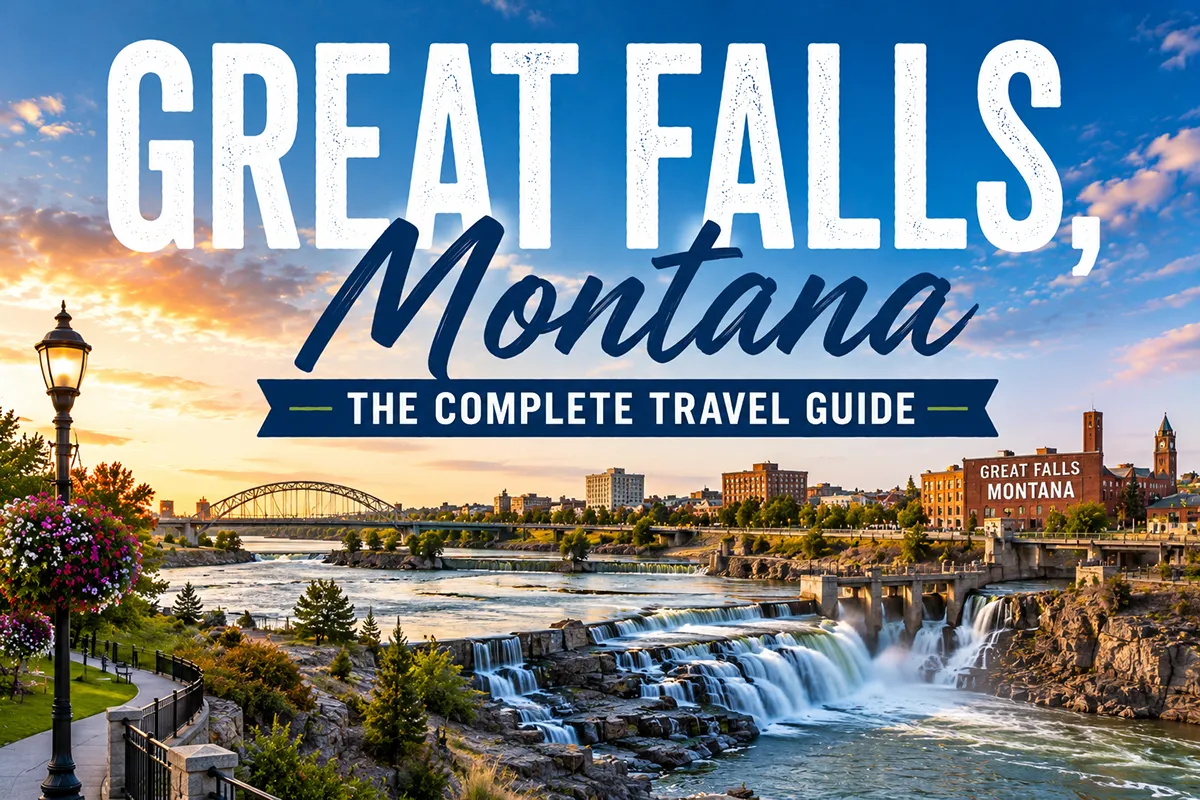
- Named for the actual “Great Falls of the Missouri” — five waterfalls on the Missouri River that Lewis and Clark famously portaged around in 1805.
- The C.M. Russell Museum holds the largest collection of work by Western artist Charles M. Russell anywhere. The Lewis & Clark Interpretive Center is the single best Lewis & Clark site in the country.
- More working-class and less touristy than Bozeman, Whitefish, or Missoula — but exactly that makes it a better value and a more genuine Montana experience.
- Best for: art and history travelers, Lewis & Clark enthusiasts, anyone driving between Glacier and Yellowstone needing a break.
Liked this article?
Add Roaming Montana as a preferred source so you see more of our articles and guides on Google.
Great Falls at a Glance
| Population (2020) | ~60,000 (3rd largest in MT) |
|---|---|
| County | Cascade County |
| Region | Central Montana |
| Elevation | 3,330 ft |
| Nickname | “The Electric City” |
| Airport | Great Falls International (GTF) |
| Distance to Glacier West Entrance | ~170 miles (~3 hours) |
| Distance to Yellowstone North Entrance | ~260 miles (~4.5 hours) |
| Best for | Art & history travelers, Lewis & Clark enthusiasts, Glacier-Yellowstone road trippers |
What Makes Great Falls Different
Great Falls is the city that quietly punches above its weight. It’s home to Malmstrom Air Force Base (one of three Minuteman III ICBM bases in the U.S.), the Missouri River runs right through it, and the eastern prairie meets the Rocky Mountain Front about 30 miles to the west. The result is a city that’s part military town, part cultural center, part working-class blue-collar river city.
Charles M. Russell lived and painted here. Lewis and Clark spent nearly a month here in 1805, portaging 18 miles around the falls in the most challenging section of their entire expedition. The five falls are still here — though most are now controlled by dams.
For broader trip planning, see my Montana cities and towns hub.
The Top 10 Things to Do in Great Falls
1. C.M. Russell Museum
The most important Western-art museum in the country, holding the largest collection of work by Charles M. Russell anywhere. Russell’s home and studio are on the property and included in admission. Plan 2–3 hours minimum. Charlie Russell’s annual auction in March is one of the biggest events in Western art each year.
2. Lewis & Clark National Historic Trail Interpretive Center
Sitting on a bluff overlooking the Missouri River, this is the single best Lewis & Clark museum in the country. The exhibits cover the full 1804–1806 expedition in extraordinary detail, with a particular focus on the Great Falls portage. Admission is modest; plan 2–3 hours.
3. Giant Springs State Park
One of Montana’s most popular state parks, on the bank of the Missouri. Features Giant Springs (one of the largest freshwater springs in the U.S.), the Roe River (once listed as the world’s shortest river at just 201 feet), and the Lewis & Clark Interpretive Center.
4. River’s Edge Trail
A 53-mile paved and unpaved trail system along the Missouri River through the city. Easy walking and biking, with access to all five of the actual “great falls” — Black Eagle Falls, Rainbow Falls, Crooked Falls, Colter Falls (mostly submerged), and Great Falls itself.
5. Paris Gibson Square Museum of Art
A contemporary art museum housed in a historic 1896 Romanesque schoolhouse downtown. Strong rotating exhibits and focus on Montana artists.
6. The Sip ‘n Dip Lounge (Mermaid Bar)
Yes, really. A tiki bar in the basement of the O’Haire Motor Inn where live “mermaids” swim in a window behind the bar. GQ Magazine once named it “Best Bar on the Planet.” A genuine Great Falls institution since 1962.
7. First Peoples Buffalo Jump State Park
A historic Indigenous buffalo jump site 30 minutes from town. Interpretive trails explain how the Blackfeet and other tribes hunted bison by driving them off the cliffs. Sobering and educational.
8. Sluice Boxes State Park (Day Trip)
About an hour south of Great Falls, this state park features a limestone canyon, ghost town remains, and hiking. Less developed than most state parks; the trail follows an old railroad bed through a beautiful canyon.
9. Malmstrom Air Force Base Heritage Center
Free military history museum focused on the Minuteman III ICBM mission and the history of Malmstrom. For aviation/military history enthusiasts.
10. Drive the Missouri Breaks Country (Day Trip)
The badlands and breaks country east of Great Falls along the Missouri — wild, remote, and historically significant. The Charles M. Russell National Wildlife Refuge starts here.
Where to Stay in Great Falls
| Hotel | Vibe | Price | Best For |
|---|---|---|---|
| O’Haire Motor Inn | Historic, retro, Sip ‘n Dip on-site | $100–170 | Character + value |
| Best Western Plus Heritage Inn | Functional, downtown-adjacent | $130–200 | Most travelers |
| Hampton Inn Great Falls | Reliable chain | $140–220 | Business travelers |
| Staybridge Suites Great Falls | Extended-stay | $160–240 | Families |
| Holiday Inn & Suites Great Falls Convention Center | Reliable, central | $130–210 | Convention travelers |
| The Northern Hotel | Boutique downtown | $150–250 | Splurge |
Great Falls is significantly cheaper than Bozeman, Whitefish, or even Kalispell — typical hotel rates 30–40% lower for equivalent quality. Excellent value for travelers willing to stop here.
Where to Eat
The Great Falls food scene is smaller and less polished than the western Montana cities but has its standouts:
- Roadhouse Diner — locally sourced, award-winning, the food scene’s anchor
- Jaker’s Bar and Grill — steakhouse staple
- Bert and Ernie’s — local breakfast institution
- Cassiopeia Books & Coffee — independent bookstore plus cafe
- Mighty Mo Brewing Co. — local craft brewery
- Black Eagle Brewery — quality craft beer downtown
- Faster Basset Brewing — newer downtown brewery
- Borries Famous Italian Restaurant — family-run Italian, decades old
- The Crooked Tree — coffee and pastries
Getting There & Around
By plane: Great Falls International Airport (GTF) — direct flights from Seattle, Salt Lake City, Minneapolis, Denver, and Las Vegas (limited summer schedule). Less served than Bozeman, Missoula, or Kalispell.
By car: From Bozeman, ~3 hours. From Helena, ~1.5 hours. From Glacier West Entrance, ~3 hours. From Yellowstone North Entrance, ~4.5 hours.
Around town: Car-dependent. Great Falls Transit operates limited bus routes. Uber and Lyft operate.
What Great Falls Unlocks
Glacier National Park (3 hours)
Drive west via Highway 89 through the Rocky Mountain Front to reach Glacier’s East Entrance at St. Mary or continue to West Glacier. Beautiful drive through Augusta and Choteau ranching country.
Helena (1.5 hours)
State capital with strong historic district, walkable downtown, and excellent museums.
Bozeman/Yellowstone (3.5–5 hours)
Long but doable. Better as a multi-day extension.
Lewistown (1.5 hours)
Geographic center of Montana, surrounded by ranching country.
Augusta & Rocky Mountain Front (1 hour west)
Working cattle ranches at the edge of the Rocky Mountain Front. Augusta’s American Legion Rodeo in late June is one of the most authentic rodeos in the West.
Sluice Boxes State Park (1 hour)
Limestone canyon hiking; ghost town remains.
When to Visit Great Falls
Summer (June–August) has the best weather — daytime temperatures in the 80s, but it can get hot in July and August.
September and October are excellent — golden plains, comfortable temperatures, fewer crowds.
Winter (December–March) is genuinely cold — the “Chinook wind” can warm things up by 40 degrees in an hour but usually doesn’t. Indoor attractions still work.
Spring (April–May) is windy and unpredictable but functional.
See best time to visit Montana for full timing.
Personal Tips From Multiple Great Falls Visits
Don’t skip the Lewis & Clark Interpretive Center. Even if you think you don’t care about Lewis and Clark, this museum will change your mind. The portage simulation alone is worth the visit.
The C.M. Russell Museum is a national-level institution. Don’t rush it. Plan 3 hours.
The Sip ‘n Dip Mermaid Bar is genuinely fun. Take the joke at face value — drinks are cheap, the kitsch is sincere, and the experience is unforgettable.
The wind is real. Great Falls is famously windy — partly because it sits at the edge of the plains where Rocky Mountain winds accelerate down. Pack a windbreaker even in summer.
Use it as a budget base. If your trip routes through central Montana, Great Falls hotels are dramatically cheaper than western alternatives. Two nights here can offset the cost of a Whitefish stay.
The River’s Edge Trail is the best urban hike in Montana. Take an evening walk along the Missouri.
Eat at Roadhouse Diner. Worth a stop on its own merits.
Great Falls Quick Facts
| Founded | 1883 |
|---|---|
| Named for | The Great Falls of the Missouri (5 waterfalls) |
| Major industries | Military (Malmstrom AFB), agriculture, healthcare, refining |
| Famous resident (historical) | Charles M. Russell, Western artist |
| Average summer high | 84°F |
| Average winter low | 12°F |
| Closest national park | Glacier (170 mi to West Entrance) |
Conclusion
Great Falls won’t ever be the destination travelers fly to first — and that’s fine. It’s the smart stopover, the genuine cultural anchor of central Montana, and the cheapest of Montana’s larger cities. If you have any interest in Western art, Lewis and Clark, or just authentic non-touristy Montana, plan at least a day here. You’ll thank yourself.
Have a Great Falls question? Drop it in the comments — I read every one.
Frequently Asked Questions
Is Great Falls, Montana worth visiting?
Yes — Great Falls is worth at least a 1–2 day visit, particularly for travelers interested in Western art (C.M. Russell Museum), Lewis & Clark history (Lewis & Clark National Historic Trail Interpretive Center), and authentic non-touristy Montana culture. The city is also a strong, affordable stopover on a Glacier-to-Yellowstone route.
What is Great Falls, Montana known for?
Great Falls is known for being Montana’s third-largest city, the home of Malmstrom Air Force Base, the original Great Falls of the Missouri River (five waterfalls), the C.M. Russell Museum (the largest collection of Charlie Russell Western art in the world), and the Lewis & Clark National Historic Trail Interpretive Center. The city’s nickname is “The Electric City” due to its historical hydroelectric production.
How many days do you need in Great Falls?
Plan 1–2 days in Great Falls to properly experience the C.M. Russell Museum, the Lewis & Clark Interpretive Center, Giant Springs State Park, and at least part of the River’s Edge Trail. Add a day if you want to explore First Peoples Buffalo Jump or do a day trip to Sluice Boxes State Park.
How far is Great Falls from Glacier National Park?
Great Falls is approximately 170 miles from Glacier National Park’s West Entrance — about a 3-hour drive northwest via US-89. The drive through the Rocky Mountain Front is genuinely scenic, passing through Augusta and Choteau ranching country.
What’s the C.M. Russell Museum?
The C.M. Russell Museum in Great Falls is the world’s largest collection of work by Charles M. Russell, one of the most important Western American artists of the late 19th and early 20th centuries. The museum complex includes Russell’s home and studio (preserved on-site) and is widely considered one of the most important Western art museums in the country.
What is the Sip ‘n Dip Lounge?
The Sip ‘n Dip Lounge is a tiki-themed bar in the basement of the O’Haire Motor Inn in downtown Great Falls, famous for live “mermaid” performers who swim in a window behind the bar. GQ Magazine once named it “the #1 Bar on the Planet.” It has been operating since 1962 and is a genuine Great Falls cultural landmark.
What airport serves Great Falls, Montana?
Great Falls International Airport (GTF) serves Great Falls. The airport offers direct flights from Seattle, Salt Lake City, Minneapolis, Denver, and Las Vegas, with limited seasonal expansion. It’s less served than Montana’s other major airports but adequate for travelers basing in central Montana.
Is Great Falls cheaper than Bozeman or Whitefish?
Yes — Great Falls is significantly cheaper than Bozeman, Whitefish, or even Kalispell. Mid-range hotels typically run $130–200/night versus $250–400 in Bozeman or Whitefish. Restaurants and most attractions are also less expensive, making Great Falls a strong value option for travelers willing to base outside the main tourist destinations.
What’s the best time of year to visit Great Falls?
Summer (June–August) has the best weather but can be hot and windy. September and October are arguably the best months — comfortable temperatures, golden plains, and fewer crowds. Winter is cold but indoor attractions (museums, the Sip ‘n Dip) work year-round.
Can you see Lewis & Clark sites in Great Falls?
Yes — Great Falls is one of the most important Lewis & Clark sites in the country. The Lewis & Clark National Historic Trail Interpretive Center is the largest L&C museum in the country. The actual portage route around the Great Falls of the Missouri is partially visible from various points along the River’s Edge Trail and from interpretive overlooks throughout the area.