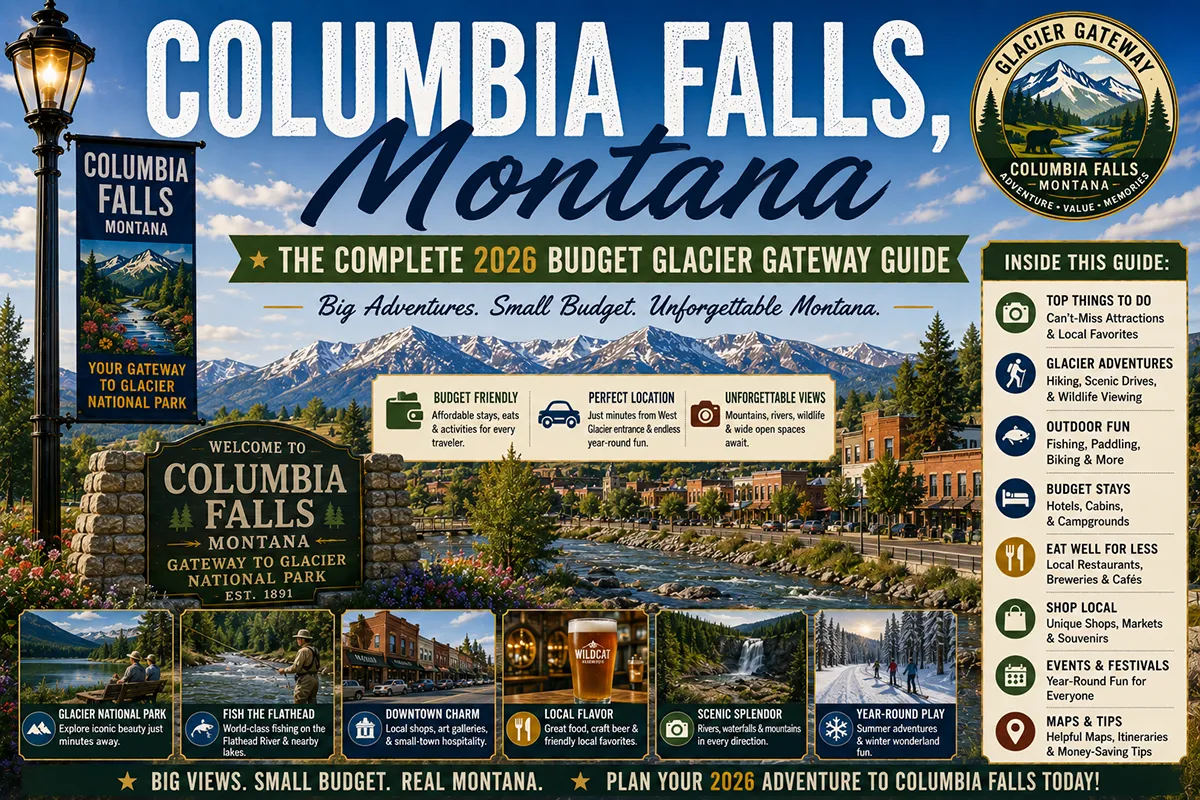
For 54 years a smelter on the edge of this town made aluminum, and for the last few decades Columbia Falls has been the place people sleep on their way into Glacier. Which of those two towns you meet depends on where you stand.
TL;DR
- Columbia Falls (5,308 residents in the 2020 census) is a working town on the Flathead River, roughly 17 miles from Glacier National Park, and the practical, usually cheaper alternative to sleeping in Whitefish.
- The town is not a polished resort. Its strengths are position, a good brewery, a Thursday summer market, river access, and three very different roads out: to Glacier, to the North Fork, and to Hungry Horse Dam and Reservoir.
- One thing most guides skip: the former aluminum smelter site is on the EPA’s Superfund list, and cleanup is ongoing. It does not affect a normal visit, but it is part of the honest story.
- In 2026 Glacier required no vehicle reservations, but Logan Pass parking was capped and shuttle tickets were required for some hikes. Confirm current rules before you go.
Liked this article?
Add Roaming Montana as a preferred source so you see more of our articles and guides on Google.
Two Towns in One
Drive US-2 through Columbia Falls and it looks like a highway town: gas, groceries, a motel or two, a waterpark and a row of storefronts on Nucleus Avenue. Park the car and the picture gets more interesting. There is a red steel bridge over the Flathead, an 1891 church on the National Register of Historic Places, an old depot with a steam locomotive, and a river that runs along the town’s eastern edge.
Then there is the other Columbia Falls, the industrial one. From 1955 to 2009, the Anaconda Aluminum Company’s Columbia Falls Reduction Plant turned out aluminum on a 1,340-acre site on the town’s outskirts, which, like other Northwest aluminum plants, relied on Bonneville Power electricity. The town’s character comes from that blue-collar past more than from tourism, and it explains why Columbia Falls feels less staged than its neighbors.
This guide is for travelers deciding whether to use Columbia Falls as a base or add it as a stop. It sits within the larger picture of Montana cities and towns, and it is one of three Flathead Valley options along with Whitefish and Kalispell.
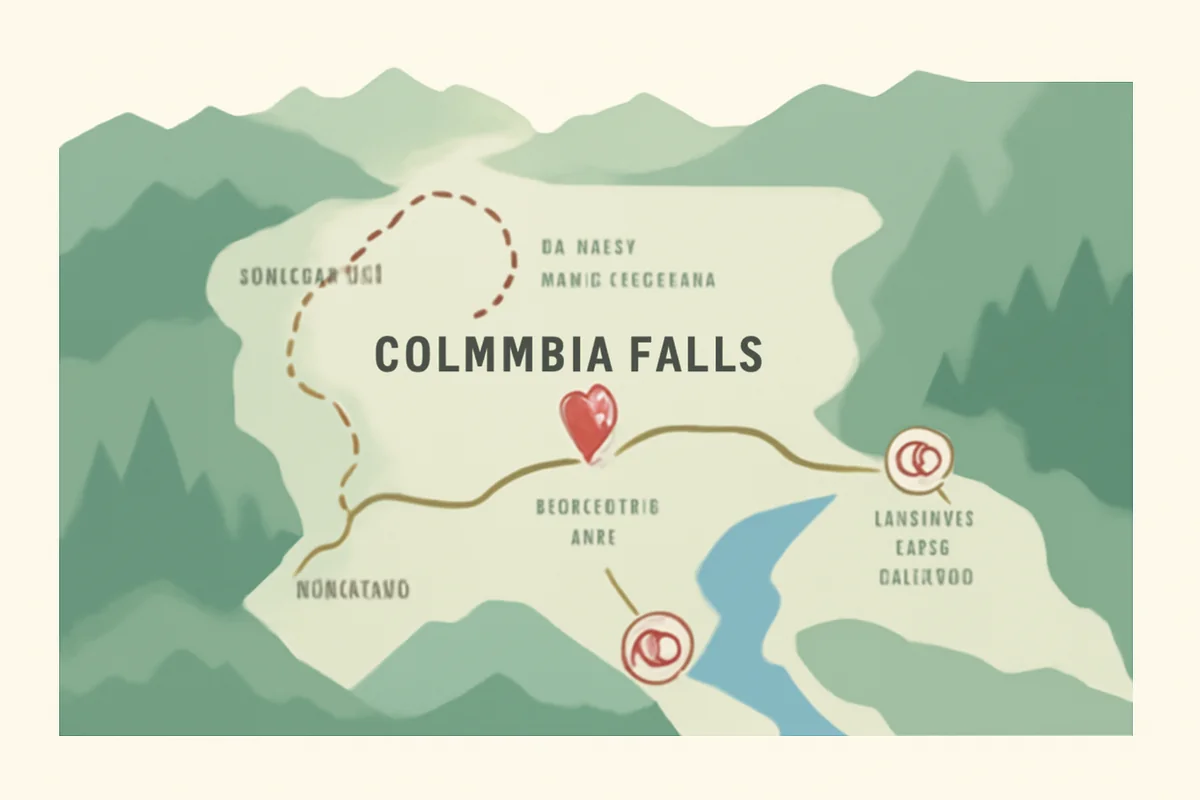
Columbia Falls in Numbers
| Population | 5,308 (2020 census) |
| Elevation | About 3,080 feet |
| County | Flathead County |
| Settled / incorporated | First settled in 1891; incorporated April 26, 1909 |
| Glacier National Park | About 17 miles; roughly 20 minutes to the West Entrance area in normal conditions |
| Whitefish | About 15 minutes by car |
| Kalispell | About 15 miles |
| Glacier Park International (FCA) | About 8 miles south of town |
| Hungry Horse Dam | Roughly 20 minutes east |
| Best for | Glacier access without Whitefish prices, river days, a quieter base, RV and cabin stays |
How the Town Got Its Name (and What the Old Guides Get Wrong)
A common line on travel sites is that Columbia Falls was named for the Columbia River watershed. The better-documented story is simpler and more local: residents asked for “Columbia” for the post office, and “Falls” was added to avoid confusion with Columbus, Montana. The area was first settled in 1891 in anticipation of the Great Northern Railway, and the city incorporated in 1909. The 1891 church, St. Richard’s, is one of the oldest buildings you can still visit.
The Smelter and the Superfund Site
Plenty of visitors never realize that one of the biggest stories in town is on its outskirts. The Anaconda Aluminum Company’s smelter started production in 1955. It stopped operating in 2009, when aluminum prices fell and the plant could not compete on power costs, and the owners announced a permanent shutdown in 2015.
The site is now on the EPA’s National Priorities List. According to the EPA, spent potliner and other waste contaminated groundwater, and contaminated sediments were found in the Flathead River floodplain; the site owner removed those sediments in a 2020 removal action. Partial demolition ran from 2015 to 2019, and long-term cleanup was scheduled to begin in 2026.
What does this mean for a visitor? The plant grounds are not a tourist attraction, and nothing about a normal trip to the brewery, the market or Glacier touches them. It is worth mentioning because anglers use the Flathead River and local news coverage has followed redevelopment plans for adjacent land, which developers have said would include homes, industrial space and a park. It is part of the town’s identity, and the town is better understood with it than without.
Three Roads Out of Town
The easiest way to think about Columbia Falls is as a crossroads. Each road leads to a different trip.
The Glacier Road (US-2 East)
This is the one most people take. West Glacier and the park’s main entrance are about 17 miles away, which puts you at the gate quickly. Lake McDonald, Apgar and the start of Going-to-the-Sun Road are the main targets; see the Going-to-the-Sun Road and Glacier National Park guides for the full road.
Along US-2 you will pass the Glacier-oriented businesses: a zipline outfitter, hiking and biking outfitters, the Glacier Institute, and a handful of cabin and motel properties. Because the highway funnels everything toward the park, expect heavy summer traffic into and out of West Glacier. Leave early and come back late.
The North Fork Road (Toward Polebridge)
Take Nucleus Avenue out of town and follow North Fork Road, and the drive turns into a different Montana. Sources describe it as roughly 20 miles on a mix of pavement and gravel, a back way into the park’s western side that bypasses the main entrance gate. It leads to the Polebridge area, which is covered in the things to do in Polebridge guide.
The Park Service listed the North Fork among the areas that needed no vehicle reservation in 2026, though vehicles could be diverted when areas became congested. Gravel means slow driving, dust and a spare tire worth checking. Do not expect services; fill your tank and your cooler before you leave town.
The Hungry Horse Road (Dam and Reservoir)
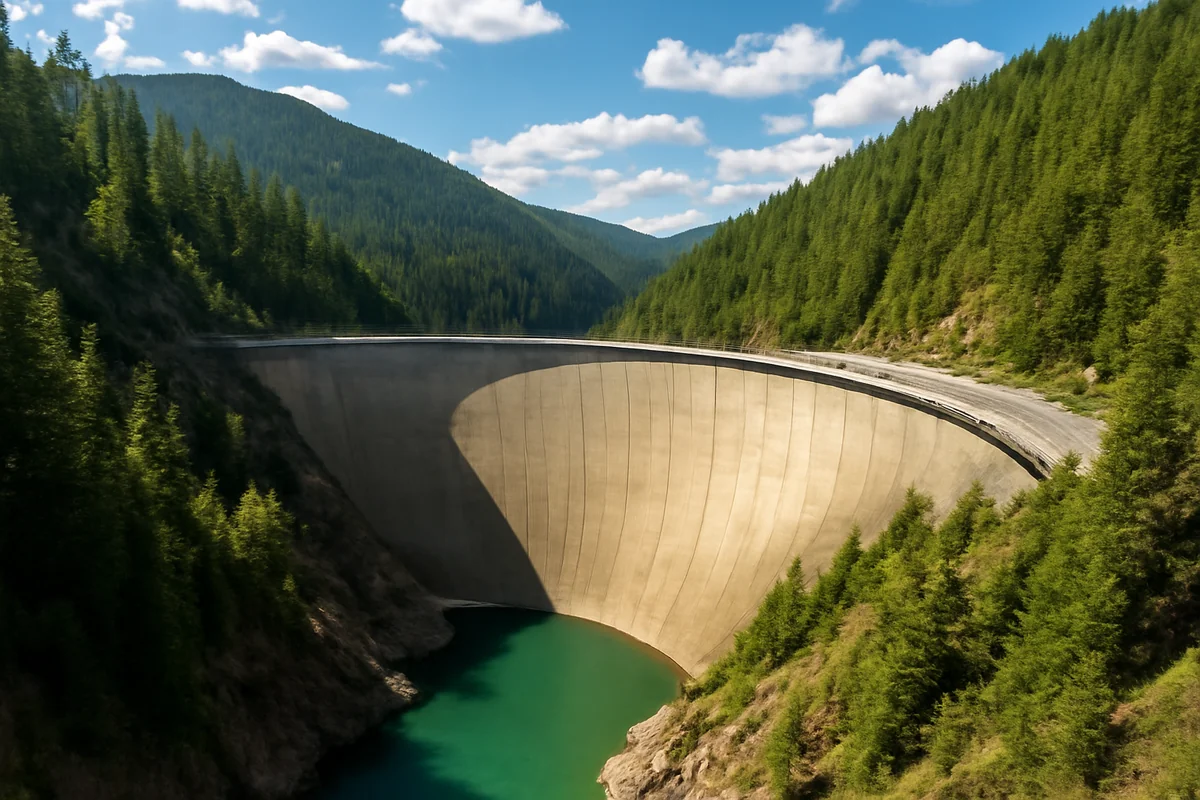
Hungry Horse Dam is a concrete arch dam on the South Fork of the Flathead River, completed in 1953. It stands 564 feet high and is 2,115 feet long, and its morning-glory spillway is among the best-known features. At completion it was among the largest dams in the world. Per the Bureau of Reclamation (page updated March 2026), the visitor center was closed for summer 2026, while the top of the dam stayed open to vehicles and pedestrians.
Behind the dam, Hungry Horse Reservoir stretches about 34 miles with roughly 170 miles of shoreline, managed for recreation by the Flathead National Forest. Campgrounds and boat launches line its edges. For a bigger day, the Great Northern Mountain route on the east side is a roughly 6-mile round trip with nearly 5,000 feet of gain and a Class 2 and 3 scramble, with mountain goats commonly seen near the top. That is a strenuous outing, not a casual stroll.
In Town: What Is Actually Worth Your Time
Columbia Falls is not a town of famous attractions. It is a town of small, useful ones, and a few that are just fun.
River’s Edge Park. A community park of about 28 acres along the Flathead River, with trails, a fishing pond and picnic areas. In winter it is used for cross-country skiing and snowshoeing.
The Red Bridge and Depot Park. The red steel bridge over the Flathead is a landmark. At Depot Park you can see a historic steam locomotive, and the old depot now houses a locally owned antique and gift shop.
Columbia Falls Community Market. A Thursday-evening market from May through September, with produce, crafts and local goods.
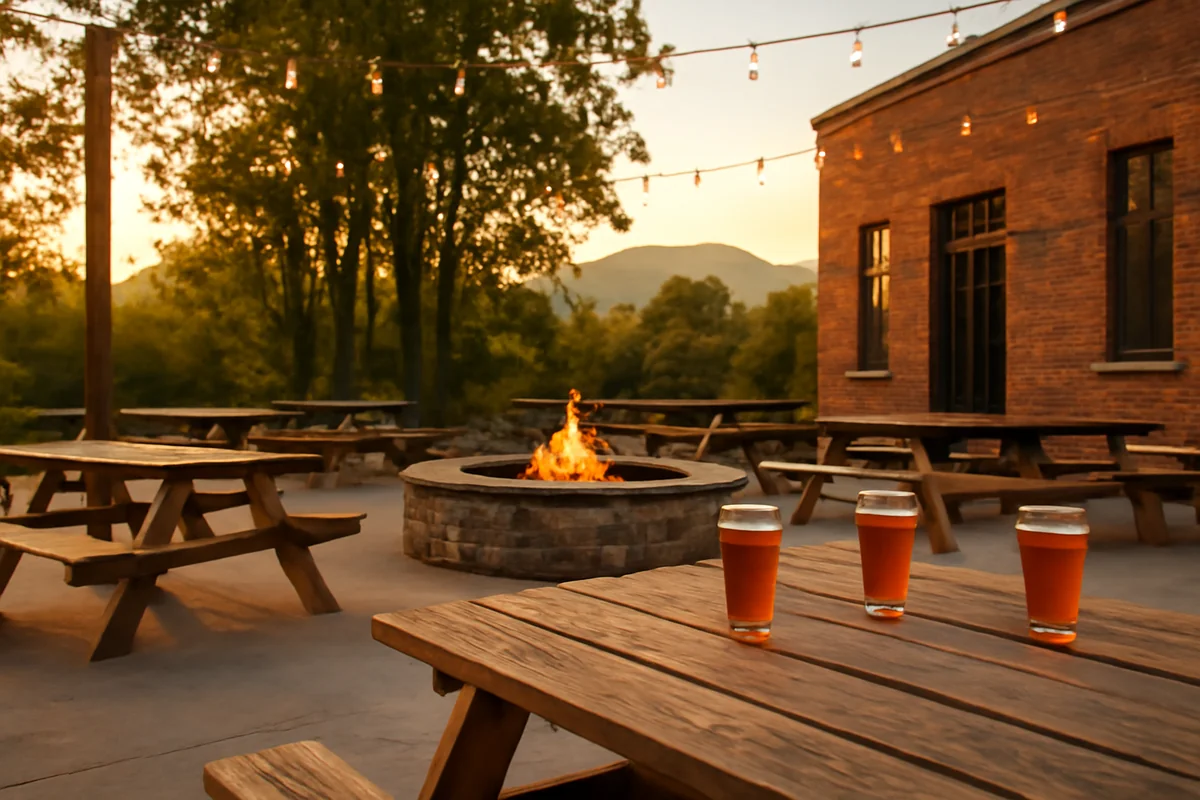
Backslope Brewing. The anchor for the town’s eating and drinking scene, with a taproom, a food menu and a patio. If you only pick one local stop, make it this one.
Montana Vortex and House of Mystery. A tilted-house optical-illusion attraction that families either love or find hokey. It is cheap entertainment, and the tilted-room effect is the draw.
Big Sky Waterpark and the Amazing Fun Center. Seasonal attractions that matter if you travel with kids. Big Sky Waterpark is described as Montana’s largest and is generally open on summer afternoons, with day passes in the roughly $35 to $45 range per person according to one travel site. See the Montana waterparks guide for context.
Meadow Lake Golf Course. A resort course that the local tourism office says Golf Digest rated a “must play”.
Brash Rodeo Summer Series. Held at Blue Moon Arena in the summer.
What to Eat
Columbia Falls rewards people who like diners and roadhouses over white-tablecloth dining. Names that come up repeatedly in local listings and travel coverage:
- Backslope Brewing (Ninth Street W): craft beer and a menu that goes beyond bar snacks.
- Nite Owl and the Back Room: a roadhouse with two sides, with homestyle fare and old-fashioned ice cream in one and barbecue and pizza in the other.
- Columbia Cafe, Uptown Hearth and North Fork Pizza (all on or near Nucleus Avenue): the sit-down options in the center of town.
- Mudman Burgers: a burger spot on Ninth Street W.
- Three Forks Grille: a downtown spot with Italian dishes.
- Cowgirl Coffee: a drive-through coffee kiosk just south of downtown.
- Ice cream: Farm to Table Ice Cream and Sweet Retreat Creamery on the main streets.
- White Raven Winery on US-2 for wine.
A practical note: restaurants in small Montana towns close earlier than you expect and shorten their hours off-season. Check before you drive over, particularly in October through April.
Where to Stay, by the Kind of Trip You Are Taking
Instead of a ranked hotel list, think of the lodging in terms of what you want your days to look like.
For a standard Glacier base. Cedar Creek Lodge, a Xanterra property near the Glacier entrance with a pool and an on-site restaurant, and Meadow Lake Resort, with condos and a golf course, are the two bigger names. Both are practical for families.
For a quieter or more rustic stay. Badrock Bed and Breakfast, Moss Mountain Inn on North Fork Road, and the Montana Treehouse Retreat sit in the more atmospheric end of the range. The treehouse books months ahead.
For cabins and rentals. There are several cabin rentals along US-2 and the side roads. Read recent reviews closely and check the distance to services, because some are farther out than the map suggests.
For RV travelers and campers. Columbia Falls RV Park and Glacier Peaks RV Park and Cabins are options, and the broader area is covered in the RV parks near Columbia Falls and West Glacier guide.
Price reality. Columbia Falls is usually cheaper than Whitefish, but not always, and summer weekends can narrow the gap sharply. Treat any fixed “you’ll save $X per night” claim with caution; price your exact dates on both towns. If you plan to sleep inside the park, see where to stay in Glacier National Park.
Glacier From Columbia Falls: 2026 Rules and the Crowd Math
The distance is the whole sales pitch: West Glacier is about 17 miles away, and you reach the main entrance before most people staying in Whitefish have finished breakfast. That said, the line at the gate and the parking at Apgar and Lake McDonald are what shape your day.
Here is how 2026 worked, based on the National Park Service:
- Vehicle reservations were not required anywhere in the park.
- From July 1 through September 7, private vehicles could park at Logan Pass for up to three hours, with a free timestamped permit displayed on the dashboard.
- Longer hikes starting at Logan Pass, such as the Highline Trail to Granite Park Chalet, required a Logan Pass Shuttle ticket from Recreation.gov, with a $1 processing fee. Boarding was at places including Apgar Visitor Center and Lake McDonald Lodge.
- Vehicles could still be diverted from entrances during congestion.
Rules change from year to year, so check the Park Service before booking. For trail ideas once you are in, see the best hikes in Glacier National Park.
Columbia Falls, Whitefish or Kalispell?
Most people arrive at this decision already holding a lodging search. Here is the shorthand.
| If you want… | Choose |
|---|---|
| The shortest drive to the Glacier gate, and a plain, practical town | Columbia Falls |
| A lake, a ski mountain and a walkable downtown, and you will pay for it | Whitefish |
| An airport, a hospital, big grocery stores and the widest lodging range | Kalispell |
| Quiet evenings and cabin-style stays on the way to the North Fork | Columbia Falls |
| Nightlife, a rich restaurant scene and shopping | Whitefish |
Columbia Falls will disappoint you if you expect a resort village. It will suit you if you want to spend your days in the park, the forest or on the river and treat the town as a comfortable place to sleep and eat.
A Year in Columbia Falls
Winter (December to March). Quiet. Snowshoeing and cross-country skiing at River’s Edge Park, and a nearby alpine option at Whitefish Mountain Resort about 30 minutes away. Going-to-the-Sun Road is closed at higher elevations, but lower-elevation areas near Lake McDonald may remain reachable. See Whitefish in winter for ski-area details.
Spring (April to May). Mud season. Some seasonal businesses begin to open in mid-May. Some visitors cycle the lower sections of Going-to-the-Sun Road while it is still closed to cars.
Summer (June to August). The big window. Late June through early September is the period travel sources most often cite for full Going-to-the-Sun Road access, with daytime temperatures roughly in the 40s to low 80s Fahrenheit. The Thursday market runs from May to September, rodeo season is on, and the waterpark and zipline are open. Mosquitoes can be bad in early summer; the Montana bug season guide has the timing. Wildfire smoke can also affect views in some late summers.
Fall (September to October). The best-kept option. Crowds thin after Labor Day, many business hours shorten, and Hungry Horse Reservoir and the North Fork are lovely. Harvestfest is held in Hungry Horse in October. For wider timing across the state, see the best time to visit Montana.
Getting There and Getting Around
Fly into Glacier Park International Airport, about 8 miles south of town, and you are in Columbia Falls within minutes. See the Montana airports guide for flight options. Public transit is limited, so most visitors rent a car. If you are trying to manage without one, the Montana without a car guide covers the realistic options.
From other parts of the state, plan on long driving days; Columbia Falls is far from Billings, Bozeman and Helena. A pleasant add-on is a stop in Bigfork or on Flathead Lake before or after your Glacier days.
Insider Tips: What Visitors Wish They Knew
- Fill the tank and the cooler before the North Fork. There is little in the way of services up that road.
- Do not trust “savings vs Whitefish” claims. Compare actual dates; summer weekends can erase the gap.
- Check restaurant hours before you drive in. Small-town hours shift by season and day.
- Start Glacier days early. The 17-mile drive is short, but the parking at Lake McDonald and Logan Pass is not.
- Use Thursday evenings. Build a market stop into a summer plan.
- Look up Logan Pass rules before planning a big hike. The three-hour parking limit and shuttle tickets caught many visitors off guard in 2026.
- Treat the smelter as local history, not an attraction. Stay on public roads and trails.
Practical Info
| Best seasons | Late June to September for full Glacier access; September and October for quiet; winter for snowshoeing and skiing nearby |
| Getting there | Fly into Glacier Park International (FCA), about 8 miles south; US-2 runs through town |
| Getting around | A car is essentially required; public transit is limited |
| Glacier rules | Verify vehicle reservation, Logan Pass and shuttle rules with the NPS |
| Entry fees | Glacier:; Big Sky Waterpark:; Hungry Horse Dam crest: |
| Difficulty | Easy town and river walks to strenuous mountain scrambles |
| What to bring | Layers, bear spray, insect repellent, a spare tire check for gravel roads, a refillable water bottle |
| Cell service | Generally fine in town; spotty on the North Fork Road and in the park |
| Nearby | Glacier National Park, Whitefish, Kalispell, Hungry Horse Reservoir, Polebridge, Flathead Lake |
Frequently Asked Questions
Is Columbia Falls a good base for Glacier National Park?
Yes. It is about 17 miles from the park, usually quicker to the gate than Whitefish, and often cheaper, though prices vary by date.
How far is Columbia Falls from Whitefish and Kalispell?
Whitefish is about 15 minutes away. Kalispell is about 15 miles south.
Is Columbia Falls cheaper than Whitefish?
Often, but not always. Compare your exact dates, because summer weekends can narrow the difference.
What is the aluminum plant near Columbia Falls?
It is the former Columbia Falls Reduction Plant, which operated from 1955 to 2009. The site is on the EPA’s National Priorities List and is being cleaned up.
What is there to do in Columbia Falls with kids?
Big Sky Waterpark, the Amazing Fun Center, the Montana Vortex and House of Mystery, river parks and the Thursday summer market.
Can I visit Hungry Horse Dam?
Yes, the top of the dam was open to vehicles and pedestrians in 2026, although the Bureau of Reclamation listed the visitor center as closed for the summer. Check its page before you go.
Final Thoughts
Columbia Falls is not the town that wins the postcard contest, and it does not seem to mind. It sits where three good roads meet, it has a real local history that includes a hard chapter, and it makes a useful base if you value position over polish. If you are still building your itinerary, the Montana cities and towns guide shows how it compares with the rest of the state.
Pin this guide for your trip planning, and drop your questions in the comments. Questions about whether Columbia Falls, Whitefish or Kalispell fits a trip are welcome in the comments.
Sources and Official Links
- Columbia Falls, Montana, Wikipedia
- Hungry Horse Dam, Wikipedia
- Beyond Hungry Horse Dam, Flathead Beacon
- Anaconda Aluminum Co. Columbia Falls Reduction Plant, EPA
- Smelter closure coverage, Montana Public Radio
- Logan Pass 2026 visiting rules, NPS
- Columbia Falls, Glacier Country Montana
- Columbia Falls Chamber of Commerce
- Columbia Falls travel guide, Travel Montana Now
- Underrated riverside city, Islands