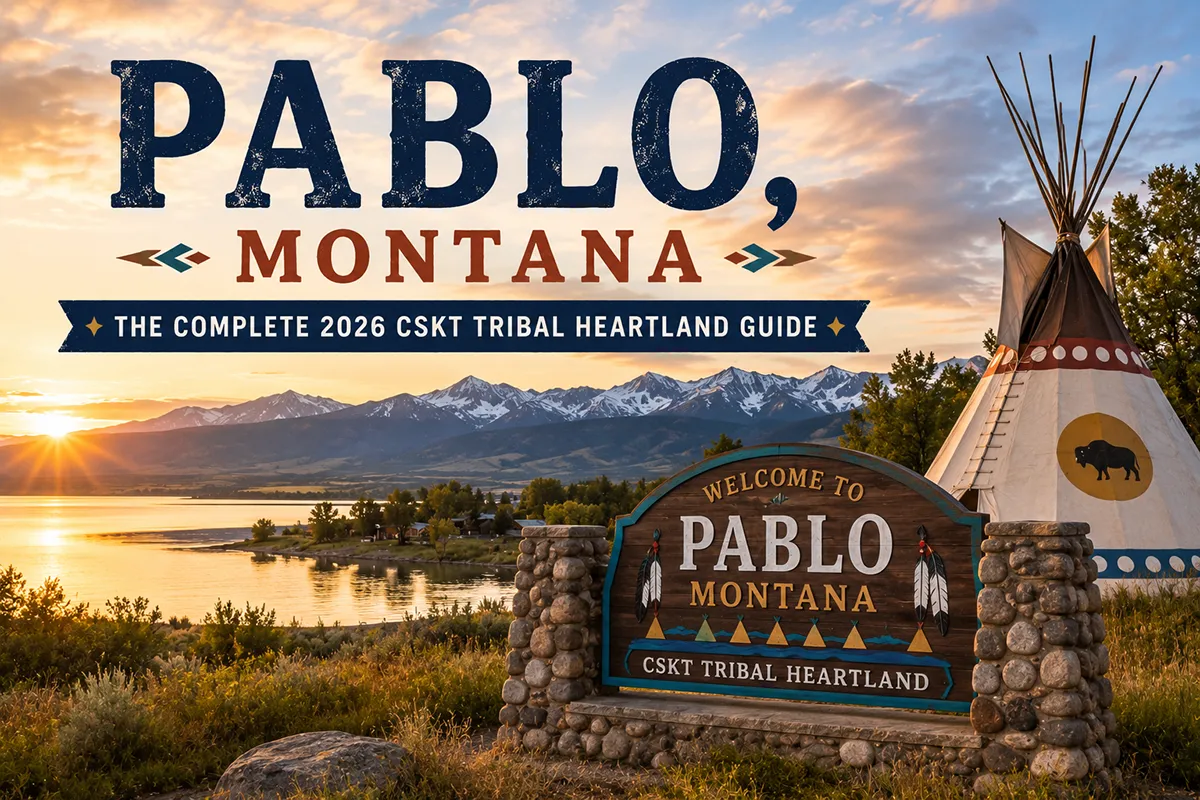
Pablo is small — fewer than 2,000 residents — but it carries an outsized importance. This is the administrative and cultural capital of the Confederated Salish and Kootenai Tribes (CSKT), the sovereign nation whose homeland includes most of the Mission Valley.
The tribal council meets here. Salish Kootenai College — one of the most established tribal colleges in the United States — is based here. And the Three Chiefs Culture Center (until recently called The People’s Center) is one of Montana’s most important Indigenous cultural institutions.
TL;DR
- Pablo (~1,900) is the administrative and cultural capital of the Confederated Salish and Kootenai Tribes — the sovereign nation whose homeland comprises the Flathead Indian Reservation.
- The Three Chiefs Culture Center (formerly The People’s Center) presents Salish, Kootenai, and Pend d’Oreille history from Indigenous perspectives.
- Salish Kootenai College is among the most established tribal colleges in the U.S.
- Pablo National Wildlife Refuge is adjacent to town — pothole wetlands with strong waterfowl populations.
- Best for: travelers genuinely interested in CSKT culture and history, Mission Valley birders, and education-focused visitors.
- Visitor protocol: Pablo is a community first, not a tourist destination. Approach with respect.
Liked this article?
Add Roaming Montana as a preferred source so you see more of our articles and guides on Google.
Pablo at a Glance
| Population (2020) | ~1,900 |
|---|---|
| County | Lake County |
| Reservation | Flathead Indian Reservation (CSKT capital) |
| Region | Northwest Montana (Glacier Country) |
| Elevation | 2,910 ft |
| Distance to Polson | ~7 miles (~10 min north) |
| Distance to Ronan | ~7 miles (~10 min south) |
| Distance to Missoula | ~55 miles (~1 hour south) |
| Best for | CSKT cultural institutions, Salish Kootenai College, Pablo NWR, Mission Valley birding |
What Makes Pablo Different
Pablo’s distinct character comes from its role as the governmental and educational center of the Confederated Salish and Kootenai Tribes — a sovereign Indigenous nation whose 1.3-million-acre Flathead Reservation occupies the entire Mission Valley and southern Flathead Lake region.
The 1855 Hellgate Treaty established this reservation; the 1908 allotment policy and the 1910 opening to non-Indian homesteading caused profound damage to tribal sovereignty that the CSKT has spent the past century working to repair.
That work is visible in Pablo. The Three Chiefs Culture Center tells the story from Indigenous perspectives. Salish Kootenai College trains the next generation of tribal members and others in fields from natural resource management to nursing.
The tribal government offices coordinate everything from natural resource policy to language preservation programs.
This is genuinely Indian Country. Visitors who come with respect and curiosity find a rich cultural experience; visitors who treat it as a checklist stop will miss what makes Pablo significant.
For broader trip context, see my Montana cities and towns hub.
Things to Do In & Around Pablo
1. Three Chiefs Culture Center
Recently renamed from The People’s Center, this is the CSKT’s own cultural institution presenting Salish, Kootenai, and Pend d’Oreille history and culture. The center includes a museum with traditional and contemporary cultural artifacts, educational programming, a gift shop featuring tribal artisans, and rotating exhibits. Among the most important Indigenous cultural museums in Montana. Genuine learning, not tourist performance.
2. Salish Kootenai College
One of the most established tribal colleges in the United States, founded 1977. The campus library has significant CSKT historical and cultural archives; the college offers associate’s and bachelor’s degrees in fields including tribal historic preservation, Native American studies, and natural resource management. Visitors welcome with appropriate respect.
3. Pablo National Wildlife Refuge
A 2,500-acre wetland refuge adjacent to Pablo — pothole lakes and grasslands with strong waterfowl populations. Less famous than Ninepipe NWR (5 miles south near Ronan) but equally productive for birding, particularly during spring and fall migrations. Free.
4. CSKT Bison Range (Moiese, 30 minutes south)
The National Bison Range at Moiese — recently transferred to CSKT management after generations of federal control — protects one of America’s last free-roaming bison herds. A 19-mile auto tour and hiking trails. The bison range is on the southern part of the reservation; admission is now managed by the tribes.
5. Ronan & Mission Valley Activities (10 minutes south)
Ninepipe NWR, Mission Mountain Golf Course, and the Garden of the Rockies Museum are all close. See Ronan guide.
6. Tribal Powwows & Cultural Events (Seasonal)
The CSKT hosts multiple cultural events throughout the year — the Arlee Celebration Fourth of July Powwow (an hour south) is one of Montana’s largest. Contact the CSKT tribal office for current cultural event schedule. Open to respectful public visitors.
7. Day Trip to Polson & Flathead Lake (10 minutes north)
Wild Horse Island boat trips, KwaTaqNuk Resort, lake water sports. See Polson guide.
8. Mission Mountain Views
Pablo offers some of the Mission Valley’s most uninterrupted Mission Mountain views — the eastern skyline is the dominant feature of any time spent in town.
Where to Stay
Pablo has very limited lodging — Polson and Ronan are the practical bases:
| Option | Vibe | Price | Best For |
|---|---|---|---|
| Polson hotels (10 min north) | Full range, lakeside | $130–250 | Lake-focused travelers |
| Ronan motels (10 min south) | Budget options | $80–140 | Most travelers |
| KwaTaqNuk Resort (Polson) | Tribally-owned, lakeside | $180–300 | Cultural experience focus |
Where to Eat
Pablo’s dining options are limited — Polson and Ronan have more variety:
- Salish Kootenai College Cafe — when open to public, decent meals
- Polson dining (10 min north) — see Polson guide
- Ronan dining (10 min south) — see Ronan guide
Visitor Protocol
The Flathead Reservation is a sovereign nation. Visitors should:
- Approach Pablo with respect and genuine cultural curiosity
- Tribal recreation permits required for fishing, hiking on reservation lands beyond paved roads
- Ask before photographing community members or events
- Purchase from CSKT-owned businesses when possible
- Treat the Three Chiefs Culture Center as a museum, not entertainment
Getting There & Around
From Polson: 7 miles south on US-93, about 10 minutes.
From Ronan: 7 miles north on US-93, about 10 minutes.
From Missoula: 55 miles north on US-93, about 1 hour.
What Pablo Unlocks
Polson & Flathead Lake (10 min north)
See Polson guide.
Ronan & Mission Valley (10 min south)
See Ronan guide.
National Bison Range (30 min south)
CSKT-managed bison preserve.
St. Ignatius Mission (30 min south)
Historic 1854 Jesuit mission with extraordinary murals.
When to Visit
Spring and fall for peak bird migration at Pablo NWR.
Summer (June–August) for full cultural center hours, tribal events.
Year-round for the Three Chiefs Culture Center and Salish Kootenai College — verify hours before visiting.
Personal Tips
Three Chiefs Culture Center before the rest. Visit Pablo’s cultural center before exploring the broader Mission Valley. The context it provides transforms everything else you see.
Combine with Ronan and Polson. Pablo is geographically tiny — most travelers experience it as part of the broader Mission Valley itinerary, not a standalone destination.
Respect tribal permits. If you plan any reservation recreation beyond roadside stops — fishing, hiking, photography of cultural events — get the appropriate tribal permits first.
The National Bison Range is essential. 30 minutes south, recently returned to CSKT management. One of America’s most historically significant wildlife sites and now under appropriate tribal stewardship.
Pablo Quick Facts
| Tribal capital | Confederated Salish and Kootenai Tribes (CSKT) |
|---|---|
| Reservation | Flathead Indian Reservation (1.3 million acres) |
| Salish Kootenai College | Founded 1977 |
| Three Chiefs Culture Center | Formerly The People’s Center |
| Average summer high | 81°F |
| Average winter low | 18°F |
Conclusion
Pablo rewards visitors who come with genuine respect for what it is — the administrative and cultural heart of a sovereign Indigenous nation, not a tourist destination. The Three Chiefs Culture Center alone justifies a visit; understanding the CSKT context enriches everything else you’ll do in the Mission Valley.
Have a Pablo question? Drop it in the comments — I read every one.
Frequently Asked Questions
Is Pablo Montana worth visiting?
Yes for travelers genuinely interested in CSKT culture and Mission Valley history. The Three Chiefs Culture Center (formerly The People’s Center) and Salish Kootenai College together represent one of the most important Indigenous cultural and educational centers in Montana. Pablo NWR adds excellent birding. Pablo is best experienced as part of a broader Mission Valley itinerary.
What is the Three Chiefs Culture Center in Pablo?
The Three Chiefs Culture Center (recently renamed from The People’s Center) is the cultural institution of the Confederated Salish and Kootenai Tribes (CSKT) in Pablo. It presents Salish, Kootenai, and Pend d’Oreille history and culture from Indigenous perspectives, with museum exhibits, educational programming, a gift shop featuring tribal artisans, and rotating cultural exhibits.
Where is Salish Kootenai College?
Salish Kootenai College is in Pablo, Montana, on the Flathead Reservation. Founded in 1977, it’s one of the most established tribal colleges in the United States. The college offers associate’s and bachelor’s degrees in fields including Native American studies, tribal historic preservation, natural resource management, and education.
What tribe lives in Pablo Montana?
Pablo is on the Flathead Indian Reservation, homeland of the Confederated Salish and Kootenai Tribes (CSKT) — combining the Bitterroot Salish, Upper Pend d’Oreille, and Kootenai peoples. The CSKT is a sovereign Indigenous nation; Pablo serves as the administrative and cultural capital.
How far is Pablo from Polson Montana?
Pablo is approximately 7 miles south of Polson on US-93 — about a 10-minute drive. Polson is the practical lodging base for travelers focused on the Mission Valley and Flathead Lake.