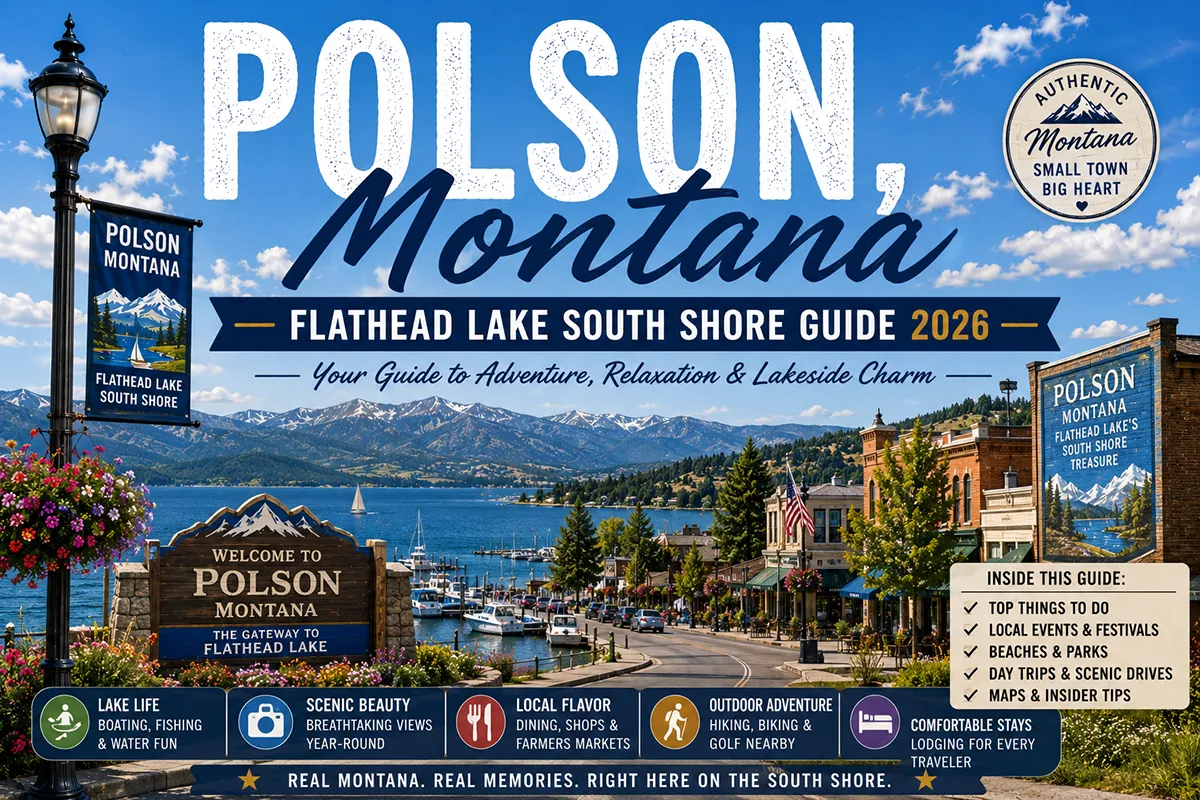
Most visitors treat Polson as the place Flathead Lake ends. For the Salish and Kootenai people, whose reservation holds the lake’s southern half, it is closer to the place the story starts.
TL;DR
- Polson (5,148 residents in the 2020 census) is the Lake County seat, on Flathead Lake’s south shore and inside the Flathead Indian Reservation, home of the Confederated Salish and Kootenai Tribes (CSKT).
- It is a highway town with a small lakeside core, not a polished village. Its strengths are lake access, the SKQ Dam, the Miracle of America Museum, cherry season and an easy day trip to the CSKT Bison Range.
- Summer (late June to early September) is the main season, with the Flathead Cherry Festival on Main Street in late July. May and September are quieter, and many attractions run shorter hours or close in winter.
- Polson works as a lake-and-culture base, particularly for travelers heading between Missoula and Glacier. It is a poor base for Glacier day trips.
Liked this article?
Add Roaming Montana as a preferred source so you see more of our articles and guides on Google.
Reading Polson Through Three Lenses
Polson is easiest to understand through three overlapping stories rather than a single list of attractions.
The first is the reservation. Polson sits on the Flathead Indian Reservation, set aside in the 1855 Treaty of Hellgate, and the CSKT bring together the Salish (Séliš), Kootenai (Ksanka) and Pend d’Oreille (Qlispé) peoples. Homesteading opened parts of the reservation to non-Native settlers after 1910, and the town grew from that.
The second is the dam. A hydroelectric project on the Flathead River, completed in 1938, raised Flathead Lake by ten feet and still controls its level. Since 2015, the Tribes own it.
The third is the cherry. The lake’s mild climate supports orchards, and fruit stands line the highways from midsummer.
This guide is organized around those three lenses, then covers the practical side: where to eat, where to stay and when to go. It sits within the larger picture of Montana cities and towns and pairs closely with the Bigfork guide on the lake’s opposite shore.
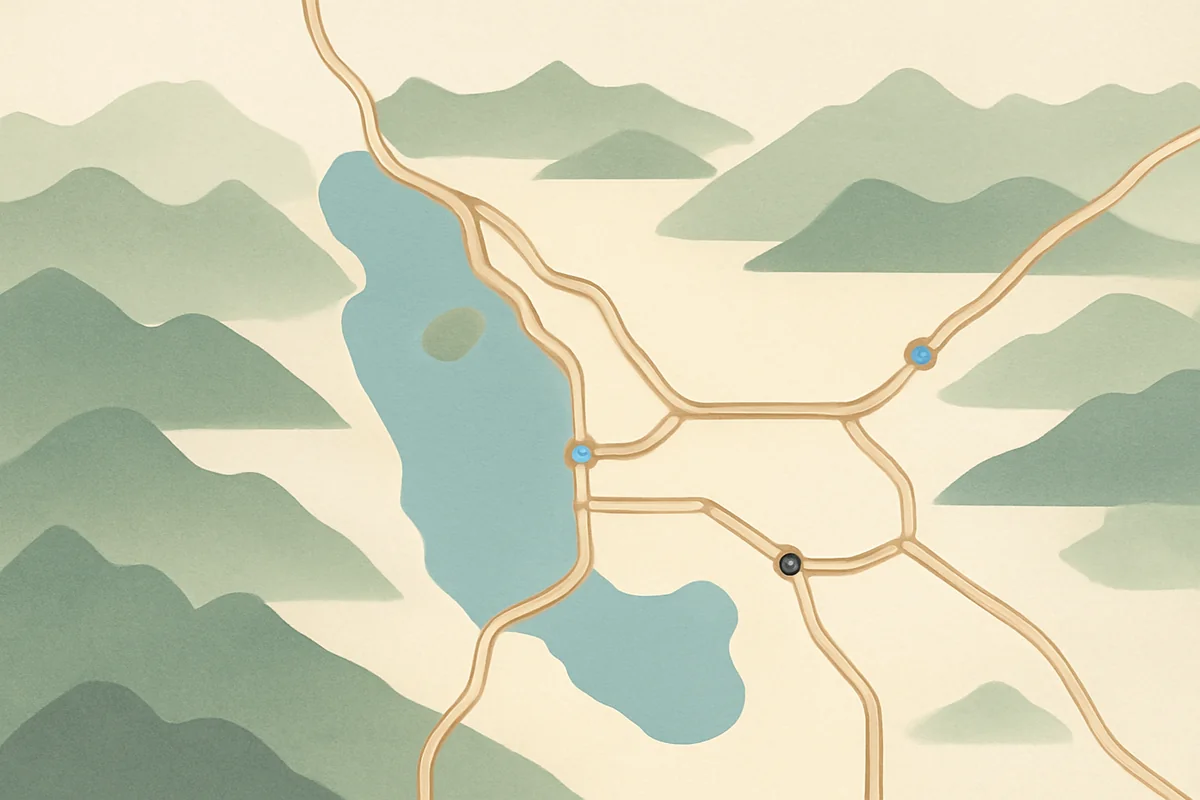
Polson by the Numbers
| Population | 5,148 (2020 census) |
| Elevation | About 3,030 feet |
| County | Lake County (county seat) |
| Named for | David Polson, pioneer rancher; named in 1898, incorporated 1910 |
| Land | On the Flathead Indian Reservation |
| Flathead Lake | About 197 square miles of surface; Polson is at the south end |
| SKQ Dam (formerly Kerr Dam) | About 7 miles south of Polson; completed 1938 |
| CSKT Bison Range (Moiese) | Roughly 30 minutes south |
| Missoula | About 70 miles; roughly an hour |
| Kalispell | About 50 miles; roughly 50 to 60 minutes |
| Bigfork | About 35 miles; roughly 45 minutes |
| Best for | Lake days, cherry season, Native history, road trips between Missoula and Glacier |
Whose Lake Is It? Polson and the Flathead Reservation
Flathead Lake is one of the first things Montana travel marketing mentions and one of the least explained. The south half of the lake lies inside the reservation, which means different rules from the east and west shores.
The Confederated Salish and Kootenai Tribes manage tribal lands and waters, and recreation on reservation waters can require a tribal permit or license. A tribal fishing license is required to fish on tribal waters, and boaters should check current permit rules before launching.
Several of Polson’s best-known places carry that context directly:
- KwaTaqNuk Resort and Casino is a tribally owned resort on the bay, with a marina and boat rental operation at the same address.
- The SKQ Dam is owned and operated by the Tribes through Energy Keepers, Inc.
- The CSKT Bison Range is managed by the Tribes (see below).
- The People’s Center in Pablo, about 15 minutes away, is owned and operated by the CSKT. It has a main exhibit room (“The First Sun, The Beginning”) opened in 1994, an oral history program and a gift shop selling work by local Native artists.
The honest framing is that many visitors never leave the lakeshore and never learn whose land they are standing on. Spending even half a day at the People’s Center changes how the rest of the area reads. For museum context across the state, see the best museums in Montana guide.
The Dam That Changed the Lake
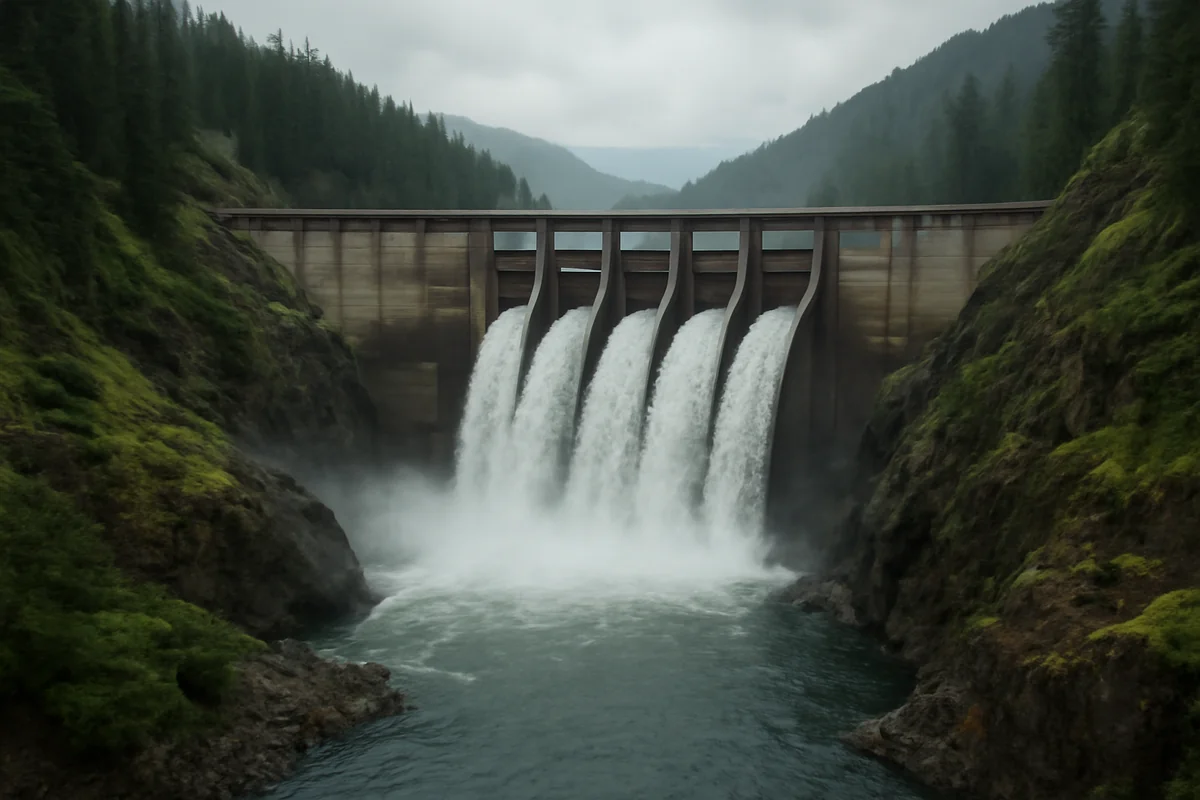
Seven miles south of town, the Séliš Ksanka Qlispé Dam (SKQ Dam) crosses the Flathead River. It was known for most of its life as Kerr Dam, after the president of the Montana Power Company. Construction began in 1930, halted in 1931 during the Depression, resumed in 1936 and finished in 1938. According to the Flathead Beacon, 14 lives were lost during the project. Tribal leaders opposed the original proposal.
The numbers are large. The concrete dam stands roughly 205 feet high and about 751 feet long, and it raised Flathead Lake by 10 feet, giving managers control over its level for power, irrigation and recreation. In September 2015, the CSKT paid about $18.2 million to buy the Kerr Hydroelectric Project from NorthWestern Energy, becoming the first tribal government to own and operate a major hydroelectric facility, with the project run by the tribally owned Energy Keepers, Inc. The dam was renamed at a ceremony on September 5, 2015.
For visitors, the dam is a viewpoint rather than an attraction. An observation area is open, and a staircase of more than 250 steps leads to a viewing platform. Spring snowmelt is the best time to see the spillways at work. Because the dam is a working power facility, follow posted restrictions.
Main Street and the South Shore
Wikivoyage notes that Polson’s businesses line the highway rather than a central downtown, and that is a fair description of the main commercial strip along US-93. The town’s walkable core is smaller than the map suggests: a few blocks near Main Street and the lakefront.
Sacajawea Park and Salish Point Park. Two lakefront parks at the northern edge of the commercial district, with grass, docks, picnic tables and a playground at Sacajawea. Salish Point Park adds a roped-off swimming area and a fishing dock. The Flathead Lake Festival of Art is held in Sacajawea Park each July, sponsored by Sandpiper Gallery.
Sandpiper Gallery. A cooperative gallery on Main Street run by local artists, selling jewelry, paintings and ceramics, with year-round workshops.
Polson Flathead Historical Museum. At 708 Main Street, open daily from mid-May through September. Exhibits cover reservation history and homesteading after 1910, a stagecoach and the original Lambert Trading Post (built in the 1870s), which now holds a gift shop. Combined tickets with the Miracle of America Museum have been offered.
Miracle of America Museum. At 36094 Memory Lane, a sprawling collection spread across dozens of buildings, with vintage vehicles, a turn-of-the-century schoolroom, and everything in between. Plan on at least a few hours. Listings put the admission around $5 and describe it as open daily with longer summer hours.
Polson Bay Golf Club. A 9-hole course on Bayview Drive.
Cherry Country: What the Calendar Actually Looks Like
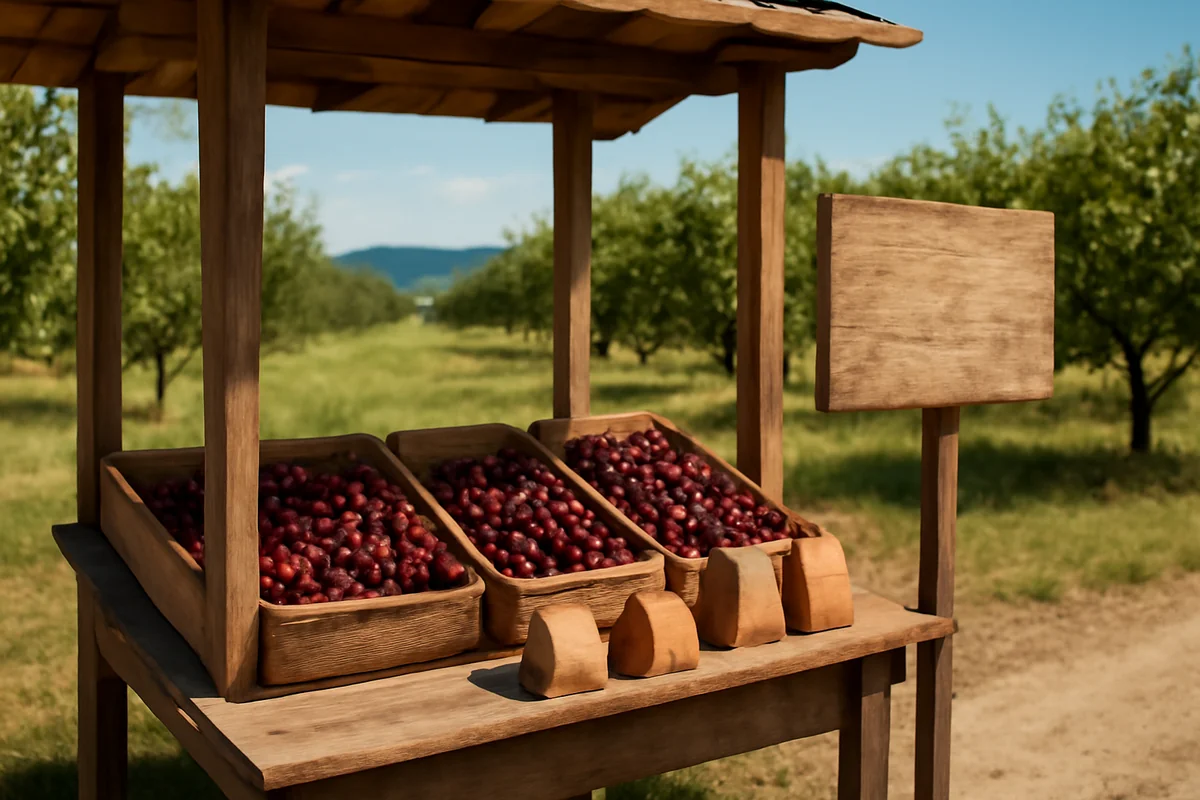
The Flathead cherry is the local brand, and the timing is more predictable than most Montana seasonal things. Travel sources describe the cherry peak as running from about the second week of July to the second week of August, with roadside stands and pick-your-own farms along the east shore.
The Flathead Cherry Festival takes over Main Street for a weekend in late July. The 2026 festival ran July 25 and 26 and included local vendors, cherry-themed food, a foodie competition, cherry pit spitting and chalk art contests. Confirm 2027 dates with the Polson Chamber or Glacier Country before booking.
A practical point: cherry season overlaps the busiest weeks for lodging, so book early if the festival matters. For wider timing across the state, see the best time to visit Montana guide.
South of Town: Pablo, Moiese and the Bison Range
The best half-day from Polson heads south on US-93.
Pablo. The People’s Center and Salish Kootenai College are in Pablo. See Pablo for more on the town.
Ronan and Charlo. Ronan sits farther south on the highway, and Charlo is home to the Ninepipes Museum of Early Montana (about $5 per Wikivoyage, with reduced winter hours). See the Ronan and Charlo guides.
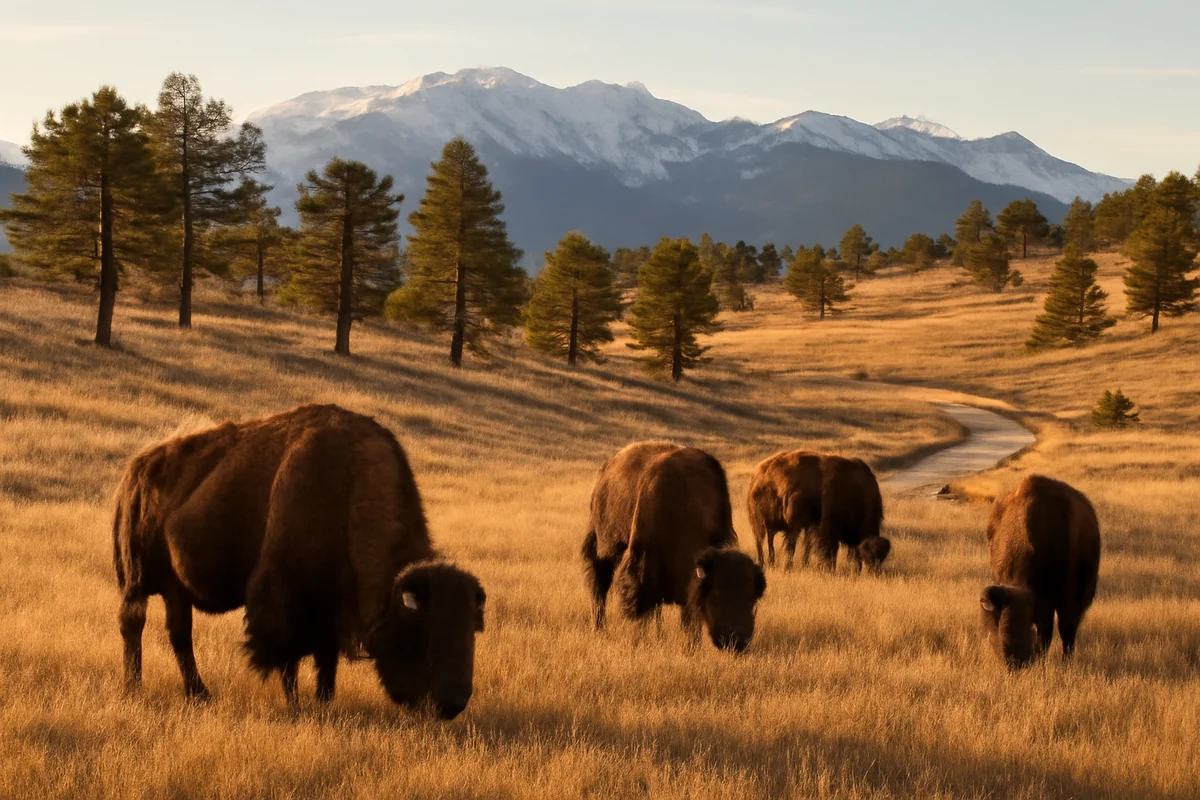
The CSKT Bison Range. Established in 1908 as the National Bison Range, the refuge passed to the CSKT in 2022 after the land was placed into trust for the Tribes in 2021. Many travel sites still use the old name. Sources give its size as roughly 18,500 to 18,800 acres. The grounds are open daily from dawn to dusk, and the visitor center has been listed as open from 9 a.m. to 5 p.m. daily from May through October. Gravel roads, including Red Sleep Mountain Drive, which reopens each May, reach viewing areas. The herd numbers about 350 adult bison, and elk, bighorn sheep, pronghorn, black bear and more than 200 bird species have been recorded. The Bison Range’s herd traces to a famous tribal story involving the Pend d’Oreille and the Pablo-Allard herd. See the Bison Range page for context.
Plan on gravel-road driving, carry water and keep a safe distance from bison.
On the Water: Rentals, State Park Units and Wild Horse Island
Rentals. Boat rentals including powerboats, pontoons, personal watercraft, kayaks and paddleboards are available from operators on the south shore, including at KwaTaqNuk.
Flathead Lake State Park units. The park is divided into several units, each with a public boat ramp. Finley Point (about 12 miles east of Polson) and Big Arm (about 14 miles west, with 40 campsites and a pebble beach) are the best known near Polson. Yellow Bay, Wayfarers and West Shore are smaller. See the Montana state parks guide for context.
Wild Horse Island. The largest island in Flathead Lake, at about 2,164 acres, protected as a state park since 1977, with bighorn sheep, mule deer, bald eagles and a few wild horses. Access is by boat only and for day use only. There is no public ferry, so the options are a private boat or a shuttle; Boat Rentals and Rides in Big Arm and guided kayak trips from Lakeside have been named in travel sources. The island is part of the story of the Salish and Kootenai, who pastured horses there for generations. Wild Horse Island is closer to Big Arm and Lakeside than to Polson; those towns are covered in the Lakeside guide.
Water reality. Flathead Lake is cold even in July, and wind can build quickly in the afternoon. Check the forecast before heading out on small craft.
Where to Eat
Polson’s food scene is casual and regional.
- Barbecue: Cherries BBQ Pit is known for cherry-wood-smoked pulled pork with multiple sauces, and travel sources note that the menu can sell out, so arrive early.
- Diner: Betty’s Diner (49779 US-93), a 1950s-style diner open daily.
- Beer: Glacier Brewing Company Taproom, known for a Flathead cherry ale, has been listed as open Tuesday through Saturday in the late afternoon and evening.
- East shore: East Shore Smoke House (35103 MT Hwy 35) and Finley Point Grill appear in travel coverage.
- Quick bites: The Cove Pizza and Deli and Mrs. Wonderful’s Cafe appear regularly in listings.
Hours shrink in the off-season, so call ahead between November and April.
Where to Stay, by the Kind of Trip
On the water. KwaTaqNuk Resort and Casino is the lakefront anchor, a tribally owned resort with a marina. Some guest reviews have mentioned renovation noise, so check recent reviews.
Chain-style convenience. Red Lion Inn and Suites (Ridgewater) and Americas Best Value Port Polson Inn are the main roadside options, both with breakfast listed.
Quiet and simple. Flathead Lake Inn of Polson (125 Anchor Way) offers continental breakfast.
Camping. The Polson / Flathead Lake KOA (200 Irvine Flats Road) and the Flathead Lake State Park units are the main choices. Big Arm and Finley Point have the largest campgrounds.
Rentals. Lakefront cabins and vacation homes are common around the south and west shores. Read recent reviews closely and check the distance to services.
Price reality. Fixed nightly price bands and “20 to 40 percent cheaper than Bigfork or Whitefish” claims circulate online without sources. Treat them with caution: check live rates for the exact dates, because July and August can narrow the gap.
Polson, Bigfork or Whitefish?
| If you want… | Choose |
|---|---|
| Native history, a working dam, the Bison Range and cherry stands | Polson |
| Galleries, summer theater and a walkable village | Bigfork |
| Skiing, Glacier access and a lively downtown | Whitefish |
| The widest lodging range and the airport | Kalispell |
| A midpoint between Missoula and Glacier | Polson |
Polson will disappoint a visitor expecting a resort village. It suits travelers who want the lake’s southern half, tribal history and a more everyday Montana feel.
Polson Through the Seasons
Winter (December to March). Quiet. Some attractions close or reduce hours, including the Historical Museum, and the People’s Center and Ninepipes keep limited hours. The lake typically does not freeze at Polson in most years, but never assume ice is safe.
Spring (April to May). Mud season and a good time for the dam’s spillways during snowmelt. Red Sleep Mountain Drive at the Bison Range reopens in May.
Summer (June to August). The peak. Lake days, the Flathead Lake Festival of Art in July, the Cherry Festival in late July and the busiest lodging. See the Montana bug season guide for mosquito timing.
Fall (September to October). A quiet and pleasant window, with wintry conditions possible by late October. Some businesses begin to shorten hours after Labor Day.
Getting There and Getting Around
Polson sits on US-93, about an hour north of Missoula via I-90 exit 96 and about an hour south of Kalispell. The nearest commercial airports are Missoula and Glacier Park International in Kalispell; see the Montana airports guide. Polson Airport, about a mile west of town, is general aviation. A car is effectively required: businesses are spread along the highway, and the best day trips are by road. A bicycle can work in the lakefront core.
Insider Tips: What Visitors Wish They Knew
- Check tribal permit rules before boating or fishing. The south half of the lake is within the reservation.
- Use the current name. Travel sites still say “National Bison Range”; the CSKT Bison Range is the current name.
- Go early to Cherries BBQ Pit. Travel coverage notes the menu can sell out.
- Treat Wild Horse Island as a planned trip. It is boat-only and day-use-only, and Big Arm or Lakeside are closer launch points.
- Use the People’s Center to understand the area. It is run by the Tribes and gives context the lakeshore does not.
- Book early for the cherry weekend. Lodging tightens in late July.
- Do not plan a Glacier day trip from Polson. The park is much farther than from Whitefish.
Practical Info
| Best seasons | Late June to early September for lake, cherries and attractions; May and September for quiet |
| Getting there | US-93; about an hour from Missoula and Kalispell; fly into Missoula or Glacier Park International |
| Getting around | A car is essentially required |
| Tribal permits | Verify current CSKT recreation and fishing permit rules |
| Entry fees | Miracle of America Museum:; Historical Museum:; Bison Range:; state parks: |
| Difficulty | Easy waterfront walks to gravel-road wildlife drives |
| What to bring | Layers, swimsuit, sun protection, insect repellent, bear spray for backcountry, binoculars for the Bison Range |
| Cell service | Generally fine in town; patchy on parts of the Bison Range and lake shores |
| Nearby | Flathead Lake, SKQ Dam, Pablo, Ronan, Charlo, Bison Range, Bigfork, Kalispell, Missoula |
Frequently Asked Questions
Is Polson, Montana worth visiting?
Yes, for the lake’s southern half, tribal history and culture, and cherry season. It is a weaker fit for visitors seeking a polished resort village.
Is Polson on the Flathead Indian Reservation?
Yes. The town is inside the reservation, home of the Confederated Salish and Kootenai Tribes.
What is the SKQ Dam?
The Séliš Ksanka Qlispé Dam, formerly Kerr Dam, completed in 1938 and owned by the Tribes since 2015.
When is the Flathead Cherry Festival?
Late July on Main Street in Polson. The 2026 festival was July 25 and 26; confirm 2027 dates before planning.
How far is Polson from Missoula, Kalispell and Glacier?
Missoula is about 70 miles and Kalispell about 50 miles, each roughly an hour. Glacier’s West Entrance is farther, and the drive is longer than from Whitefish.
Can visitors go to Wild Horse Island from Polson?
By boat only. There is no public ferry from Polson, and shuttle and guided options leave from towns such as Big Arm and Lakeside.
Is the Bison Range still the National Bison Range?
No. It is now the CSKT Bison Range, managed by the Tribes since 2022.
Final Thoughts
Polson rewards travelers who slow down enough to see the lake, the dam and the reservation as one story. It is a good base for lake days, a good stop on a Missoula-to-Glacier route and an easy way to add Native history to a Montana trip. For travelers still building an itinerary, the Montana cities and towns guide shows how Polson compares with the rest of the state.
Pin this guide for trip planning, and leave questions in the comments about whether Polson, Bigfork or Whitefish fits a trip.
Sources and Official Links
- Polson, Montana, Wikipedia
- SKQ Dam, Wikipedia
- CSKT Prepares for Historic Acquisition of Kerr Dam, Flathead Beacon
- CSKT Bison Range, Wikipedia
- CSKT Bison Range, Glacier Country Montana
- Flathead Lake, Wikipedia
- Wild Horse Island, Wikipedia
- The People’s Center
- 10 Top-Rated Things to Do in Polson, PlanetWare
- Things to do in Polson, Travel Montana Now
- Polson, Wikivoyage (mirror)
- Flathead Cherry Festival 2026, Glacier Country Montana