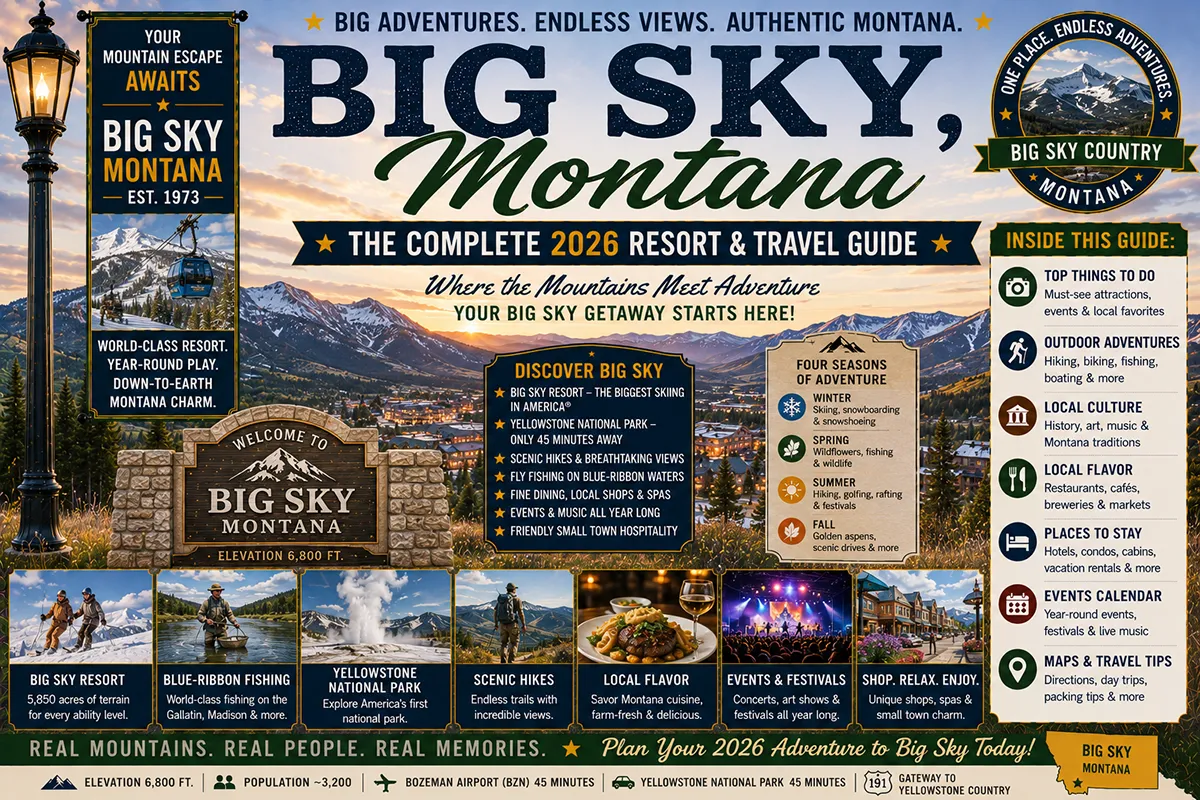
Big Sky, Montana, covers about 120 square miles, has no mayor, and is still not technically a town, which explains why first-time visitors so often book the wrong base.
TL;DR
- Big Sky is an unincorporated community in the Madison Range, roughly 45 miles south of Bozeman and 45 miles north of West Yellowstone on US-191. Its 2020 census count was 3,591 residents.
- It is four separate places: the canyon along the Gallatin River, Meadow Village and Town Center, the Mountain Village at the foot of Lone Mountain, and the private and semi-private enclaves such as Moonlight Basin and the Yellowstone Club.
- Skiing at Big Sky Resort (about 5,850 acres and an 11,166-foot summit) is the main draw, but summer hiking, rafting, and Yellowstone day trips are why many visitors return.
- The most useful decision a visitor makes is which base to choose, followed by how to reach it in winter.
Liked this article?
Add Roaming Montana as a preferred source so you see more of our articles and guides on Google.
A Place That Was Planned, Not Platted
Most Montana towns appeared because of a railroad, a mine, or a river crossing. Big Sky was designed. In the late 1960s, newscaster Chet Huntley, who had retired from NBC’s Huntley-Brinkley Report, set out to build a resort in the state where he had grown up. The resort opened in late 1973, and Huntley died in March 1974, shortly before its formal dedication.
That origin shapes everything a visitor sees. The layout was drawn around a mountain and a golf-and-meadow village, not a main street. There is no courthouse square, no historic downtown, and no single place called “the center” that everyone agrees on. A first look at a map can feel disorienting for exactly that reason.
This guide explains how Big Sky actually works: where its four parts sit, what happened here before the resort, what each season offers, and how the community has changed from a ski-area outpost into a place with a serious housing problem. It sits alongside the other entries in the Montana cities and towns guide, though it is the most resort-driven of them.
Big Sky in Numbers
- Population: 1,221 in 2000, 2,308 in 2010, and 3,591 in 2020, an increase of about 56 percent in the last decade. A different estimate method, the American Community Survey, put the 2020 figure near 3,054, so the number depends on the source.
- Area: about 120 square miles, mostly in Gallatin County with a western edge in Madison County.
- Elevation: about 6,900 feet in the community, with the Meadow area near 6,200 and the Mountain area near 7,400. The Lone Mountain summit is 11,166 feet.
- Status: a census-designated place with ZIP code 59716. It is not incorporated.
- Visitors: Many pages repeat a figure of 20,000 or more people in town during peak season. No source for that number was found, so it should not be quoted without a citation.
What Was Here Before the Resort
The canyon was a travel corridor and a ranching landscape long before skis arrived.
Homesteads and dude ranches
Around 1906, ranchers along the Gallatin, including Tom Michener and Sam Wilson, began hosting Yellowstone-bound travelers as dude ranch guests and coordinated their rates. A week’s stay, with a cabin and ranch chores, reportedly cost $12, plus $6 for a horse. Wilson’s Buffalo Horn Ranch is today’s 320 Guest Ranch. The Dew Drop Inn became the Half Way Inn in 1919 and is now Rainbow Ranch. The B Bar K, bought by Julius Butler and Don Kilbourne in 1926, grew into Lone Mountain Ranch, which remains a Nordic skiing and summer destination.
The Crail Ranch
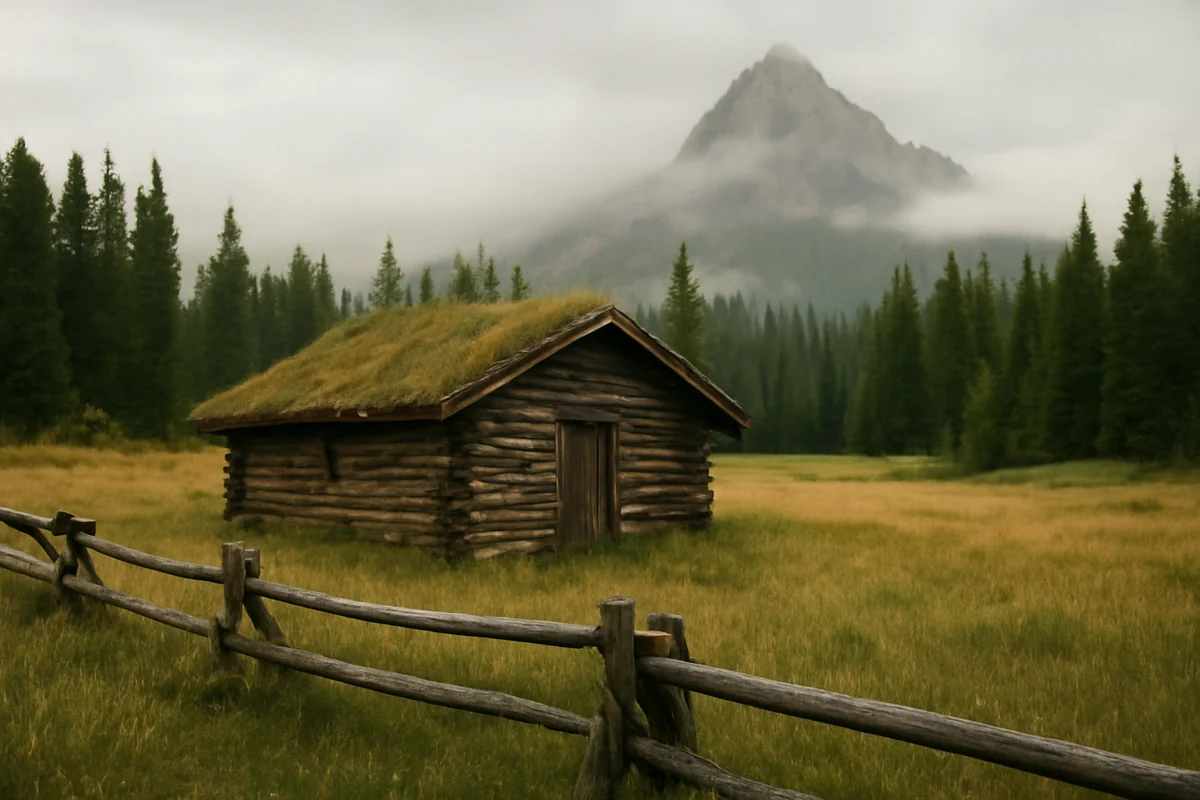
The best surviving glimpse of that era is the Crail Ranch. Augustus Crail bought a 160-acre homestead in December 1901 for $150, and his family moved in during spring 1902. At its peak the ranch had as many as ten buildings, including a forge and a sawmill. Two original log structures remain, and the property is run as a museum by volunteers with the Big Sky Community Organization.
In the late 1960s, Huntley’s investor group bought the ranch, and workers building the resort lived in the old buildings during the early 1970s. A fire nearly destroyed the small cabin, and its scars are still visible.
Four Places, One Name
The most useful way to understand Big Sky is to treat it as four neighborhoods with different jobs.
The Gallatin Canyon corridor
US-191 follows the Gallatin River through the canyon between the Madison and Gallatin ranges. This is where most visitors first arrive, and it holds river access, rafting outfitters, trailheads such as Lava Lake and Storm Castle, and a few long-established lodges. Elevation here drops to about 5,900 feet at the lowest point. This stretch is also the weakest link in winter driving.
Meadow Village and Town Center
Meadow Village is the older residential and golf area. Town Center, at the corner of Ousel Falls Road and Lone Mountain Trail, is the newer commercial hub. Master developer Simkins Holdings began working on development rights in the late 1990s, and the first infrastructure projects were completed in 2001. It now has restaurants, grocery stores, a medical clinic, a theater, a community center, an ice rink, and an electric-vehicle charging station.
Seasonal programming runs on a predictable calendar: a farmers market on Wednesdays from June through September and free live music on Thursdays from June through August. Town Center is also where the Park & Ride lot sits, with a free shuttle to the resort bases.
Mountain Village
Mountain Village sits at the base of Lone Mountain, roughly seven to nine miles uphill from Town Center on MT-64. It holds the ski-in lodging, the main lift base, and most of the après scene. It is also the most expensive and the most seasonal part of Big Sky.
Moonlight Basin, Spanish Peaks, and the Yellowstone Club
Moonlight Basin was a separate resort on the northern side of Lone Mountain until October 2013, when it merged with Big Sky Resort. Spanish Peaks, a private club, was folded into the resort’s lift network the same year. The Yellowstone Club, a private residential ski community adjacent to the resort, remains closed to the public.
For travelers, the practical result is that “Big Sky” on a booking site can mean any of these places. A listing marketed as ski-in may be miles from Town Center and unreachable on foot.
Choosing a Base
| If the priority is… | Likely best base | Trade-off |
|---|---|---|
| Walking to lifts | Mountain Village | Highest costs, fewest services |
| Groceries, restaurants, summer events | Town Center / Meadow Village | Needs a shuttle or car to reach the lifts |
| A quiet, river-focused trip | Gallatin Canyon lodging | More driving; weather-exposed in winter |
| A group renting a house | Meadow Village area | Check shuttle routes and parking rules |
| Budget flexibility | Bozeman or Belgrade | Longer daily drive; see the Bozeman guide and the Belgrade guide |
Current lodging rates change by season and event, so any quoted nightly price should be checked before booking. For campers and RV travelers, the Big Sky RV parks guide covers a different set of options.
Skiing Lone Mountain
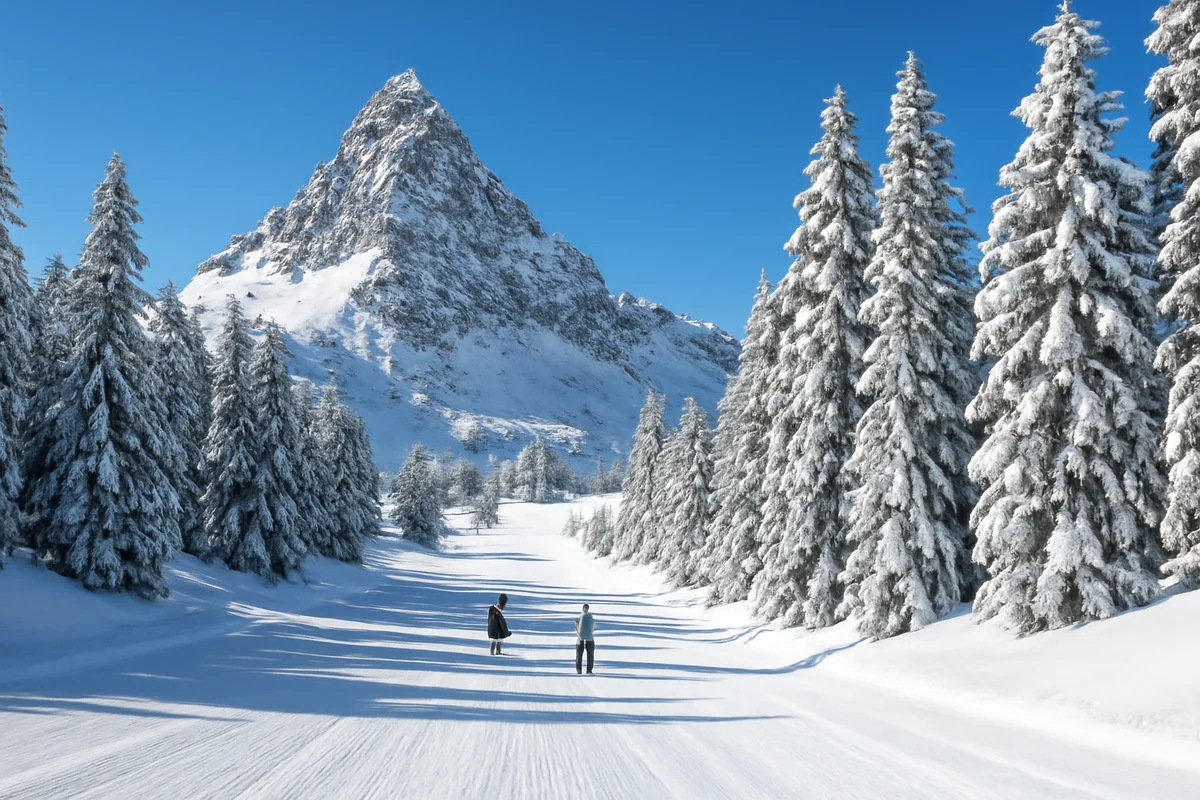
Big Sky Resort is the reason for the town’s existence, and its numbers are large. The resort lists roughly 5,850 skiable acres, a vertical drop of 4,350 feet, a summit of 11,166 feet, and more than 320 trails. Lift counts vary by source, with one reference listing about 40 lifts.
What the lifts reveal
The lift history doubles as a timeline of how the mountain grew:
- 1973: the resort opens with four lifts, including the first gondola.
- 1995: the Lone Peak Tram is built, opening the steep terrain at the summit. A replacement tram was announced in 2022.
- 1996: Swift Current replaces the second gondola.
- 2013: the Moonlight Basin and Spanish Peaks merger adds terrain on the northern side of Lone Mountain.
- 2018: Ramcharger 8 opens as what the resort called North America’s first eight-person chairlift.
How to read the “biggest” claim
Many pages state that Big Sky has the most skiable acres in the United States. Resort marketing uses that language, but no independent ranking was found, so a safer phrase is “one of the largest ski areas in the country”.
Nordic and other winter options
Lone Mountain Ranch runs a Nordic network of 75 kilometers or more of groomed trails. The Town Center trail system is maintained for snowshoeing and cross-country skiing in winter. For a comparison with other resorts across the state, see the Montana ski resorts guide.
Summer in Big Sky
Summer reframes the place. The lifts and tram close or run limited schedules, and attention shifts to trails, rivers, and Yellowstone.
Ousel Falls and the trail system
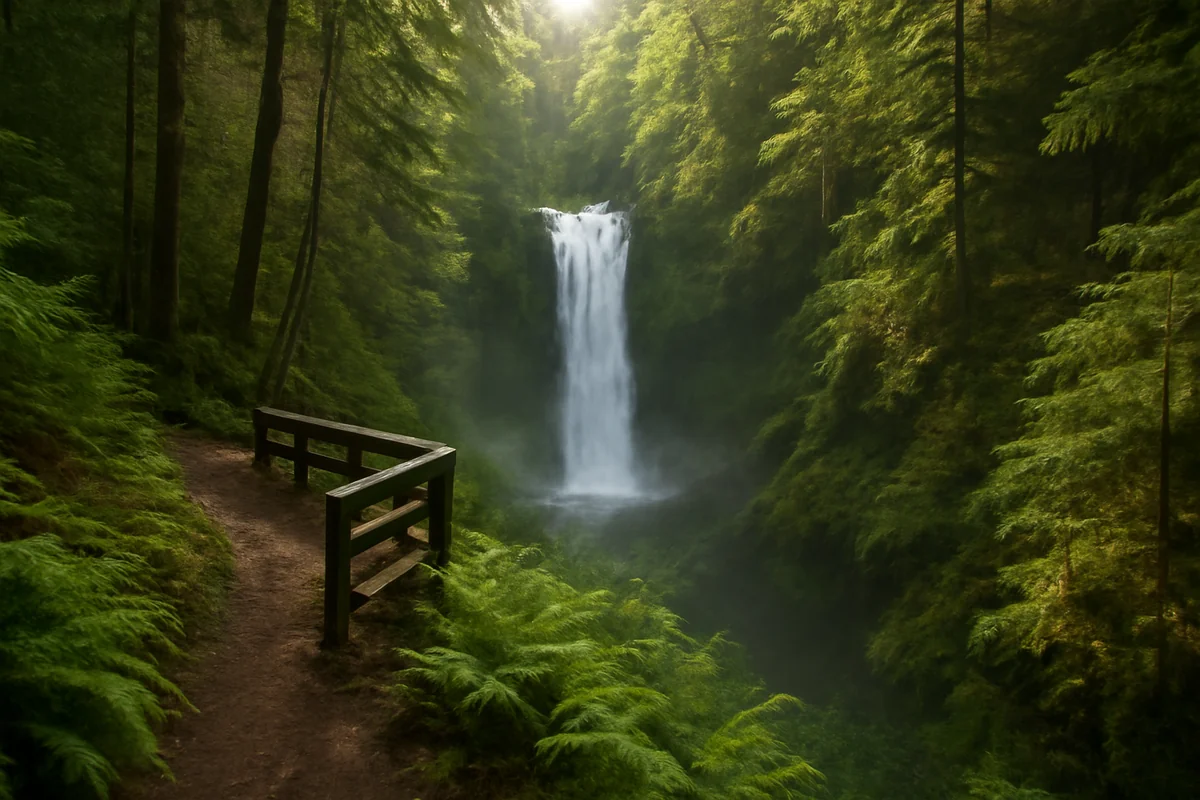
The Ousel Falls Trail begins in Town Center and is maintained year-round. A local trail description lists a total gain of 265 feet and describes the route as easy. The distance is easy to misquote: one source measures the trail as two miles one way to the open-space park, while the waterfall itself is reported as an additional 0.8 miles from the trailhead. The trailhead has parking, a restroom, and picnic tables. A longer guide to the falls is in the Ousel Falls hike post, and other waterfalls across the state are in the Montana waterfalls guide.
Lava Lake, Beehive Basin, and bigger hikes
The canyon holds higher-effort trails, including Lava Lake near the Gallatin River and Beehive Basin toward the Spanish Peaks. Trail lengths and trailheads vary by source, so a current map or BSCO resource should confirm distances before an outing. Bear awareness matters on every trail here; see the Montana bear guide.
The Gallatin River
Rafting outfitters run trips on the canyon rapids, and anglers fish the river from pullouts along US-191. The Gallatin is the best-known trout stream in the area, and rapid classes and fishing conditions change with runoff. For other rivers, see the best rivers in Montana guide.
Mountain biking and the lifts in summer
Mountain biking at the resort has expanded, with the resort listing more than 40 miles of trails as of 2014. Lift operations in summer are limited, so scenic-ride and tram schedules should be confirmed first.
Yellowstone From Big Sky
The Yellowstone connection is a major reason travelers pick Big Sky over a Bozeman hotel. West Yellowstone is about 45 miles south on US-191, and the West Entrance sits there. Studies cited by the local resort-tax board say about 45 percent of Yellowstone visitors enter through the West Entrance.
A day trip works, but it is long. Old Faithful lies well inside the park beyond the West Entrance, and summer traffic and wildlife jams slow the route. Anyone aiming for the northern end of the park should note that Gardiner is much farther than a quick day-trip: the route goes back through Bozeman and Livingston, and several pages understate the distance. See the West Yellowstone guide, the Gardiner guide, and the Yellowstone National Park guide.
Wildlife-focused travelers can add the Lamar Valley and Yellowstone wolf watching posts to a longer plan.
Getting There and Getting Around
The drive from Bozeman
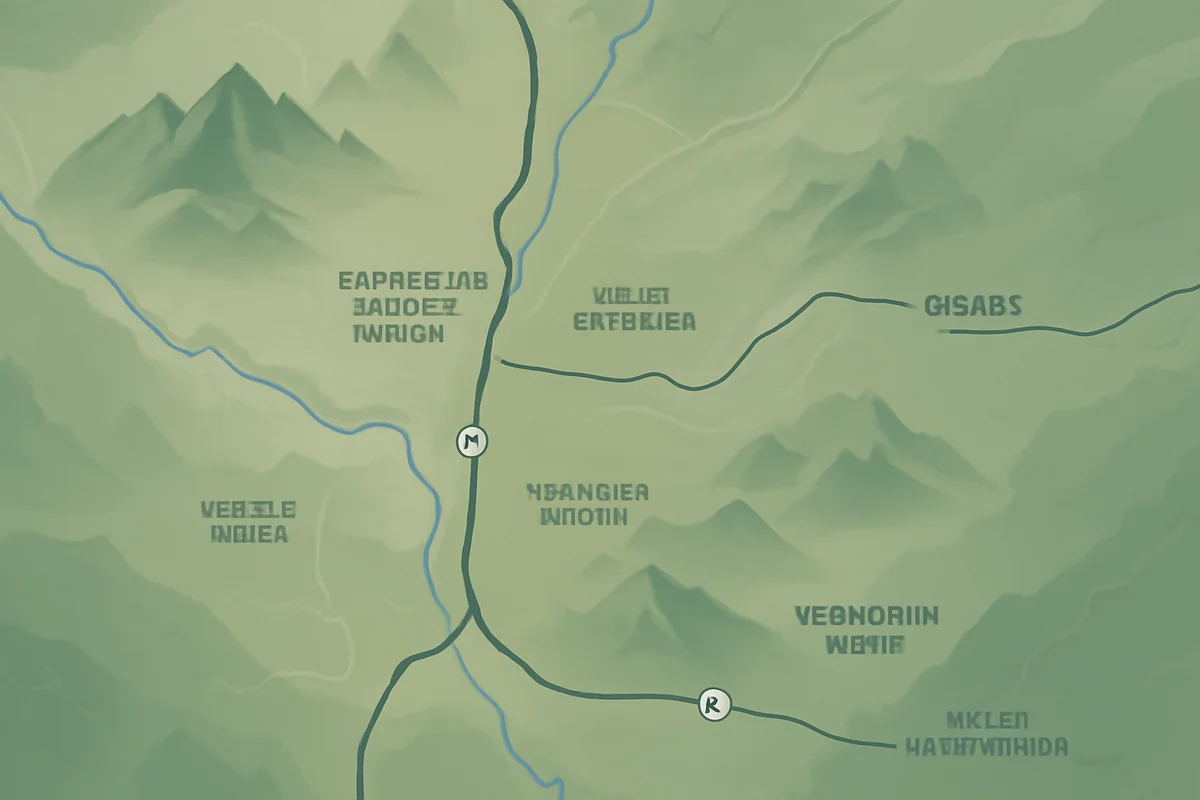
From Bozeman, the route follows US-191 south for about 45 miles through the Gallatin Canyon, then climbs about nine miles on MT-64 to the Mountain Village. It takes about an hour in good conditions. Town Center sits on the way and is a quicker stop.
Airport and buses
Bozeman Yellowstone International Airport is the nearest commercial airport, and the town center site lists a trip of under 45 minutes from there. The Skyline Bus runs to Town Center for $5, about an hour and a half. Private shuttles offer door-to-door service at a higher cost. See the Montana airports guide and the Montana without a car post.
Winter driving
Snow, ice, and reduced visibility are common from November through March, and storms can arrive as late as May. Chains or all-wheel drive are advisable, and extra time is wise on weekends. The canyon has little room for error, so the Montana winter driving guide is worth reading before an early-season trip. Wildlife, including elk and moose, uses the corridor, especially at dawn and dusk.
Moving around once there
Town Center’s Park & Ride lot connects to the resort bases by free shuttle. Without a car, the shuttle plus the Skyline Bus covers the main routes, though trailheads and canyon stops need a vehicle.
The Cost of a Resort Town
Big Sky’s economy is built around tourism, and the numbers show the strain.
Housing is the central tension. The Big Sky Community Housing Trust has reported a median single-family home price of about $2.6 million and a median condo price near $875,000. A 2020 resort-tax profile found 3,504 housing units and a 57 percent vacancy rate, which points to a large second-home market, and it estimated that about two-thirds of the workforce commuted in from outside the community.
The community has responded with a tax. The resort tax rose from 3 percent to 4 percent in July 2020, with part of the revenue reserved for infrastructure. In October 2026, ground was broken on Cold Smoke, a 389-home workforce-housing project on 99 acres off MT-64 near Meadow Village, with 264 multifamily homes and 125 single-family homes. Resort Tax bonded just under $58 million for the project after a 2025 community vote, and the first phase is expected in spring 2028.
For a visitor, this explains why service can be thin at shoulder-season restaurants and why many employees live in Gallatin Gateway or Bozeman. For people considering a move, the broader picture is in the Montana cost of living guide.
Season by Season
Winter (December to March) is peak season for lodging and lift lines, with the best snow typically in the middle of the season. Conditions vary by year, so published snowfall averages should be checked against the resort’s own records. See Montana in January, February, and March.
Spring (April and May) is a transitional lull. Lifts close, some restaurants shut, and roads can still turn wintery. Rates are generally lower, but services are limited.
Summer (June to August) brings hiking, rafting, the farmers market, and outdoor music. See Montana in July and plan around the Montana bug season guide for early summer.
Fall (September and October) brings cooler weather and fewer crowds, with some businesses closing for the offseason. See Montana in September and Montana in October. For statewide timing, see best time to visit Montana.
Insider Notes for Visitors
- Ask which “Big Sky” a listing means. Moonlight Basin, Meadow Village, and the canyon can all be marketed under the same name.
- Check the distance to the lifts, not just the name. A listing “in Big Sky” may sit seven miles or more from the Mountain Village.
- Plan food around the calendar. Shoulder seasons close restaurants, so confirm hours before relying on a specific place.
- Do not rely on cell service in the canyon. Download offline maps before leaving Bozeman.
- Start the drive early on winter Fridays. The canyon road backs up and has little passing room.
- Treat the “20,000 in season” figure with caution. It appears widely but without a source.
- Respect private land. The Yellowstone Club and other enclaves are not open to the public.
Practical Info at a Glance
Big Sky Quick Reference
| Best season | Late December to March for skiing; July to September for hiking and rafting |
| How to get there | US-191 from Bozeman, then MT-64 to Mountain Village; Bozeman Yellowstone International Airport is nearest |
| Distance | About 45 miles from Bozeman; about 45 miles from West Yellowstone |
| Ski resort stats | About 5,850 acres, 4,350 ft vertical, 11,166 ft summit |
| Ousel Falls | Trailhead in Town Center; easy; confirm distance on site signs |
| Lodging | Mountain Village, Meadow Village, canyon lodges; check rates |
| What to bring | Layers, chains or AWD in winter, bear spray in summer, offline maps |
| Nearby | West Yellowstone, Bozeman, Belgrade, Gardiner, Yellowstone National Park |
Common Questions About Big Sky, Montana
Is Big Sky a town? Not legally. It is an unincorporated, census-designated place covering about 120 square miles.
How far is Big Sky from Bozeman? About 45 miles, or about an hour to Mountain Village in good conditions.
How far is Big Sky from West Yellowstone? About 45 miles south on US-191.
What is the difference between Meadow Village and Mountain Village? Meadow Village and Town Center hold the community’s shops and residences; Mountain Village sits at the foot of Lone Mountain with ski-in lodging.
Who founded Big Sky? Retired newscaster Chet Huntley led the effort that produced the resort, which opened in late 1973.
Is Big Sky worth visiting in summer? Yes, for hiking, rafting, and Yellowstone access, though lifts run on limited schedules.
A Resort That Became a Community
Big Sky began as a plan on a map and is still working out what kind of place it wants to be. The old ranch cabins at Crail Ranch, the lift towers on Lone Mountain, and a housing project breaking ground in October 2026 all belong to the same story.
For the next stop on a bigger itinerary, browse the full Montana cities and towns guide, and pin this post for trip planning. Questions about choosing a base in Big Sky go in the comments below.