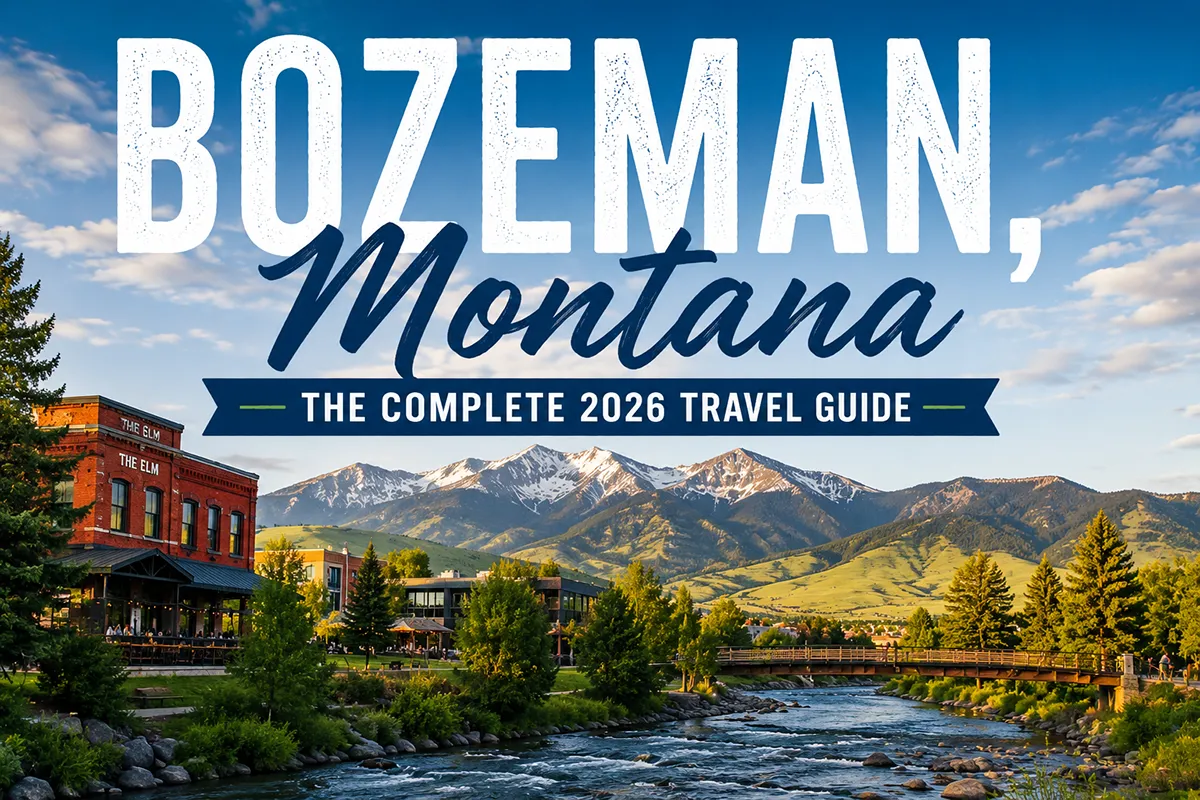
I first visited Bozeman in 2014. I came back in 2018 and didn’t recognize half the downtown. I came back in 2022 and didn’t recognize the price of dinner.
Bozeman has gone through one of the most dramatic transformations of any small American city this century — and it’s still the easiest, most enjoyable basecamp for a serious Montana trip.
TL;DR
- Bozeman is the fastest-growing major city in Montana, with population growth of ~49% between 2010 and 2020. It’s now a genuine cultural and culinary hub of ~57,000 people.
- It’s the most accessible Montana city for out-of-state visitors — Bozeman Yellowstone International Airport (BZN) has direct flights from 20+ cities.
- Best base for: Yellowstone (90 min to Gardiner), fly fishing (Madison, Gallatin, Yellowstone rivers), skiing (Bridger Bowl + Big Sky), and a city-feeling weekend in Montana.
- Downtown Main Street is the food, brewery, and shopping core. The Museum of the Rockies is one of the best dinosaur museums in the country.
- Expensive by Montana standards. Plan accordingly.
Liked this article?
Add Roaming Montana as a preferred source so you see more of our articles and guides on Google.
Bozeman at a Glance
| Population (2020) | ~57,000 (fastest-growing in MT) |
|---|---|
| County | Gallatin County |
| Region | South-Central Montana (Yellowstone Country) |
| Elevation | 4,820 ft |
| Airport | Bozeman Yellowstone International (BZN) |
| University | Montana State University (~17,000 students) |
| Distance to Yellowstone North Entrance | ~85 miles (1.5 hours) |
| Best for | Yellowstone trips, skiing, fly fishing, urban Montana |
What Makes Bozeman Different
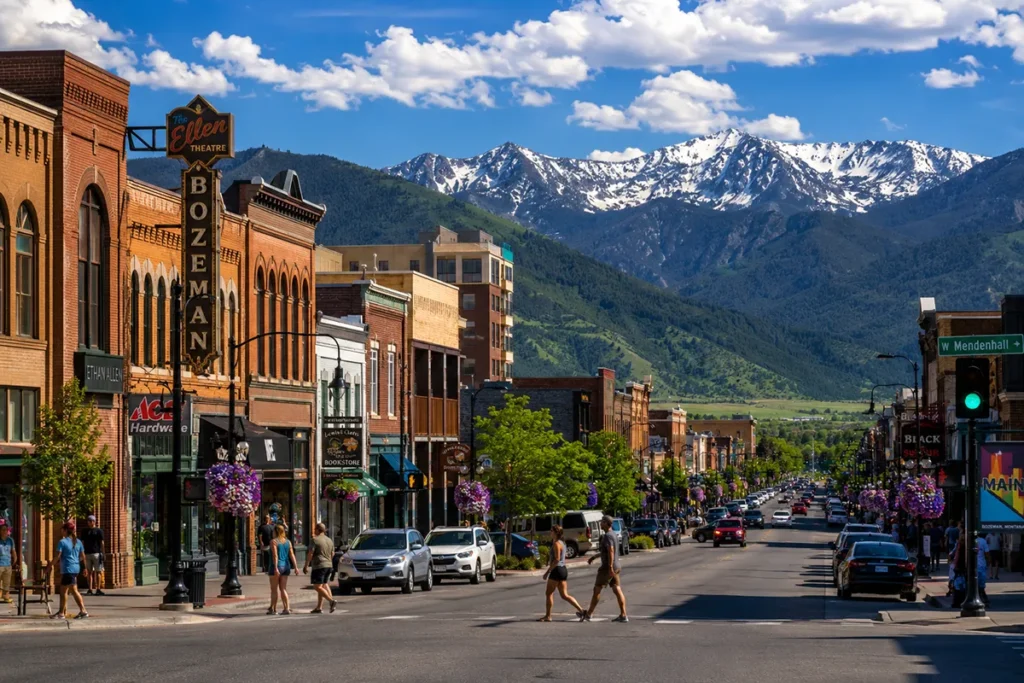
Bozeman is what happens when remote workers, tech founders, and outdoor enthusiasts decide a college town with mountain access should also have French bistros, sushi, and a Kimpton hotel. Some locals love it. Some grumble that it’s lost its character. Both can be true.
The population grew almost 50% in a decade. Real estate prices doubled. The dining scene now competes with cities ten times its size.
Yet Main Street still looks like a Western college town, the Bridger Mountains still dominate the skyline, and within 90 minutes you can be in Lamar Valley watching bison or floating the Madison River.
For trip planning across the state, see my full Montana cities and towns hub.
The Top 10 Things to Do in Bozeman
1. Museum of the Rockies
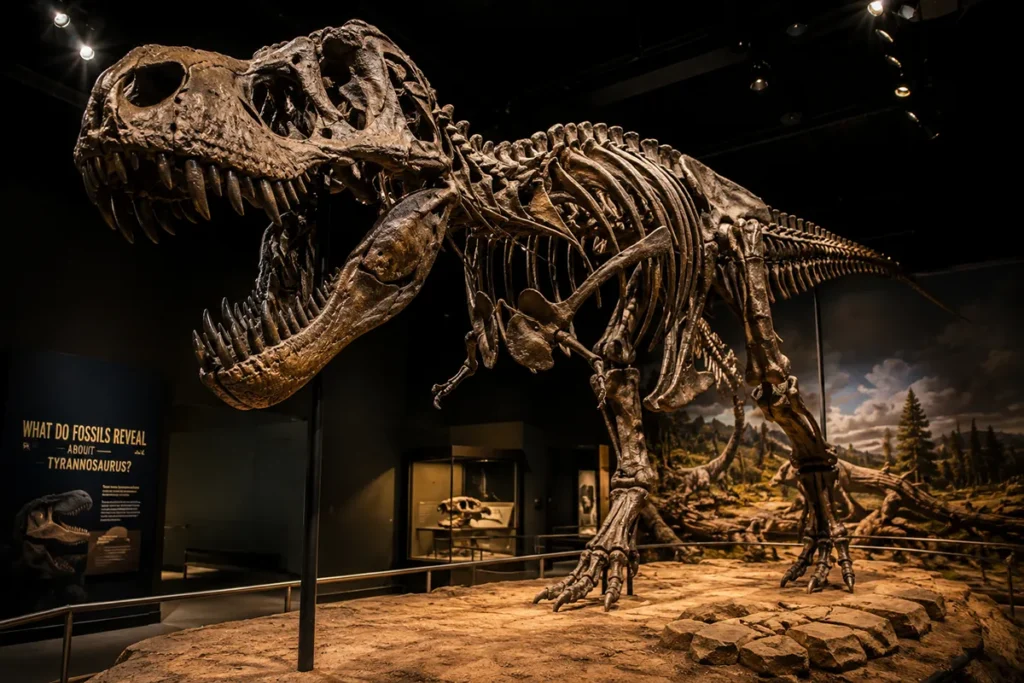
One of the world’s best dinosaur museums, with a permanent collection assembled largely by paleontologist Jack Horner (the consultant for Jurassic Park). The T. rex skeletons are extraordinary; the regional history wing and planetarium are excellent supporting attractions. Plan 2–3 hours minimum.
2. Walk Downtown Main Street
The compact downtown core (roughly Babcock to Mendenhall, with Main Street as the spine) is genuinely walkable, with independent bookstores, outdoor-gear shops, breweries, and restaurants packed shoulder-to-shoulder. Country Bookshelf and Vargo’s Jazz City & Books are both worth visiting.
3. Hike the M Trail
A short, steep hike from the trailhead at Bridger Canyon Road climbing to the giant white “M” on the hillside above town. About 1.5 miles round-trip if you take the steeper route up; easier loop adds distance. Local sunset hike for a reason.
4. Ski Bridger Bowl (Winter)
The locals’ ski mountain — 16 miles north of town. Genuinely good skiing (2,000+ acres, “cold smoke” powder reputation) at less than half the price of Big Sky. Local nonprofit-style ownership keeps it affordable.
5. Day-Trip to Big Sky Resort
About an hour south, Big Sky has the most skiable terrain in America (5,800+ acres). Lift tickets are pricey ($150–200+ for adults). Summer is also excellent — the Lone Peak Tram reaches 11,166 ft for 360-degree views.
6. Fly Fish the Madison, Gallatin, or Yellowstone
Bozeman sits within easy reach of three world-famous trout rivers. A full-day guided trip runs about $500–600 for two anglers including gear, boat, and lunch. River’s Edge and Bozeman Angler are reliable outfitters; see best guided Montana tours for broader options.
7. Walk the Bozeman Brewery Scene
11+ breweries and distilleries within walking distance of downtown. MAP Brewing, Bozeman Brewing Co., 406 Brewing, Mountains Walking, Bridger Brewing — all distinct, all worth a flight.
8. Drive Down to Yellowstone’s North Entrance
90 minutes south via US-89 brings you to Gardiner and Yellowstone’s North Entrance. For Lamar Valley wolf watching, continue east — see my Lamar Valley Montana guide and full Yellowstone wolf watching guide.
9. Hike Hyalite Canyon
Just 20 minutes south of town, Hyalite Canyon has dozens of trails — Palisade Falls (easy, 0.6 mi RT), Hyalite Peak (strenuous, 18 mi), and the popular Lava Lake hike (5 mi RT). In winter, world-class ice climbing.
10. Float the Madison River
Tube rentals on the Madison south of town are a classic summer Bozeman day — a slow float, a cooler, and friends. Reservations recommended on summer weekends.
Where to Stay in Bozeman
| Hotel | Vibe | Price | Best For |
|---|---|---|---|
| Kimpton Armory Hotel | Boutique, historic | $300–500 | Splurge |
| AC Hotel by Marriott | Modern downtown | $250–400 | Business travelers |
| The Lark | Hip boutique | $250–400 | Couples, design-conscious |
| Element Bozeman | Extended-stay style | $200–350 | Families, longer stays |
| Bozeman Inn | Affordable, central | $130–200 | Budget |
| Field & Stream Lodge | Cabin-style | $250–400 | Outdoor enthusiasts |
Bozeman is expensive. Summer rates routinely top $300/night even for mid-range hotels. Belgrade (adjacent town, 10 min away) offers cheaper alternatives.
Where to Eat
Bozeman’s restaurant scene is the best in Montana by most measures. Standouts:
- Blackbird Kitchen — wood-fired everything, intimate
- Open Range — modern Western cuisine, special-occasion
- Plonk — wine bar with strong small plates
- Roots Kitchen & Cannery — farm-to-table, locally sourced
- Ted’s Montana Grill — Ted Turner’s bison-focused chain, born in Bozeman
- Western Cafe — old-school Western breakfast, decades old, cash-friendly
- Wild Crumb — best bakery in town
- Mountains Walking Brewery — beer + better-than-expected food
- La Parrilla — solid Mexican, several locations
- Wild Joe’s Coffee Spot — local coffee institution
Reservations recommended on weekends for any sit-down dinner.
Getting Around
Bozeman is mostly car-dependent, but the downtown core and MSU campus are walkable. Streamline Bus offers free public transit (limited routes). Uber and Lyft operate.
From the airport (BZN): 15-minute drive to downtown.
For Yellowstone trips, you’ll drive yourself or join a guided tour from Bozeman — several operators do day and multi-day tours.
What Bozeman Unlocks (Day Trips)
Yellowstone via Gardiner (1.5 hours)
The closest entrance for Bozeman travelers. Mammoth Hot Springs is 5 miles inside the park. Continue east 50 miles for Lamar Valley wolf and bison viewing.
Big Sky Resort (1 hour)
Skiing in winter, hiking and Lone Peak Tram in summer.
Chico Hot Springs (1 hour 15 minutes)
Paradise Valley historic hot-spring resort, excellent restaurant, perfect for a day soak. See my full Chico Hot Springs guide.
Madison River (30 minutes)
Tubing in summer, fly fishing year-round.
Lewis and Clark Caverns State Park (1 hour)
Decorated limestone cave system; guided tours.
Virginia City & Nevada City (1.5 hours)
Living-history gold-rush towns.
When to Visit Bozeman
Summer (June–August) is peak — best weather, full access to mountains and Yellowstone, but expensive and crowded.
September is my favorite — comfortable weather, fall colors in the Bridgers, fewer tourists, lower lodging rates.
Winter (December–March) is for skiers. Bridger Bowl and Big Sky shine. Downtown stays lively.
Spring (April–May) is mud season at higher elevations but pleasant in town.
See best time to visit Montana for broader timing.
Personal Tips After Many Bozeman Trips
Don’t try to do Yellowstone in a day from Bozeman. It’s possible but exhausting. Stay at least one night closer to the park if possible.
Book lodging far ahead. Summer rooms book 6+ months out for the best properties. June–August is brutal for last-minute booking.
The brewery scene closes earlier than you’d expect. Most are done serving by 9–10 p.m. Plan accordingly.
Bridger Bowl is the local secret. Tourists go to Big Sky and pay double. Bridger has comparable skiing, much shorter lift lines, and a tight community feel.
Belgrade is the budget alternative. Adjacent town with hotels often $50–100 cheaper than Bozeman proper, with the same access to the airport.
The university year matters. Mid-August to early May, MSU’s 17,000 students fill the bars on weekends. Quieter midweek and during summer break.
Cell service is solid in town, spotty outside. Download offline maps before heading to Hyalite, the Madison, or Yellowstone.
Bozeman Quick Facts
| Founded | 1864 |
|---|---|
| Named for | John M. Bozeman, frontier guide |
| Major industries | Tourism, tech, MSU, healthcare, outdoor manufacturing |
| Average summer high | 80°F |
| Average winter low | 14°F |
| Closest national park | Yellowstone (85 mi to North Entrance) |
| Major ski areas | Bridger Bowl (in town), Big Sky (1 hr south) |
Conclusion
Bozeman has become the easy answer for “where should I fly into for Montana?” — and it deserves the title.
The combination of a real downtown, world-class restaurants, immediate ski-mountain access, three blue-ribbon trout rivers, and a 90-minute Yellowstone drive is unmatched anywhere else in the state. Just bring a higher budget than you’d expect and book ahead.
Have a Bozeman question? Drop it in the comments — I read every one.
Frequently Asked Questions
Is Bozeman worth visiting?
Yes — Bozeman is absolutely worth visiting and is the most accessible base for a serious Montana trip. The combination of a walkable downtown, the Museum of the Rockies, immediate access to Bridger Bowl and Big Sky ski areas, world-class fly fishing on the Madison, Gallatin, and Yellowstone Rivers, and a 90-minute drive to Yellowstone’s North Entrance makes it the smartest single-city base for first-time Montana visitors.
How many days do you need in Bozeman?
Plan 3–5 days in Bozeman to experience the city itself plus the major day trips. One day for downtown, the Museum of the Rockies, and Main Street. One day for fly fishing, hiking Hyalite, or skiing. One day for a Yellowstone day trip. Add 1–2 more for Big Sky, Chico Hot Springs, or more time in Yellowstone.
What is Bozeman, Montana known for?
Bozeman is known for being the fastest-growing city in Montana, home to Montana State University and the Museum of the Rockies (one of the world’s premier dinosaur museums), the gateway to Yellowstone’s North Entrance, access to world-class fly fishing on three rivers, and as a major ski destination via Bridger Bowl and nearby Big Sky Resort.
How far is Bozeman from Yellowstone National Park?
Bozeman is approximately 85 miles from Yellowstone’s North Entrance at Gardiner, about a 90-minute drive via US-89 south through Paradise Valley. From Bozeman, it’s another 50 miles into Lamar Valley for wildlife viewing.
What airport do you fly into for Bozeman?
Bozeman Yellowstone International Airport (BZN) is the main airport serving Bozeman, located about 15 minutes from downtown. BZN offers direct flights from 20+ destinations including New York, Boston, Chicago, Atlanta, Dallas, Denver, Seattle, San Francisco, and Los Angeles, with most direct routes seasonal (summer peak).
Is Bozeman expensive to visit?
Yes — Bozeman is significantly more expensive than other Montana cities. Expect hotel rates of $250–500/night in summer, $30–50 for most sit-down dinner entrees, and lift tickets of $150–200 at Big Sky. Budget travelers can reduce costs by staying in Belgrade (10 min away), eating at brewpubs, and skiing at Bridger Bowl instead of Big Sky.
What’s the best time of year to visit Bozeman?
Summer (June–August) offers the best weather and full access to all activities but the highest prices and crowds. September is the locals’ favorite — pleasant temperatures, fall colors, and significantly lower rates. Winter (December–March) is excellent for skiers. Spring (April–May) is mud season at elevation but pleasant downtown.
What’s the difference between Bozeman and Big Sky?
Bozeman is a year-round city of ~57,000 with a downtown, university, restaurants, and culture. Big Sky is a destination resort community an hour south with America’s largest skiable terrain and the Lone Peak Tram, but much less year-round infrastructure and higher prices. Most travelers stay in Bozeman and day-trip to Big Sky.
Can you see Yellowstone from Bozeman?
You cannot see Yellowstone National Park from Bozeman — the park is 85 miles south. However, Bozeman is the closest major city and airport to Yellowstone’s North and West Entrances, making it the practical Yellowstone base for most travelers.
Is Bozeman safe?
Yes — Bozeman is one of the safest cities of its size in the United States. Standard urban precautions apply, but crime rates are low and downtown is comfortable to walk at all hours. The biggest practical concern for visitors is winter driving on mountain roads, not personal safety.