I’ve stayed in Gardiner more nights than I can count over the years, and the thing that still strikes me every time I drive down Park Street in the early morning is that there are usually elk grazing on the high school football field. Not as a tourist attraction. As an everyday fact of life in a town where the wildlife outnumbers the residents.
TL;DR
- Gardiner (population ~870) sits directly at the Roosevelt Arch entrance to Yellowstone National Park’s North Entrance — the only Yellowstone entrance open year-round to vehicles.
- The smallest of Yellowstone’s gateway towns but the most strategically positioned: 5 miles to Mammoth Hot Springs, 60 miles to Lamar Valley, with the Yellowstone River running through town.
- Best base for: travelers who want easy daily access to Yellowstone’s North entrance plus town amenities (dining, lodging, services).
- Less crowded than West Yellowstone, more developed than Cooke City.
- Year-round destination — winter brings wildlife viewing, snowmobiling, and access to the park’s snow-covered north range.
Liked this article?
Add Roaming Montana as a preferred source so you see more of our articles and guides on Google.
Gardiner at a Glance
| Population (2020) | ~870 (residents) |
|---|---|
| County | Park County |
| Region | South-Central Montana (Yellowstone Country) |
| Elevation | 5,259 ft |
| Best for | Year-round Yellowstone North Entrance access, families, wolf watchers wanting town amenities |
| Distance to Mammoth Hot Springs (Yellowstone) | 5 miles (10 min) |
| Distance to Lamar Valley (eastern Yellowstone) | ~60 miles (75 min) |
| Distance to Bozeman | ~85 miles (1.5 hours) |
| Distance to Billings | ~215 miles (~4 hours) |
| Founded | 1880 |
What Makes Gardiner Different
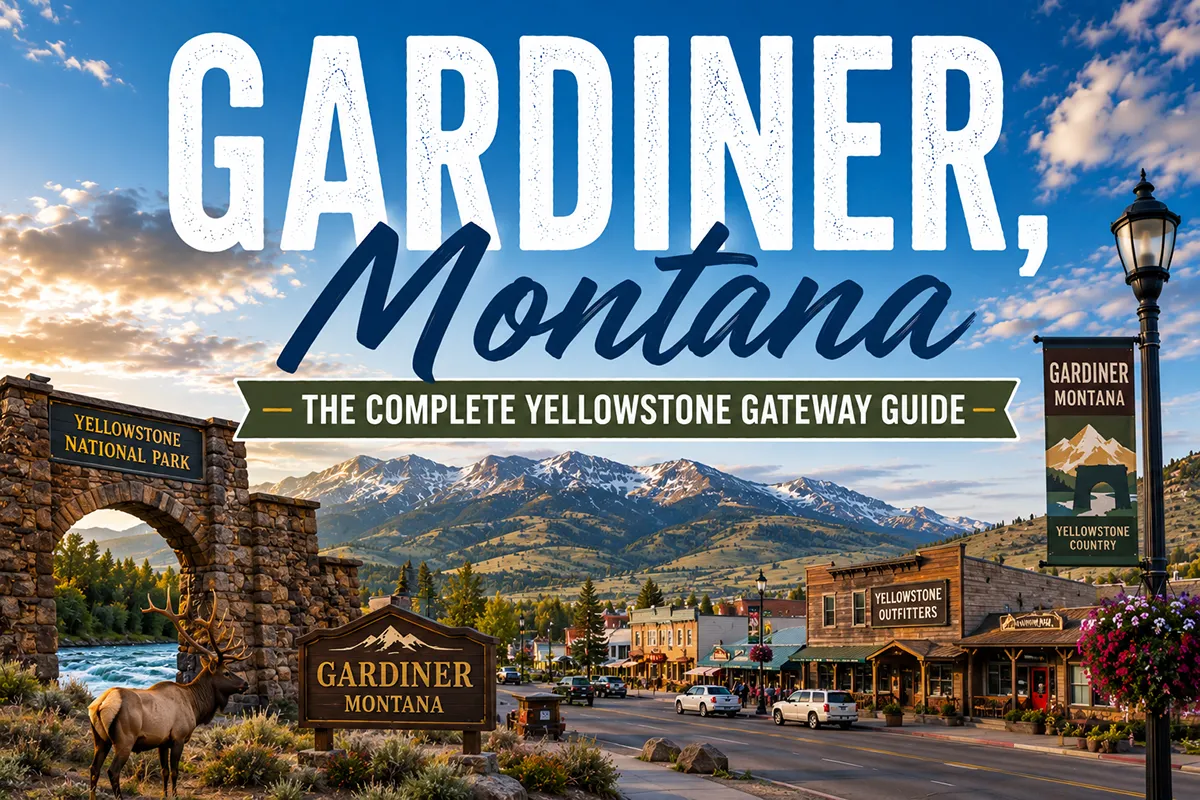
Gardiner is the town that exists because of Yellowstone. The original park boundary actually runs through downtown — you can stand at the Roosevelt Arch and have one foot in Montana and another technically in Wyoming.
The town was founded in 1880, just eight years after Yellowstone became the world’s first national park, specifically to serve travelers arriving by the Northern Pacific Railroad.
What separates Gardiner from the other Yellowstone gateways is its year-round practicality. While Cooke City freezes off the highway in winter and West Yellowstone becomes a snowmobile-only outpost, Gardiner stays plowed and accessible.
The North Entrance Road from Gardiner through Mammoth to Cooke City is the only Yellowstone road open to vehicles all winter — which means Gardiner is the only practical winter base for serious wildlife watchers.
For broader trip planning, see my Montana cities and towns hub and my 27 best things to do in Montana guide.
The Top 10 Things to Do in Gardiner
1. Drive Through the Roosevelt Arch into Yellowstone
The dedication ceremony in 1903 was led by President Theodore Roosevelt himself. The arch still bears the engraving: “For the Benefit and Enjoyment of the People.” Drive through it. Take the photo. Don’t skip it.
2. Visit Mammoth Hot Springs (5 miles into the park)
The travertine terraces at Mammoth Hot Springs are unlike any other thermal feature in Yellowstone — cascading white and orange mineral formations that change constantly as the spring water reshapes them. Elk routinely graze in the parking lot. Park headquarters is here.
3. Wildlife Watch in Lamar Valley (75 minutes east)
The most famous wildlife valley in the lower 48. Gardiner is the practical year-round base for Lamar Valley wolf and bison watching. See my full Lamar Valley Montana guide and Yellowstone wolf watching guide.
4. White-water Raft or Float the Yellowstone River
The Yellowstone River runs right through town and is the largest undammed river in the lower 48. Several outfitters in Gardiner offer half- and full-day raft trips on the Yankee Jim Canyon section, which has Class II–III rapids. Family-friendly options also available.
5. Fly Fish the Yellowstone River
Parks’ Fly Shop, operating since 1953, is the oldest fly shop in the area. The Yellowstone River outside the park is world-famous trout water. Inside the park, fishing requires a separate Yellowstone permit (not the Montana license).
6. Watch Elk in Town
Gardiner has a resident elk herd that wanders through town freely. The high school football field is a famous gathering spot, especially in the fall rut. Bull elk bugle through Gardiner streets in September and October — a sound you don’t forget.
7. Hike Yellowstone’s Northern Range
From the North Entrance, multiple short trails lead to viewpoints, waterfalls, and lakes. The Wraith Falls trail (1 mile RT) and the Sepulcher Mountain trail (variable length) start nearby.
8. Yellowstone Heritage and Research Center
A surprisingly substantive museum located in Gardiner — houses Yellowstone National Park Service archives, museum collections, and reference libraries. Free to visit.
9. Soak at Chico Hot Springs (30 minutes north)
In Paradise Valley between Gardiner and Livingston, Chico Hot Springs is one of Montana’s best historic hot-spring resorts. The pools are excellent; the restaurant is one of the state’s best meals.
10. Boiling River Hot Springs (currently closed — verify)
The Boiling River was a famous wild hot spring swimming spot at the confluence with the Gardner River. Note: This area has been closed for safety reasons in recent years. Verify current status with NPS before traveling — it may or may not be open.
Where to Stay in Gardiner
| Hotel | Vibe | Price | Best For |
|---|---|---|---|
| Yellowstone Gateway Inn | Comfortable, walkable to park | $180–280 | Most travelers |
| Absaroka Lodge | Right at the park entrance | $180–290 | Park-adjacent convenience |
| Cowboy’s Lodge & Grille | Old-school Western motel | $130–200 | Budget, character |
| Riverside Cottages | Cabins along the Yellowstone River | $200–350 | Couples, families |
| Yellowstone River Motel | Functional, riverside | $130–200 | Budget |
| Travelodge by Wyndham Gardiner | Reliable chain | $150–230 | Standard chain travelers |
Book early. Gardiner has limited lodging and summer rooms fill 6–9 months out. Winter rates drop significantly but most properties stay open year-round.
Where to Eat
For a town under 1,000 residents, Gardiner punches above its weight on dining:
- Iron Horse Bar & Grille — bison and elk burgers, local favorite
- Wonderland Cafe & Lodge — family-friendly, solid breakfasts and dinners
- Yellowstone Pizza Co. — pizza and pasta, casual
- Cowboy’s Restaurant — Western-themed, steaks and burgers
- The Raven Grill — slightly more refined dining
- K-Bar Pizza (verify current status) — Gardiner pizza institution
- Tumbleweed Bookstore & Cafe — coffee, light food, books
- Sawtooth Deli — sandwiches and quick service
- Two Bit Saloon — historic Western bar
Getting There & Around
By car: From Bozeman, 85 miles via US-89 south through Paradise Valley (1.5 hours). From Billings, 215 miles (4 hours).
By plane: Bozeman Yellowstone International Airport (BZN) is the nearest major airport, 1.5 hours north.
Around town: Gardiner is compact and walkable — most of downtown is 6–10 blocks. A car is essential for accessing the park and surrounding wildlife areas.
What Gardiner Unlocks
Mammoth Hot Springs & North Yellowstone (5–10 minutes into the park)
Park headquarters, the travertine terraces, and easy day trips into the park’s geyser country.
Lamar Valley (60 miles east in the park)
Best wildlife watching in the lower 48. See the full Lamar Valley guide.
Cooke City & the Beartooth Highway (60+ miles east)
Continue past Lamar to Cooke City and Silver Gate, then connect to the Beartooth Highway in summer.
Paradise Valley & Chico Hot Springs (30 minutes north)
The valley between Gardiner and Livingston is one of Montana’s most beautiful. Chico Hot Springs is a destination in its own right.
Livingston (45 minutes north)
A real Western town with art galleries, fly-fishing shops, and Murray Bar.
Bozeman (1.5 hours)
The nearest major city with full services.
When to Visit Gardiner
Summer (June–August) is peak — Mammoth area is fully accessible, all park entrances open, weather is pleasant. Most crowded.
September–October is excellent — elk rut, fall colors, fewer crowds, lower lodging rates.
Winter (December–March) is one of Gardiner’s best-kept secrets. The North Entrance road stays plowed, wolves and bison are highly visible against snow, and lodging is dramatically cheaper.
Spring (April–May) brings bears emerging from hibernation and elk calving. Mud season early on; great wildlife by late May.
See best time to visit Montana for full timing.
Personal Tips From Many Gardiner Visits
Stay in town, not down the highway. Some travelers book Livingston or Bozeman for “savings” but lose hours of daily drive time. For Yellowstone-focused trips, Gardiner is the smart base.
Pack for cold mornings even in summer. Gardiner’s 5,259 ft elevation means even July mornings can dip into the 40s.
The elk are protected. They wander town freely; do not approach. The park rules (25 yards minimum) apply in town too, technically.
Top off gas in town. Park gas stations are limited and expensive. Fill up in Gardiner before any long day in the park.
Wonderland Cafe for breakfast. The most reliable kitchen in town; great spot to fuel up before a 5 a.m. wildlife morning.
Winter wildlife watching is extraordinary. If you can handle -10°F mornings, December–February in Gardiner is one of the great wildlife experiences in North America. Lodging is half summer rates.
Don’t try to do Lamar Valley as a one-day round trip. It’s 75 minutes each way to the western edge of Lamar. Doable but exhausting. Plan two consecutive mornings if wildlife is your priority.
Gardiner Quick Facts
| Founded | 1880 |
|---|---|
| Named for | Johnson Gardiner, fur trapper (1830s) — note the spelling difference: the town is “Gardiner” (with i), the river is “Gardner” (without i) |
| Primary industry | Tourism (Yellowstone) |
| Average summer high | 81°F (cooler than Bozeman or Billings) |
| Average winter low | 8°F |
| Closest national park | Yellowstone (entrance literally at edge of town) |
Conclusion
Gardiner is the town that makes a Yellowstone trip work. It’s small, it’s all about the park, and that’s exactly why it’s the smart choice for travelers who want year-round Yellowstone North Entrance access without giving up dining, lodging, and basic services. For wolf watchers in winter or families doing summer wildlife days, this is the practical base.
Have a Gardiner question? Drop it in the comments — I read every one.
Frequently Asked Questions
Is Gardiner, Montana worth visiting?
Yes — Gardiner is essential to visit if you’re entering Yellowstone via the North Entrance, which is the only park entrance open year-round to vehicles. The town sits directly at the historic Roosevelt Arch and offers 5-minute access to Mammoth Hot Springs and approximately 75-minute access to Lamar Valley wildlife viewing. As a destination in its own right, Gardiner offers Yellowstone River rafting, fly fishing, and authentic small-town Yellowstone gateway character.
Why is Gardiner Yellowstone’s only year-round entrance?
The road from Gardiner through Mammoth Hot Springs to Cooke City (the North Entrance Road) is the only Yellowstone road plowed and maintained for vehicles year-round. All other interior Yellowstone roads close to vehicles from approximately early November through late April due to snow, accessible only by snowmobile or snowcoach during that period.
How far is Gardiner from Yellowstone?
Gardiner is literally at the Yellowstone National Park entrance — the Roosevelt Arch is the town’s southern boundary. Mammoth Hot Springs (inside the park) is just 5 miles south, about a 10-minute drive. This makes Gardiner the closest gateway town to Yellowstone of any.
What’s the Roosevelt Arch?
The Roosevelt Arch is the historic stone entrance arch at Yellowstone’s North Entrance in Gardiner, Montana. It was dedicated by President Theodore Roosevelt on April 24, 1903, and bears the inscription “For the Benefit and Enjoyment of the People.” Today it remains one of Yellowstone’s most iconic photo locations and the literal entrance gate for vehicles entering through the North Entrance.
Where should I stay near Yellowstone’s North Entrance?
Gardiner, Montana is the closest town to Yellowstone’s North Entrance, with multiple hotels and motels directly on the park’s edge. Inside the park, Mammoth Hot Springs Hotel is the closest in-park lodging (5 miles south, but books up 12+ months in advance). For travelers wanting a larger town with more services, Livingston (45 minutes north) or Bozeman (1.5 hours north) are alternatives.
How many days do you need in Gardiner?
Plan 3–5 days using Gardiner as your Yellowstone base. One full day for Mammoth Hot Springs and the immediate North entrance area. Two days for Lamar Valley wildlife watching (early mornings essential). One day for the geyser basins (Old Faithful is 1.5 hours from Gardiner). Optional extra days for fly fishing, rafting, or Chico Hot Springs visits.
Is Gardiner cheaper than other Yellowstone gateways?
Gardiner is moderately priced for a Yellowstone gateway — typically cheaper than West Yellowstone in summer peak (similar rates in shoulder seasons), more expensive than Cooke City but with substantially more lodging options. Winter rates in Gardiner drop 30–50% from summer peaks, making it an excellent value for off-season visitors.
Can you see wildlife in Gardiner itself?
Yes — Gardiner has a resident elk herd that wanders through town year-round, and bison sometimes appear within town limits. The Gardiner High School football field is a famous local gathering spot for elk. During the fall rut (September–October), bull elk bugle through town streets at dawn and dusk.
What’s the best time of year to visit Gardiner?
September and October offer the best combination of weather, fall colors, elk rut activity, and reduced crowds. Summer (June–August) is the busiest season with full park access. Winter (December–March) is the best time for wildlife watching against snow, with dramatically lower lodging rates.
Is Gardiner or West Yellowstone a better Yellowstone base?
It depends on your priorities. Gardiner is the better year-round option (only year-round entrance), much better for wildlife focused on Lamar Valley, and more authentic small-town character. West Yellowstone is closer to Old Faithful and the major geyser basins, has more lodging and dining options, and is the primary winter snowmobile hub. For wildlife-focused trips, Gardiner; for geyser-focused trips, West Yellowstone.