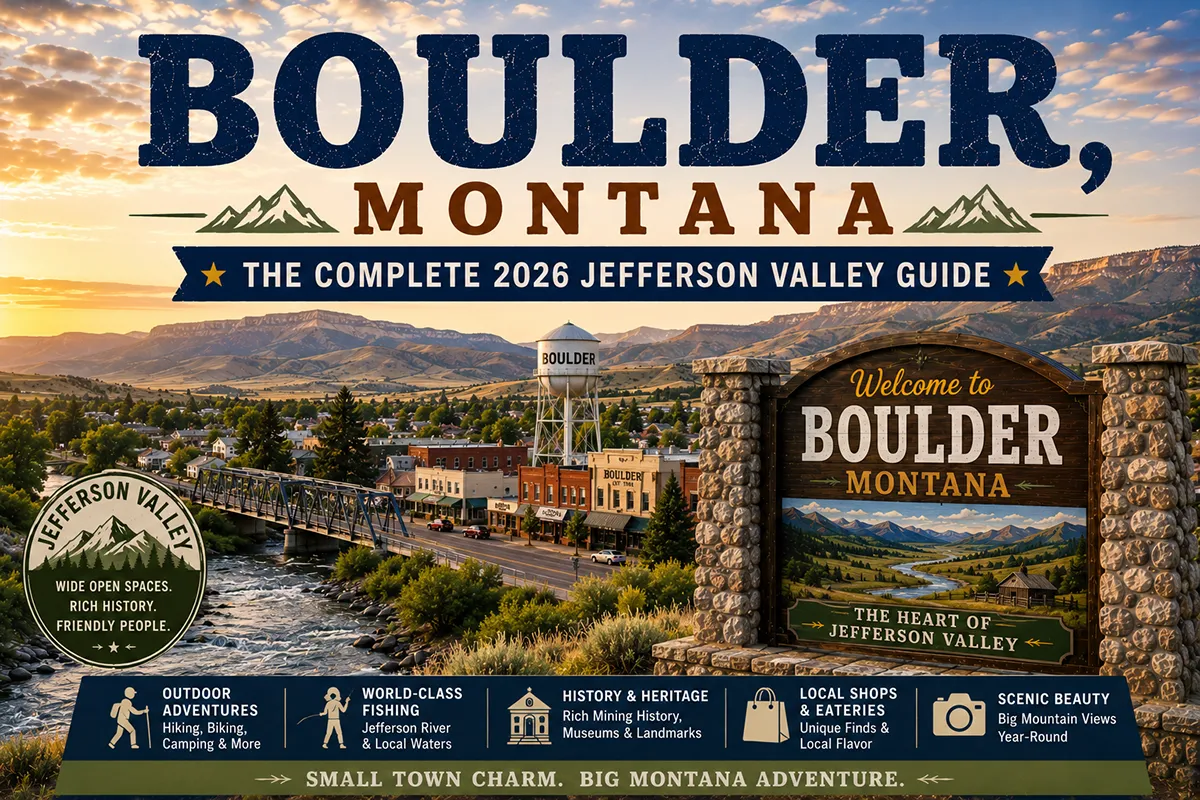
Boulder is named for the rocks, and the rocks explain the town better than most of its buildings do.
TL;DR
- Boulder (population 1,201 at the 2020 census) is the Jefferson County seat, set between Helena and Butte where Interstate 15 meets Montana Highway 69. Regional tourism places it in the Helena Area of Southwest Montana.
- The reasons to stop are Boulder Hot Springs, the Elkhorn ghost town and state park, Boulder River fishing, and a handful of historic buildings, including the county courthouse.
- Elkhorn is not close by road. Sources put it about 18 miles northeast, with the last roughly 9 miles on maintained gravel, and the live post’s “12 miles southeast” does not match.
- Many details about Boulder differ across sources, including the hot springs hotel’s construction date, the courthouse date, and the town’s founding story. This guide shows the ranges and flags what needs checking.
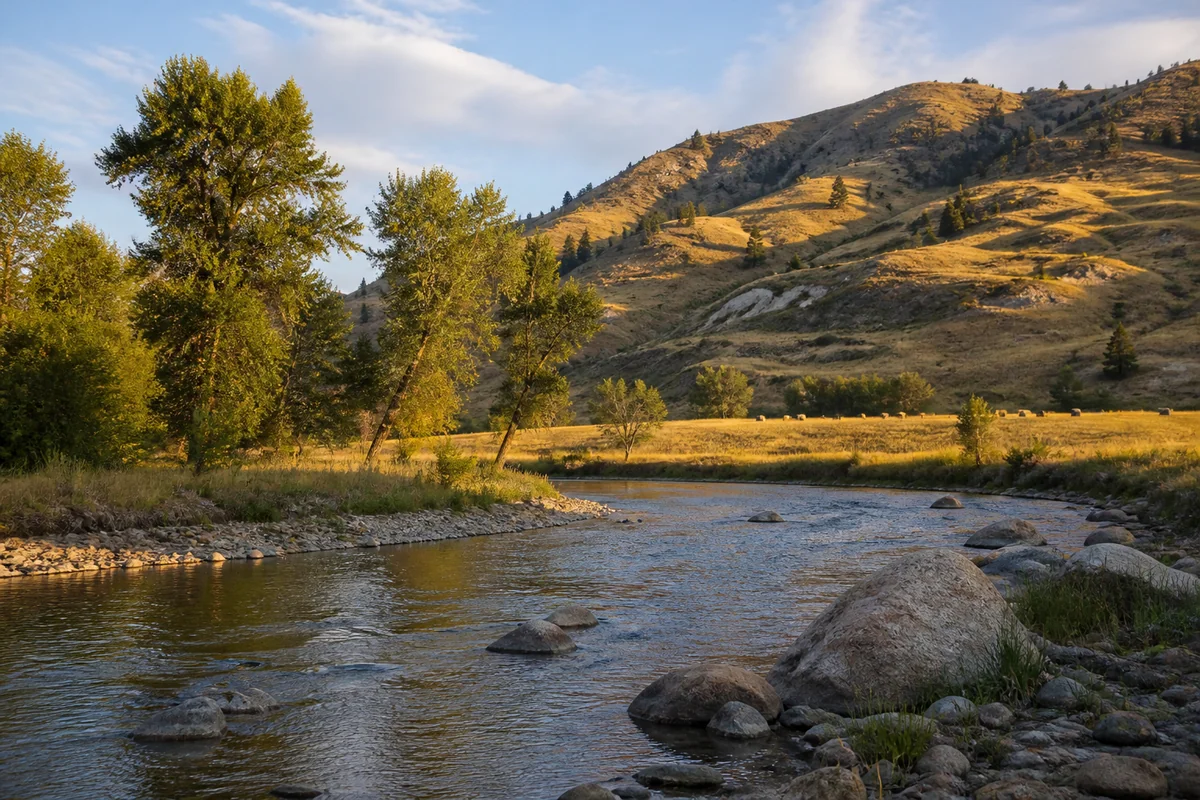
Pull off I-15 at Boulder and the first thing worth noticing is the ground. Large rounded rocks sit across the valley and up the hills, left by an igneous body called the Boulder Batholith, and they gave the town its name.
The second thing is how many chapters one small town contains. It started as a stagecoach station, absorbed several mining districts, got a railroad in 1888, lost a bid to become the state capital, and later became home to state institutions that shaped its economy for more than a century.
For visitors, that history shows up as a short list of real places: a historic hot springs hotel, a silver-camp ghost town up in the Elkhorn Mountains, and a courthouse that still runs the county. This guide covers each of them within the context of Southwest Montana and the larger list of Montana cities and towns.
Liked this article?
Add Roaming Montana as a preferred source so you see more of our articles and guides on Google.
Boulder at a Glance
| Detail | What sources support |
|---|---|
| County | Jefferson County; Boulder is the county seat |
| Population | 1,201 (2020 census); 1,183 (2010) |
| Elevation | 4,907 feet (tourism); Wikipedia gives 4,905 and 4,990 feet in different places |
| Area | About 1.1 square miles |
| Setting | North bank of the Boulder River, at I-15 and Montana Highway 69 |
| Climate | Semi-arid; January average about 20°F, July average about 64°F; about 10.8 inches of precipitation and 33 inches of snow a year |
| Distance to Helena | About 27 miles (Wikipedia); the live post said 33 |
| Distance to Butte | About 35 miles (Wikipedia); the live post said 37 |
| Region | Helena Area of Southwest Montana |
| Schools | Boulder Elementary and Jefferson High School; the school system serves Basin, Clancy, Jefferson City, and Montana City |
The live post gave I-15 exits “160 to 163” in one place and “Exit 160” in another. Neither Wikipedia nor the tourism page gives an exit number, so confirm the exit before relying on it.
How Boulder Grew
A Stagecoach Station
Boulder began in the 1860s as a stagecoach station on the route between Fort Benton and Virginia City. Placer gold in the valley gravels drew prospectors, but it did not make anyone rich. The money came from lode deposits in the mountains, which yielded copper, lead, zinc, silver, and some gold.
Several mining districts, including the Elkhorn Mining District, the Comet Mine, and the Baltimore Company’s mines, eventually merged into the present town. A live-post line saying Boulder was “founded in 1862 as a mining camp” is not supported by these sources. For the larger regional story, see the Montana Gold Rush guide.
The Railroad
In 1888, a Great Northern Railway branch from Helena to Butte reached Boulder. The town became a trading center for farmers, ranchers, and miners, and a resort town for wealthy families from Helena and Butte, a reputation tied closely to the hot springs.
The Capital Vote
Boulder appeared on the ballot in Montana’s state capital referendum and received only 295 votes, which did not advance it past the first round. Wikipedia dates the vote to 1892, while Southwest Montana tourism and the University of Montana column say 1894. Either way, it was a long shot, but the fact that Boulder was on the ballot says something about how the town saw itself in the 1890s.
State Institutions
In 1892, Wikipedia reports, state schools for the deaf, blind, and developmentally disabled were established in Boulder, and the state’s developmental center employed about 300 people. The live post said the Montana Developmental Center operated from 1892 to 2015. Confirm the closure date and the current use of the campus before repeating it. The institution’s history is part of how the town’s economy and population developed for more than a century.
A Name Shortened
The name was shortened to Boulder in 1897 according to Wikipedia, after being known as Boulder Valley.
Boulder Hot Springs
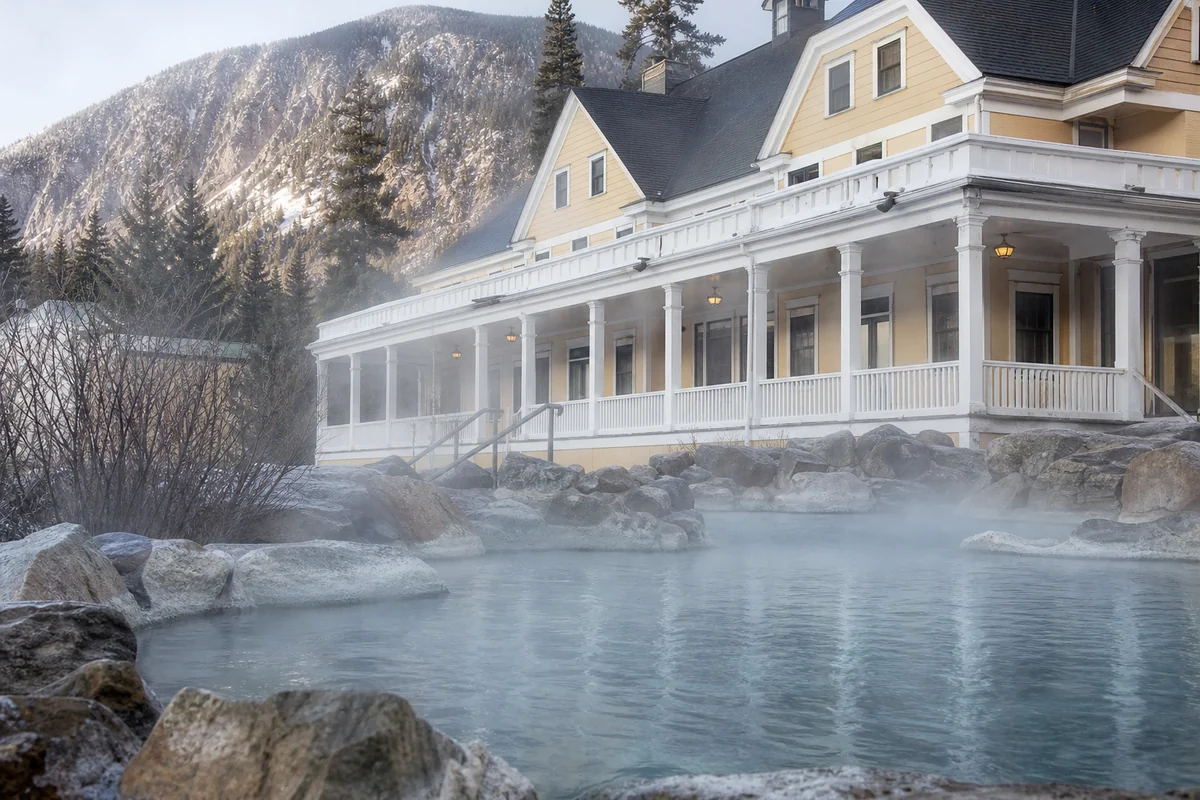
The hot springs are the most famous thing about Boulder, and the sources disagree on the details. A timeline helps.
| Year | Event |
|---|---|
| Before 1863 | Native peoples knew of the geothermal feature; the property calls the area “Peace Valley” |
| 1863 | Prospector James E. Riley builds the first structures, a saloon and bathhouse |
| 1881 | Riley begins a hotel for 50 guests; he later dies of smallpox and ownership changes several times |
| 1883 | Wikipedia dates the hotel’s construction, by builders Able Quaintance and C.W. Kerrick |
| 1909 | Butte millionaire James A. Murray buys and renovates the hotel, adding Chinese motifs and Tiffany glass globes |
| 1940 | C.L. “Pappy” Smith buys it and runs it as the Diamond S Ranchotel, a dude ranch |
| January 12, 1979 | Listed on the National Register of Historic Places |
The live post said the building dates from “1893” in one place and “1888 to 1893” in another and called it Mission Revival. Wikipedia gives 1883 and describes Mission/Spanish Revival and Queen Anne styles, so the construction date remains unsettled.
What visitors find today. The property presents itself as a retreat and wellness center. It is smoke-free, alcohol-free, and drug-free, with a larger outdoor pool, a women’s plunge, a co-ed plunge, indoor steam rooms, spa services, and meals. Day-use policies, hours, and lodging rates were not listed on the pages reviewed, so contact the property before planning. The live post’s temperature claim of 175°F and its lodging prices were not confirmed.
The hotel sits southeast of Boulder on Montana Highway 69. For other soaking options, see the Montana hot springs guide.
Elkhorn Ghost Town
Elkhorn is the other major draw, and it takes planning.
Getting There
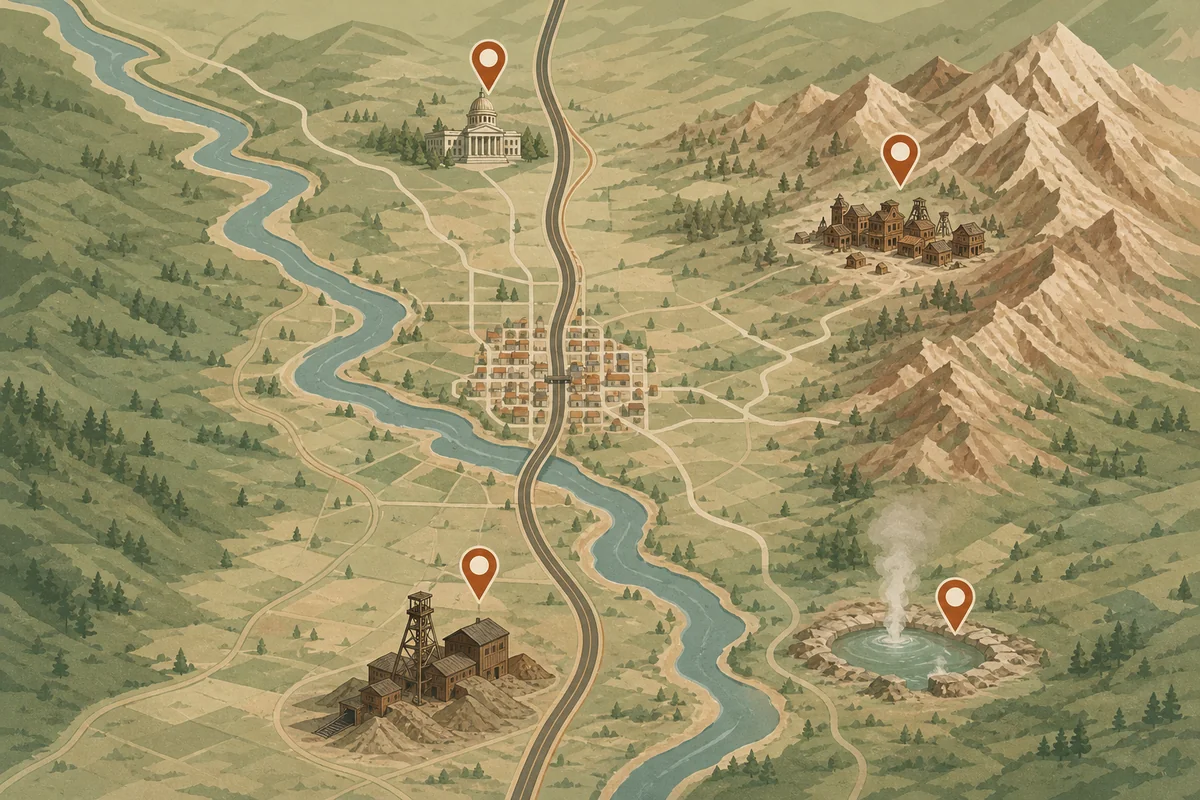
Southwest Montana tourism says the park is about 18 miles northeast of Boulder and reachable by passenger vehicle year-round. The first half of the route is paved, and the last roughly 9.2 miles are maintained gravel that crosses private land and the Beaverhead-Deerlodge National Forest. Watch for ATVs and other off-highway vehicles, check weather before winter travel, and expect little or no cell service. The live post’s “12 miles southeast” does not match this.
Silver Camp
Swiss miner Peter Wys discovered silver veins in the Elkhorn Mountains in 1868, and Helena entrepreneur Anton M. Holter and partners developed the Elkhorn Mine. By 1888, the mine was the largest in the area, producing $30,000 of ore monthly, when it was sold to an English syndicate. The Northern Pacific built a line from Boulder to Elkhorn in 1889, carrying passengers, shipping ore to the East Helena smelter, and bringing in coal. The railroad removed the line in 1931.
At its peak, about 2,500 people lived in Elkhorn into the 1890s, mostly married miners with families. Three schools served up to 200 students, and around 500 woodsmen cut timber for the mines. The boom faded around 1892 as silver prices fell, followed by the Silver Panic of 1893. By 1900, the mine had produced 8,902,000 ounces of silver, 8,500 ounces of gold, and 4,000,000 pounds of lead, and some mining continued until 1971, according to Southwest Montana tourism.
What Remains
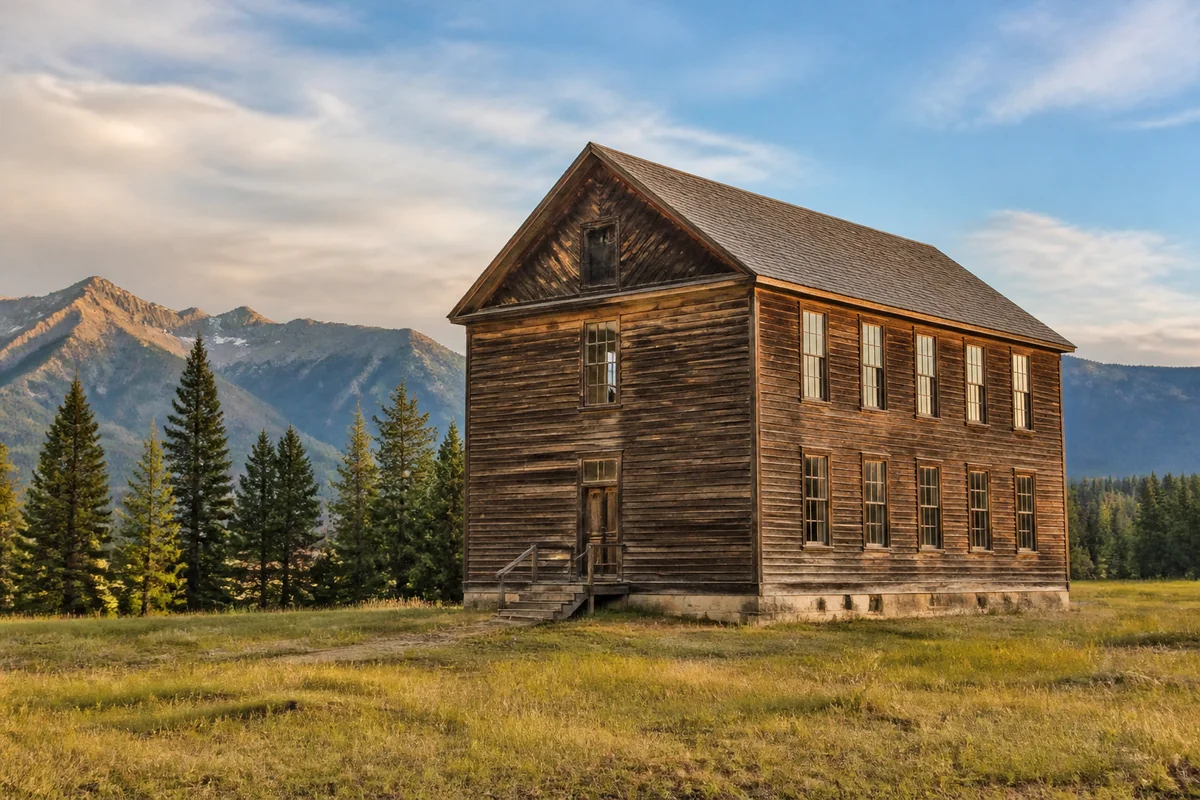
Elkhorn is Montana’s smallest state park, with two buildings on less than an acre. Fraternity Hall, built in 1893, is the town’s symbol, with Greek Revival and gold-camp styling. Montana Fish, Wildlife and Parks owns the second building, spelled Gilliam Hall on its page and Gillian Hall in other sources. Visitors may enter both halls, and the rest of the town is privately owned with interpretive signs along the streets.
Nonresident day use was listed at $8 per vehicle. The live post said Elkhorn was free. Camping is not allowed in or near the town, and there is a seasonal portable latrine and picnic tables. Respect private property and close the doors on both halls when leaving.
For other abandoned camps, see Montana ghost towns.
Historic Buildings in Town
Jefferson County Courthouse
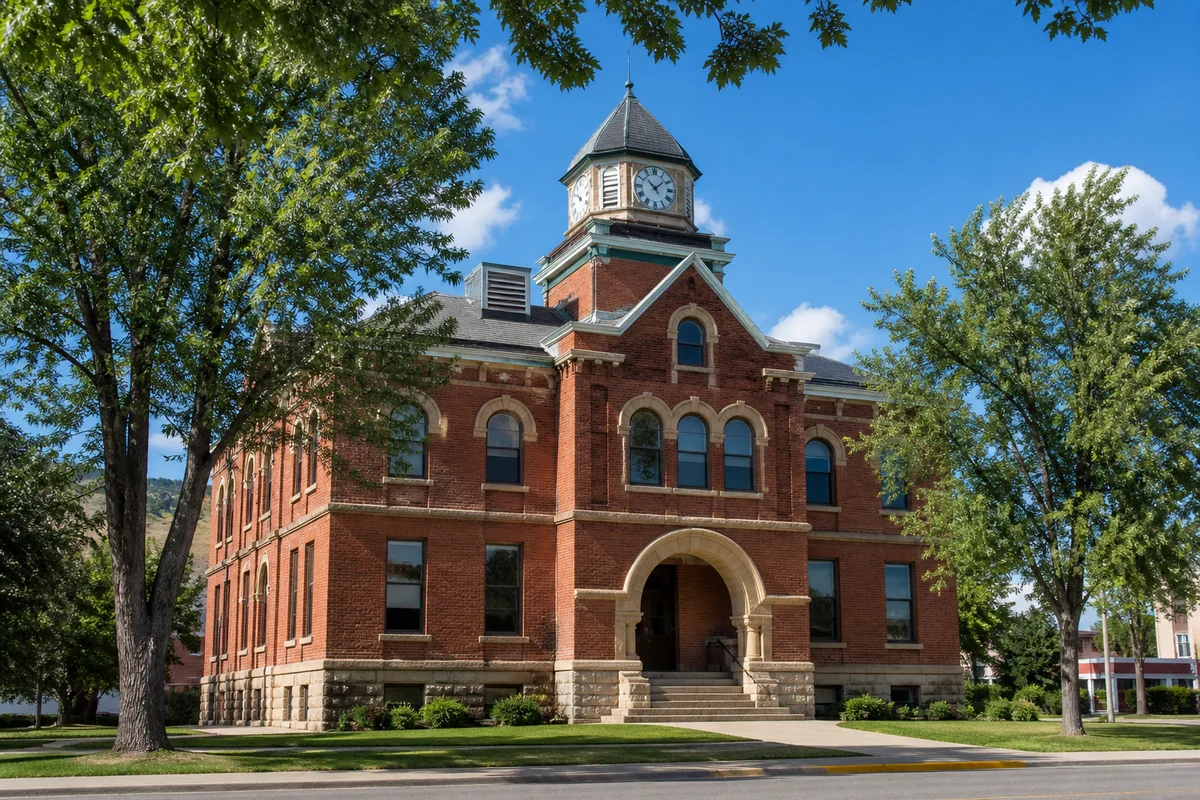
The courthouse on Centennial Avenue was added to the National Register of Historic Places in 1980, according to Wikipedia. A separate source says it was built in 1889 and displays artifacts about mining, ranching, and family life in the county over the past 150 years. The live post called it an “1881 brick building,” which conflicts with that date.
Heritage Center and History Tours
The Jefferson County Heritage Center is restoring the original 1888 bank to serve as the city’s first historical museum, according to the Advisory Council on Historic Preservation. The same source says “Discover Jefferson County” guided tours run two to three times a year and include the courthouse, Boulder Hot Springs, the Free Enterprise Health Mine, and the old mining town of Comet.
The Boulder River
The Boulder River runs 77.3 miles from the Continental Divide in the Boulder Mountains to the Jefferson River near Cardwell. Wikipedia reports an average flow of about 119 cubic feet per second at Boulder and notes that the lowest 12 miles are affected by irrigation withdrawals. Brook, brown, and rainbow trout and mountain whitefish live in the river. Brown trout dominate the last two miles near the mouth, while the other three species are more common upstream of Boulder.
Southwest Montana tourism calls the fly-fishing excellent but difficult, with few boat ramps, swift currents, and slippery rocks. Check current regulations and flows before fishing, and note that seepage from old mines and tailings affects the stretch below Basin.
Other Stops
- Tizer Gardens and Arboretum. Themed gardens, water features, and seasonal events, listed as a nearby attraction near the hot springs.
- Lewis and Clark Caverns State Park. Guided cave tours, roughly Memorial Day to Labor Day. See the Lewis and Clark Caverns guide and Whitehall.
- Elkhorn Mountains. Popular for mountain biking and ATV/OHV riding, plus wildlife viewing.
Events
| Event | Typical timing | Notes |
|---|---|---|
| Boulder Farmer’s Market | Thursdays, July to September | Produce, meat, handwork, and art |
| Music and Art Festival | September | Hosted by the Chamber of Commerce |
| Fiddle Fest | ||
| Boulder Car Show | ||
| Christmas Bazaar | Winter | |
| Jefferson County Fair and Rodeo | Summer | |
| Skijoring | Winter | Listed by the hot springs |
| Big Rock Fright Nights | Fall | Listed by the hot springs |
Where to Stay and Eat
The tourism page for Boulder does not list specific lodging. The hot springs offers rooms on its own site, and the live post’s price ranges for an inn and a motel were not confirmed. Helena and Butte are the larger bases, with the Helena and Butte guides covering them. East Helena is closer than either city center.
Dining in Boulder itself is limited, so check hours before arriving, especially off-season. The live post also mentioned Marysville as a 30-minute dining stop, which does not fit the geography, since Marysville lies north of Helena.
Who Boulder Suits
Boulder is a good fit for travelers who like layered history and are comfortable with a little planning.
- Hot springs travelers who prefer a historic, quiet property over a large resort.
- Ghost town readers who want an easy-to-reach example with two enterable buildings and a good history.
- Road-trippers on I-15 looking for a break between Helena and Butte.
- Anglers willing to work for a hard river.
- Families combining Elkhorn picnics with a courthouse stop.
It suits less well for anyone expecting a full-service visitor town. The tourism page lists no lodging, restaurant hours vary, and the best attractions sit off the highway on rural roads.
Boulder by Season
Spring. Mud season. Elkhorn Road can be soft, and the farmers’ market has not started.
Summer. The best time for Elkhorn, the farmers’ market, and the fair. Hot springs are popular year-round.
Fall. September brings the Music and Art Festival, and the hills turn gold.
Winter. About 33 inches of snow a year. Elkhorn is technically open, but travel requires caution.
For wider planning, see the best time to visit Montana.
Plans That Fit Boulder
A stop on I-15. Walk past the courthouse and see the boulders.
A half day. Add a soak at the hot springs.
A full day. Add Elkhorn, with a picnic and the drive on gravel.
Two days. Add a Boulder River fishing day, Tizer Gardens, and a trip to Whitehall’s caverns.
Getting There
| From | Direction from Boulder | Approximate distance |
|---|---|---|
| Helena | North | About 27 miles |
| Butte | South | About 35 miles |
| Elkhorn State Park | Northeast | About 18 miles |
| Boulder Hot Springs | Southeast on MT-69 | A few miles |
| Whitehall | South | |
| Townsend | North and east |
The previous town on the corridor is Townsend, and the next is Whitehall.
What Visitors Should Know
- Plan for Elkhorn. Bring water and fuel, and expect little cell service.
- Call the hot springs. The property is alcohol-free and has its own rules.
- Check hours. Small-town businesses keep short schedules.
- Respect private land around Elkhorn.
- Cross-check numbers. Dates and distances vary widely online.
Practical Info
| Item | Details |
|---|---|
| Best season | June through September |
| Time needed | A few hours to two days |
| Fees | Elkhorn day-use fee; hot springs charges vary |
| Difficulty | Easy in town; Elkhorn road is gravel |
| What to bring | Water, layers, swimsuit, picnic supplies |
| Nearby | Helena, Butte, Whitehall, East Helena |
Conclusion
Boulder works because it is real. It is a county seat first and a stop second, and the hot springs, the ghost town, and the old courthouse all belong to the same working valley.
Save this guide for your Southwest Montana planning, and leave questions in the comments, especially if hours or road conditions have changed. For more places, browse the full list of Montana cities and towns or build a route through Southwest Montana.
Frequently Asked Questions
What is Boulder, Montana known for?
Boulder Hot Springs, the nearby Elkhorn ghost town, and its role as the Jefferson County seat.
How many people live in Boulder?
1,201 at the 2020 census.
Why is it called Boulder?
For the many large boulders scattered across the valley and hills.
How far is Elkhorn from Boulder?
About 18 miles northeast, with the last roughly 9 miles on gravel.
When was Boulder Hot Springs built?
Sources differ: the springs have been in use since 1863, while the hotel is dated 1883 by Wikipedia and to a later year by other pages.
How far is Boulder from Helena?
About 27 miles.
Can you fish the Boulder River?
Yes, though tourism calls it difficult, with few boat ramps and slippery rocks.
Was Boulder ever a candidate for state capital?
It appeared on the ballot with 295 votes and did not advance.