The town of Charlo is named for one of the most principled figures in Montana history. Chief Charlo — son of Chief Victor, leader of the Bitterroot Salish — refused to sign the 1872 Hellgate Treaty amendment that would have required the Salish to leave the Bitterroot Valley.
He refused for 20 years. He watched his people’s numbers dwindle, their lands encroached upon, their cattle killed.
In 1891, with no remaining viable options, he finally agreed to move — but he made the journey to the Mission Valley under protest, telling the Indian agent, “I will go. I will say no more.” A town on the Flathead Reservation now bears his name.
TL;DR
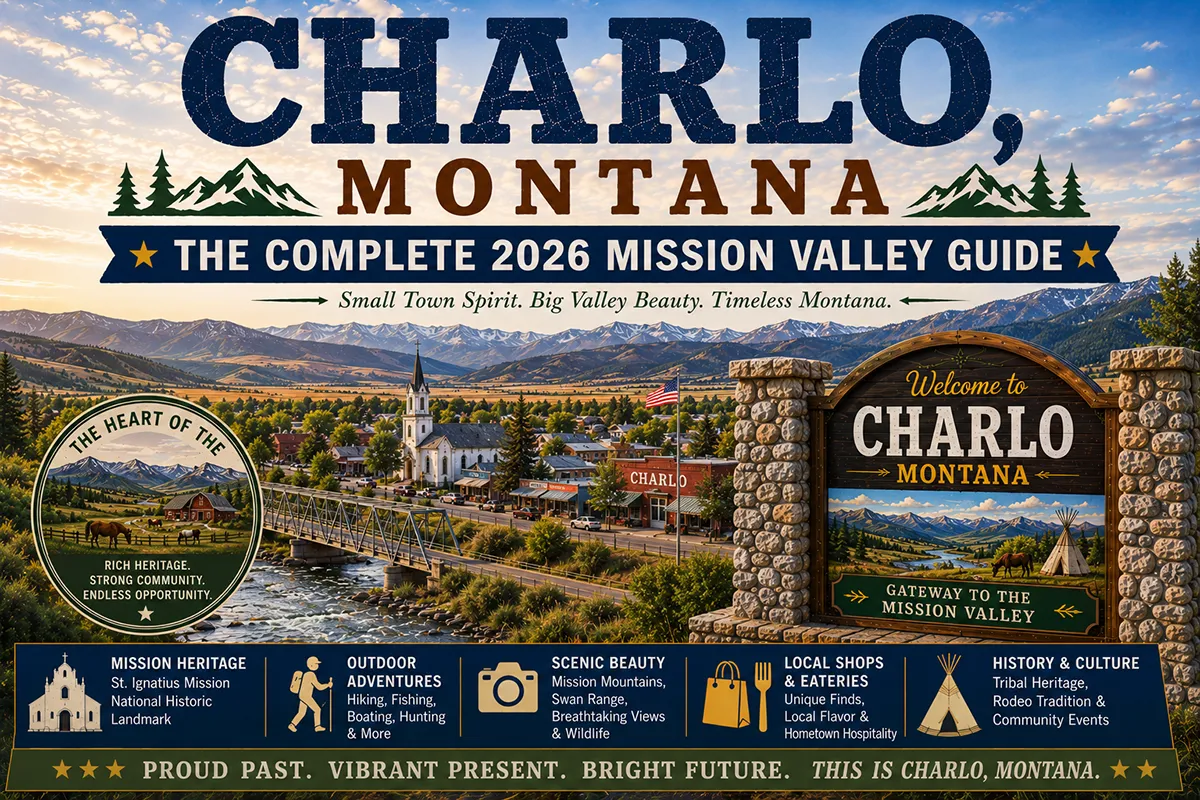
- Charlo (~360) is a small agricultural community in the Mission Valley on the Flathead Reservation, on US-93 between Ronan and St. Ignatius.
- Named for Chief Charlo — the Bitterroot Salish leader who resisted removal for two decades before relocating to the Mission Valley in 1891.
- The Charlo Wildlife Management Area provides local fishing and wildlife access.
- Agricultural character: grain farming, cattle, and the reservation’s agricultural community centered here.
- Best for: travelers wanting to understand the Chief Charlo story, Mission Valley completionists, and birding at nearby refuges.
Liked this article?
Add Roaming Montana as a preferred source so you see more of our articles and guides on Google.
Charlo at a Glance
| Population (2020) | ~360 | | County | Lake County | | Reservation | Flathead Indian Reservation (CSKT) | | Distance to Ronan | ~7 miles north (~10 min) | | Distance to St. Ignatius | ~8 miles south (~10 min) | | Named for | Chief Charlo, Bitterroot Salish leader |
What Makes Charlo Different
Chief Charlo’s story is one of the most important in Montana history and one of the least told. When the 1872 agreement required the Salish to consolidate on the Flathead Reservation, Charlo refused to sign — his father Chief Victor had signed the 1855 Hellgate Treaty, but Charlo argued the treaty had not required abandonment of the Bitterroot.
He stayed in the Bitterroot Valley for 19 years after most Salish had moved north, watching his community shrink as settlers flooded in under the homestead acts. In 1891, elderly and with a dramatically reduced band, he finally made the journey north.
The town named for him is small and agricultural. The reservation land around Charlo is productive farmland — wheat, alfalfa, cattle — and the community reflects that working character.
But knowing who Charlo was transforms what might seem like a nondescript highway town into something with genuine historical weight.
The Top Things to Do
1. Learn Chief Charlo’s Story
The Three Chiefs Culture Center in Pablo (15 miles north) presents the full Chief Charlo narrative from CSKT perspectives — his two decades of resistance, the circumstances of his removal, and his legacy in the Salish community. This is the most important context for understanding Charlo the town.
2. Charlo Wildlife Management Area
Local fishing access and wildlife habitat on the Mission Valley floor. Good early-morning wildlife viewing — deer, birds, occasional elk.
3. Ninepipe National Wildlife Refuge (8 miles north near Ronan)
800+ pothole lakes with 200+ documented bird species — one of the Mission Valley’s signature wildlife destinations. See Ronan guide.
4. Mission Valley Agricultural Character
Charlo’s agricultural landscape tells the story of the reservation’s transition from pre-European life to farming — a complex history worth understanding in the context of federal allotment policy and the Salish people’s resilience.
5. St. Ignatius Mission (8 miles south)
The mission church with 58 murals is 10 minutes south. See St. Ignatius guide.
6. Day Trip to Pablo & Three Chiefs Culture Center
15 miles north — the CSKT’s own cultural institution.
7. National Bison Range (25 minutes south via Moiese)
CSKT-managed bison preserve with 500 free-roaming bison.
Where to stay: Very limited in Charlo. Ronan (10 min north) is the practical base.
Getting there: US-93 between Ronan (7 miles north) and St. Ignatius (8 miles south).
Visitor protocol: Charlo is within the sovereign Flathead Reservation. Tribal recreation permits required for fishing and backcountry use.
Quick Facts
Named for: Chief Charlo (ca. 1830–1910), Bitterroot Salish leader. Reservation: CSKT Flathead Reservation. Average summer high: 82°F.
Conclusion
Charlo is a small town carrying a large historical name. The Chief Charlo story — one of principled resistance under impossible circumstances — is among the most significant in the Montana Salish experience. The town itself is agricultural and quiet; the cultural weight it carries is profound.
FAQ
Is Charlo Montana worth visiting?
Charlo is worth a stop primarily for travelers who understand who it’s named for — Chief Charlo’s story of resistance to removal is among the most significant in Montana Indigenous history. The Three Chiefs Culture Center in Pablo (15 miles north) provides the full context.
Who was Chief Charlo?
Chief Charlo was the leader of the Bitterroot Salish people and son of Chief Victor. When an 1872 agreement called for the Salish to relocate to the Flathead Reservation, Charlo refused — arguing it violated the original 1855 Hellgate Treaty. He remained in the Bitterroot Valley for 19 years as his community dwindled under homesteader encroachment, finally relocating to the Mission Valley in 1891 under protest.