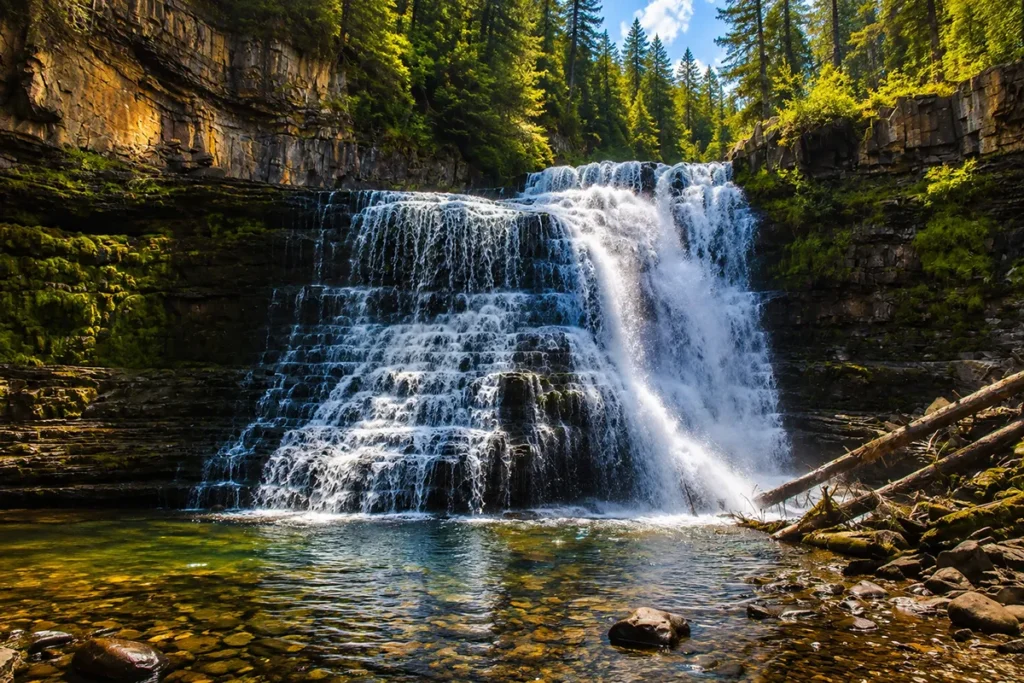
The moment I rounded the final bend of the trail and heard the thunderous roar of Ousel Falls echoing through the canyon, I understood why this 100-foot cascade has become one of the most beloved Montana waterfalls for visitors of all ages.
Standing on the viewing platform last June, mist coating my face while watching the South Fork of the West Fork of the Gallatin River plunge dramatically into the gorge below, I felt that familiar rush of awe that keeps me chasing waterfalls across Big Sky Country.
- Ousel Falls is a stunning 100-foot waterfall located just 3 miles from Big Sky Town Center
- The trail is 1.6 miles round trip with only 340 feet of elevation gain — perfect for families
- Best visited late May through early July for peak water flow
- Free to access with a well-maintained trail and viewing platform
- Allow 1-2 hours for the complete experience including photography
- The trailhead has limited parking — arrive before 10 AM in summer
Liked this article?
Add Roaming Montana as a preferred source so you see more of our articles and guides on Google.
Why Ousel Falls Should Be on Your Montana Itinerary
I’ve hiked to dozens of waterfalls across Montana, from the remote backcountry cascades of Glacier National Park to roadside wonders you can see from your car.
What makes Ousel Falls special isn’t just its impressive height or photogenic qualities — it’s the perfect combination of accessibility, natural beauty, and the charming mountain town atmosphere of Big Sky that surrounds the experience.
During my most recent trip last summer, I brought my 68-year-old mother and my 7-year-old nephew on this hike. Both completed it without difficulty, which speaks volumes about who can enjoy this trail.
The falls themselves are genuinely spectacular. Unlike some overhyped Montana attractions that leave you thinking “that’s it?”, Ousel Falls delivers exactly what the photos promise — and then some.
Getting to Ousel Falls Trailhead
The trailhead sits at the end of Ousel Falls Road, just a few minutes from Big Sky Town Center. If you’re coming from Bozeman, expect about a 45-minute drive south on US-191 through the stunning Gallatin Canyon.
Here’s the route I always take: From Bozeman, head south on US-191 for approximately 36 miles. Turn right onto Big Sky Spur Road (MT-64) and continue for about 3.5 miles. At the stoplight in Big Sky Town Center, turn left onto Ousel Falls Road. Follow this road for 1.5 miles until it dead-ends at the trailhead parking area.
The final stretch of Ousel Falls Road winds through residential areas with some truly impressive mountain homes. Drive carefully — I’ve seen kids on bikes and people walking dogs along this road numerous times.
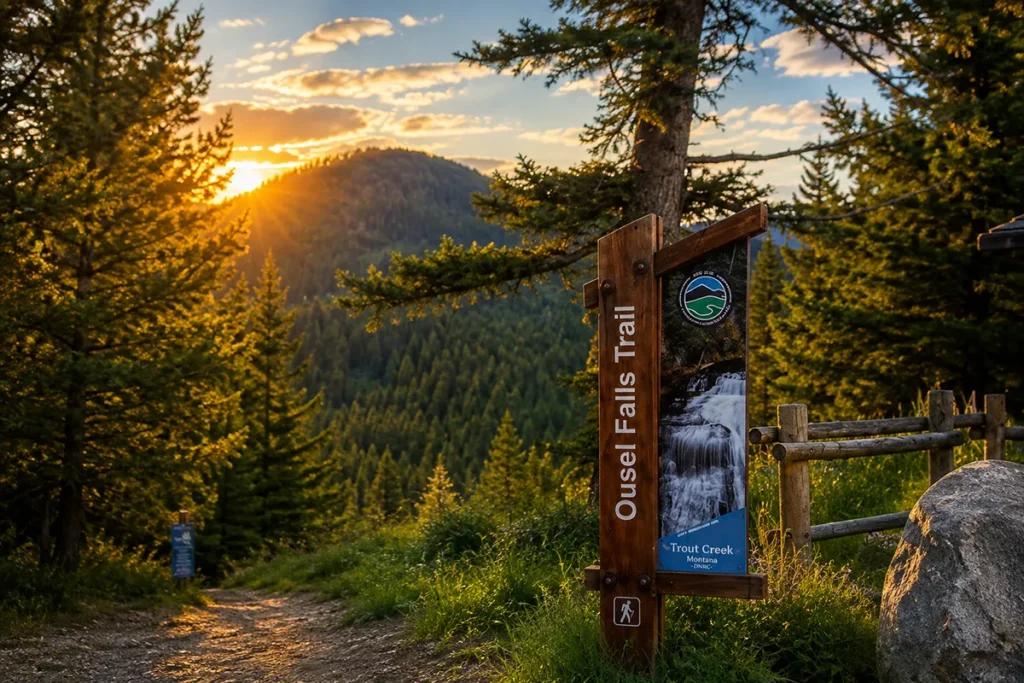
Parking Situation and When to Arrive
The parking lot at Ousel Falls trailhead is deceptively small for such a popular destination. On my visit during a July weekend, the lot was completely full by 10:30 AM, with cars lined up along the road.
I highly recommend arriving before 10 AM if you’re visiting during summer months or on any nice weather weekend from May through October. The earlier you arrive, the better your chances of snagging a spot in the main lot.
If the lot is full, you can park along Ousel Falls Road, but be mindful of private property and no-parking signs. During peak season, you might end up walking an extra quarter-mile just to reach the trailhead.
The Trail: What to Expect Step by Step
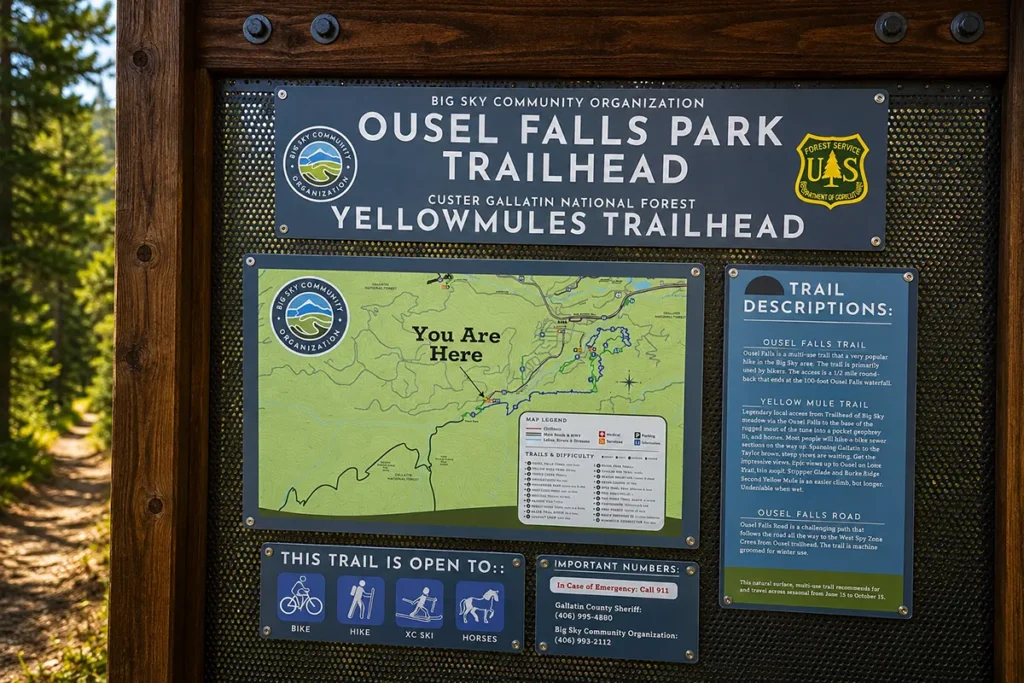
The Ousel Falls Trail is maintained by the Big Sky Community Organization, and they do an excellent job keeping it in pristine condition. This 0.8-mile path (1.6 miles round trip) is one of the most well-built trails I’ve encountered for a community-maintained route.
The First Section: Forest Walk
From the parking area, you’ll immediately enter a beautiful mixed conifer forest dominated by lodgepole pine and Douglas fir. The trail begins with a gentle descent, which means — yes — you’ll be climbing on the way back out.
I always appreciate how the trail starts in forest shade, especially on hot summer days. The temperature drops noticeably once you’re under the tree canopy, sometimes by 10-15 degrees from the sunny parking lot.
Within the first few minutes, you’ll cross a sturdy wooden bridge over a small seasonal stream. During my early June visits, this stream runs strong and cold. By late August, it’s often reduced to a trickle.
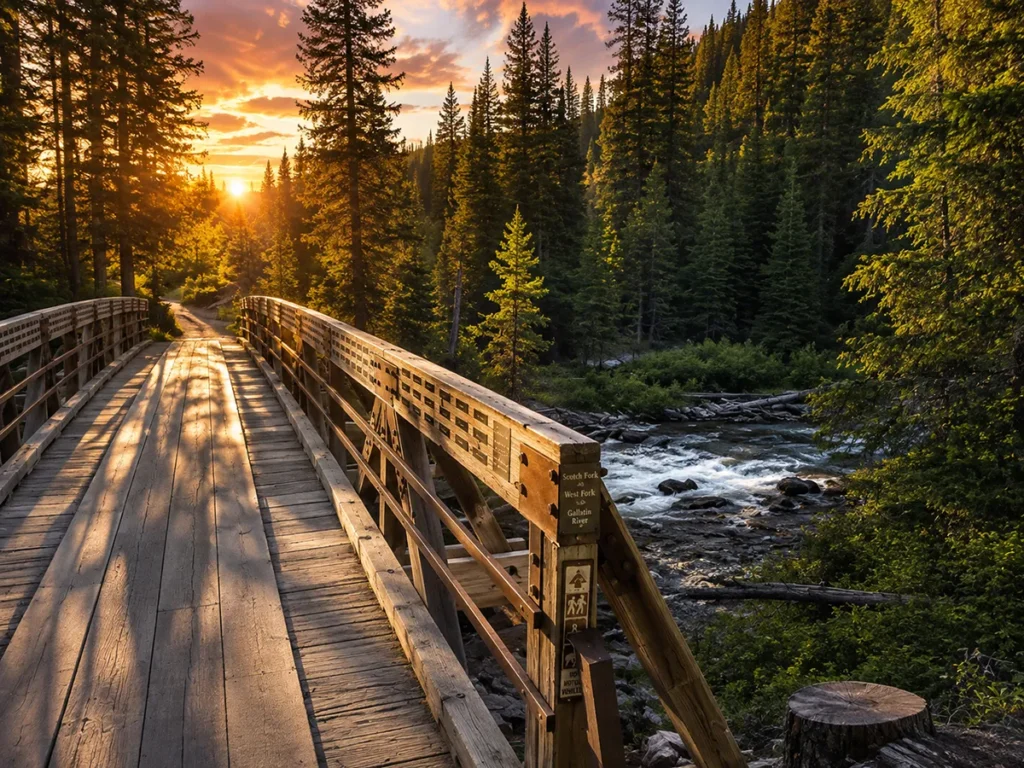
The Middle Section: Canyon Views
About a third of the way down, the trail opens up with glimpses into the canyon carved by the South Fork of the West Fork of the Gallatin River. Yes, that’s a mouthful — locals just call it the Ousel Falls Creek.
This section features some of my favorite viewpoints. You’ll walk along the canyon rim with partial views of the river below, and on clear days, the surrounding peaks of the Madison Range create a stunning backdrop.
The trail includes several sets of wooden stairs in this section. They’re well-constructed with railings, but they can get slippery when wet. On a rainy visit last spring, I was grateful for the sturdy handrails.
The Final Descent: Stairway to the Falls
The last portion of the trail involves a significant staircase descent to the viewing platform. I counted 127 steps on my last visit, though I may have miscounted while chatting with other hikers.
This is the most challenging section, not because of the descent (gravity helps with that), but because you’ll need to climb back up on your return. Take your time, use the handrails, and pause at the benches strategically placed along the way.
The sound of the falls builds as you descend. By the time you reach the final steps, the roar is unmistakable, and anticipation reaches its peak.
The Waterfall: First Impressions and What You’ll See
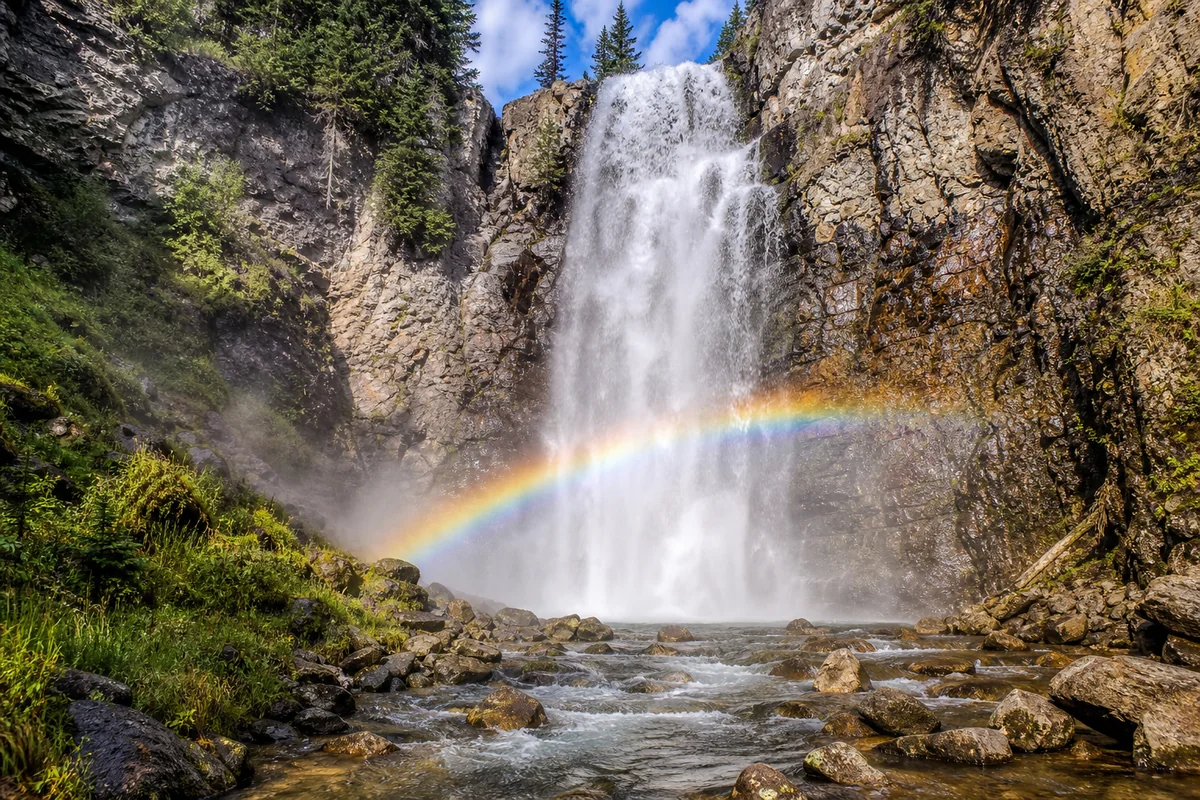
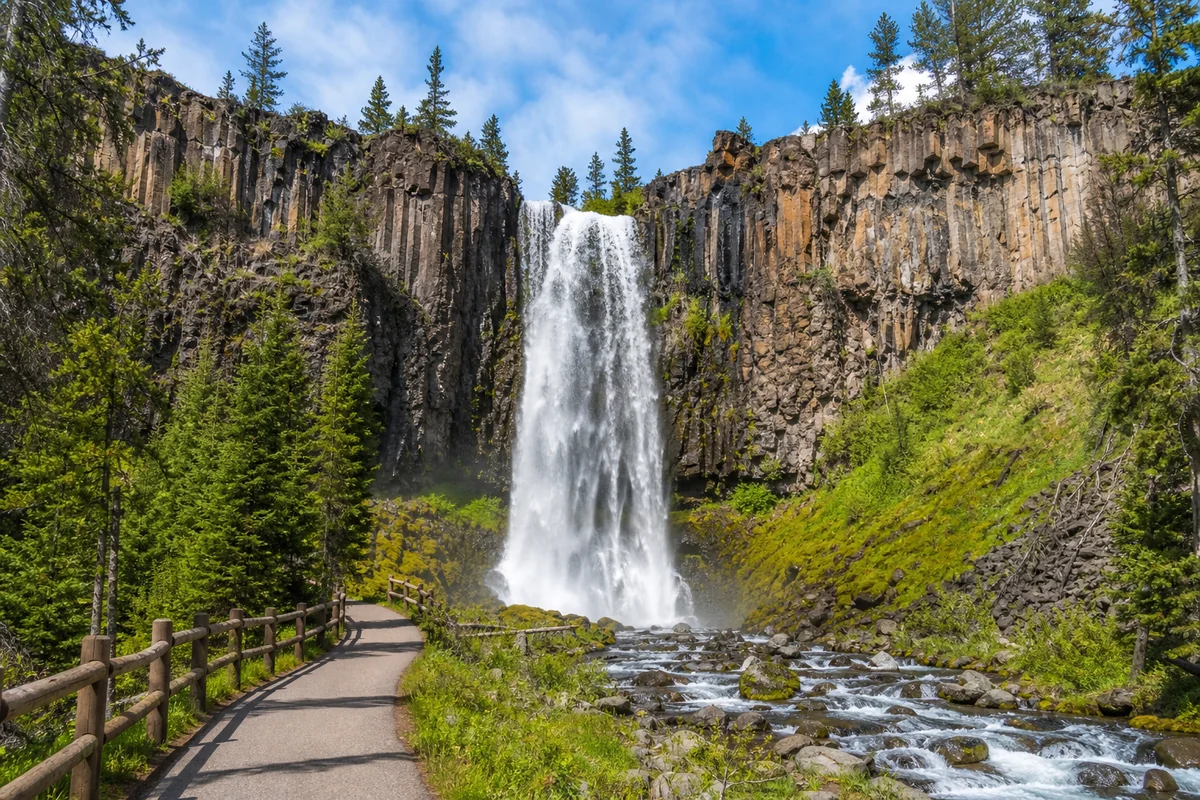
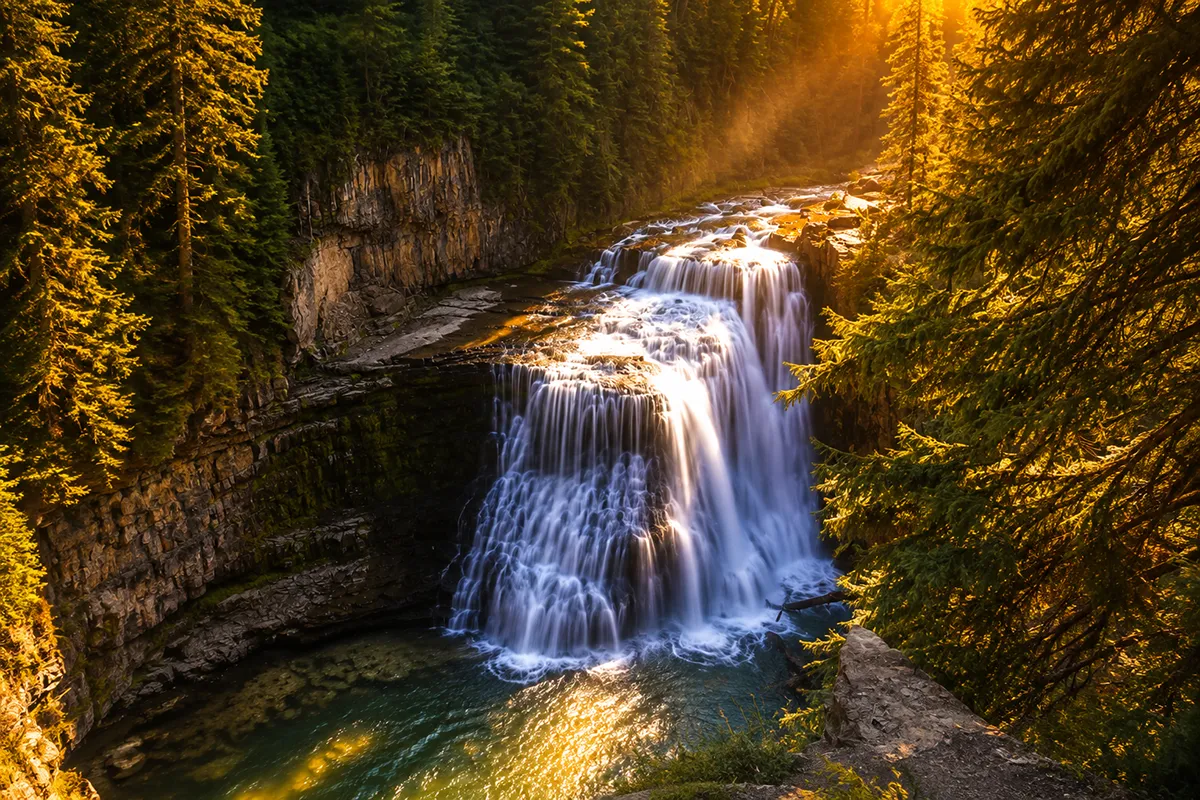
Ousel Falls drops approximately 100 feet in a dramatic horsetail formation, meaning the water maintains contact with the rock face as it descends rather than freefalling. This creates a beautiful, fan-like effect that’s particularly photogenic.
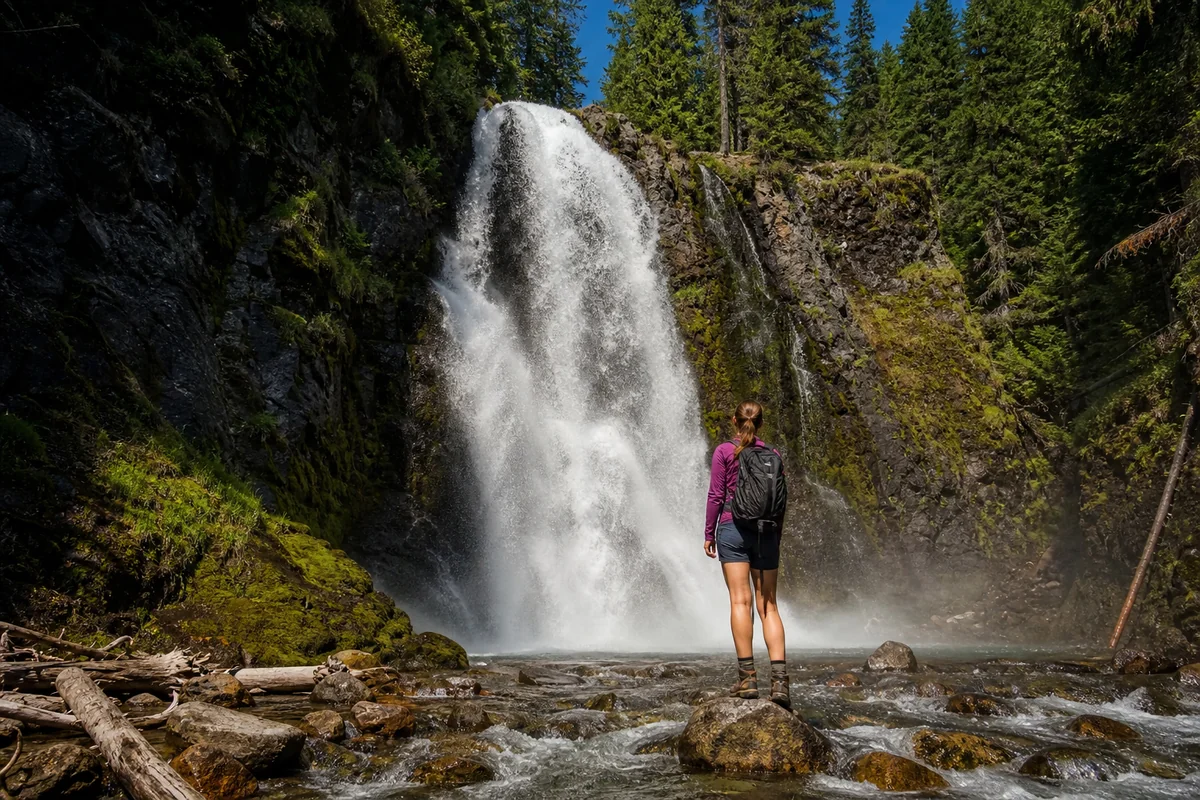
The viewing platform sits at the base of the falls, close enough that you’ll feel mist on your face during high-water periods. I’ve stood on this platform in various seasons, and the experience changes dramatically throughout the year.
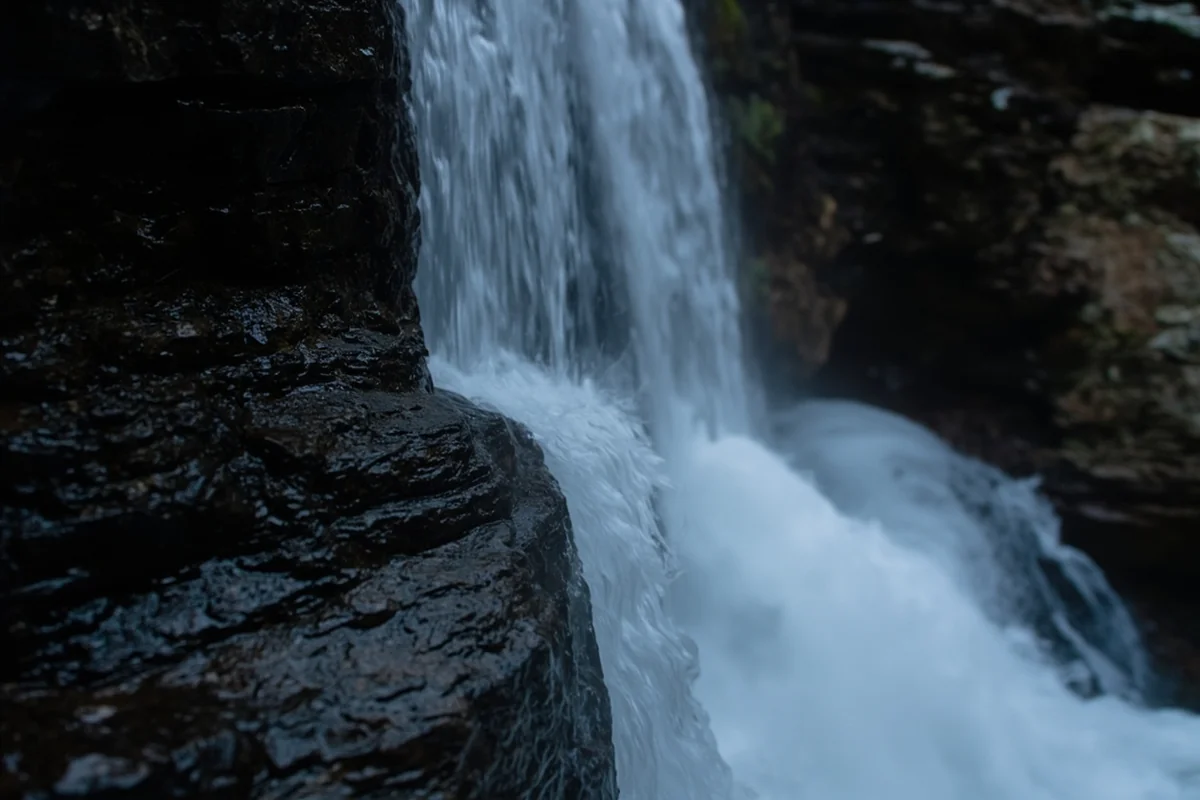
Seasonal Variations
Late May to Early July: This is peak season for Ousel Falls. Snowmelt from the surrounding mountains sends massive volumes of water over the cliff, creating a thunderous, powerful display. During my early June visit, the spray was so intense that my camera lens fogged up repeatedly.
Mid-July to September: Water volume decreases but the falls remain impressive. This is actually my favorite time to visit for photography because the reduced mist allows for clearer shots. The falls take on a more delicate appearance, revealing rock features hidden during peak flow.
October to November: The falls slow significantly, and ice begins forming on the cliff edges during cold snaps. Fall colors in the surrounding forest add visual interest, though crowds thin considerably.
Winter: Ousel Falls transforms into an ice sculpture. The trail can be treacherous with ice and snow, and I’d only recommend it for experienced winter hikers with proper traction devices. That said, the frozen falls are absolutely magnificent if you’re prepared.
Photography Tips from Multiple Visits
I’ve photographed Ousel Falls in various conditions over the years, and I’ve learned a few things worth sharing.
Best Light Conditions
The falls face roughly northeast, which means direct sunlight doesn’t hit them until late morning during summer months. For the most even lighting without harsh shadows, I prefer arriving either before 9 AM or after 4 PM.
Overcast days actually produce the best waterfall photos here. The diffused light eliminates the contrast issues that direct sun creates on the white water and dark rock.
Protecting Your Gear
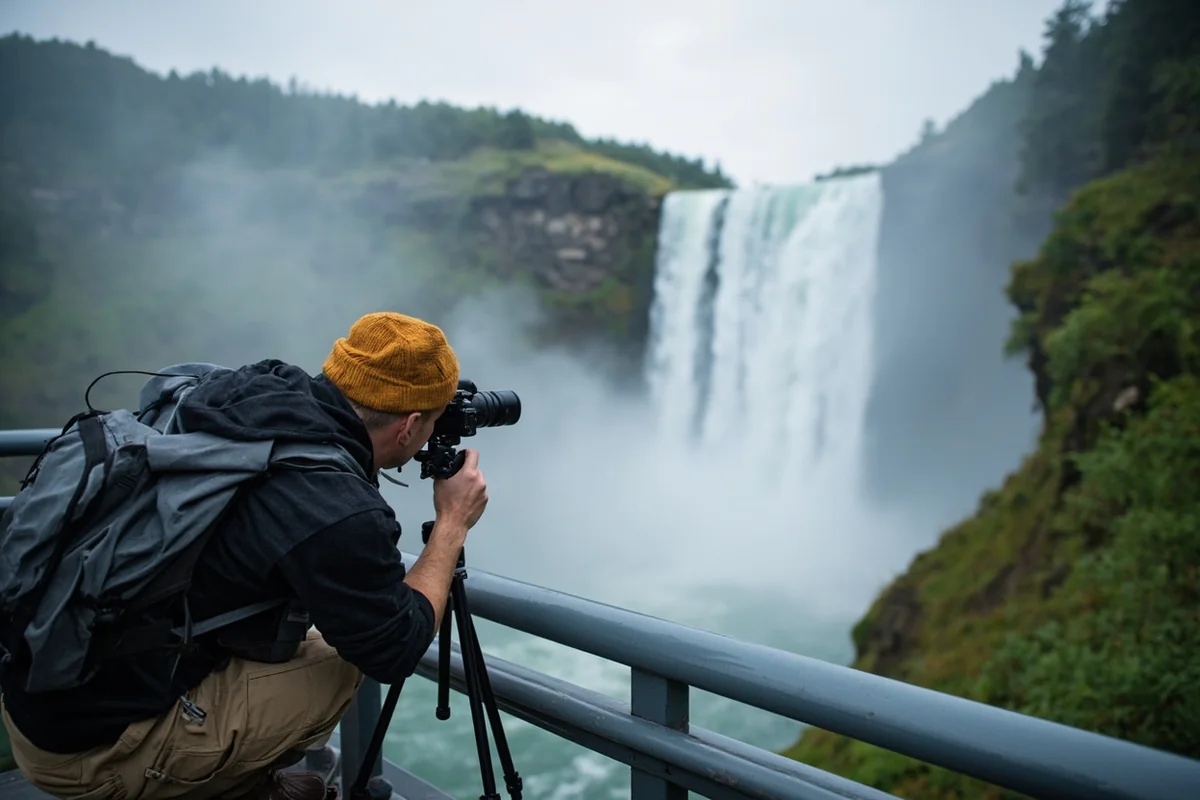
During peak flow, mist saturates the air around the viewing platform. I always bring a microfiber cloth and a plastic bag to protect my camera between shots. On my June visit, I went through three lens wipes in about 20 minutes.
If you’re serious about long-exposure shots of the water, bring a tripod with good leg locks — the platform can vibrate slightly from other visitors’ footsteps.
Composition Suggestions
The viewing platform limits your angles somewhat, but there are still creative options. I like shooting vertically to capture the full height of the falls, but horizontal compositions that include the canyon walls add context and scale.
For a unique perspective, try shooting from the stairs during your descent — the elevated angle shows more of the pool at the base of the falls.
Trail Difficulty and Who Can Hike It
I rate the Ousel Falls Trail as easy to moderate, with the moderate classification applying primarily to the stair climb on the return trip.
| Trail Specification | Details |
|---|---|
| Distance | 1.6 miles round trip |
| Elevation Gain | 340 feet |
| Estimated Time | 1-2 hours |
| Trail Surface | Dirt path, wooden stairs, wooden bridges |
| Dogs Allowed | Yes, on leash |
| Wheelchair Accessible | No |
| Fee | Free |
Family Friendliness
This trail is excellent for families with children who can walk independently. I’ve seen kids as young as four complete it without being carried, though parents should stay close during the steeper stair sections.
The benches placed along the trail make great rest stops for older visitors or anyone who needs a breather. My mother used two of them on her way back up and finished feeling accomplished rather than exhausted.
Physical Considerations
The main challenge is the return climb. Those 127 stairs (or thereabouts) will get your heart rate up. If you have knee issues, bring trekking poles — they make a significant difference on the stairs.
I always recommend starting your descent at a comfortable pace to preserve energy for the climb back. Too many people rush down excited to see the falls, then struggle on the return.
Wildlife and Nature Along the Trail
The “ousel” in Ousel Falls refers to the American Dipper, also known as the water ouzel. These remarkable birds are year-round residents of rushing mountain streams, and I’ve spotted them near the falls on several occasions.
Look for a small, gray bird that bobs constantly and dives underwater to feed on aquatic insects. Watching a dipper disappear beneath the churning water at the base of the falls is genuinely fascinating.
Other Wildlife Sightings
During my various visits, I’ve encountered mule deer near the trailhead, red squirrels chattering from the trees, and numerous bird species including Clark’s nutcrackers and mountain chickadees.
The forest along the trail also hosts black bears, though I’ve never seen one here personally. As always in Montana, make noise while hiking and be aware of your surroundings. Bear spray is never a bad idea, even on popular trails.
Wildflowers
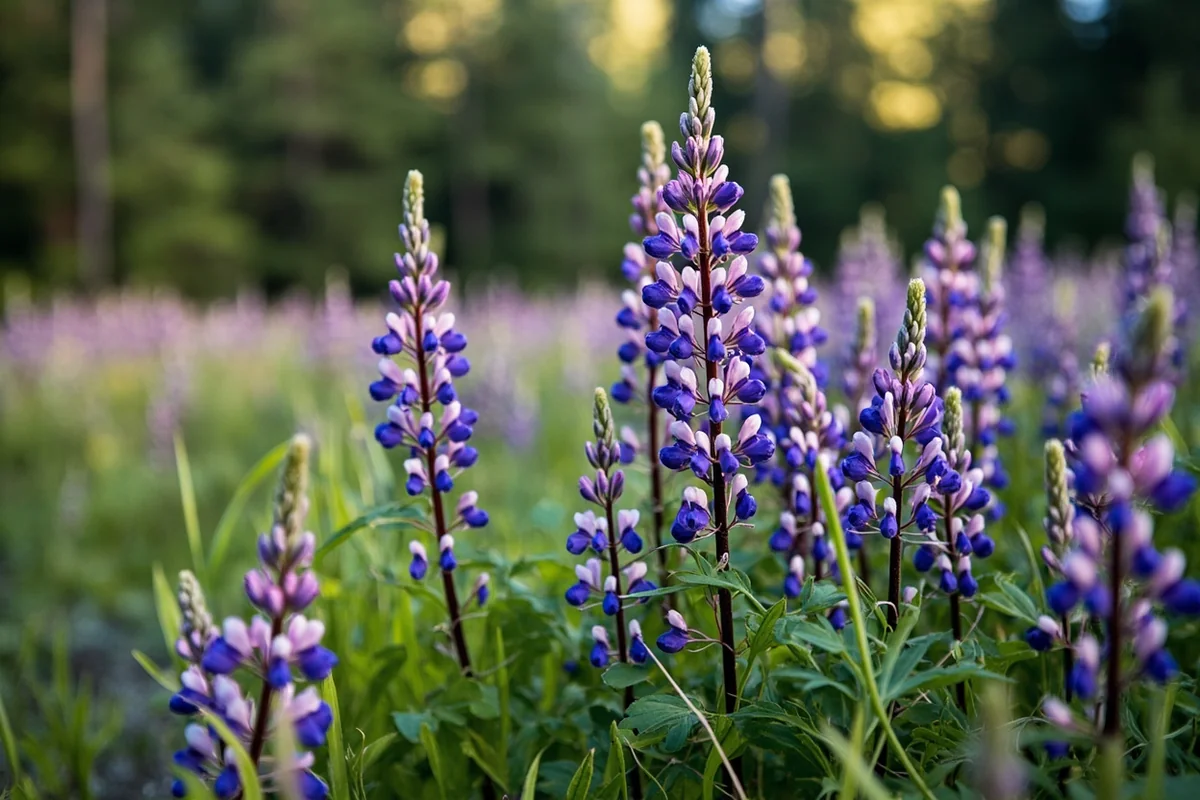
June visits reward hikers with excellent wildflower displays. I’ve photographed lupine, Indian paintbrush, and columbine along the trail margins. The moist environment near the falls supports lush vegetation that adds color to photographs.
What to Bring: My Packing List
Based on multiple trips to Ousel Falls, here’s what I always pack:
- Water bottle — at least 16 oz per person
- Light rain jacket or windbreaker (mist at the falls can soak you)
- Microfiber cloth for camera lens or sunglasses
- Snacks for the climb back
- Bug spray (mosquitoes can be fierce in June)
- Sunscreen for the exposed sections
- Camera with waterproof case or bag
- Trekking poles (optional but helpful for stairs)
Footwear Recommendations
Standard hiking shoes or trail runners work perfectly on this trail. I wouldn’t recommend flip-flops or dress shoes — I’ve seen people attempt the trail in inappropriate footwear and struggle, especially on the wooden stairs when wet.
During spring or after rain, the trail can be muddy in sections. Waterproof boots aren’t necessary but will keep your feet dry and comfortable.
Combining Ousel Falls with Other Big Sky Activities
One of the best things about Ousel Falls is its proximity to other Big Sky attractions. During my last trip, I made a full day of it with multiple activities.
Morning at Ousel Falls
I hit the trail at 8 AM, spent about 90 minutes at the falls and on the trail, then returned to my car before the parking lot filled up. This left the entire afternoon open for other adventures.
Afternoon Options
Big Sky Resort offers summer activities including scenic chairlift rides, mountain biking, and ziplining. The views from the summit of Lone Mountain are spectacular on clear days.
For a more relaxed afternoon, the town center has excellent restaurants and shops. I’m partial to Blue Moon Bakery for lunch — their sandwiches are huge and perfect after a morning hike.
Evening Possibilities
If you’re staying overnight, consider driving the Gallatin Canyon back toward Bozeman at dusk. Wildlife sightings are common, and the canyon itself is gorgeous in evening light.
Nearby Waterfalls Worth Exploring
If Ousel Falls leaves you craving more waterfall experiences, Montana has no shortage of options within reasonable driving distance.
Palisade Falls near Bozeman offers another family-friendly waterfall hike with similar accessibility. The drive from Big Sky takes about an hour, making it feasible as a same-day addition if you have the energy.
For those heading toward Yellowstone, the park’s own waterfalls are world-class, though considerably more crowded than Ousel Falls. I prefer Montana’s quieter alternatives when possible.
If you’re planning a more extensive waterfall tour of Montana, consider adding Morrell Falls near Seeley Lake to your itinerary. It requires a longer hike (about 5.4 miles round trip) but rewards visitors with one of the most beautiful cascades in the state.
The Kootenai Falls in northwestern Montana provides a completely different waterfall experience — massive and wide rather than tall and dramatic. It’s worth the drive if you’re touring the state extensively.
Best Time of Year to Visit Ousel Falls
I’ve visited Ousel Falls in every season, and each offers something unique. Here’s my honest assessment:
Spring (May-June)
This is peak waterfall season and my overall favorite time to visit. The snowmelt creates maximum water volume, and the falls are at their most powerful and photogenic. The downside? Mud, mosquitoes, and occasionally lingering snow on the upper trail sections.
During my late May visit a few years ago, a small snow patch remained near the top of the trail. It was passable but required careful footing.
Summer (July-August)
The most popular season for obvious reasons. Water flow decreases from the spring peak but remains impressive through mid-July. By August, the falls are still beautiful but noticeably smaller.
Summer brings the largest crowds. If you value solitude, this isn’t your season — but if you enjoy meeting other travelers and sharing the experience, you’ll find plenty of friendly company.
Fall (September-October)
My sleeper recommendation. The falls are smaller but still flowing, the crowds thin dramatically, and fall colors add visual interest to photographs. September temperatures in Big Sky are usually perfect for hiking — cool mornings, warm afternoons.
Last October, I had the viewing platform entirely to myself for nearly 30 minutes. That simply doesn’t happen in summer.
Winter (November-April)
Only for adventurous visitors with appropriate gear. The frozen falls are stunning, but the trail becomes hazardous. Microspikes or crampons are essential, and even then, I’d recommend experienced winter hikers only.
The drive to the trailhead can also be tricky in winter, as Ousel Falls Road isn’t always plowed immediately after storms.
Practical Information and Planning Details
Fees and Permits
Ousel Falls requires no entrance fee or permit. The trail and parking area are maintained by the Big Sky Community Organization through local funding and volunteer efforts.
If you enjoy the trail, consider making a donation to the organization. They do excellent work maintaining this and other trails in the Big Sky area.
Facilities
The trailhead has a vault toilet that’s generally clean and stocked with toilet paper. There’s also an information kiosk with trail maps and wildlife information.
No water or other amenities are available at the trailhead. Fill your bottles before arriving.
Cell Service
Cell service at the trailhead and along the trail is decent but not perfect. I’ve had reliable reception with Verizon, but friends with other carriers have reported spotty coverage.
Don’t rely on your phone for navigation — the trail is well-marked and easy to follow anyway.
Staying Near Ousel Falls
Big Sky offers accommodations ranging from budget-friendly to ultra-luxury. The proximity to the ski resort means quality lodging options are abundant.
Budget Options
The Big Sky vacation rental market includes reasonably priced condos, especially during shoulder seasons. I’ve found great deals on VRBO for early June visits — that sweet spot after ski season ends but before summer crowds arrive.
Mid-Range
Several hotels and lodges in Big Sky Town Center offer comfortable rooms at moderate prices. The proximity to restaurants and shops makes these convenient for visitors who want walkable amenities.
Luxury
For a splurge, the resort area lodging provides full-service amenities. I’ve stayed at the summit once and can confirm the views are worth the premium price if your budget allows.
Camping
For those preferring to camp, several forest service campgrounds line US-191 through Gallatin Canyon. Greek Creek Campground and Swan Creek Campground are both within reasonable distance of Ousel Falls and offer a more rustic Montana experience.
Common Mistakes to Avoid
After numerous visits and conversations with rangers and locals, I’ve identified the most common mistakes visitors make at Ousel Falls.
Arriving Too Late
The parking situation is the biggest issue. I’ve watched frustrated visitors circle the lot and eventually give up during peak hours on summer weekends. Arrive early or visit during shoulder seasons.
Underestimating the Return Climb
Many visitors blow through all their energy rushing to the falls, then struggle on the climb back. Pace yourself, take breaks, and remember that the stairs are steeper than they look.
Insufficient Rain Protection
The mist at the viewing platform will soak you during high-water periods. I’ve seen people try to shield cameras and phones with their hands, with predictable results. Bring a rain jacket or poncho.
Expecting Yellowstone-Level Infrastructure
This is a community-maintained trail, not a national park. The facilities are simple, and you’re responsible for your own preparation. That’s part of the charm, but set expectations accordingly.
The Ousel Falls Experience: What It All Means
Standing at the base of Ousel Falls during my most recent visit, watching the water cascade endlessly downward, I reflected on why this particular spot resonates so strongly with visitors.
It’s not just the waterfall itself, though that’s certainly impressive. It’s the combination of accessibility and wild beauty that Montana does so well. In under an hour of easy hiking, you’re standing in a place that feels genuinely remote and natural, yet you started from a paved parking lot minutes from coffee shops and restaurants.
The Holland Lake Falls hike offers a similar experience on a slightly larger scale if you’re looking for another accessible Montana cascade. The Memorial Falls near Great Falls provides yet another family-friendly option in a different part of the state.
For more challenging waterfall adventures, Impasse Falls and Rockwell Falls in Glacier National Park offer backcountry experiences that reward hikers willing to put in more miles.
The beauty of Montana is that waterfalls like Ousel exist alongside wilderness cascades like Siksika Falls and easily accessible roadside wonders. There’s something for every ability level and every ambition.
Final Thoughts and Recommendations
Ousel Falls deserves its reputation as one of Montana’s most rewarding easy waterfall hikes. The combination of a well-maintained trail, impressive 100-foot cascade, and charming Big Sky atmosphere makes it a must-visit for travelers in the area.
If I could give you one piece of advice from all my visits, it would be this: allow more time than you think you need. The viewing platform invites contemplation, the trail offers multiple photo opportunities, and rushing diminishes the experience.
Plan for at least 90 minutes from parking lot to parking lot, and you’ll have a much more satisfying visit than someone racing to check it off their list.
Whether you’re a first-time Montana visitor or a seasoned Big Sky regular, Ousel Falls rewards every visit. The falls themselves never look exactly the same twice — water volume, light conditions, and seasonal changes create an ever-evolving display that keeps me coming back year after year.
I hope this guide helps you plan your own Ousel Falls adventure. When you’re standing on that viewing platform, mist on your face, listening to the roar of 100 feet of falling water, I think you’ll understand exactly why this place is special.
Frequently Asked Questions
How long is the hike to Ousel Falls in Big Sky, Montana?
The Ousel Falls trail is approximately 1.6 miles round trip, making it one of the most accessible waterfall hikes in Montana. I found the well-maintained path takes about 45 minutes to an hour to complete at a leisurely pace, perfect for families with kids or anyone wanting an easy nature walk.
Is Ousel Falls trail open year-round?
Yes, Ousel Falls trail is open year-round, though conditions vary dramatically by season. In winter, you’ll need traction devices like microspikes as the trail becomes icy, while summer offers dry, easy hiking conditions. I recommend visiting in late spring or early summer when snowmelt makes the 70-foot waterfall most impressive.
Is there a fee to visit Ousel Falls near Big Sky?
No, visiting Ousel Falls is completely free with no entrance fee or parking charge. The trailhead has a decent-sized parking lot maintained by the Big Sky Community Organization, though it can fill up quickly on summer weekends, so arriving before 10 AM is smart.
How far is Ousel Falls from Bozeman, Montana?
Ousel Falls is located about 45 miles south of Bozeman, roughly a one-hour drive through the scenic Gallatin Canyon along Highway 191. From downtown Big Sky, the trailhead is only 2 miles away, making it an easy addition to any Big Sky Resort visit or Yellowstone road trip.
What should I bring for the Ousel Falls hike?
For summer visits, bring sturdy walking shoes, water, and bug spray since mosquitoes can be thick near the falls. In winter, I highly recommend microspikes or yaktrax, trekking poles, and warm layers. Year-round, pack your camera because the falls photograph beautifully from the viewing platform at the trail’s end.
Is Ousel Falls trail dog-friendly?
Yes, dogs are welcome on the Ousel Falls trail but must be kept on a leash at all times. The trail is well-suited for most dogs, though the wooden bridges and stairs near the falls can be slippery when wet. Bring waste bags as there are no trash receptacles along the trail.
Can you swim at Ousel Falls in Montana?
Swimming at Ousel Falls is not recommended due to the cold water temperatures, slippery rocks, and dangerous currents at the base of the falls. The South Fork of the Gallatin River feeds the falls with snowmelt that stays frigid even in summer. You can safely enjoy the viewing platform and take photos, but wading into the pool is risky and discouraged.
Sources