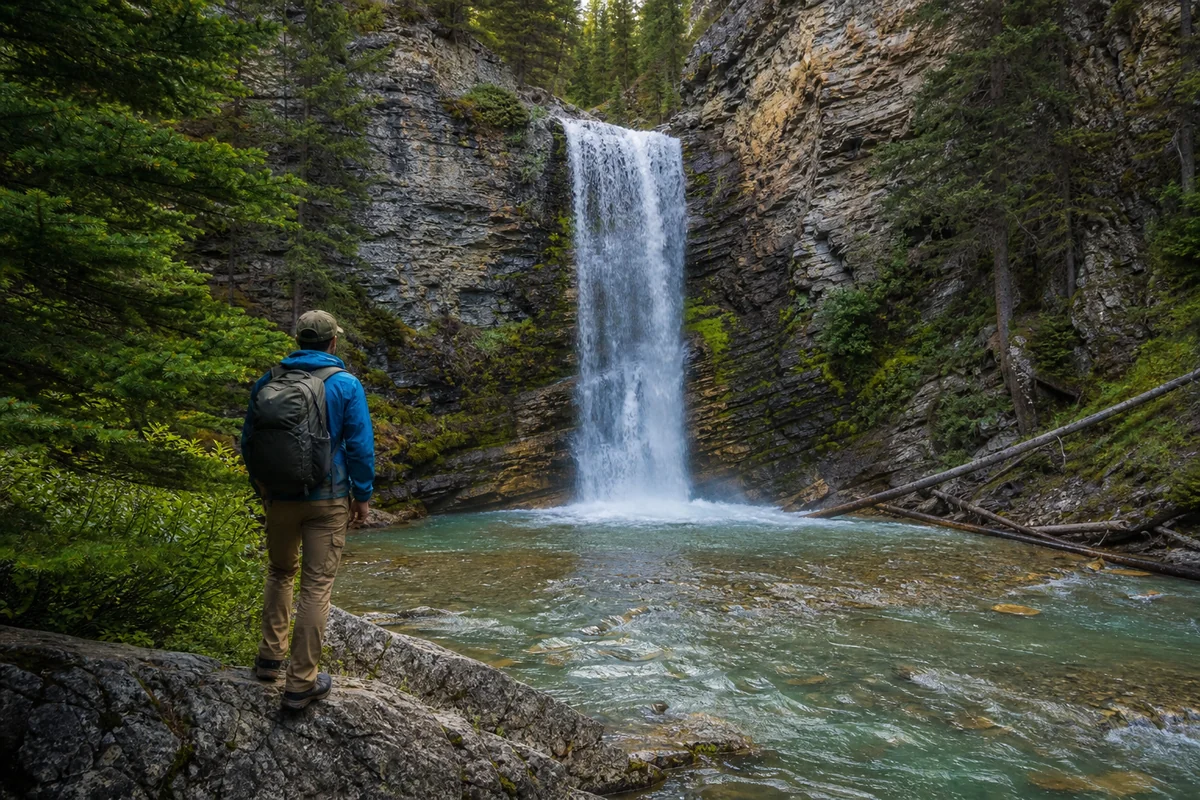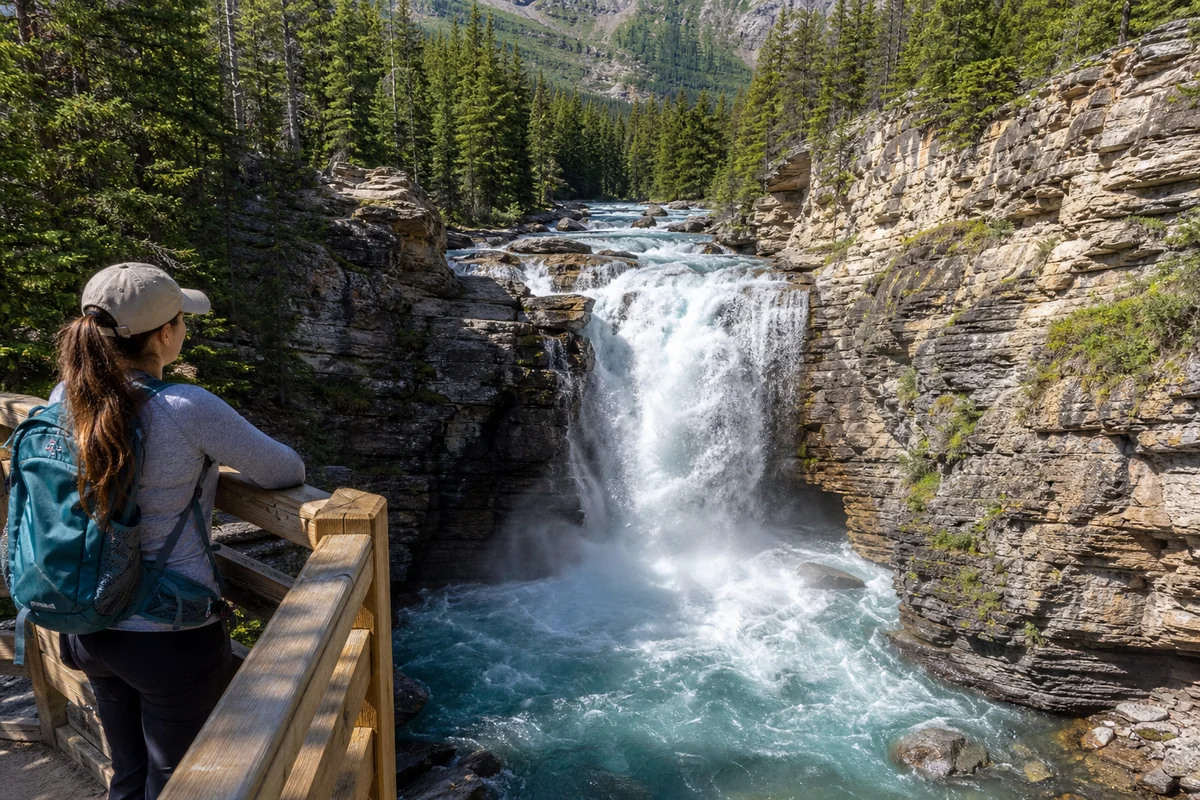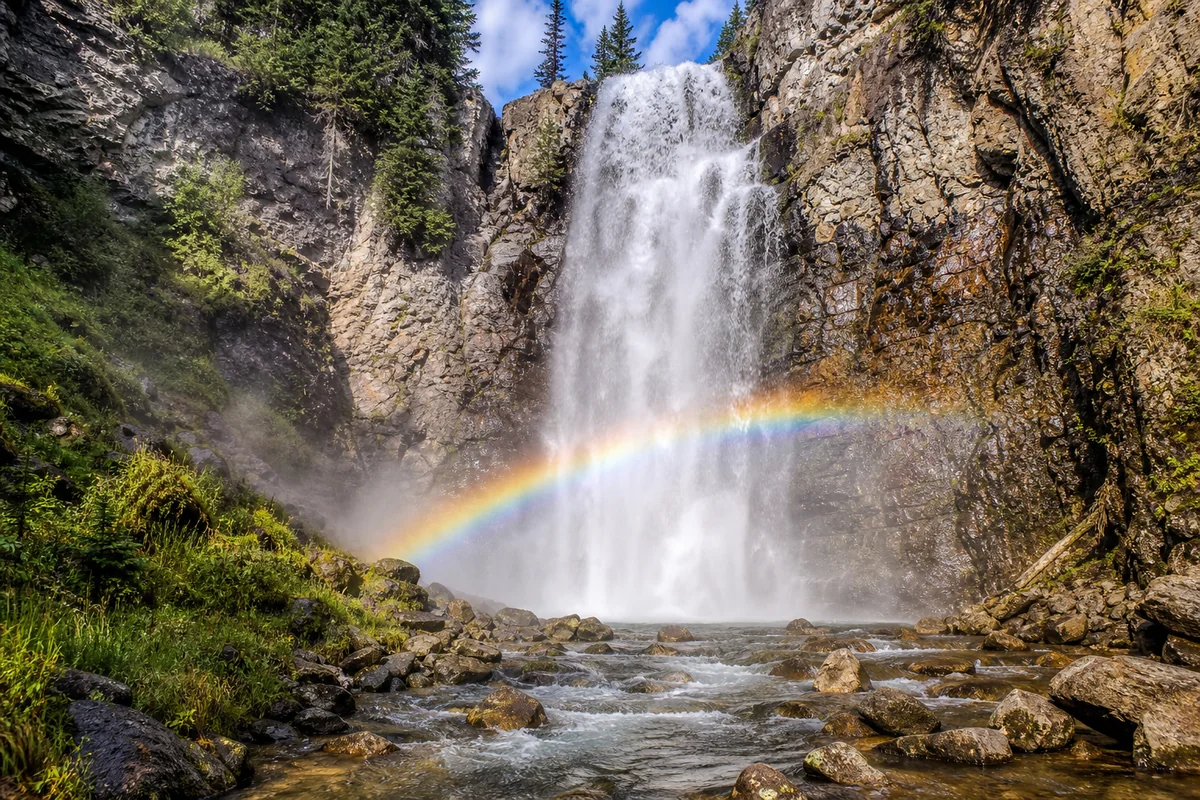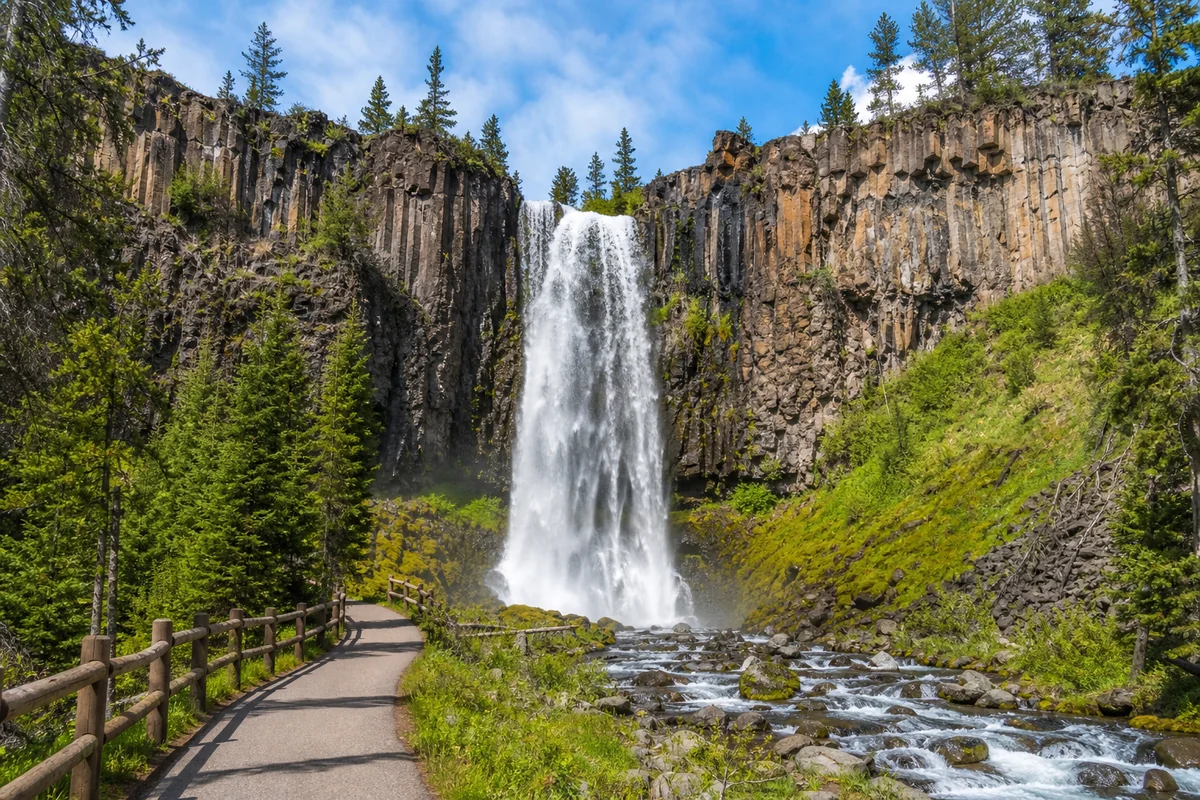
The moment I rounded the final corner of the trail and saw Palisade Falls thundering down that ancient volcanic cliff face, I actually laughed out loud.
Not because anything was funny, but because this 80-foot waterfall felt like it shouldn’t be this easy to reach—just a half-mile walk from the parking lot, fully paved, and absolutely spectacular.
If you’re exploring Montana waterfalls, Palisade Falls deserves a spot at the top of your list for its perfect combination of accessibility and raw natural beauty.
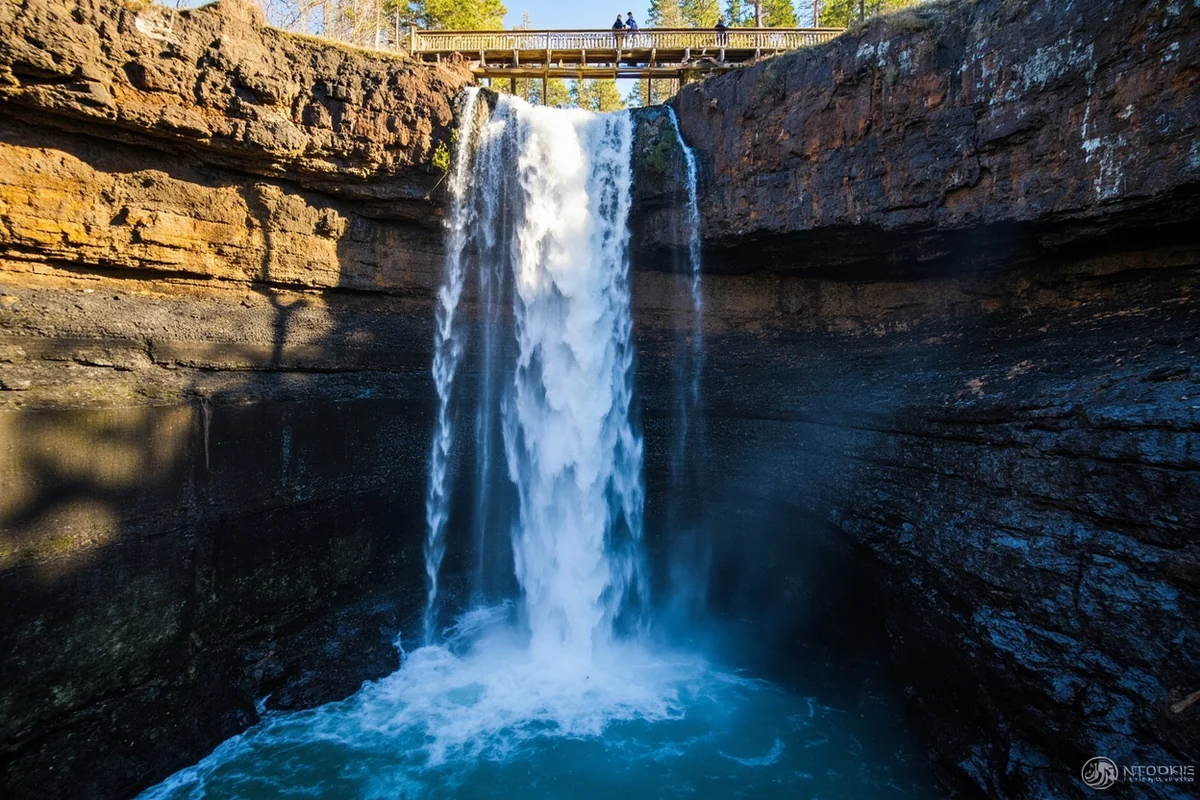
- Palisade Falls is a stunning 80-foot waterfall just 22 miles south of Bozeman in Hyalite Canyon
- The paved trail is only 0.6 miles round trip with 120 feet of elevation gain—perfect for families, wheelchairs (with assistance), and strollers
- Best visited late May through early July for peak water flow, or September for fall colors
- Free to access, no permits required, but the road closes in winter
- Plan for crowds during summer weekends—arrive before 9 AM or after 5 PM
- Allow 30-45 minutes for the hike, longer if you want to explore the base
Liked this article?
Add Roaming Montana as a preferred source so you see more of our articles and guides on Google.
What Makes Palisade Falls Special
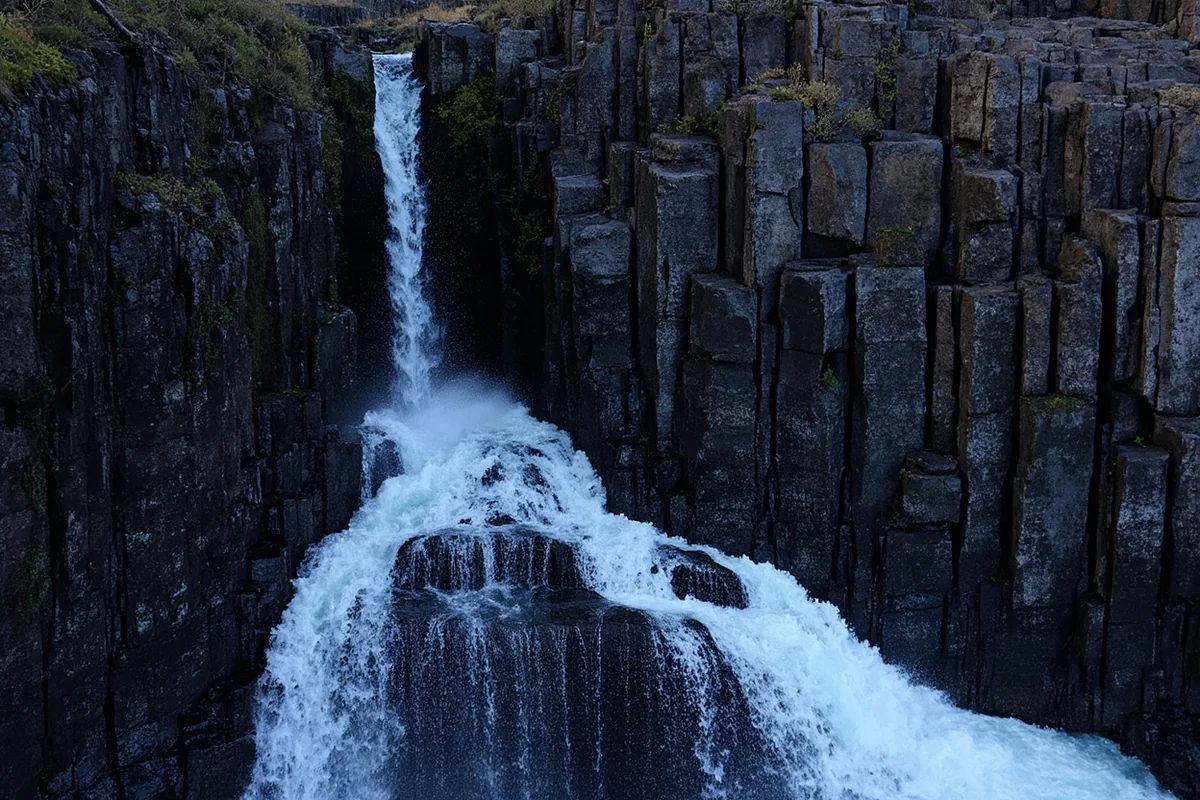
During my visit last summer, I spent a good twenty minutes just staring at the columnar basalt formations that frame the waterfall. These hexagonal rock columns were formed around 50 million years ago when volcanic lava cooled slowly, creating geometric patterns that look almost artificial.
The waterfall itself drops approximately 80 feet down this natural amphitheater of volcanic rock. What struck me most was how the mist created a microclimate at the base—noticeably cooler than the parking lot, with lush moss and wildflowers thriving in the constant spray.
Unlike some of Montana’s more remote falls like Impasse Falls or Pintler Falls, Palisade Falls welcomes visitors of all mobility levels. I watched a grandmother in a wheelchair reach the viewing platform with her family, tears in her eyes as she experienced her first Montana waterfall in years.
Getting to Palisade Falls: Detailed Directions
The drive to Palisade Falls is half the adventure. From downtown Bozeman, head south on South 19th Avenue, which becomes Hyalite Canyon Road.
You’ll drive approximately 22 miles, passing Hyalite Reservoir along the way. The road winds through gorgeous canyon scenery with several pullouts where I couldn’t resist stopping for photos.
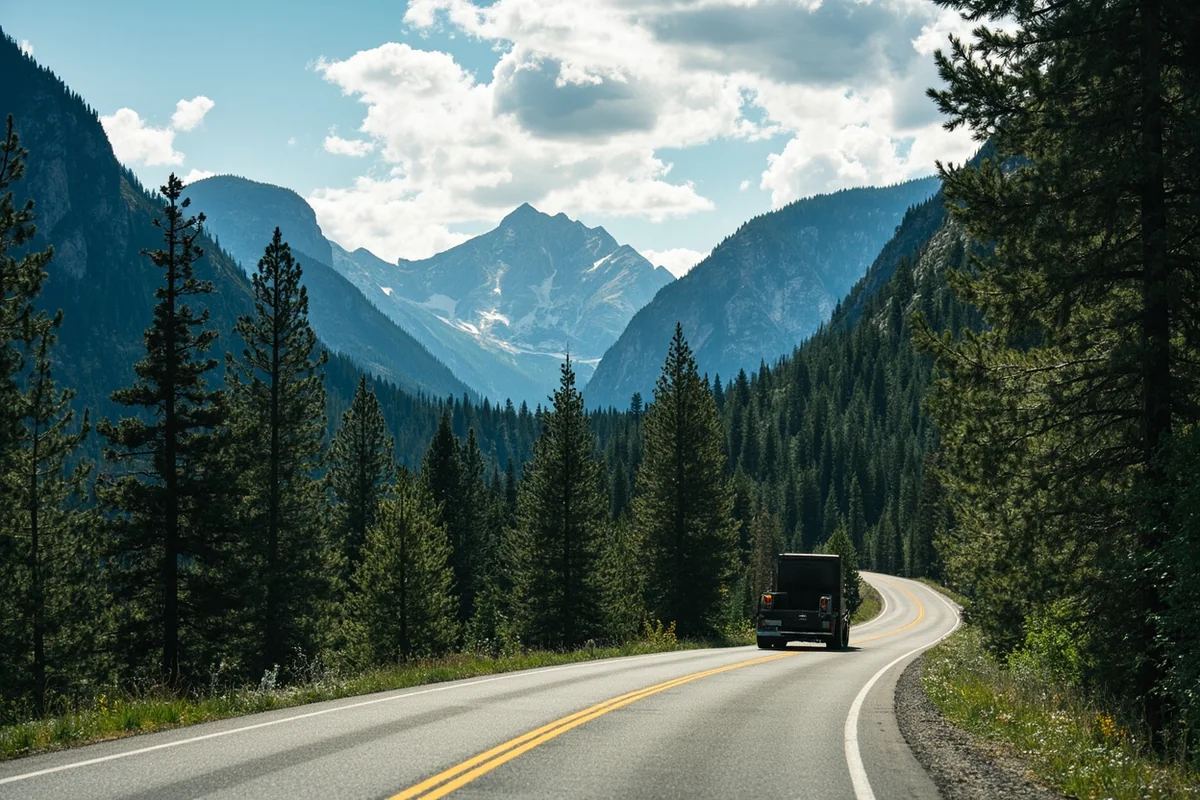
After passing the reservoir, watch for the Palisade Falls sign on your right. The parking lot accommodates about 30 vehicles, but on my July visit, cars were lined up along the road by 10 AM.
Road Conditions and Seasonal Access
Here’s something that caught me off guard during my first attempt: Hyalite Canyon Road closes seasonally, typically from December through mid-April, depending on snowpack. The road beyond the East Fork Hyalite Creek crossing can remain snow-covered well into May.
I called the Bozeman Ranger District (406-522-2520) before my trip to confirm the road was open. The recording updates regularly with current conditions—I’d recommend doing the same, especially for spring or late fall visits.
During summer months, the road is well-maintained gravel after the pavement ends near the reservoir. My sedan handled it fine, though I’d exercise caution after heavy rain when the surface gets slick.
The Trail Experience: Step by Step
The Palisade Falls Trail officially measures 0.6 miles round trip, making it one of the shortest waterfall hikes in Montana. But don’t let the brevity fool you into rushing through—this trail rewards those who take their time.
The Trailhead
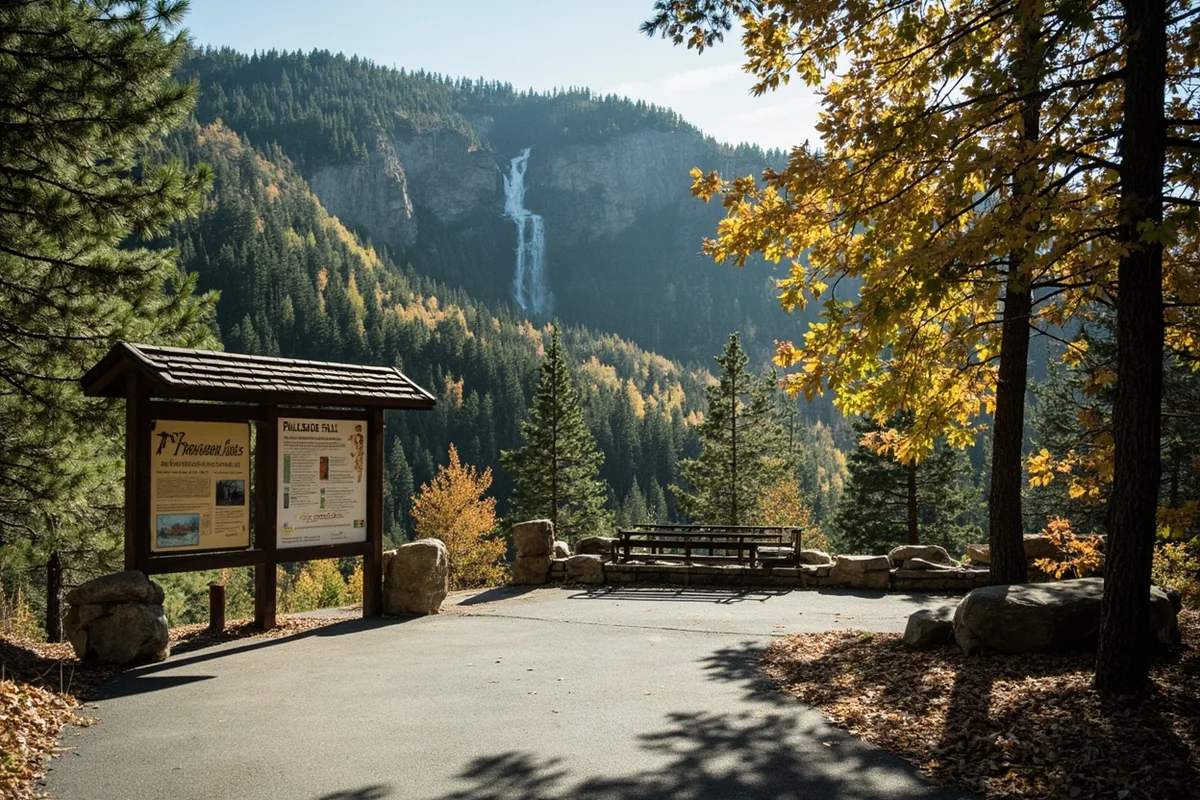
The trail begins at the well-marked trailhead with an interpretive sign explaining the geological history of the area. There’s a vault toilet here that’s actually quite clean (a rarity in my experience), so take advantage of it.
I noticed immediately that the trail is fully paved with asphalt, wide enough for two people walking side by side. The Forest Service has done an exceptional job maintaining this surface—no significant cracks or upheaval when I visited.
The First Section
The initial stretch winds gently through a mixed conifer forest of lodgepole pine and Douglas fir. During my summer hike, the shade was glorious—temperatures dropped at least 10 degrees once I entered the treeline.
Listen for Hyalite Creek to your left. The sound builds anticipation for the waterfall ahead, and on my visit, I spotted a water ouzel (American dipper) bobbing along the rocks.
This section gains minimal elevation and takes about five minutes at a leisurely pace. I recommend pausing to admire the understory wildflowers—I counted columbine, arnica, and Indian paintbrush during my July visit.
The Climbing Section
About halfway in, the trail begins its steeper ascent toward the falls. The path transitions to a series of gentle switchbacks with periodic benches for resting.
This is where the 120 feet of elevation gain happens, and while it’s not strenuous by any measure, folks with mobility challenges may appreciate the rest stops. I saw parents pushing jogging strollers manage it without too much difficulty.
The sound of the waterfall grows louder here, and you’ll likely feel the temperature drop as you approach the canyon’s end.
The Viewing Platform
The trail culminates at a wooden viewing platform with benches. This is where most visitors stop, snap photos, and turn back—but I’d encourage you to linger.
The platform offers the classic Palisade Falls view: the full 80-foot drop framed by columnar basalt, with mist catching the light on sunny afternoons. During my visit, a rainbow appeared briefly in the spray around 2 PM when the sun angle was just right.
If you’re able, carefully make your way to the base of the falls via the rocky scramble beyond the platform. The rocks are slippery—I nearly took a tumble—but getting close enough to feel the spray on your face is absolutely worth the extra effort.
Best Times to Visit Palisade Falls
Seasonal Considerations
I’ve now visited Palisade Falls in three different seasons, and each offered a distinct experience.
Late May to Early July brings peak water flow when snowmelt feeds Hyalite Creek at maximum volume. The falls thunder with impressive force, and the spray creates a constant mist that soaks you at the base. This is my favorite time, though crowds are also at their peak.
Mid-July to August sees reduced flow as snowmelt diminishes. The waterfall is still beautiful but noticeably thinner. On the plus side, you can get closer to the base without getting drenched, making photography easier.
September to October offers fall colors that transform the canyon. Golden aspens contrast beautifully with the dark basalt columns. Water flow is lowest, but the atmosphere is magical, and crowds thin dramatically after Labor Day.
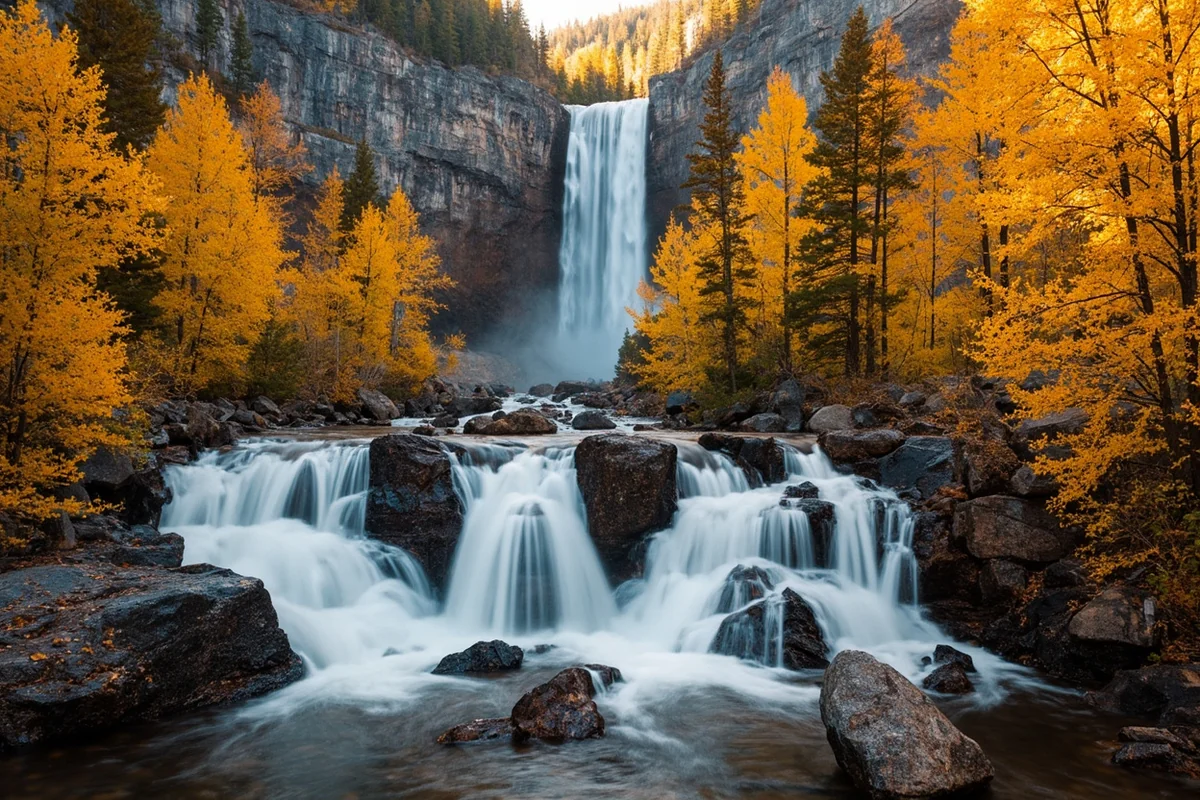
For a completely different Montana waterfall experience during peak summer, consider Holland Lake Falls or the iconic Kootenai Falls in the northwest corner of the state.
Time of Day
Morning light hits Palisade Falls most favorably, with direct sun reaching the falls between approximately 10 AM and 2 PM in summer. However, this is also when crowds peak.
During my July visit, I arrived at 7:30 AM and had the falls nearly to myself for a full hour. By 10:30 AM, I counted over 40 people on the trail.
Late afternoon visits (after 5 PM) also thin the crowds, though the falls will be in shadow. The soft evening light creates a different mood that photographers may appreciate.
What to Bring
Based on my visits, here’s the gear I’d recommend:
Essential items:
- Water bottle (even for this short hike, Montana’s dry air dehydrates quickly)
- Sunscreen and hat for the exposed parking lot and sections of trail
- Sturdy footwear—flip-flops aren’t ideal for the rocky scramble to the falls’ base
- Camera or phone for photos
- Light jacket, as temperatures at the falls can be 10-15 degrees cooler than the parking lot
Nice to have:
- Binoculars for spotting birds and wildlife
- Waterproof phone case if you plan to approach the base during high water
- Picnic lunch—there are great spots along Hyalite Reservoir to enjoy after your hike
- Bug spray (mosquitoes can be fierce near the creek in early summer)
Practical Information Table
| Detail | Information |
|---|---|
| Trail Distance | 0.6 miles round trip |
| Elevation Gain | 120 feet |
| Difficulty | Easy (accessible paved trail) |
| Time Required | 30-45 minutes |
| Waterfall Height | Approximately 80 feet |
| Entrance Fee | None |
| Parking | Free lot, ~30 spaces |
| Facilities | Vault toilet at trailhead |
| Dog Friendly | Yes, on leash |
| Cell Service | Limited to none |
| Managing Agency | Custer Gallatin National Forest |
Photography Tips
As someone who spent an embarrassingly long time trying to capture the perfect shot during my last visit, I can offer some hard-won advice.
Lens choice matters. The amphitheater is relatively tight, so wide-angle lenses (16-35mm equivalent) work best for capturing the full scene. I struggled with my 50mm, constantly backing up and still missing the top of the falls.
Bring a polarizing filter if you’re serious about waterfall photography. The mist and wet rocks create significant glare. My polarizer helped reduce reflections and saturate the greens of the surrounding vegetation.
Consider a tripod for smooth, silky water effects if you visit during lower flow. During peak runoff, the falls move so forcefully that longer exposures aren’t strictly necessary. On my September visit, I used a 2-second exposure at f/16 to create that dreamy water look.
Protect your gear. The spray is real, especially in June. I keep microfiber cloths in every pocket and wipe my lens between shots. A rain sleeve saved my camera on one particularly misty afternoon.
Scout your compositions first. Walk the entire accessible area before committing to a spot. I found that shooting from the left side of the viewing platform, angled slightly right, captured the most dramatic perspective of the columnar basalt.
Wildlife Encounters
Hyalite Canyon is prime wildlife habitat, and even on this short trail, I’ve had memorable encounters.
During my summer visit, a pine marten crossed the trail about 50 feet ahead—a streak of brown fur that disappeared before I could grab my camera. The resident squirrel population is bold and plentiful, clearly accustomed to visitors.
Bird life is excellent. I’ve spotted mountain chickadees, Clark’s nutcrackers, and the aforementioned water ouzel. Bring binoculars and spend some time quietly watching the creek.
The area is bear country. While I’ve never seen a bear on the Palisade Falls trail specifically, I’ve encountered fresh scat in the parking lot. Make noise on the trail, and don’t leave food in your vehicle—bear boxes are available at the trailhead during peak season.
Moose frequent Hyalite Canyon, particularly near the reservoir. Give them wide berth—they’re more dangerous than bears in many situations. I once had to wait fifteen minutes for a cow moose to move off the road near the reservoir.
Combining Palisade Falls with Other Hyalite Activities
One of Palisade Falls’ greatest advantages is its location within the larger Hyalite Canyon recreation area. I’d encourage you to make a full day of it.
Hyalite Reservoir
This beautiful mountain lake sits about 5 miles before the Palisade Falls trailhead. On my last trip, I combined the waterfall hike with a lakeside picnic and some easy fishing.
The reservoir offers multiple day-use areas with picnic tables, grills, and stunning mountain views. It’s also stocked with rainbow and cutthroat trout—I didn’t catch anything, but I watched others having better luck.
Grotto Falls
If you’re up for a more challenging hike after Palisade Falls, the Grotto Falls trailhead sits just a short drive further up the canyon. This 2.5-mile round trip hike features a waterfall you can actually walk behind—one of Montana’s unique geological wonders.
Additional Hyalite Waterfalls
Hardcore waterfall enthusiasts should know that Hyalite Creek hosts multiple cascades beyond Palisade Falls. The creek tumbles through a series of falls higher in the drainage, though accessing them requires significantly more effort.
If you’re building a Montana waterfall bucket list, don’t miss Morrell Falls near Seeley Lake or the stunning Ousel Falls in Big Sky—both are within reasonable driving distance of Bozeman and offer completely different experiences.
Accessibility Details
The Forest Service designates Palisade Falls Trail as accessible, and I want to give an honest assessment of what that means in practice.
The paved surface is generally smooth, with occasional minor bumps and cracks. On my last visit, I walked the entire trail backward, imagining navigating it in a wheelchair. My assessment: it’s doable with assistance but would be challenging solo due to the sustained grade.
The steeper middle section presents the biggest obstacle. Someone with strong arm strength could self-propel a manual wheelchair, but an attendant would make the experience much more comfortable.
Power wheelchairs and mobility scooters should handle the trail well, assuming sufficient battery life. The surface is solid enough to support wheels.
The viewing platform at the end is large enough to accommodate multiple wheelchairs simultaneously, with railing at an appropriate height.
I spoke with a park volunteer who mentioned that the Forest Service has considered additional accessibility improvements but faces funding constraints. What exists now represents a genuine effort to welcome visitors of all abilities to this remarkable natural feature.
Visiting with Children
Palisade Falls ranks among Montana’s most family-friendly waterfall experiences. I visited last summer with my seven-year-old niece, and she deemed it “actually really cool”—high praise from a jaded second-grader.
The short distance prevents tired-leg meltdowns, and the paved surface accommodates strollers without issue. I’d recommend a jogging stroller over an umbrella stroller for the steeper section.
Children are fascinated by the columnar basalt formations. Before our hike, I explained how volcanoes create hexagonal rock patterns, and my niece spent several minutes counting the sides of columns near the falls.
Safety considerations: The rocks beyond the viewing platform are slippery. I wouldn’t let young children scramble to the base unassisted. The creek below the falls also moves swiftly—maintain close supervision near the water.
For families exploring Montana’s waterfall diversity, Running Eagle Falls in Glacier National Park offers a similarly accessible experience, while Lost Creek Falls near Pray provides another short, rewarding hike.
Common Mistakes to Avoid
Having visited multiple times and observed hundreds of other hikers, I’ve compiled a list of common missteps:
Arriving mid-morning on weekends. The 10 AM to 2 PM Saturday window is chaos. I’ve seen parking overflow by quarter-mile stretches along the road. Come early, come late, or come on weekdays.
Wearing inappropriate footwear. Yes, the trail is paved. But if you want to explore the base of the falls, flip-flops are a recipe for twisted ankles. I watched a guy in Crocs take a spectacular fall on the wet rocks—he was okay, but his dignity suffered.
Forgetting layers. The temperature differential between the parking lot and the falls genuinely surprised me on my first visit. That cool mist feels fantastic until you’re soaking wet and chilled.
Rushing the experience. Many visitors reach the falls, snap a few photos, and immediately turn back. Sit on a bench. Watch the water. Count the basalt columns. This is a place that rewards patience.
Ignoring the surrounding area. Palisade Falls is a highlight, but Hyalite Canyon offers so much more. Combine your visit with the reservoir, additional hikes, or even ice climbing at Hyalite Falls in winter (when the road is accessible).
Expecting solitude. This is a popular destination, and rightfully so. If you need wilderness silence, consider more remote falls like Mud Creek Waterfall or Passage Creek Falls.
Nearby Dining and Lodging
Bozeman, just 22 miles north, offers comprehensive services.
For post-hike fuel, I’m partial to Nova Cafe on Main Street for breakfast and brunch—their huevos rancheros have fueled many of my Montana adventures. Jam! is another excellent breakfast spot, though expect lines on weekends.
For dinner, Blackbird Kitchen serves phenomenal wood-fired pizzas and locally sourced Montana fare. I’ve also had memorable meals at Squire House, which occupies a beautifully restored historic building.
Lodging ranges from boutique hotels like The Lark (my favorite for its modern design and downtown location) to chain options along North 7th Avenue. During summer and ski season, book well in advance—Bozeman fills up quickly.
For camping, the Hyalite Canyon area offers multiple Forest Service campgrounds. Hood Creek Campground sits closest to Palisade Falls and operates on a first-come, first-served basis. I’ve also camped at Chisholm Campground near the reservoir, which offers a few reservable sites.
Winter Considerations
While the road closes to vehicle traffic in winter, Palisade Falls transforms into an ice climbing destination that draws enthusiasts from across the country.
I’ve never attempted the climb myself—I’m firmly a warm-weather waterfall visitor—but I’ve driven up after the road opens in spring to see the remnants of the frozen falls. The sight of that massive ice curtain, slowly melting in the warming sun, is remarkable in its own right.
Cross-country skiers and snowshoers access the falls via the road, adding approximately 4 miles each way to the journey. Serious winter enthusiasts consider this a worthy destination, though it requires proper gear, avalanche awareness, and fitness.
If you’re visiting Montana in winter and craving waterfall views, McDonald Falls in Glacier remains relatively accessible, or consider Memorial Falls near Great Falls, which can sometimes be reached with proper preparation.
Geological Background
I’ll confess to being a geology enthusiast, and Palisade Falls delivers fascinating insights into Montana’s volcanic past.
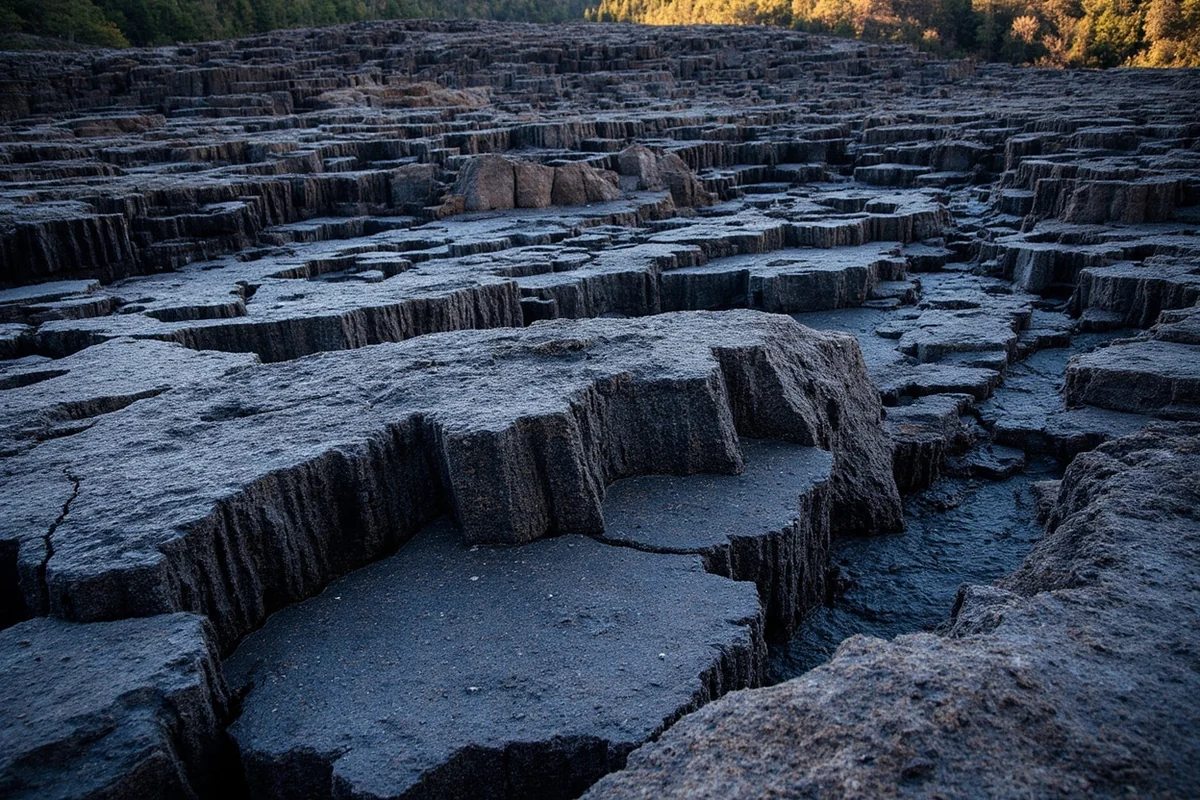
The columnar basalt visible at the falls formed during the Absaroka volcanic period, roughly 50 million years ago. When basaltic lava cooled slowly, it contracted and cracked into these distinctive hexagonal columns—a phenomenon visible at famous locations worldwide, from the Giant’s Causeway in Ireland to Devils Tower in Wyoming.
The waterfall itself is relatively young in geological terms, carved by glacial meltwater after the last ice age approximately 10,000 years ago. The falls continue to erode the basalt, meaning future visitors will see a slightly different waterfall than I saw.
Understanding this history enriched my experience considerably. Those geometric rock columns aren’t just beautiful—they’re a tangible connection to Montana’s volcanic heritage, preserved in stone.
Conservation and Trail Ethics
Palisade Falls’ accessibility is both a blessing and a responsibility. High visitation takes a toll on sensitive environments.
On every visit, I’ve picked up at least a handful of litter left by less conscientious visitors. I’d encourage you to do the same—pack out more than you pack in. The Forest Service maintains trash receptacles at the trailhead, making proper disposal easy.
Stay on the designated trail and viewing platform to protect fragile vegetation. I’ve seen visitors trampling moss and wildflowers near the base of the falls in pursuit of unique photos. Those plants took decades to establish in this challenging environment.
If you’re visiting during high-use periods, model good behavior for others. Your example influences how other visitors treat these public lands.
Consider supporting organizations like the Custer Gallatin National Forest Foundation, which funds trail maintenance and improvements throughout the region. Accessible trails like this one require ongoing investment to maintain.
Final Thoughts on Palisade Falls
Across all the Montana waterfalls I’ve visited—from the remote backcountry cascades like Rockwell Falls to roadside attractions like Skalkaho Falls—Palisade Falls occupies a unique position in my heart.
It’s not the tallest waterfall in Montana. It’s not the most secluded or the most challenging to reach. But it might be the most *generous* waterfall in the state.
Palisade Falls gives its beauty freely to everyone who visits—elderly grandparents, toddlers in strollers, wheelchair users, seasoned hikers, and first-time visitors alike. That accessibility, combined with genuine geological wonder and impressive natural beauty, creates something special.
When I brought my niece last summer, I watched her face as she encountered a true Montana waterfall for the first time. The wonder there reminded me of my own first visit, and of why I keep returning.
Whether Palisade Falls is your introduction to Montana’s waterfalls or your twentieth, it delivers an experience worth the drive, worth the walk, and worth the wonder. I hope you’ll visit soon.
Frequently Asked Questions
How do I get to Palisade Falls in Montana?
Palisade Falls is located about 25 miles south of Bozeman in the Hyalite Canyon area of the Gallatin National Forest. From Bozeman, take South 19th Avenue south, which becomes Hyalite Canyon Road, and follow it for approximately 17 miles to the Palisade Falls trailhead. The road is paved but winding, and the parking area fills up quickly on summer weekends, so I recommend arriving before 10 AM.
How long is the Palisade Falls trail hike?
The Palisade Falls trail is an easy 1.2-mile round-trip hike that’s fully paved and wheelchair accessible. Most visitors complete the hike in about 30-45 minutes, including time to enjoy the waterfall. The trail gains roughly 200 feet in elevation with a gentle grade, making it perfect for families with young children or anyone looking for a quick scenic walk.
What is the best time of year to visit Palisade Falls Montana?
The best time to visit Palisade Falls is late May through early July when snowmelt creates the most impressive water flow. I’ve found that early summer offers the perfect combination of accessible trails and peak waterfall volume. The road to Hyalite Canyon typically opens in late May depending on snowpack, and by late August, the falls can slow to a trickle during dry years.
Is there an entrance fee for Palisade Falls?
There is no entrance fee to visit Palisade Falls, but you will need a valid parking pass for the Hyalite Canyon area. A day pass costs $5 and is available at self-service stations at the trailhead, or you can use an America the Beautiful Annual Pass if you have one. I always keep a few dollars cash in my car since the self-pay stations don’t accept cards.
Can you swim at Palisade Falls in Hyalite Canyon?
Swimming directly at Palisade Falls is not recommended due to the rocky terrain, shallow pool, and cold temperatures even in summer. The water at the base is frigid from snowmelt and the area around the falls can be slippery. If you’re looking to cool off, Hyalite Reservoir just a few miles down the road offers much better swimming opportunities during warmer months.
What should I bring on the Palisade Falls hike?
I recommend bringing sturdy shoes with good traction since the paved trail can be wet from waterfall mist, especially near the viewing platform. Pack a light jacket even in summer because temperatures in Hyalite Canyon run 10-15 degrees cooler than Bozeman. Don’t forget your camera, water bottle, and bear spray since this is active grizzly country in the Gallatin National Forest.
Is Palisade Falls trail dog-friendly?
Yes, Palisade Falls trail welcomes dogs but they must be kept on a leash at all times. The paved trail is easy on paws, though the surface can get hot on sunny summer afternoons. I always bring extra water for my dog and keep them close since wildlife encounters with deer, moose, and occasionally bears are possible in the Hyalite Canyon area.
Sources