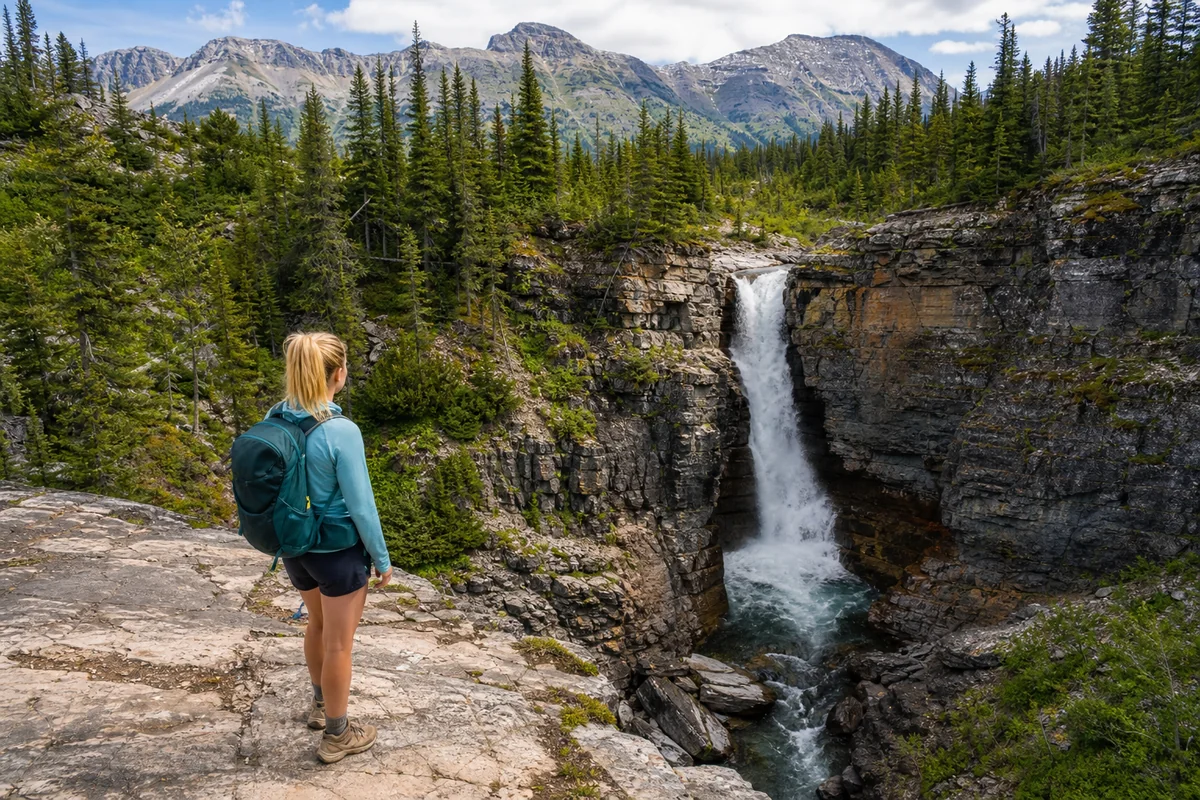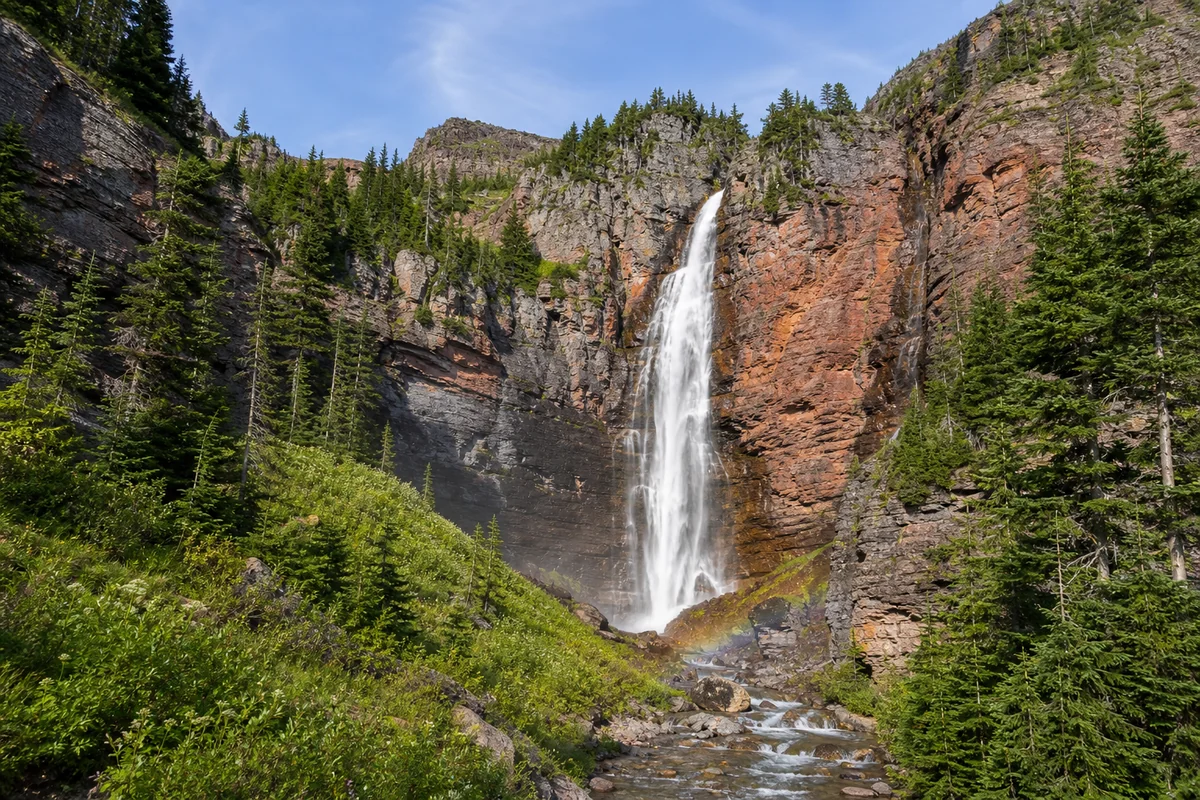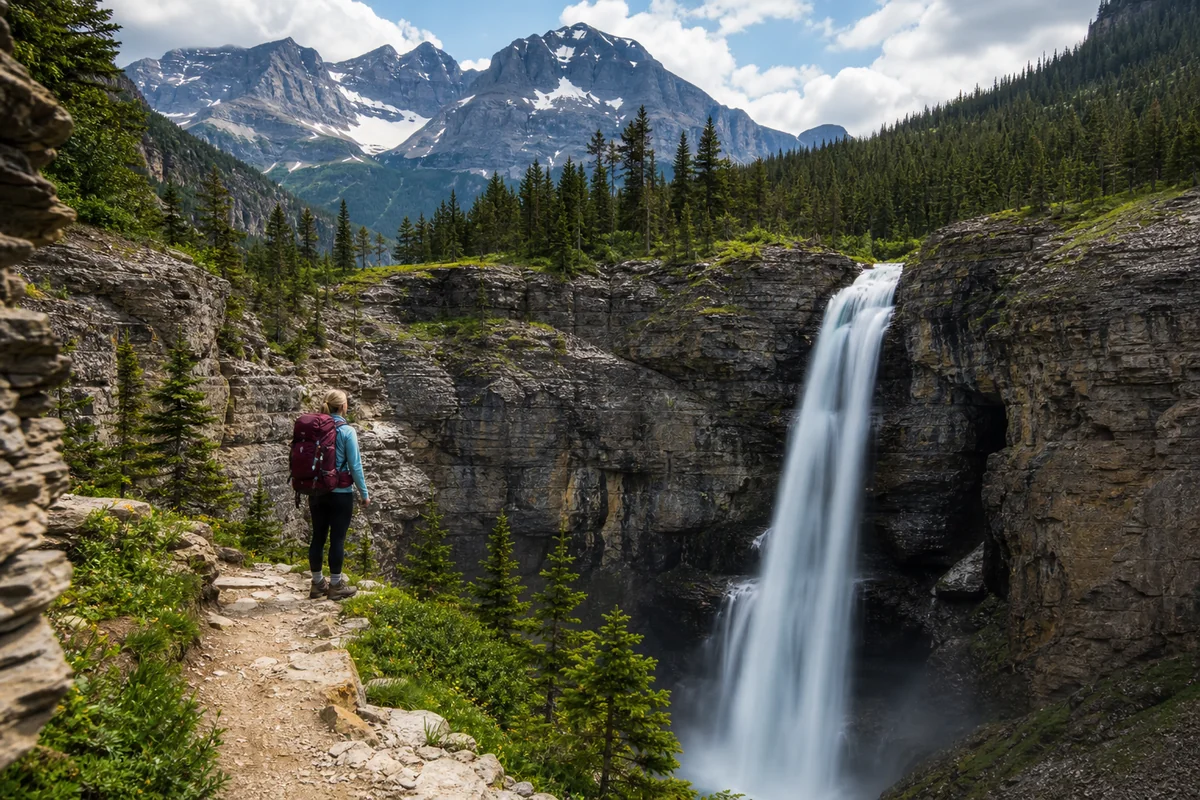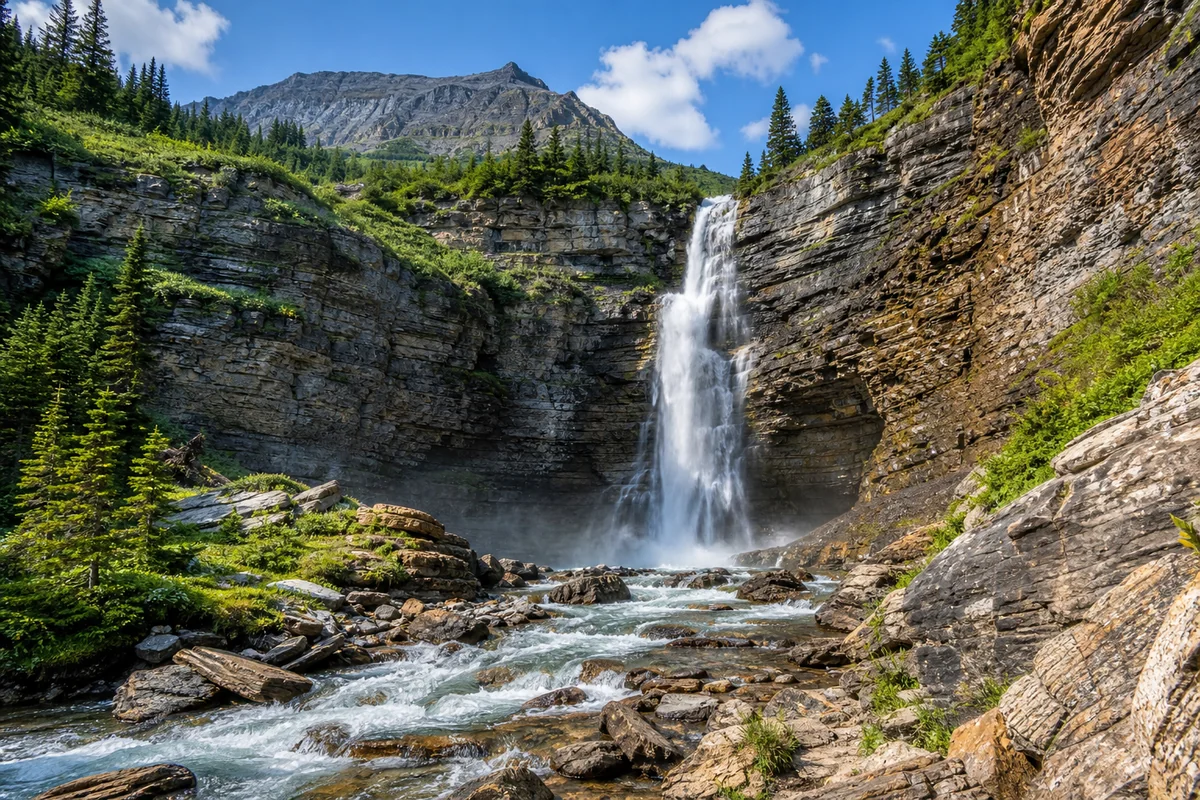
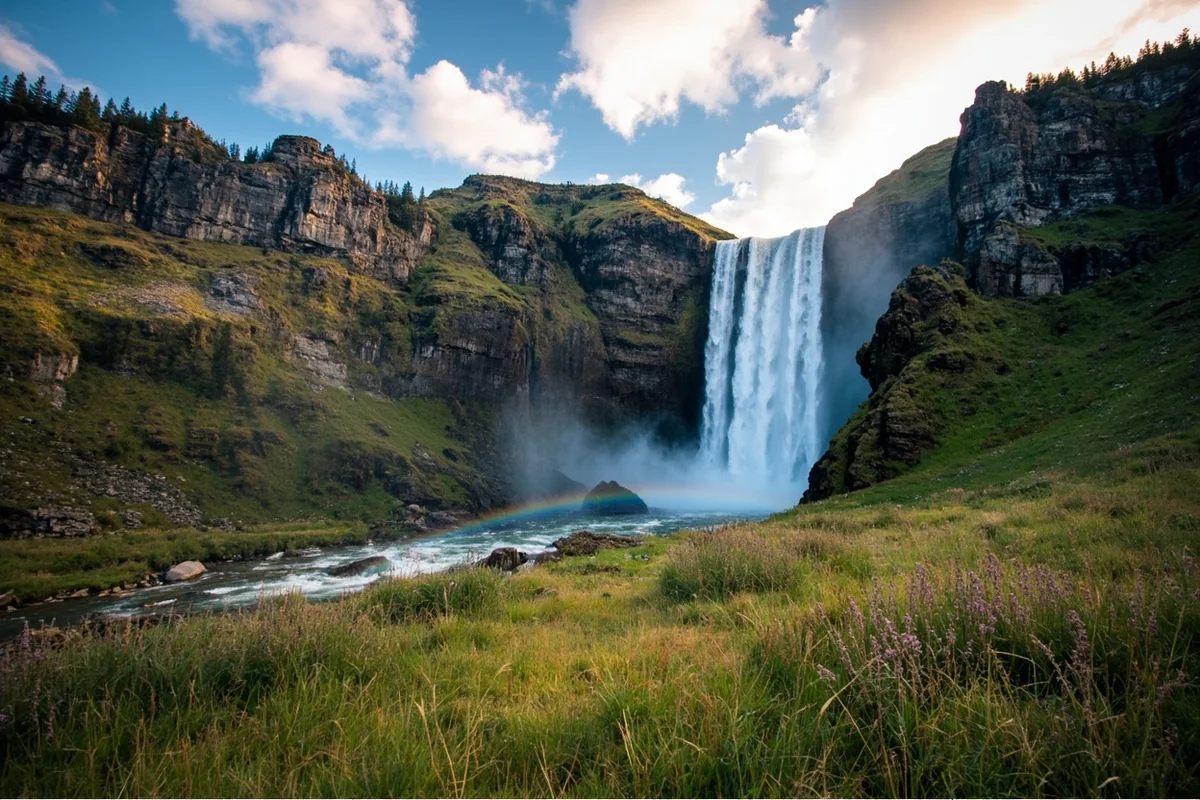
The moment I rounded the final bend on the trail and heard the thunderous roar of Siksika Falls echoing through the valley, I understood why the Blackfeet people named this cascade after their own—the word “Siksika” meaning “Blackfoot” in their native language.
Standing there last July with mist cooling my sun-warmed face, I felt like I’d stumbled upon one of Glacier National Park’s best-kept secrets, a waterfall that doesn’t appear on most tourist itineraries but absolutely deserves a spot on your Montana waterfalls bucket list.
- Siksika Falls is located in Glacier National Park’s Two Medicine region, dropping approximately 40 feet into a stunning alpine basin
- The roundtrip hike is roughly 6.6 miles with moderate difficulty and about 700 feet of elevation gain
- Best visiting window: late June through mid-September when trails are snow-free and water flow is optimal
- You’ll need a Glacier National Park entrance pass ($35/vehicle for 7 days or $80 annual)
- Wildlife encounters are common—I spotted mountain goats on my last visit—so bring bear spray and stay alert
- Early morning starts (before 8 AM) offer the best lighting and fewer crowds
Liked this article?
Add Roaming Montana as a preferred source so you see more of our articles and guides on Google.
Understanding Siksika Falls: More Than Just Another Waterfall
I’ve been chasing waterfalls across Montana for nearly a decade now, and I can honestly say that Siksika Falls occupies a unique place in my memory. Unlike the easily accessible Running Eagle Falls just down the road in Two Medicine, reaching Siksika requires genuine effort—and that effort filters out the casual visitors.
What makes this waterfall special isn’t just its impressive 40-foot drop, though that certainly commands attention. It’s the entire setting: the falls emerge from a high alpine cirque, feeding into the pristine waters that eventually make their way to Two Medicine Lake.
The geology here tells a story millions of years in the making. The distinctive red and green argillite rocks that frame the falls are part of the Belt Supergroup, ancient sedimentary formations that give Glacier National Park its characteristic colorful appearance.
Getting to the Trailhead: Your Journey Begins
Let me walk you through exactly how to reach the Siksika Falls trailhead, because I’ve seen plenty of confused visitors in the Two Medicine area over the years.
From the town of East Glacier Park, drive approximately 4 miles north on Highway 49. You’ll turn left onto Two Medicine Road, following signs toward Two Medicine Lake.
The road winds for about 7 miles before reaching the Two Medicine Lake area. During my last visit in summer 2023, I noticed they’d improved the road signage, making navigation much simpler than previous years.
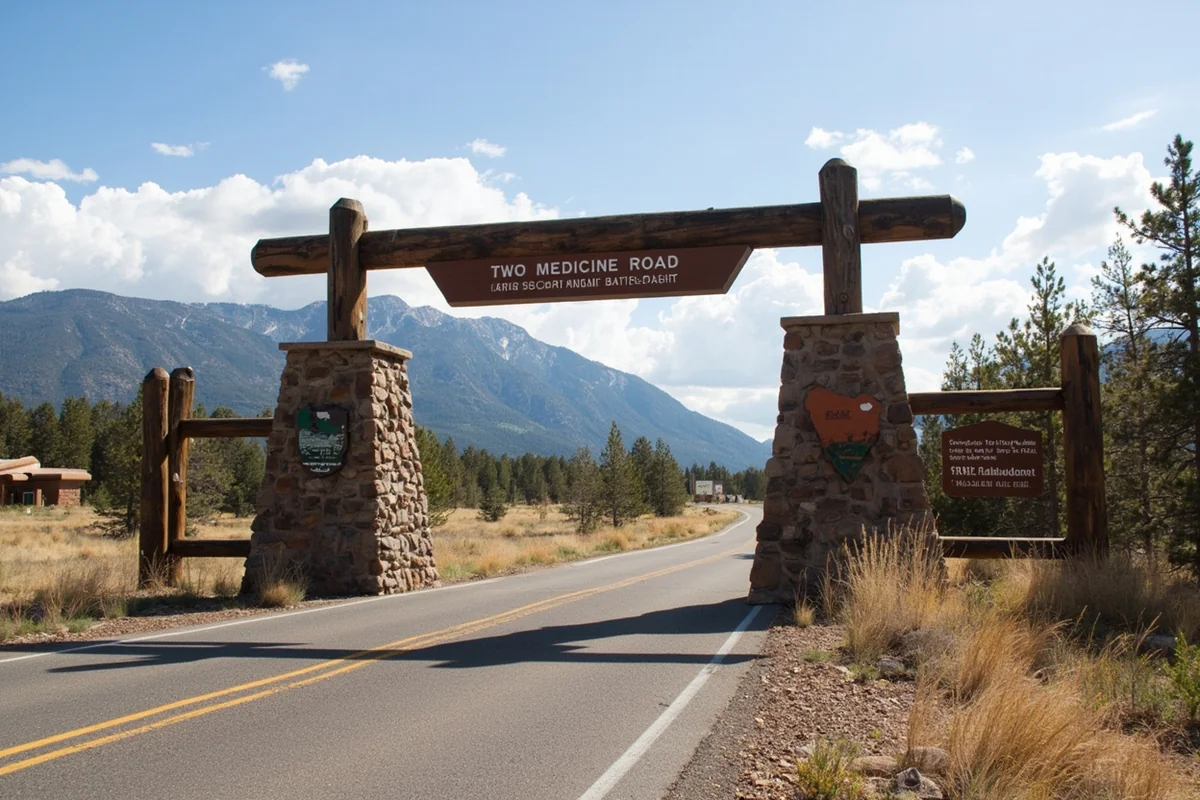
Park at the Two Medicine Lake parking area, where you’ll find restrooms and an information board. During peak season (July and August), I strongly recommend arriving before 8:30 AM—by 10 AM during my recent trip, the lot was completely full with cars circling desperately for spots.
Entrance Fees and Passes
You’ll need a valid Glacier National Park pass to access the Two Medicine area. Here’s the current fee structure:
| Pass Type | Cost | Duration |
|---|---|---|
| Private Vehicle | $35 | 7 days |
| Motorcycle | $30 | 7 days |
| Individual (walk/bike) | $20 | 7 days |
| Glacier Annual Pass | $80 | 12 months |
| America the Beautiful Pass | $80 | 12 months (all federal lands) |
If you’re planning multiple waterfall hikes in Glacier—perhaps combining Siksika with Saint Mary Falls or Redrock Falls—the annual pass pays for itself quickly.
The Trail to Siksika Falls: A Step-by-Step Breakdown
The journey to Siksika Falls follows the South Shore Trail along Two Medicine Lake before climbing into the backcountry. I’ve hiked this trail in various conditions and want to share the real experience, not just trail statistics.
Section 1: Two Medicine Lake Shore (Miles 0-1.8)
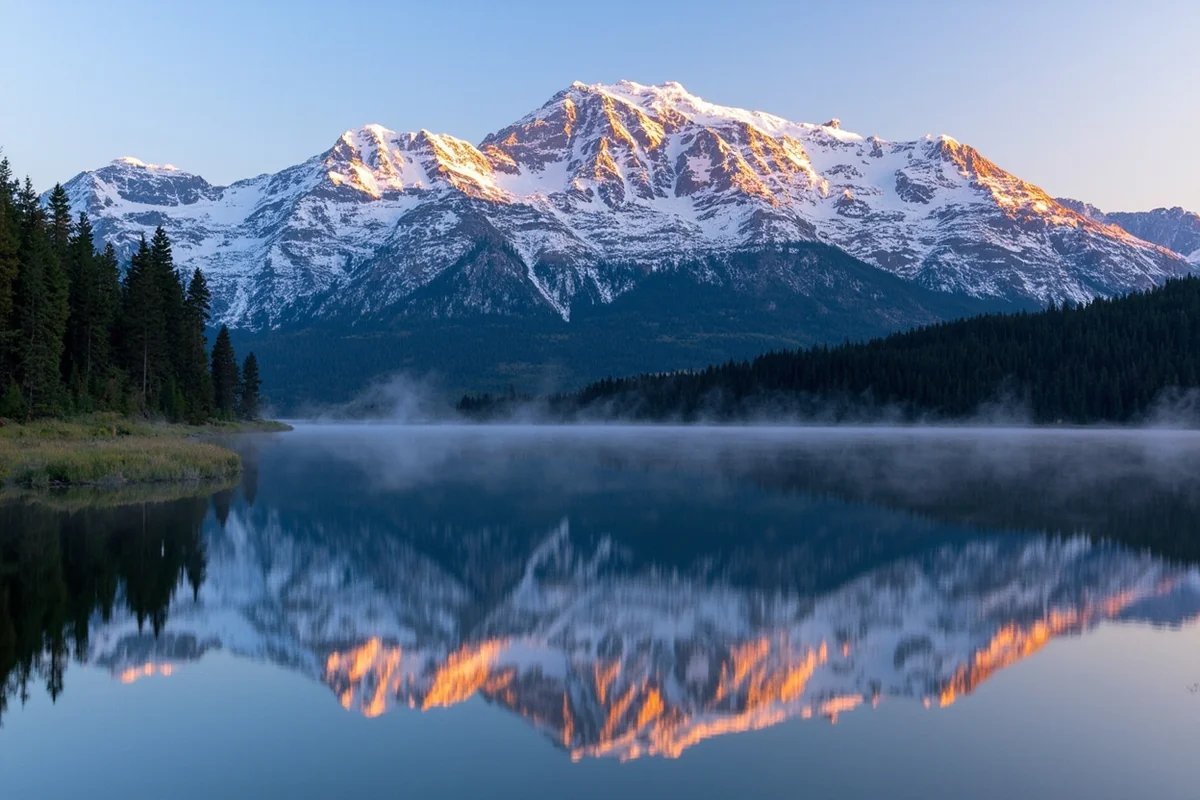
The hike begins at the boat dock area, following the shoreline of Two Medicine Lake. This initial section is deceptively easy—flat, well-maintained, and absolutely gorgeous.
I always pause at the quarter-mile mark to photograph Rising Wolf Mountain reflected in the lake’s surface. The morning light here is extraordinary, painting the peaks in shades of pink and gold.
Watch for the junction with the North Shore Trail at about 0.2 miles. Stay left (south) to remain on the correct path. I’ve met several hikers over the years who accidentally took the wrong fork and ended up at Aster Falls instead—a lovely detour, but not where you want to go if Siksika is your goal.
Section 2: The Climb Begins (Miles 1.8-2.5)
After the relatively flat lakeshore stretch, the trail begins ascending toward Paradise Point and beyond. This is where you’ll feel the elevation gain start to accumulate in your legs.
The forest here consists primarily of subalpine fir and Engelmann spruce, creating a cool, shaded corridor even on the warmest summer days. During my August hike, temperatures at the trailhead hit 82°F, but under the forest canopy, it felt easily 15 degrees cooler.
Pay attention to your surroundings in this section. I’ve encountered black bears here twice over multiple visits—both times they were foraging along the trail edges and moved off when they heard me coming. Make noise, carry bear spray, and stay alert.
Section 3: Upper Valley Approach (Miles 2.5-3.3)
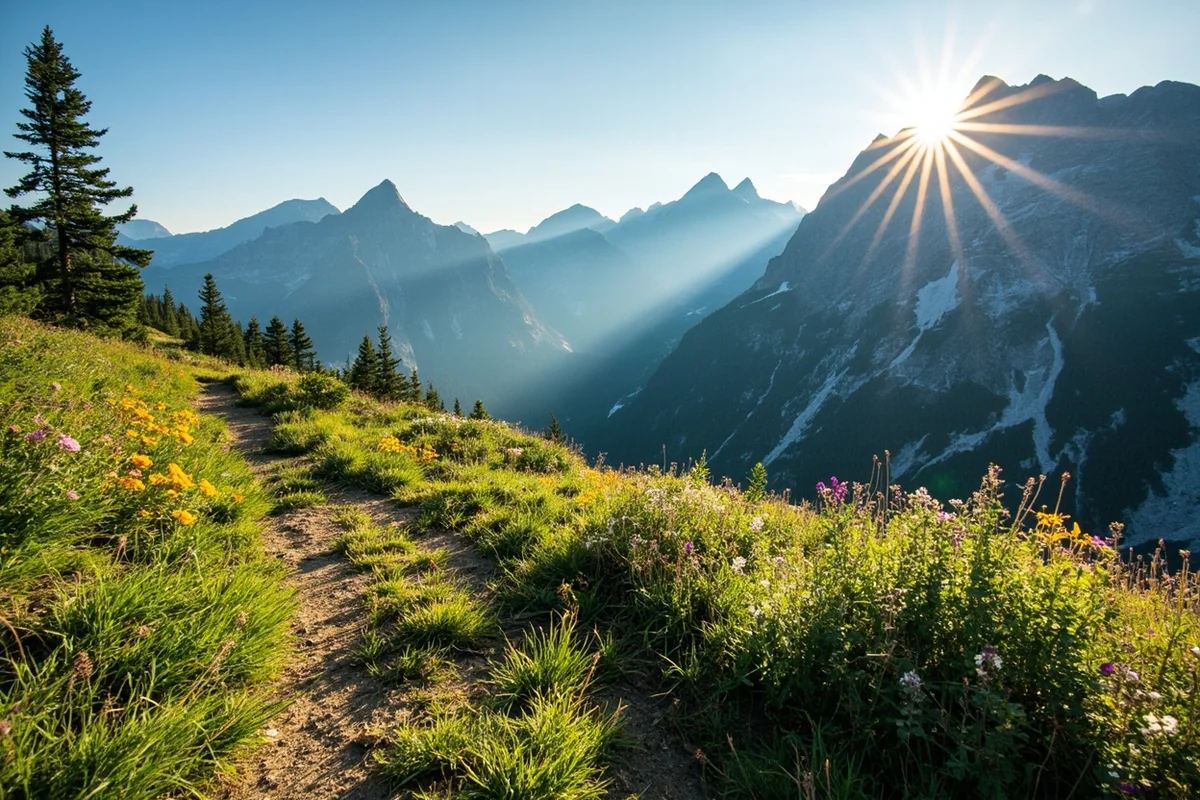
The final stretch to Siksika Falls takes you above the treeline into open alpine terrain. This is my favorite part of the entire hike.
The trail crosses several small streams—during early season (late June), these can be shin-deep with snowmelt, so waterproof boots or sandals that can get wet are essential. By mid-August, most crossings are easily navigable by rock-hopping.
You’ll hear Siksika Falls before you see it. The sound builds gradually as you approach, a low rumble that intensifies into a genuine roar. The anticipation is delicious.
At the Falls: What to Expect
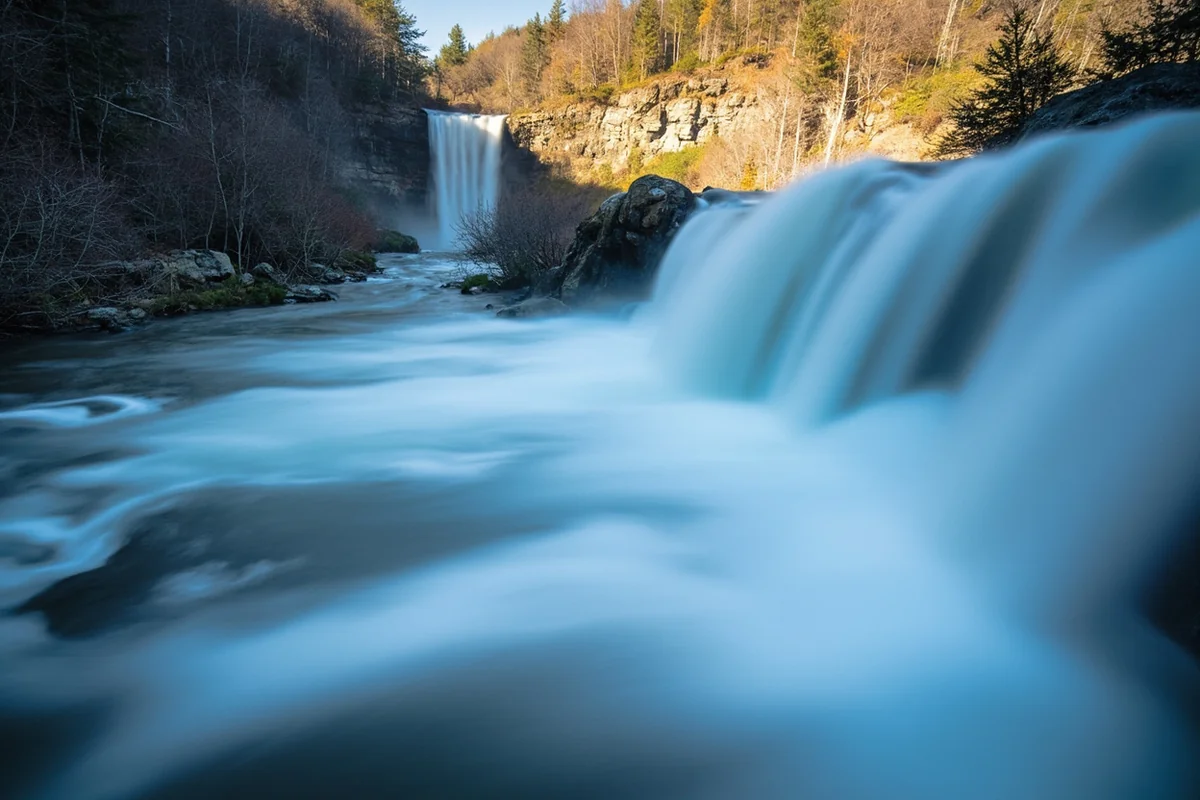
Siksika Falls reveals itself dramatically as you crest the final rise. The waterfall drops in two distinct tiers, with the main plunge constituting the majority of the 40-foot height.
The viewing area is a natural rocky amphitheater that provides multiple perspectives. I’ve spent anywhere from 20 minutes to two hours here, depending on the conditions and my mood.
During peak flow (typically late June through mid-July), the spray reaches the main viewing area, so keep cameras protected. By late August, flow diminishes considerably but the falls remain photogenic.
Photography Tips from My Experience
I’ve photographed Siksika Falls in morning light, afternoon sun, and overcast conditions. Each has advantages, but I prefer early morning visits for several reasons.
First, the eastern orientation means morning light illuminates the falls directly. Second, fewer hikers means more flexibility in composition. Third, wildlife is more active in cooler morning hours.
Bring a polarizing filter if you have one—it cuts glare from wet rocks and enhances the blue sky contrast. I also recommend a small tripod or gorillapod for long exposures that give the water that silky, ethereal quality.
The falls face roughly east-northeast, so afternoon light creates harsh shadows. If you can only visit in the afternoon, overcast days actually produce better results by eliminating contrast issues.
Seasonal Considerations: When Should You Visit?
Timing your visit correctly can make the difference between an incredible experience and a disappointing one. I’ve visited Siksika Falls in every month it’s accessible, and here’s what I’ve learned.
Late June
Peak water flow makes for the most dramatic views of the falls. However, snow may still linger on upper trail sections, and stream crossings can be challenging.
I attempted this hike on June 22nd two years ago and had to turn back at mile 2.8 due to a snow field covering the trail. Always check current conditions with the Two Medicine Ranger Station before heading out in early season.
July
This is the sweet spot for most visitors. Trails are typically snow-free, water flow remains impressive, and wildflowers carpet the alpine meadows.
The trade-off is crowds. July brings peak visitation to Glacier National Park, and while Siksika Falls sees far fewer visitors than Going-to-the-Sun Road attractions, you won’t have the trail to yourself.
August
My personal favorite month for this hike. Water flow is moderate but still scenic, temperatures are comfortable, and crowds thin noticeably after mid-August.
Wildflowers begin their decline, but fall colors start emerging in the alpine grasses. The light has a golden quality that’s especially beautiful for photography.
September
September visits are hit or miss depending on weather. I’ve enjoyed stunning autumn hikes and been chased out by early snowstorms.
If you visit in September, check the forecast obsessively and be prepared to change plans. The Two Medicine Road typically closes for the season in late October, but early storms can make trails impassable well before official closure.
Wildlife You Might Encounter
The Two Medicine area supports remarkable biodiversity, and the trail to Siksika Falls passes through prime wildlife habitat.
Mountain Goats
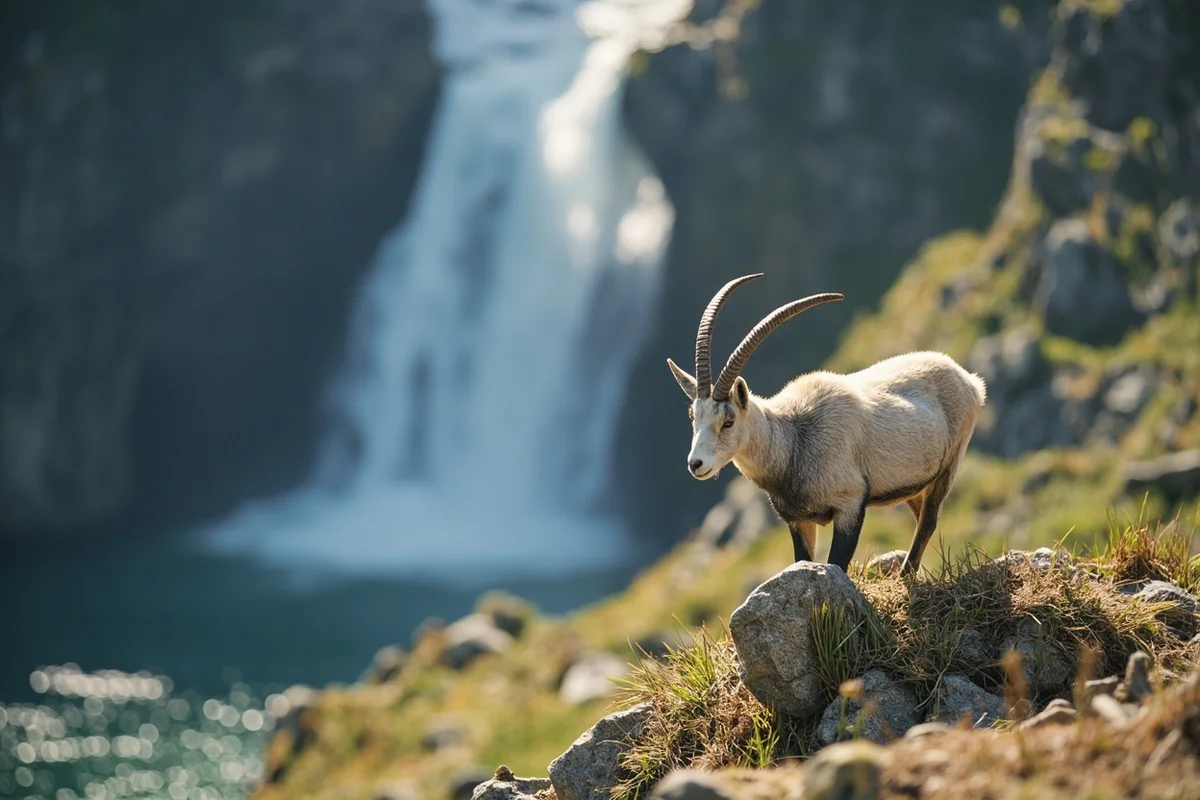
These are the most reliably spotted large mammals along the route. During my July 2023 visit, I watched a nanny and kid navigating cliff faces near the falls for nearly 30 minutes.
Mountain goats seem curious about humans rather than fearful, but maintain distance and never approach them. They can be aggressive when threatened, particularly mothers with young.
Bears
Both black bears and grizzlies inhabit this region. I carry bear spray on every hike without exception—not because encounters are likely, but because the consequences of being unprepared are severe.
Make noise in dense vegetation and around blind corners. I talk, clap occasionally, and sometimes attach a small bell to my pack. Some people think bear bells are useless, but I figure any extra noise helps.
Smaller Wildlife
Keep eyes open for marmots (you’ll hear their warning whistles before you see them), pikas in rocky areas, and Columbian ground squirrels throughout the lower trail sections.
Bird enthusiasts will appreciate the variety: Clark’s nutcrackers, gray jays, and ptarmigan are common. I once spotted a golden eagle soaring above the falls—a memory I treasure.
Essential Gear and Preparation
The moderate difficulty rating shouldn’t lull you into complacency. Proper preparation ensures an enjoyable, safe experience.
Footwear
Sturdy hiking boots with ankle support are my strong recommendation. The trail includes rocky sections, root tangles, and potentially wet crossings—trail runners can work, but boots offer more protection and stability.
I made the mistake of wearing low-cut trail shoes on an early season hike and regretted it at every stream crossing. Learn from my soggy experience.
Clothing Layers
Mountain weather changes rapidly. I always carry:
- Moisture-wicking base layer
- Insulating mid-layer (fleece or light down)
- Waterproof outer layer (jacket and pants)
- Hat and light gloves for alpine sections
Last summer, I started in shorts and t-shirt at the trailhead and was wearing all my layers by the time I reached the falls. A cold front moved through mid-hike, dropping temperatures 25 degrees in under an hour.
The Ten Essentials
Every hiker should carry:
- Navigation (map and compass; GPS as backup)
- Sun protection (sunscreen, sunglasses, hat)
- Insulation (extra clothing)
- Illumination (headlamp with extra batteries)
- First aid supplies
- Fire starting materials
- Repair tools and knife
- Nutrition (extra food beyond what you think you’ll need)
- Hydration (water and treatment method)
- Emergency shelter (space blanket minimum)
This might seem excessive for a day hike, but conditions can deteriorate quickly in the mountains. I once helped an underprepared hiker who’d twisted an ankle 2 miles from the trailhead—she was wearing canvas sneakers and carrying nothing but her phone.
Combining Siksika Falls with Other Two Medicine Attractions
If you have multiple days in the Two Medicine area, several other waterfalls and scenic destinations warrant exploration.
Running Eagle Falls
This accessible waterfall is just a short walk from the Two Medicine entrance. Unlike Siksika, Running Eagle Falls requires minimal effort—the paved trail covers only 0.3 miles.
What makes Running Eagle unique is its dual nature: during high water, the falls pour over the cliff top, but during lower flows, the water emerges mysteriously from within the cliff face itself. The Blackfeet tell stories about a legendary warrior woman associated with this falls.
Aster Falls
Take the North Shore Trail to reach this lesser-known cascade. The hike is similar in length to Siksika Falls but follows the opposite shore of Two Medicine Lake.
I find Aster Falls more intimate than Siksika—smaller in scale but set in a narrow rocky gorge that amplifies the sound. It’s an excellent alternative if Siksika’s trail is impassable early season.
Twin Falls and Upper Two Medicine Lake
For those wanting a full-day adventure, continue beyond Siksika Falls to reach Twin Falls and Upper Two Medicine Lake. This extends the total distance to approximately 9.4 miles roundtrip.
The additional effort is rewarded with increasingly dramatic scenery. Upper Two Medicine Lake occupies a stunning cirque beneath several imposing peaks, and Twin Falls is arguably more photogenic than Siksika.
Other Montana Waterfalls Worth Exploring
If Siksika Falls ignites your passion for Montana waterfalls (as it did mine), the state offers dozens of other incredible cascades to discover.
Within Glacier National Park, Grotto Falls offers a unique walk-behind experience, while Ptarmigan Falls requires a bit more effort but delivers stunning alpine scenery.
For accessible options, McDonald Falls on the park’s west side provides quick waterfall gratification without significant hiking. Similarly, Sacred Dancing Cascade can be viewed from the roadside.
Outside the park, Kootenai Falls in northwestern Montana ranks among the state’s most powerful waterfalls. The wide cascade and dramatic swinging bridge make it a photographer’s paradise.
Near Bozeman, Ousel Falls offers an easily accessible waterfall experience perfect for families. And Palisade Falls near Hyalite Canyon is another accessible option with a fully paved trail.
For those seeking solitude, Holland Lake Falls in the Swan Valley rarely draws crowds despite its impressive height. Morrell Falls in the Seeley-Swan area is another crowd-free gem.
The Hidden Falls near Skalkaho Pass lives up to its name—I had the place entirely to myself when I visited. Nearby Skalkaho Falls can be combined for a two-waterfall day.
Practical Information Summary
| Detail | Information |
|---|---|
| Location | Two Medicine area, Glacier National Park |
| Roundtrip Distance | Approximately 6.6 miles |
| Elevation Gain | ~700 feet |
| Difficulty | Moderate |
| Average Hike Time | 3-4.5 hours |
| Best Season | Late June – Mid September |
| Dog Friendly | No (pets prohibited on trails) |
| Restrooms | Available at Two Medicine parking area |
| Cell Service | Very limited to none |
Nearby Accommodations and Services
Planning where to stay requires some advance consideration, as options near Two Medicine are limited compared to other park areas.
Camping
Two Medicine Campground offers 99 sites on a first-come, first-served basis with some reservable sites available through Recreation.gov. I’ve camped here several times—it’s basic but beautiful, with sites nestled among the trees just steps from the lakeshore.
Arrive early (before noon) during peak season to snag a spot. The campground fills quickly, especially on weekends.
Lodging
East Glacier Park Village, about 11 miles from Two Medicine, offers the nearest lodging options. The historic Glacier Park Lodge is a stunning railway-era hotel with impressive timber architecture.
More budget-friendly motels and cabins are also available in East Glacier. Book well in advance for summer visits—I’ve seen the entire town sold out by April for peak season dates.
Food and Supplies
The Two Medicine Store near the campground sells basic supplies, snacks, and camping essentials. Don’t rely on it for full meal provisions—stock up in East Glacier or Browning before entering the park.
The Two Medicine Grill (when open) serves solid casual fare. I particularly enjoy their breakfast options before early morning hikes.
Respecting the Land and Its Heritage
The Two Medicine area holds profound cultural significance for the Blackfeet Nation, whose ancestral territory encompasses this region. The name “Siksika” itself is the Blackfeet word for their people.
When hiking here, I try to remember that I’m a guest on lands that have been home to Indigenous peoples for thousands of years. The mountains, lakes, and waterfalls were sacred places long before they became national park attractions.
Practice Leave No Trace principles: pack out everything you pack in, stay on established trails, and resist the temptation to take “souvenirs” from the natural environment. The rocks, flowers, and other features belong here—we don’t.
I’ve also learned to approach the area with a sense of reverence rather than conquest. This isn’t just a recreational playground; it’s a living landscape with deep cultural meaning.
Final Thoughts: Why Siksika Falls Deserves Your Time
After all my visits to Siksika Falls, what keeps drawing me back isn’t just the waterfall itself—though it remains genuinely impressive. It’s the complete experience: the quiet trail along the lakeshore, the transition through forest to alpine meadow, the wildlife encounters, and finally that first glimpse of white water against ancient stone.
This isn’t a waterfall you can drive to and photograph from your car window. It requires effort, preparation, and a willingness to earn your reward. In an age of instant gratification, I find that meaningful.
If you’re planning a visit to Glacier National Park and want to experience something beyond the usual Going-to-the-Sun Road crowds, consider the Two Medicine area and Siksika Falls. You’ll be rewarded with authenticity—a genuine Montana wilderness experience that stays with you long after you’ve returned home.
Just remember to start early, carry bear spray, and leave nothing but footprints. The falls will be waiting.
For additional waterfall adventures in Glacier, don’t miss Oberlin Falls along the Garden Wall, Piegan Falls on the Siyeh Pass Trail, or the easily accessible Memorial Falls near the town of Glacier.
Hikers seeking longer backcountry adventures might also consider Ipasha Falls or Mokowanis Cascade, though both require significant mileage and often overnight trips.
Frequently Asked Questions
Where is Siksika Falls located in Montana and how do I get there?
Siksika Falls is located in Glacier National Park along the Two Medicine Valley area. From the Two Medicine Campground, you’ll take the South Shore Trail approximately 2.5 miles to reach the falls. The trailhead is about 12 miles from East Glacier Park Village, making it accessible for day hikers exploring this less-crowded section of the park.
How difficult is the hike to Siksika Falls in Glacier National Park?
The hike to Siksika Falls is rated as easy to moderate, with relatively flat terrain and only about 300 feet of elevation gain over the 2.5-mile trail. I found it perfect for families with kids or anyone looking for a scenic Montana waterfall hike without an exhausting climb. The well-maintained trail follows Two Medicine Lake’s shoreline before heading toward the falls.
What is the best time of year to visit Siksika Falls Montana?
The best time to visit Siksika Falls is late June through mid-July when snowmelt creates the most powerful water flow. I recommend visiting in early morning to avoid afternoon crowds and capture the best photography lighting. Keep in mind that the Two Medicine Road typically opens in late May and closes in mid-October, weather permitting.
Do I need a park pass or permit to hike to Siksika Falls?
Yes, you’ll need a Glacier National Park entrance pass which costs $35 per vehicle for a 7-day pass, or you can use your America the Beautiful Annual Pass ($80). During peak summer months from late May through mid-September, you’ll also need a vehicle reservation through Recreation.gov in addition to your entrance pass.
What should I bring on the Siksika Falls hike in Montana?
Bring bear spray (essential in Glacier), plenty of water, sturdy hiking boots, and layers since mountain weather changes quickly. I always pack a rain jacket, snacks, and my camera with extra batteries for the stunning Two Medicine Valley scenery. Don’t forget sunscreen and bug spray, especially in June and July when mosquitoes are active near the water.
Can I combine Siksika Falls with other waterfalls in the Two Medicine area?
Absolutely—the Two Medicine Valley is perfect for a waterfall-hopping day trip. You can extend your hike past Siksika Falls to reach the more dramatic Twin Falls, adding about 1.5 miles to your total distance. Many hikers also visit Running Eagle Falls (Trick Falls) near the Two Medicine entrance, which is an easy 0.6-mile round trip and wheelchair accessible.
Is Siksika Falls less crowded than other Glacier National Park waterfalls?
Yes, Siksika Falls sees significantly fewer visitors than popular spots like McDonald Falls or St. Mary Falls since the Two Medicine area is off the main Going-to-the-Sun Road. I’ve hiked here on summer weekends and encountered only a handful of other visitors on the trail. This makes it an ideal choice if you’re seeking a peaceful Montana waterfall experience without the Glacier Park crowds.