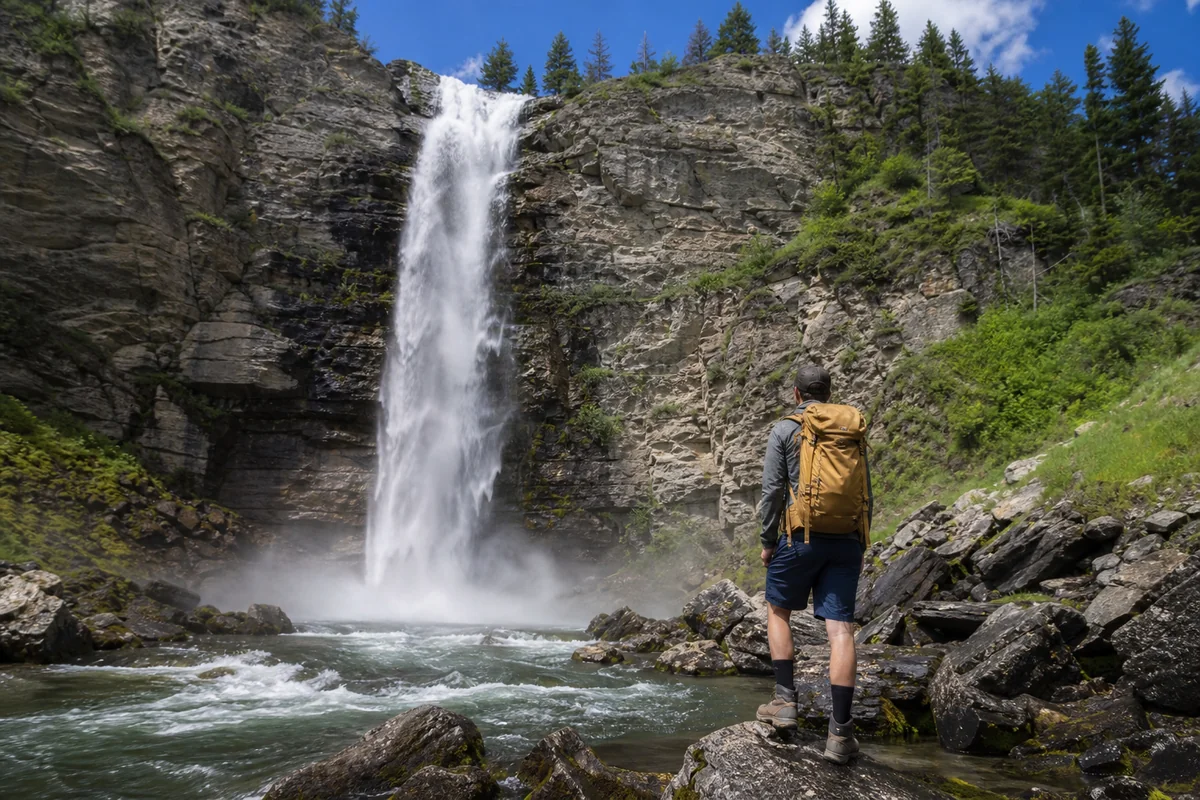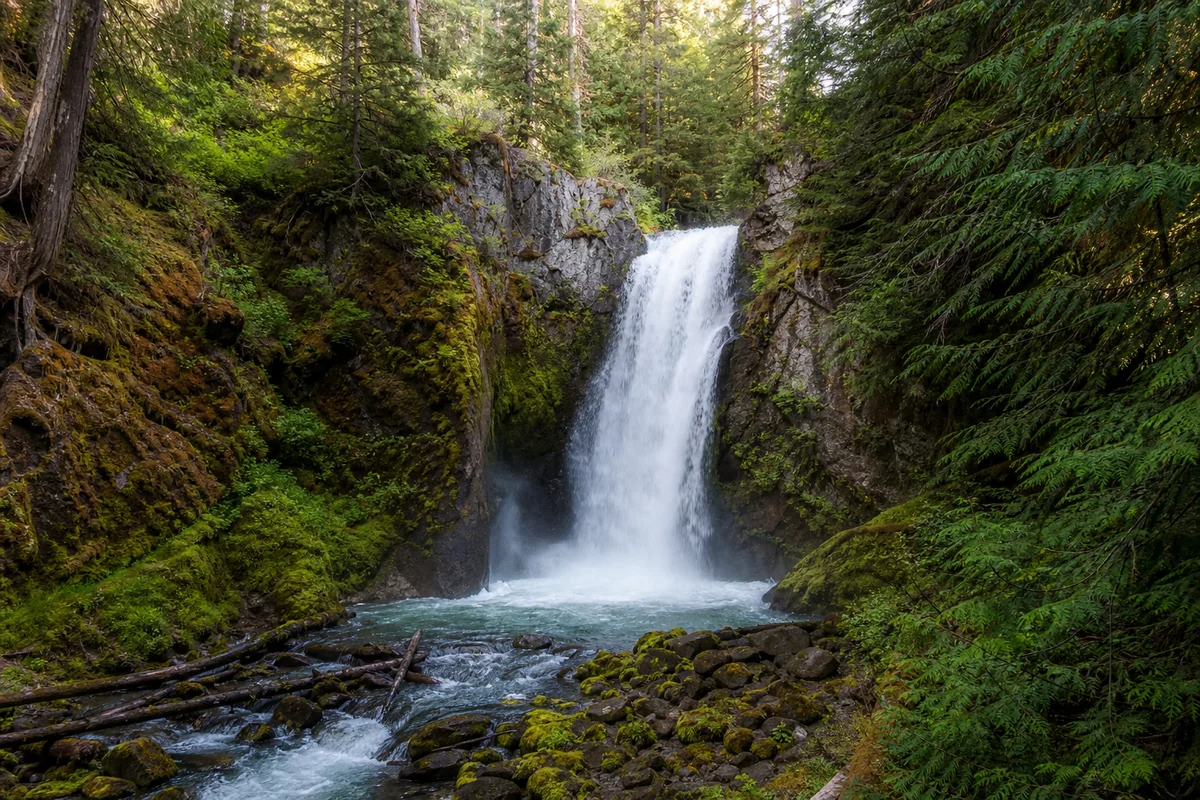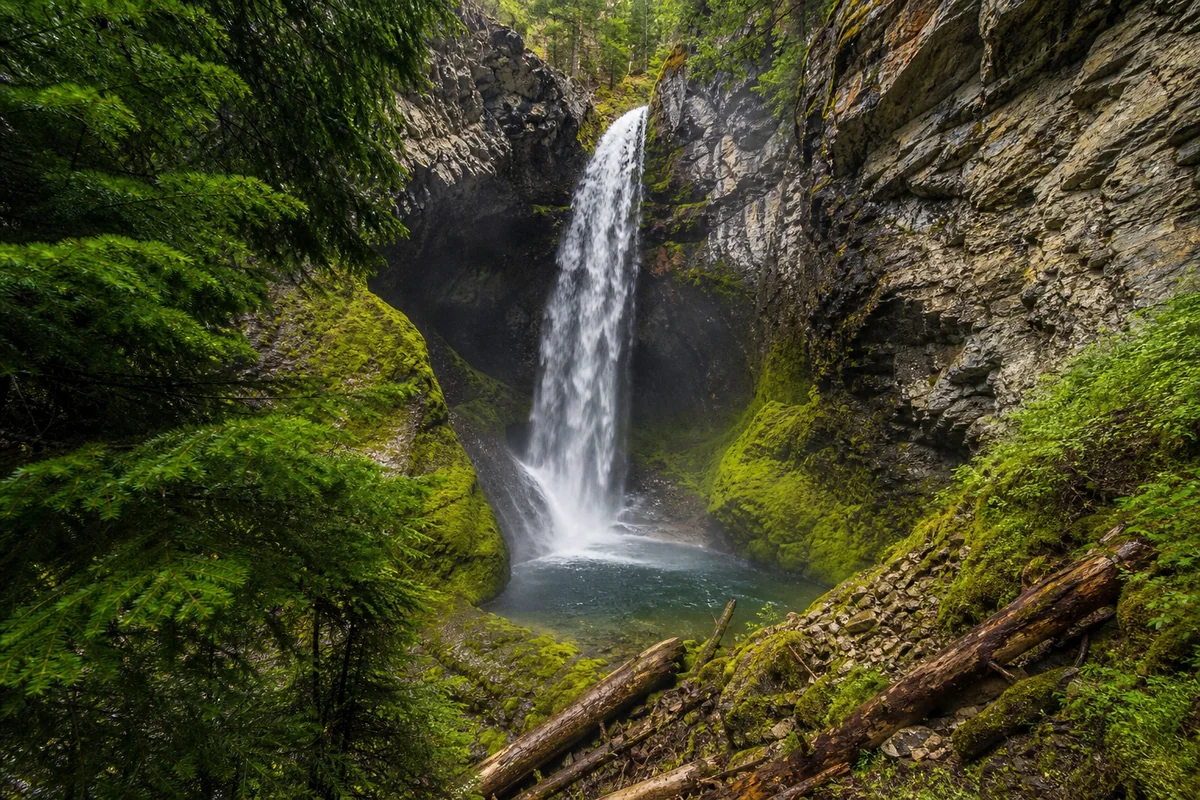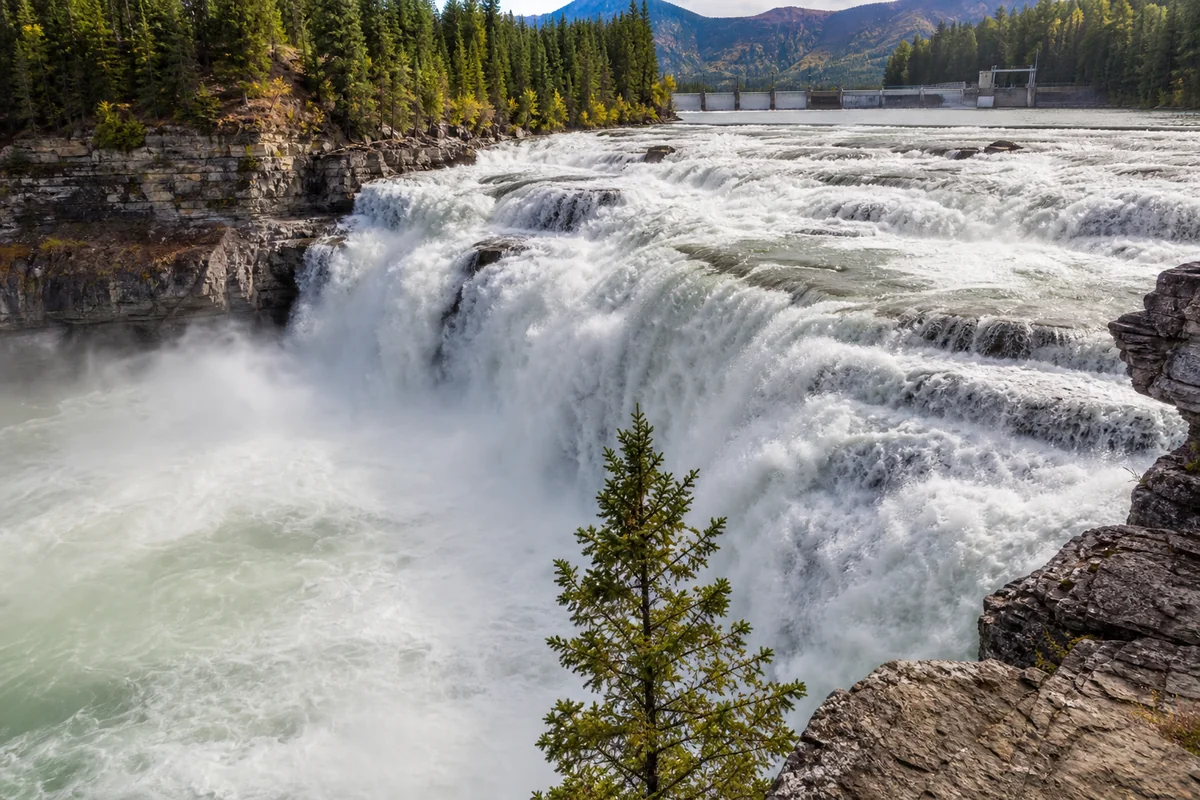
The thunderous roar hit me before I even saw the water. Standing on the observation platform at Kootenai Falls last September, watching 2.7 million gallons of water crash over ancient rock formations every single minute, I understood why the Kootenai Tribe has considered this place sacred for thousands of years.
This isn’t just another pretty waterfall—it’s Montana’s most powerful free-flowing falls and arguably the most accessible major waterfall in the entire Pacific Northwest.
If you’re exploring Montana waterfalls, Kootenai Falls deserves a top spot on your itinerary.
Unlike many of the state’s backcountry cascades that require serious hiking commitments, this thundering giant delivers an unforgettable experience with minimal effort.
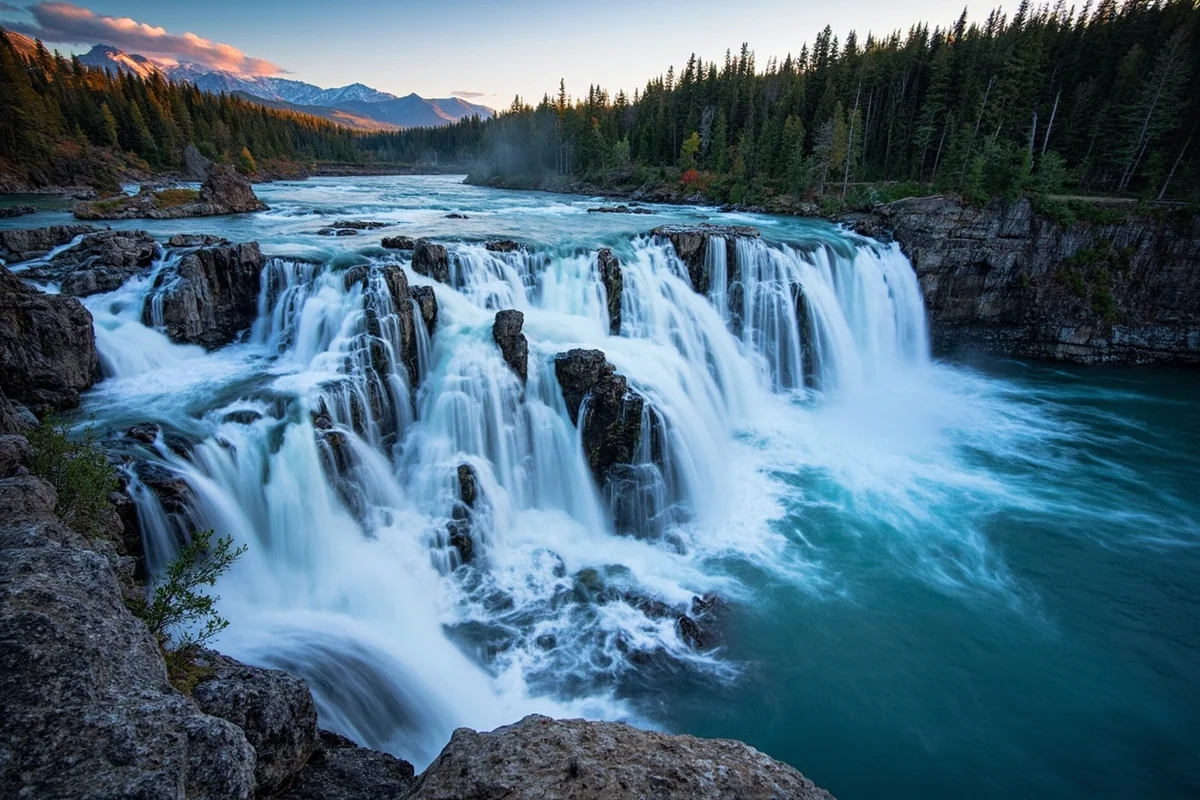
- Kootenai Falls is Montana’s largest undammed waterfall at 90 feet wide and 30+ feet tall
- Easy 0.9-mile round-trip trail suitable for all fitness levels
- The swinging bridge is 210 feet long and crosses 100 feet above the Kootenai River
- Free parking and no entrance fees required
- Best visited May through July for peak water flow
- Allow 2-3 hours to explore falls, bridge, and multiple viewpoints
- Open year-round but winter conditions require caution
Liked this article?
Add Roaming Montana as a preferred source so you see more of our articles and guides on Google.
Why Kootenai Falls Should Be on Your Montana Bucket List
I’ve visited dozens of waterfalls across Montana, from the easily accessible Morrell Falls to challenging backcountry destinations like Impasse Falls. Kootenai Falls stands apart for several compelling reasons that I didn’t fully appreciate until experiencing it firsthand.
First, there’s the sheer power. The Kootenai River gathers water from nearly 9,000 square miles of Montana, Idaho, and British Columbia before funneling through this narrow rock canyon. During my September visit, even at moderate flow, the ground trembled beneath my feet as I approached the main viewing area.
Second, the accessibility is remarkable. While spectacular falls like Holland Lake Falls require moderate hikes and Siksika Falls demands serious effort, Kootenai delivers a world-class waterfall experience via a flat, well-maintained trail that my 73-year-old father navigated without issue.
Third, the setting remains wonderfully undeveloped. Despite its accessibility, Kootenai Falls hasn’t been commercialized or crowded with infrastructure. It feels wild and authentic in a way that many easily accessed natural attractions don’t.
Getting to Kootenai Falls: Directions and Logistics
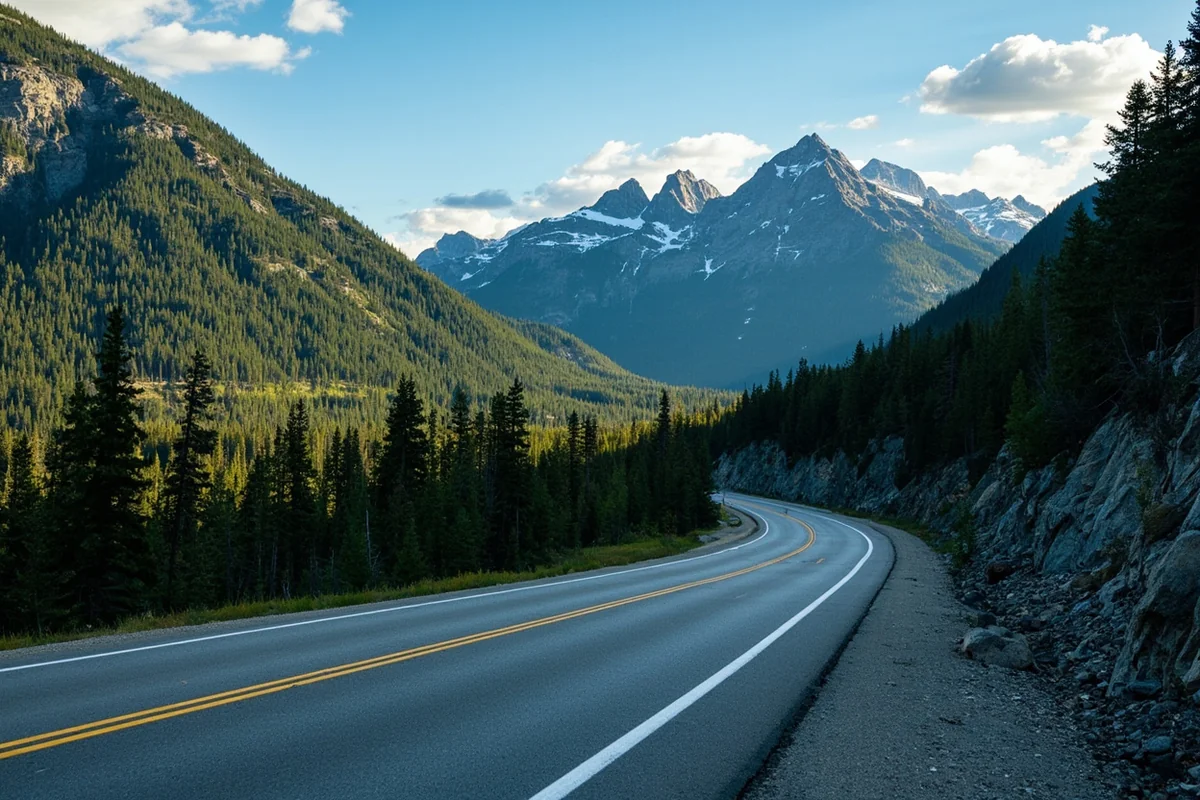
Kootenai Falls sits in the remote northwestern corner of Montana, roughly 10 miles west of Libby along Highway 2. If you’re coming from Glacier National Park, expect about a 2.5-hour drive—longer than you might think given the distance on a map.
Driving Directions
From Missoula, take US-93 North to Highway 2 West. The total drive is approximately 180 miles and takes about 3 hours in good conditions. The trailhead is on the south side of Highway 2, marked with a small brown sign that’s easy to miss if you’re not watching carefully.
From Kalispell, head west on Highway 2. The drive is around 90 miles and takes roughly 1.5 hours. Watch for the trailhead on your left after passing through Libby.
From Spokane, Washington, drive east on I-90 to Highway 200, then connect to Highway 2 East near Sandpoint, Idaho. Total distance is about 140 miles, typically taking 2.5 hours.
Trailhead Parking and Facilities
The parking area accommodates roughly 30 vehicles in the main lot, with overflow parking along the road during busy periods. During my visit on a Saturday in early fall, the lot was about two-thirds full by 10 AM.
A vault toilet is located at the trailhead—basic but maintained. There’s no potable water, so bring your own. I’d also recommend arriving before 11 AM on summer weekends to ensure parking.
| Practical Information | Details |
|---|---|
| Address | Highway 2, approximately 10 miles west of Libby, MT |
| GPS Coordinates | 48.4483°N, 115.7558°W |
| Admission Fee | Free |
| Hours | Open 24 hours (daylight recommended) |
| Trail Distance | 0.9 miles round trip to main falls; 1.6 miles including swinging bridge |
| Elevation Gain | Approximately 150 feet total |
| Difficulty | Easy to moderate |
| Dog Friendly | Yes, must be leashed |
The Trail to Kootenai Falls: What to Expect
The trail system at Kootenai Falls is deceptively simple on paper but offers more variety than you might expect. I spent nearly three hours exploring all the viewpoints and side trails during my visit.
Main Trail to the Falls
From the parking area, the trail drops gradually through a forest of western larch, Douglas fir, and western red cedar. The path is wide and well-maintained, with wooden boardwalks covering muddy sections. I counted 47 steps on the wooden staircases leading down toward the river—useful information for anyone with mobility concerns.

About a quarter-mile in, you’ll reach a junction. The left fork leads directly to the falls viewing areas, while the right fork heads toward the swinging bridge. I recommend going left first, experiencing the falls, then looping back via the bridge.
The sound of rushing water builds as you approach, and suddenly the forest opens to reveal a massive rock shelf overlooking the falls. This first viewpoint never fails to impress—during my visit, I watched several first-time visitors stop in their tracks, genuinely awestruck.
Multiple Viewing Platforms
What I appreciate about Kootenai Falls is the variety of perspectives available. Three distinct viewing areas along the trail each offer something different.
The upper platform provides the best overall panorama, perfect for photography that captures the full width of the falls. This is where I got my best shots, especially in morning light when the mist catches golden tones.
The middle viewing area brings you closer to the action, where the spray sometimes reaches visitors on windy days. I got legitimately soaked here during spring runoff on an earlier trip—worth it, but be prepared.
The lower rocks (accessible via an unofficial but well-worn path) offer an intimate experience with the river immediately downstream of the falls. Use extreme caution here, as the rocks are perpetually slick.
The Famous Kootenai Falls Swinging Bridge
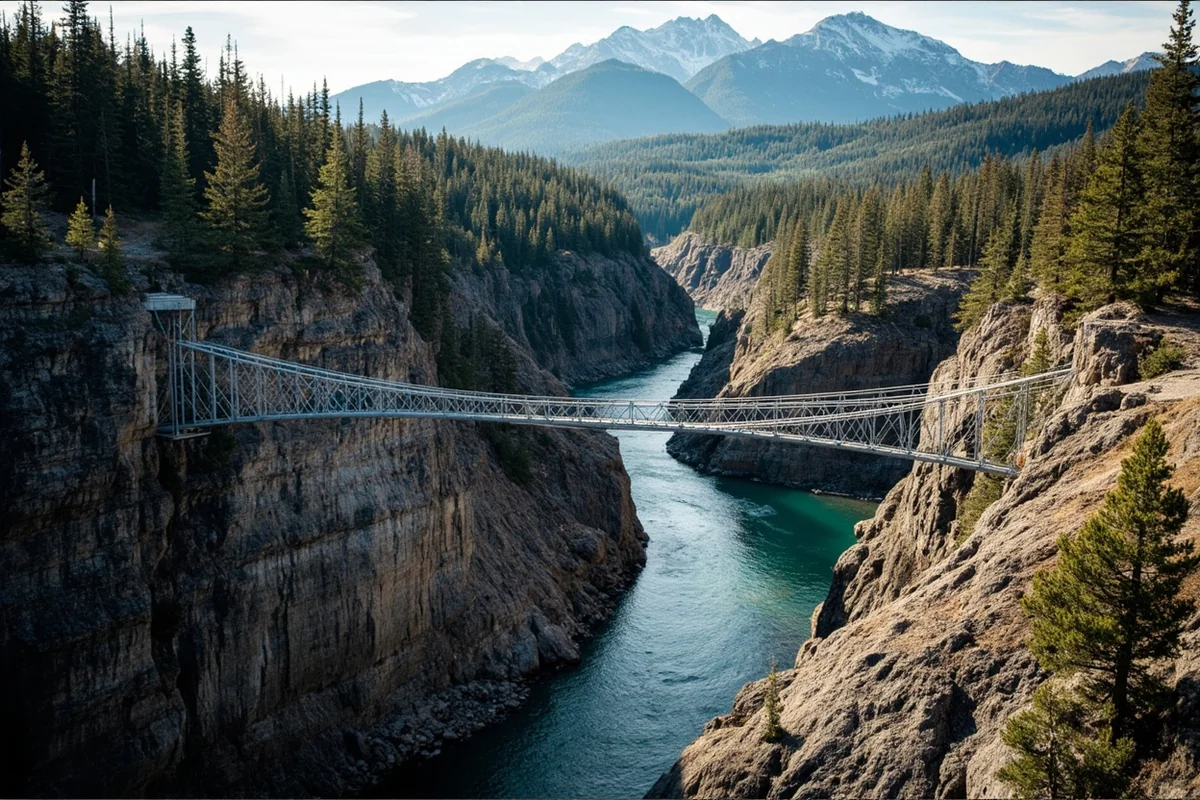
No visit to Kootenai Falls is complete without crossing the swinging bridge. This cable suspension bridge stretches 210 feet across the Kootenai River, hanging roughly 100 feet above the churning water below.
What Crossing Feels Like
I won’t sugarcoat it—if you’re afraid of heights, this bridge will challenge you. The wooden planks are spaced about three inches apart, meaning you can see straight down to the river through the gaps. The bridge sways noticeably with each step, especially if others are crossing simultaneously.
During my crossing last September, two teenagers running across created enough motion that I gripped the cables tightly until they passed. The bridge’s engineers definitely knew what they were doing (it’s perfectly safe), but your brain might not be fully convinced.
That said, I watched people of all ages cross successfully, including several children and at least one visitor using a walking cane. Take your time, hold the cables if needed, and embrace the experience.
Views from the Bridge
The payoff for conquering any nervousness is extraordinary. Looking upstream from mid-bridge, you’ll see the falls from a completely different angle than the main viewpoints. Downstream, the river churns through a narrow gorge where kayakers occasionally brave class IV rapids.
On the far side of the bridge, informal trails lead along the riverbank to additional viewpoints. I spent about 30 minutes exploring this less-visited area and had it almost entirely to myself.
The Sacred Significance of Kootenai Falls
Understanding the cultural importance of Kootenai Falls deepens the experience considerably. The Kootenai Tribe has called this region home for over 10,000 years, and the falls hold profound spiritual significance in their tradition.
The tribe considers the falls a sacred site connected to powerful water spirits. Historically, young Kootenai warriors would undertake vision quests here, seeking guidance and spiritual connection with the natural world.
During my visit, I noticed visitors treating the area with appropriate respect—speaking quietly, not littering, and generally behaving as you would at any sacred site. I encourage you to maintain this atmosphere.
The tribe successfully prevented the falls from being dammed in the 1970s, preserving both the ecological function and spiritual integrity of this place. When you visit Kootenai Falls, you’re experiencing one of the few major waterfalls in the American West that flows exactly as it has for millennia.
Best Time to Visit Kootenai Falls
The experience at Kootenai Falls varies dramatically throughout the year. Having visited in both September and late May, I can offer informed guidance on timing your trip.
Peak Season: May Through July
This is when the Kootenai River runs fullest and the falls are most impressive. Snowmelt from the surrounding mountains swells the river, sometimes doubling or tripling its volume compared to late summer.
On my May visit, the roar was genuinely deafening—I had to shout to communicate with my hiking partner even from a few feet away. The spray reached all the viewing platforms, and rainbows danced in the mist throughout midday.
The tradeoff is increased crowds and potentially muddy trail conditions. But for sheer waterfall spectacle, late spring and early summer can’t be beaten.
Shoulder Season: August Through October
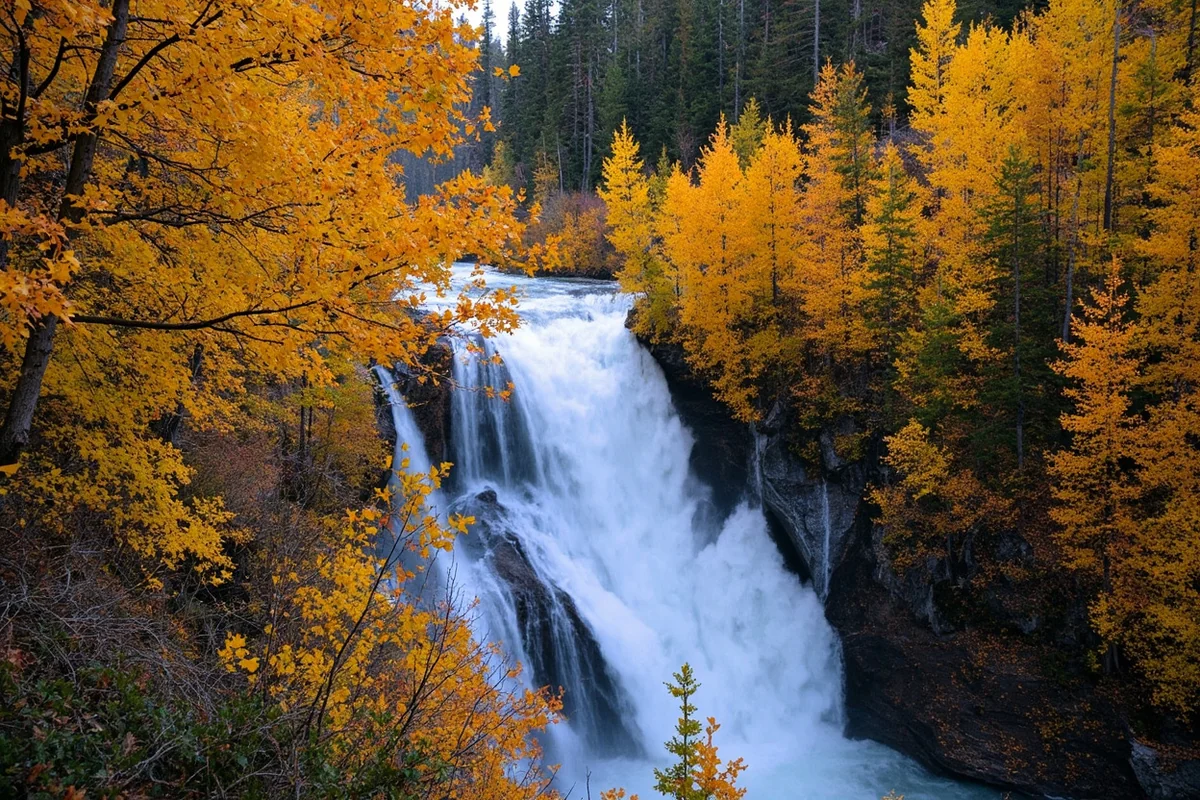
My September visit offered a different but equally compelling experience. Water flow was more moderate, allowing me to hear the varied sounds of water hitting different rock formations. The cottonwoods and larches were beginning to turn, adding golden tones to photographs.
Crowds were noticeably lighter on weekdays—I encountered perhaps 20 other visitors during my three-hour exploration. The trail was bone-dry and easy to navigate.
Off-Season: November Through April
Winter transforms Kootenai Falls into something magical but demands caution. Ice formations build along the canyon walls, and parts of the falls themselves can freeze, creating sculptural ice curtains.
I haven’t personally visited in deep winter, but locals I spoke with in Libby warned that the trail becomes treacherous with ice. Traction devices are essential, and the swinging bridge accumulates ice that makes crossing genuinely dangerous.
Photography Tips for Kootenai Falls
As someone who’s spent considerable time photographing Montana’s waterfalls, from Palisade Falls near Bozeman to Memorial Falls in the Hi-Line region, I’ve learned what works at Kootenai.
Best Light Conditions
Morning light is generally most favorable, with golden tones illuminating the mist between 7-9 AM during summer months. The falls face roughly northwest, meaning direct sunlight hits the water mid-morning in summer.
Overcast days actually work brilliantly here. The soft, even light eliminates harsh shadows and allows the white water to pop against darker rocks. Some of my favorite shots came on a cloudy morning when the forest fog was just burning off.
Recommended Gear and Settings
A polarizing filter is essential if you want to cut the glare on wet rocks and maximize color saturation. I use mine on probably 90% of my waterfall shots here.
For that classic silky-water effect, bring a tripod and neutral density filter. Exposures of 1-3 seconds at ISO 100 work well. The main viewing platforms are stable enough for tripod work.
If you’re shooting from the swinging bridge, forget about tripods—the movement makes long exposures impossible. Instead, use a faster shutter speed (1/500 or higher) to freeze the action and embrace the dynamic energy of the scene.
Unique Angles to Try
Most visitors photograph from the obvious viewpoints, and those shots are certainly worthwhile. But I’d encourage exploring less common perspectives.
The view from the far side of the swinging bridge, looking back toward the falls, creates interesting foreground possibilities with the bridge cables framing the distant cascades.
Downstream from the falls, where large boulders punctuate the river, you can capture the ongoing power of the Kootenai as it continues its journey. This section reminded me of the rugged terrain near Knowles Falls on the Yellowstone River.
Wildlife and Nature at Kootenai Falls
The Kootenai River corridor supports remarkable biodiversity, and patient visitors often spot wildlife during their visit.
Birds to Watch For
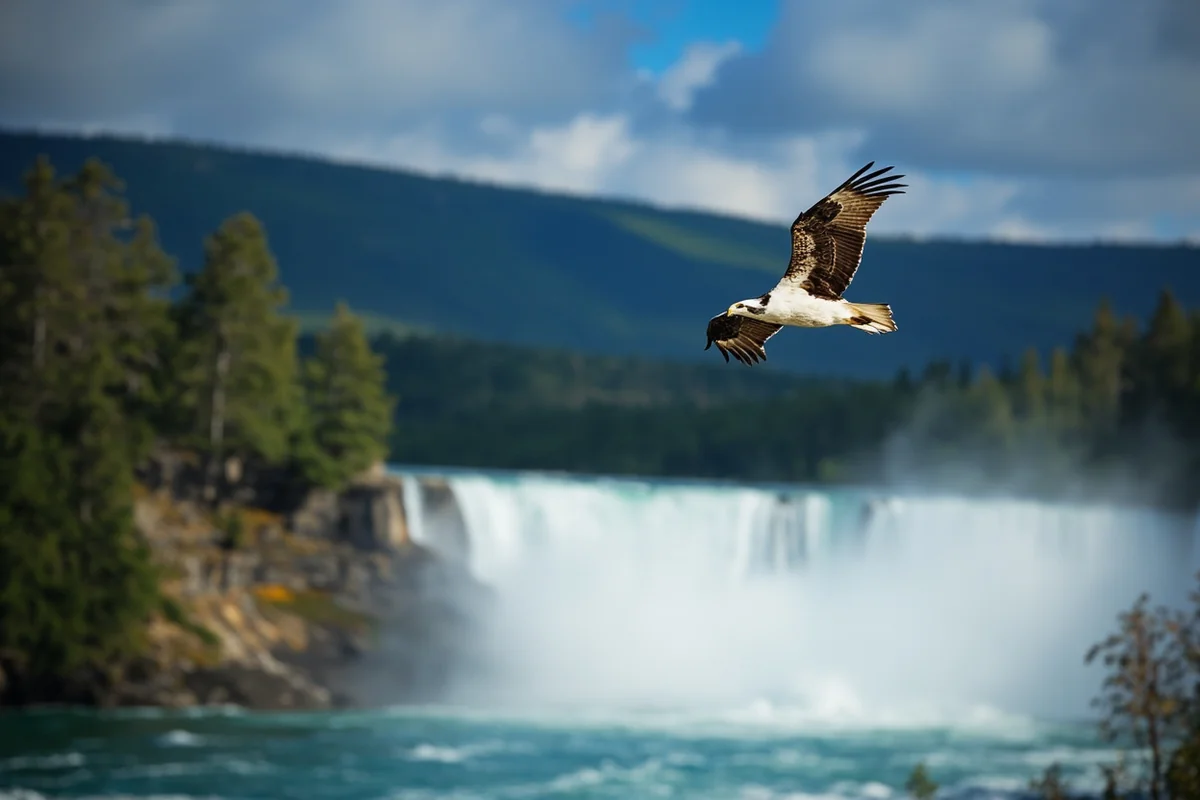
Bald eagles are common along this stretch of the Kootenai River, especially in winter when they gather to fish below the falls. During my September visit, I spotted two adults circling overhead within the first 15 minutes.
American dippers (water ouzels) work the rocks below the falls constantly, bobbing characteristically before diving into the rushing water to hunt aquatic insects. Watch for their distinctive gray plumage and hyperactive movement.
Ospreys nest in tall snags along the river corridor and hunt the calmer pools downstream. Their fishing dives are spectacular to witness.
Other Wildlife
Black bears frequent the surrounding forest, particularly in fall when berries ripen. I didn’t see any bears during my visit, but fresh scat on the trail confirmed their presence. Make noise on the trail and carry bear spray, especially in early morning or evening.
White-tailed deer are common, and I spotted several grazing in the meadows near the parking area. Less commonly, mountain lions hunt this corridor, though sightings are rare.
Combining Kootenai Falls with Other Area Attractions
Northwestern Montana offers enough attractions to fill several days, and I’d recommend treating Kootenai Falls as part of a broader exploration rather than a standalone destination.
Nearby Natural Attractions
The Cabinet Mountains Wilderness begins just south of Libby and offers excellent hiking with alpine lakes and additional waterfalls. Ross Creek Cedars, about 45 minutes southwest of Kootenai Falls, protects a grove of ancient western red cedars that rival any old-growth forest I’ve experienced.
If you’re waterfall-obsessed like me, consider combining Kootenai Falls with Rock Creek Falls or the stunning Ptarmigan Falls for a multi-day waterfall adventure.
The Town of Libby
Libby itself is a small logging town that’s slowly reinventing itself as an outdoor recreation hub. During my visit, I grabbed lunch at The Last Straw on Mineral Avenue—excellent burgers and surprisingly good craft beer selection.
The Heritage Museum downtown offers interesting exhibits on the region’s mining and timber history. Budget about an hour if local history interests you.
For overnight stays, the Venture Motor Inn offers clean, basic rooms at reasonable rates. For something more atmospheric, the Caboose Motel features actual railroad cabooses converted to guest rooms—quirky but surprisingly comfortable.
Safety Considerations and Important Warnings
Kootenai Falls’ accessibility can create a false sense of security. The dangers here are real and have claimed lives.
Water Hazards
The Kootenai River below the falls is extraordinarily powerful and cold. Several drowning deaths have occurred here, usually when visitors left designated viewing areas and slipped on wet rocks.
The current immediately below the falls creates hydraulics that can trap even strong swimmers. Never enter the water near the falls themselves—there’s no surviving a swim here.
Trail Safety
The unofficial paths leading to lower viewpoints are not maintained and can be extremely slippery. During my visit, I watched a fellow hiker slip and narrowly avoid a serious fall on moss-covered rock. If you venture off the main trail, proceed with extreme caution.
The swinging bridge, while structurally sound, does present fall risks if you’re not paying attention. Keep your hands available (not full of camera equipment) and move deliberately.
Wildlife Awareness
Bear encounters, while rare, do occur here. Carry bear spray and know how to use it. Make noise on the trail, especially when approaching blind corners or dense vegetation.
Rattlesnakes occasionally sun themselves on exposed rocks during summer months. Watch where you put your hands and feet, particularly if you’re scrambling on rocks off the main trail.
Making the Most of Your Visit: My Recommended Itinerary
Based on my experience, here’s how I’d structure a visit to maximize enjoyment while respecting the site and your safety.
The Ideal Half-Day Visit
Arrive by 9 AM to secure parking and enjoy cooler morning temperatures. Hit the main falls viewpoints first while the light is good and crowds are minimal.
Spend 45-60 minutes at the various falls viewpoints, taking your time to absorb the sensory experience rather than rushing through for photos. This isn’t a destination to check off quickly.
Cross the swinging bridge and explore the far riverbank for another 30-45 minutes. Return via the same route (there’s no loop option) and enjoy different perspectives on your return journey.
Budget 2.5-3 hours total, including time at the trailhead and a possible snack break. I recommend bringing a packed lunch to enjoy at one of the informal picnic spots near the river.
If Time Is Limited
If you only have an hour, focus on the main falls viewpoints and skip the swinging bridge. You’ll still experience the core attraction, though you’ll miss a memorable component.
The trail to the primary viewpoint takes only about 10-15 minutes of walking. Even a quick 45-minute visit delivers an impressive experience that rivals much longer hikes to other falls like Passage Creek Falls or Pioneer Falls.
What to Bring: Essential Packing List
Based on my visits, here’s what I recommend bringing:
- Water: At least one liter per person, more in summer heat
- Sturdy footwear: Trail shoes minimum, hiking boots preferred for rocky sections
- Layers: Temperatures near the falls run 5-10 degrees cooler than surrounding areas
- Rain jacket: Mist from the falls can soak you during high water
- Camera with lens cloth: Mist accumulates on lenses quickly
- Bear spray: Standard precaution in grizzly/black bear country
- Snacks: No food available at the trailhead
- Sunscreen: The exposed rock near viewpoints can be surprisingly sunny
Frequently Underestimated Aspects of Kootenai Falls
After discussing this destination with fellow travelers and reading numerous online reviews, I’ve noticed several elements that visitors consistently underestimate.
The Sound
Photos and videos don’t capture the auditory assault of standing near Kootenai Falls during peak flow. The bass rumble reverberates in your chest. I’ve stood at the base of massive speakers at concerts that delivered less physical impact than this waterfall.
Even in September’s moderate flow, the constant white noise created a meditative quality. Conversation becomes difficult near the main viewpoints, encouraging a contemplative solo experience even when other visitors are present.
The Scale
Photographs consistently fail to communicate how wide and powerful these falls actually are. I recommend putting your camera away for the first five minutes at each viewpoint—let your brain process the actual scene before trying to capture it.
The Kootenai River at this point is roughly 300 feet wide during normal flow. Standing on the viewing platforms, you’re immersed in the spectacle rather than observing it from a distance.
The Time Required
Many visitors apparently budget 30-45 minutes for Kootenai Falls, treating it as a quick roadside stop. This approach does a disservice to both the destination and your own experience.
I’d argue that less than two hours here means missing significant elements. The swinging bridge alone deserves substantial time for crossing, exploring the far side, and photographing from multiple angles.
Kootenai Falls in Popular Culture
Film buffs might recognize Kootenai Falls from “The Revenant” (2015), where portions of the movie’s river sequences were filmed. Seeing the location in person, I understood why director Alejandro Iñárritu chose this spot—the wild, untamed energy perfectly matched the film’s themes.
The falls also appeared in “The River Wild” (1994) starring Meryl Streep, another film that leveraged the location’s visual drama.
This film heritage hasn’t significantly increased crowds or commercialized the area, thankfully. The falls remain remarkably unspoiled despite their occasional Hollywood appearances.
Comparing Kootenai Falls to Other Montana Waterfalls
Having explored waterfalls throughout Montana, I can offer some context for where Kootenai Falls fits in the broader landscape.
For pure power and volume, Kootenai Falls stands alone among accessible Montana waterfalls. Only Rainbow Falls on the Missouri River near Great Falls approaches this volume, and that’s a completely different type of experience.
For easy access to spectacular scenery, Kootenai Falls competes with Ousel Falls near Big Sky and Skalkaho Falls in the Bitterroot Range. Each offers a distinct personality—Ousel is more refined and tourist-friendly, while Skalkaho delivers a wilder Bitterroot experience.
For combination with a swinging bridge, only Kootenai offers this pairing in Montana. The bridge adds a substantial adventure element that most waterfall destinations lack.
If you’re planning a comprehensive Montana waterfall tour, consider including both Kootenai Falls and some of the state’s more hidden gems like Hidden Falls or Grotto Falls for variety.
Accessibility Considerations
While the main trail is relatively easy, it’s not fully ADA accessible. Here’s honest guidance for visitors with mobility concerns.
The trail includes wooden staircases with handrails at several points. Standard wheelchairs cannot navigate the complete route to the falls viewpoints.
Visitors with limited mobility who can manage stairs and uneven terrain will likely succeed on the main trail. I observed several older visitors using trekking poles navigating the trail without difficulty.
The swinging bridge is theoretically passable with mobility aids but practically challenging. The swaying motion and gaps between planks create significant obstacles. I wouldn’t recommend it for anyone unstable on their feet.
Final Thoughts on Visiting Kootenai Falls
After multiple visits to Kootenai Falls, I’m convinced it represents one of Montana’s most underrated natural attractions. The combination of raw power, cultural significance, accessible trails, and that unforgettable swinging bridge creates an experience that rivals any waterfall in the Pacific Northwest.
If you’re exploring this corner of Montana, make Kootenai Falls a priority rather than an afterthought. Give it the time it deserves—at least two hours, preferably three—and approach it with the reverence that the Kootenai Tribe has shown for millennia.
The falls will still be flowing exactly as they have for thousands of years, unaltered by dams or development. In an era when so few wild places remain truly wild, that alone makes Kootenai Falls worth your time and attention.
Whether you’re chasing waterfalls across Montana, passing through on a road trip, or specifically seeking out this sacred site, Kootenai Falls delivers an experience that stays with you long after you leave. The thunderous roar still echoes in my memory, calling me back to northwestern Montana whenever I browse through my photographs.
Frequently Asked Questions
How do I get to Kootenai Falls in Montana and where do I park?
Kootenai Falls is located about 5 miles west of Libby, Montana, right off Highway 2. There’s a free parking lot at the trailhead with clear signage, and from there it’s an easy 0.8-mile hike through the forest to reach the falls overlook.
Is there an entrance fee to visit Kootenai Falls?
No, Kootenai Falls is completely free to visit with no entrance fees or permits required. The site is managed by the Montana Fish, Wildlife & Parks and remains open year-round, making it one of the best free attractions in northwestern Montana.
What is the best time of year to visit Kootenai Falls Montana?
Late spring through early summer (May-June) offers the most dramatic water flow at Kootenai Falls due to snowmelt runoff. I’ve found that visiting in early morning provides the best lighting for photography and fewer crowds, though the falls are impressive any time of year.
Can you swim at Kootenai Falls or walk across the swinging bridge?
Swimming at Kootenai Falls is extremely dangerous and strongly discouraged due to powerful currents that have caused multiple fatalities. However, you can walk across the iconic swinging bridge, which spans the Kootenai River and offers stunning views—it’s a highlight of the visit for most travelers.
How difficult is the Kootenai Falls trail and is it family-friendly?
The Kootenai Falls trail is considered easy to moderate, covering about 1.6 miles round trip with some wooden staircases and uneven terrain near the viewing platforms. It’s manageable for most families with kids, though I’d recommend sturdy shoes and keeping children close near the unfenced overlooks.
Was Kootenai Falls really in The Revenant movie?
Yes, Kootenai Falls served as a filming location for the 2015 movie The Revenant starring Leonardo DiCaprio. You can stand at the same overlooks where dramatic scenes were shot, which adds an exciting element for movie fans visiting northwestern Montana.
What should I bring when visiting Kootenai Falls and how long does the visit take?
Bring sturdy hiking shoes, water, a camera, and layers since the canyon can be cooler than surrounding areas. Most visitors spend 1-2 hours exploring the falls, swinging bridge, and multiple viewpoints, though photographers and those wanting to soak in the scenery may want to allow more time.
Sources