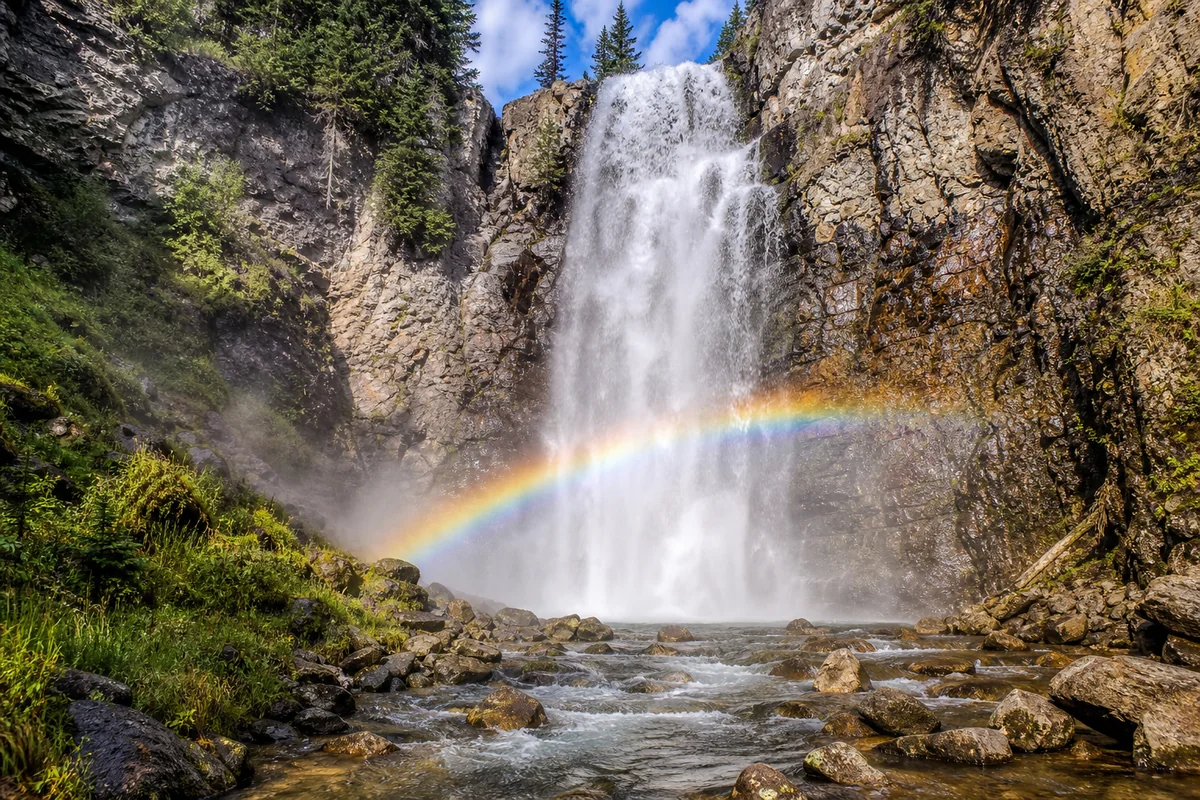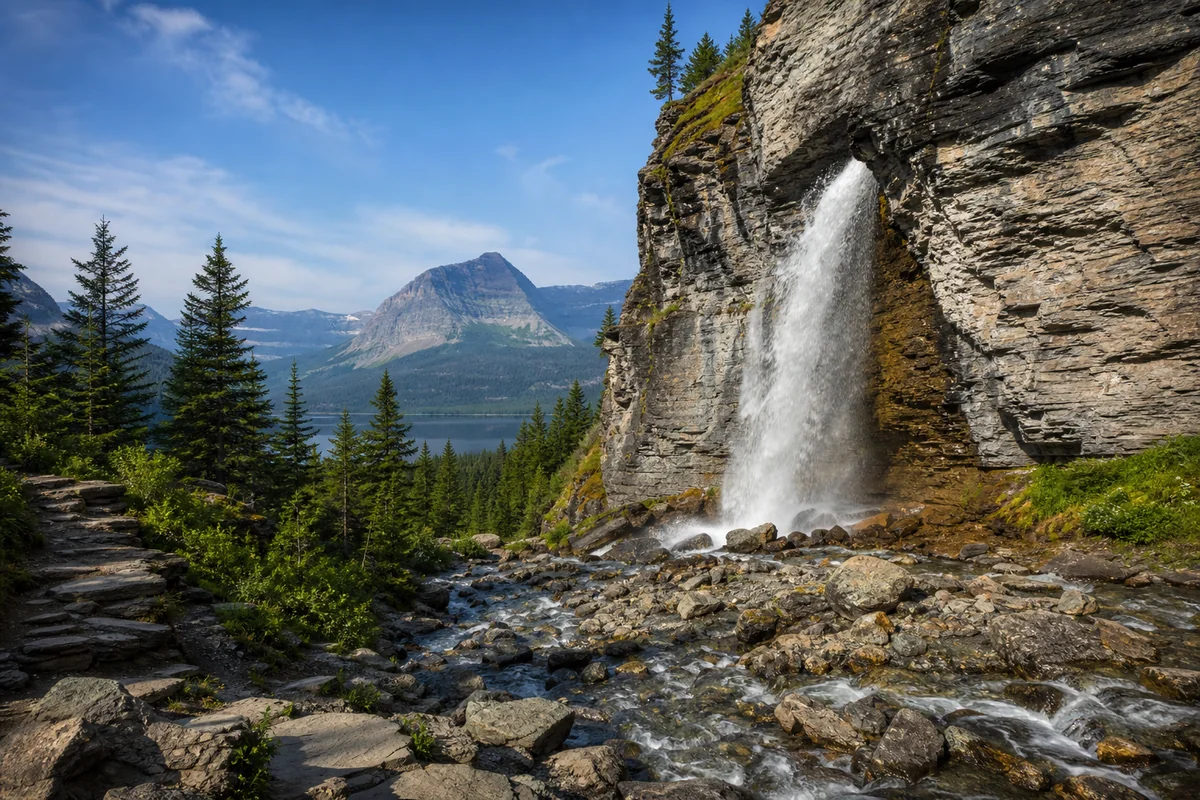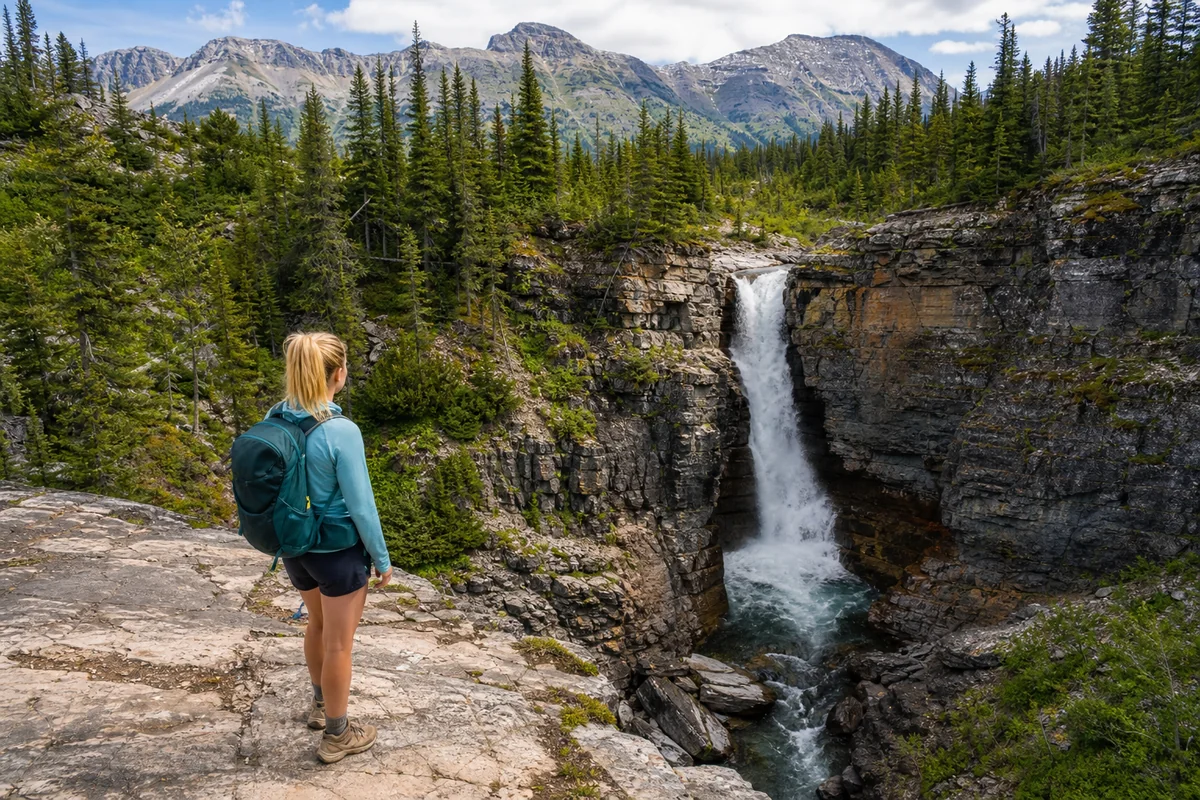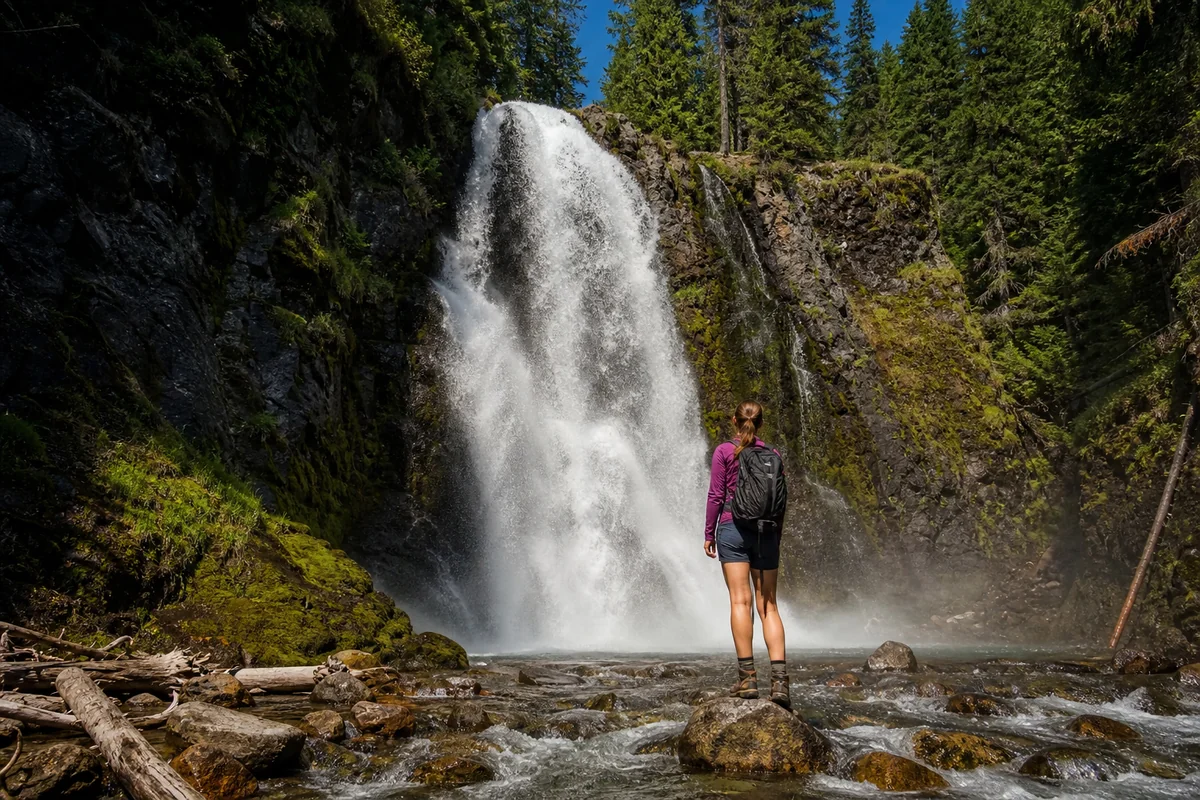
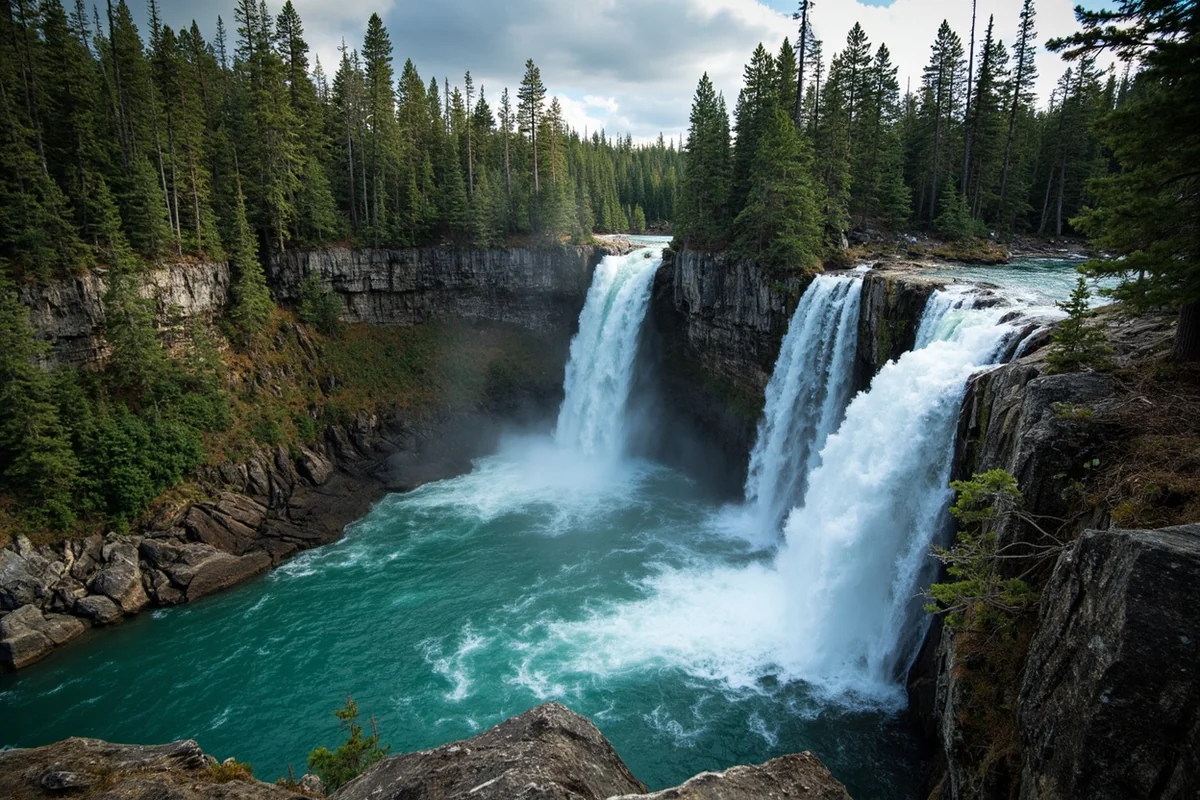
Standing at the base of Holland Lake Falls last July, with mist coating my face and the roar of water drowning out everything else, I understood why this 40-foot cascade has become one of the most beloved Montana waterfalls for visitors seeking accessible wilderness beauty.
The falls tumbled down a moss-covered cliff face, catching sunlight in a way that created fleeting rainbows—a moment I’d driven three hours from Missoula to witness, and one that exceeded every expectation.

- Holland Lake Falls is a 40-foot waterfall reached via an easy 1.6-mile round-trip hike in Montana’s Swan Valley
- Trailhead starts at Holland Lake Campground, about 60 miles southeast of Kalispell
- Best visited late May through July for peak water flow; trail is family-friendly with only 400 feet elevation gain
- No entrance fee required, but arrive before 10 AM on summer weekends to secure parking
- Combine with swimming at Holland Lake or extend to Upper Holland Lake for a full day adventure
Liked this article?
Add Roaming Montana as a preferred source so you see more of our articles and guides on Google.
Why Holland Lake Falls Deserves a Spot on Your Montana Itinerary
I’ve hiked to dozens of waterfalls across Montana over the past eight years, from the powerful Kootenai Falls in the northwest corner to the hidden gems tucked away in Glacier National Park.
Holland Lake Falls holds a special place in my recommendations because it offers something increasingly rare: a genuinely spectacular natural feature accessible to almost anyone willing to take a short walk.
The falls sit within the Flathead National Forest, serving as a gateway to the Bob Marshall Wilderness Complex—the third-largest wilderness area in the lower 48 states.
When I stood at the viewing area during my visit, I could feel that sense of vastness behind me, knowing that million-acre wilderness stretched beyond the peaks.
What sets Holland Lake Falls apart from many Montana waterfalls is the combination of visual drama and ease of access.
Unlike Impasse Falls or some of the more remote cascades that require significant backcountry experience, Holland Lake Falls welcomes families with young children, older visitors, and anyone looking for a rewarding hike without an all-day commitment.
Getting to Holland Lake Falls: Detailed Directions
Finding Holland Lake requires a bit of navigation, as the Swan Valley remains one of Montana’s more secluded corridors despite its proximity to busier tourist areas.
From Missoula (Approximately 85 miles, 1.5-2 hours)
Head north on Highway 93 through the Flathead Indian Reservation. The drive itself is stunning, passing through the Mission Valley with views of the Mission Mountains rising to the east.
Turn east onto Highway 83 near Clearwater Junction. This is where the landscape shifts dramatically—suddenly you’re in dense forest with glimpses of pristine lakes through the trees.
Continue north on Highway 83 for approximately 35 miles. You’ll pass Seeley Lake, Salmon Lake, and several smaller bodies of water.
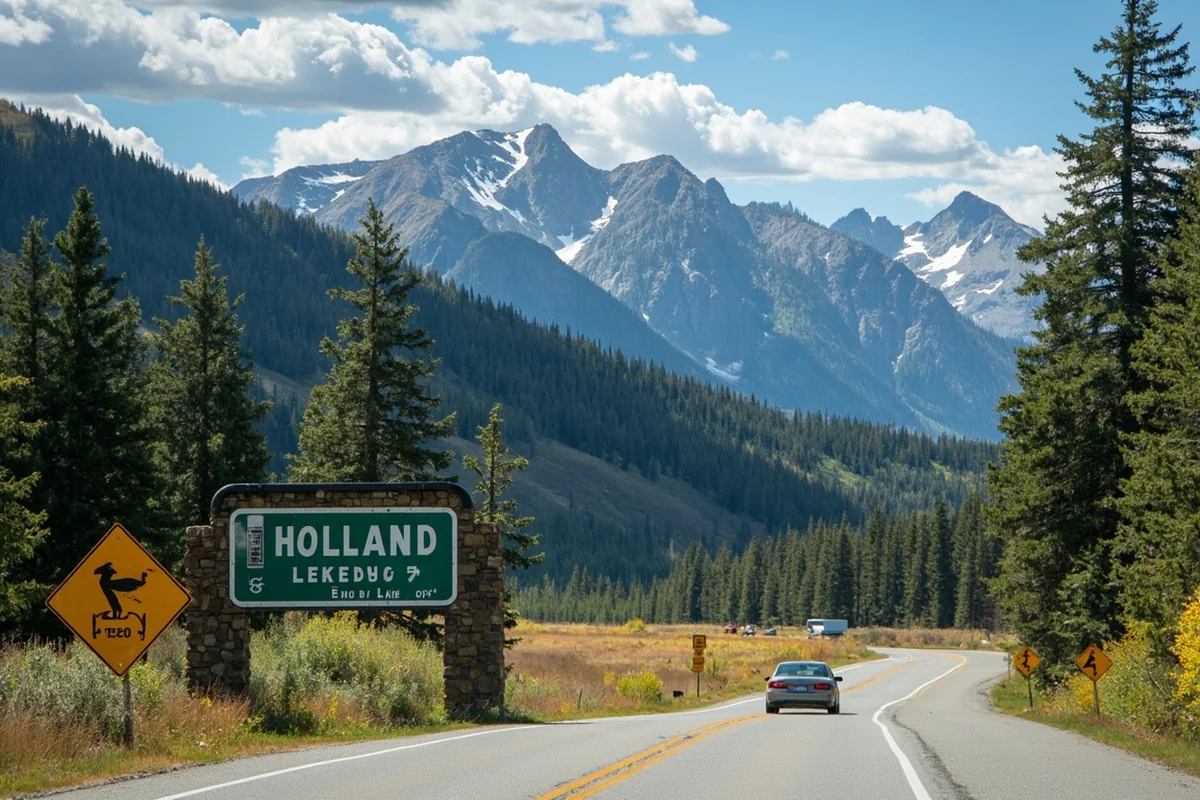
Turn east onto Holland Lake Road (Forest Road 44). There’s a brown Forest Service sign marking the turn. From here, it’s about 3 miles on a paved road to the trailhead.
From Kalispell (Approximately 60 miles, 1.5 hours)
Take Highway 83 south from Bigfork. This route winds through the Swan Valley, offering some of the most scenic lake-studded driving in Montana.
Watch for the Holland Lake Road turnoff on your left about 35 miles south of Bigfork.
During my last visit, I noticed the cell phone service disappears almost entirely once you turn onto Highway 83. Download offline maps before you go—trust me on this one.
Trailhead and Parking Details
The Holland Lake Falls trailhead is located at the Holland Lake Campground day-use area. When I arrived on a Saturday morning around 9 AM last summer, the parking lot was about half full. By the time I returned around noon, cars were lining the road.
The parking area can accommodate roughly 30 vehicles in the main lot, with overflow parking available along the entrance road. There are vault toilets at the trailhead—they’re well-maintained but basic, so set your expectations accordingly.
A small boat launch area sits adjacent to the trailhead, and on busy summer days, the parking lot serves double duty for hikers and boaters. This can create congestion, which is another reason I recommend an early start.
| Detail | Information |
|---|---|
| Trailhead Location | Holland Lake Campground, Flathead National Forest |
| GPS Coordinates | 47.4534° N, 113.6071° W |
| Entrance Fee | None required |
| Parking Capacity | Approximately 30 vehicles (main lot) |
| Facilities | Vault toilets, boat launch, campground nearby |
| Nearest Town | Condon, MT (12 miles south) |
The Hike: What to Expect on the Trail
The Holland Lake Falls Trail (Forest Service Trail #415) ranks as one of the most accessible waterfall hikes in western Montana. Here’s the honest breakdown from my experience on the trail.
Trail Statistics
- Round-trip distance: 1.6 miles (some sources say 1.8, but I measured it at closer to 1.6)
- Elevation gain: Approximately 400 feet
- Difficulty: Easy to moderate
- Average hiking time: 45 minutes to 1.5 hours round trip
- Trail surface: Dirt path with some rocks and roots, well-defined throughout
The First Half Mile: Lakeshore Beauty
The trail begins at the north end of Holland Lake, following the shoreline through a mixed forest of lodgepole pine, Douglas fir, and western larch. During my July hike, wildflowers dotted the forest floor—Indian paintbrush and beargrass were particularly abundant.
This initial section is almost completely flat, making it suitable for all fitness levels. I passed several families with young children and even saw one couple with a jogging stroller (though I’d say that’s pushing the trail’s limits).
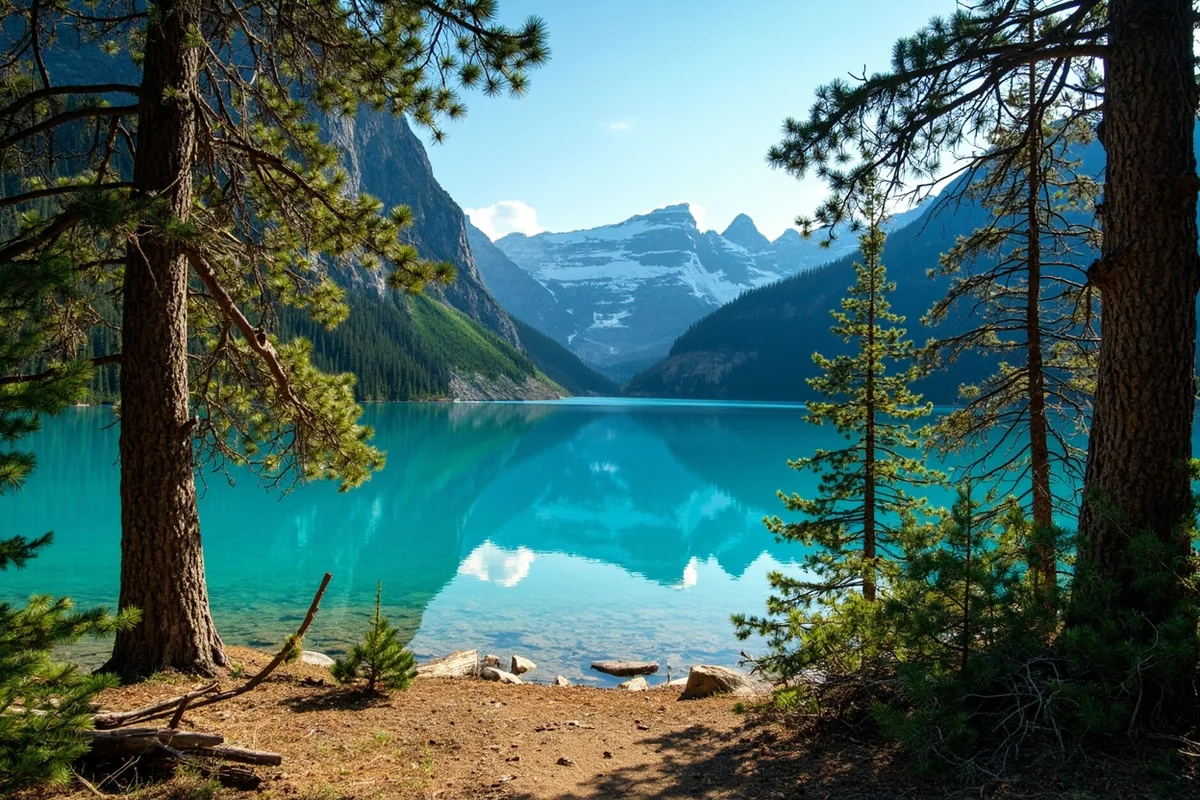
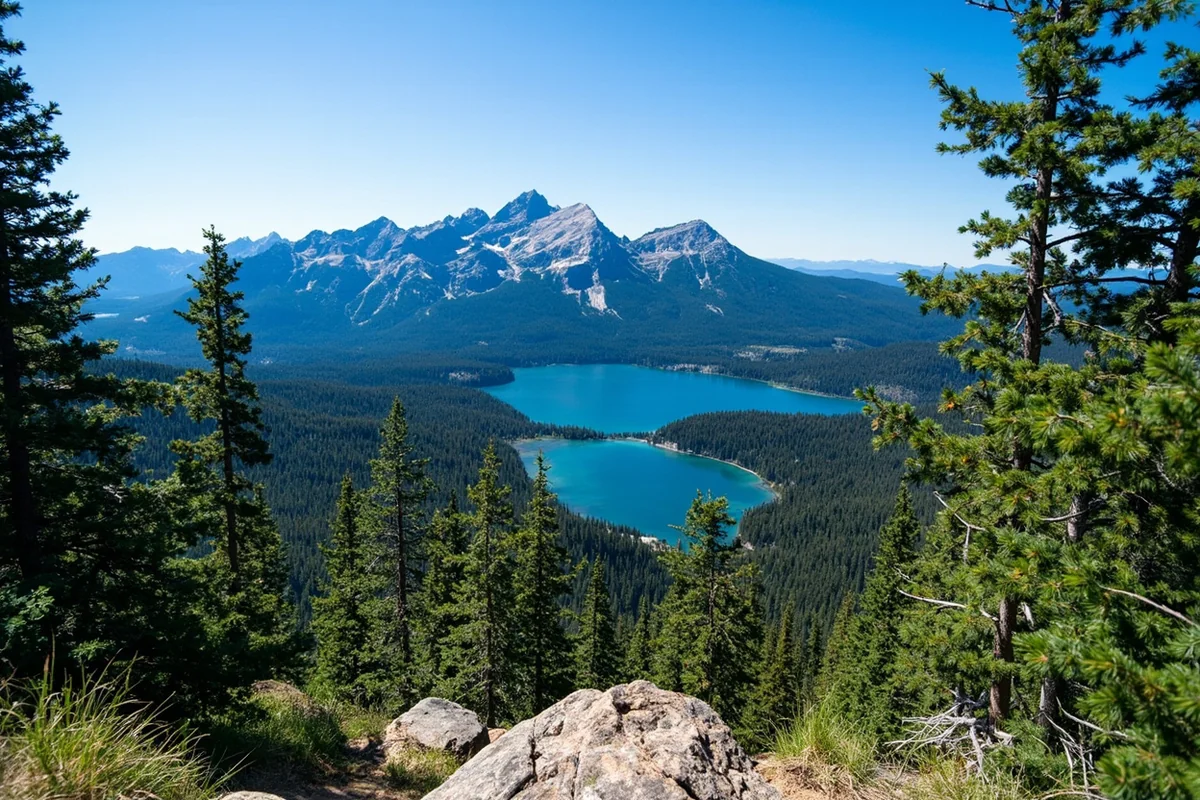
The lake views through the trees are spectacular. Holland Lake is remarkably clear, with a turquoise tint that reminds me of Caribbean waters—except surrounded by evergreens and snow-capped peaks. If you’re like me, you’ll stop multiple times just to absorb the scenery.
The Climb: When Things Get Interesting
After about half a mile, the trail veers away from the lake and begins ascending toward the falls. This is where some hikers get caught off guard—the incline is noticeable, though never severe.
The path follows Holland Creek, and as I gained elevation, I could hear the falls before seeing them. The anticipation builds with each switchback. I counted four distinct switchbacks, each short enough that you can pause, catch your breath, and appreciate how the forest changes as you climb.
The trail surface becomes rockier in this section. I recommend sturdy shoes rather than sandals or flip-flops, though I did see people in both (one woman in flip-flops was clearly regretting her choice).
The Final Approach
About 0.7 miles from the trailhead, you’ll reach a signed junction. The left fork leads to Upper Holland Lake (more on that later), while the right fork takes you to the falls viewpoint in about two minutes of walking.
The viewing area consists of a natural rocky outcropping where the trail essentially ends. There’s room for perhaps a dozen people to stand comfortably, which can feel crowded on busy summer afternoons.
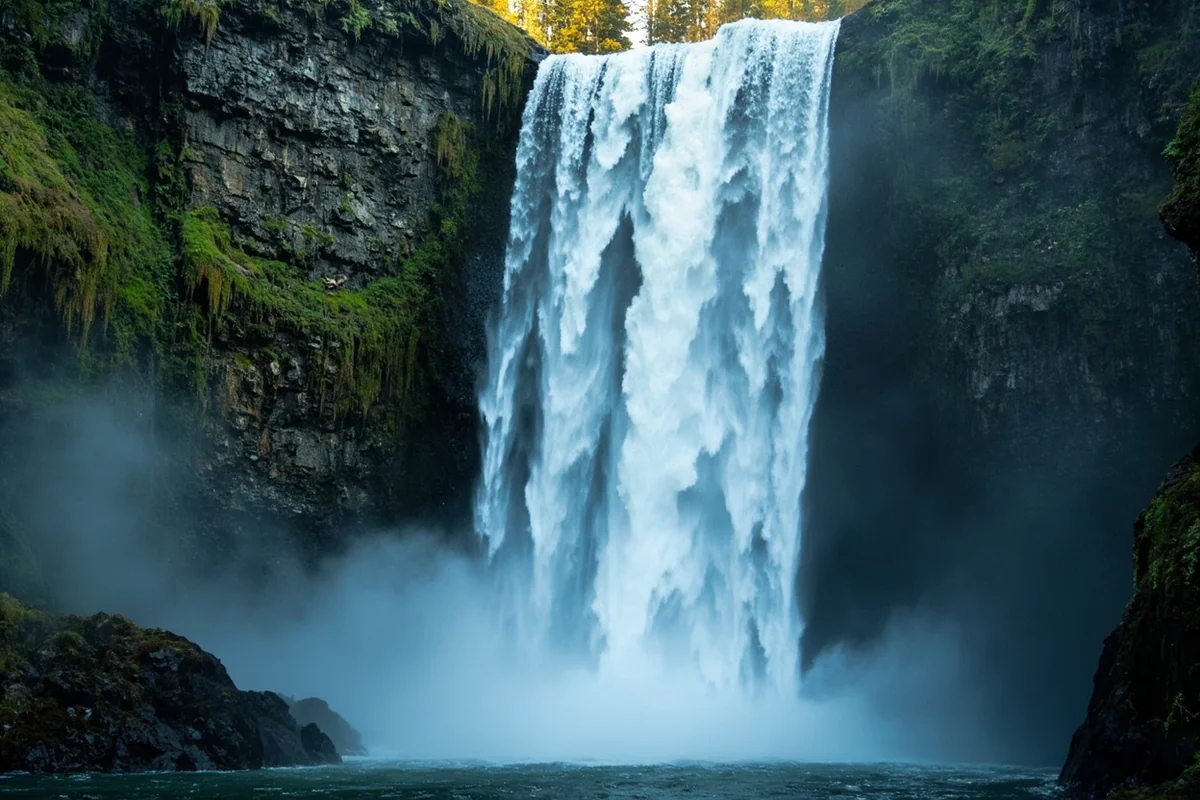
During my visit, I arrived at this spot and immediately understood the appeal. The falls drop approximately 40 feet over a cliff face that’s been shaped by centuries of flowing water.
The rock behind the falls is streaked with green moss and minerals, creating a natural artwork that changes with the light.
Best Time to Visit Holland Lake Falls
Timing matters tremendously for this waterfall. I’ve now visited three times across different seasons, and each experience was notably different.
Peak Flow: Late May Through July
My July visit coincided with excellent water flow. The snowmelt from the surrounding peaks feeds Holland Creek, and by mid-summer, you get that perfect combination of substantial water volume and warm hiking temperatures.
During peak flow, the falls create a significant mist cloud that can soak you if you stand at the viewpoint for more than a few minutes. I brought a light rain jacket, which turned out to be the right call.
If you’re comparing options, this is similar timing to when Morrell Falls is at its most impressive—both benefit from the same Swan Valley snowpack.
Summer (August-September)
By late August, water levels typically diminish. The falls remain beautiful but transform from a thundering cascade into a more delicate, lace-like flow.
If you prefer photography without mist on your lens, this might actually be your preferred time.
Trail conditions are generally excellent in late summer—dry, firm, and easy to navigate.
Fall (October-November)
I haven’t personally visited in fall, but locals tell me the western larch trees turn golden in October, creating a stunning backdrop. Water levels are low, and you might encounter early snow at higher elevations.
Winter and Early Spring
The trail is typically snow-covered from November through April. Some visitors snowshoe to the falls, though I’d only recommend this for experienced winter hikers who understand avalanche safety (the upper basin does present some risk).
Early spring means muddy trails and potentially hazardous conditions. I’d wait until at least mid-May unless you’re prepared for significant mud and possible ice.
Wildlife and Safety Considerations
Holland Lake Falls sits at the edge of serious wilderness, and that means taking wildlife seriously.
Bear Country Reality
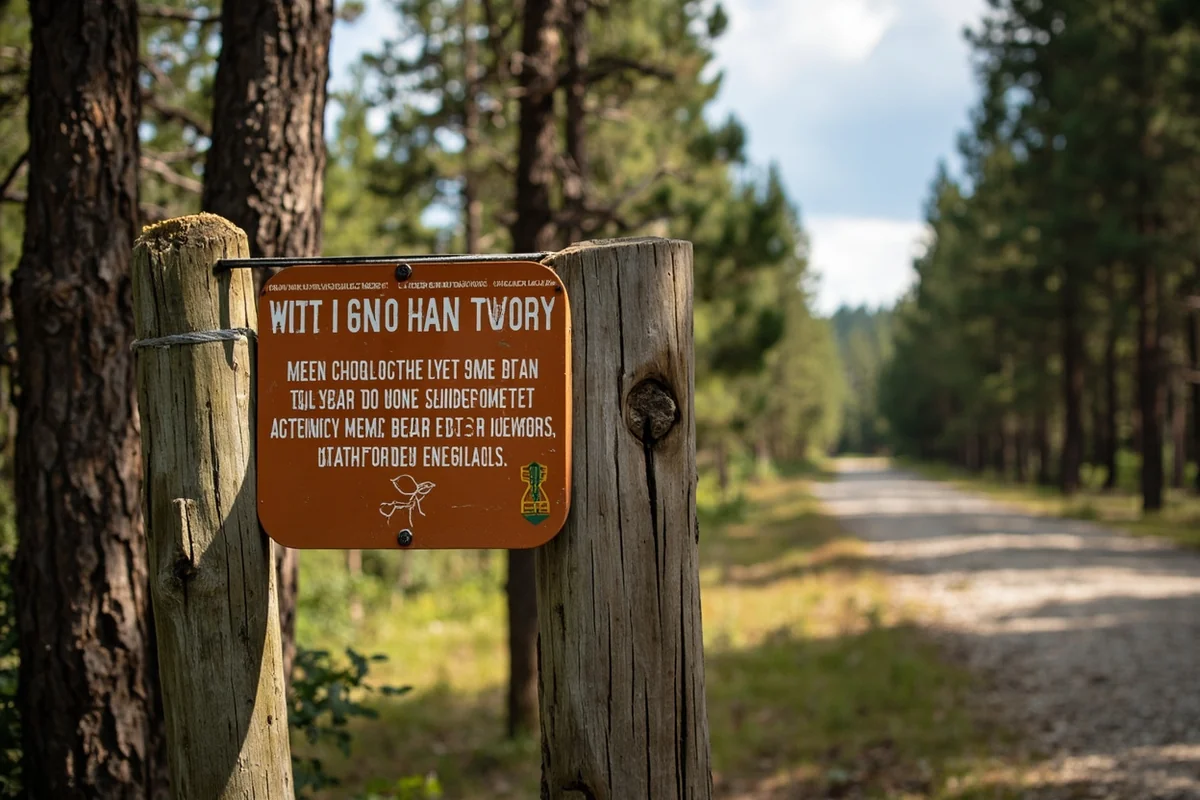
This is active grizzly and black bear habitat. During my visit, I saw a “Bear Activity Warning” sign at the trailhead indicating recent sightings in the area. This isn’t meant to scare you away—it’s meant to ensure you come prepared.
I carry bear spray on every Montana hike, and this trail is no exception. Make noise on the trail, especially around blind corners. When I hiked, I noticed many visitors chatting loudly or clapping periodically—smart behavior in bear country.
Never leave food in your car with windows down, and don’t leave backpacks unattended on the trail. Bears in this area are accustomed to human presence but remain wild and unpredictable.
Other Wildlife
During my hike, I spotted mule deer near the lakeshore and what I believe was a pine marten darting across the trail. The Swan Valley is known for its healthy populations of elk, moose, and mountain lions, though seeing the latter is rare.
The bird life impressed me as well. I identified Clark’s nutcrackers, Steller’s jays, and what I’m fairly certain was a pileated woodpecker hammering away in a dead snag.
Trail Hazards
The main hazards are fairly typical for Montana trails: exposed roots, loose rocks, and the occasional muddy section. The area near the falls viewpoint can be slippery when wet—I saw one hiker lose his footing, though he caught himself before any serious tumble.
Do not attempt to climb closer to the falls than the designated viewpoint. The rocks are wet, mossy, and genuinely dangerous. Every year, Montana sees injuries from visitors who ignored similar warnings at various waterfalls.
Combining Holland Lake Falls with Other Activities
One of my favorite aspects of this location is the potential for a full-day adventure without driving between multiple destinations.
Swimming at Holland Lake
After my hike, the cool waters of Holland Lake were absolutely irresistible. There’s a small beach area near the campground where swimming is permitted.
Fair warning: the water is cold even in July. I’m talking “takes your breath away” cold. But on a hot summer day after hiking, it’s incredibly refreshing. I floated for about 15 minutes, letting the mountain views wash over me—one of those perfect Montana moments.
Extending to Upper Holland Lake
Remember that trail junction I mentioned near the falls? Taking the left fork leads to Upper Holland Lake, adding roughly 3 miles each way to your hike (6 miles total from the trailhead).
I’ve done this extended hike once, and it’s substantially more challenging—you’ll gain about 1,800 feet total. The reward is a stunning alpine lake surrounded by peaks, with far fewer visitors than the falls. If you have the time and fitness level, I highly recommend it.
This area also serves as a launching point for expeditions into the Bob Marshall Wilderness, though those trips require extensive planning and backcountry experience.
Kayaking or Paddleboarding
The boat launch at the trailhead makes Holland Lake a fantastic spot for paddling. I didn’t bring my kayak on my last visit, but I watched several paddlers head out onto glass-calm morning water, and I felt a pang of regret for not planning better.
Nearby Waterfall Alternatives
If you’re creating a waterfall-focused road trip through the Swan Valley, consider combining Holland Lake Falls with some nearby options. Monture Falls is accessible from a trailhead not far south along Highway 83, offering a similar accessibility level with a different character.
Where to Stay Near Holland Lake Falls
Accommodations near Holland Lake range from camping to a recently renovated lodge, with each option offering a distinct experience.
Holland Lake Lodge
The historic Holland Lake Lodge sits right on the lake, about a half-mile from the trailhead. The lodge has undergone renovation in recent years, updating amenities while maintaining its rustic character.
I’ve had dinner at the lodge restaurant, and while it’s pricey, the setting is hard to beat—you’re eating with views of the lake and mountains. Reservations are strongly recommended, especially on summer weekends.
Room rates vary seasonally, and the lodge books up quickly for peak summer months. I’d recommend reserving at least 2-3 months in advance if you’re planning a July or August visit.
Holland Lake Campground
The Forest Service campground offers approximately 40 sites right at the lake. During my camping experience here, I secured a lakeside spot that offered sunrise views I still think about.
Campsite reservations are available through Recreation.gov for some sites, while others remain first-come, first-served. On weekends, the first-come sites fill by early afternoon—another argument for arriving early.
Amenities include vault toilets, potable water, fire rings, and picnic tables. There are no hookups, making this a destination for tent campers and self-contained RVs rather than full-service camping.
Seeley Lake Area
The town of Seeley Lake, about 25 miles south on Highway 83, offers more lodging options including motels, vacation rentals, and additional campgrounds.
I’ve stayed at a small cabin rental near Seeley Lake on multiple occasions—it serves as a good base for exploring multiple Swan Valley waterfalls and activities over several days.
Photography Tips for Holland Lake Falls
I’m an amateur photographer, but I’ve learned a few things about capturing waterfalls on my Montana adventures.
Timing for Light
The falls face roughly west, which means afternoon light hits them directly during summer months. For photography, this creates challenges—harsh shadows and blown-out highlights if you’re shooting in midday sun.
My best photos came from a morning visit when the falls were in soft shade. If you’re a dedicated photographer, I’d suggest arriving early and taking your shots before the sun clears the eastern ridgeline.
Dealing with Mist
During peak flow, mist can coat your lens within seconds. I brought a microfiber cloth and wiped my lens between shots constantly. Some photographers use a UV filter specifically to protect their main lens in these conditions.
A lens hood also helps, both with mist and with controlling flare when the sun does hit the falls.
Composition Ideas
The standard “straight-on” shot from the viewpoint is what everyone gets, and it’s a good one. But I found some interesting angles by moving around the viewing area—there’s room to position yourself for side views that show the falls’ depth and the surrounding cliff structure.
Including foreground elements like ferns or fallen logs adds dimension. I spent probably 20 minutes experimenting with different framings before I got a shot I was genuinely happy with.
Video Considerations
If you’re shooting video, the sound of the falls is as impressive as the visuals. My phone captured surprisingly good audio—the rumble of falling water is visceral and transports me right back every time I replay the clips.
Practical Tips From My Experience
After multiple visits to Holland Lake Falls, here’s the accumulated wisdom I’d share with anyone planning their first trip.
What to Bring
- Bear spray: Non-negotiable in this area
- Water: At least one liter per person, more if it’s hot
- Snacks: Energy bars, fruit, or trail mix
- Light rain jacket: Both for mist at the falls and Montana’s unpredictable weather
- Sturdy footwear: Trail runners at minimum, hiking boots ideal
- Camera: You will regret not having one
- Sunscreen and hat: Portions of the trail are exposed
- Bug spray: Mosquitoes can be fierce near the lake in June and July
Timing Your Visit
Weekday mornings are your best bet for solitude. During my Saturday visit, I passed probably 30 other hikers. On a Tuesday morning trip the following year, I saw fewer than ten people total.
If you must visit on a weekend, arrive before 9 AM. The parking lot fills quickly, and the trail feels meaningfully more crowded by midday.
Managing Expectations
Holland Lake Falls is spectacular, but it’s not Niagara. At 40 feet, it’s a modest waterfall by some standards. What makes it special is the combination of beauty, setting, and accessibility—not raw size or volume.
I’ve talked to visitors who expected something larger and felt slightly disappointed. Go with appropriate expectations, and you’ll be thrilled. This is a perfect waterfall for the experience it offers, which is a manageable hike to a beautiful cascade in stunning wilderness surroundings.
Don’t Rush
My biggest regret on my first visit was treating it like a checklist item. I power-hiked to the falls, snapped some photos, and hiked back in under 45 minutes.
On subsequent visits, I’ve lingered at the falls viewpoint, sat on the lakeshore, and taken time to really absorb the environment. There’s a serenity here that rewards patience. Bring a book, pack a picnic, and make an afternoon of it.
Holland Lake Falls in the Broader Montana Waterfall Context
Having explored waterfalls throughout Montana, I can place Holland Lake Falls in useful context for trip planning.
For accessibility, it’s comparable to Palisade Falls near Bozeman or Memorial Falls near Whitefish—short hikes with significant payoff.
For scenic drama, it holds its own against better-known cascades. While it doesn’t match the raw power of Ousel Falls near Big Sky during peak flow, the setting at Holland Lake offers something more intimate.
If you’re planning a waterfall-focused Montana trip, Holland Lake Falls combines beautifully with other Swan Valley attractions. You might spend a morning at Mission Falls on the nearby Flathead Reservation, then head to Holland Lake for afternoon hiking and swimming.
For those heading into Glacier National Park, numerous waterfalls await—from the easily accessible Running Eagle Falls to more challenging destinations like Ptarmigan Falls or Redrock Falls.
The Story Behind Holland Lake
Understanding a place’s history enriches the experience, and Holland Lake has an interesting past.
The lake and falls are named for a prospector, Ben Holland, who explored this region in the 1890s seeking gold. Like many Montana prospectors, he never struck it rich, but his name stuck to the landscape.
The Swan Valley served as traditional territory for the Salish and Kootenai peoples, who traveled through these mountains for hunting and gathering. The names we use today are relatively recent overlays on a land that held significance for millennia before European-American arrival.
The Holland Lake Lodge dates to the 1920s, serving as a base for forest exploration and eventually tourism. The lodge has operated nearly continuously since then, evolving from a backcountry outpost to a destination in its own right.
The Bob Marshall Wilderness, which rises behind the lake, was designated in 1964 and named for a forester, writer, and wilderness advocate who helped establish America’s wilderness preservation system. Standing at Holland Lake Falls, you’re quite literally at the doorstep of one of America’s great wild places.
Final Thoughts: Why Holland Lake Falls Matters
Montana has no shortage of beautiful places, and every visitor has limited time to spend. So why should Holland Lake Falls make your list?
In my experience, this waterfall represents something increasingly valuable: accessible wilderness. You don’t need to be an expert hiker or spend all day on the trail.
You don’t need special permits or early-morning alarm clocks to beat permit system quotas. You just need to show up, walk for 45 minutes, and experience something genuinely beautiful.
During my most recent visit, I watched a grandmother hike to the falls with her two young grandchildren. I watched a couple celebrating their 40th anniversary pose for photos. I watched a solo backpacker pause briefly before continuing toward the wilderness beyond.
Holland Lake Falls serves as a gathering point—a place where the majesty of Montana becomes available to almost everyone willing to walk toward it. That’s not a small thing.
The Swan Valley itself remains one of Montana’s less-traveled corridors, especially compared to the crowds at Glacier National Park or the developed resort areas. Coming here feels like discovering something, even though the falls have welcomed visitors for a century.
If you’re planning a Montana trip and wondering whether Holland Lake Falls deserves your time, my answer is an enthusiastic yes. Come in early summer for peak water flow. Bring your bear spray and your camera. Give yourself more time than you think you need.
And when you’re standing at that viewpoint, mist on your face, mountains rising behind you, take a moment to appreciate that places like this still exist—and that they’re open to anyone willing to seek them out.
Frequently Asked Questions
How long is the hike to Holland Lake Falls in Montana?
The Holland Lake Falls trail is approximately 1.6 miles round trip, making it one of the most accessible waterfall hikes in Montana’s Swan Valley. I found the trail takes about 45 minutes to an hour to complete at a leisurely pace, with only around 300 feet of elevation gain.
What is the best time of year to visit Holland Lake Falls?
The best time to visit Holland Lake Falls is late May through early July when snowmelt creates the most dramatic water flow. I recommend visiting on weekday mornings to avoid crowds, though the falls remain beautiful through September if you prefer warmer weather and calmer trails.
Is Holland Lake Falls trail suitable for beginners and families with kids?
Yes, Holland Lake Falls is one of the most family-friendly waterfall hikes in Montana with a well-maintained trail and minimal elevation change. The path is wide enough for kids to walk safely, though I’d recommend keeping little ones close near the falls overlook as rocks can be slippery.
Where is Holland Lake Falls located and how do I get there?
Holland Lake Falls is located in the Flathead National Forest, about 60 miles south of Kalispell and 80 miles north of Missoula off Highway 83. The trailhead starts at Holland Lake Lodge, where you’ll find a day-use parking area that costs $5 per vehicle during peak season.
Can you swim at Holland Lake near the falls?
While swimming directly at the base of Holland Lake Falls isn’t practical due to the rocky terrain, Holland Lake itself offers excellent swimming during summer months. The lake water stays cold even in August, typically around 60-65°F, but the sandy beach area near the lodge is perfect for wading and cooling off after your hike.
What should I bring for the Holland Lake Falls hike?
I always bring sturdy hiking shoes with good traction since the trail can be muddy near the falls, plus bear spray as you’re hiking in active grizzly country. Pack water, snacks, and a rain layer even on sunny days since mountain weather changes quickly in the Swan Valley.
Are dogs allowed on the Holland Lake Falls trail?
Yes, dogs are allowed on the Holland Lake Falls trail but must be kept on a leash no longer than 6 feet at all times. I’d recommend bringing extra water for your pup since the trail can get warm in summer, and be aware of wildlife encounters in this remote area of Montana.
Sources