

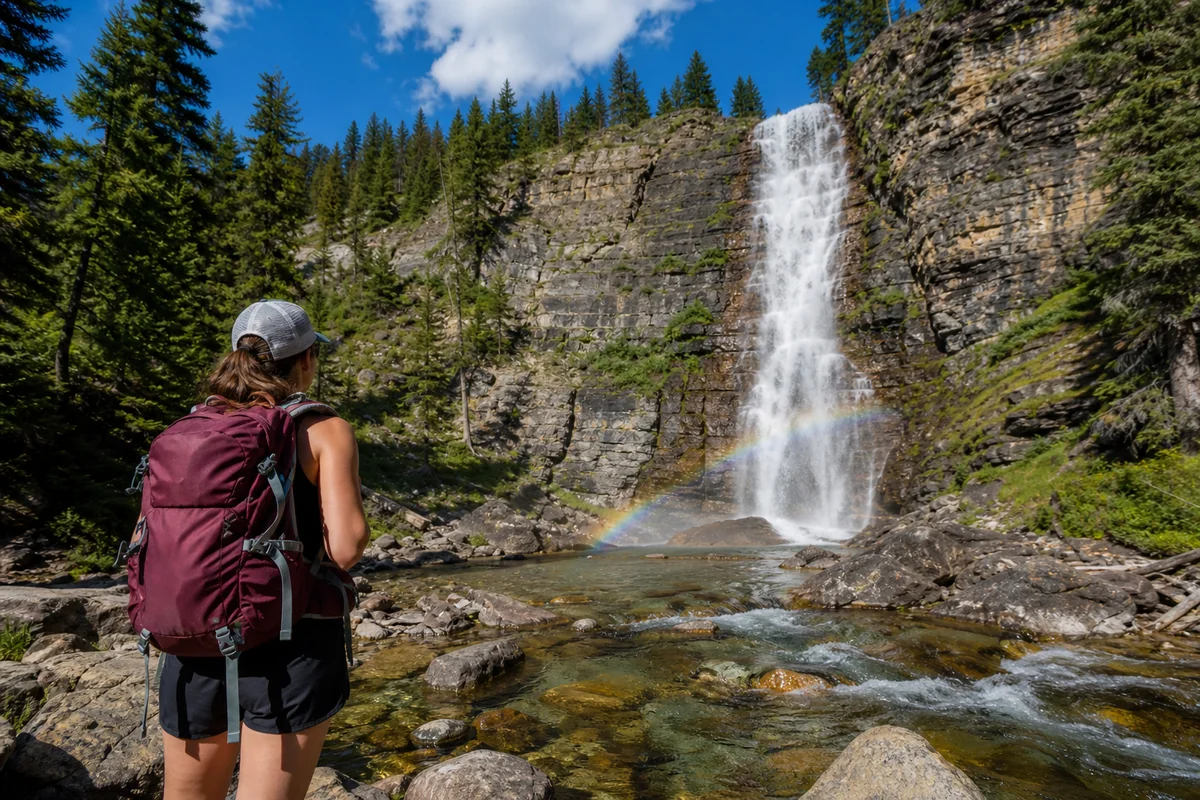
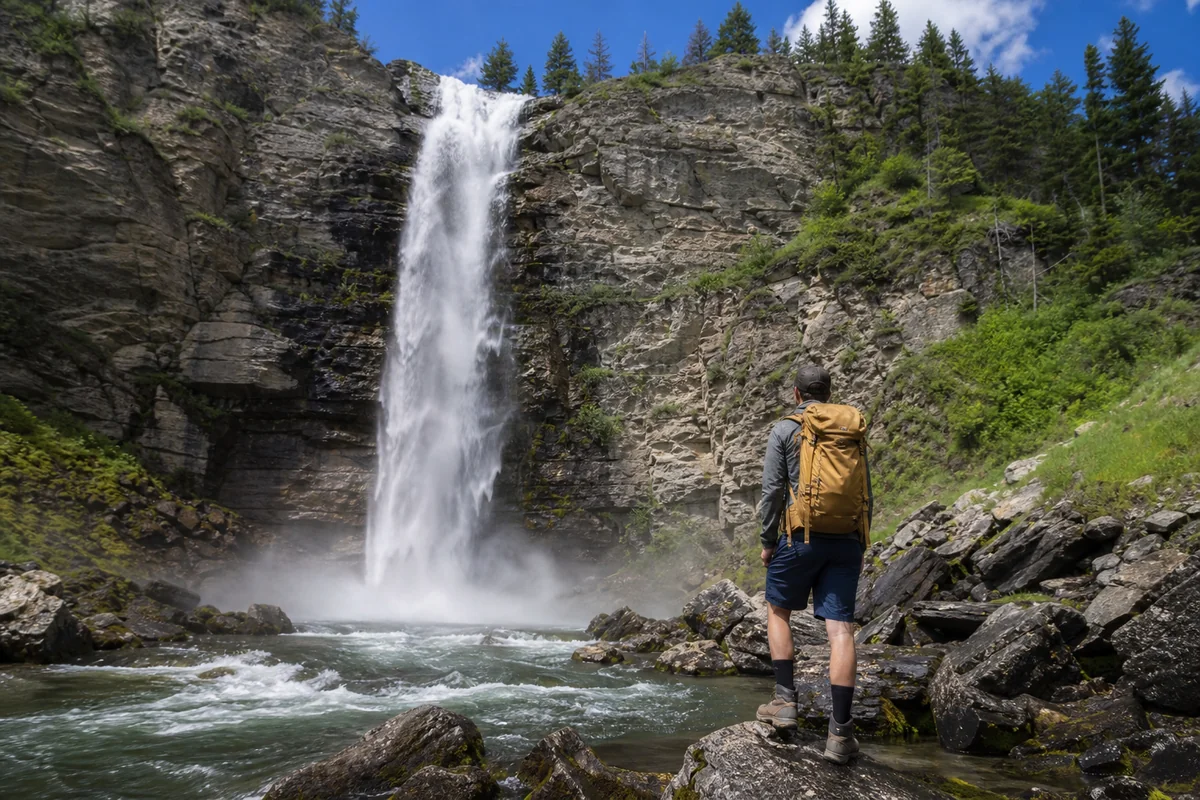
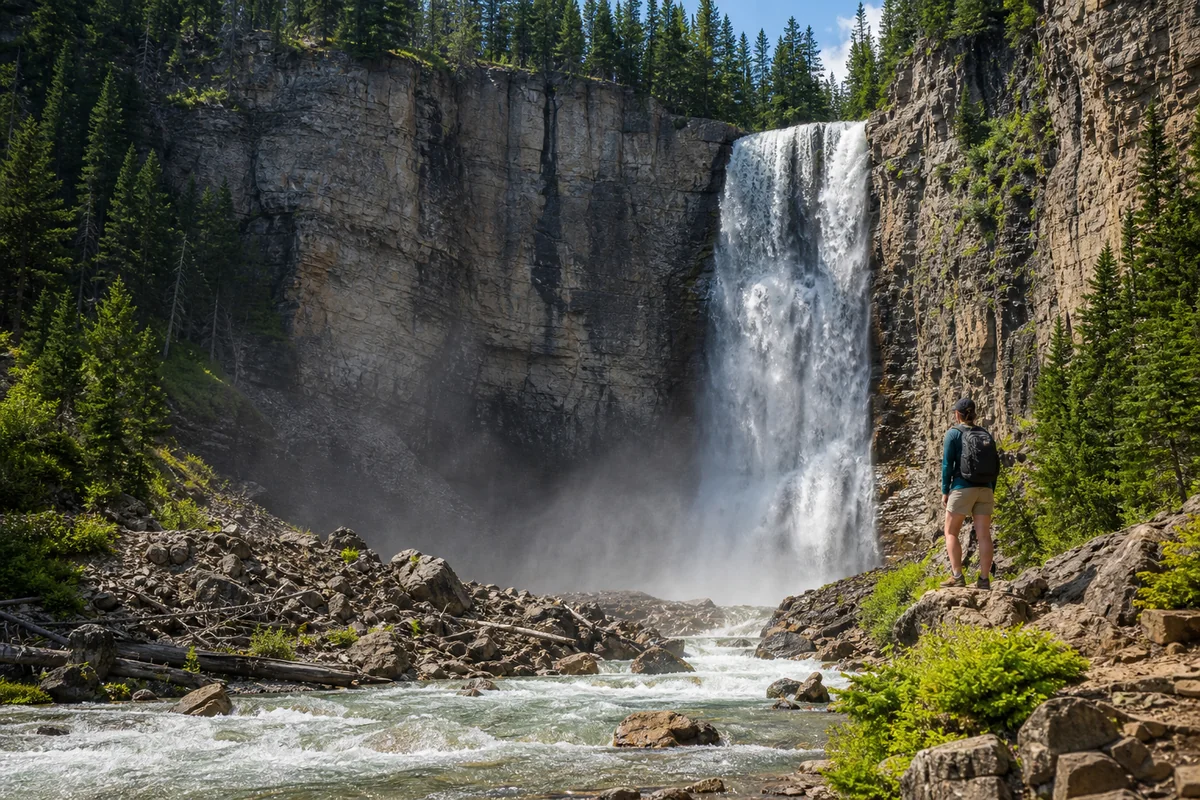
Standing at the base of Rockwell Falls last July, I watched the afternoon sun catch the mist rising from the 40-foot cascade, creating tiny rainbows that danced across the rock face before disappearing into the alpine air.
This moment—after a moderate 7-mile round-trip hike through some of Glacier National Park’s most spectacular backcountry—reminded me exactly why I spend so much time chasing Montana waterfalls.
What makes Rockwell Falls special isn’t just its beauty; it’s that perfect combination of accessibility, dramatic scenery, and the kind of solitude that’s increasingly rare in our national parks.
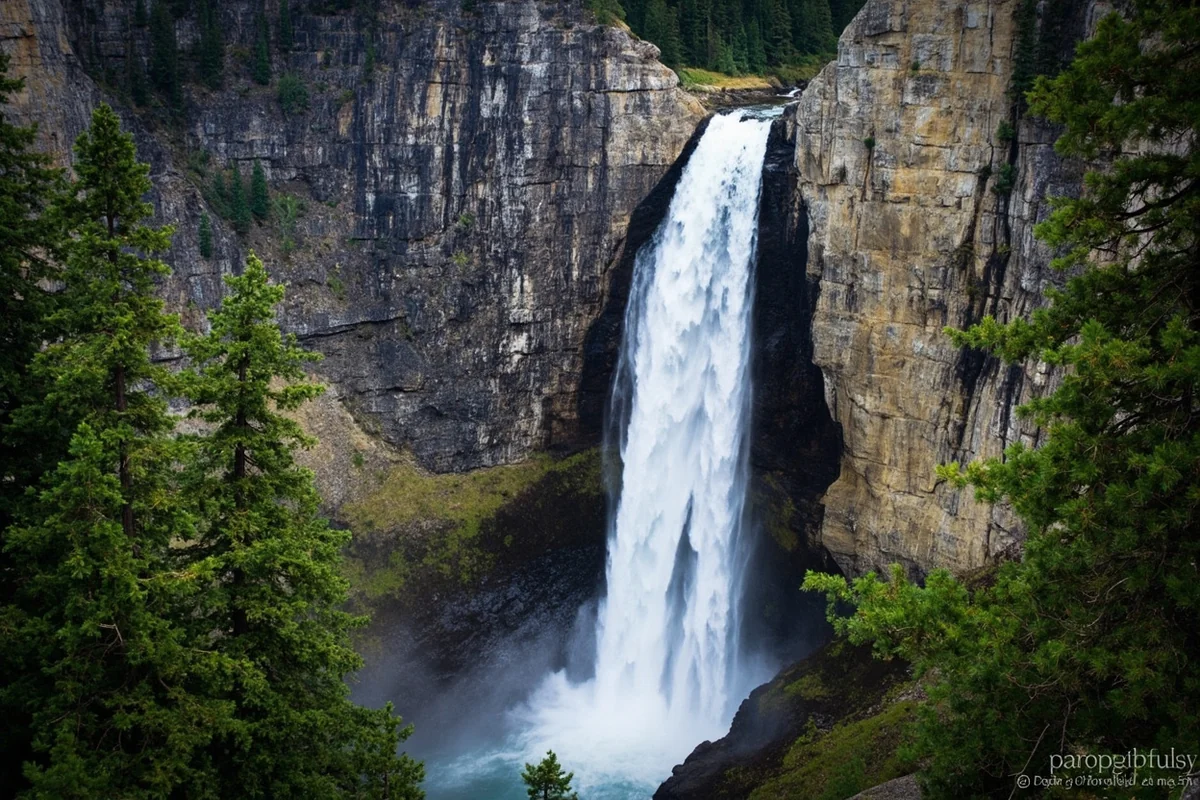
- Rockwell Falls is a 40-foot waterfall reached via a 7-mile round-trip hike from Two Medicine Lake in Glacier National Park
- The trail gains about 1,100 feet in elevation with moderate difficulty suitable for most fit hikers
- Best visited June through September; peak water flow occurs in June and early July
- Start early to secure parking and avoid afternoon thunderstorms common in summer
- Bear spray is essential—I saw fresh grizzly tracks on my last visit
- The hike can be extended to Cobalt Lake for ambitious day hikers or backpackers
Liked this article?
Add Roaming Montana as a preferred source so you see more of our articles and guides on Google.
What Makes Rockwell Falls Worth the Hike
I’ve visited dozens of waterfalls throughout Montana, from the easily accessible Kootenai Falls in the northwestern corner of the state to the more remote Morrell Falls near Seeley Lake. Rockwell Falls occupies a sweet spot that makes it particularly appealing for visitors who want a genuine wilderness experience without requiring technical climbing skills or an overnight backpacking trip.
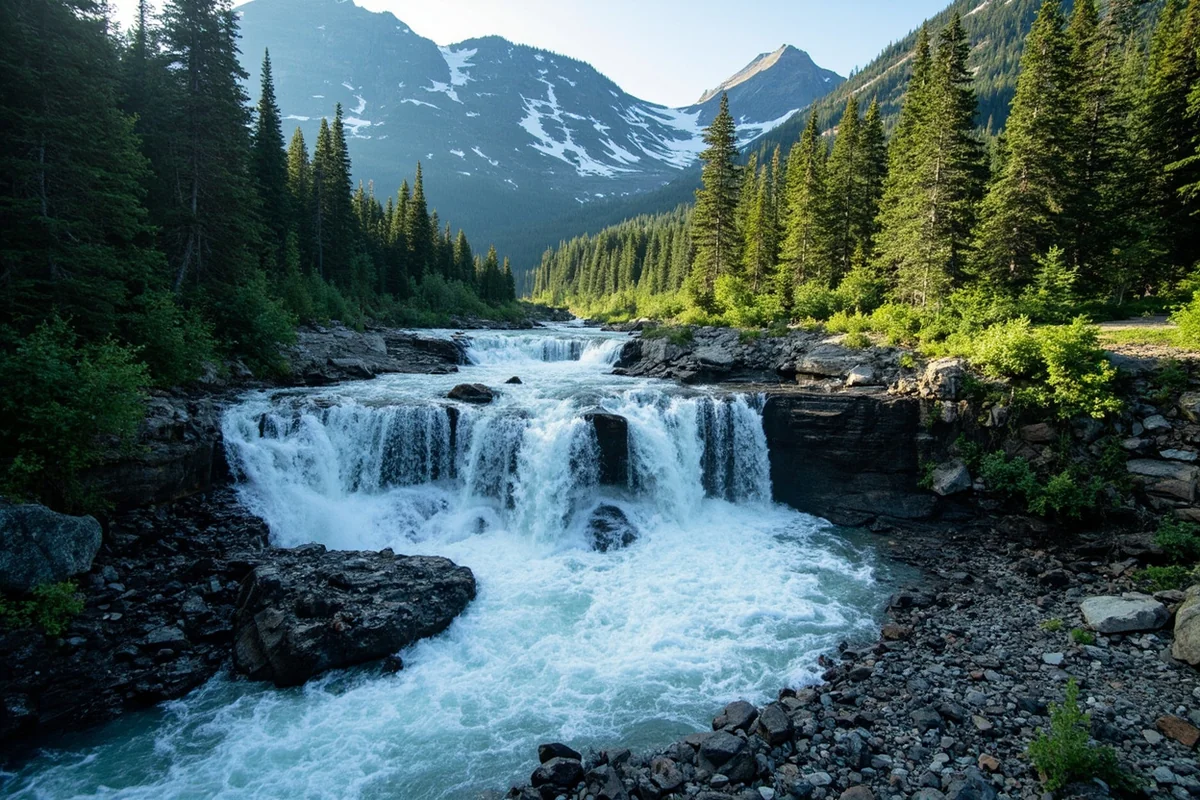
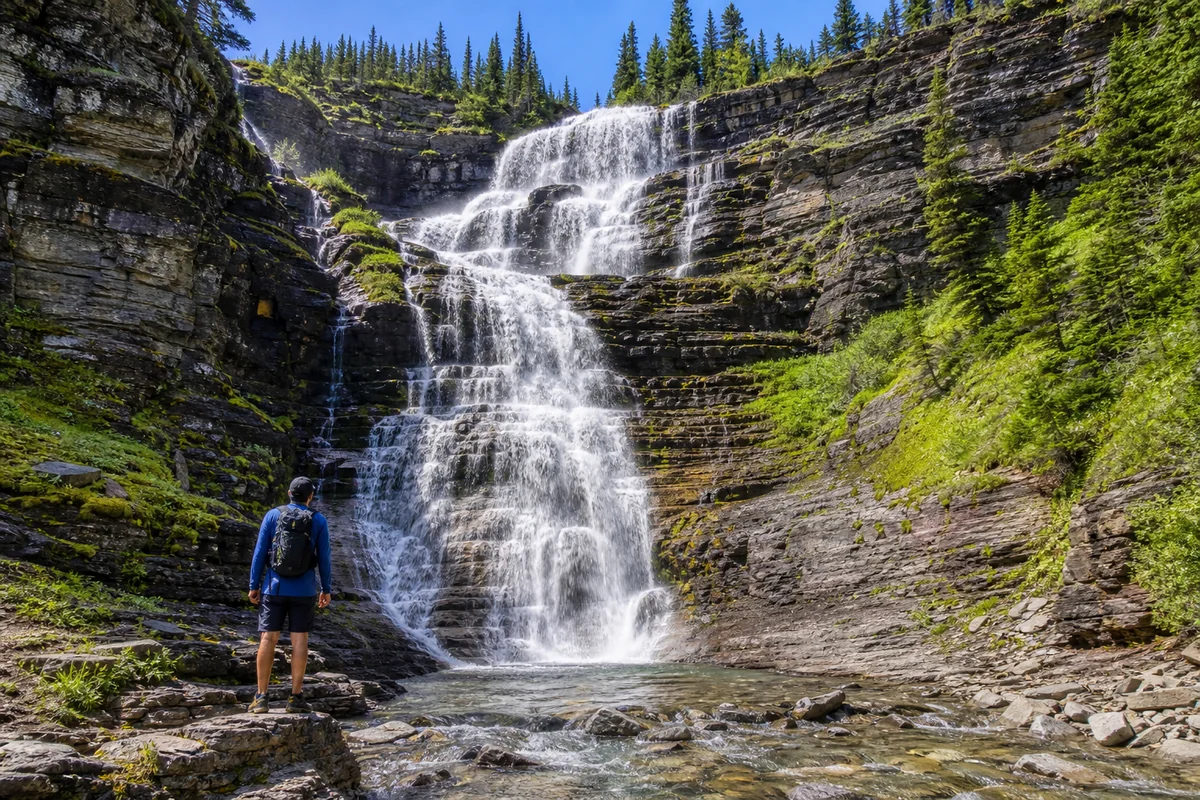
The falls themselves drop approximately 40 feet in a horsetail pattern, spreading across a wide rock face before collecting in a shallow pool at the base. During my July visit, the water volume was still substantial from snowmelt, creating a powerful roar that I could hear a quarter-mile before reaching the viewpoint.
What truly sets Rockwell Falls apart is its setting. The waterfall sits in a dramatic cirque surrounded by towering peaks, including Mount Rockwell to the south. The entire area feels ancient and untouched, despite being just a few miles from the Two Medicine Lake parking area.
Getting to the Trailhead
The journey to Rockwell Falls begins at the Two Medicine area of Glacier National Park, which I consider one of the park’s most underrated sections. While most visitors flock to Going-to-the-Sun Road and the Many Glacier region, Two Medicine offers equally stunning scenery with significantly fewer crowds.
Driving Directions
From East Glacier Park Village, take Highway 49 north for approximately 4 miles until you reach the Two Medicine Road junction. Turn left and follow this scenic road for about 7 miles to its terminus at the Two Medicine Lake parking area.
During my last summer visit, I arrived at 7:30 AM on a Saturday and had no trouble finding parking. By the time I returned around 2 PM, the lot was overflowing with vehicles parked along the road shoulders. The lesson here is clear: arrive early.
Entrance Fees and Passes
You’ll need a valid Glacier National Park pass to enter the Two Medicine area. During my most recent trip, the entrance fee was $35 for a seven-day vehicle pass, or $80 for an annual Glacier National Park pass. If you’re planning to visit multiple national parks, the America the Beautiful annual pass at $80 offers the best value.
Trail Details and What to Expect
| Trail Information | Details |
|---|---|
| Distance | 7.0 miles round-trip |
| Elevation Gain | 1,100 feet |
| Difficulty | Moderate |
| Trail Type | Out and back |
| Estimated Time | 3.5-5 hours |
| Dog Friendly | No (National Park rules) |
The First Mile: Two Medicine Lake
The trail begins at the south end of the parking area, following the western shore of Two Medicine Lake. This opening section is relatively flat and provides stunning views across the lake to Rising Wolf Mountain. I always find myself stopping multiple times in this first stretch to photograph the morning light on the water.
The path here is wide and well-maintained, suitable for families with children. You’ll pass the boat dock where the historic tour boat departs—more on that time-saving option later.
Miles 1-2: Through the Forest
After leaving the lakeshore, the trail enters a mixed conifer forest dominated by lodgepole pine and subalpine fir. The path begins to climb more steadily here, though the grade remains manageable. During my July hike, this shaded section provided welcome relief from the sun that was already heating up the exposed areas.
Keep your eyes and ears open in this stretch. I spotted a pine marten darting across the trail during my last visit, and the birding is excellent throughout the morning hours. Look for Clark’s nutcrackers, mountain chickadees, and the occasional pileated woodpecker.
Miles 2-3: Rockwell Creek Valley
As you continue climbing, the forest opens up, and you’ll get your first glimpses of the dramatic peaks surrounding the Rockwell Creek drainage. The trail crosses several small streams in this section—most were easy rock-hops during my July visit, though earlier in the season you might get your feet wet.
This is where the trail starts to feel genuinely wild. Unlike the crowded paths in other areas of Glacier, I encountered only a handful of other hikers throughout my entire trip. The solitude adds immensely to the experience, though it also means you need to be more vigilant about wildlife.
The Final Push to the Falls
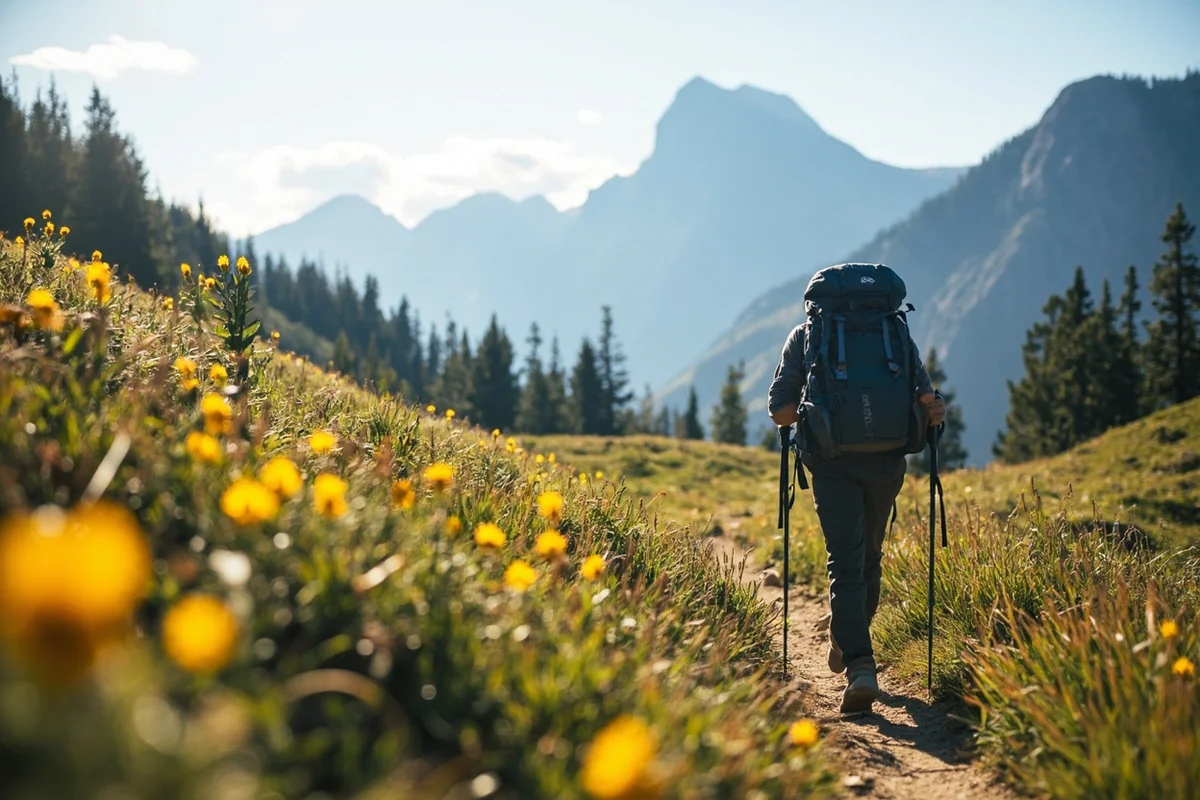
The last half-mile to Rockwell Falls involves the steepest climbing of the entire hike. The trail switchbacks up through increasingly alpine terrain, with wildflowers exploding in color during July and early August. I counted at least a dozen different species during my most recent visit, including Indian paintbrush, beargrass, fireweed, and mountain arnica.
You’ll hear the falls before you see them. The sound builds gradually as you approach, and then suddenly the trail opens up to reveal Rockwell Falls in all its glory. The viewpoint isn’t at the base of the falls but rather at a comfortable distance that allows you to take in the entire scene—the cascade, the surrounding cliffs, and the peaks beyond.
Best Time to Visit Rockwell Falls
Timing your visit correctly can make the difference between a good hike and an unforgettable one. Based on my multiple visits over the years, here’s what I’ve learned about seasonal conditions.
June: Peak Water Flow
If you want to see Rockwell Falls at its most powerful, June is the month to visit. Snowmelt fills the creeks to their maximum capacity, and the falls thunder with impressive force. However, there are significant trade-offs.
The trail may still have substantial snow patches in June, particularly in the upper sections. I attempted a late June hike a few years back and had to turn around about half a mile from the falls due to dangerous snow conditions on steep slopes. Check current trail conditions with the ranger station before committing to an early-season visit.
July: The Sweet Spot
My preferred time to hike to Rockwell Falls is mid to late July. The snow has typically cleared from the trail, the wildflowers are at their peak, and water flow remains strong. The weather is generally more stable than June, though afternoon thunderstorms are still common.
During my most recent July visit, I started hiking at 8 AM and was back at the trailhead by 1:30 PM—well before the storms that rolled in around 3 PM. This timing worked perfectly.
August and September: Late Season Charm
By August, water flow begins to diminish, but the falls remain photogenic. The crowds thin out as summer winds down, and the weather often becomes more stable. September brings fall colors to the lower elevations and a special crispness to the air that makes hiking particularly pleasant.
Keep in mind that the Two Medicine Road typically closes in late October or early November, depending on snowfall. The exact closure date varies year to year.
Wildlife Safety: This Is Grizzly Country
I cannot stress this enough: the Two Medicine area is prime grizzly bear habitat. During my July hike to Rockwell Falls, I observed fresh grizzly tracks in the mud along the trail, and I could see where a bear had been digging for ground squirrels just off the path.
Essential Bear Safety Practices
Carry bear spray and know how to use it. I keep mine in a hip holster where I can access it in seconds—not buried in my pack where it does no good in an emergency.
Make noise while hiking, especially in areas with limited visibility. I carry a small bell, but more importantly, I talk loudly or sing (badly) when approaching blind corners or moving through dense vegetation. Some hikers find this annoying, but I’d rather be annoying than surprise a grizzly.
Never hike alone in this area. I usually hike solo, but for trails in bear country like this one, I make a point of finding a hiking partner. During my last visit, I fell in with a couple from Minnesota, and we stuck together through the upper portion of the trail.
What to Do If You Encounter a Bear
If you see a bear at a distance, do not approach. Give the animal plenty of space to move away, and if it doesn’t notice you, quietly back away and take a different route if possible.
For close encounters, the response depends on the bear’s behavior. If a grizzly is aware of you but not acting aggressively, speak in calm, low tones and slowly back away. Never run—this can trigger a predatory response.
If a grizzly charges, stand your ground. Many charges are bluffs that stop short. If a grizzly makes contact, play dead by lying flat on your stomach with your hands clasped behind your neck. If the attack persists or if you’re dealing with a predatory bear (one that stalks you or attacks at night), fight back with everything you have.
The Boat Shortcut Option
Here’s a tip that can save you about 2 miles of hiking each way: the historic tour boat on Two Medicine Lake. During summer months, a shuttle boat runs from the main dock to the far end of the lake, dropping you much closer to the Rockwell Falls trail junction.
When I took the boat on a previous visit, the brief ride across the lake was a delight in itself. The captain shared stories about the area’s history and pointed out wildlife along the shoreline. We spotted a moose feeding in the shallows near the far shore.
The boat schedule varies throughout the season, so check current times at the ranger station or general store. As of my last visit, round-trip tickets were $18 for adults. If you’re short on time or prefer to save your energy for the steeper upper portions of the trail, this option is well worth considering.

Extending Your Hike: Cobalt Lake
For hikers who want more than just the falls, the trail continues beyond Rockwell Falls to Cobalt Lake, a stunning alpine lake that sits in a dramatic cirque about 2 miles farther up the drainage.
I’ve done this extended hike twice, and both times it ranked among my best days in Glacier National Park. The total distance to Cobalt Lake and back is approximately 11 miles round-trip with about 1,400 feet of elevation gain. It’s a long day, but the rewards are exceptional.
Cobalt Lake lives up to its name—the water really does have an intense blue-green color that seems almost artificial. A backcountry campsite sits near the lake for those who want to spend the night, though permits are required and competition for spots is fierce during peak season.
Photography Tips for Rockwell Falls
Over the years, I’ve developed a few techniques for capturing the best images at Rockwell Falls. Here’s what I’ve learned.
Timing and Light
The falls face roughly northeast, which means morning light works best for photography. During my July visit, the falls were in direct sunlight from about 9 AM to noon. After that, shadows from the surrounding peaks began to creep across the scene.
For the classic silky-water effect, you’ll need a longer exposure, which requires a tripod and likely a neutral density filter to avoid overexposing in bright daylight. I bring a lightweight travel tripod specifically for waterfall shots—the extra weight is worth the improved images.
Composition Ideas
The main viewpoint offers an obvious composition, but don’t stop there. Explore the area around the falls for alternative angles. I found a fantastic perspective from slightly up the trail toward Cobalt Lake that included wildflowers in the foreground with the falls behind.
If you hike during peak wildflower season, look for opportunities to incorporate the vibrant colors into your waterfall shots. A patch of Indian paintbrush in the foreground can add tremendous visual interest to an otherwise standard waterfall image.
What to Pack for the Hike
Based on my experience hiking to Rockwell Falls in various conditions, here’s my recommended packing list:
- Bear spray — Non-negotiable in this area
- Plenty of water — I carry at least 2 liters, plus a filter for refilling from streams
- Layers — Mountain weather changes rapidly; a light rain jacket is essential
- Snacks and lunch — There are no services beyond the trailhead
- Sturdy hiking boots — Trail runners work in dry conditions, but I prefer the ankle support of boots
- Trekking poles — Helpful for the steeper sections, especially on the descent
- Sun protection — Hat, sunscreen, and sunglasses for exposed sections
- First aid kit — Basic supplies for blisters and minor injuries
- Map and navigation — Cell service is unreliable in this area
Nearby Waterfalls and Attractions
If you’re spending multiple days in the area, consider adding these nearby destinations to your itinerary.
The Two Medicine area itself offers several other excellent hikes. Running Eagle Falls, also known as Trick Falls, is just a short walk from the road and showcases an interesting geological feature where water flows from both above and below the main cascade.
For more waterfall adventures, Running Eagle Falls makes an excellent warm-up hike before tackling Rockwell Falls, or a nice cool-down afterward. The easy half-mile trail is perfect for families with young children.
If you’re exploring the wider region, Saint Mary Falls and Redrock Falls on the east side of the park offer additional stunning cascades with relatively moderate hiking requirements. For something more challenging, Ptarmigan Falls rewards adventurous hikers with dramatic alpine scenery.
Where to Stay Near Rockwell Falls
Your accommodation options depend on whether you prefer camping, rustic lodges, or modern hotels.
Camping
The Two Medicine Campground offers the closest camping to the trailhead. With 99 sites, it’s one of the smaller campgrounds in Glacier, but its location makes it ideal for early starts. During my last visit, I scored a site by arriving on a Thursday afternoon—weekends fill up fast during peak season.
Sites are available on a first-come, first-served basis, which can be stressful during busy summer weekends. My strategy is to arrive by early afternoon and have a backup plan in case Two Medicine is full.
Lodges and Hotels
The historic Glacier Park Lodge in East Glacier Park Village offers a classic national park lodge experience about 12 miles from the Two Medicine trailhead. The massive timber lobby and comfortable rooms make it a wonderful base for exploring this side of the park.
For budget-conscious travelers, East Glacier also has several smaller motels and vacation rentals. I’ve stayed at a few over the years, and while they lack the grandeur of the main lodge, they provide clean, comfortable accommodations at reasonable prices.
Planning Your Visit: Practical Considerations
Weather Patterns
Weather in the Glacier National Park region can change dramatically within hours. Even on seemingly perfect mornings, afternoon thunderstorms are common throughout July and August. Lightning poses a serious risk in the exposed alpine terrain near Rockwell Falls.
My rule is to be heading back down by early afternoon at the latest. I’ve been caught in mountain thunderstorms before, and it’s not an experience I care to repeat. The falls will still be there tomorrow—your safety is more important than any photograph.
Trail Conditions
Before heading out, check current trail conditions at the Two Medicine Ranger Station or online through the National Park Service website. Conditions can change quickly due to weather, wildlife activity, or trail maintenance.
During my most recent visit, a section of trail had been temporarily rerouted due to a washed-out bridge. The ranger station had current information that wasn’t yet reflected on the NPS website, so an in-person stop proved valuable.
Permits and Regulations
Day hikers don’t need a permit for the Rockwell Falls trail, but backpackers planning to camp at Cobalt Lake must obtain a wilderness camping permit from the backcountry office. These permits are in high demand during summer months, and many popular sites book up well in advance.
The standard national park rules apply: pack out all trash, stay on designated trails, don’t feed wildlife, and maintain a safe distance from all animals.
Comparing Rockwell Falls to Other Montana Waterfalls
Having hiked to numerous waterfalls across Montana, I often get asked how Rockwell Falls compares to other popular destinations.
In terms of the overall experience, Rockwell Falls most closely resembles Holland Lake Falls near Seeley Lake—both require a moderate hike through beautiful forest before revealing a dramatic cascade in an alpine setting. However, Rockwell’s location within Glacier National Park means you’re surrounded by higher, more dramatic peaks.
For sheer accessibility, falls like Palisade Falls near Bozeman or Skalkaho Falls in the Bitterroot Valley require far less effort to reach. But those easy-access falls don’t offer the same wilderness experience that makes Rockwell Falls special.
If you’re looking for something even more remote and challenging, consider Grotto Falls in the Hyalite drainage or the stunning Ousel Falls near Big Sky. Both offer excellent hiking with dramatic waterfall payoffs.
Within Glacier National Park itself, Rockwell Falls occupies a middle ground between the very easy McDonald Falls visible from the road and the challenging backcountry cascades like Morning Eagle Falls or Ipasha Falls.
My Honest Assessment
After multiple visits to Rockwell Falls over the years, I can offer some candid thoughts about who this hike is best suited for.
This is an ideal destination for fit, experienced hikers who want a genuine wilderness waterfall experience without requiring technical skills or overnight gear. The 7-mile round-trip distance and 1,100 feet of elevation gain are manageable for most people who exercise regularly, but this isn’t a casual stroll.
Families with young children should consider the boat shortcut to reduce the overall distance, or perhaps save this hike for when the kids are older. The upper portions of the trail are steep enough that tired little legs might struggle.
For photographers, Rockwell Falls offers tremendous potential, but be prepared to carry your gear up a moderately challenging trail. The extra weight of a tripod and filters is worth it for the images you’ll capture.
Final Thoughts on Rockwell Falls
Standing at that viewpoint last July, watching the water cascade down the rock face while clouds drifted across the peaks above, I was struck by how places like this remind us what wilderness really means. Rockwell Falls isn’t just a pretty waterfall—it’s a window into a landscape that has remained essentially unchanged for thousands of years.
The Two Medicine area of Glacier National Park doesn’t get the attention it deserves. While crowds flock to the famous Going-to-the-Sun Road, hikers willing to venture a few miles into the backcountry find a quieter, more intimate experience with the park’s natural wonders.
Rockwell Falls rewards those who make the effort to reach it. The hike challenges your body, the scenery feeds your soul, and the falls themselves deliver a moment of pure Montana magic that stays with you long after you’ve returned to the trailhead.
For those building a Montana waterfall bucket list, Rockwell Falls deserves a spot near the top. Combine it with other Two Medicine hikes, explore the broader region including gems like Memorial Falls near Choteau or Mission Falls on the Flathead Reservation, and you’ll discover why waterfall chasers keep coming back to Big Sky Country year after year.
I’ll certainly be back. There’s always another season to experience, another light condition to photograph, another excuse to spend a day in one of America’s most spectacular wilderness areas.
Frequently Asked Questions
Where is Rockwell Falls located in Montana and how do I get there?
Rockwell Falls is located in Glacier National Park near Two Medicine Lake in the southeastern part of the park. To reach the trailhead, drive to the Two Medicine area entrance, about 9 miles from East Glacier Park Village. From there, you can hike approximately 3.5 miles one-way along the South Shore Trail to reach the falls.
How difficult is the hike to Rockwell Falls in Glacier National Park?
The hike to Rockwell Falls is considered moderate with about 700 feet of elevation gain over 3.5 miles each way. I found the trail well-maintained with some rocky sections near the falls, so sturdy hiking boots are a must. Most hikers with average fitness can complete the 7-mile round trip in 3-4 hours.
What is the best time of year to visit Rockwell Falls Montana?
The best time to visit Rockwell Falls is late June through early August when snowmelt creates the most impressive water flow. I recommend visiting in July for the perfect combination of accessible trails and peak waterfall volume. Note that the Two Medicine Road typically opens in late May and closes in mid-October, weather permitting.
Is there an entrance fee to see Rockwell Falls in Glacier National Park?
Yes, you’ll need to pay the Glacier National Park entrance fee of $35 per vehicle, which is valid for 7 days. If you’re planning multiple national park visits, I’d suggest getting an America the Beautiful Annual Pass for $80. There’s no additional fee specifically for the Rockwell Falls trail.
Can I combine Rockwell Falls with other waterfalls in the Two Medicine area?
Absolutely, and I highly recommend it since the Two Medicine area has several stunning waterfalls within close proximity. You can extend your hike to include Cobalt Lake and see additional cascades, or visit nearby Running Eagle Falls (Trick Falls), which is just a short 0.3-mile walk from its own parking area. Planning a waterfall-hopping day lets you maximize your time in this less-crowded section of Glacier.
What should I bring on the Rockwell Falls hike in Montana?
Pack bear spray (required in Glacier), plenty of water, layered clothing since mountain weather changes quickly, and a good camera for the stunning views. I always bring trekking poles for the rocky sections near the falls and a packed lunch to enjoy at the scenic overlook. Don’t forget sunscreen and bug spray, especially in early summer when mosquitoes are active.
Is Rockwell Falls crowded and are there parking concerns at Two Medicine?
Rockwell Falls sees significantly fewer visitors than popular Glacier spots like Logan Pass, making it a great choice for hikers seeking solitude. However, the Two Medicine parking area can still fill up by mid-morning during peak summer weekends, so I recommend arriving before 9 AM. The longer hike naturally thins out crowds, and you’ll often have the falls nearly to yourself.
Sources

going to 2 Medicine area Sept. 26th. Coming in on Amtrak that morning arrives appox. 9:30 AM) from Whitefish and returning that evening (train departs at 7:30ish PM). I have reserved a spot on a shuttle to take us to the trailhead. My husband and I are in our mid 60″s and fairly good health. In the amount of time we have, and knowing the boat is a NO due to season shutdown, what do you suggest? my thoughts were Appistoki Falls, Aster Falls, and either Rockwell or Twin Falls. we will have to be back to the shuttle by 4:45-5:00ish.