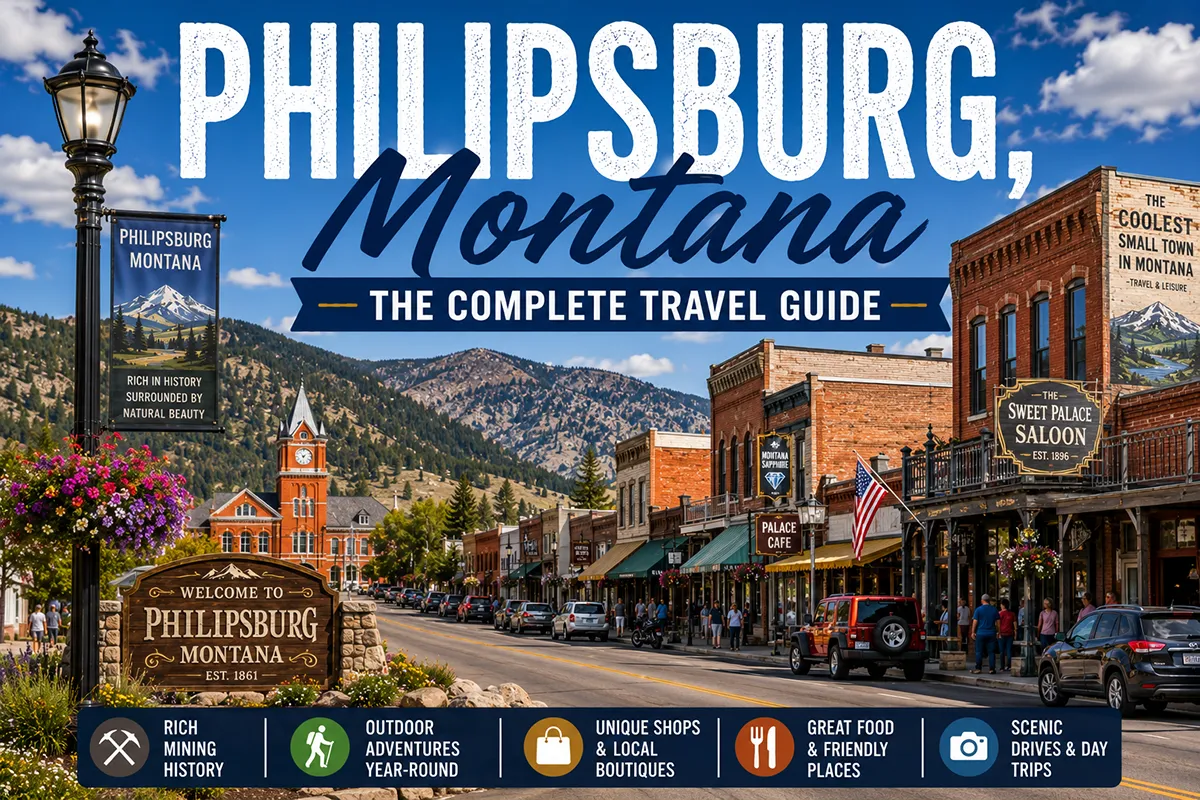
By the 1980s the sawmills and mines around Philipsburg had closed, and the town could have gone the way of the ghost towns up the hill. Instead, a few newcomers bought the old brick storefronts, and Broadway Street came back.
TL;DR
- Philipsburg (population 841 at the 2020 census) is the county seat of Granite County and the only surviving town of the county’s mining-era settlements, with a well-preserved Victorian business district on the Pintler Scenic Route.
- The compact core packs in a candy shop, sapphire stores, an 1891 opera house, a county museum, a brewery, and restaurants within a few blocks.
- The big draws outside town are Granite Ghost Town State Park (a short but steep drive, open only Memorial Day through September), Gem Mountain’s summer sapphire mining, Georgetown Lake, and Discovery Ski Area.
- Plan one night rather than a pass-through. The town is quiet after dinner, and the best light on Broadway is evening.
- Online sources disagree on distances, dates, and a few headline claims. This guide uses the best-sourced figures and flags the rest.
Philipsburg is easy to describe and easy to underestimate. It is a town of fewer than 900 people with a single main street, set in a high valley surrounded by the Beaverhead-Deerlodge National Forest. The buildings along Broadway date to the silver boom of the 1880s and 1890s. Painted in period colors and fitted with historic plaques, they give the street its nickname: the Painted Ladies.
Few Montana towns have kept so much of their original downtown intact. That is partly luck, because the silver crash and later mine closures left little money for modernization, and partly work, because restoration after the 1980s turned the old buildings into shops, restaurants, and hotels. Today the town runs on tourism, ranching, and the occasional sapphire.
It sits in the Southwest Montana region and belongs on any list of Montana cities and towns worth a night. This guide covers the street, the ghost town above it, the gems, the lake, and the logistics.
Liked this article?
Add Roaming Montana as a preferred source so you see more of our articles and guides on Google.
Philipsburg at a Glance
| Detail | What sources support |
|---|---|
| County | Granite County (county seat) |
| Population | 841 (2020 census); 820 (2010) |
| Elevation | About 5,235 feet. Sources give 5,233 (Wikipedia) and 5,240 (regional tourism) |
| Area | Under 1 square mile |
| Climate | Long, dry winters and warm summers; about 16.5 inches of precipitation per year; record high 98°F and record low minus 38°F |
| Highway | Pintler Veterans Memorial Scenic Highway (Highway 1) |
| Airport | Riddick Field, about a mile south of town |
| National forest | Beaverhead-Deerlodge, surrounding the town |
Founding dates vary. Regional tourism and Visit Helena say the camp began as a trading post and mining camp in 1866 or 1867. The town is named for mining engineer Philip Deidesheimer, who designed the Hope Smelter and platted the townsite in 1867.
How Philipsburg Happened: Silver, Crash, Revival
The Hope Mill was Montana’s first silver mill, and it set the town’s direction. The real fortune came a few miles up the mountain, at Granite, where the Granite Mountain mine struck a massive silver deposit about 200 feet down. Regional tourism says the mine produced about $20 million in silver from 1885 to 1893. The state park describes a final blast that uncovered a bonanza yielding $40 million. The numbers differ and are best quoted with their source.
Then silver collapsed. After Congress repealed the Sherman Silver Purchase Act in 1893, the price crashed and the mine shut down. Granite’s population, which had peaked at about 3,000, dropped to around 140 within a year, and the camp became a ghost town. Philipsburg survived because it was the county seat and because other industries, including sawmills, sustained it.
By the 1980s, those industries had closed too. In the 1990s newcomers began buying and restoring buildings in the historic district. The Broadway Hotel reopened in 2003, and Philipsburg Brewing Company moved into an 1888 building in 2012. Tourism now supports the local economy.
For the wider context of how Montana’s mining camps rose and fell, see the Montana Gold Rush guide.
Broadway Street on Foot
The business district is a National Historic Business District with informational plaques on many buildings. A walk takes about an hour, longer with shopping.
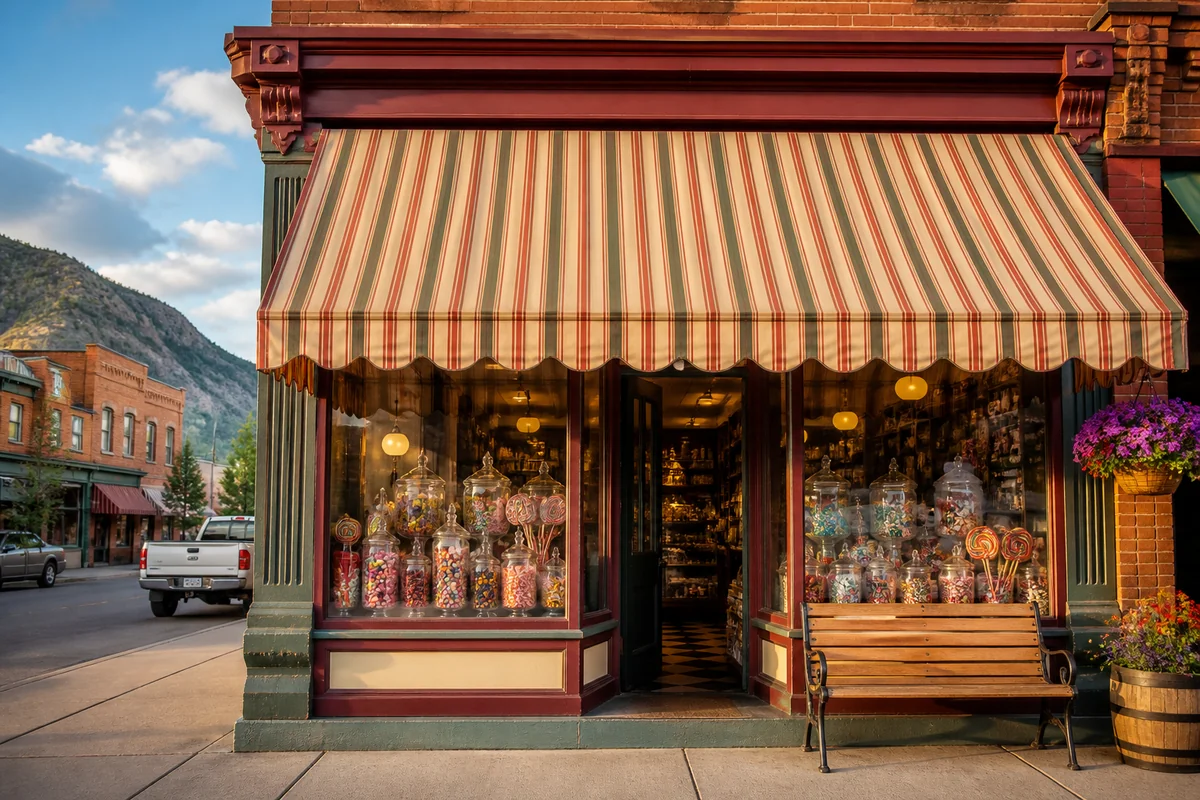
The Sweet Palace. At 109 E. Broadway, this Victorian-style candy shop makes fudge, caramel, and taffy on site, and sells more than 1,000 confections by tourism-office count. It is the most photographed storefront on the street and the one most likely to have a line on summer afternoons.
Sapphire stores. Sapphire Gallery describes itself as the only all-sapphire and ruby store in the country, with indoor mining and custom jewelry. Montana Gems of Philipsburg has a water flume where visitors can sift gravel in town, plus a jewelry store.
Kaiser House Mercantile and Wine Cellar. A shop for Montana-made goods and a large wine selection.
Flint Creek Outdoors. A fly-fishing shop with guiding services and a large fly selection.
Heritage Photo, antiques, and gem shops. Old West costume photos, antiques and collectibles, and several jewelry stores round out the street.
Granite County Museum
The museum at 135 S. Sansome Street occupies the former Courtney Hotel, built in 1918. It opened in 1993 and covers mining, ranching, and pioneer life from the 1860s onward. A walk-through underground mine replica, a miner’s cabin, rotating exhibits, and the Ghost Town Hall of Fame are the main features. Summer hours have been listed as daily from noon to 4 p.m., with winter visits by appointment.
Montana Law Enforcement Museum
A small museum with booking records and equipment from Granite County, including a cell from the defunct Anaconda prison, according to regional tourism. Check hours and admission before going.
The Opera House
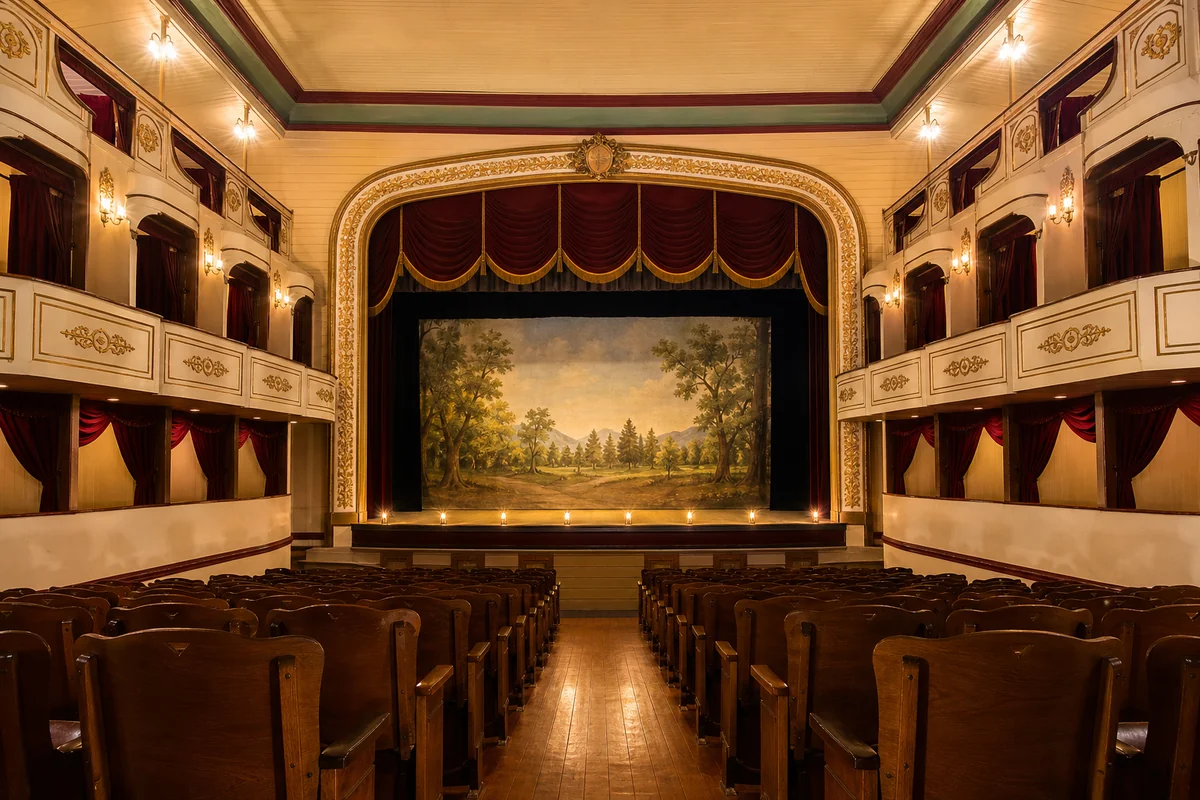
The Philipsburg Opera House Theatre opened in 1891 as the McDonald Opera House, built by Angus and JoAnna McDonald for the mining community. The two-story building has a granite foundation, a high loft for scenery, and ornate boxes. Around 1900 Montana artist Edgar S. Paxton hand-painted six backdrops for the stage. In 1919 it became a movie theater called the Granada, and the backdrops were sold. In 1998 the theater reacquired five of the six.
A pianist bought the building in the 1980s to save it from demolition. Later owners restored it and revived live theater. Since 2019, a nonprofit has run the theater, with screenings, live theater, concerts, and special events. The theater describes itself as the oldest operating theater in Montana, and regional tourism uses the same claim. Tours can be booked through the theater’s website or by phone. Staff and visitors also tell ghost stories about the building.
Granite Ghost Town State Park
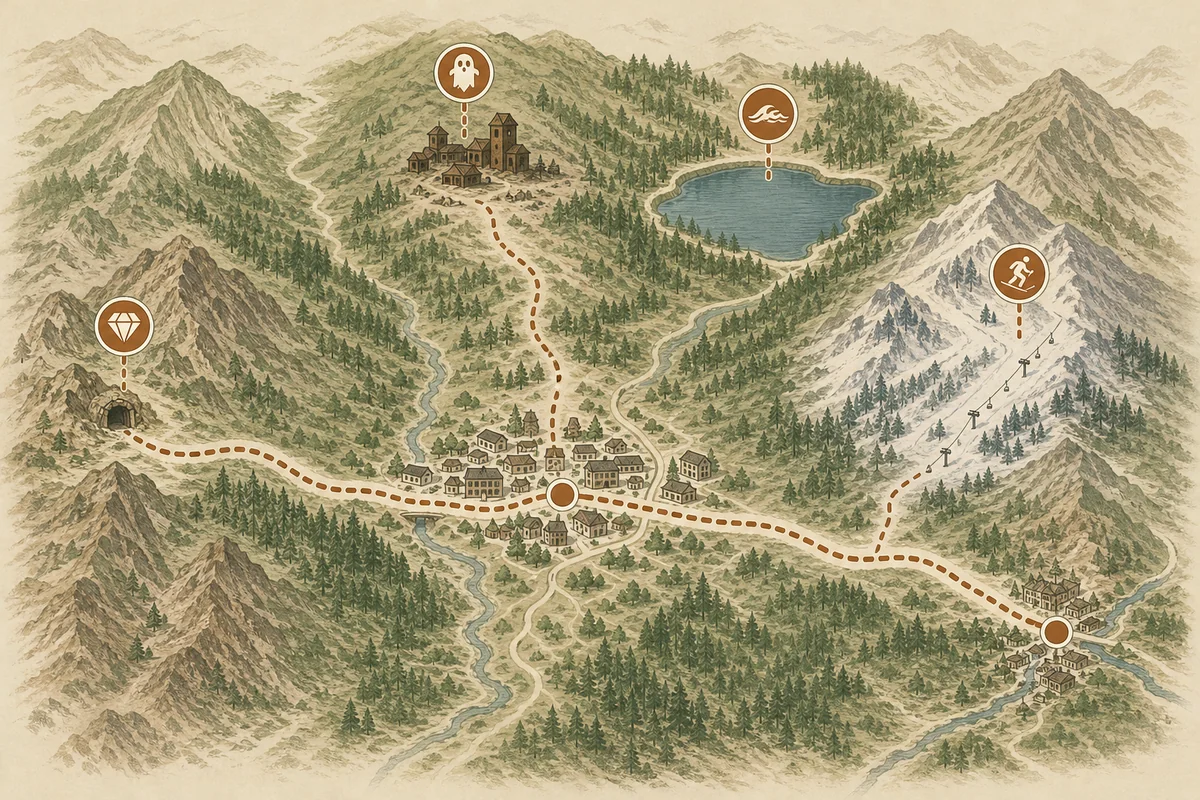
Granite is the best reason to stay overnight. It is less than 5 miles from Philipsburg by road, but it is a world apart.
The short version. The road to Granite gains about 1,280 feet and is narrow, steep, and winding, with places where drivers must pull over for oncoming traffic. Montana State Parks says a high-clearance vehicle is necessary and that the site is not accessible by RV or bus.
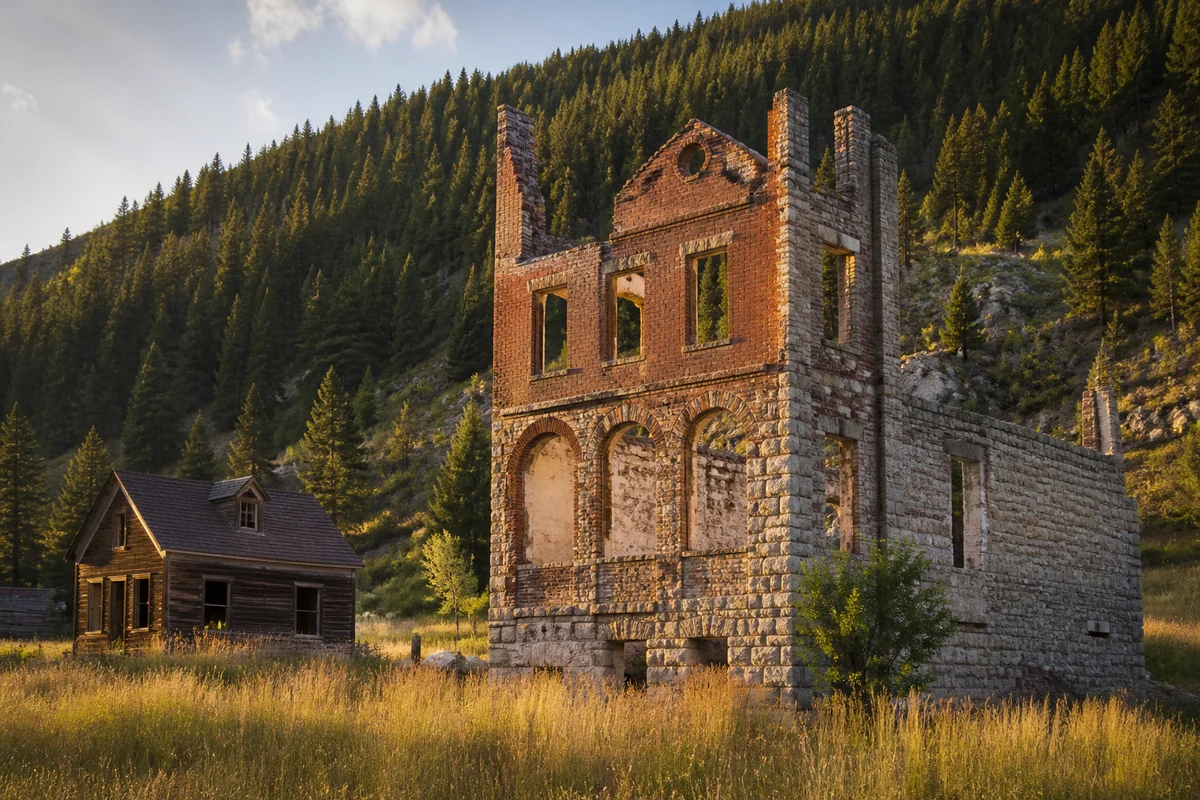
What you see. The remnants of the 1890s silver boomtown, including the Granite Mine Superintendent’s house and the ruins of the miners’ Union Hall, which is recorded in the Historic American Buildings Survey. At its height, Granite had a large Union Hall, a library, 18 saloons, a hospital, a school, and churches, according to Wikipedia. No one lives there now.
When it is open. Memorial Day through September 30, in daylight only. Snow can block the road into late May.
What it costs. Nonresidents pay $8 per vehicle or $4 for walk-ins, bicyclists, or bus passengers. Montana residents are covered by the $9 state parks fee on vehicle registration.
What to expect. Bring water. The park offers few amenities, and it works on a pack-in, pack-out basis. For other sites like it, see Montana ghost towns and the more extensive Bannack State Park guide.
Sapphires: Rock Creek and Gem Mountain
The Sapphire Mountains got their name from sapphires found in Rock Creek in 1892. Early stones were shipped to Switzerland for use as watch bearings. Synthetic sapphires slowed mining by the 1930s, and the region has since reinvented itself around recreational digging.
Gem Mountain Sapphire Mine. The family-owned mining site is in the Sapphire Mountains, about 22 to 23 miles west of town by two sources, and it operates in summer. Visitors buy gravel, wash it, and look for stones. Heat treatment and faceting cost extra, and a downtown gallery sells finished stones. The tip from travel writers: wear a hat and bring water, because gems are easier to spot in sunlight.
In town. If the drive is too far, the in-town flumes at Montana Gems of Philipsburg and Sapphire Gallery offer a shorter version of the same experience.
For other stone hunts across the state, see the Montana gemstones section of the site.
Georgetown Lake and the Pintler Route
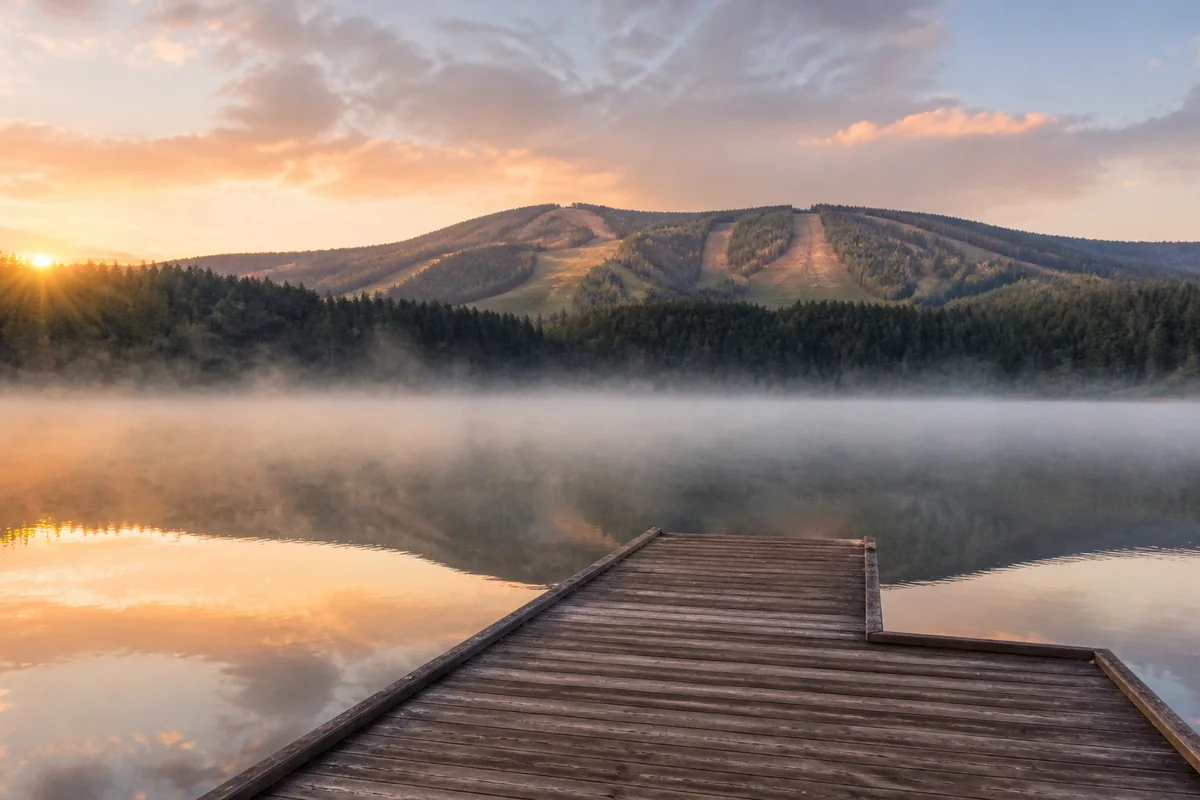
Georgetown Lake covers about 3,700 acres at around 6,400 feet. It is known for kayaking, boating, fishing, and shoreline camping, and for ice fishing in winter. Fish include rainbow and brook trout and kokanee salmon. The lake is about 10 miles from Philipsburg by Wikipedia and regional tourism, while other sources say 15.
The lake is on the Pintler Scenic Route, a 64-mile road that connects Anaconda and Drummond. Philipsburg sits between them, about 26 miles south of Drummond. Allow a half day to drive the full route with stops. Anaconda anchors the other end; see Anaconda.
Discovery Ski Area
Discovery sits above the town to the southeast and is about 30 minutes south of Philipsburg by road. It has more than 2,000 acres of terrain, a day lodge, a cafe known for its cookies, and Nordic trails around Echo Lake, plus lift-served mountain biking in summer. See the Discovery Ski Area guide.
Where to Eat and Drink
Philipsburg has more food than its size suggests. Names and hours change, so confirm before planning a meal around one.
- Philipsburg Brewing Company is in a restored 1888 building that once housed a bank, with Montana craft beers and weekend live music, according to Visit Helena.
- Silver Mill Restaurant and Saloon serves steaks, seafood, and Montana dishes in a restored 1882 building.
- Doe Brothers Restaurant has a varied menu and is a walkable option.
- Philipsburg Creamery serves homemade ice cream and espresso.
- Sherry’s Homestyle Bakery is farther west in town, with pastries and pies.
Dinner service ends early in the off-season. When in doubt, arrive before 7 p.m.
Where to Stay
Regional tourism lists a motel and an RV park on Broadway, and the Broadway Hotel is a restored historic property that reopened in 2003. Beyond that, Georgetown Lake has cabins and campgrounds, and Anaconda and Deer Lodge have larger motels.
Prices change by season and event weekend, so check directly rather than relying on printed ranges. For extra-large vehicles, note that the Granite road is not suitable for RVs or buses, and plan to leave them in town.
Philipsburg by Season
Spring. Mud and patchy snow. Granite’s road is closed into late May, and Gem Mountain is not yet open.
Summer. The prime season. Granite, Gem Mountain, the museum, and Georgetown Lake are all open. Days are warm and evenings cool.
Fall. Quiet and colorful. Granite closes September 30, and the Gem Mountain season ends. Broadway stays open year-round.
Winter. Discovery and Georgetown Lake ice fishing lead. Highway 1 can be icy, and some Broadway businesses reduce hours.
For broader planning, see the best time to visit Montana.
One Day, Two Days
One day. Morning at Granite, lunch on Broadway, an hour at the museum, and an evening at the brewery or opera house.
Two days. Add Gem Mountain, Georgetown Lake, and the Pintler route to Anaconda.
Three days. Add Discovery, a hot springs soak at Fairmont (see Montana hot springs), and a loop through Butte and Dillon.
Nearby Towns and Day Trips
- Anaconda (about 38 miles by the route): Smelter Stack, Washoe Theatre, and Old Works. See Anaconda.
- Butte: See Butte.
- Helena: Visit Helena lists Philipsburg as a day trip, 90 to 100 miles and about 1 hour 15 minutes away. See Helena.
- Virginia City and Bannack: More territorial gold history. See Virginia City.
- Missoula: About 75 miles northwest.
Getting There
Philipsburg is reached only by Highway 1, the Pintler Scenic Route. From Interstate 90 at Drummond, the road runs about 26 miles south. From Anaconda, it runs north and west.
| From | Direction | Approximate distance |
|---|---|---|
| Drummond | South on Highway 1 | About 26 miles |
| Missoula | East on I-90, then south | About 75 miles |
| Helena | West and south | 90 to 100 miles (about 1 hour 15 minutes) |
| Anaconda | North and west on Highway 1 | About 38 miles |
| Butte | West via Anaconda or I-90 | About 60 miles |
A car is essential. The nearest commercial airports are in Missoula, Butte, and Bozeman.
What Visitors Wish They Knew
- Granite is a one-vehicle trip. The road is steep and narrow, and RVs and buses are not allowed.
- Gem Mountain is seasonal. Check before driving out.
- Hours shrink off-season. Many shops close or reduce hours after summer.
- Cell service varies. It thins out toward Granite and the Pintlers.
- Bring cash and water for the ghost town and for gem sifting.
- Look up. The best architectural details on Broadway are above the storefronts.
- Cross-check numbers. Mine production, distances, and founding dates vary by source.
Practical Info
| Item | Details |
|---|---|
| Best season | Late May through September for full access; winter for skiing and ice fishing |
| Time needed | One night; two for the full circuit |
| Fees | Granite state park charges per vehicle for nonresidents; gem mining and museums charge |
| Difficulty | Easy on Broadway; steep road to Granite |
| What to bring | Hat, water, layers, cash |
| Nearby | Georgetown Lake, Discovery, Anaconda, Granite |
Conclusion
Philipsburg proves a small town can keep its past without turning it into a theme park. The brick storefronts are real, the ghost town is a short climb away, and the sweets and sapphires give the street a playful side.
Save this guide for your Southwest Montana trip planning, and leave questions in the comments, especially if hours or road conditions have changed. For more places, browse the full list of Montana cities and towns or build a route through Southwest Montana.
Frequently Asked Questions
What is Philipsburg, Montana known for?
Its restored Victorian business district, the Sweet Palace, sapphire mining, the 1891 opera house, and nearby Granite Ghost Town.
How many people live in Philipsburg?
841 at the 2020 census.
How far is Granite Ghost Town from Philipsburg?
Less than 5 miles, but the road is steep and requires a high-clearance vehicle. RVs and buses are not allowed.
When is Granite Ghost Town open?
Memorial Day through September 30, daylight hours only.
Can you mine sapphires near Philipsburg?
Yes. Gem Mountain operates in summer, and shops in town offer indoor sifting.
How far is Georgetown Lake?
About 10 miles by some sources and 15 by others.
Is Philipsburg worth an overnight stay?
Yes, for the evening light on Broadway, the opera house, and a relaxed start to Granite the next morning.
How far is Philipsburg from Missoula?
About 75 miles.
Who is Philipsburg named for?
Mining engineer Philip Deidesheimer, who designed the Hope Smelter and platted the town in 1867.