For about ten years Virginia City ran a territory, and then the capital moved to Helena and the town stayed put, which is why so much of it is still standing.
TL;DR
- Virginia City (population 219 at the 2020 census) is the Madison County seat and was Montana Territory’s capital from 1865 to 1875. It sits in a National Historic Landmark district built on the richest placer gold strike in the Rockies.
- Nevada City, a short drive away, is a separate, relocated-and-preserved town. The two work as one visit, and a half day covers the highlights while an overnight stay covers the rest.
- Most attractions, lodging, and restaurants run Memorial Day through Labor Day. The streets can be driven year-round, but the town is very quiet in winter.
- Many online claims about the vigilantes, the town’s size, the discovery of gold, and the distances to nearby towns conflict. This guide shows the ranges and flags what still needs checking.
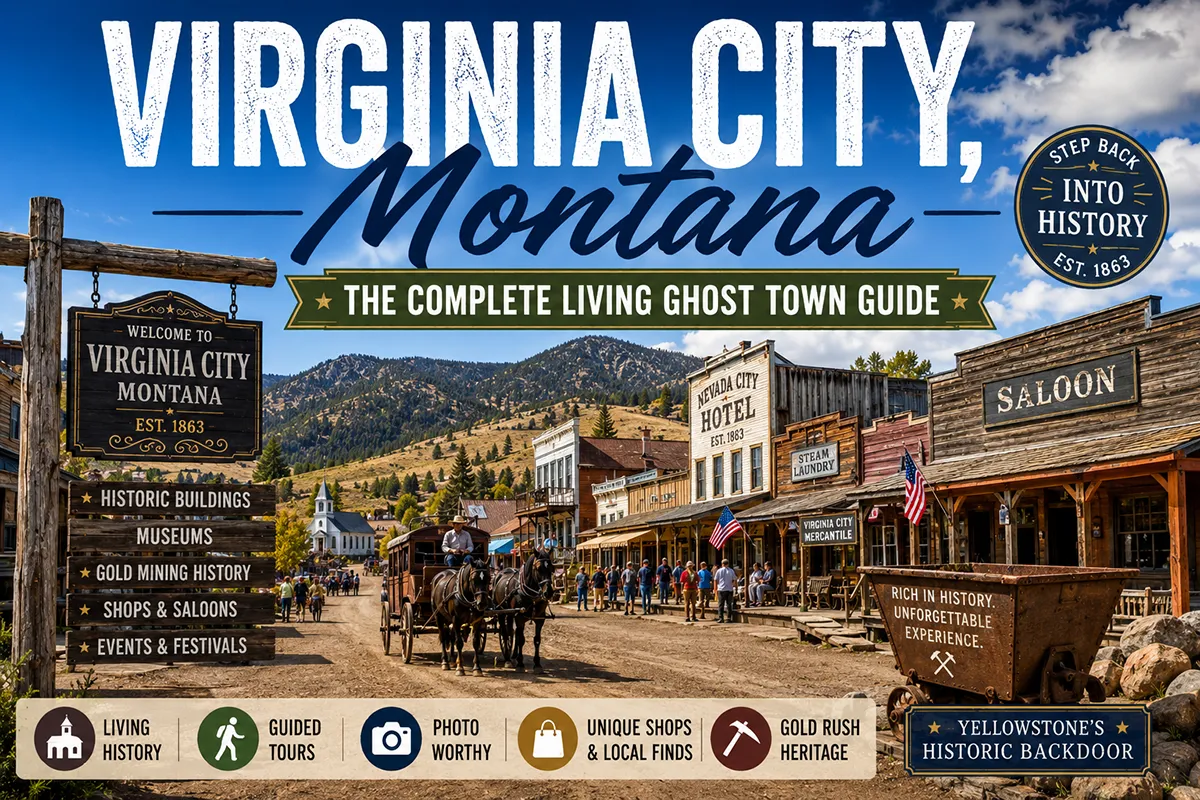
Walk Wallace Street on a summer afternoon and the town reads like a stage set, until a pickup pulls up, someone goes into the courthouse, and a child asks why the fire truck is closed. Virginia City is not a museum with a ticket booth. It is a working county seat that happens to be wrapped in one of the best-preserved mining camps in the West.
That mix is the reason it earns a place on a Southwest Montana itinerary and on the longer list of Montana cities and towns. It also explains why the town is easy to do badly: arrive late, expect everything open, and the day shrinks fast.
This guide covers the history, the difference between Virginia City and Nevada City, what to do, when to visit, and the places where sources disagree.
Liked this article?
Add Roaming Montana as a preferred source so you see more of our articles and guides on Google.
Virginia City at a Glance
| Detail | What sources support |
|---|---|
| County | Madison County; Virginia City is the county seat |
| Population | 219 (2020 census); 190 (2010). The Montana Heritage Commission cites about 150 year-round and 300 in summer |
| Elevation | 5,919 feet (Wikipedia); the Heritage Commission lists 5,680 feet |
| Area | Under 1 square mile |
| Designation | National Historic Landmark district; sources give 1961 or 1962 |
| Capital | Territorial capital 1865 to 1875 |
| Highway | Montana Highway 287 |
| Climate | Borderline cool semi-arid and humid continental; record high 103°F, record low minus 40°F |
| Snowfall | About 65 inches a year |
The Landmark district covers about 20,000 acres, including all of the city limits and much of Alder Gulch. Wikipedia counts over 200 nineteenth-century buildings; the Heritage Commission reports 237 major structures remaining. The town had roughly 1,200 buildings in 1868.
Virginia City vs. Nevada City
The two towns are often treated as one place. They are not.
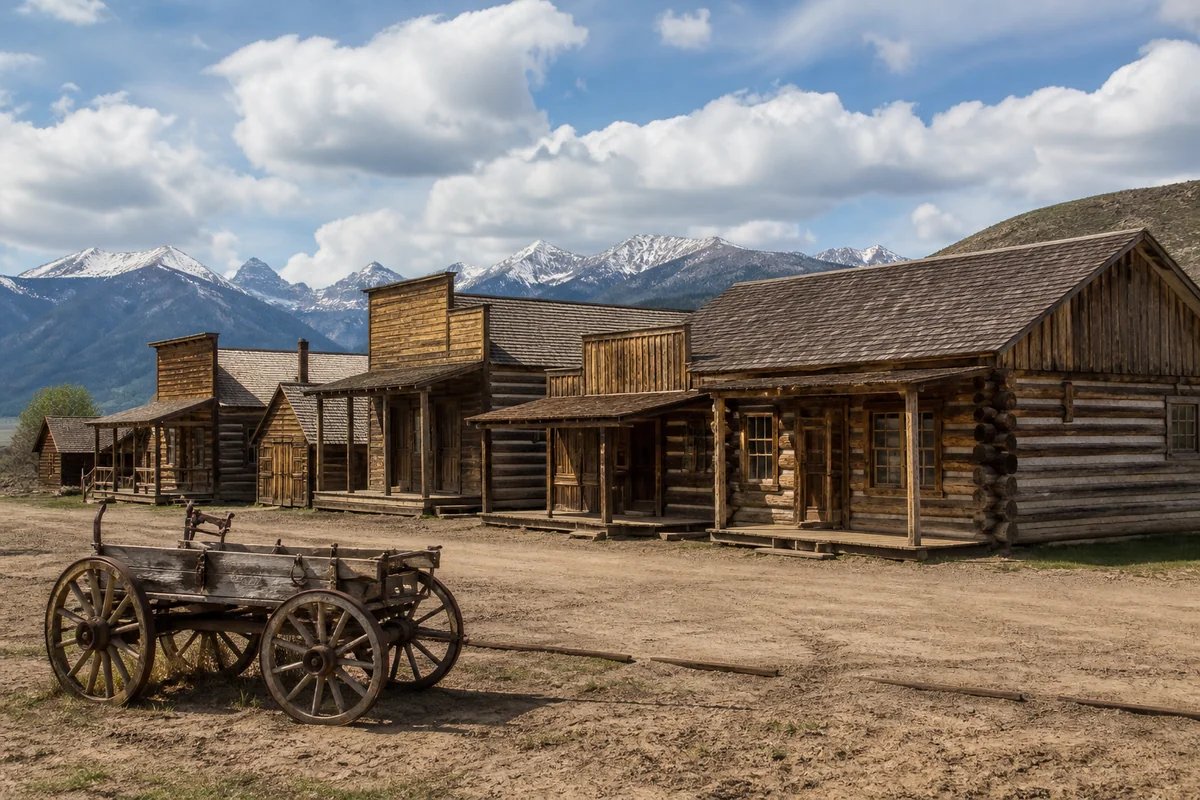
Virginia City is the living town: the county seat, the courthouse, the shops, the opera house, the Players, and the lodging. Nevada City is a preserved site. The original Nevada City town was west of the highway and was destroyed by early twentieth-century dredging. The historic buildings there were largely moved in from elsewhere, and the Nevada City Museum and Music Hall operates there today under the Montana Heritage Commission.
Counts differ. Southwest Montana tourism says the museum has over 100 historic buildings; the live post said 108 buildings with 14 original. Treat both as approximations.
The distance between the two is small. The live post gave about 1.5 miles, and a travel blogger described a five-minute drive. The Alder Gulch Shortline Railroad also runs between them.
The Gold Strike
May 26, 1863
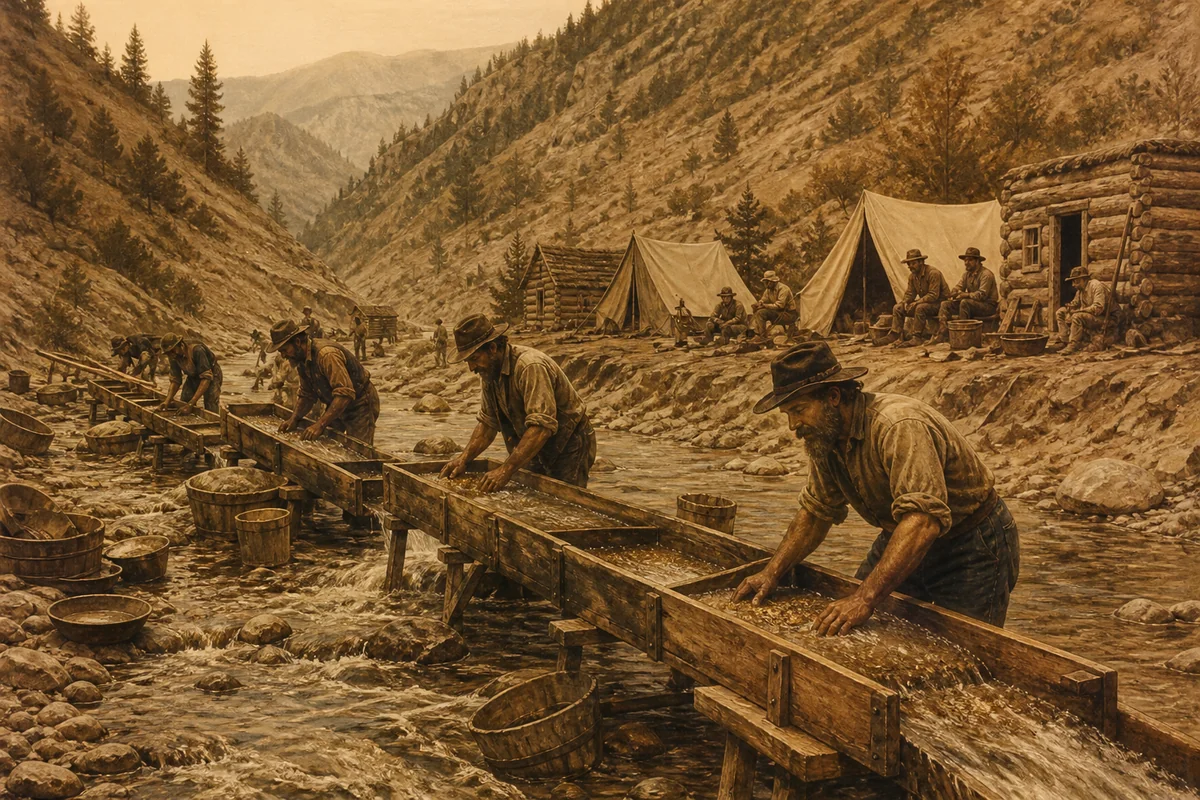
On May 26, 1863, six men camped along an alder-lined stream in what became Alder Gulch: Barney Hughes, Thomas Cover, Henry Rodgers, William Fairweather, Henry Edgar, and Bill Sweeney. Fairweather dug the dirt and Edgar washed the first pan, which yielded $2.40. The Montana Heritage Commission says the gulch became the richest placer strike in the Rockies, with an estimated value of $100 million and about $30 million in the first three seasons.
Some accounts say five men made the discovery, and the exact dates and names vary by source. The 1863 date is consistent. A live-post line calling the rush an “1864 gold rush” in the TL;DR contradicted the body.
From Varina to Virginia
The township was platted on June 16, 1863. It was first called Verina or Varina, in honor of Varina Howell Davis, the wife of the Confederate president. A judge named G.G. Bissell objected and had it recorded as Virginia City instead. The founders were largely Confederate sympathizers in Union territory.
Boom, Then Quiet
The population of the whole gulch reached an estimated 10,000, spread across communities that stretched along what was called “Fourteen-Mile City.” Virginia City itself had about 5,000 by mid-1864. About a third of its residents were Chinese by 1870. Early in the 1870s, the population fell to a few hundred and never recovered.
For the bigger picture, see the Montana Gold Rush guide and the Bannack State Park guide for the earlier 1862 strike.
The Vigilante Story
The vigilante chapter is the most retold and the least consistent part of the town’s story.
What most sources agree on. Road agents were blamed for violence and robbery on the trails around Bannack and Virginia City in 1863 and 1864. Wikipedia says they were blamed for up to 100 deaths. The Vigilance Committee of Alder Gulch formed in response, and Henry Plummer, the sheriff of Bannack, was among those hanged.
Where sources split. Wikipedia says up to 15 road agents were hanged between December 1863 and January 1864. The live post said 21 men were hanged and credited Plummer’s gang with over 100 murders. Neither number is fully settled in the sources reviewed.
Who is named. Wilbur F. Sanders was a founding member of the Vigilance Committee, and Granville Stuart and Nathaniel P. Langford were also vigilantes, according to Wikipedia. Jack Slade was lynched in Virginia City.
Boot Hill. Five road agents buried on Boot Hill were exhumed, identified, and reburied in 1907. A live-post line about “five hanging posts remaining” was not confirmed.
Historians still argue about whether the vigilantes were justice or something darker. The honest approach for a visitor is to read the markers and the museum labels with that debate in mind.
Capital, Then Not
Montana Territory was organized in May 1864. Virginia City was named the capital in February 1865, got Montana’s first telegraph in 1866, and hosted Montana’s first public school in March 1866. The first newspaper, the Montana Post, began publishing in August 1864. The capital moved to Helena on April 19, 1875, and Virginia City’s role as a transport hub ended.
Mining continued in other forms: hydraulic mining arrived in 1867 and floating dredges worked the gulch from 1898 to 1922. Federal Limitation Order 209 effectively shut down U.S. gold mining in 1942. The dredging left the tailings piles visible in Alder Gulch today.
The story of the capital’s next home is covered in the Helena guide.
How the Town Was Saved
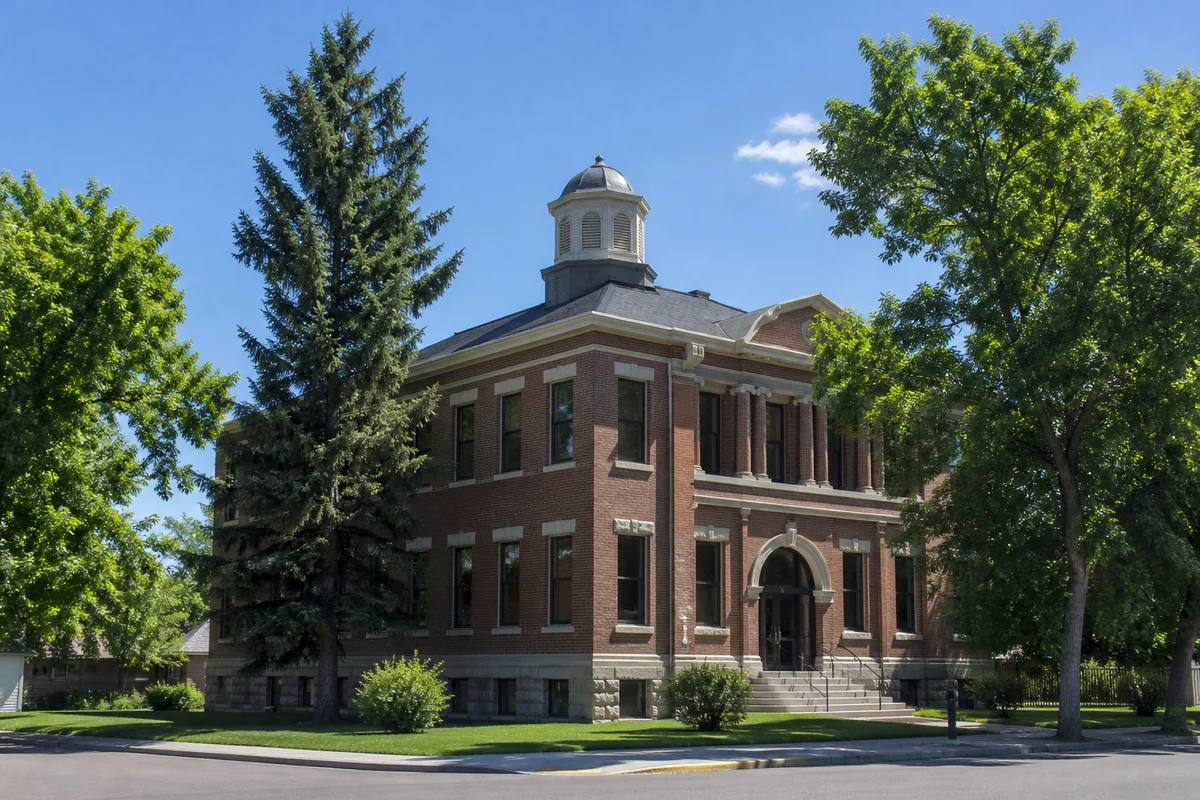
In the 1940s, Charles and Sue Bovey began buying abandoned buildings and restoring them, creating what is often described as an open-air museum. The state later took over management through the Montana Heritage Commission. The Charles A. and Sue Ford Bovey Visitor Center explains their role. Several details in the live post, including the date and terms of the state acquisition, were not confirmed here.
Things to Do
All hours, prices, and seasons are subject to change, so check the Montana Heritage Commission and individual venues before planning.
Walk Wallace Street
Authentic buildings line the street, some operating as shops and others kept as period exhibits. Self-guided walking tour maps for Virginia City and Nevada City are free in print around town and available as a PDF from the town’s website.
Nevada City Museum and Music Hall
Regional tourism says the site has over 100 historic buildings and thousands of frontier-era antiques, plus one of the largest publicly accessible music machine collections in the world. Living history volunteers demonstrate trades on summer weekends. An entry fee applies. A travel blogger who arrived late was told little could be seen, while others said a visit takes a few hours, so go early.
Virginia City Players
The Players perform family-friendly vaudeville and plays at the Opera House on Wallace Street. The live post said they have performed since 1949 and perform Monday through Saturday, then called it “nightly” elsewhere, so confirm the schedule.
Brewery Follies
An adult comedy variety show at the Gilbert Brewery, described as the oldest brewery in the Montana Territory, now a theater.
Alder Gulch Shortline Railroad
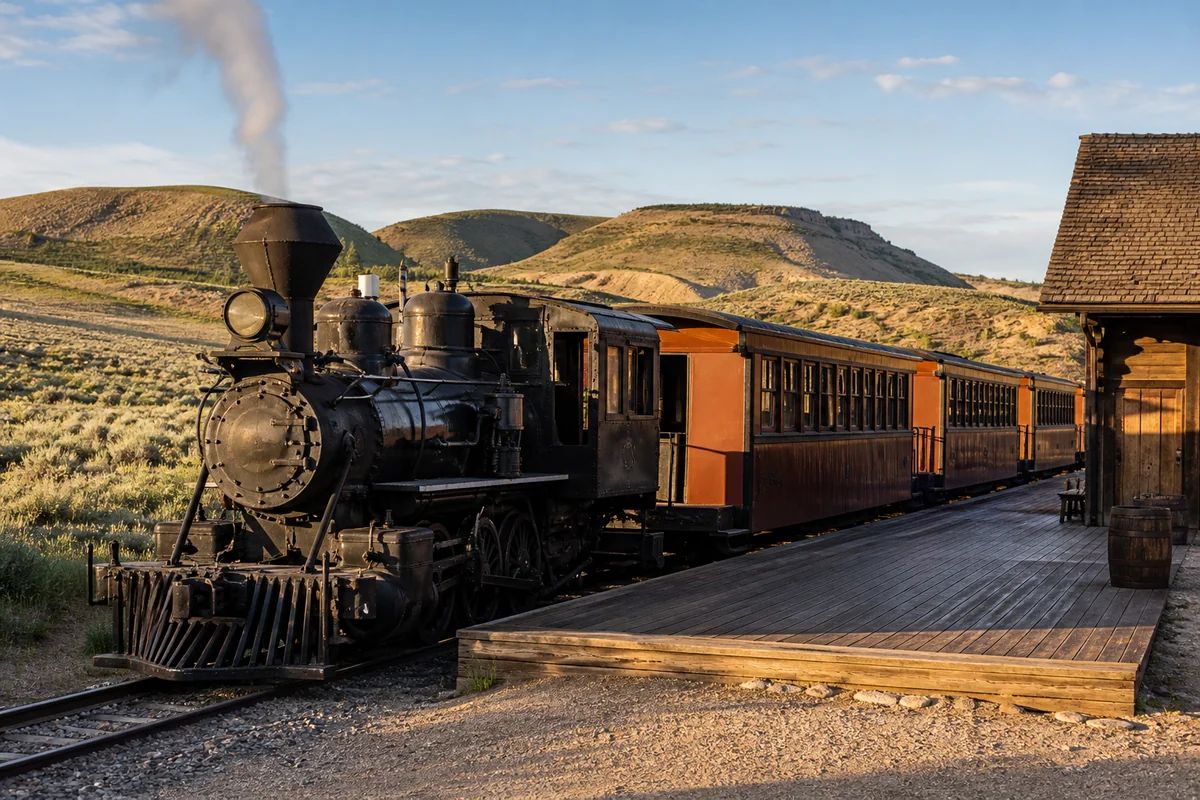
The train runs between Virginia City and Nevada City. A blogger described a ride of about 15 minutes and noted that the return time is chosen at booking. The same writer found the train small and aimed at children, and suggested booking ahead.
Museums
- Thompson-Hickman Museum. Built in 1918, it is free and displays artifacts, photos, rare guns, and rock samples.
- Bovey Visitor Center. Free, and focused on the Bovey preservation story.
Gold Panning, Photos, and Arcades
River of Gold teaches panning and lets visitors try it. Costumed photos are available at the Montana Picture Gallery and the Wallace Street Photographic Emporium, and the Gypsy Arcade offers vintage penny games.
Rides and Tours
Vigilante Carriages offers stagecoach and horseback rides, and a 1941 fire truck tour operates in season. One blogger arrived to find the fire truck closed, so confirm availability. Evening ghost tours also run.
Small Stops
- St. Paul’s Episcopal Church. A small chapel with a notable stained-glass window.
- Candy shops. A large candy shop with fudge is popular with kids.
- Elling House Arts and Humanities Center. Musical performances and visual art.
Where to Stay and Eat
Regional tourism lists the Fairweather Inn, The Carriage House, Vigilante View, Rambling Moose Campground, Just An Experience, and Elijah’s Rest. The Montana Heritage Commission also offers packages, some including lodging. Ennis is the main alternative, with more motels and restaurants. See Ennis.
A travel blogger recommended Road Agents’ Roost, a German restaurant, for pierogies and sauerkraut. Other restaurants exist, but the live post’s naming of Ranks Mercantile and a drugstore soda fountain was inconsistent, so confirm what is open.
Tourism advises staying overnight to see the town fully, even though the highlights can be seen in a few hours.
Virginia City by Season
Spring. Quiet. Attractions open around Memorial Day.
Summer. The full season. Memorial Day through Labor Day is when shows, trains, and museums run. Crowds are heaviest on weekends.
Fall. September is a shoulder season, and October onward is very quiet. Hunting season fills the valley.
Winter. Snow, closures, and a town that mostly belongs to its residents. The streets can still be driven year-round.
For wider planning, see the best time to visit Montana.
Plans That Fit the Town
A half day. Park once on Wallace Street, pick up a free walking tour map, and walk the street before the day heats up. Add a Thompson-Hickman Museum stop, then drive to Nevada City for the museum and the train. Return for a late lunch.
A full day. Start early in Nevada City, when the buildings are quiet and the living history volunteers are setting up on summer weekends. Spend the afternoon in Virginia City with the Bovey Visitor Center and a gold-panning session. Finish with a Players show, if it is running.
An overnight. Tourism advises staying overnight, and the reason is practical. The town changes character once day-trippers leave, shows run in the evening, and the street is easiest to photograph in low light. Book early for summer weekends.
Two days with the region. Combine Virginia City with Ennis and the Madison River, then add Twin Bridges and Sheridan on the road toward Dillon and Bannack. The 28-mile road between Virginia City, Sheridan, and Twin Bridges carries interpretive signs on the Road Agent Trail history.
Who Will Enjoy It, and Who Might Skip Parts
Virginia City suits history readers, families who like costumed settings, and travelers building a Southwest Montana route. It suits less well for anyone expecting a quiet ruin with no other people. Bannack is the better match for that, and it is covered in the Bannack State Park guide.
Younger children usually enjoy the train, the candy shop, and the arcade. Adults who want depth tend to prefer the museums, the self-guided map, and the Boot Hill history. One travel blogger found the Players show less polished than a larger regional theater but still enjoyable for children, which is a fair expectation to carry in.
Getting There
| From | Direction from Virginia City | Approximate distance |
|---|---|---|
| Ennis | East | About 14 miles |
| Twin Bridges | Northwest | About 28 miles |
| Sheridan | West | Roughly 18 miles |
| Bozeman | East and north | About 1 hour 15 minutes by one account |
| West Yellowstone | East and south | About 1 hour 15 minutes by one account |
| Nevada City | Adjacent | Minutes by car |
A live-post statement that Ennis is 20 miles north does not match Wikipedia, which gives 14 miles east on Montana Highway 287.
Related stops include Twin Bridges, Sheridan, Dillon, and Butte. For other mining towns, see Montana ghost towns.
What Visitors Should Know
- Arrive early. Late arrivals miss Nevada City and some tours.
- Confirm hours. Closures happen, including the fire truck tour.
- Plan a night. The highlights fit into a few hours, but evenings add shows and quiet streets.
- Check the season. Most services run Memorial Day through Labor Day.
- Pick up a map. Free walking tour maps are available.
- Cross-check numbers. Counts of buildings, hangings, and residents vary widely online.
Practical Info
| Item | Details |
|---|---|
| Best season | Memorial Day through Labor Day |
| Time needed | Half a day to two days |
| Fees | Free museums and streets; Nevada City, train, and shows charge |
| Difficulty | Easy; walkable |
| What to bring | Hat, layers, cash backup, walking shoes |
| Nearby | Ennis, Twin Bridges, Sheridan, Bannack |
Conclusion
Virginia City earns its reputation by being both a real town and a preserved one. The history is layered, the arguments over it are unresolved, and the buildings are mostly still there.
Save this guide for your Southwest Montana planning, and leave questions in the comments, especially if hours or schedules have changed. For more places, browse the full list of Montana cities and towns or build a route through Southwest Montana.
Frequently Asked Questions
Is Virginia City, Montana a ghost town?
No. It is a small, inhabited town and the Madison County seat, with 219 residents at the 2020 census. Nearby Nevada City is the preserved site.
When was gold found in Alder Gulch?
May 26, 1863.
Was Virginia City the capital of Montana?
Yes, from 1865 to 1875.
How many people lived in Virginia City at its peak?
The gulch held an estimated 10,000 people, and Virginia City itself about 5,000 by mid-1864.
How far is Virginia City from Ennis?
About 14 miles.
How far apart are Virginia City and Nevada City?
A few minutes by car.
When is the best time to visit?
Memorial Day through Labor Day for open attractions.
Is Virginia City worth an overnight stay?
Tourism advises it. The highlights fit in a few hours, but shows and quiet evenings need a night.
How many people did the vigilantes hang?
Sources differ: up to 15 road agents in one account and 21 in another.