

Bigfork’s main street is named after a power plant. That small fact explains a lot about a village that has always run on water, whether it was turning turbines, floating boats or filling a 400-seat theater by the bay.
TL;DR
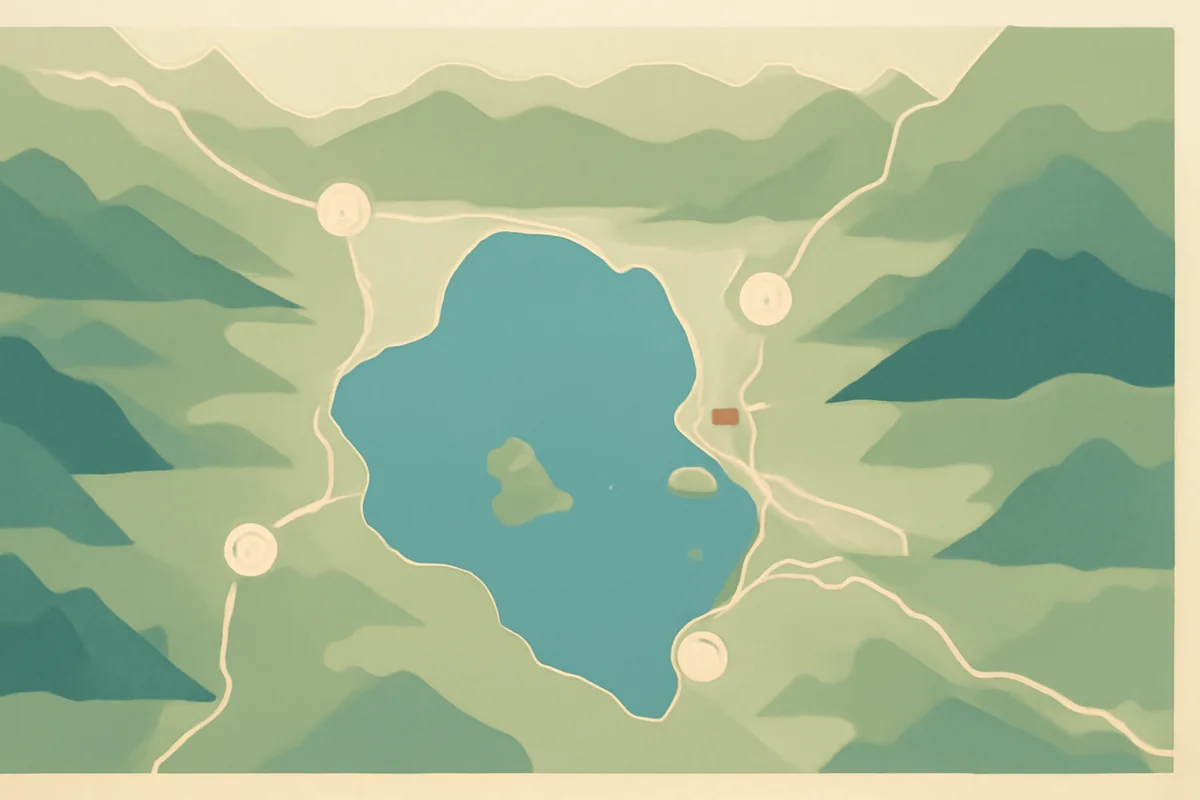
- Bigfork (5,118 residents in the 2020 census, in an unincorporated census-designated place) sits where the Swan River meets the northeast corner of Flathead Lake, about 18 miles from Kalispell.
- It is a village for people who like galleries, summer theater, lake days and quiet evenings. It is a poor choice as a Glacier base, because the park’s West Entrance is about an hour away.
- The anchors are Electric Avenue, the Bigfork Summer Playhouse (its 67th season ran in 2026), Wayfarers State Park, boat-only Wild Horse Island and the hiking-only Jewel Basin.
- Plan around the season: June through September for the lake and stage, May and October for quiet and lower crowds, and winter for a handful of Nordic and ski options nearby.
Liked this article?
Add Roaming Montana as a preferred source so you see more of our articles and guides on Google.
The Village That Electricity Built
Most Montana towns grew around a mine, a railroad or a ranch. Bigfork grew around a river. Everit Sliter planted fruit trees on the lake’s east shore in the early 1890s, became the first postmaster in 1901, and platted the townsite in 1902 at the mouth of the Swan River. About the same time, a hydroelectric plant on the Swan began supplying power, and by 1902 power lines already ran the length of the main street. Locals took to calling it Electric Avenue.
That plant, in a form rebuilt over the decades, still runs. Its current units date to the 1920s and feed power into the regional grid. The name Bigfork itself has a murkier origin. Some accounts tie it to a Salish name for the area; others point to the geography, where the Swan and Flathead rivers both reach the lake.
What visitors get today is a compact, walkable village with galleries, boutiques and restaurants, backed by one of the Flathead Valley’s most photogenic bays. It is a place for slow days. For the big-picture comparison with other Montana places, see the Montana cities and towns guide, and for the activity list, see things to do in Bigfork. This page is the planning version.
Bigfork by the Numbers
| Population | 5,118 (2020 census, census-designated place) |
| Status | Unincorporated community in Flathead County |
| Elevation | About 3,070 feet |
| Kalispell | About 18 miles; roughly 20 to 25 minutes |
| Glacier Park International (FCA) | About 20 minutes |
| Whitefish | About 35 to 40 minutes |
| Glacier West Entrance | About one hour |
| Polson | About 45 minutes by road around the lake |
| Best for | Couples, arts and theater fans, lake days, relaxed family trips |
| Skip if | Glacier is the whole point, or the budget is tight in July |
Electric Avenue on Foot
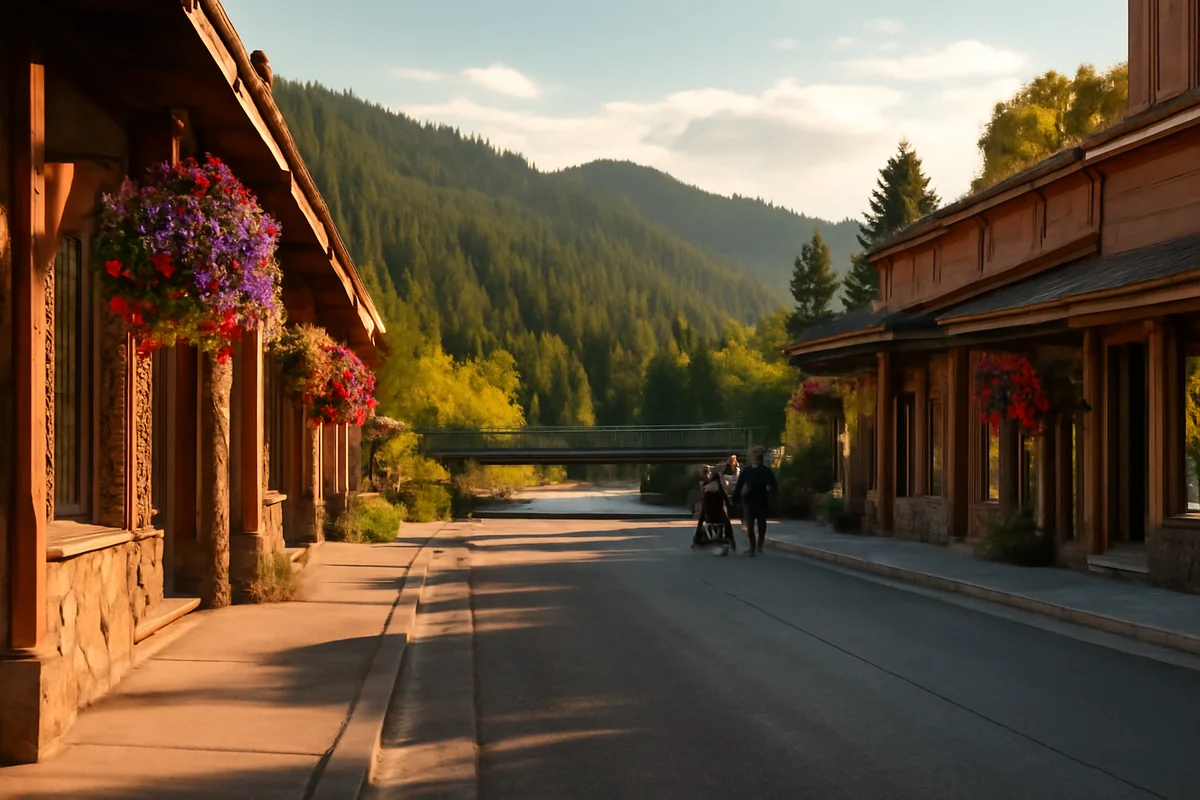
Most of Bigfork’s appeal is a few walkable blocks. Electric Avenue and the streets that branch off it hold locally owned shops, galleries and restaurants, and the Swan River runs through the middle of it all. Visitors who have heard about “no chain restaurants” will find that roughly true downtown, though the surrounding highway has more standard businesses.
Some stops worth knowing:
- Kehoe’s Agate Shop has sold Montana sapphires, agates and minerals since 1932. Montana sapphire is a local specialty, and silver settings tend to cost less than gold.
- The Bigfork Art and Cultural Center and the village’s galleries carry work by Western Montana artists, and the area has long supported foundry-cast bronze work.
- Pocketstone Cafe, on Electric Avenue, is a popular breakfast stop with pancakes, waffles, crepes and outdoor seating.
- Sliter Park sits near the site of the original power plant and the river.
A caution that applies to the whole village: hours shrink sharply after Labor Day, and some shops close by late afternoon in fall. Anyone arriving in October should go before 5 p.m. for shopping and check restaurant hours first.
The Stage and the Calendar: Bigfork After Dark
Bigfork’s reputation for culture is earned. The Bigfork Summer Playhouse, billed as the “theatre by the bay,” completed its 67th season in 2026. It runs musicals in a roughly 400-seat theater from May through September, and the 2027 season (the 68th) was set to be announced by email around Thanksgiving. Tickets are sold through the playhouse’s online box office. Summer seats can sell out, so booking before arriving is wise.
The rest of the village calendar is full enough to build a trip around. Events described by Glacier Country and Bigfork tourism sources include:
| Month | Event |
|---|---|
| May | Bigfork Whitewater Festival |
| Memorial Day to Labor Day | Bigfork Monday Market |
| July | Fourth of July Parade; Bigfork Rodeo |
| August | Bigfork Festival of the Arts (traditionally the first weekend) |
| September | Rumble in the Bay Car Show |
| Fall | Bigfork Independent Film Festival |
| December | Holiday Parade of Lights |
Dates shift year to year, so confirm each with the Bigfork Area Chamber of Commerce before booking. The Festival of the Arts and the Fourth of July weekend are the two periods when lodging tightens most, and the Chamber recommends booking early for June through September.
On the Water: What Flathead Lake Access Really Looks Like
Flathead Lake is the reason most people come. It covers about 197 square miles, reaches roughly 370 feet at its deepest, and is regularly described as one of the cleanest lakes of its size. It is often billed as the largest natural freshwater lake west of the Mississippi in the lower 48; that claim depends on whether size is measured by surface area or volume, so treat it as a headline rather than a fact to quote. See the best lakes in Montana guide for how it compares with other lakes.
Much of the shoreline is private, so lake days in Bigfork come down to a few public or commercial access points.
Wayfarers State Park. The most reliable public access near the village, on the northeast shore at 8600 MT Hwy 35, with rocky cliffs above the water, swimming, boating, fishing, hiking and 30 campsites. The campground is open April through October, and day-use hours are 7 a.m. to 10 p.m. Day-use fees for nonresidents were $8 per vehicle, according to Montana State Parks.
Wild Horse Island State Park. The largest island in the lake, at about 2,164 acres, protected as a state park since 1977. Access is by boat only, for day use only. It has bighorn sheep, mule deer, bald eagles and a small herd of wild horses. For centuries the Salish and Kootenai pastured horses on the island to keep them safe from raiders, and the island was part of the Flathead Indian Reservation until 1904. Boat trips run from several lake towns; confirm operators and schedules before planning a day around it.
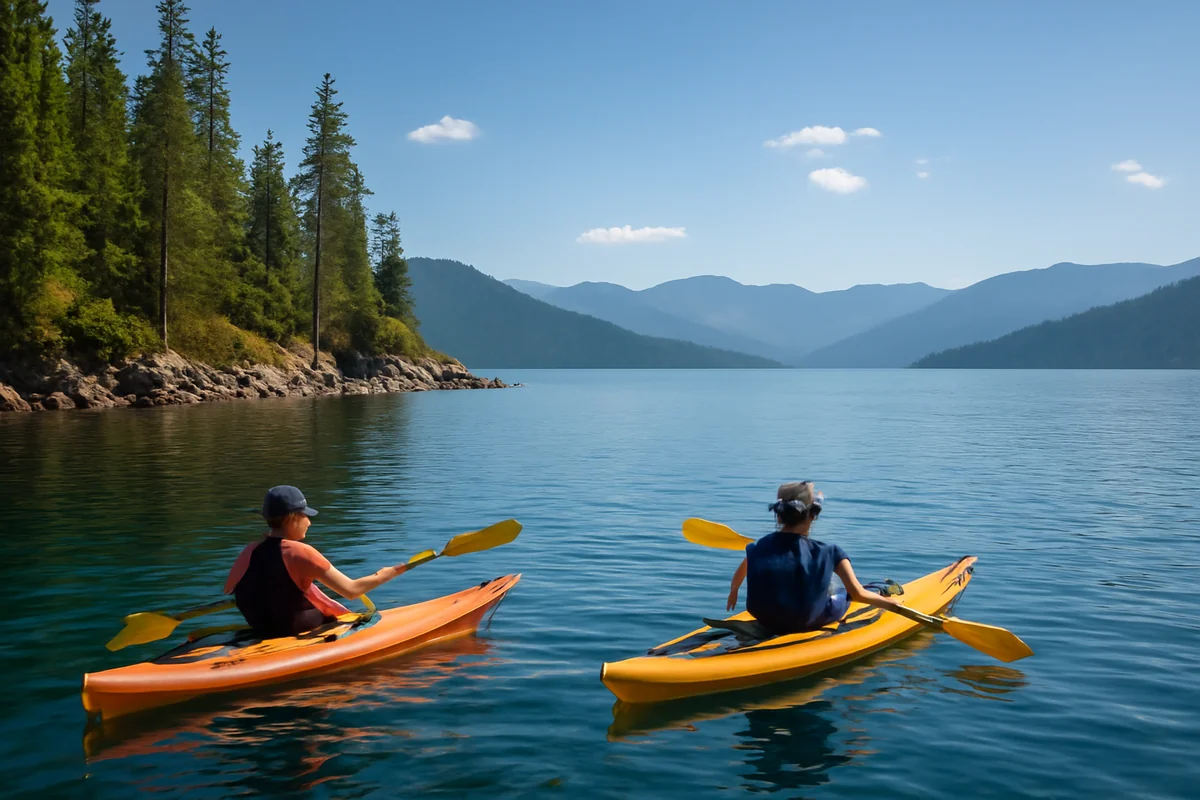
Rentals and charters. Kayak, paddleboard and boat rentals and fishing charters operate from the village in season. Base Camp Bigfork and Flathead Lake Monster Charters are two names that appear in local listings.
Tribal lands. The south half of Flathead Lake lies within the Flathead Indian Reservation of the Confederated Salish and Kootenai Tribes. Visitors planning to boat or fish in tribal waters should check the Tribes’ recreation permit rules before going.
Swimming reality. Many travel sources describe swimming as comfortable only from late June to early September, with the water warmest in midsummer. Plan on cold water, even in July.
Up the Mountain: Jewel Basin and Echo Lake
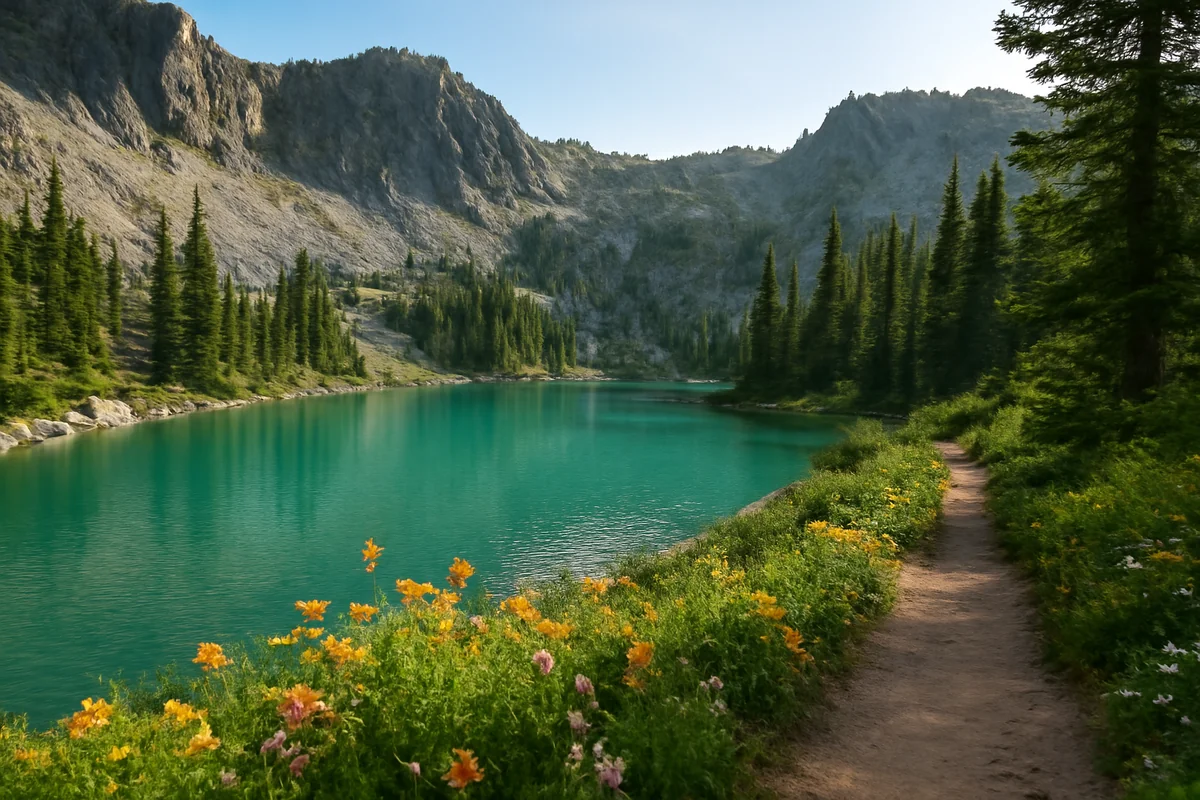
Away from the water, the best day trip from Bigfork is the Jewel Basin Hiking Area in the Flathead National Forest. It covers about 15,349 acres and holds 27 lakes and roughly 35 miles of trails. It is a hiking-only area; motorized vehicles and horses are prohibited. Some sites cite far larger acreages; the Forest Service-based figure is the one to use.
The main access runs from MT Highway 83 to Echo Lake Road and then onto Jewel Basin Road (Forest Service Road 5392) to the main parking area. Snow lingers at elevation into early summer, and the high lakes are best from mid-July to September. Expect bears. Carry bear spray, hike in a group and make noise on blind corners.
Echo Lake, on the way up, is a smaller option for paddling and early-morning fishing. For the bug-season angle, the Montana bug season guide has the timing.
Cherries, Huckleberries and Other Local Flavors
The east shore of Flathead Lake is cherry country, and pick-your-own and roadside stands typically show up in late July, depending on the crop. Huckleberry products appear in nearly every shop on Electric Avenue; the Montana state fruit, the huckleberry page explains what is worth buying. Flathead Lake Brewing Company and Whistling Andy Distillery (known for a huckleberry vodka) are the craft names visitors hear most.
Where to Eat
Bigfork has a good restaurant scene for its size, and summer dinners often need a reservation.
- Breakfast: Pocketstone Cafe on Electric Avenue.
- Lakeside views: The Raven, a longtime seasonal spot at Woods Bay, about four miles south of the village, known for waterfront views and sunset drinks.
- Dinner and drinks: Bon Fire (panko-breaded artichoke hearts, local beers and cocktails) and Flathead Lake Brewing Company and Pub House appear regularly in recommendations.
- Fine dining a short drive away: Laughing Horse Lodge at Swan Lake has been described as fine dining, though one recent source noted the owner was selling, so call ahead.
Hours shrink in the off-season, so confirm before driving over in November through April.
Where to Stay, by the Kind of Trip
The Bigfork Area Chamber groups lodging into hotels, vacation rentals, resorts and cabins, and camping and RV sites. A more useful way to choose is by trip style.
Walk to everything. The Cottages at Bigfork (along the Swan River) and Bridge Street Cottages (efficiency cottages with kitchens, walkable to town and the lake) put a car-free evening within reach.
On the lake. The Inn at Bigfork Bay has lake-view rooms and a hot tub, and Mountain Lake Lodge has a pool and hot tub. The Islander Inn is described as pet-friendly.
Ranch-style. Flathead Lake Lodge, a dude ranch-style resort near Bigfork, has long been a destination in itself, with weekly stays common in summer.
Camping. Wayfarers State Park has 30 campsites and is the nearest state park campground.
Price reality. Lodging in July and August is the most expensive and the quickest to sell out, particularly around the Fourth of July and the Festival of the Arts. Earlier versions of this page printed fixed nightly price bands; those were not sourced, so check live rates for your exact dates instead. Kalispell, about 18 miles away, usually offers the widest and often cheaper range; see the Kalispell guide.
Bigfork Is Not a Glacier Base (and Why That Is Fine)
Bigfork is about an hour from Glacier’s West Entrance, so a Glacier day from here means a long round trip. In 2026, the National Park Service did not require vehicle reservations anywhere in the park, but Logan Pass had time-limited parking from July 1 through Labor Day, and longer hikes from Logan Pass required a shuttle ticket from Recreation.gov. See the Glacier National Park and Going-to-the-Sun Road guides for the park itself.
The practical advice: if two or more days will be in Glacier, base in Whitefish or Columbia Falls. If the trip is mostly lake, theater and relaxing, with one Glacier day, Bigfork works well.
Bigfork, Polson or Whitefish?
| If you want… | Choose |
|---|---|
| Galleries, theater and a walkable village | Bigfork |
| A bigger lake town with more services and tribal-lands context | Polson |
| Skiing, Glacier access and a livelier downtown | Whitefish |
| The widest lodging and shopping range, near the airport | Kalispell |
| Small east-shore lake villages with fewer crowds | Lakeside or Somers |
Bigfork Through the Seasons
Spring (April to May). Shoulder season. The Bigfork Whitewater Festival is held in May, some businesses are still reopening and the lake is cold. Spring is a good time for waterfalls and wildlife watching.
Summer (June to August). The peak. Boating, hiking, live music, farmers markets and the Playhouse. Book early, expect traffic on Highway 35 and Highway 82 and plan the Jewel Basin hikes for mornings.
Fall (September to October). Larch trees turn gold in western Montana, crowds drop and some businesses close earlier. This is a quiet, atmospheric window, with golf at Eagle Bend, wildlife viewing and the Rumble in the Bay car show in September. See the best time to visit Montana guide for statewide timing.
Winter (November to March). Quiet, cold and mostly local. Cross-country skiing is available at Blacktail Mountain Nordic Trails, and downhill skiing is a drive away; see the Montana ski resorts guide. Ice fishing and dog sledding appear in winter listings. Never assume lake ice is safe without checking locally.
Getting There and Getting Around
Glacier Park International Airport is about 20 minutes away, and flight options are covered in the Montana airports guide. A car is effectively required: there is no local public transit, and lodging, trailheads and the state park are spread along Highway 35. The drive from Missoula is long, roughly two and a half to three hours. Parking in the village fills on summer evenings when the Playhouse has a show, so arrive early.
Insider Tips: What Visitors Wish They Knew
- Book the Playhouse before anything else. Tickets and lodging both tighten in July and August.
- Eat dinner early or reserve. Small restaurants fill quickly on summer weekends.
- Do not count on a free beach. Public lake access is limited; Wayfarers State Park and rentals are the dependable options.
- Check tribal rules before boating the south half of the lake.
- Treat Wild Horse Island as a planned trip. Boat-only and day-use-only access means the day needs a booking.
- Verify Jewel Basin road conditions before driving up. Snow can close or limit the access road into early summer.
- Go before 5 p.m. in fall if shopping. Some businesses cut hours after Labor Day.
Practical Info
| Best seasons | June to September for lake, theater and hiking; May and October for quiet |
| Getting there | Fly into Glacier Park International (FCA), about 20 minutes; Highway 35 and Highway 82 connect the area |
| Getting around | A car is essentially required |
| Glacier rules | Verify vehicle reservation, Logan Pass and shuttle rules with the NPS |
| Entry fees | Wayfarers State Park day use:; Glacier:; Playhouse tickets: |
| Difficulty | Easy village walks to strenuous mountain hikes |
| What to bring | Layers, swimsuit, bear spray, insect repellent, sun protection, a refillable water bottle |
| Cell service | Generally fine in the village; spotty in Jewel Basin |
| Nearby | Flathead Lake, Wayfarers State Park, Wild Horse Island, Jewel Basin, Kalispell, Whitefish, Polson |
Frequently Asked Questions
Is Bigfork, Montana worth visiting?
Yes, for a walkable arts village on Flathead Lake with summer theater and easy access to the lake and Jewel Basin. It is a weaker fit for travelers whose main goal is Glacier.
How far is Bigfork from Glacier National Park?
About one hour to the West Entrance.
How far is Bigfork from Kalispell and Whitefish?
Kalispell is about 18 miles, around 20 to 25 minutes. Whitefish is about 35 to 40 minutes.
What is Electric Avenue in Bigfork?
The village’s main street, named for the hydroelectric power that reached it in the early 1900s.
Can you swim in Flathead Lake at Bigfork?
Yes, though the water is cold. Wayfarers State Park is the most dependable public access point.
How do you get to Wild Horse Island?
By boat only, for day use. It is a state park.
When is the Bigfork Summer Playhouse open?
Roughly May through September. Check the current show schedule and book ahead.
Is Jewel Basin open to bikes or horses?
It is a hiking-only area, and horses are prohibited.
Final Thoughts
Bigfork rewards the visitor who slows down. The village works best as a place to walk to a show, spend an afternoon on the bay and eat dinner without a drive. For travelers still building a Montana itinerary, the Montana cities and towns guide shows how Bigfork compares with the rest of the state.
Pin this guide for trip planning, and leave questions in the comments about whether Bigfork, Whitefish or Polson fits a trip.
Sources and Official Links
- Bigfork, Montana, Wikipedia
- Flathead Lake, Wikipedia
- Jewel Basin, Wikipedia
- Wild Horse Island, Wikipedia
- Wayfarers State Park, Montana FWP
- Bigfork Summer Playhouse
- The Bigfork Plant, Flathead Beacon
- Bigfork electricity history, Bigfork Eagle
- Bigfork Area Chamber of Commerce: Places to Stay
- A perfect Western Montana getaway: Bigfork, Glacier Country
- Things to do in Bigfork MT, Twist Travel Magazine
- Glacier National Park 2026 shuttle service, NPS
