Pierre Wibaux was 25 years old when he arrived in Montana from France in 1883 with $20,000 of family money and the ambition of a cattle baron. Within 13 years he had built one of the largest cattle operations in the northern Great Plains.
At his peak, the W Bar brand ran 65,000 cattle across eastern Montana and the Dakotas. The devastating winter of 1886–87 — which killed 60–80% of the cattle on the northern plains — nearly ended him; he borrowed additional capital from his father-in-law and expanded while others sold out at distressed prices.
By the 1890s he was one of the most powerful cattlemen in Montana. The town named for him sits at the far eastern edge of the state, 5 miles from North Dakota.
TL;DR
- Wibaux (~600) is the county seat of Wibaux County in Montana’s extreme eastern corner, on I-94 just 5 miles from the North Dakota border.
- Pierre Wibaux — a French immigrant who built a 65,000-head cattle empire on the northern Great Plains — is the town’s defining historical figure.
- The Wibaux Museum (Pierre Wibaux House) and St. Peter’s Catholic Church (built by Wibaux) are the primary attractions.
- Best for: cattle industry history enthusiasts, I-94 corridor travelers, and completing the eastern Montana journey.
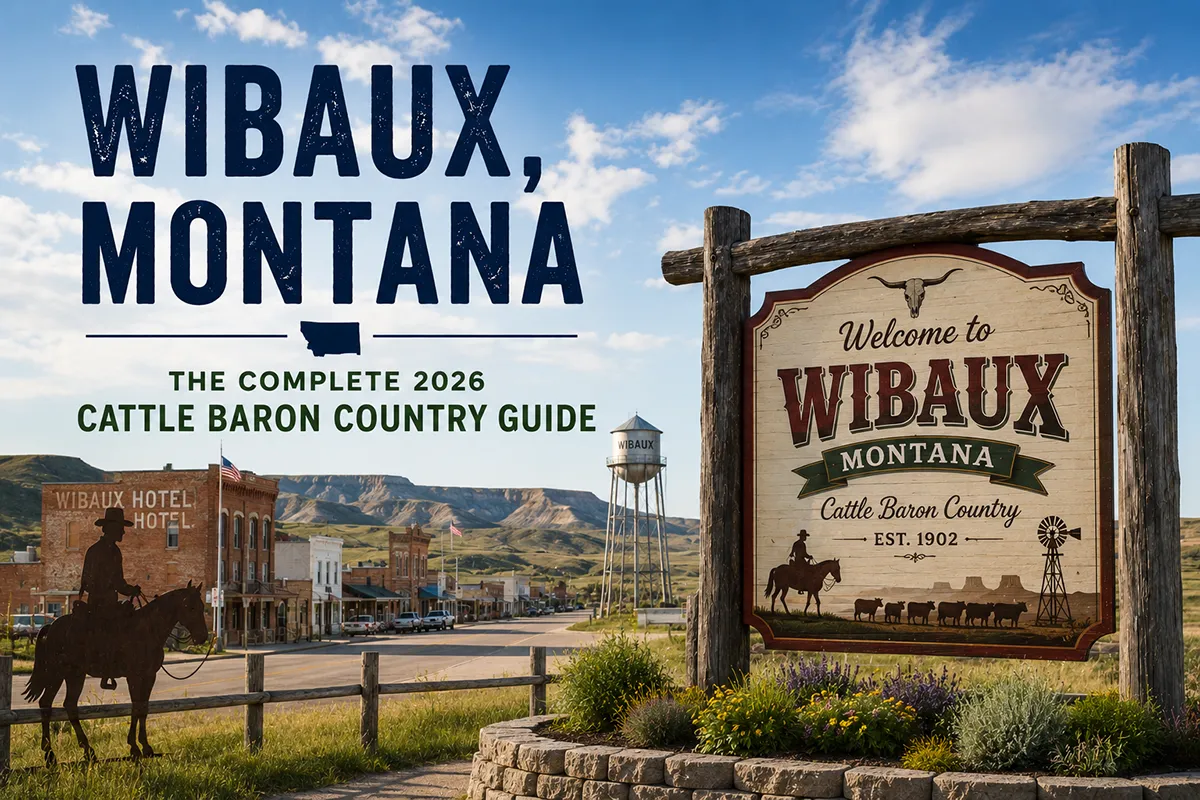
<!– wp:image –> <!– IMAGE PLACEHOLDER Position: Hero image Alt text: “Pierre Wibaux statue and St. Peter’s Catholic Church in Wibaux Montana” Caption: “Pierre Wibaux’s legacy in the town that bears his name — the bronze statue and the church he built.” AI Generation Prompt: “Realistic travel photography, wide-angle view of the town of Wibaux Montana showing the bronze Pierre Wibaux statue in a small downtown park with St. Peter’s Catholic Church visible behind it, eastern Montana prairie landscape surrounding the town, blue sky, professional travel documentary photography style, ultra high detail, 16:9 aspect ratio.” –> <!– /wp:image –>
Liked this article?
Add Roaming Montana as a preferred source so you see more of our articles and guides on Google.
Wibaux at a Glance
| Population (2020) | ~600 |
|---|---|
| County | Wibaux County (county seat) |
| Region | Far Eastern Montana |
| I-94 position | Near Exit 212 (easternmost Montana I-94 town) |
| Distance to Glendive | ~50 miles west (~55 min) |
| Distance to North Dakota border | ~5 miles east |
| Distance to Medora, ND | ~30 miles east |
| Best for | Pierre Wibaux history, cattle baron era, I-94 eastern terminus stop |
What Makes Wibaux Different
The Pierre Wibaux story is one of the most remarkable in Montana cattle history — and it’s distinctly different from the stories of Montana’s American cattle barons.
Wibaux was French, educated, and came with family capital rather than frontier grit. But what he built with it was as impressive as anything the American cattlemen achieved.
The critical moment was the winter of 1886–87. The “Great Die-Up” killed an estimated 60–80% of cattle on the northern plains — a catastrophic loss for most operators.
Wibaux mortgaged his French family assets and bought cattle from desperate operators at pennies on the dollar. When the thaw came and markets recovered, he emerged as one of the largest cattle operators in the region.
St. Peter’s Catholic Church, which Wibaux built at his personal expense for the community, still stands as the town’s architectural centerpiece. The Pierre Wibaux House museum is the original Wibaux residence, preserved and interpreted.
The Top 10 Things to Do
1. Wibaux Museum (Pierre Wibaux House)
The original home of Pierre Wibaux, now operated as a museum with exhibits on his cattle empire, the northern plains cattle era, and early Wibaux County settlement. Open summer months; tours available.
2. St. Peter’s Catholic Church
Built at Wibaux’s personal expense for the community in the 1880s. A stone Gothic church that remains Wibaux’s most enduring legacy — architectural quality unusual for a remote eastern Montana community.
3. Pierre Wibaux Bronze Statue
A downtown park bronze statue of Wibaux commemorating his cattle empire — a good starting point for understanding the town’s identity.
4. Wibaux County Museum
Additional exhibits on county history, homesteading, and the transition from open-range cattle to homestead farming.
5. Beaver Creek Reservoir
Fishing and camping south of Wibaux — walleye, northern pike.
6. Wibaux Area Badlands
The terrain around Wibaux features Hell Creek formation badlands similar to Glendive — eroded sedimentary geology accessible via county roads.
7. Day Trip to Glendive (55 min west)
Makoshika State Park — Montana’s largest, with extraordinary badlands and dinosaur fossil country. See Glendive guide.
8. North Dakota Badlands Day Trip (60 min east)
Theodore Roosevelt National Park (South Unit) at Medora, ND — dramatic badlands, bison herds, the scenic Roosevelt connection.
9. Terry Day Trip (40 min west)
Evelyn Cameron Gallery. See Terry guide.
10. Prairie Stargazing
Wibaux County has minimal light pollution. New moon nights offer extraordinary Milky Way views from any open rural road.
Where to Stay
| Hotel | Vibe | Price | Best For |
|---|---|---|---|
| Beaver Creek Inn | Local, basic | $90–140 | Most travelers |
| Budget Motel | Very basic | $75–110 | Budget |
| Glendive (55 min west) | Full chain options | $120–200 | More variety |
Where to Eat
- Shamrock Bar & Café — Wibaux’s main restaurant
- Local tavern options — limited but available
- Glendive (55 min) for more variety
Getting There
I-94, near Exit 212. From Glendive: 50 miles east (~55 min). From Medora, ND: 30 miles west (~35 min).
Personal Tips
The Pierre Wibaux House museum requires advance planning. Summer hours are limited; call ahead.
St. Peter’s Church deserves a visit even without a museum tour. The stone construction and Gothic elements are architectural quality you wouldn’t expect in a remote county seat.
Medora, ND is a natural pairing. Theodore Roosevelt National Park’s South Unit is 30 miles east — combining Wibaux (cattle baron era) with Roosevelt National Park (the president’s own ranching era) makes excellent historic sense.
Quick Facts
| Founded | 1895 (as Mingusville, renamed 1895) | | Pierre Wibaux | Arrived Montana 1883; peak herd 65,000 cattle | | Great Die-Up 1886–87 | Wibaux expanded while others failed | | Average summer high | 88°F | | Average winter low | 3°F |
Conclusion
Wibaux is the end of the Montana line on I-94 — and the town named for one of the northern Great Plains’ most remarkable cattle barons. The Pierre Wibaux story is worth knowing before you arrive; St. Peter’s Church and the museum make the stop worthwhile. For travelers completing the eastern Montana corridor, Wibaux is the final chapter.
Have a Wibaux question? Drop it in the comments — I read every one.
Frequently Asked Questions
Is Wibaux Montana worth visiting?
Worth a stop for the Pierre Wibaux Museum and St. Peter’s Catholic Church — together telling the story of one of the northern Great Plains’ most remarkable cattle barons. As the last I-94 stop before North Dakota, it naturally pairs with a day trip to Theodore Roosevelt National Park (30 miles east).
Who was Pierre Wibaux?
Pierre Wibaux was a French immigrant who arrived in Montana in 1883 at age 25 with family capital and built one of the largest cattle operations in the northern Great Plains. His W Bar brand ran up to 65,000 cattle at its peak. After the catastrophic winter of 1886–87 wiped out most competitors, Wibaux expanded by buying distressed cattle cheap, emerging as one of the most powerful cattlemen in eastern Montana.
How far is Wibaux from the North Dakota border?
Wibaux is approximately 5 miles west of the Montana-North Dakota border — effectively Montana’s easternmost I-94 community. Theodore Roosevelt National Park’s South Unit at Medora, ND is 30 miles east.