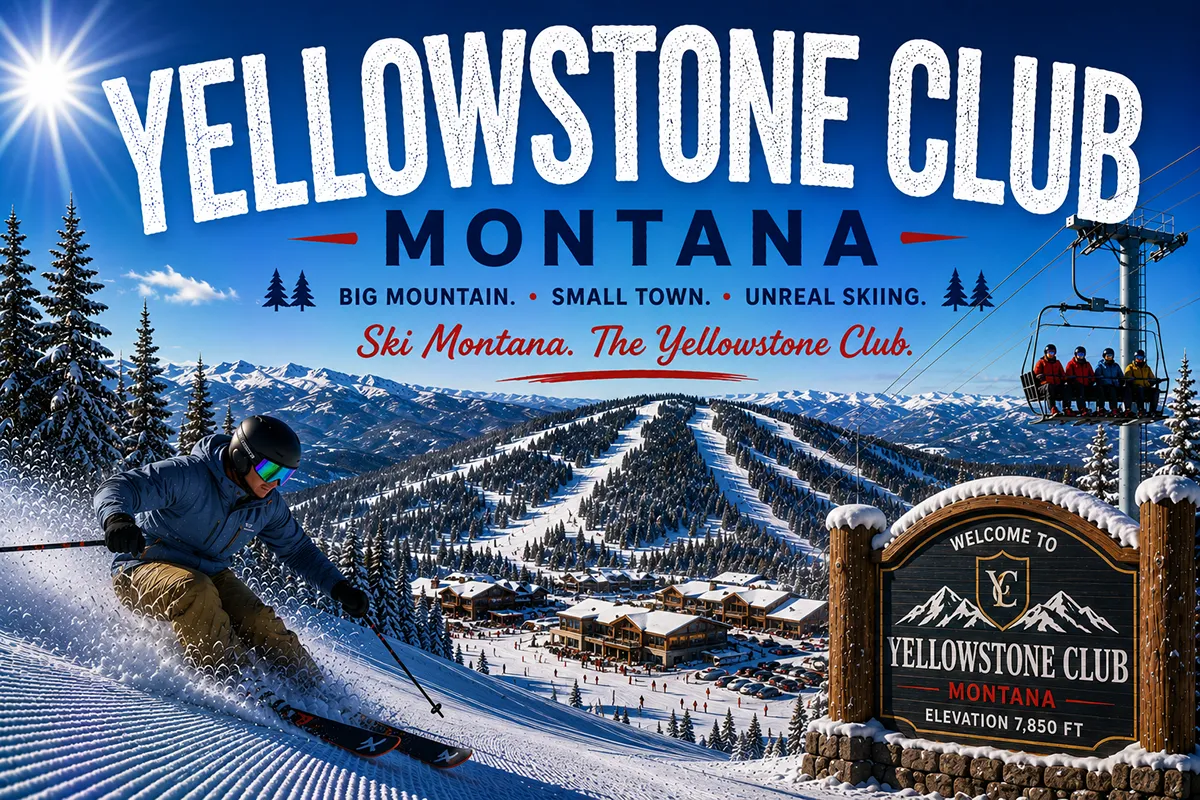
I have never skied Yellowstone Club. Statistically, almost no one reading this has. Almost no one ever will. And that’s exactly why I’m writing this post.
- Yellowstone Club is a private members-only ski, golf, and residential community adjacent to Big Sky Resort in Madison County, Montana
- 15,200 total acres including a residential community plus skiing terrain
- Approximately 2,900 skiable acres, 100+ named ski runs, 2,700-foot vertical drop, ~300 inches of annual snowfall on Pioneer Mountain and Eglise Mountain
- Direct access to Big Sky’s 5,850 acres via shared boundary
- Membership is invitation-only with reported deposits in the multi-millions, plus annual dues and required real estate purchase
- Founded by Tim Blixseth in 1999, the resort filed for bankruptcy in 2008 and was acquired by CrossHarbor Capital Partners in 2009
- Membership reportedly capped at approximately 864 families at full build-out
- Private Powder® is the registered trademark and operational reality — fresh tracks are available on the third day after a storm because only 10-20 people are skiing
- This post exists for curiosity-search readers, not as a how-to — there is no “how to ski Yellowstone Club” guide because you cannot
Liked this article?
Add Roaming Montana as a preferred source so you see more of our articles and guides on Google.
Why I’m Writing About a Resort You Cannot Visit
There are 18 ski areas in Montana. I’ve written guides to 17 of them as part of our complete guide to Montana ski resorts — each based on actual visits, real skiing experiences, and direct observations. Yellowstone Club is the one I haven’t, and won’t, ski.
Yellowstone Club is genuinely not accessible to the public. There is no day-pass program, no resort guest pass, no “let me check this out” option.
Membership requires invitation, a multi-million-dollar deposit, an additional real estate purchase, and annual dues that few Americans could afford. Guests can only access the property when sponsored by a member.
So why include Yellowstone Club in this guide? Three reasons:
- Completeness. This guide covers all 18 Montana ski areas. Pretending Yellowstone Club doesn’t exist would undercount the state’s ski landscape.
- Genuine reader curiosity. People search for “Yellowstone Club Montana” with various levels of seriousness — from members planning a trip, to potential members evaluating the cost, to people who saw a paparazzi photo and want to understand the resort. All of these readers deserve accurate information.
- The institution is publicly knowable. Yellowstone Club’s existence, terrain, ownership history, and operational character are all matters of public record. I can write about the institution without claiming personal experience or fabricating details about individual members.
What I won’t do in this post:
- Name specific members (you can find lists elsewhere, and that’s not the angle for this site)
- Fabricate quotes or experiences
- Pretend to have skied terrain I haven’t skied
- Speculate on individual financial transactions
What I will do:
- Explain the resort’s history, terrain, and operation as a matter of public record
- Be honest about what’s publicly knowable vs. what isn’t
- Help readers understand how the resort fits into Montana’s broader ski landscape
Where Yellowstone Club Actually Is
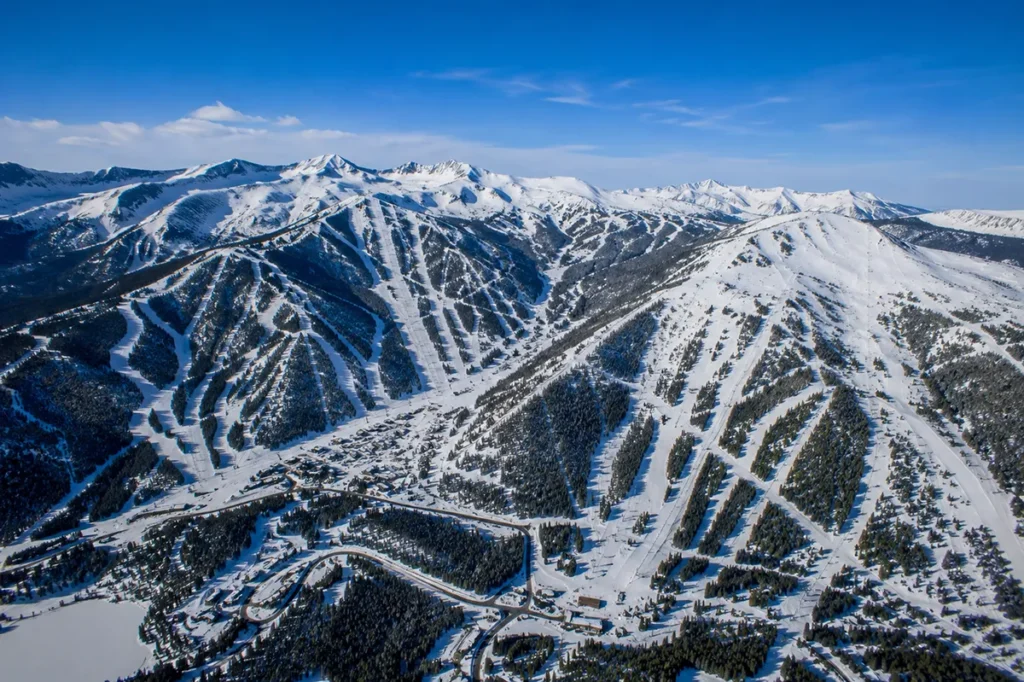
Yellowstone Club is located in Madison County, Montana, just west of the town of Big Sky, on land adjacent to Big Sky Resort and the now-merged Moonlight Basin terrain.
The total property covers approximately 15,200 acres including the ski resort, golf course, residential community, and surrounding land.
The resort spans terrain on:
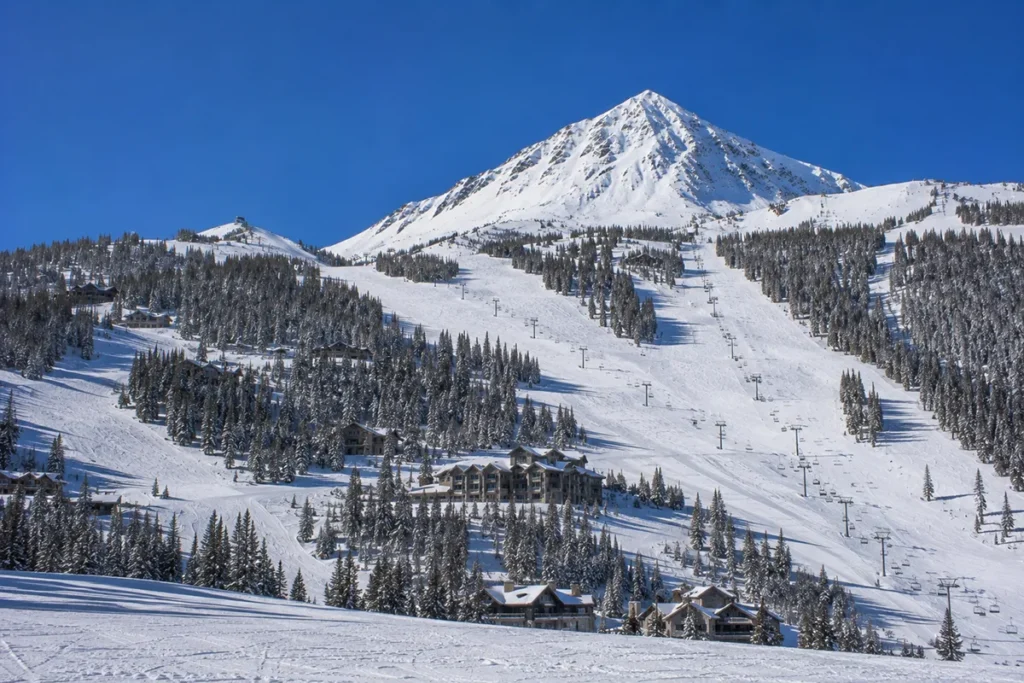
- Pioneer Mountain — the signature ski peak at 9,860 feet of elevation
- Eglise Mountain — additional skiing terrain to the south
The northern boundary of Yellowstone Club connects to Big Sky’s ski terrain. Members can ski directly from Yellowstone Club into Big Sky’s public terrain (passing through gated security checkpoints).
This shared boundary is part of the broader operational integration that’s developed in the Big Sky area over the past 15 years.
Public visitors at Big Sky can sometimes see Yellowstone Club lifts running across the boundary. From the Lone Peak Tram, the Yellowstone Club’s groomed runs are visible to the south. The lifts are running. The terrain is being skied. You’re just not allowed to ski it without an invitation.
The closest public road approach is via the Big Sky region. Bozeman Yellowstone International Airport (BZN) is the practical commercial airport. Many members fly into BZN and then proceed to the resort via private vehicles or arranged transportation.
The History: From Timberland to Most Exclusive Club in America
Yellowstone Club’s institutional history is genuinely fascinating and worth knowing for context.
1992-1999: The Land Assembly
Real estate developer Tim Blixseth purchased approximately 100,000 acres of timberland in southwestern Montana during the 1990s, partly through purchases from Plum Creek Timber and partly through land swaps with the U.S. Forest Service and federal government (the “Gallatin Land Exchanges”).
The original concept evolved from timber holding into a planned private ski and residential community.
1999-2001: Yellowstone Club Opens
Yellowstone Club opened in 1999 as a private ski and residential community.
By 2001, when ski journalists were first invited to preview the resort, the mountain had 4 lifts and approximately 2,700 vertical feet of skiing over 1,000+ acres, plus 3 lodges and 16 mid-mountain guest cabins.
Approximately 70 of a projected 864 memberships had been sold by that point.
2001-2008: Rapid Growth
Through the mid-2000s, Yellowstone Club expanded:
- Additional ski terrain developed
- Pioneer Mountain established as the central ski peak
- A Tom Weiskopf-designed 18-hole championship golf course planned and built
- More residential development throughout the property
- Membership grew toward the targeted ~864-family cap
2008: The Bankruptcy
In November 2008, Yellowstone Club filed for Chapter 11 bankruptcy protection. The financial crisis had hit the resort’s loan structure and real estate sales hard.
Founder Tim Blixseth’s contentious divorce proceedings also complicated the financial situation. The resort continued to operate through bankruptcy proceedings.
2009: CrossHarbor Acquisition
In August 2009, CrossHarbor Capital Partners — a Boston-based investment firm led by Sam Byrne — acquired Yellowstone Club out of bankruptcy.
CrossHarbor has continued to own and develop the resort since, and has played a significant role in the broader Big Sky region’s consolidation (including the 2013 acquisition of Moonlight Basin and Spanish Peaks).
2009-Present: Stabilization and Growth
Under CrossHarbor ownership, Yellowstone Club has:
- Stabilized operations and membership
- Continued to expand ski terrain to approximately 2,900 acres
- Developed extensive residential and amenity infrastructure
- Become widely recognized as the most exclusive ski resort in America
For broader context on the Big Sky area’s transformation, see my Big Sky Resort guide and Moonlight Basin post.
The Terrain: What’s Skiable at Yellowstone Club
Yellowstone Club’s ski terrain — based on the resort’s own published information and historical reports — is genuinely substantial.
The Mountains
- Pioneer Mountain at 9,860 feet of summit elevation is the signature peak
- Eglise Mountain offers additional terrain to the south
- Total skiable area: approximately 2,900 acres
- Total vertical drop: 2,700 feet
For context, this is more skiable acreage than Aspen Mountain in Colorado, more than Park City Mountain Resort, and more than most well-known destination ski resorts. The footprint is meaningful.
The Lifts
Yellowstone Club operates 6+ high-speed chairlifts plus a gondola, accessing approximately 100+ named runs. The current published lift inventory includes:
- Pioneer Express — central mountain access
- Sunrise — early morning lift
- Hot Shot — additional terrain access
- Pony Express — beginner area access
- Lake Lift — lower mountain access
- Plus additional lifts and a gondola
[Verify current lift inventory on the Yellowstone Club website or recent industry reporting.]
The Skiing
According to publicly available information:
- Diverse terrain ranging from gentle beginner runs to extremely steep expert chutes
- Famous expert terrain includes runs named “Hour Glass,” “Stein’s,” and “Elevator Shaft” off Pioneer Ridge
- Approximately 300 inches of annual snowfall — generous for the region
- Terrain park for freestyle skiing
- Approximately 100+ named runs
“Private Powder®”
This is registered trademark and operational reality: Yellowstone Club’s marketing emphasizes the unique experience of skiing in a community with approximately 750 member families, resulting in dramatically lower skier density than any public resort.
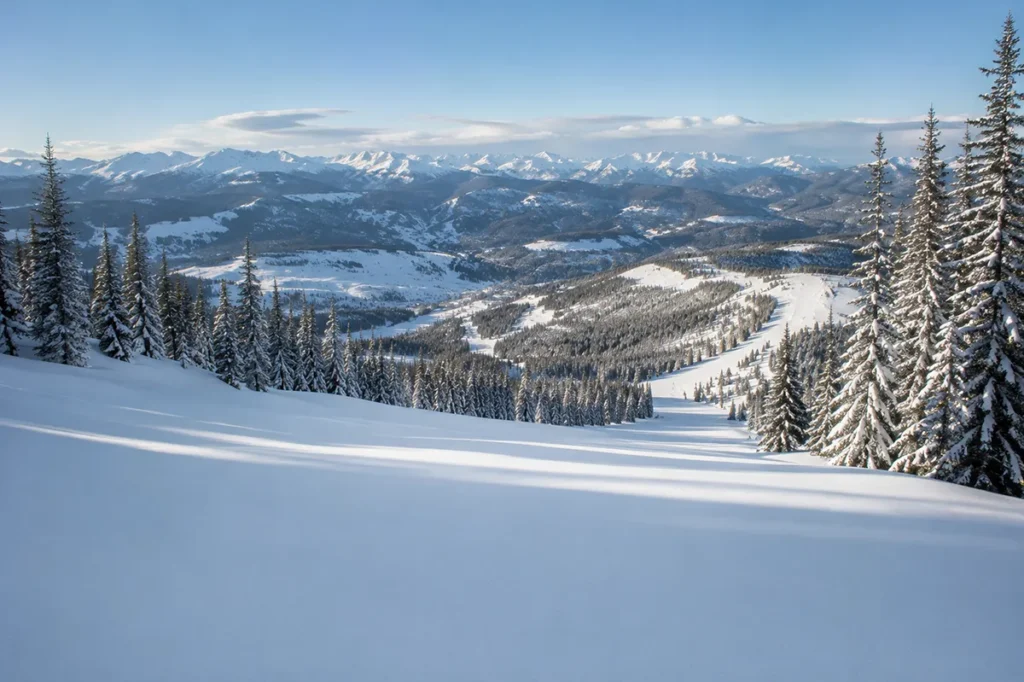
Historical reports suggest that on a typical winter day, only 10-20 people may be skiing on the entire mountain. This creates a fundamentally different ski experience than even the quietest public resorts:
- Fresh tracks available 2-3 days after storms — at public resorts, this disappears within hours
- Perfectly groomed corduroy stays untracked for extended periods
- No lift lines — ever
- Tree zones hold powder for entire seasons
This skier-density advantage is one of the defining features that justifies the membership cost from a pure skiing standpoint.
Membership and Cost (What’s Publicly Knowable)
This is the part where transparency requires acknowledgment of significant uncertainty. Yellowstone Club does not publish detailed membership pricing. What’s available in public reporting:
General Membership Structure
- Approximately 750-864 families at projected full build-out
- Invitation-only — you don’t apply, you’re invited
- Real estate purchase required — membership comes with required home or lot purchase on the property
- Initiation deposit reportedly in the multi-millions ($300,000+ has been cited in various sources, with the requirement varying with membership level)
- Annual dues in the substantial range ($30,000+/year has been publicly reported)
- Real estate values for member properties ranging from millions to tens of millions
What This Means Practically
If you’re researching Yellowstone Club because you’re considering membership: you’re already in a financial position where price is a known quantity rather than an unknown one.
Membership decisions are made through direct engagement with the club’s membership office, not from research articles like this one.
If you’re researching Yellowstone Club out of curiosity: it’s effectively impossible for most Americans to become members.
The combination of invitation-only access, multi-million-dollar deposit, required real estate purchase, and annual dues puts membership in the realm of net-worth requirements that exceed all but a small fraction of one percent of households.
The Lone Mountain Land Company (CrossHarbor’s development arm) describes Yellowstone Club as “the largest and most-exclusive private ski, golf, and adventure community in the world.” This positioning is genuinely accurate — there isn’t a more exclusive comparable property in North America.
What Yellowstone Club Offers Beyond Skiing
A few public-information items about the broader club experience:
Tom Weiskopf Golf Course
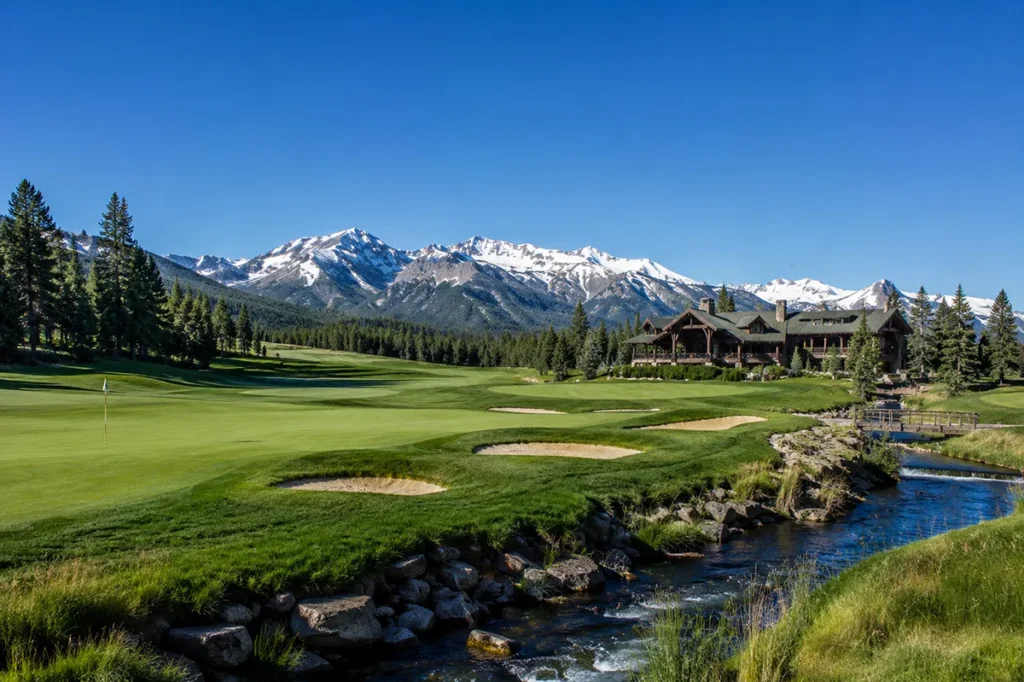
An 18-hole championship course designed by Tom Weiskopf, set at high elevation in the Madison Range. The summer golf operation is a primary attraction for many members.
Lodging Infrastructure
The property includes multiple lodges including the historic Warren Miller Lodge, plus dozens of private residences ranging from cabins to substantial mountain homes.
Members can also access One&Only Moonlight Basin (the high-end resort hotel at adjacent Moonlight Basin) as part of the broader CrossHarbor-developed amenity network.
Other Amenities
Based on Yellowstone Club’s own published information and Lone Mountain Land Company’s descriptions:
- Spa facilities
- Music venue
- Multiple restaurants
- Equestrian center (planned/operating)
- Private fly-fishing streams (14 miles, per historical reports)
- Hiking and biking trails (40 miles, per historical reports)
- Real estate sales and rentals through the club’s network
Summer Operations
Beyond skiing, Yellowstone Club operates a full summer season with golf as the primary draw, plus hiking, biking, fly fishing, and family programming. The 15,200-acre property offers extensive outdoor recreation potential.
Yellowstone Club Compared to the Other 17 Montana Ski Areas
This comparison requires more nuance than usual because Yellowstone Club isn’t competing for the same trips as the public ski areas.
Vs. Big Sky Resort: Yellowstone Club shares a boundary with Big Sky. Members can ski into Big Sky’s public terrain. The terrain quality is comparable (similar snow, similar pitches, similar elevations). The difference is exclusivity — Big Sky has 5,000+ skiers per day in peak season; Yellowstone Club has 10-20. Per-skier density is roughly 250x different.
Vs. Moonlight Basin: The Moonlight Basin terrain (now part of Big Sky) and Yellowstone Club share similar geography — both on the north and west sides of the Lone Mountain ridge. Geographically adjacent, operationally different. Moonlight is publicly accessible; Yellowstone Club is not.
Vs. all other Montana ski areas: Yellowstone Club isn’t really comparable to public ski areas like Whitefish, Bridger Bowl, or Discovery — these are public ski resorts. Yellowstone Club is a private residential community that happens to have skiing as one of its amenities.
For the broader Montana ski landscape, see the complete Montana ski resorts pillar guide.
Yellowstone Club: At-a-Glance
| Status | Private members-only ski, golf, and residential community |
|---|---|
| Total Property | ~15,200 acres |
| Skiable Acres | ~2,900 |
| Summit Elevation | 9,860 ft (Pioneer Mountain) |
| Vertical Drop | 2,700 ft |
| Trails | 100+ named runs |
| Annual Snowfall | ~300 inches |
| Lifts | 6+ chairlifts plus a gondola |
| Signature Terrain | Pioneer Ridge expert chutes (Hour Glass, Stein’s, Elevator Shaft) |
| Membership Cap | ~750-864 families at projected build-out |
| Public Access | None — invitation-only |
| Day-Pass Option | None — there is no day-pass option |
| Founded | 1999 by Tim Blixseth |
| 2008 Status | Bankruptcy filed (Chapter 11) |
| 2009 Acquisition | CrossHarbor Capital Partners |
| Current Owner | CrossHarbor Capital Partners (via Lone Mountain Land Company) |
| Daily Skier Density | Approximately 10-20 people on the mountain (per public reports) |
| Adjacent Big Sky Access | Members can ski into Big Sky’s public terrain |
| Golf | Tom Weiskopf-designed 18-hole championship course |
| Nearest City | Big Sky, Montana (immediately adjacent) |
| Nearest Airport | Bozeman Yellowstone International (BZN), about 1 hour |
All terrain, lift, and amenity information based on public reports and Yellowstone Club’s own published information. Membership details, ownership history, and bankruptcy history based on public business records and credible news reporting.
What This Means for the Rest of Us
A few practical reflections for the broader Montana ski-trip-planning audience.
You can see Yellowstone Club from public terrain at Big Sky. From the Lone Peak Tram, from the upper Andesite Mountain area, and from various points on the Moonlight side, you can see Yellowstone Club’s lifts running and ski runs visible in the distance. This is the closest most of us will ever get to the resort, and that’s okay.
The existence of Yellowstone Club affects Big Sky. The merger of Big Sky, Moonlight Basin, and Spanish Peaks in 2013 — discussed in detail in my Big Sky Resort guide and Moonlight Basin post — was led by the same CrossHarbor partnership that owns Yellowstone Club. The broader corporate concentration of ski real estate in the Big Sky area has shaped what Big Sky has become — for better and worse, depending on your perspective.
Yellowstone Club’s existence is a useful reference point for ski-industry economics. If you’ve ever wondered how expensive a “ski experience” can become, Yellowstone Club provides the upper bound. The contrast between a $25 lift ticket at Bear Paw Ski Bowl and the multi-million-dollar Yellowstone Club membership is roughly the full range of American skiing as a financial product. Both are forms of Montana skiing. Both serve genuine demand.
The land that’s now Yellowstone Club was once publicly accessible. Tim Blixseth’s land assembly during the 1990s included swaps with the U.S. Forest Service that transferred public land into private hands. This history matters for context on how the resort came to exist.
Final Thoughts on Yellowstone Club
I’ll close with the honesty this post requires.
I have not skied Yellowstone Club. I have no insider knowledge of the experience that comes from being there.
I cannot tell you what the snow on Pioneer Mountain skis like on a powder day, or what dinner at the Warren Miller Lodge tastes like, or what the night sky looks like from a member residence at 8,500 feet.
What I can tell you is that Yellowstone Club exists, it’s a real ski resort with substantial terrain, and it shapes the broader Montana ski landscape in ways that matter even for visitors who’ll never set foot on the property.
For the curious-search reader who landed here from a Google query: now you know what’s publicly knowable about the resort, why it’s structured the way it is, and how it fits into the broader Big Sky region’s transformation over the past two decades.
For the genuinely interested potential-member reader: this isn’t the right resource. Engage directly with Yellowstone Club’s membership office.
They will provide accurate, current information for serious inquiries. Public resources like this one are necessarily incomplete and out of date on the financial particulars.
For everyone else — the vast majority of readers — the takeaway is simple: when you’re skiing public terrain at Big Sky and you can see Yellowstone Club’s lifts running across the boundary, that’s the closest most of us will ever get to America’s most exclusive ski resort.
And the public skiing we have access to in Montana — including all 17 other resorts in the complete Montana ski resorts guide — represents some of the best skiing available anywhere in the country, accessible to virtually anyone with a lift ticket.
Pin this guide for your trip planning, and drop your questions in the comments below — but be aware that I cannot answer questions about Yellowstone Club itself beyond the publicly available information presented here. For specific questions about membership, contact Yellowstone Club directly.
Frequently Asked Questions
Can you visit Yellowstone Club?
No. Yellowstone Club is a private members-only resort. There is no day-pass program, no resort guest program, no public access. Visitors can only access the property when sponsored by a member, and even then access is typically limited to specific events or stays.
How much does Yellowstone Club membership cost?
Yellowstone Club does not publish detailed membership pricing publicly. Based on credible reporting, membership requires an initiation deposit reportedly in the multi-millions, plus required real estate purchase (homes and lots ranging from millions to tens of millions), and annual dues. Membership is by invitation only — you cannot apply. For accurate current pricing, contact Yellowstone Club’s membership office directly.
Who owns Yellowstone Club?
Yellowstone Club is owned by CrossHarbor Capital Partners, a Boston-based investment firm led by Sam Byrne. CrossHarbor acquired the resort out of bankruptcy in August 2009 after the previous owner (founder Tim Blixseth’s company) filed for Chapter 11 in November 2008. Development is managed by Lone Mountain Land Company, which is a CrossHarbor-related entity.
How big is Yellowstone Club’s ski area?
Yellowstone Club has approximately 2,900 skiable acres with a 2,700-foot vertical drop, 100+ named runs, and roughly 6+ chairlifts plus a gondola. The summit elevation on Pioneer Mountain is 9,860 feet. By skiable acreage, Yellowstone Club is comparable to many destination resorts in the West.
How many members does Yellowstone Club have?
Yellowstone Club has reportedly targeted approximately 750-864 family memberships at full build-out. Combined with the fact that not all members visit at the same time, this results in a typical daily skier density of 10-20 people on the entire mountain — dramatically lower than any public ski resort.
Can Yellowstone Club members ski Big Sky?
Yes. Yellowstone Club’s property shares a boundary with Big Sky Resort, and members can ski from Yellowstone Club’s terrain into Big Sky’s public terrain via gated entrances. This shared boundary is part of the broader operational integration in the Big Sky area.
Is Yellowstone Club in Big Sky?
Yellowstone Club is located just west of the town of Big Sky in Madison County, Montana. The resort is geographically adjacent to Big Sky Resort, but is a separate private property. Most public discussion treats Yellowstone Club as part of the broader “Big Sky area,” which is accurate geographically even though the resort is institutionally separate.
What is “Private Powder”?
“Private Powder®” is Yellowstone Club’s registered trademark and the central marketing concept around the skiing experience. The phrase refers to the unique experience of skiing in a community with so few skiers per day that fresh tracks remain available 2-3 days after storms — something effectively impossible at public resorts where powder is skied off within hours of a storm.
Who founded Yellowstone Club?
Yellowstone Club was founded by Tim Blixseth, a Montana real estate developer who acquired approximately 100,000 acres of timberland in the 1990s and developed the property as a private ski and residential community. The resort opened in 1999. Blixseth and his then-wife Edra Blixseth’s contentious divorce proceedings contributed to the resort’s 2008 bankruptcy.
When did Yellowstone Club go through bankruptcy?
Yellowstone Club filed for Chapter 11 bankruptcy protection in November 2008. The financial crisis hit the resort’s loan structure and real estate sales hard, and ownership-related litigation complicated the situation. The resort continued to operate through bankruptcy proceedings and was acquired out of bankruptcy by CrossHarbor Capital Partners in August 2009.
Does Yellowstone Club have a golf course?
Yes. Yellowstone Club has a Tom Weiskopf-designed 18-hole championship golf course that operates as a primary summer amenity. The course is set at high elevation with mountain views and is included in the membership amenities.
Can I see Yellowstone Club from Big Sky Resort?
Yes. From the Lone Peak Tram and various viewpoints on the upper mountain at Big Sky, you can see Yellowstone Club’s lifts running and ski runs visible to the south. This is the closest public access most visitors will ever have to the resort.
Why is Yellowstone Club included in this Montana ski resort guide?
This guide aims to cover all 18 Montana ski areas comprehensively. Yellowstone Club is a real ski resort with real terrain and real operations, and excluding it would undercount the state’s ski landscape. The post is included for completeness and for the genuine curiosity-search audience that wants accurate information about what’s publicly knowable, while being transparent about the inaccessibility to general visitors.