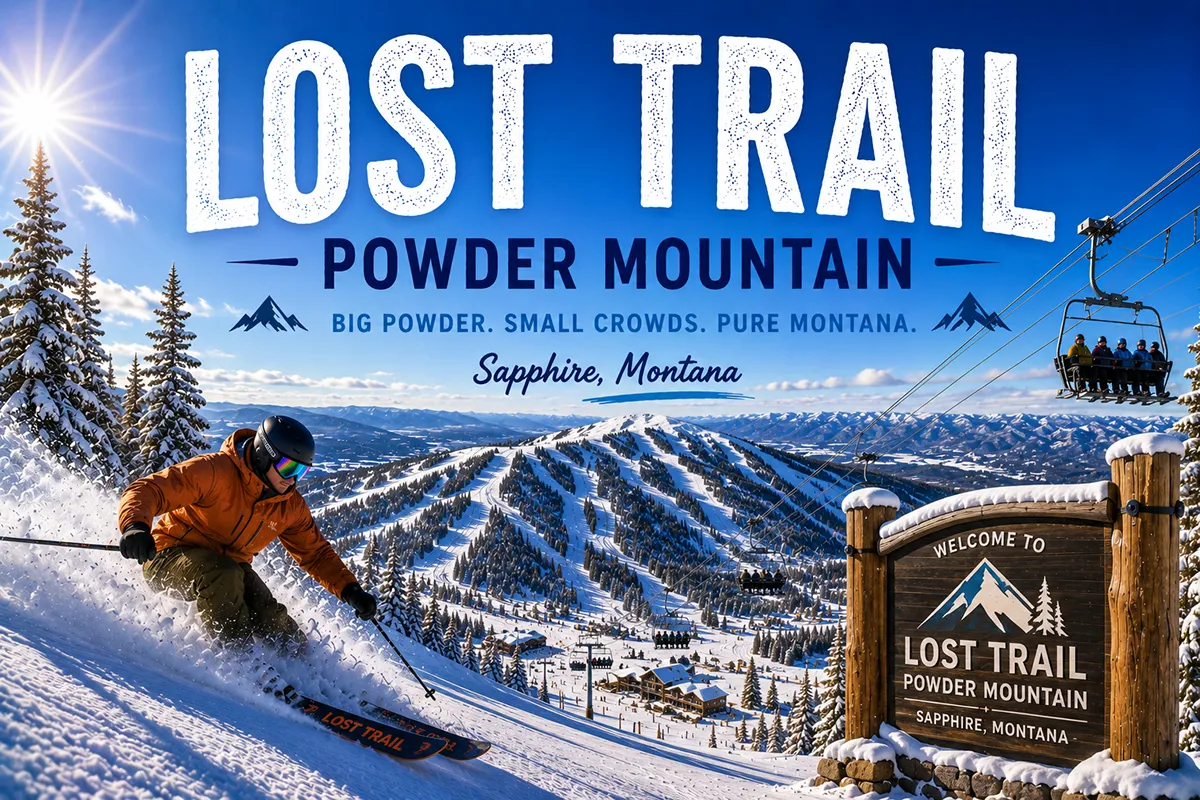
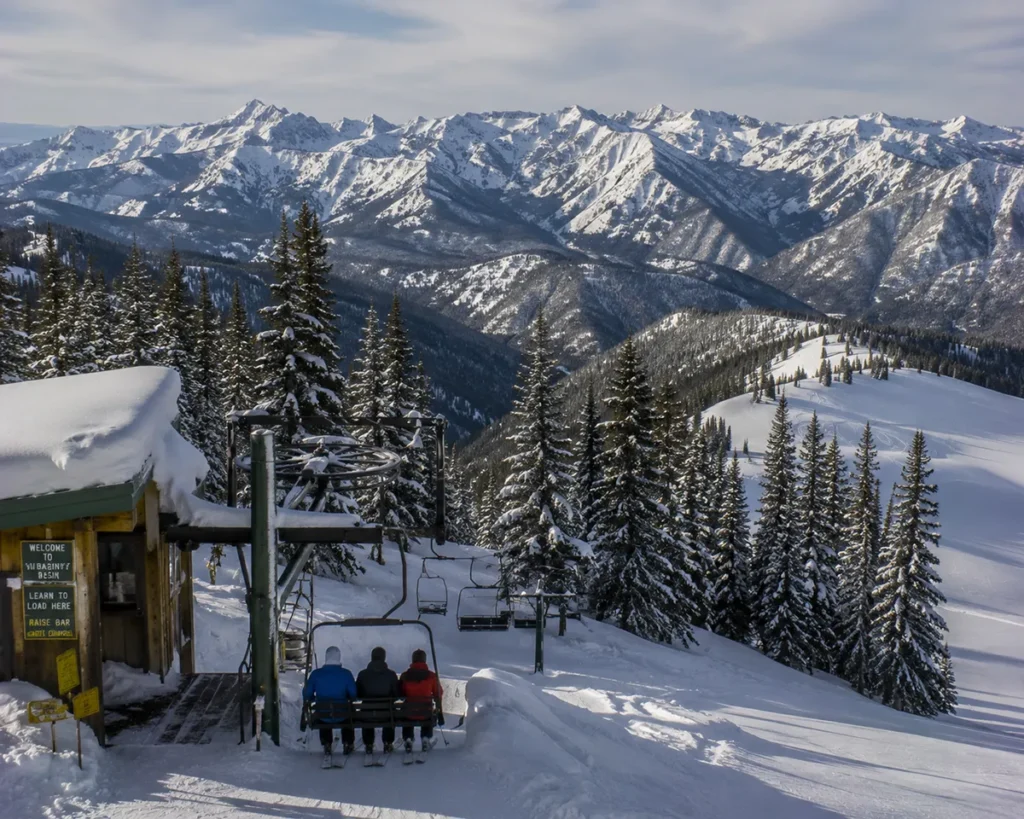
I drove 90 minutes south from Missoula on a Friday morning, parked in a half-full gravel lot at 7,000 feet on the Continental Divide, clicked into skis, and stood there for a moment trying to figure out which state I was in. The answer turned out to be: depends on which chair you load.
- Lost Trail Powder Mountain straddles the Montana-Idaho border at Lost Trail Pass on the Continental Divide, about 90 minutes south of Missoula via US-93
- 1,800 acres across two mountains, 1,800-foot vertical drop, 60+ trails, ~300 inches of light powder per year
- Operates Thursday through Sunday plus major holidays — make this part of your trip plan, not an assumption
- 5 double chairlifts + 3 rope tows (8 lifts total), no high-speed infrastructure
- Indy Pass partner in recent seasons [verify current season]
- Lift tickets typically run $50–$65 [verify current price] — one of the most affordable lift tickets in the Northern Rockies
- Family-owned since 1938 — one of the oldest continuously-operating ski areas in Montana
Liked this article?
Add Roaming Montana as a preferred source so you see more of our articles and guides on Google.
Why Lost Trail Is a Pilgrimage, Not a Day Trip
There are 18 ski areas in Montana. Most are accessible from major airports within an hour or two. Most operate Wednesday-or-Tuesday-through-Sunday. Most have at least one high-speed chairlift. Most have published terrain stats that match across multiple sources.
Lost Trail Powder Mountain is none of these things.
The mountain is 90 minutes south of Missoula via US-93 — the closest major city — and even further from any other commercial airport.
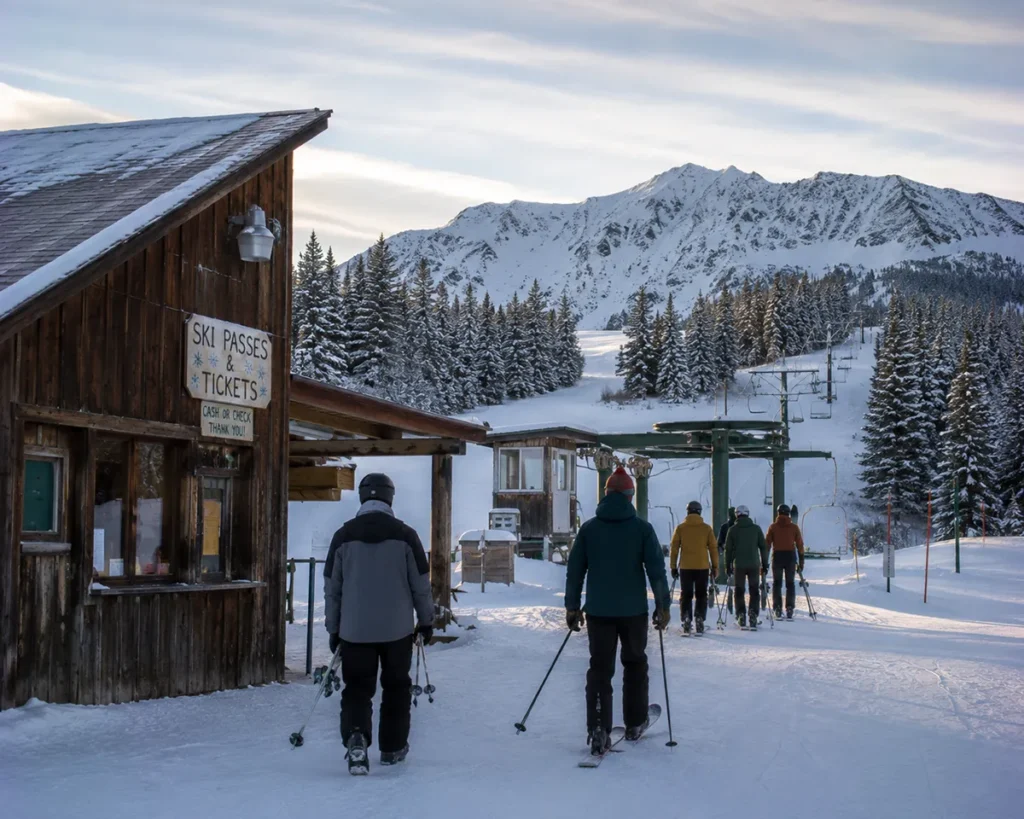
It operates only Thursday through Sunday plus major holidays, which means visiting requires planning the days of your week, not just the dates. It runs on five vintage double chairlifts plus three rope tows, no high-speed infrastructure anywhere.
And the resort’s own marketing has called itself “Montana’s best-kept secret” for so long that the marketing line is now affectionately ironic.
What Lost Trail does have is light, dry continental powder — Indy Pass calls it “Montana’s lightest snow” — falling on 1,800 acres across two distinct mountains that happen to straddle the Idaho-Montana state line.
Family-owned and operated since 1938, the resort has resisted nearly every trend in modern destination skiing. The result is one of the most authentic ski experiences left in the American West, and one of the more rewarding pilgrimages a Montana skier can make.
This is part of our complete guide to Montana ski resorts — and if you’re trying to figure out whether Lost Trail belongs on your itinerary, this guide will tell you exactly when and how.
Where Lost Trail Actually Is
Lost Trail sits at Lost Trail Pass on the Continental Divide, on the border between Ravalli County, Montana and Lemhi County, Idaho. This is one of the few ski areas in America that genuinely straddles a state line — Chairlift #1 runs essentially along the border, and Chairlift #2 is entirely in Idaho.
Getting there:
- From Missoula: 90 minutes south via US-93 through the Bitterroot Valley
- From Hamilton: about 70 miles south on US-93 (1 hour 20 minutes)
- From Darby: about 50 miles south on US-93 (1 hour)
- From Salmon, Idaho: about 45 minutes north on US-93
- From Missoula International Airport (MSO): about 100 miles total, roughly 1 hour 50 minutes
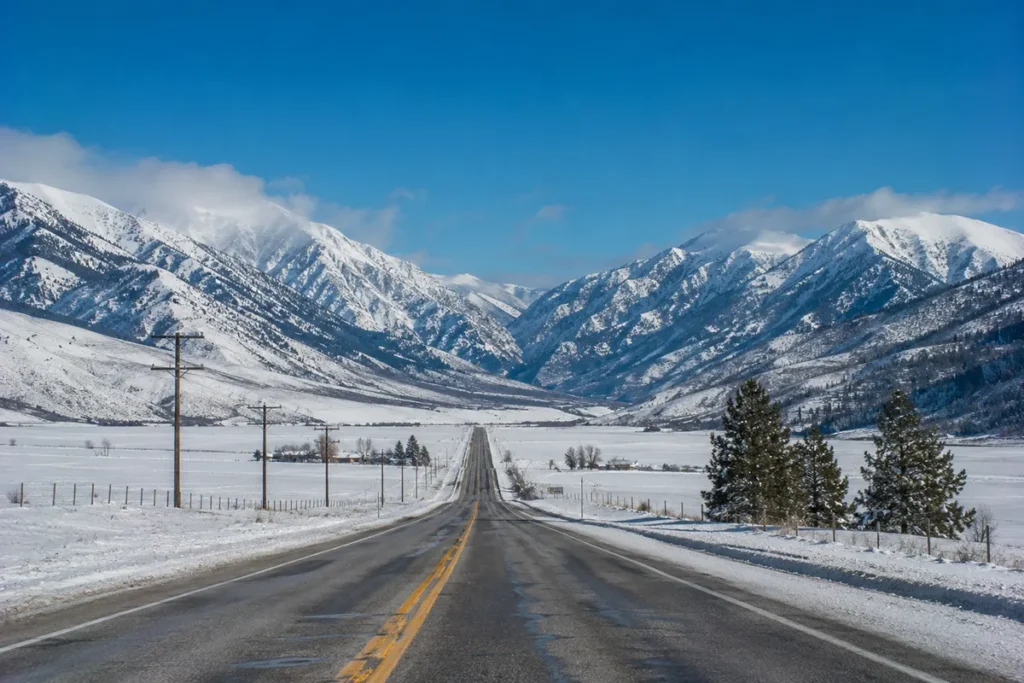
Missoula International (MSO) is the only practical commercial airport. The drive south on US-93 through the Bitterroot Valley is one of Montana’s most beautiful highways — and that drive is part of the trip.
The road follows the Bitterroot River south past Stevensville, Victor, Hamilton, and Darby, with the Bitterroot Mountains rising sharply on the western side and the Sapphire Range on the east. See my Hamilton guide for the natural lunch stop on the way down.
The Continental Divide Drive
The final 30 minutes south of Darby climb steadily through national forest land to Lost Trail Pass at 7,000 feet of elevation. This stretch can be dramatic in storm conditions — heavy snowfall, blowing snow, and limited visibility are common.
Snow tires and AWD/4WD are essential in winter. Cell service drops out about 30 minutes before you arrive at the pass.
The ski area sits immediately west of US-93 at the pass — you can’t miss it. Parking is at the main base lodge at 7,000 feet on the Montana side.
For winter driving prep, see my Montana winter driving guide.
The History: Family-Owned Since 1938
This is the part of the Lost Trail story most articles skip. The resort has been continuously family-owned and operated since 1938, making it one of the oldest still-operating ski areas in Montana and one of the few in the country with an unbroken family ownership history this long.
What this means practically:
- Decisions are made for the long term, not for quarterly returns
- Infrastructure prioritizes maintenance and longevity over flashy upgrades
- Operating decisions follow what the mountain and the community need — including the Thursday-Sunday schedule
- The business office is at Conner, MT, between the resort and Hamilton — not at corporate headquarters somewhere
- The same family knows generations of the regular skiers personally
The lift inventory tells the story. The original Chairlifts #1 and #2 access the older, lower-elevation terrain. Chairlift #3 (Huckleberry) was added in 2002, lowering the base by 200 vertical feet and expanding the terrain on the Montana side.
Chairlift #4 on Saddle Mountain opened in February 2003, adding 400 vertical feet and making Saddle Mountain the new summit at 8,200 feet. The current 1,800-foot vertical drop reflects 60+ years of careful expansion rather than a single buildout.
For the 2025-26 season, Lost Trail introduced new RFID lift access — a long-awaited modernization that joins the resort with Bridger Bowl and Red Lodge in adopting tap-to-access systems while keeping the rest of the operation distinctly old-school.
The Terrain: How Lost Trail Skis
Lost Trail’s footprint covers 1,800 acres across two mountains — Lost Trail Mountain on the Idaho side and Saddle Mountain on the Montana side. The terrain is laid out across multiple distinct zones.
Approximate Terrain Breakdown
- 20% Beginner
- 60% Intermediate (this is notably high for a Montana resort)
- 20% Advanced/Expert
That intermediate-heavy distribution is unusual and worth understanding. Lost Trail is one of the best mid-sized ski areas for families and intermediate cruisers in the state — much more so than Snowbowl or Bridger Bowl, which both skew expert.
The Idaho Side (Chairlift #2)
The original terrain on Lost Trail Mountain itself. Chairlift #2 accesses runs that are entirely in Idaho — meaning you can technically ski into Idaho from a Montana lift. The terrain here is classic, varied, and includes some of the resort’s longest cruising groomers.
The Border Terrain (Chairlift #1)
Chairlift #1 runs along the Idaho-Montana border ridge. The terrain accessed from this chair is the heart of the resort — varied intermediate cruisers, tree skiing, and direct access to traverses that reach other parts of the mountain.
The Montana Side and Saddle Mountain (Chairlifts #3 and #4)
The newer expansion. Chairlift #3 (Huckleberry) opened tree-skiing zones and lower-elevation terrain on the Montana side.
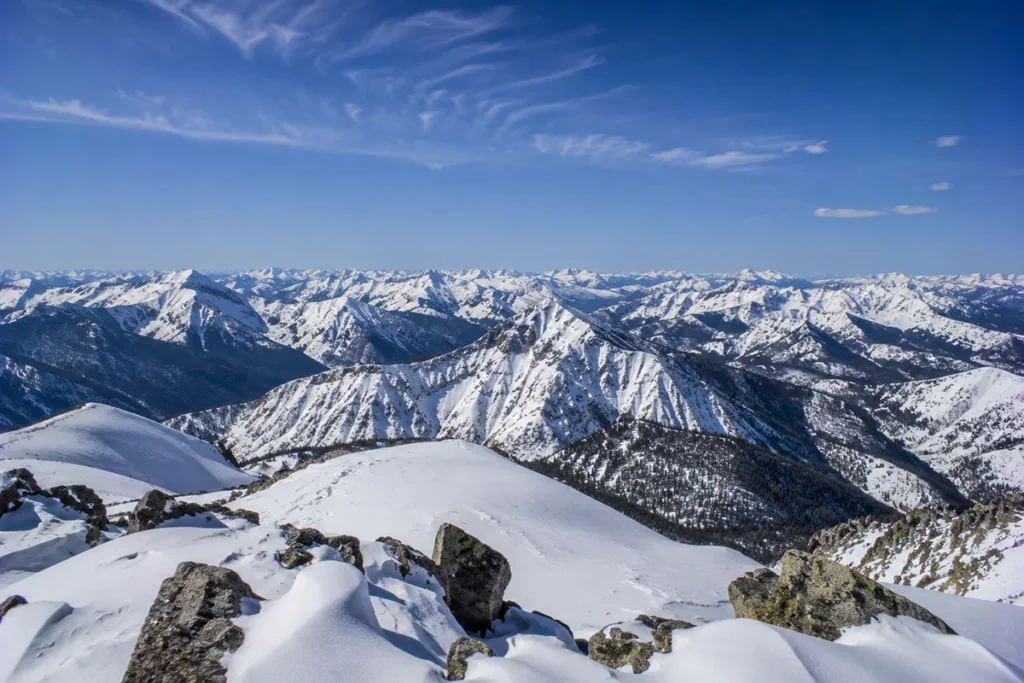
Chairlift #4 climbs Saddle Mountain to the 8,200-foot summit, accessing the most challenging advanced terrain on the mountain.
The slopes here face primarily east, which means good sun in the morning and protected snow holding through the afternoon.
The Real Selling Point: Powder Longevity
Here’s what most posts miss. Because Lost Trail operates only Thursday-Sunday, and because the resort sees a fraction of the visitor traffic of any larger destination resort, powder lasts dramatically longer here than anywhere else in Montana.
I’ve found untracked lines two full days after a storm at Lost Trail. At Big Sky, the same snow would be skied off within the first two hours of opening on a powder day.
At Whitefish, within the first morning. At Bridger Bowl, within the first 90 minutes. At Lost Trail, you can show up Saturday afternoon after a Wednesday storm and still find fresh tracks if you know where to look.
This is the practical translation of the “Montana’s best-kept secret” marketing line — and it’s why serious powder skiers will drive 90 minutes from Missoula to ski here over more accessible options.

The “Lightest Snow in Montana” Claim
Lost Trail’s marketing claims the resort gets “Montana’s lightest snow.” Indy Pass repeats the claim. It’s worth unpacking.
Snow density is a function of moisture content, temperature at formation, and temperature at landing. Lost Trail benefits from a few factors:
- High base elevation (7,000 feet) — cold temperatures at the base mean snow stays dry longer
- Far from the Continental Divide’s moisture-rich storm tracks — what reaches the pass is the lighter, drier fraction of incoming storms
- East-facing aspects — slopes catch morning sun briefly but stay protected from afternoon warm winds
- Northern Rockies cold air mass that often parks over the area in winter
The result is genuinely light continental powder — Indy Pass markets it as competing with Bridger Bowl’s famous “cold smoke.”
Local powder hounds will openly debate which mountain has the lighter snow on any given day. The honest answer is that they’re both world-class for light powder in the way that western Wyoming and central Utah aren’t.
Annual snowfall averages around 300 inches by the resort’s own published figure, though Indy Pass cites 350 and big snow years have exceeded 400. The mountain doesn’t have snowmaking — what falls is what you ski.
Lift Tickets, Operating Schedule, and Practical Logistics
Lost Trail’s pricing is one of the best stories in modern American skiing, and the operating logistics are critical to get right before your trip.
Lift Tickets
Full-day adult lift tickets typically run $50–$65 depending on the date, with online advance purchases sometimes offering small discounts. [Verify current pricing on losttrail.com.]
A few specifics:
- Active military discount: $5 off full-day adult tickets at the window
- Senior, junior, and student discounts available
- 10-Day Pass available for multi-trip skiers — typically a significant per-day savings
- RFID cards introduced for the 2025-26 season — a one-time $5 charge for the reloadable card
- Set up your RFID account online before your trip — saves time at the window
- No mail-in/shipping options — you pick up at the ticket window
The Operating Schedule (Read This Carefully)
This is the single most important piece of practical information for any Lost Trail trip. The resort operates:
- Thursday, Friday, Saturday, Sunday plus major holidays
- Closed Monday, Tuesday, Wednesday
- Hours: typically 9:30am–4:00pm
The mountain extends its days and hours during holiday weeks (Christmas-New Year, Presidents’ Day), but outside those windows the four-day operating schedule is strict. Show up on a Tuesday and you’ll find an empty parking lot.
This schedule has been intentional for decades — it lets the resort operate sustainably while preserving snow quality (less skier traffic per acre per week than nearly any other resort) and giving the small operating staff a meaningful work-life rhythm.
Indy Pass
Lost Trail has been an Indy Pass partner for several seasons, providing standard Indy Pass holders two days of access per season and Indy+ holders additional days.
This is one of the highest-value Indy Pass redemptions in the system — the day-pass-equivalent value alone usually exceeds the cost of the Indy Pass itself.
For Missoula-based skiers, the Missoula four-mountain Indy Pass week (Snowbowl + Lost Trail + Discovery + Lookout Pass) is one of the strongest itineraries the pass offers anywhere in America. [Verify current Indy Pass terms each season.]
What I Wish I Knew Before Skiing Lost Trail
A few things I’d tell my pre-Lost-Trail self.
Plan the trip around the operating days. This is non-negotiable. If your week in Missoula is Sunday-Saturday, you have exactly four possible Lost Trail days. If your week is Monday-Friday, you have one. Plan the days of your trip around when Lost Trail is open.
Fill up gas in Hamilton or Darby on the way down. There is no gas at Lost Trail Pass. Sula has minimal services. Hamilton is the last reliable full-service stop. Same on the way back.
Pack a real lunch. Lost Trail has lodge food — honest, well-priced, but limited. If you’re picky, hungry, or have dietary restrictions, pack from a Missoula or Hamilton grocery store before driving up.
Stay in Missoula, not closer. The 90-minute drive is genuinely part of the experience, and Missoula gives you food, lodging, and culture options that nowhere closer to the resort can match. See Missoula lodging. If you want a quieter base, Hamilton or Darby work and cut 30-60 minutes off the drive each way.
The cold is real. At 7,000 feet on the Continental Divide, January and February days can hit -10°F to -20°F with wind chills meaningfully colder. Vintage double chairs offer no wind protection. Layer aggressively, bring hand warmers, and don’t underestimate exposure on slower lifts. See my Montana winter clothing guide and how cold Montana gets.
Hit it after a storm. Lost Trail’s whole advantage is powder longevity. Watch the forecasts for storms tracking across western Montana and time your trip to arrive Thursday or Friday after a Wednesday dump. The combination of light dry snow and minimal traffic means tracks last for days.
Set up the RFID account before your trip. The 2025-26 RFID system requires online account creation per skier in your group. Do this at home — it saves significant time at the ticket window.
Don’t skip the Saddle Mountain side. Chairlift #4 to Saddle Mountain is the newer expansion and offers the resort’s most challenging terrain plus genuinely beautiful summit views. Many casual visitors stay on the lower Idaho-side terrain and miss this entirely.
Combine with hot springs. Lolo Hot Springs is on the route back to Missoula via Lolo Pass. After a cold ski day at Lost Trail, soaking in a hot spring on the way home is one of the great Montana ski-trip rhythms. See Montana hot springs for other options in the region.
Lost Trail Compared to the Other 17 Montana Ski Areas
Quick honest comparisons.
Vs. Montana Snowbowl: The natural Missoula-area pairing. Snowbowl is 25 minutes from downtown Missoula and operates Wednesday-Sunday with steeper expert terrain. Lost Trail is 90 minutes from Missoula and operates Thursday-Sunday with lighter powder, more intermediate terrain, and dramatically less traffic. Many Missoula skiers ski both — Snowbowl for after-class laps, Lost Trail for committed weekend pilgrimages.
Vs. Discovery Ski Area: Discovery is east of Missoula (90 minutes), operates full week, has more developed terrain. Lost Trail is south (90 minutes), operates four days, has lighter snow and far less traffic. Both are Indy Pass partners. For terrain variety, Discovery. For powder pilgrimage, Lost Trail.
Vs. Lookout Pass: Lookout Pass is west of Missoula (90 minutes) on the Idaho border. The two are similar in remote-feeling location and Indy Pass partnership. Lookout has more developed infrastructure and operates full week; Lost Trail has lighter snow and more authentic family-owned culture.
Vs. Bridger Bowl: The closest spiritual comparison — both nonprofit-ethos local mountains with legendary light powder. Bridger has more terrain, more vertical, the Ridge, and is 16 miles from Bozeman. Lost Trail has even less traffic and a more remote location. If you can only pick one for a powder pilgrimage, Bridger is closer to a major airport. Lost Trail rewards the longer drive with emptier slopes.
Vs. Turner Mountain: Both are remote, family-feeling, low-traffic mountains. Turner is steeper (70% black diamond) and weekend-only (Friday-Sunday). Lost Trail is more intermediate-friendly and operates one additional day per week. Both are uniquely Montana experiences. Many committed Montana ski road-trippers do both in the same season.
For the full picture, see the Montana ski resorts pillar guide.
Lost Trail Powder Mountain: At-a-Glance
| Vertical Drop | 1,800 ft |
|---|---|
| Skiable Acres | 1,800 (across two mountains: Lost Trail in Idaho, Saddle in Montana) |
| Top Elevation | 8,200 ft (Saddle Mountain summit) |
| Base Elevation | 7,000 ft (main lodge); 6,400 ft (lowest lift) |
| Annual Snowfall | ~300+ inches (“Montana’s lightest snow” per Indy Pass) |
| Terrain Breakdown | 20% Beginner, 60% Intermediate, 20% Advanced/Expert |
| Trails | 60+ named runs |
| Longest Run | 1.2 miles |
| Lifts | 5 double chairs + 3 rope tows (8 total) |
| Lift Ticket | $50–$65 range [verify current price] |
| Pass Affiliation | Indy Pass partner [verify current season] |
| Operating Days | Thursday–Sunday + major holidays only |
| Hours | 9:30am–4:00pm |
| Season | Typically early-mid December through early April |
| Snowmaking | None |
| Night Skiing | None |
| Ownership | Family-owned since 1938 |
| Nearest Town | Hamilton, MT (70 miles north); Salmon, ID (45 minutes south) |
| Nearest Airport | Missoula International (MSO), ~100 miles / 1 hr 50 min |
| State Location | Straddles Idaho-Montana border at Lost Trail Pass |
Lift ticket prices, Indy Pass terms, operating schedule, and lift inventory change annually — verify current information on losttrail.com before booking.
Things to Do Around Lost Trail When You’re Not Skiing
Lost Trail is genuinely remote, but the broader area offers a few options worth knowing:
- Lolo Hot Springs — natural hot springs on the route back to Missoula, perfect after a cold ski day
- The Bitterroot Valley towns — Hamilton, Darby, Stevensville, Victor, Corvallis, and Florence each have their own character and worth a stop
- Salmon, Idaho — about 45 minutes south of the pass, the Idaho gateway with its own dining and lodging options
- Bitterroot National Forest — extensive cross-country skiing and snowshoeing trails throughout the valley
- Trapper Peak — the only 10,000-foot peak in the Bitterroot Range, prominent from US-93
- Painted Rocks State Park — beautiful in winter snow, southwest of Darby
For winter Airbnb planning in the Bitterroot Valley, see winter Airbnbs in Montana.
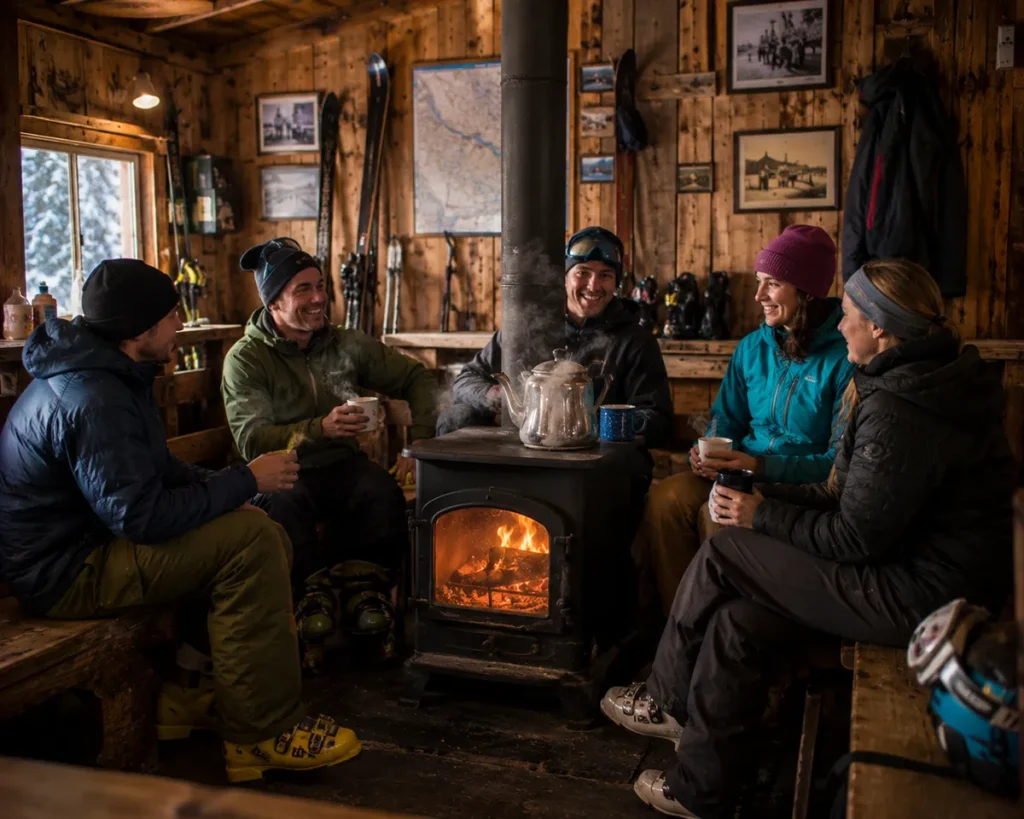
Final Thoughts on Lost Trail Powder Mountain
Lost Trail Powder Mountain is the kind of ski area I tell people about carefully, because the people who would love it are a specific subset of skiers and the people who would be frustrated by it are everyone else.
If you want a destination resort with high-speed lifts, paved parking, multiple dining options, and skiing every day of the week — Lost Trail will disappoint you. There’s no comparison. The mountain is not optimized for that experience and isn’t trying to be.
If you want light powder that lasts for days, a family-owned operation that hasn’t changed its core identity since 1938, an intermediate-friendly mountain you can ski with your whole family without anyone feeling left out, and a 90-minute drive through one of the most beautiful valleys in Montana — Lost Trail is exactly the right answer, and you’ll want to come back season after season.
The Thursday-Sunday schedule, the long drive, the vintage double chairs, the lack of snowmaking, the family ownership — these aren’t problems to overcome.
They’re the reason Lost Trail is what it is, and the reason the powder still lasts here in a way it doesn’t anywhere else. Once you ski it, you understand why locals make the drive.
Pin this guide before your trip planning kicks into gear, and drop your questions in the comments below — I read every one and will happily help you decide if Lost Trail fits your itinerary, whether it pairs better with Snowbowl or Discovery for a Missoula-based week, and how to time your trip for a storm.
Frequently Asked Questions
Where is Lost Trail Powder Mountain?
Lost Trail Powder Mountain straddles the Idaho-Montana state line at Lost Trail Pass on the Continental Divide, in Ravalli County, Montana, and Lemhi County, Idaho. The resort is 90 minutes south of Missoula via US-93 through the Bitterroot Valley. The main base lodge is at 7,000 feet on the Montana side.
What days is Lost Trail open?
Lost Trail operates Thursday, Friday, Saturday, and Sunday plus major holidays only. It is closed Monday, Tuesday, and Wednesday during the regular season. Hours are typically 9:30am to 4:00pm. The resort extends its days and hours during holiday weeks. Always verify the current schedule on losttrail.com before driving out.
How much does a lift ticket at Lost Trail cost?
Full-day adult lift tickets at Lost Trail typically run $50–$65 in recent seasons, depending on the date. Active military members receive a $5 discount at the window. Senior, junior, and student discounts available. A 10-Day Pass option offers significant per-day savings for multi-visit skiers. [Verify current pricing on losttrail.com.]
Is Lost Trail on the Ikon, Epic, or Indy Pass?
Lost Trail has been an Indy Pass partner for several seasons, providing standard Indy Pass holders two days of access and Indy+ holders additional days. It is not on the Ikon or Epic Pass. The Indy Pass partnership represents one of the best per-day values in the pass system. [Verify current Indy Pass terms each season.]
How big is Lost Trail Powder Mountain?
Lost Trail covers 1,800 skiable acres across two mountains (Lost Trail Mountain in Idaho and Saddle Mountain in Montana), with a 1,800-foot vertical drop and 60+ named trails. Summit elevation is 8,200 feet at Saddle Mountain. The resort is mid-sized by Montana standards — bigger than Snowbowl, smaller than Discovery or Whitefish.
Who owns Lost Trail Powder Mountain?
Lost Trail Powder Mountain has been family-owned and operated since 1938, making it one of the oldest continuously-operating ski areas in Montana under a single ownership lineage. The business office is at Conner, Montana, midway between Hamilton and the resort.
Is Lost Trail good for beginners?
Yes, particularly for confident beginners and progressing intermediates. About 20% of terrain is rated beginner and 60% intermediate — the intermediate footprint is unusually high for a Montana ski resort. For absolute first-timers, the dedicated learning terrain and family-friendly atmosphere are strong, but the 90-minute drive from Missoula can be a logistical hurdle.
Does Lost Trail have snowmaking?
No. Lost Trail relies entirely on natural snowfall — there is no snowmaking infrastructure. The resort averages 300+ inches of natural snow annually, with peak conditions typically January through March.
Can I ski both Idaho and Montana terrain at Lost Trail?
Yes — that’s one of the resort’s unique features. Chairlift #1 runs essentially along the Idaho-Montana border, Chairlift #2 is entirely in Idaho, and the runs from Chairlifts #3 and #4 (Saddle Mountain) are in Montana. You can ski into Idaho from a Montana base lodge multiple times per day.
How does Lost Trail compare to Bridger Bowl?
Both are mid-sized local mountains famous for light dry powder. Bridger Bowl (north of Bozeman) has more terrain, more vertical, the famous Ridge, and is much closer to a major airport. Lost Trail has even less skier traffic, an even more authentic family-owned operation, and powder that lasts dramatically longer between storms. Both are excellent — pick based on which region of Montana you’re anchoring in.
Where should I stay for a Lost Trail ski trip?
Missoula (90 minutes away) offers the most lodging options, food, and culture — see Missoula lodging. For a quieter base closer to the resort, Hamilton is 70 miles north (about 1h 20m) and Darby is 50 miles north (about 1 hour). Both offer modest motels, B&Bs, and vacation rentals. There is no on-mountain lodging at Lost Trail.