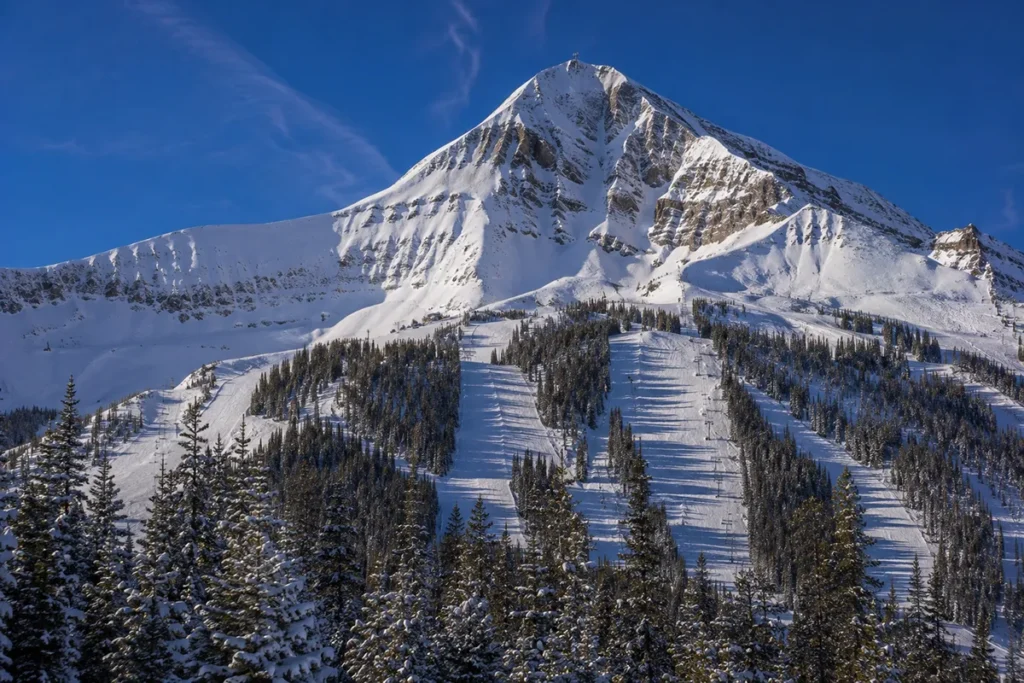
I rode the Lone Peak Tram for the first time on a Thursday in March with five strangers and a ski patroller. By the time we stepped out at 11,166 feet, two of us were quiet, one was crying a little, and the patroller just said, “Yep. Welcome to Big Sky.”
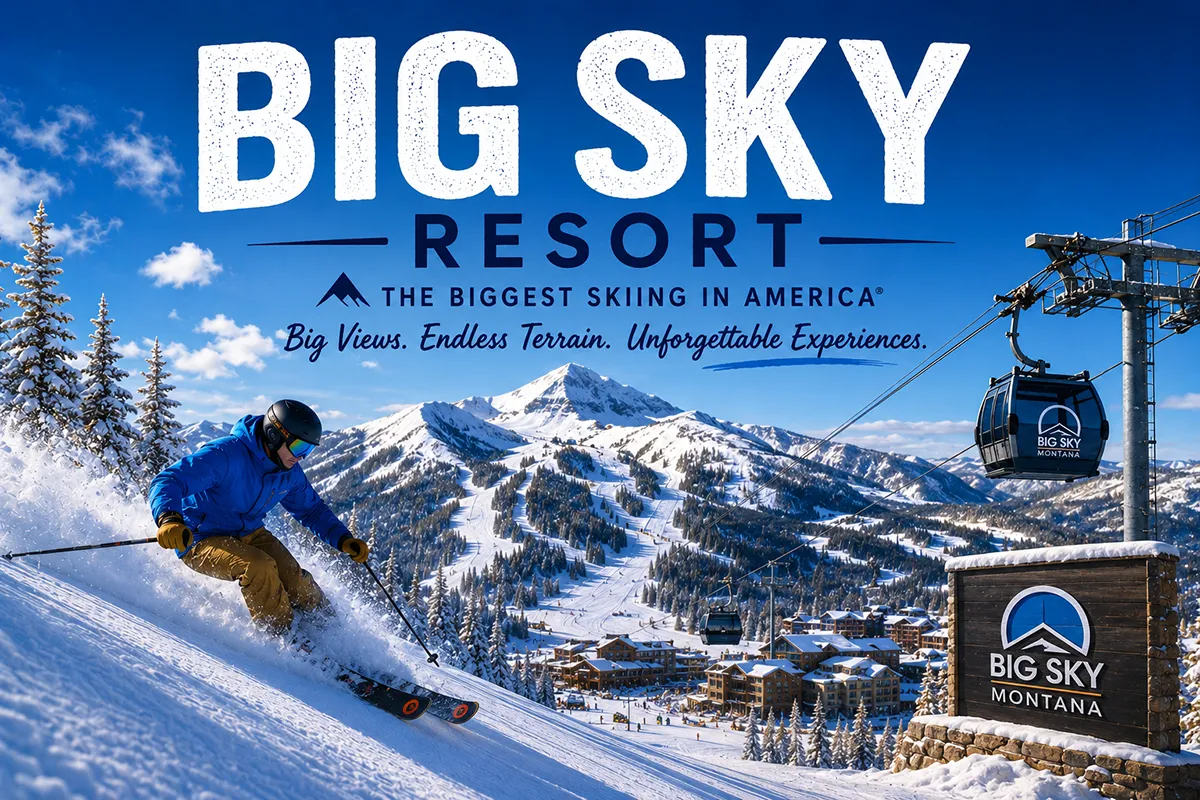
- Big Sky Resort sits on Lone Mountain in southwest Montana, about 50 miles south of Bozeman
- 5,850 skiable acres, 4,350-foot vertical drop, 11,166-foot summit — second only to Snowmass in vertical, and one of the top five resorts in North America by acreage
- Roughly 400+ inches of snow per year, 300+ named runs, 38–40 lifts (count varies with ongoing upgrades)
- The Lone Peak Tram accesses some of the wildest lift-served terrain in the lower 48 — Big Sky added a “triple black diamond” rating for it
- Full-day lift tickets typically run $200–$280+ in peak season [verify current price] — by far the most expensive in Montana
- On the Ikon Pass (with day limits and blackouts) [verify current season]
- The right trip if you’re an advanced skier chasing big-mountain terrain or a family that wants resort amenities; the wrong trip if you’re looking for the funky Montana ski-bum experience
Liked this article?
Add Roaming Montana as a preferred source so you see more of our articles and guides on Google.
Why Big Sky Is Different From Everywhere Else in Montana
I’ve skied every operating resort in Montana, and Big Sky is the only one that doesn’t feel like Montana when you’re in the base village. That’s not entirely a criticism — it’s a description.
Most Montana ski resorts feel like small towns that happen to have a chairlift. Whitefish has a real downtown with breweries and families who live there year-round. Red Lodge has a preserved historic main street. Bear Paw has volunteers who know every visitor by name.
Big Sky is something else. It’s a destination resort that was built, deliberately and from scratch, to be a destination resort — first by NBC news anchor Chet Huntley in the early 1970s, then by Boyne Resorts who’ve owned and developed it since 1976.
The result is the most ambitious ski operation in the state — and arguably in the country. 5,850 acres of skiable terrain. A 4,350-foot vertical drop. A summit at 11,166 feet. The Lone Peak Tram dropping skiers into terrain that elsewhere requires a helicopter. Roughly 400 inches of snow annually and a season that often stretches into late April.
This is part of our complete guide to Montana ski resorts — and if you’re trying to decide between Big Sky and any other Montana resort, this guide will give you the honest comparison I’d give a friend.
Where Big Sky Resort Actually Is
Big Sky sits in the Madison Range in southwest Montana, in Madison County, technically separate from the town of Big Sky (the town itself is a few miles down the canyon).
The resort is built on three mountains — Lone Mountain, Andesite Mountain, and Flat Iron Mountain — and following the 2013 acquisition of Moonlight Basin and the Spanish Peaks terrain, it also includes what was previously known as the north side of Lone Mountain.
Getting there:
- From Bozeman: 50 miles south on US-191 through Gallatin Canyon (about 1 hour)
- From Bozeman Yellowstone International Airport (BZN): about 60 miles total, roughly 75 minutes
- From West Yellowstone: 45 miles north on US-191 (about 1 hour)
- From Yellowstone National Park’s north entrance (Gardiner): about 2.5 hours
- From Billings: about 3.5 hours west
Bozeman Yellowstone International (BZN) is the primary airport — it has direct flights from a growing number of major U.S. hubs and has expanded significantly over the past decade. Some skiers consider flying into Salt Lake City or Denver and driving up, but BZN is meaningfully more direct.
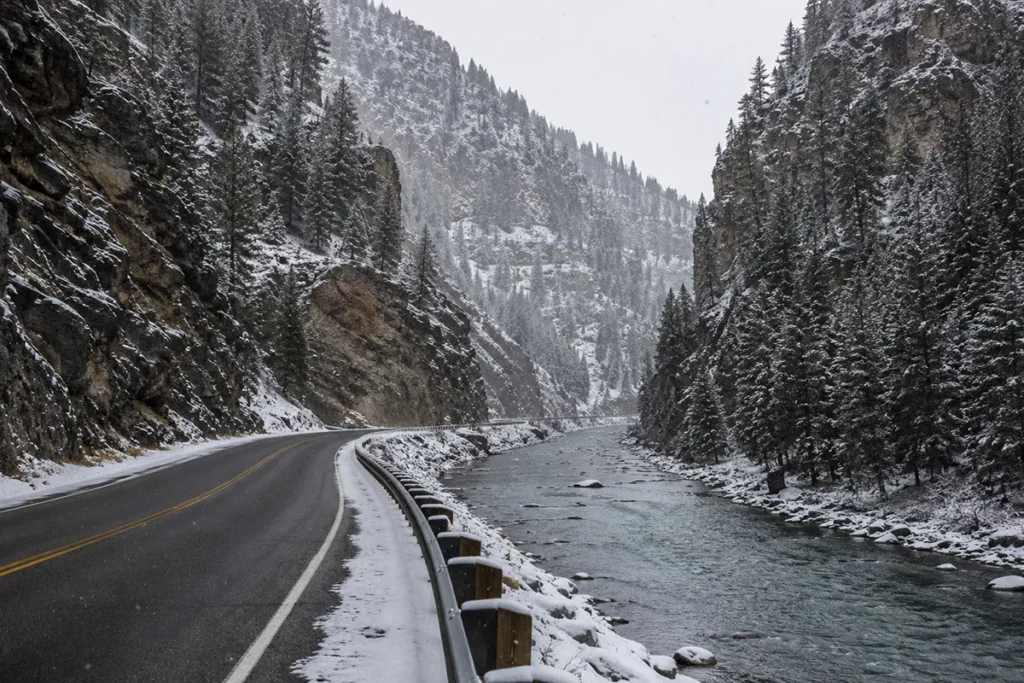
The drive in from Bozeman through Gallatin Canyon is one of the prettiest ski-resort approaches in North America. The Gallatin River runs alongside US-191 for most of the route, with sheer rock walls and dense pine on either side. This canyon road is a winter driving concern.
It’s narrow, two-lane, and prone to ice and rockfall. Snow tires are not optional — full stop. See my Montana winter driving guide before you make the drive.
The Terrain: How Big Sky’s Skiing Is Actually Organized
Big Sky’s footprint is so large that it can feel disorienting on the first visit. Here’s the practical breakdown I wish someone had given me before my first trip.
The Three Mountains
Lone Mountain (peak: 11,166 ft) — the iconic centerpiece. The Lone Peak Tram accesses the summit and the most extreme terrain. This is the mountain you see in every photo of Big Sky.
Andesite Mountain (peak: ~8,800 ft) — the intermediate-friendly side. Long groomers, good tree skiing, and the area where most of the mountain’s everyday skiers spend their days. The Ramcharger 8 high-speed chair is the main access.
Flat Iron Mountain — quieter, with a mix of intermediate and advanced runs. Accessed via the Six Shooter (now replaced by the Madison 8 in recent upgrades) and the Lone Tree lift.
The former Moonlight Basin terrain on the north side of Lone Mountain is now fully integrated and skiable on a Big Sky ticket. This side feels noticeably quieter than the main Mountain Village side, because most visitors gravitate toward the central lifts.
The Lone Peak Tram (Read This Before You Ride It)
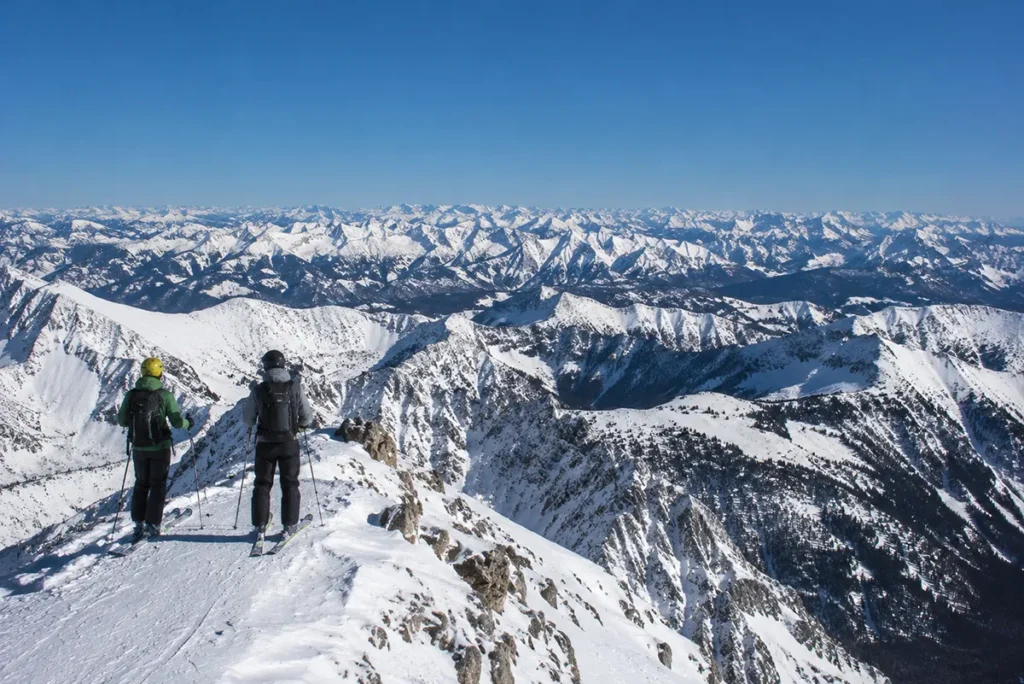
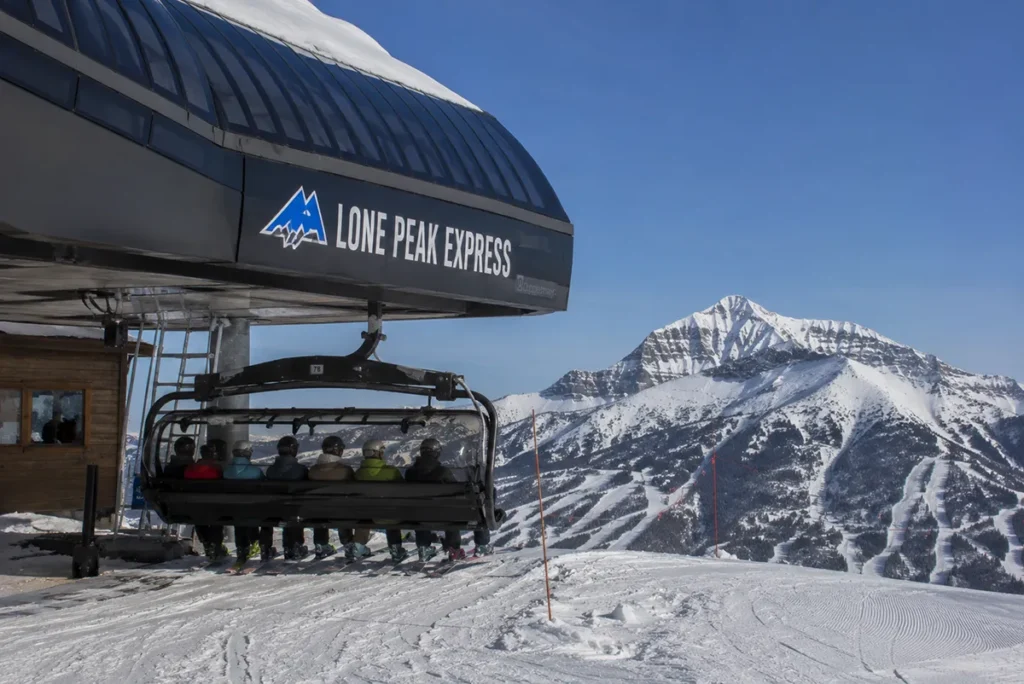
The Lone Peak Tram is the experience that defines Big Sky. The original 15-passenger tram, built in 1995, was replaced in 2023 by a new 75-person tram that dramatically increased capacity. The ride goes from the top of the Powder Seeker lift up to the 11,166-foot summit of Lone Peak.
From the summit, you have two main options:
- The Big Couloir — a 50-degree pitch with a mandatory 15-foot cliff entrance. Avalanche transceiver and partner required. This is the run most people associate with Big Sky.
- Liberty Bowl, Marx, North Summit Snowfield, and the South Face terrain — slightly more approachable but still legitimately expert. You will not find groomed terrain off this tram.
Big Sky introduced a “triple black diamond” rating in 2020–21 specifically to mark the most extreme tram-accessed terrain. That’s not marketing — there are runs on this mountain that require equipment, partner, and competence beyond standard expert skiing.
A few things I learned the hard way:
- The wind at the summit is real, and the tram routinely doesn’t run on windy days. Have a backup plan.
- The line for the tram can be 30–60 minutes on weekends. Midweek is dramatically better.
- The Kircliff Glass Alpine Observatory at the summit (added in recent seasons) is now a sightseeing draw — non-skiers can ride the tram up just for the views, which means more general-public traffic.
Terrain by Ability
Big Sky markets itself as a mountain for all levels, and that’s largely true — but the distribution skews advanced.
Approximate terrain breakdown:
- Beginner: ~15%
- Intermediate: ~25%
- Advanced/Expert: ~60% (with roughly 18% rated true expert)
For beginners, the Explorer area near the base of Mountain Village is excellent — gentle terrain, a magic carpet, and a long progression of green runs. Big Sky’s ski school is one of the best-staffed in the West.
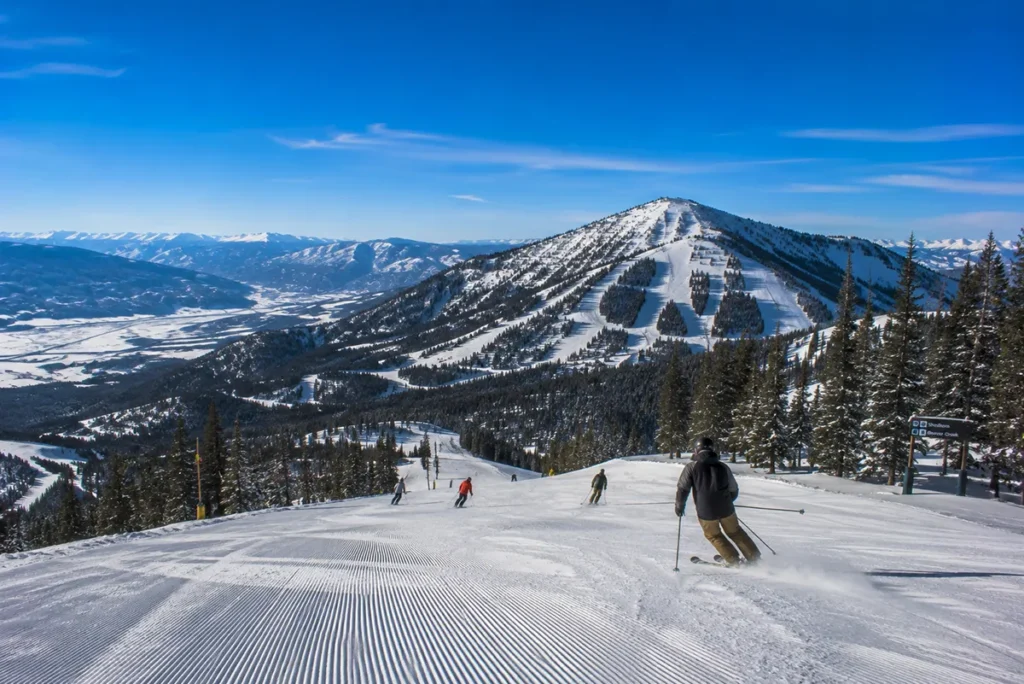
For intermediates, Andesite Mountain is where you’ll live. The Ramcharger 8 lift accesses miles of cruising groomers with views toward the Spanish Peaks. The Calamity Jane, Mr. K, and Lower Morningstar runs are some of the most enjoyable intermediate skiing in North America.
For advanced and expert skiers, the choice opens up: Lone Peak Tram terrain, the South Face, Headwaters from Moonlight Basin, the chutes and trees off the Challenger lift, and the Dakota terrain on the back side of Andesite.
There’s enough advanced terrain here that I’ve spent a full week at Big Sky and still not skied every named expert run.
Recent Lift Upgrades (Why Big Sky Skis Different Than It Used To)
Big Sky has invested heavily in lift infrastructure over the past five years. The most significant changes:
- New 75-person Lone Peak Tram (2023) — replaced the old 15-passenger version
- Madison 8 — the world’s longest 8-person chairlift, replaced Six Shooter
- New 10-person D-line gondola (2025–26 season) connecting Mountain Village to The Bowl with a mid-station for beginner/intermediate access
- Ramcharger 8 high-speed chair on Andesite
- Kircliff Glass Alpine Observatory at the summit
The cumulative effect is that the resort moves people uphill far more efficiently than it did even five years ago. Lift lines, while still real on busy weekends, are meaningfully shorter than they used to be.
Lift Tickets, Passes, and the Honest Conversation About Cost
This is where the conversation about Big Sky gets uncomfortable. Let me be direct.
Big Sky is by far the most expensive resort in Montana. Walk-up lift ticket prices in peak season have run $200–$280+ for a single day in recent seasons. That’s not unusual for a destination resort of this size — it’s roughly in line with mid-tier Vail Resorts pricing — but it’s a sharp departure from the rest of Montana skiing.
A few ways to ski Big Sky for meaningfully less:
Ikon Pass
Big Sky is on the Ikon Pass, with day allotments depending on which tier you buy. [Verify current season’s Ikon Pass terms — day counts and blackout dates change annually.] For visitors who plan to ski 4+ days at Big Sky in a season, or who combine Big Sky with other Ikon resorts, the Ikon Pass usually beats walk-up rates dramatically.
Multi-Day Tickets and Lodging Packages
Booking a multi-day ticket directly through Big Sky, or bundling lift tickets with on-mountain lodging, typically discounts significantly off walk-up rates. The biggest deals tend to be early-season (before mid-December) and late-season (after mid-March).
Half-Day and Early-Out Tickets
If you’re doing afternoon-only skiing or combining a ski day with another activity, half-day tickets cut prices noticeably.
Avoiding Holiday Weeks
Christmas-to-New-Year and Presidents’ Day weekend pricing runs 20-30% higher than off-peak. If you have flexibility, target the second week of January, the third week of February, or anywhere in March.
The bottom line: if cost is a top-three consideration on your trip, Big Sky is the wrong Montana resort for you. Whitefish delivers similar terrain variety at roughly 50% of the price. Discovery and Bridger Bowl deliver comparable advanced terrain for a fraction of the cost.
If you specifically want the Lone Peak Tram experience, the most extreme lift-served terrain in the country, or the resort amenities Big Sky offers — then it’s worth the price.
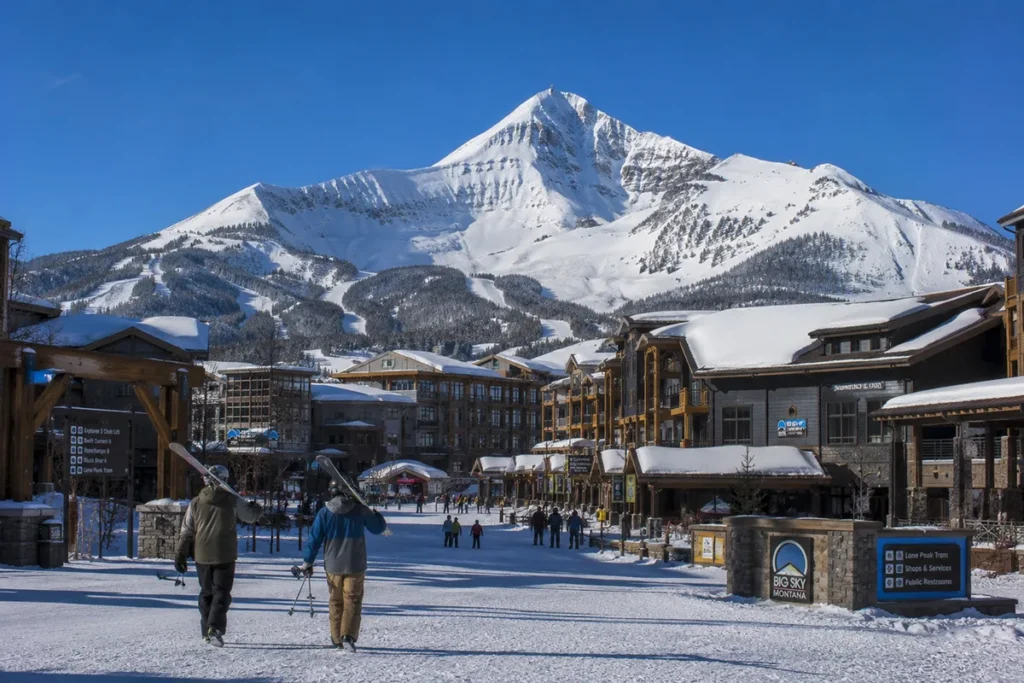
Where to Stay: Mountain Village vs. Big Sky Town vs. Bozeman
Big Sky’s lodging options break into three distinct strategies, each with real tradeoffs.
Stay in Mountain Village (On-Mountain)
Ski-in/ski-out lodging right at the base of the lifts. Convenient, expensive, and dominated by hotels and condos built specifically for resort visitors. The recent additions — Montage Big Sky, the Gravity Haus lifestyle hotel — have raised the bar significantly.
Best for: Visitors who want maximum convenience and don’t want to deal with shuttle buses or driving in winter. Worth it if you’re at Big Sky to ski hard and don’t want non-skiing time in the car.
Tradeoff: You’re paying a premium, and the village itself, while improved, still feels engineered rather than organic. Dining options are limited and expensive compared to what you’d find in a real town.
Stay in the Town of Big Sky (Down Canyon)
A few miles down the canyon from the resort, the town of Big Sky has more lodging variety, a Town Center with restaurants and shops, and a less-engineered feel. Free shuttle service runs between the town and the resort during ski season.
Best for: Visitors who want a more authentic mountain town feel, more dining options, and slightly lower lodging prices. See my guide to the town of Big Sky.
Tradeoff: You’re committing to the shuttle or driving in each morning. Manageable but adds friction.
Stay in Bozeman (45 Minutes North)
This is the move I personally make. Bozeman is a real Montana town with a thriving food scene, craft breweries, a major university, and meaningfully lower lodging costs than the resort area. The drive is about an hour to the slopes, but for me, the dining and town-life upside is worth the commute.
Best for: Cost-conscious travelers, foodies, anyone combining Big Sky with Bridger Bowl (which is just outside Bozeman), and visitors who want to see a genuine Montana college town in addition to skiing. See my things to do in Bozeman guide.
Tradeoff: An hour each way to the mountain. The Gallatin Canyon drive in storm conditions can be slow or even risky.
For RV travelers, see my guide to RV parks in Big Sky.
What I Wish I Knew Before Skiing Big Sky
A few things I’d tell my pre-Big-Sky self.
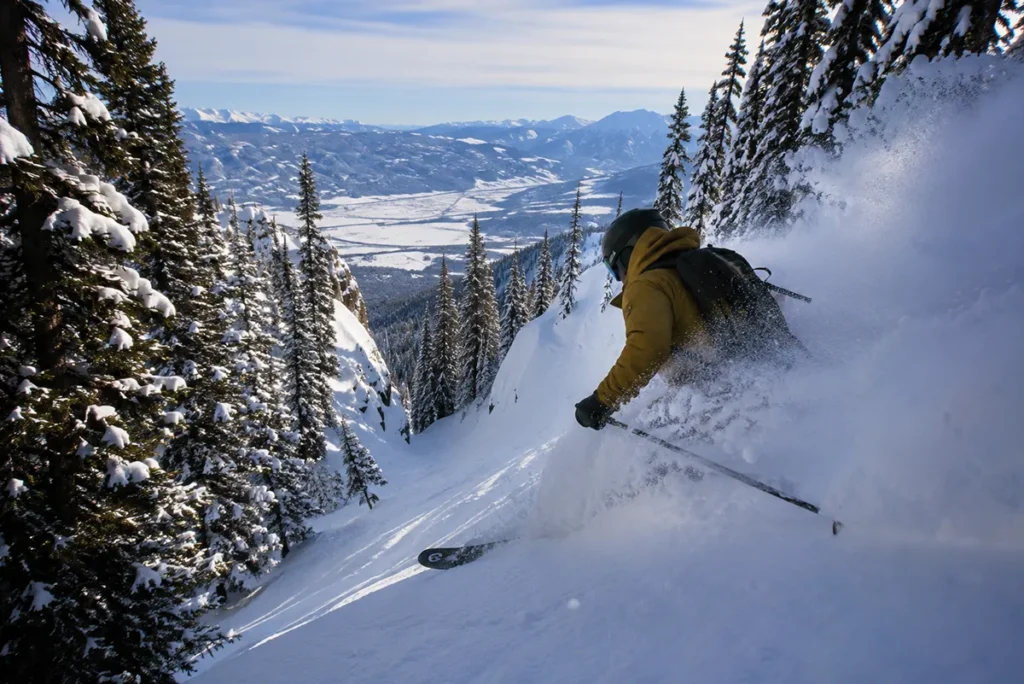
The mountain is too big to ski casually on day one. Plan to spend your first day getting oriented. Pick up a trail map at the base and study it. Take a free orientation tour if the resort offers one. The terrain is laid out across three mountains and multiple base areas, and figuring out the lift connections takes a beat.
Midweek skiing is dramatically better. I’ve ridden the Lone Peak Tram on a holiday Saturday and waited 45 minutes. I’ve ridden it on a Thursday in February and lapped it four times without stopping. The midweek difference at Big Sky is bigger than at almost any other Montana resort.
The altitude is real. Lone Peak sits at over 11,000 feet. Visitors coming from sea level should hydrate hard, ease into skiing the first day, and limit alcohol the first night. Altitude sickness here is genuinely possible.
The cold is real and Montana-specific. Bozeman and Big Sky regularly hit -10°F to -20°F in January and February. The Lone Peak summit can hit wind chills of -40°F. A balaclava, hand warmers, and proper layers aren’t optional. See my Montana winter clothing guide and how cold Montana gets.
Yellowstone is right there. Big Sky is 45 miles from West Yellowstone. Building a Yellowstone day into a Big Sky trip — snowcoach tours, wildlife watching, geothermal features in the snow — is one of the best winter combinations in American travel. See Yellowstone wolf watching, Lamar Valley, the Grizzly and Wolf Discovery Center, and my West Yellowstone guide.
Spring skiing at Big Sky is underrated. The resort often stays open into late April, and the March-April window combines deep snowpack with longer days and moderate temperatures. My favorite Big Sky ski days have been in late March. See Montana in March for the broader seasonal context.
Don’t try to “do” the whole mountain in a single trip. With 5,850 acres, you can ski Big Sky for a week and still find new terrain. Pick a few zones each day, get to know them well, and skip the urge to chase the trail map.
Big Sky Compared to the Other 17 Montana Ski Areas
A quick honest comparison for anyone deciding between resorts.
Vs. Whitefish Mountain Resort: Whitefish has the better town, more affordable pricing, and a genuinely organic ski-town culture. Big Sky has more terrain, more vertical, and the Lone Peak Tram. For first-time Montana visitors with non-skiing partners, Whitefish. For pure terrain volume and big-mountain skiing, Big Sky.
Vs. Bridger Bowl: Bridger Bowl is the local Bozeman move — cheaper, more authentic, with legendary “cold smoke” powder. Big Sky has more amenities, more variety, and more extreme terrain. Most serious Bozeman skiers split their time between the two.
Vs. Moonlight Basin: Moonlight Basin terrain is now part of Big Sky’s ticket. Worth knowing because the Moonlight side of Lone Mountain is noticeably less crowded than the Mountain Village side.
Vs. Yellowstone Club: Yellowstone Club is the private members-only resort directly adjacent to Big Sky. Not accessible to the public regardless of money.
Vs. Discovery, Lost Trail, Turner Mountain, Bear Paw: These are the funky, cheap, small Montana ski areas — fundamentally different experiences from Big Sky. Most serious Montana ski trips include a day at Big Sky and a day at one of these smaller mountains. The contrast is the point.
For the full picture, see the Montana ski resorts pillar guide.
Big Sky Resort: At-a-Glance
| Vertical Drop | 4,350 ft |
|---|---|
| Skiable Acres | 5,850 |
| Summit Elevation | 11,166 ft (Lone Peak) |
| Base Elevation | 7,500 ft (Mountain Village) |
| Annual Snowfall | ~400 inches |
| Terrain Breakdown | 15% Beginner, 25% Intermediate, 60% Advanced/Expert |
| Trails | 300+ named runs |
| Longest Run | ~6 miles |
| Lifts | 38–40 total (count varies with ongoing upgrades) |
| Lift Ticket (full day) | $200–$280+ peak season [verify current price] |
| Pass Affiliation | Ikon Pass (with day limits) [verify current season] |
| Operating Season | Late November to late April (typically) |
| Owner | Boyne Resorts |
| Snowmaking | ~10% of terrain |
| Nearest Town | Big Sky (5 miles); Bozeman (50 miles) |
| Nearest Airport | Bozeman Yellowstone International (BZN), ~60 miles |
Lift ticket prices, lift counts, and pass affiliations change annually — verify current information on bigskyresort.com before booking.
Things to Do at Big Sky When You’re Not Skiing
Big Sky has built out meaningful non-skiing infrastructure over the years. Options include:
- Yellowstone day trips — winter snowcoach tours from West Yellowstone, plus wildlife watching in Lamar Valley
- Lone Mountain Ranch — Nordic skiing on extensive groomed trails
- Snowshoeing — guided and self-guided options on multiple trails
- Snowmobile tours — guided tours into the Gallatin National Forest
- Spa and wellness — multiple resort spas, including at the Montage and Gravity Haus
- Dining — improving year over year, though pricier than off-mountain
- Kircliff Glass Alpine Observatory — non-ski tram ride and summit viewing for non-skiers
- Ice climbing and dog sledding — available through outfitters
For a broader winter southwest Montana itinerary, see my southwest Montana guide.
Final Thoughts on Big Sky
Big Sky is the most polarizing ski resort in Montana. Locals either love it or roll their eyes at it. Visitors often say it’s the best skiing of their lives. Frequent travelers compare it favorably to the biggest names in North American skiing — Whistler, Snowbird, Jackson Hole.
The honest assessment is that Big Sky is excellent at what it sets out to be — a destination resort with world-class terrain, modern infrastructure, and the most ambitious lift-served vertical in the country. It’s also expensive, deliberately engineered, and not representative of what Montana skiing typically feels like.
If you’ve never been to Montana and you want one trip that includes the iconic terrain people fly across the country to ski, Big Sky belongs on the itinerary.
If you’re an experienced skier who specifically wants the Lone Peak Tram experience, nothing else in the lower 48 delivers it. If you want to learn what Montana ski culture actually is, drive an hour up the road to Bozeman, ski Bridger Bowl, and spend a few days at the smaller resorts.
For most visitors, the answer is to do both. Anchor a Montana ski trip at Big Sky for two or three days, then drop down to Bridger Bowl, or drive out to Discovery or even Turner Mountain for the contrast. That combination is the Montana ski trip that gives you the full picture.
Pin this guide for your trip planning, and drop your questions in the comments — I read every one and will happily help you decide if Big Sky is the right anchor for your Montana ski week.
Frequently Asked Questions
How big is Big Sky Resort?
Big Sky Resort has 5,850 skiable acres, a 4,350-foot vertical drop, and a summit elevation of 11,166 feet on Lone Peak. By skiable acreage, it’s one of the largest ski resorts in North America. By vertical drop, it’s second only to Snowmass at Aspen.
How much does a lift ticket at Big Sky cost?
Full-day adult walk-up lift tickets at Big Sky typically run $200–$280+ during peak season, making it by far the most expensive resort in Montana. Multi-day tickets, Ikon Pass access, and lodging packages all reduce the effective cost significantly. [Verify current pricing on bigskyresort.com.]
Is Big Sky on the Ikon Pass?
Yes. Big Sky is on the Ikon Pass, with access varying by pass tier — typically 4–7 days plus blackout dates. [Verify current Ikon Pass terms each season as they change.]
Is Big Sky good for beginners?
Yes, but with caveats. Big Sky has dedicated beginner terrain at Mountain Village (the Explorer area with a magic carpet and gentle green runs) and one of the best-staffed ski schools in the West. However, beginners can feel intimidated by the sheer scale of the mountain and the prominence of expert terrain. If you’re traveling specifically as a beginner-focused family, Whitefish or Discovery may be a better fit.
What is the Lone Peak Tram?
The Lone Peak Tram is the lift that takes skiers to the 11,166-foot summit of Lone Mountain at Big Sky. A new 75-person tram replaced the original 15-person tram in 2023. From the summit, skiers can access the most extreme lift-served terrain in the lower 48, including the famous Big Couloir (a 50-degree pitch with a mandatory cliff entrance). Non-skiers can also ride the tram to visit the Kircliff Glass Alpine Observatory.
How far is Big Sky from Bozeman?
Big Sky Resort is approximately 50 miles south of Bozeman via US-191 through Gallatin Canyon — about a 1-hour drive in good conditions, longer in winter weather. Bozeman Yellowstone International Airport (BZN) is the primary airport, about 60 miles from the resort.
Can I combine a Big Sky ski trip with Yellowstone?
Yes — Big Sky is one of the best winter base camps for combining skiing and Yellowstone exploration. West Yellowstone is about 45 miles south, and winter snowcoach tours, cross-country skiing, and wildlife watching in Lamar Valley are all within day-trip range. The combination is one of the best winter travel experiences in American travel.
When is the best time to visit Big Sky?
Mid-January through early March offers the most consistent snow conditions. March is the locals’ favorite month — deepest snowpack, longer days, moderate temperatures, and the spring light at altitude is exceptional. Avoid holiday weeks (Christmas–New Year, Presidents’ Day weekend) unless you book 3–4 months out and don’t mind crowds. Big Sky typically operates from late November through late April.
How does Big Sky compare to Whitefish?
Big Sky has more terrain (5,850 acres vs. Whitefish’s 3,000), more vertical (4,350 ft vs. 2,353 ft), and the Lone Peak Tram. Whitefish has a real ski town with year-round residents, significantly lower prices, and a more authentic Montana feel. For first-time Montana visitors with mixed-ability groups, Whitefish is often the better all-around choice. For experienced skiers chasing big terrain, Big Sky. See the complete Montana ski resorts guide for the full comparison.
Does Big Sky have on-mountain lodging?
Yes — extensive on-mountain lodging is available in Mountain Village, including hotels (Montage Big Sky, Huntley Lodge, Summit Hotel, Gravity Haus), condos, and ski-in/ski-out residences. The town of Big Sky a few miles down canyon offers additional, generally more affordable lodging, and Bozeman (about an hour away) offers the most variety and the lowest costs.