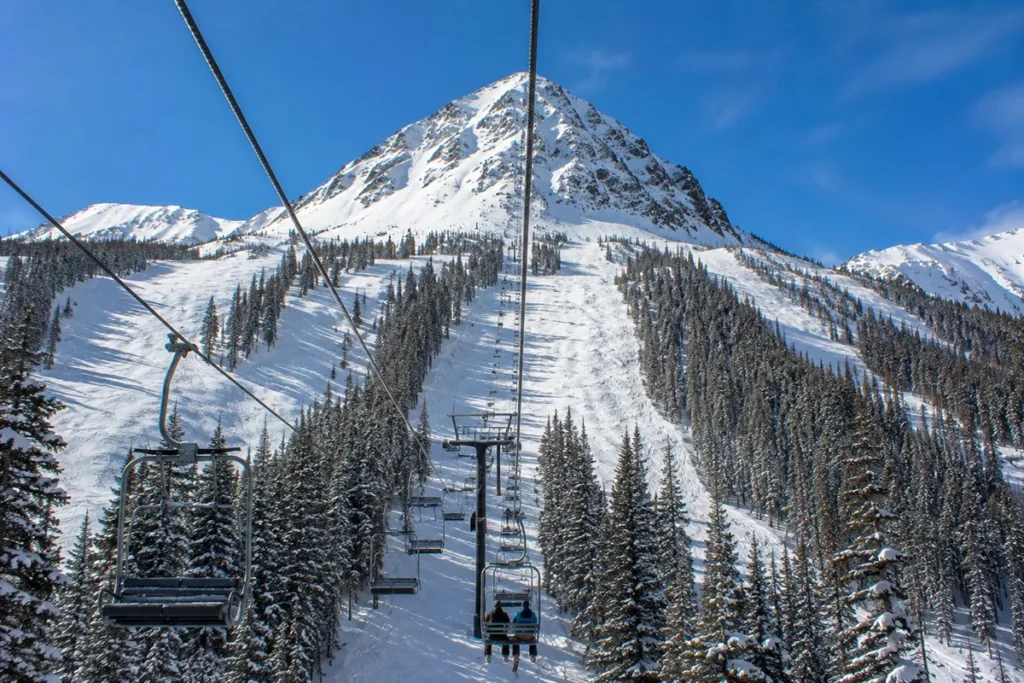
I rode the Six Shooter lift on the Moonlight side of Big Sky on a Saturday in February. The Mountain Village side was packed.
There was a 30-minute line at the Lone Peak Tram. The Six Shooter had a 90-second wait. I lapped untracked snow all morning while the rest of the resort fought for parking.
- Moonlight Basin operated as a separate Montana ski resort from 2003 to 2013, when it was acquired by Big Sky’s ownership group and merged into Big Sky Resort
- The Moonlight side covers the north and northwest aspects of Lone Mountain — adding approximately 2,000 acres to Big Sky’s footprint
- After the 2013 merger, Moonlight Basin’s terrain is accessible on a standard Big Sky lift ticket
- The Moonlight side is noticeably quieter than the main Mountain Village side because most visitors stay on the south side
- The merger created “Biggest Skiing in America” — 5,850 total acres, 4,350-foot vertical drop, one of the largest ski resorts in North America
- Headwaters — Moonlight’s signature expert terrain — features steep chutes and big-mountain skiing rivaling anything in the lower 48
- The Reserve at Moonlight Basin golf course (Jack Nicklaus-designed, opened 2016) offers summer activity at the same base area
- The right move if you’re skiing Big Sky and want to escape the crowds, lap untracked snow, and experience legitimate big-mountain terrain without the tram lines
Liked this article?
Add Roaming Montana as a preferred source so you see more of our articles and guides on Google.
Why Moonlight Basin Still Deserves Its Own Post
Most ski-area guides will tell you that Moonlight Basin “no longer exists” — that it’s just part of Big Sky now. That’s technically accurate but practically misleading.
The Moonlight side of Lone Mountain still feels distinct from the Mountain Village side, both in terrain character and in crowd density.
Locals and frequent visitors know the difference. The Moonlight base lodging operates separately. The Moonlight golf course is private.
And the history of Moonlight as a distinct resort — opened in 2003, struggled financially, merged in 2013 — is meaningful Montana ski history worth knowing.
This is part of our complete guide to Montana ski resorts — and Moonlight Basin is included because the all-18-resorts pillar would be incomplete without it.
The Moonlight terrain is genuinely different from the Big Sky main-mountain experience, and visitors who don’t understand the layout often miss what’s available on the north side.
The History: 2003-2013 as a Separate Resort
The Moonlight Basin story is one of the more interesting recent ski-industry sagas. Worth knowing for context.
1992-2003: From Lumber Land to Ski Resort
The Moonlight Basin land was purchased in 1992 from the Big Sky Lumber Company.
The original development concept was Moonlight Basin Ranch — a real estate development on the north edge of the adjacent Big Sky Resort.
Over the next decade, the development transitioned from primarily real estate to including a planned ski resort.
December 2003: Moonlight Basin Ski Resort Opens
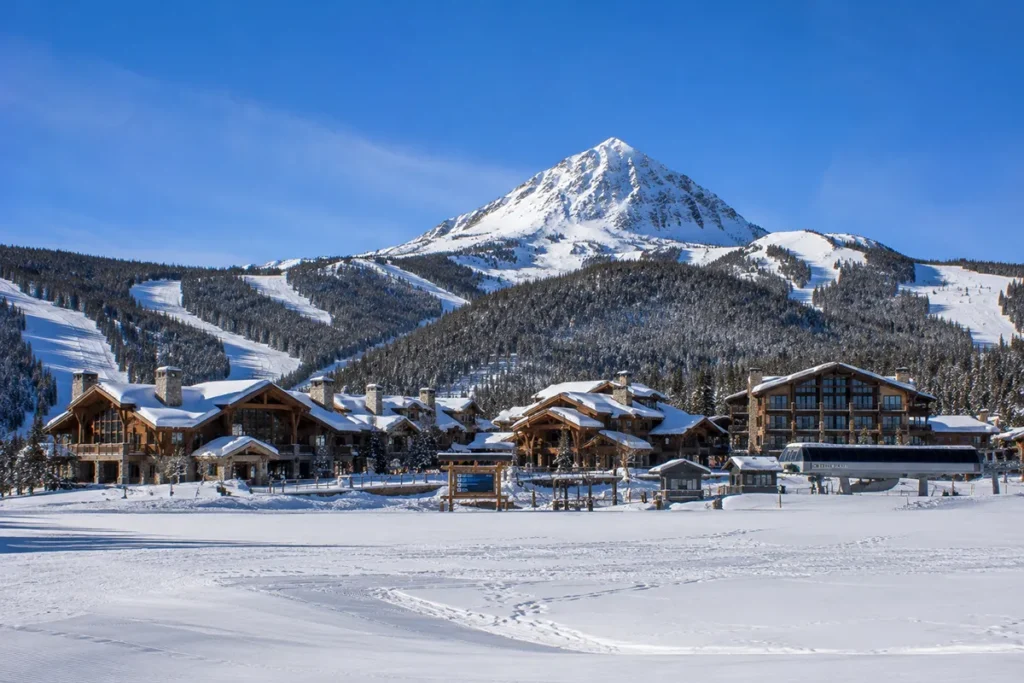
Moonlight Basin Ski Resort opened in December 2003 on the northern face of Lone Mountain, with approximately 1,900 acres of terrain ranging from gentle cruisers to legitimately steep chutes.
The resort featured its own base area with the Moonlight Lodge, its own lift system, and was positioned as a luxury counterpoint to the more developed Big Sky Mountain Village.
For 5 years, Moonlight Basin operated as a separately-ticketed ski area with its own daily operations, lodging, and identity.
By 2005, the resort experimented with a combined Big Sky/Moonlight single ticket at $78 — a then-affordable rate that hinted at the operational integration that would eventually follow.
2008-2013: Financial Crisis and Lehman Bankruptcy
The 2008 financial crisis hit Moonlight Basin hard. The resort’s debt was held by Lehman Brothers Holdings, which went bankrupt in 2008.
When Lehman demanded full repayment with interest, it foreclosed on Moonlight in 2009, forcing the resort into its own bankruptcy proceedings.
The resort continued to operate during this period but increasingly under uncertain ownership and financial conditions.
August 2013: The Merger Announcement
On August 14, 2013, a joint statement from CrossHarbor Capital Partners and Boyne Resorts (Big Sky’s owner) announced an agreement with Lehman to acquire Moonlight Basin’s assets.
This followed an earlier July 2013 acquisition of the bankrupt Club at Spanish Peaks by the same partnership.
The combined transaction effectively gave the CrossHarbor-Boyne partnership control of four of the five ski areas in the Big Sky region (Big Sky, Moonlight Basin, Spanish Peaks, and Yellowstone Club).
October 2013: Merger Completes
In October 2013, the merger formally completed. Big Sky Resort’s total acreage grew to over 5,850 acres — becoming “Biggest Skiing in America” and one of the largest single ski resorts in the United States.
For broader Big Sky context, see my Big Sky Resort guide.
The Terrain: What Skiing the Moonlight Side Is Actually Like
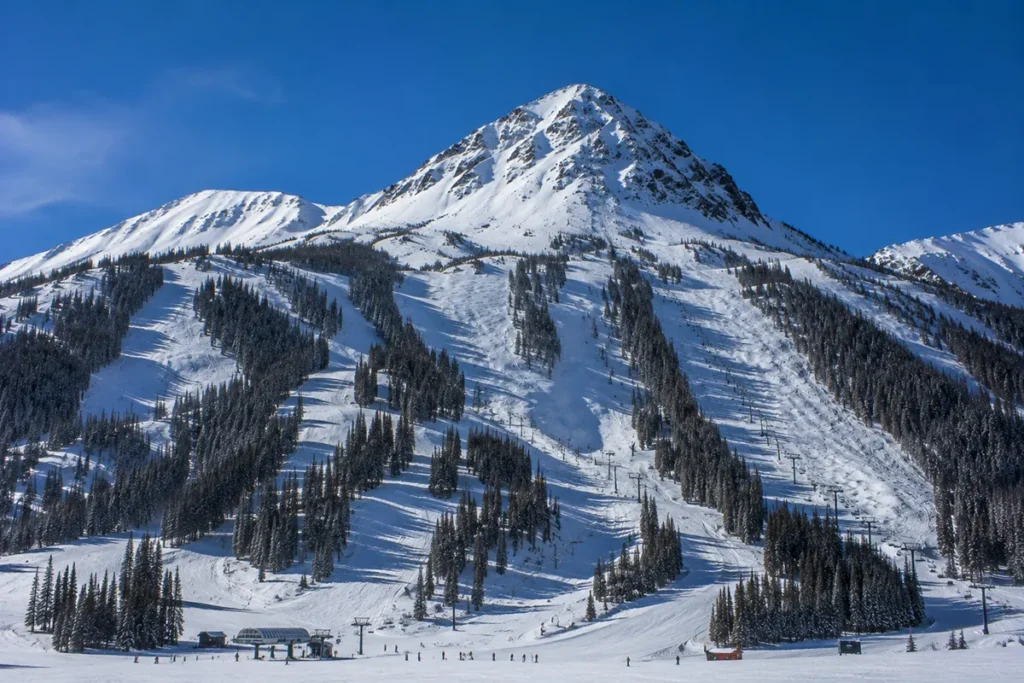
The Moonlight side adds approximately 2,000 acres to Big Sky’s footprint and includes terrain on the north and northwest aspects of Lone Mountain.
The terrain character is distinctly different from the south-facing main-mountain side.
Aspect Differences That Matter
The Moonlight side is north-facing. This means:
- Snow stays better, longer. North-facing aspects don’t get the direct sun exposure that warms south-facing snow. Powder lasts longer between storms.
- Conditions can be colder. The same -10°F day at Big Sky’s main area might feel -20°F on the Moonlight side due to wind exposure and lack of solar warming
- Spring skiing is excellent. When the south-facing terrain gets slushy in April, the Moonlight side often skis better
- Tree skiing holds snow well — particularly in the heavily-treed lower portions of the mountain
The Lifts
The Moonlight side accesses Big Sky’s terrain via several lifts that were part of the original Moonlight Basin infrastructure:
- Six Shooter chair — the main access lift on the Moonlight side, climbing through trees and accessing intermediate-to-advanced terrain
- Lone Tree lift — accessing additional intermediate terrain
- Headwaters lifts — accessing the signature expert terrain
- Various other lifts that have been added or modified post-merger
The lift naming and configuration has shifted somewhat over the years as Big Sky has integrated and improved infrastructure.
Verify current lift inventory and configuration on bigskyresort.com before planning a trip.
Headwaters — The Signature Terrain
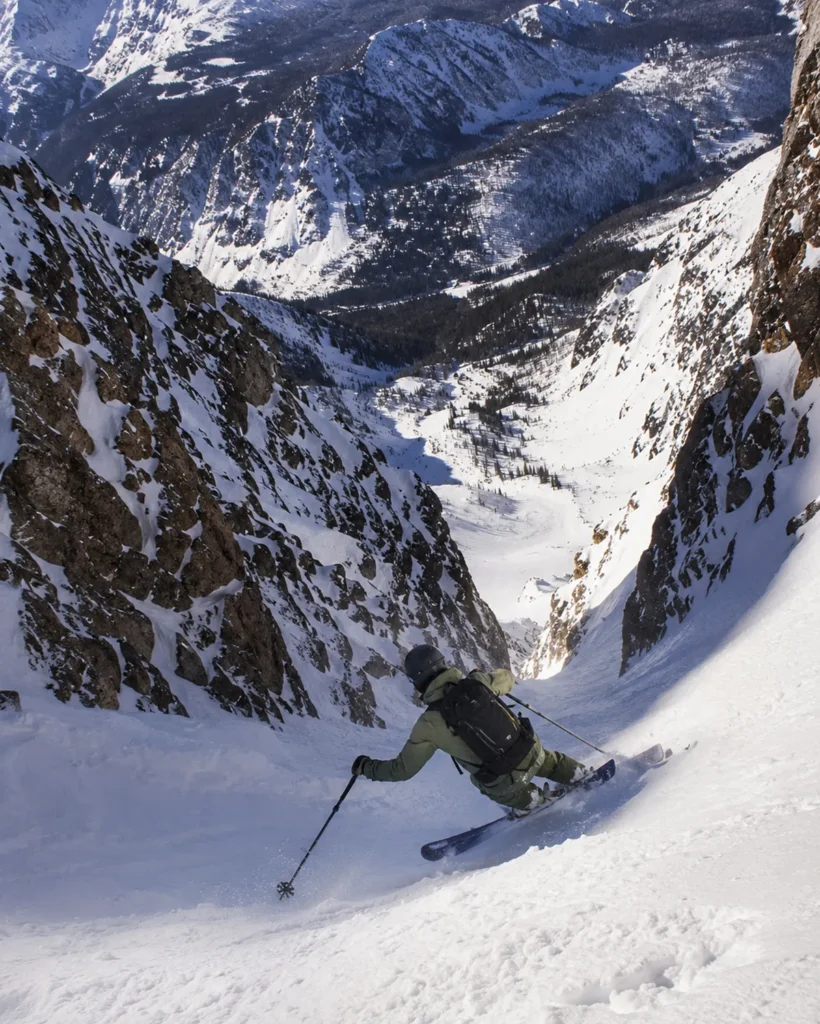
Headwaters is the Moonlight side’s signature expert terrain — and one of the genuinely world-class lift-served areas in North America. The Headwaters terrain features:
- Steep chutes with sustained pitches above 40 degrees
- Big-mountain skiing including cornice drops and exposure
- Natural terrain features that ski like backcountry skiing within resort boundaries
- Glades and gladed chutes that hold powder for days
For experienced advanced skiers, Headwaters rivals the Lone Peak Tram terrain in challenge and quality — without the 30-minute tram lines.
What Visitors Often Miss
The biggest practical insight about the Moonlight side: most Big Sky visitors stay on the Mountain Village side and never venture over to the Moonlight terrain.
This isn’t because the Moonlight terrain is inferior — it’s largely because:
- Most visitors stay at lodging on the Mountain Village side and gravitate toward nearby lifts
- The Lone Peak Tram (the iconic feature) is on the south side
- The trail map and signage emphasize the Mountain Village area
- The Moonlight base area is less developed and less obvious
The result is that on busy weekends and holiday weeks, the Moonlight side genuinely has a fraction of the crowds. Locals who know the resort will explicitly route their days to the Moonlight side on heavy-traffic days.
The Moonlight Lodge and Base Area
The base area on the Moonlight side has its own character, separate from the Mountain Village.
Moonlight Lodge
The original Moonlight Lodge served as the resort’s main lodge and dining facility during the 2003-2013 independent operating era.
In 2017, the Moonlight Lodge closed to the public and was renovated to create “soft seating options” and “greater culinary variety” — language from Big Sky’s communications that translated to converting it to private/member-only use as part of the broader Big Sky integration.
The Reserve at Moonlight Basin (Golf Course)
In 2016, The Reserve at Moonlight Basin opened — a Jack Nicklaus-designed private golf course at the base of the Moonlight side.
The par-72 layout is 7,800 yards at an average elevation of 7,500 feet, making it one of the higher-elevation championship golf courses in North America. A four-hole short course was added later.
The Reserve is a private members-only facility — not accessible to general resort guests. Members include real estate owners in the Moonlight Basin development and Yellowstone Club members.
This further reinforces the somewhat-exclusive character of the Moonlight side compared to the more democratic main Mountain Village.
Lodging Options
Lodging on the Moonlight side includes condos, residences, and townhomes that were originally developed as the Moonlight Basin Ranch real estate project.
Some of these are available for rent through Big Sky Resort’s lodging programs; others are private residences.
For broader Big Sky lodging strategies, see my Big Sky Resort guide.
How to Actually Ski the Moonlight Side
A few practical tactics for accessing and enjoying the Moonlight terrain on your Big Sky trip.
From the Mountain Village
The Moonlight side is accessed from the Mountain Village by riding lifts up to a connecting ridge and then descending into the Moonlight terrain.
From there, you can lap the Moonlight lifts without returning to the Mountain Village area.
Common access routes:
- Up the Swift Current high-speed quad, then traverse to the Moonlight side
- Up the Ramcharger 8, then traverse via various intermediate runs
- Via Lone Peak Tram terrain descending into the Moonlight zones
From Direct Moonlight Access
If you’re staying at lodging on the Moonlight side, you can access the lifts directly without going through Mountain Village.
This is the most efficient approach if you’re committed to spending most of your day on the Moonlight terrain.
Strategic Use of the Moonlight Side
The Moonlight side is the move on:
- Holiday weekends when Mountain Village is packed
- Powder days when you want to lap untracked terrain without crowds
- Spring skiing when south-facing terrain has gone slushy
- Days when you want big-mountain expert terrain without tram lines
The Mountain Village side is the move on:
- First-time Big Sky visits when you want the full experience including the tram
- Days when you have non-skiing partners who need easy access to dining and amenities
- Weather days when you need lots of indoor options nearby
Lift Tickets and Access
The Moonlight terrain is included on the standard Big Sky lift ticket — there is no separate ticket for the Moonlight side.
Anything you pay for a Big Sky ticket gives you access to the full 5,850 acres including all Moonlight terrain.
- Big Sky lift tickets typically run $200-$280+ during peak season [verify current price]
- Ikon Pass holders have access with day allocations [verify current season terms]
- Multi-day tickets and lodging packages offer the best value
For detailed pricing analysis, see my Big Sky Resort guide.
Moonlight Basin: At-a-Glance
| Status | Operationally part of Big Sky Resort since October 2013 |
|---|---|
| Original Founding | Opened December 2003 as Moonlight Basin Ski Resort |
| Merger Date | October 2013, acquired by CrossHarbor/Boyne for Big Sky |
| Original Terrain | ~1,900 acres (now ~2,000 added to Big Sky’s 5,850) |
| Aspect | North/northwest face of Lone Mountain |
| Signature Terrain | Headwaters (steep expert chutes) |
| Lifts | Six Shooter, Lone Tree, Headwaters, plus various other lifts (verify current configuration) |
| Lift Ticket | Standard Big Sky ticket — no separate ticket for Moonlight side |
| Pass Affiliation | Big Sky / Ikon Pass terms apply |
| Lodging | Condos and residences on Moonlight side, separate from Mountain Village |
| Moonlight Lodge | Renovated for private/member use in 2017 |
| Golf | The Reserve at Moonlight Basin (Jack Nicklaus-designed, opened 2016) — private members only |
| Crowd Density | Notably lower than Mountain Village side |
| Best For | Avoiding crowds at Big Sky; expert terrain at Headwaters; spring skiing on north-facing aspects |
| Owner | Boyne Resorts (through Big Sky Resort), via 2013 acquisition |
Lift configuration and lodging options change as Big Sky continues to integrate and develop the Moonlight side — verify current information on bigskyresort.com before booking.
What I Wish I Knew Before Skiing the Moonlight Side
A few things I’d tell my pre-Moonlight self.
Use the Moonlight side on holiday weekends. This is the single most important tactical insight. When Big Sky is packed with destination visitors, the Mountain Village side gets uncomfortable. The Moonlight side is your refuge. Plan your busy-day skiing here.
The aspect difference is real. In late season (March-April), the Moonlight side genuinely skis better than the Mountain Village side because the north-facing terrain holds snow quality. By the time south-facing slopes are slushing out by 1 PM, the Moonlight side is still skiing well.
Headwaters skis like backcountry skiing within boundaries. Don’t take this terrain lightly. The chutes and exposure are real. Ski with a partner, scout your line, and don’t push beyond your ability level — the consequences of falling on Headwaters terrain can be significant.
Stay on the Moonlight side if you’re a quiet-skier-vibes person. If you’ve heard about Big Sky being too crowded or too commercial, staying on the Moonlight side and accessing skiing from there transforms the experience. Same ticket, dramatically different vibe.
Don’t try to ski everything in one day. Big Sky’s 5,850 acres including the Moonlight side is genuinely too much terrain to cover in one day. Pick a side and ski it well rather than chasing the full mountain.
Spring skiing here is exceptional. Late March and April skiing on the north-facing Moonlight terrain combines deep snowpack from winter with longer days and moderate temperatures — some of my best Big Sky days have been in this window. See Montana in March for broader spring context.
The Moonlight Lodge closure to public was a real loss. Old-time Moonlight regulars miss the lodge as a public dining option. If you have access through real estate ownership or Yellowstone Club membership, it remains worthwhile. For general resort guests, dining means returning to Mountain Village.
Moonlight Basin Compared to the Other 17 Montana Ski Areas
Quick honest framing.
Vs. Big Sky Resort main side: Same ticket, same overall ownership, but the Moonlight side feels quieter and the terrain character is genuinely different (north-facing vs. south-facing). Use Moonlight when you want to escape the Big Sky main-side crowds.
Vs. Yellowstone Club: Yellowstone Club is the directly-adjacent private resort with similar terrain character (north-facing on the same general ridgeline). Yellowstone Club is members-only; Moonlight is publicly accessible on a Big Sky ticket.
Vs. independent Montana ski areas — Moonlight Basin’s distinctness is now historical rather than operational. It’s not an independent operation anymore; it’s part of Big Sky. The historical comparison to resorts like Whitefish, Bridger Bowl, or Discovery doesn’t really apply post-2013.
For the full picture, see the Montana ski resorts pillar guide.
Things to Do on the Moonlight Side When You’re Not Skiing
The Moonlight side has more limited non-skiing infrastructure than the Mountain Village, but offers some options:
- The Reserve at Moonlight Basin golf course (private members only; check Yellowstone Club connections if relevant)
- The Moonlight Lodge (private/member access only since 2017)
- Wildlife viewing — the north-facing aspects sometimes host elk and other wildlife visible from lift rides
- Nordic skiing — connection to broader Big Sky Nordic operations
- Backcountry tours — guided backcountry options accessing terrain beyond the resort boundary
For broader Big Sky-area attractions, see my town of Big Sky guide, things to do in Bozeman, and RV parks in Big Sky.
Final Thoughts on Moonlight Basin
Moonlight Basin’s story is one of the more consequential in recent Montana skiing history. The independent resort’s 2003 opening, its 2008-2009 financial collapse during the Great Recession, and its 2013 merger into Big Sky Resort marked a meaningful shift in how Montana destination skiing operates.
For current visitors, the practical takeaways are simple: The Moonlight terrain is genuinely different from the Big Sky main-mountain experience.
The north-facing aspects hold snow better. The crowd densities are lower. The Headwaters expert terrain rivals anything in lift-served North America. And the Moonlight Lodge — closed to the public since 2017 — represents a recognizable change in how the resort serves its broader customer base.
For Montana ski enthusiasts, the Moonlight Basin story is also a cautionary tale about the consolidation trends reshaping American skiing. The 2013 merger that created “Biggest Skiing in America” simultaneously eliminated one of the few destination-quality independent Montana ski resorts.
Whether that’s celebrated as economic efficiency or mourned as ski-culture loss depends largely on which side of the ski-industry debate you sit on.
If you’re skiing Big Sky and looking to escape the Mountain Village crowds, use the Moonlight side strategically. If you’re interested in lift-served expert terrain that’s comparable to the Lone Peak Tram terrain but without the tram lines, ski Headwaters.
And if you’re researching Montana ski history, the Moonlight Basin saga is worth understanding for context on how the modern Big Sky Resort came to be what it is.
Pin this guide before your trip planning, and drop your questions in the comments below — I read every one and will happily help you decide how to incorporate Moonlight-side skiing into your Big Sky trip strategy.
Frequently Asked Questions
Is Moonlight Basin a separate ski resort?
Not anymore. Moonlight Basin operated as a separate ski resort from December 2003 to October 2013, when it was acquired by Big Sky’s owners (CrossHarbor Capital Partners and Boyne Resorts) and merged into Big Sky Resort. Today, the Moonlight terrain is part of Big Sky Resort’s footprint, accessible on a standard Big Sky lift ticket.
Where is Moonlight Basin?
The Moonlight Basin terrain covers the north and northwest aspects of Lone Mountain in southwestern Montana, adjacent to and now part of Big Sky Resort. The base area is approximately 50 miles south of Bozeman via US-191 through Gallatin Canyon — the same approach as Big Sky.
Can I ski the Moonlight Basin side on a regular Big Sky ticket?
Yes. The Moonlight terrain is fully included on standard Big Sky lift tickets and the Ikon Pass. There is no separate ticket required to access the Moonlight side of the mountain. Lift ticket prices typically run $200-$280+ during peak season at Big Sky.
What is Headwaters at Moonlight Basin?
Headwaters is the signature expert terrain on the Moonlight side of Lone Mountain. It features steep chutes, cornice drops, exposed cliff bands, and big-mountain skiing that rivals the Lone Peak Tram terrain — but typically without the same crowd density. Headwaters is for advanced and expert skiers; the terrain is genuinely committing.
Is the Moonlight side less crowded than the Mountain Village side?
Yes — generally significantly less crowded. Most Big Sky visitors stay on the Mountain Village side due to lodging location, the Lone Peak Tram attraction, and dining/amenity proximity. The Moonlight side typically has 30-50% fewer skiers on busy days, making it a popular tactical move for locals and frequent visitors.
When did Moonlight Basin merge with Big Sky?
The merger was announced August 14, 2013 and completed in October 2013. CrossHarbor Capital Partners and Boyne Resorts (Big Sky’s owner) acquired the assets of Moonlight Basin from Lehman Brothers Holdings, which had foreclosed on the resort in 2009 during the financial crisis. The merger also included the Spanish Peaks ski terrain.
What is The Reserve at Moonlight Basin?
The Reserve at Moonlight Basin is a Jack Nicklaus-designed private golf course at the Moonlight Basin base area, opened in 2016. The par-72 layout is 7,800 yards at an average elevation of 7,500 feet — one of the higher-elevation championship golf courses in North America. It is a private members-only facility; not accessible to general resort guests.
Is the Moonlight Lodge open to the public?
No — the Moonlight Lodge closed to the public in 2017 and was renovated for private/member use. The lodge serves Moonlight Basin real estate owners and certain Yellowstone Club members. General Big Sky Resort guests must use the Mountain Village dining facilities or the on-mountain quick-service options.
Should I stay on the Moonlight side or the Mountain Village side?
Most visitors stay on the Mountain Village side for convenience — closer to the Lone Peak Tram, more dining options, more lodging variety. The Moonlight side offers quieter accommodations and direct access to less-crowded skiing. For first-time visitors, Mountain Village is usually the better choice. For repeat visitors who specifically want quieter skiing and the Moonlight-side experience, lodging on the Moonlight side makes sense.
Is the Moonlight side good for beginners?
Yes — the Moonlight side has plenty of intermediate and easy terrain in addition to the famous Headwaters expert zone. Wide groomed runs, gentle pitches, and a less-crowded learning environment make some sections of the Moonlight terrain quite friendly for progressing skiers. The advanced terrain (Headwaters) is well-marked and avoidable.
Why did Moonlight Basin go bankrupt?
Moonlight Basin’s primary debt was held by Lehman Brothers Holdings. When Lehman went bankrupt in 2008, it demanded full repayment of Moonlight’s debt. When Moonlight couldn’t pay, Lehman foreclosed in 2009, forcing Moonlight into its own bankruptcy proceedings. The resort continued to operate during this period but increasingly under uncertain ownership until the 2013 merger with Big Sky was finalized.
How does Moonlight terrain compare to Big Sky main-mountain terrain?
The Moonlight terrain is on north and northwest aspects (vs. Big Sky main side’s south/southwest aspects). This means colder, drier snow that holds longer; less direct sun exposure; better spring skiing conditions; and generally lighter crowds. The signature Headwaters terrain is comparable to Lone Peak Tram terrain in challenge — both deliver legitimate big-mountain skiing.