The Bear Paw Battlefield is 16 miles south of Havre and about 15 miles south of Chinook.
Between those two towns, there’s a genuine difference in what you find when you arrive wanting context: Havre’s Havre Beneath the Streets is excellent, but the Blaine County Museum in Chinook is specifically organized around the Bear Paw story — the 1,170-mile Nez Perce flight, the five-day battle, Chief Joseph’s surrender speech, and the historical significance of what happened 40 miles from the Canadian border. Chinook is the better museum stop before the battlefield.
TL;DR
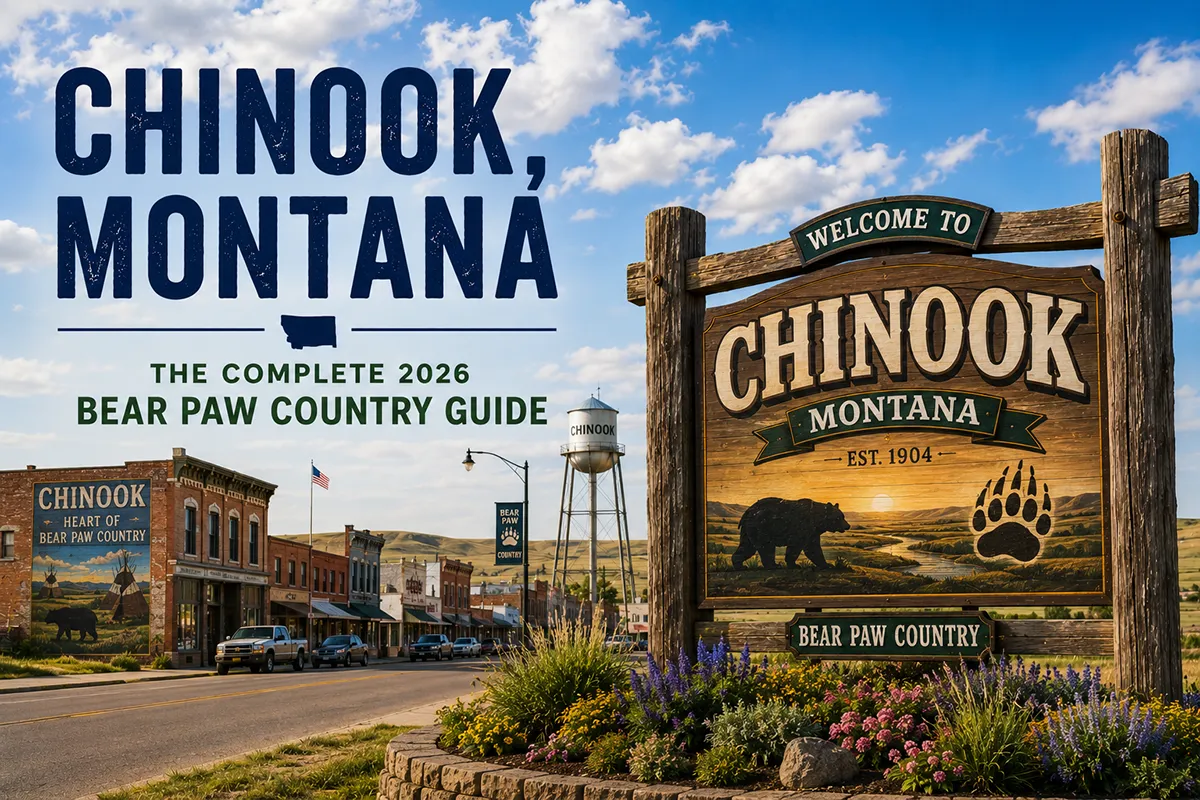
- Chinook (~1,300) is the county seat of Blaine County on US-2, 30 miles east of Havre.
- The Blaine County Museum provides the most comprehensive local interpretation of Bear Paw Battlefield and Chief Joseph’s surrender — essential context before visiting the monument.
- Bear Paw Battlefield National Monument is 15 miles south — where Chief Joseph surrendered on October 5, 1877, 40 miles short of Canada.
- Bear Paw Ski Bowl on the nearby Rocky Boy’s Reservation provides affordable local skiing.
- Best for: Bear Paw Battlefield visitors, Hi-Line history travelers, and the Chief Joseph story.
Liked this article?
Add Roaming Montana as a preferred source so you see more of our articles and guides on Google.
Chinook at a Glance
| Population (2020) | ~1,300 |
|---|---|
| County | Blaine County (county seat) |
| Region | North-Central Montana (Hi-Line) |
| Distance to Havre | ~30 miles west (~35 min) |
| Distance to Bear Paw Battlefield | ~15 miles south (~20 min) |
| Distance to Malta | ~70 miles east (~1 hour) |
What Makes Chinook Different
Chinook is the closest incorporated town to Bear Paw Battlefield, and the Blaine County Museum provides the most complete local interpretation of the Nez Perce story.
The museum covers the full arc: the 1855 Wallowa Valley homeland, the federal pressure to relocate, the flight beginning in summer 1877, the battles fought across four states, and the October 1–5, 1877 final battle in the Bear Paw Mountains.
Chief Joseph’s surrender speech — “From where the sun now stands, I will fight no more forever” — is one of the most quoted statements in American history. The museum contextualizes it within the five-day battle and the extraordinary journey that preceded it.
The name “Chinook” refers to the warm wind — the same föhn-effect weather phenomenon that brings dramatic temperature rises to the Hi-Line in winter.
Chinook winds have produced some of the most dramatic weather events in Montana history, including a 103°F temperature swing in 24 hours recorded at nearby Loma in 1972.
The Top 10 Things to Do
1. Blaine County Museum
The most complete local interpretation of the Bear Paw Battlefield and Nez Perce story on the Hi-Line. Covers the 1,170-mile flight, the five-day battle, Chief Joseph’s surrender, and the aftermath. Essential context before visiting the battlefield.
2. Bear Paw Battlefield National Monument (15 miles south)
The surrender site of Chief Joseph and the remaining Nez Perce on October 5, 1877. Self-guided driving and walking tour. NPS interpretive signs cover all battle positions. Free. Deeply moving. See Havre guide for the full battle narrative.
3. Milk River Fishing
The Milk River flows through Chinook — walleye, northern pike, and catfish in a classic Hi-Line prairie river.
4. Bear Paw Ski Bowl (Rocky Boy’s Reservation, ~50 miles southwest)
An affordable, family-friendly ski area on Bear Paw Mountain within the Rocky Boy’s Reservation — one of the Hi-Line’s few downhill skiing options.
5. Annual Mountain Man Rendezvous (August)
Chinook’s signature summer community event — traditional mountain man skills demonstrations, period attire, and Hi-Line community gathering.
6. Chinook Golf Club
A 9-hole prairie course — affordable, functional, community-maintained.
7. Box Elder (Rocky Boy’s Reservation, 50 miles southwest)
The administrative center of the Chippewa-Cree Rocky Boy’s Reservation — worth understanding as part of the Hi-Line’s Indigenous geography.
8. Havre Day Trip (30 min west)
Havre Beneath the Streets, Fort Assinniboine, Bear Paw Museum. See Havre guide.
9. Hi-Line US-2 Drive east toward Malta
The corridor continues east to Malta (70 miles) through classic Hi-Line rangeland — grain elevators, Milk River bottomlands, and enormous skies.
10. Nez Perce National Historical Park Context
Bear Paw Battlefield is one of 38 sites on the Nez Perce National Historical Park trail — the full story spans Idaho, Oregon, Wyoming, and Montana. Chinook’s museum provides the Montana chapter.
Where to Stay
| Hotel | Vibe | Price | Best For |
|---|---|---|---|
| Chinook Motor Inn | Local, reliable | $90–140 | Most travelers |
| Budget options | Basic | $80–120 | Budget |
| Havre (30 min west) | Full selection | $100–180 | More variety |
Where to Eat
- Harvest Moon — best dinner in Chinook
- Chinook Diner — breakfast and lunch basics
- Local bar options — limited but functional
Getting There
US-2. 30 miles east of Havre. Bear Paw Battlefield: 15 miles south on Cottonwood Road.
When to Visit
Summer (June–August): Full Blaine County Museum hours, Bear Paw Battlefield fully accessible.
Fall (September–October): Excellent Hi-Line landscape, Bear Paw Battlefield more atmospheric with fewer visitors.
Year-round: Bear Paw Battlefield is open year-round.
Personal Tips
Visit the museum before the battlefield. The Blaine County Museum’s full Nez Perce flight context transforms the battlefield visit. Without it, the site is moving; with it, it’s profound.
Allow a full morning for battlefield and museum combined. Museum: 90 minutes. Battlefield: 90 minutes. Don’t rush either.
Read Chief Joseph’s surrender speech beforehand. It’s short and extraordinarily moving — knowing the words before standing at the site changes the experience.
Quick Facts
| Named for | The Chinook wind | | Bear Paw Battlefield | October 1–5, 1877; Chief Joseph surrendered | | Nez Perce flight | 1,170 miles from Oregon, October 1877 | | Average summer high | 83°F | | Average winter low | 3°F |
Conclusion
Chinook is where you stop before Bear Paw Battlefield — the museum that provides the context, in the town closest to the site. For anyone making the pilgrimage to one of the American West’s most emotionally significant historical locations, Chinook is the right preparation.
Have a Chinook question? Drop it in the comments — I read every one.
Frequently Asked Questions
Is Chinook Montana worth visiting?
Yes — specifically as the gateway to Bear Paw Battlefield National Monument (15 miles south). The Blaine County Museum provides the most complete local interpretation of Chief Joseph’s surrender and the Nez Perce flight. Combined with a battlefield visit, Chinook makes for one of the most historically meaningful stops on the Hi-Line.
How far is Bear Paw Battlefield from Chinook?
Bear Paw Battlefield National Monument is approximately 15 miles south of Chinook on Cottonwood Road — about a 20-minute drive.
What happened at Bear Paw Battlefield?
On October 1–5, 1877, U.S. Army forces surrounded the remaining Nez Perce people in a coulee in the Bear Paw Mountains, 40 miles short of the Canadian border. After a five-day battle, Chief Joseph surrendered on October 5. His surrender speech — “From where the sun now stands, I will fight no more forever” — is one of the most quoted statements in American history.