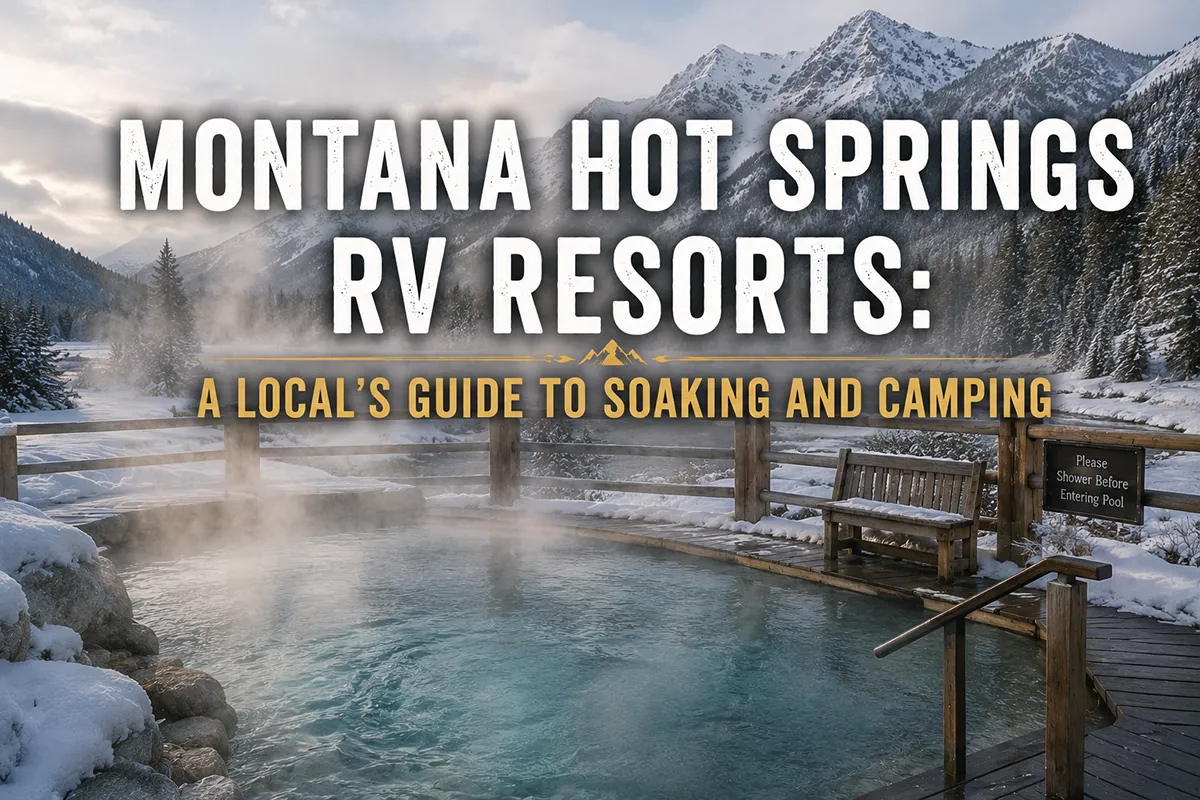
I’ve been soaking in Montana hot springs through every season — the hard winters where the steam freezes on your eyelashes, the long July evenings where you can soak until 10 p.m. and still have light, the smoke-tinged August afternoons where the mineral water is the only thing that doesn’t smell like wildfire.
Pairing an RV stay with a hot springs property is, in my honest opinion, the most underrated Montana travel move you can make. After a long driving day, the difference between a regular RV park and one with a real geothermal pool a hundred yards from your site is the difference between getting through the trip and actually loving it.
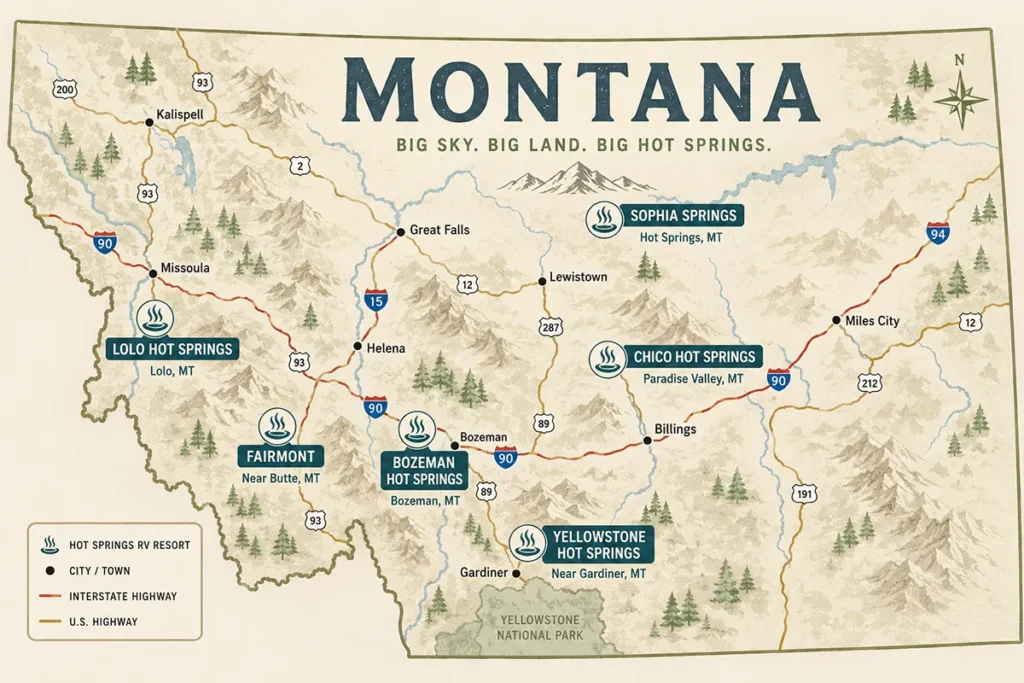
TL;DR: Montana has at least six legitimate hot springs RV resort combinations — Fairmont (near Butte), Lolo Hot Springs (near Missoula), Bozeman Hot Springs (Four Corners), Yellowstone Hot Springs (north of Gardiner), Chico Hot Springs (Paradise Valley), and Sophia Springs (small town of Hot Springs, MT). Each has different access rules, pool counts, temperatures, and RV setups. Fairmont’s pools are no longer open to public day-use — only overnight guests can soak. Yellowstone Hot Springs and Lolo are year-round. Chico is the historic destination; Sophia Springs is the off-the-radar luxury option. This guide breaks it all down.
This is the wellness-and-soaking RV deep-dive. It’s part of my broader best RV parks in Montana directory. If you’ve been routing Montana primarily as a national park trip and missing the slow-travel side of Big Sky Country, the hot springs circuit is the antidote. None of these are quick stops — every one rewards at least a two-night stay.
Liked this article?
Add Roaming Montana as a preferred source so you see more of our articles and guides on Google.
Why Montana Has So Many Hot Springs (And Why It Matters for RVers)
Geology first. Montana sits along the western edge of the Rocky Mountain geothermal corridor, with active fault systems channeling deep-earth heat upward through limestone, granite, and quartz formations.
The state has more than 50 documented hot springs, with at least a dozen developed for commercial soaking. Source temperatures range from a mild 90°F at smaller springs to 155°F at Fairmont — water that has to be cooled before humans can use it.
What this means for travelers: Montana’s hot springs aren’t the muddy-pool wilderness soaks of, say, Oregon or northern California. The commercial Montana hot springs are mostly resort properties with developed pools, lodging, and on-site RV camping or campgrounds. You drive in, plug in your rig, walk to the pools, and soak — that’s the model.
The wellness side isn’t fluff. Mineral water genuinely loosens tight muscles after a long driving day, helps you sleep better at altitude, and (in winter) is the warmest thing you’ll do anywhere within 100 miles. After enough mountain-pass driving, I’d put Montana hot springs ahead of just about any other RV park amenity in the country.
The catch — and it’s a real one — is that hot springs access rules have changed significantly in recent years. Several of Montana’s most famous springs have closed to public day-use and now restrict pool access to overnight guests only. That’s the single most important thing to know before you plan around a particular soak.
The Best Hot Springs RV Resorts in Montana
1. Fairmont Hot Springs RV Resort — The Headline Destination
Location: 15 miles west of Butte off I-90 Exit 211, at the base of the Pintler Wilderness.
Fairmont is Montana’s most complete hot springs resort. Spread across 500 acres, the property is fed by a 155°F geothermal source piped into four pools — two Olympic-sized swimming pools and two mineral soaking pools, with one of each indoors and outdoors.
Pool temperatures range from 90°F to 110°F. A 350-foot enclosed waterslide running five stories is open year-round and uses the hot springs water.
The resort also has 153 hotel rooms, an 18-hole par-72 golf course, tennis courts, a fitness center, a massage studio, multiple dining outlets, and conference facilities.
The adjacent Fairmont RV Resort has 116 RV parking spaces on 15+ acres, with a 900-square-foot general store/office. Playground, horseshoes, BBQ stands, laundry, wildlife viewing, dump station, group camping, movie rentals, and RV supplies. The hot springs facility is 300 yards from the RV park.
The critical access detail: Fairmont’s pools are NOT open to the general public for day-use. Pool access is restricted to overnight guests, condominium association members, pool/golf members, and guests staying at the Fairmont RV Park or Chalets (who use the pools with a paid daily pass). This is the most-misunderstood Fairmont fact. If you’re not staying overnight somewhere on the property, you cannot soak. The RV park is your most affordable entry point.
What I like: The combination of resort-quality amenities and RV camping is genuinely rare in Montana. After a long driving day, walking 300 yards to a 102°F mineral pool with the Pintler Wilderness rising behind you is the kind of thing that makes a trip memorable. The year-round waterslide is a real differentiator if you’ve got kids. The 18-hole golf course at the elevation makes for a stunning afternoon.
Heads-up: Pool access is a separate daily fee on top of your RV site cost — budget for both. Pool hours are 7 a.m. to 10 p.m. for hotel and member guests; 8 a.m. to 10 p.m. for RV and chalet guests (separate restricted window). Children under 12 must be accompanied by an adult in the outdoor pool. Pets are not permitted in hotel facilities. New pool construction is underway as of recent reports — the existing outdoor pools and waterslide remain open during construction, but check for updated conditions before booking. Some reviews report mixed staff experiences and snug sites — the larger pull-throughs are worth requesting specifically.
I cover the broader Butte area in detail in my RV parks in Butte guide if you’d rather base in town and visit Fairmont as a stay-and-soak overnight.
2. Lolo Hot Springs RV Park & Campground
Location: 37 miles southwest of Missoula on Highway 12 West, on 125 acres of private property in the middle of the Lolo National Forest.
Lolo is the more rustic, more affordable option — and honestly one of my personal favorites for the unpretentious vibe. A historic family-owned resort that’s been operating in some form for over 200 years, with two natural mineral hot springs pools (one indoor, one outdoor).
The RV park has 30 RV sites with 30-amp electrical and water connections (plus 50-amp sites added in recent years), a dump station, restrooms, showers, picnic area, volleyball, and horseshoes. Open year-round.
The resort property also includes the Bear Cave Bar & Restaurant (with live entertainment on weekends), a gallery, a free disc golf course, snowmobile rentals (500 miles of groomed trails in winter), and cabin rentals.
What I like: The combination of national-forest setting and casual atmosphere makes this feel more like a hidden community than a resort. Hot springs admission is reasonable (~$15) and you can do it as a separate stop or as part of your camping stay. Free disc golf. The fact that the same family-owned operation has been running here in some form since the 1800s gives it character that no chain RV resort can match. Year-round operation matters for shoulder-season and winter travelers.
Heads-up: This is “old Montana” — don’t expect resort-grade amenities. The bridge over Lolo Creek into the campground can be hair-raising for big rigs (check clearance). Interior roads are dirt and sites are grassy/uneven; bring extra leveling blocks. The dump station is rustic. Recent reviews split on facilities cleanliness — some report well-maintained, others report dirty. Mosquitoes are aggressive in early summer (June–early July). No cell service in the immediate area; WiFi available at the hot springs office, bar, and lodge. Senior and military discounts available with promo codes (call to confirm).
The route into Lolo Hot Springs takes you past the Lolo National Forest’s free Lolo Creek Campground (USFS, $15/night, 30-foot parking spurs — open mid-May to mid-September, no hookups). Worth knowing about if you’re self-contained and want the cheaper alternative.
For more on the Missoula area and the Lolo corridor, see my RV parks in Missoula guide.
3. Bozeman Hot Springs Campground & RV Park
Location: Four Corners (Highway 191 / Huffine Lane), about 7 miles west of downtown Bozeman.
Bozeman Hot Springs is the most amenity-rich hot springs RV combination in the state. The hot springs facility has twelve pools at varying temperatures from cool to 106°F, plus a fitness center, café, and live music nights (typically Wednesdays and Saturdays).
The adjacent campground offers spacious RV sites with 30 and 50-amp electrical hookups, water, sewer connections, dump station, and secure RV storage. Pull-through sites accommodate big rigs. Cabins and tent sites also available. Open May 1 through October 31.
What I like: Twelve pools means there’s always somewhere to sit. The variety of temperatures (cold plunges through 106°F) is genuinely useful — you can do an actual cold-hot contrast soak that’s restorative in a way single-pool hot springs don’t replicate. Easy walking distance from your RV pad to the pools. Location at Four Corners puts you 7 miles from downtown Bozeman, 50 miles from Big Sky, and 90 miles from Yellowstone’s west entrance.
Heads-up: The hot springs facility is primarily day-use accessible — your RV stay doesn’t automatically include unlimited pool access. Day-pass fees apply separately. Hot springs entry is sold to the general public, which means peak summer weekends can be crowded (especially Wednesday and Saturday music nights). Seasonal operation — closed November through April. Reservations fill 4–8 weeks out for July and August. Train tracks and Highway 191 traffic are audible from some sites.
I cover the broader Bozeman scene in detail in RV parks in Bozeman.
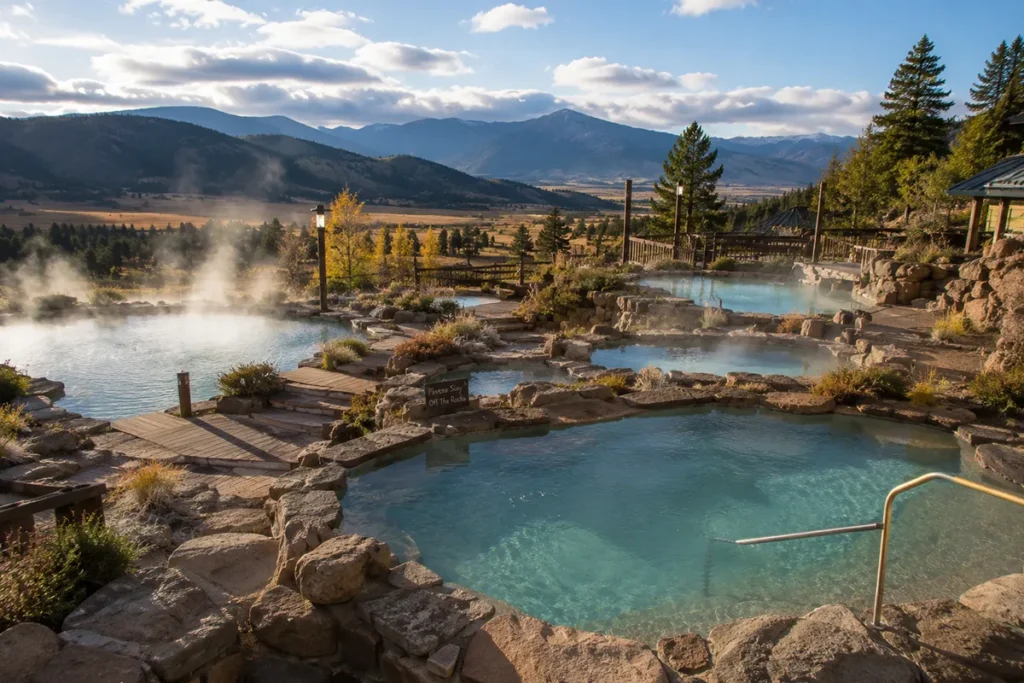
4. Yellowstone Hot Springs RV Park
Location: 8 miles north of Yellowstone’s North Entrance, at the south end of Paradise Valley, on US-89 near Gardiner.
Yellowstone Hot Springs is Montana’s newest major hot springs operation (opened in recent years), and it’s quickly become a favorite for travelers basing in the Gardiner area.
Three pools: a hot pool at 103-105°F, a main pool at 98-100°F, and a cold plunge at 60-65°F. The setting is genuinely beautiful — nestled between two mountain ranges on the bank of the Yellowstone River. Lodging available in cabins and suites.
The RV park has full-hookup and electric-only sites, a 24/7 shower house, 24/7 laundry, and a WiFi pavilion. Open year-round. RV park guests receive a $5 discount on hot springs admission.
What I like: The combination of year-round Yellowstone gateway access (Gardiner is the only entrance open to private vehicles year-round) and 105°F mineral water is unbeatable for shoulder-season travelers. After a cold October day spotting wolves in the Lamar Valley, the hot pool earns the trip on its own. The cold plunge is the real surprise — full-on contrast soaking is harder to find at most Montana hot springs.
Heads-up: 8 miles north of the park entrance means you’re making the drive back to Yellowstone each morning. Hot springs admission is separate from your RV site cost (even with the $5 camper discount). Smaller property — books up earlier than its peer hot springs RV parks for July and August. Cell service is limited.
I cover the full Gardiner gateway scene in Gardiner and Yellowstone gateway RV parks.
5. Chico Hot Springs Resort
Location: Pray, MT, in Paradise Valley about 30 miles north of Gardiner.
Chico is the historic Montana hot springs — the resort has been operating since 1900 and remains one of the most beloved destinations in the entire state.
The resort spans 152 acres at the base of the Rocky Mountains, with two pools (one warm, one hot), restaurant, bar, live music venue, day spa, conference facilities, and accommodations ranging from the Historic Main Lodge to modern Fisherman’s Lodge rooms to custom-built Conestoga Covered Wagons for “glamping.”
The RV access reality: Chico’s main lodging is in the resort itself — hotel rooms, lodges, the Conestoga wagons, cabins. There is a small RV park associated with Chico Hot Springs Resort offering full-hookup sites surrounded by Absaroka Mountain Range views. Pool access for RV guests is included.
What I like: History. Walking the Historic Main Lodge feels like stepping into 1900s Montana, in the genuine way — not a movie-set way. The dining at Chico’s main restaurant is unusually good for a hot springs resort. The Paradise Valley setting is stunning. Live music in the saloon several nights a week creates a real community feel.
Heads-up: Chico’s RV inventory is limited — book months ahead, especially for July and August. The resort is a destination property, so pricing reflects that. Surrounding dispersed camping and small private campgrounds (Hipcamp listings, Bear Creek Campground in the national forest) are alternatives if Chico itself is full but you still want to soak day-use (Chico does sell day-use pool admission, unlike Fairmont).
The drive to Yellowstone’s North Entrance is about 30 minutes from Chico. For Gardiner-area context, my Gardiner and Yellowstone gateway RV parks guide covers the broader region.
6. Sophia Springs — The Quiet Luxury Pick
Location: Hot Springs, MT — a small town of fewer than 600 people about 30 minutes from Flathead Lake and less than 2 hours from Glacier National Park.
Sophia Springs is the most under-the-radar option on this list and, depending on what you’re looking for, possibly the most rewarding. New ownership has invested in restoring the property as a private hot springs experience focused on healing and quiet.
The small town of Hot Springs has a long tradition as a wellness destination — multiple smaller spring properties in the area, but Sophia Springs is the headline.
RV park details: RV sites with hookups available; lodging in cabins also offered. Smaller property = fewer sites and more personal attention.
What I like: The combination of the genuinely small town of Hot Springs (population ~600) and a smaller, quieter spring property creates the most unpretentious soaking experience on this list. No giant resort feel, no waterslide noise, no crowds. The location halfway between Missoula and Glacier puts it on a route most travelers don’t think about. If you want a slower, more reflective version of the Montana hot springs experience, Sophia Springs delivers it.
Heads-up: Limited RV inventory — call ahead. Smaller property means fewer amenities than the resort-style hot springs. The town of Hot Springs itself is genuinely small, so dining and shopping options are limited; bring more groceries than you think you need. Cell service is variable.
For other small-town Montana RV options, see small-town Montana RV parks.
7. Other Hot Springs Worth Knowing About
A handful of additional options that don’t have on-site RV parks but are close enough to several covered above:
- Norris Hot Springs (“Water of the Gods”) — small, geothermal pool with live music, near Three Forks. About 90 minutes from Bozeman. Day-use only; no on-site RV.
- Elkhorn Hot Springs Resort — Polaris, MT, small lodge with rustic cabins, primitive RV access. Off-the-radar destination.
- Boulder Hot Springs Inn — Boulder, MT, between Helena and Butte. Historic property, limited RV access on-site, day-use available.
- Quinn’s Hot Springs Resort — Paradise, MT (near Plains). Multiple pools, full resort. Limited RV sites on-site.
- Symes Hot Springs Hotel — Hot Springs, MT (same town as Sophia Springs). Historic, smaller property.
What I Wish I’d Known About Montana Hot Springs RVing
Seven lessons from years of soaking my way around Big Sky Country:
1. Day-use access has been disappearing at the big resorts. Fairmont is the most prominent example — pools used to be open to the public for a day-pass fee, now they’re restricted to overnight guests, members, and RV park guests. Chico, Bozeman Hot Springs, Lolo, and Yellowstone Hot Springs all still allow public day-use (as of this writing), but the trend is moving toward overnight-guests-only. If you’re planning around day-use access, call to confirm within a few weeks of your visit.
2. Pool capacity is a real factor in peak summer. Bozeman Hot Springs and Chico can get genuinely crowded on July and August weekends, especially during music nights. The 5–7 a.m. soak window (before most guests are up) is dramatically quieter and arguably the best time of day to be in the water.
3. Hydrate aggressively. Soaking in 100°F+ water at Montana elevation pulls fluid out of you faster than you’d expect. I drink at least 24 oz of water before getting in, and another 24 oz after. Headaches and lightheadedness after hot springs soaks are almost always dehydration, not the minerals.
4. Bring water shoes. Many of these pools have pebbled or rough bottoms (especially the more natural ones at Lolo and Yellowstone Hot Springs). Cheap water shoes ($15–$25) make a real difference for comfort and balance.
5. Time-of-year matters more than at most RV parks. Hot springs in winter are arguably better than in summer (the contrast between cold air and hot water is the point). Yellowstone Hot Springs and Lolo are year-round; Fairmont is year-round; Bozeman Hot Springs closes November–April. Plan accordingly.
6. Routing matters. A Montana hot springs RV trip can be its own itinerary — Fairmont → Bozeman Hot Springs → Yellowstone Hot Springs → Chico → Lolo → Sophia Springs is roughly a 1,000-mile loop that hits five springs over 10–14 days. Or pair one hot springs night into a broader Montana trip as the rest stop between Glacier and Yellowstone.
7. Wellness goes beyond the pools. Most of these properties offer massage, spa services, fitness centers, and on-site dining that’s better than typical RV resort food. If you’ve been driving hard for a week, a half-day at one of these places can reset the whole trip.
Practical Info Box: Montana Hot Springs RV at a Glance
| Property | Location | Year-Round? | Pool Day-Use? | Notable Feature |
|---|---|---|---|---|
| Fairmont Hot Springs RV | 15 mi W of Butte | Yes | No (guests only) | 4 pools, 350-ft waterslide, golf |
| Lolo Hot Springs | 37 mi SW of Missoula | Yes | Yes (~$15) | 2 pools, year-round, rustic |
| Bozeman Hot Springs | Four Corners, Bozeman | RV park May–Oct | Yes | 12 pools varying temps |
| Yellowstone Hot Springs RV | 8 mi N of Gardiner | Yes | Yes | Hot/main/cold plunge, river setting |
| Chico Hot Springs Resort | Pray, Paradise Valley | Yes | Yes | Historic 1900 resort, fine dining |
| Sophia Springs | Hot Springs, MT | Seasonal | Limited | Small, quiet, luxury feel |
General notes:
- All listed properties have on-site or directly adjacent RV camping
- All pool access requires separate admission unless noted
- Reservation timing: 4–8 weeks ahead for July/August at all properties
- Average RV nightly rate: $50–$90 with hookups (varies by property)
- Pool admission ranges: ~$10 (Lolo) to ~$30+ (resort properties)
- [Verify all current rates before booking — pricing changes year over year]
The Bottom Line on Montana Hot Springs RV Trips
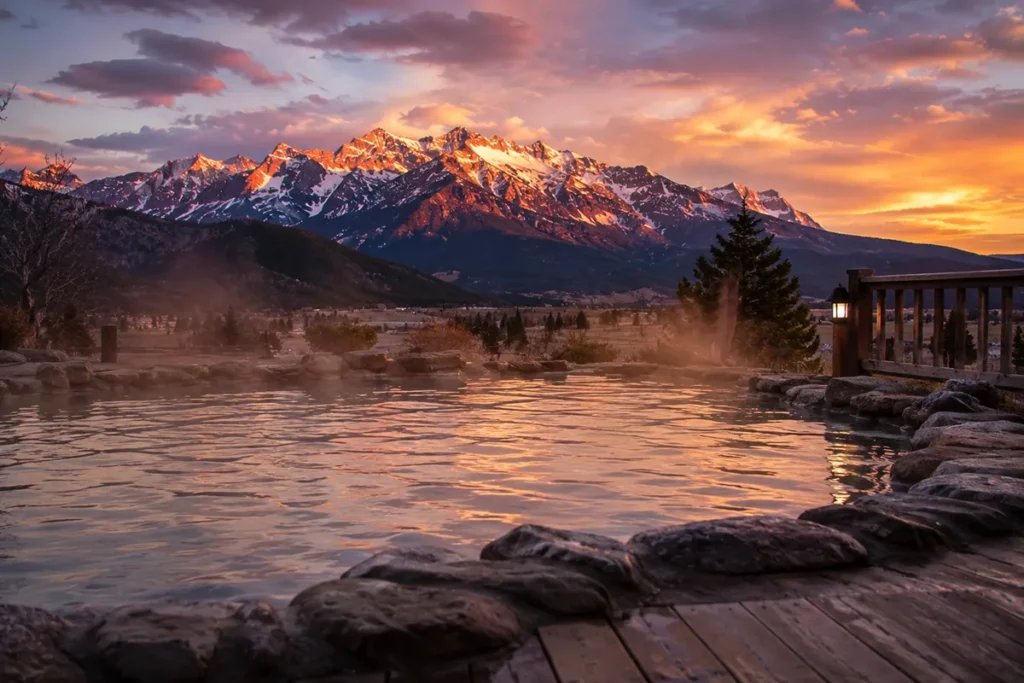
Montana hot springs are one of the most authentic, distinctively-Montana experiences you can have — and pairing one with an RV stay turns what might be a hurried day-use visit into a real, slow-travel reset.
After a week of national park driving and crowded gateway towns, an evening with 100°F mineral water and a view of the mountains earns the trip on its own.
If you’ve never done a Montana hot springs RV trip, my recommendation: pick one that fits your route, stay two nights, and see what it does for the rest of your travel. The shorter “stay-and-soak” pattern is the gateway. From there, you’ll start building hot springs nights into every Montana trip you plan.
For a broader sense of Montana travel beyond the springs, see my things to do across Montana guide. For the full RV park breakdown by region, the best RV parks in Montana directory covers every corner of the state.
Pin this post for your trip planning, and drop your favorite Montana soak in the comments — I’m always updating the list as new properties open and existing ones change.
— Emily Carter