After enough trips through Montana, every RVer learns the same thing: the most memorable nights almost never happen at the parks closest to the famous gates. They happen in the smaller towns most travelers can’t find on a map — places where the owner walks out to greet you, the creek runs through the property, and you can actually walk to dinner without firing up the tow vehicle.
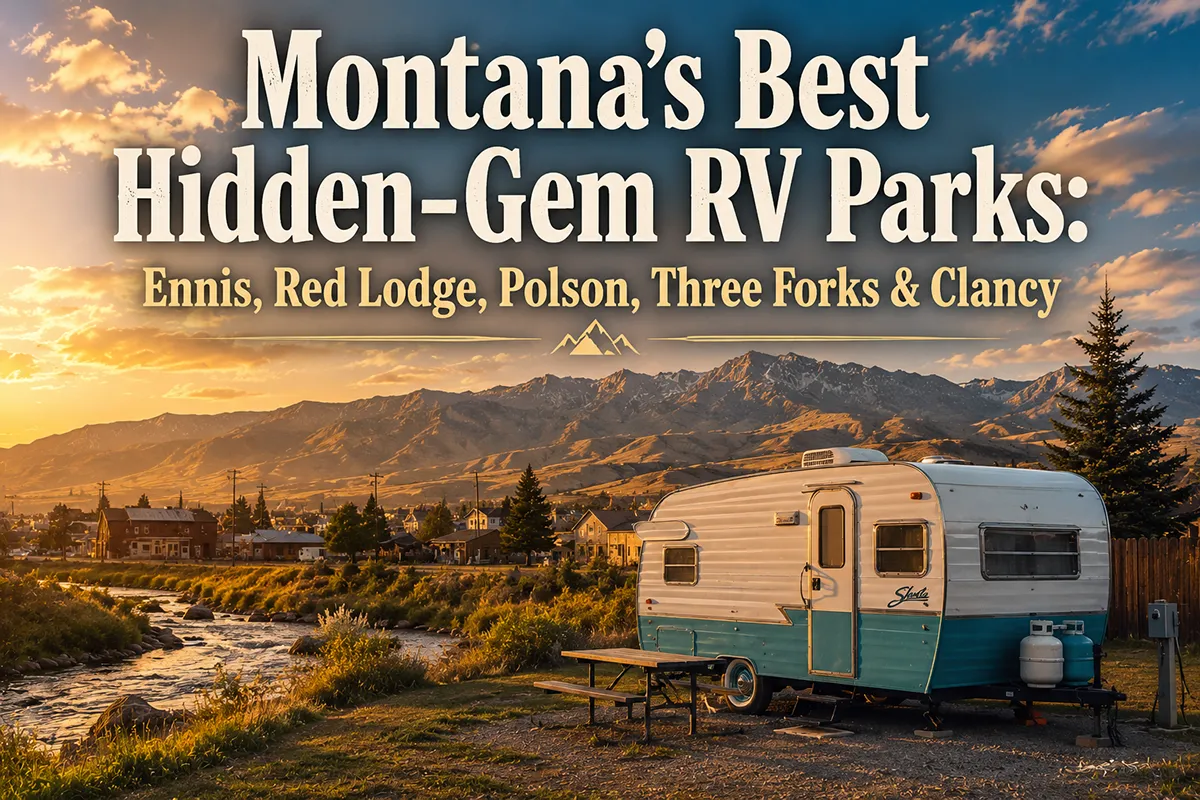
TL;DR: Some of Montana’s best RV parks are in towns most road-trippers blow past. Ennis sits in the heart of Madison River fly fishing country. Red Lodge is the basecamp for the Beartooth Pass. Polson opens up Flathead Lake with Mission Mountain views. Three Forks puts you at the actual headwaters of the Missouri River. And Clancy’s Alhambra RV Park is the underrated I-15 stopover just 10 miles south of Helena. None of these are secrets — they just don’t show up in the algorithm-driven “Top 10 Montana” lists.
This guide covers each of these hidden-gem towns and the specific RV parks worth booking in them. For the bigger picture, see my full directory of the best RV parks in Montana.
Liked this article?
Add Roaming Montana as a preferred source so you see more of our articles and guides on Google.
Why These Towns Matter More Than You’d Think
Geography is the answer. Each of these five towns sits at a specific kind of strategic position that the big gateway towns don’t:
- Ennis is at the literal center of the “Golden Triangle” of fly fishing — the section of southwest Montana, eastern Idaho, and northwest Wyoming that contains more world-class trout water than any equivalent area in North America.
- Red Lodge is the only practical basecamp for the Beartooth Pass, one of the most spectacular drives in the country and the back-door route to Yellowstone’s northeast entrance.
- Polson sits at the southern end of Flathead Lake (the largest natural freshwater lake west of the Mississippi) and is on the most logical Glacier National Park approach for anyone coming from western Montana.
- Three Forks is where Lewis and Clark identified the source of the Missouri River, and it’s an easy day trip from both Bozeman and Big Sky.
- Clancy is 10 miles south of Helena and is the right call if downtown Helena parks are full or if you want a quieter setting.
Each town below gets its own breakdown with the specific RV parks I’d actually book.
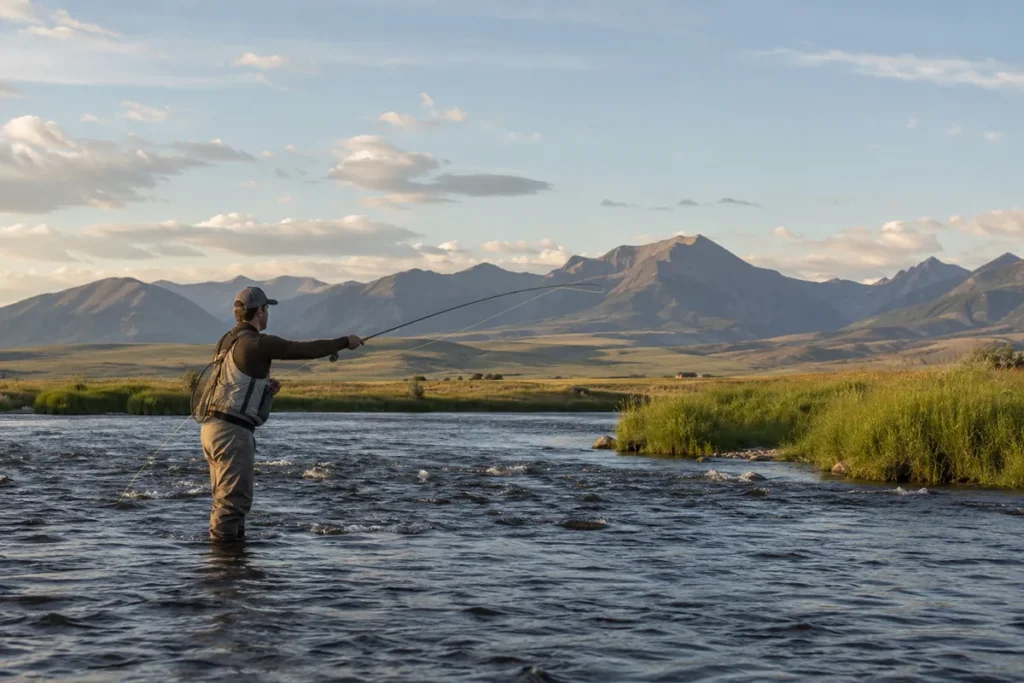
Ennis, Montana: Madison River Fly Fishing Basecamp
Ennis sits in the wide-open Madison Valley at about 4,930 feet, on Highway 287 between Bozeman and West Yellowstone. Roughly 70 miles north of West Yellowstone, 60 miles south of Bozeman, and surrounded by the Madison Range to the east and the Gravelly Range to the west.
The town’s reason for existing is the Madison River. The 50-mile stretch between Quake Lake and Ennis Lake is called the “Fifty Mile Riffle,” and it’s one of the most consistent dry fly fisheries in the world. Even non-anglers should spend a half-day watching the river — there’s something genuinely meditative about it.
Madison Valley Campground
This is the year-round RV pick in Ennis. Madison Valley Campground has full hookups with 30 and 50-amp service, level spacious sites that handle any rig size, two separate heated bathhouses, premium WiFi, laundry, and four frost-free sites for late-season travelers, year-round guests, or longer stays.
What I like: They actually stay open year-round, which is rare in Madison Valley. The frost-free sites are a genuine differentiator if you’re rolling through in late October or for the late-season hunting cohort.
Heads-up: Book ahead in peak fly-fishing season (typically June through September) — Ennis is a small town and the in-town park options fill up faster than you’d expect.
Starry Night Lodging & RV
Open April 1 through October 31, Starry Night sits just 300 feet from Highway 287 with extra-large pull-thru sites that can handle the biggest rigs (Class A motorhomes towing a vehicle, fifth-wheels with multiple slides, etc.). Full hookups available.
What I like: The big sites are the headline feature. If you’ve ever been told “we can fit you, but it’ll be tight,” Starry Night is the opposite of that.
Heads-up: Seasonal only — confirm 2026 opening date directly before planning an April or late-October stop.
Day Trips From Ennis
Virginia City and Nevada City are 15 miles southwest — restored ghost towns that operated as Montana Territory’s first capital. Costumed re-enactors during summer, original buildings, a vintage steam railroad between the two towns. Half-day stop minimum; longer if you’ve got kids.
Quake Lake is about 30 miles south on Highway 287 — a lake formed in 1959 when a 7.5-magnitude earthquake triggered a massive landslide that dammed the Madison River and killed 28 people. The visitor center tells the story powerfully. Geology nerds and history nerds both leave impressed.
West Yellowstone is 70 miles south — easy day trip into Yellowstone’s west entrance. If you’d rather basecamp closer to the park, see my RV camping near Big Sky guide for the Gallatin Canyon options or the upcoming West Yellowstone deep-dive.
Red Lodge, Montana: Beartooth Pass Basecamp
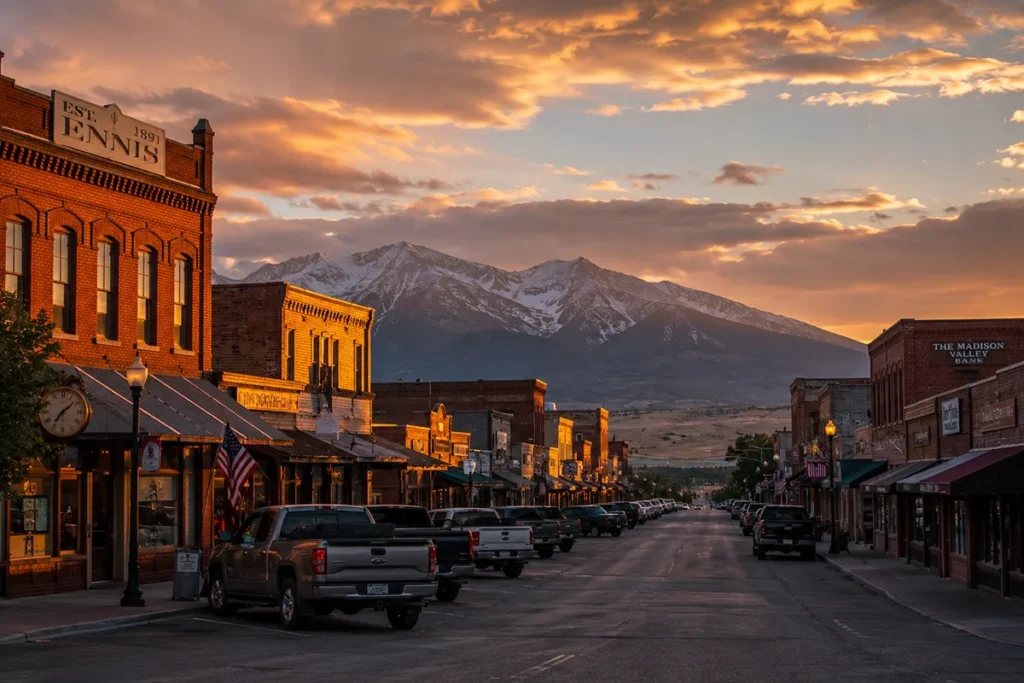
Red Lodge sits at 5,555 feet at the northern end of US-212, where the Beartooth Highway begins. It’s a charming old mining-and-railroad town turned ski-and-summer destination, with one main street of restored brick buildings, a brewery, and some of the best small-town fly shops in Montana.
The town’s strategic value: it’s the basecamp for the Beartooth Highway drive. From Red Lodge, the road climbs nearly 5,000 feet in elevation up to Beartooth Pass at 10,947 feet — the highest-elevation highway in the Northern Rockies. The pass is open Memorial Day weekend through mid-October (weather dependent) and ends at Cooke City, just outside Yellowstone’s northeast entrance.
Red Lodge KOA
Located at 7464 US-212, the Red Lodge KOA is the headline park here. Big-rig friendly pull-through sites, full hookups, pool, dog park, KOA cabin options if you want a break from the rig. Two miles from downtown Red Lodge — close enough to walk if you don’t mind a 20-minute stroll, easy enough to drive in a tow vehicle.
What I like: Position. From here you can do the Beartooth as a day-trip loop without moving your rig — drive the pass in your tow vehicle, hit Cooke City for lunch, and either turn around or loop back through Yellowstone’s northeast entrance (note: Yellowstone day-trip routing requires careful timing).
Heads-up: The Beartooth itself is not recommended for motorhomes. Switchbacks, 10% grades, and 5,000 feet of vertical climb make it brutal on big rigs. Park at the KOA and take the tow vehicle.
What to Do in Red Lodge
Drive the Beartooth Highway — top priority. Allow at least 3 hours one way to make the 69-mile drive to Cooke City with stops. Pilot Peak Overlook, the Top of the World general store, and Island Lake are essential stops. Fuel up in Red Lodge before you leave; gas stations along the route are scarce.
Yellowstone’s northeast entrance via Beartooth — if you have a full day, you can drive Beartooth → Lamar Valley (the best wildlife watching in Yellowstone) → back via Beartooth. It’s a long day but I’ve seen wolves, bison herds, bears, and bighorn sheep on this loop in a single afternoon.
Custer Gallatin National Forest trails — the Lake Fork and Hellroaring drainages have some of the most accessible alpine lake day hikes in Montana. Bear country; carry bear spray.
Red Lodge brewery scene and Sunday rodeo — Red Lodge has a punching-above-its-weight food and drink scene for a town its size. The Home of Champions Rodeo is a long-running annual event (typically July 2-4).
Polson, Montana: Flathead Lake & Mission Mountain Basecamp
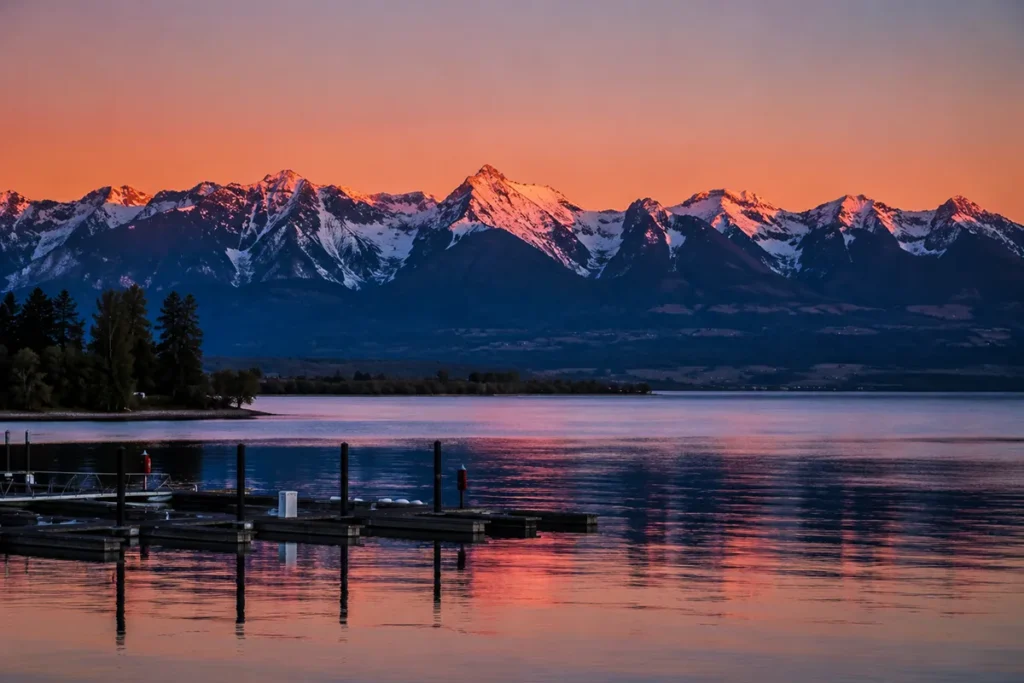
Polson sits on the south shore of Flathead Lake — the largest natural freshwater lake west of the Mississippi at 191 square miles. The town is in Mission Valley with the Mission Mountains rising dramatically to the east. About 65 miles south of Glacier National Park, 70 miles north of Missoula on US-93.
Polson / Flathead Lake KOA Holiday
The Polson / Flathead Lake KOA Holiday at 200 Irvine Flats Rd is one of the most highly-rated KOA Holidays in Montana — and probably the only RV park I’d recommend with no qualifications for first-time Montana RVers. It’s earned consistently top ratings from Trailer Life and Woodall’s for years.
The park is big-rig friendly with long pull-through sites, plus deluxe cabins, tent sites, and group camping. Amenities include a heated pool (open Memorial Day through Labor Day), miniature golf, basketball, volleyball, mini golf, dog park, adult spa, on-site store with full camping supplies, bathrooms, showers, laundry, and a communal fire pit. Super-premium sites have concrete patios, gas BBQ grills, glider benches, and 30/50-amp service.
What I like: Mission Mountain views from the right-side loops are stunning at sunrise. The KOA sits high enough above town that you get a real visual sense of Flathead Lake without being right on it. Easy access to Glacier National Park (about 90 minutes via US-93 north).
Heads-up: Books up early for July and August. Reserve 4–6 months ahead minimum. The sites are stacked uphill in tight rows in some sections — not a lot of privacy or space between rigs.
What to Do From Polson
Wild Horse Island State Park — a 2,160-acre wildlife refuge on Flathead Lake, only accessible by boat. Wild horses, bighorn sheep, bald eagles. Several local outfitters run day trips.
National Bison Range — about 25 miles south, a 19,000-acre wildlife refuge home to a herd of about 350 bison plus elk, deer, bighorn sheep, and pronghorn. The Red Sleep Mountain auto tour route is open seasonally.
Glacier National Park — Polson is one of the most logical southern approaches. From here, US-93 north takes you to Kalispell (35 miles), then on to Columbia Falls and West Glacier. If you want to base closer to the park itself, see my Columbia Falls and West Glacier RV parks guide.
Bigfork, Whitefish, Kalispell — the Flathead Valley towns are all within an hour. Bigfork’s downtown is one of the most charming small-town main streets in the state.
Three Forks, Montana: Where the Missouri Begins
Three Forks gets its name from the three rivers — Jefferson, Madison, and Gallatin — that converge here to form the Missouri River.
Lewis and Clark identified this confluence in July 1805 and named the three rivers after President Jefferson, Secretary of State Madison, and Treasury Secretary Gallatin. Three Forks sits at 4,049 feet, about 30 miles west of Bozeman on I-90.
Missouri Headwaters State Park
The most distinctive option in Three Forks is the Missouri Headwaters State Park Campground — a 532-acre state park at the actual confluence.
It offers tent and RV camping with vault toilets, picnic tables, fire rings, drinking water, and an RV dump station. The dump station, by the way, is the one I rely on most for transit-day stops in this part of Montana — free for registered campers, [verify — recently $8] for unregistered users.
What I like: The historical weight of the site is real. You’re literally camping where Lewis and Clark camped, with short interpretive trails along the water. The mosquitoes can be aggressive in early summer (sites 16 and 17 near the marshy areas are particularly buggy), but the location itself is unmatched.
Heads-up: No hookups. Vault toilets only. Maximum stay is 7 days within any 30-day period. Bring everything you need; the nearest grocery is in Three Forks itself, 5 miles away.
Three Forks Market and RV Park
The in-town commercial option, with full hookups. Less scenic than the state park but works as a one-night transit stop and gives you walking access to downtown Three Forks, which is genuinely charming — the historic Sacajawea Hotel (built 1910) is across the street and worth a meal even if you’re not staying.
Day Trips From Three Forks
Lewis & Clark Caverns State Park — about 20 miles west on I-90. Some of the most decorated limestone caverns in North America. Guided tours May through September.
Madison Buffalo Jump State Park — a Native American cultural site where buffalo were once driven over cliffs by indigenous hunters. Half-day stop.
Bozeman — only 30 miles east. From here you can day-trip to the Museum of the Rockies (world’s largest T. rex skull) or hit downtown Bozeman for dinner. My full RV parks in Bozeman guide has the details for travelers who’d rather base in Bozeman itself.
Clancy, Montana: The Alhambra RV Park Pick
Clancy is a small community just 10 miles south of Helena on I-15, named for a 19th-century railroad worker. The town itself is small — a handful of houses, a fire station, a quiet creek — but it’s home to one of the highest-search-volume small-town RV parks in Montana.
Alhambra RV Park
Alhambra RV Park at 515 MT Highway 282 is the reason most travelers find Clancy. The park sits just off I-15 at Exit 182, on the banks of Prickly Pear Creek. Sites have 50-amp electricity, water hookups, pull-through configurations, fire pits, picnic tables, and there’s an on-site dump station, propane refills, and clean restrooms. The park accommodates rigs up to about 50 feet.
What I like: Genuine quiet. Compared to in-town Helena options, Clancy gives you a creek-side, more rural setting while still being a 15-minute drive from downtown Helena and the state capital. The owners are responsive and helpful. WiFi works.
Heads-up: Smaller park; fewer sites than the big KOAs. The state previously had a non-potable water designation due to inherited well certification issues from prior ownership — that’s since been resolved as of September 2018, with the well granted public-access status by the State of Montana and testing confirming safe drinking water. Worth knowing if you’re reading older reviews.
Pairing Clancy with Helena
Clancy works best as the quieter alternative to staying in Helena proper. Use the Alhambra base for exploring the Montana State Capitol, the Cathedral of St. Helena, the Last Chance Tour Train, Mount Helena City Park, or Canyon Ferry Lake to the east. For the full breakdown of in-town Helena options, see my RV parks in Helena guide.
How These Five Towns Fit Into a Montana Loop
Building a route through any of these is straightforward:
- The Madison Valley swing: Bozeman → Three Forks → Ennis → West Yellowstone. Two days minimum, three if you want fly fishing time. This is the classic southwest Montana basecamp loop.
- The Beartooth loop: Billings → Red Lodge → Beartooth Pass → Cooke City → Yellowstone’s northeast entrance. One of the most scenic drives in the country. See my Billings RV parks guide for the lead-in.
- The Flathead approach: Missoula → Polson → Kalispell → Columbia Falls → West Glacier. The most relaxed Glacier approach, with Flathead Lake to break up the drive.
- The capital corridor: Butte → Helena (or Clancy) → Great Falls. The I-15 north spine of the state. See my RV parks in Butte guide for the southern anchor.
For broader trip planning, my guide to things to do across Montana covers what’s worth doing in each region.
What I Wish I’d Known About These Towns
A handful of lessons from years of routing through all five:
1. Small-town RV parks have small staffs. Office hours can be limited, especially in shoulder seasons. Call ahead if you’re arriving after 6 p.m. — most of these parks will leave a packet with your site assignment but you need to coordinate.
2. Mosquito season is real in Three Forks and the Madison Valley. Mid-June through mid-July, especially after a wet spring. Bring DEET, a Thermacell, or a head net. The state park sites near marshy ground are the worst.
3. The Beartooth Pass can close mid-summer. Summer snowstorms shut the road occasionally. Check the Montana DOT and Wyoming DOT road status before driving up from Red Lodge. I’ve personally had a planned Beartooth drive cancelled by a June snowstorm.
4. Polson Bay Marina has the best Flathead Lake views in town. If you’re staying at the Polson KOA, drive into Polson itself one evening for sunset at the marina. Spectacular and free.
5. Ennis books up around Memorial Day for the whole summer. Madison River fly fishing brings serious anglers from around the world. If you want a weekend in Ennis in July, book by April.
6. Clancy can sub for Helena when Helena is full. This is the underrated use case — if Helena’s parks are booked solid for an event or peak weekend, Alhambra in Clancy is 15 minutes away and almost always has space.
7. Three Forks has a hot springs option nearby. Bozeman Hot Springs is only 25 minutes east — a great evening soak after a day at the headwaters. See my Montana hot springs RV resorts guide for the full hot springs scene.
Practical Info Box: Hidden-Gem RV Parks at a Glance
| Town | RV Park | Best For | Key Detail |
|---|---|---|---|
| Ennis | Madison Valley Campground | Fly fishing year-round | Frost-free sites, 30/50-amp |
| Ennis | Starry Night Lodging & RV | Big rigs | Apr–Oct, extra-large pull-thrus |
| Red Lodge | Red Lodge KOA | Beartooth basecamp | Park your RV, drive Beartooth in tow car |
| Polson | Polson / Flathead Lake KOA Holiday | Lake & Glacier approach | Mission Mountain views, mini golf, pool |
| Three Forks | Missouri Headwaters State Park | History + budget | No hookups, 7-day max stay |
| Three Forks | Three Forks Market & RV Park | Transit stops | Full hookups, in-town walkable |
| Clancy | Alhambra RV Park | Quieter Helena alternative | 10 mi south of Helena, creek-side |
The Bottom Line on Montana’s Hidden-Gem RV Parks
The big gateway towns will always have a place in any Montana itinerary. But once you’ve done a Glacier or Yellowstone trip and want to come back for the next layer of the state, these five towns are where the real Montana experience lives.
Slower mornings. Owners who know the local fly shop. A creek you can hear from your awning. Restaurants you’ve never heard of that turn out to serve the best meal of your trip.
If I had to pick one of the five for a first-timer, I’d send you to Ennis. It’s central, fishable, walkable, has two solid park options, and the Madison Valley has some of the most photogenic big-sky views in the state. After that, plan your second Montana trip around whichever of the other four matches your route best.
Pin this post for your trip planning, see the full best RV parks in Montana directory for the rest of the state, and drop your favorite hidden-gem town in the comments — there are more of these worth covering than fit in a single post.
— Sarah Bennett