By the third night of my first Montana RV trip — somewhere outside Three Forks, after I’d just paid $62 for a “premium” pull-through with a view of a Dollar General — I realized that the difference between a great Montana RV park and a forgettable one isn’t price.
It’s whether the people who built the place actually understand what you’re driving and where you’re trying to go.
TL;DR:
Montana has hundreds of RV parks, but only a few dozen are genuinely worth planning a trip around. The best ones cluster along three corridors: the I-90 belt (Missoula → Bozeman → Billings), the Glacier gateway (Columbia Falls + West Glacier), and the Yellowstone gateway (Gardiner + Big Sky). This guide breaks down the best parks region by region, with real talk on mountain pass restrictions, reservation windows, bear-country rules, and the dump station / propane reality you won’t find on the booking sites.
Liked this article?
Add Roaming Montana as a preferred source so you see more of our articles and guides on Google.
Why a Montana RV Trip Isn’t Like Anywhere Else
I’ve taken RVs through Utah, Colorado, Oregon, and the Carolinas, and Montana plays by its own rules. The state is enormous — it’s the fourth-largest in the country, and the drive from Glacier National Park’s west entrance to Yellowstone’s north entrance is roughly 400 miles even on the shortest sensible route.
That’s two full driving days for anyone hauling a fifth-wheel, not “a quick scoot down.”
The other thing that catches travelers off guard: Montana’s RV ecosystem is built around two seasonal magnets and a handful of transit towns. From late May through September, the parks near Glacier and Yellowstone fill up months in advance.
From October through April, half of them close entirely — and the ones that stay open often shut off water hookups to keep pipes from freezing. If you’re rolling in Big Sky Country on the shoulders of summer, you need a plan B for almost every stop.
This guide is the master directory. Each region below has its own deep-dive post (linked inline) with full hookup details, rate ranges, cell service notes, and which sites I’d actually book if I were planning the trip myself.
If you’re brand new to Montana, start with things to do across Montana and planning a Montana vacation, then come back here to figure out where to park each night.
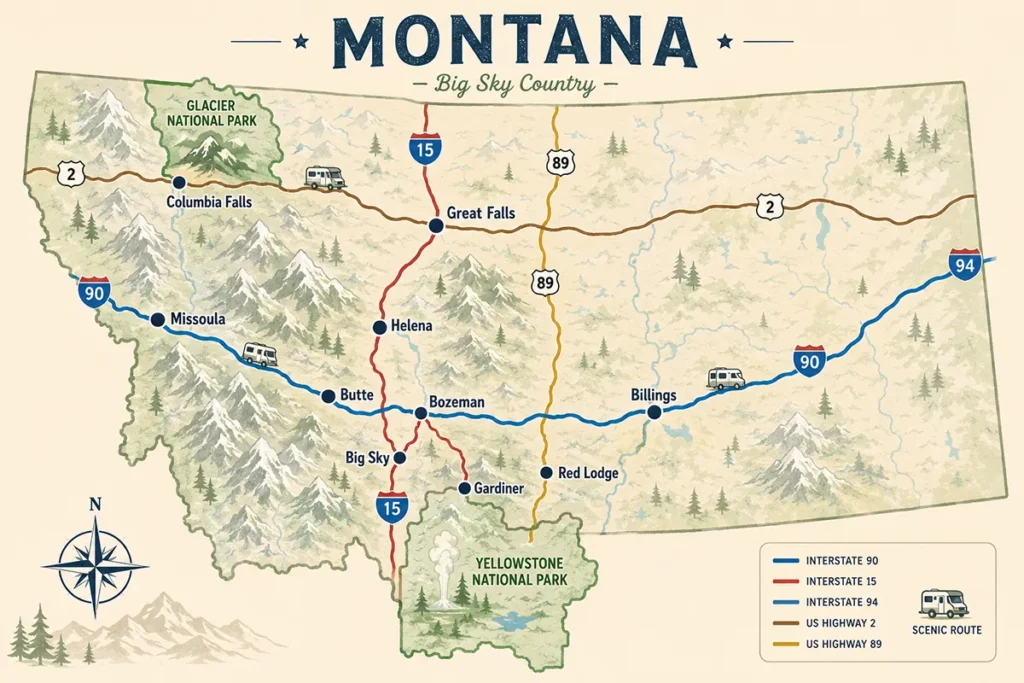
The Best RV Parks in Montana by Region
Rather than rank parks 1–25 statewide (which is meaningless — a great park in Missoula won’t help you in Gardiner), I’ve organized this by where you’ll actually be driving. Pick the regions on your route, then click through to each region’s full guide for the detailed park-by-park breakdowns.
Western Gateway: Missoula and the I-90 Corridor
If you’re entering Montana from Idaho, Missoula is your first major stop. The corridor along I-90 east of town has some genuinely beautiful spots — Jim & Mary’s RV Park has been my reliable in-town pick for years because the cottonwoods give you actual shade, which matters in July.
East of the city, Turah RV Park sits right on the Clark Fork River with sites that hum with bird life at dawn. Further east toward the Garnet Range, Bearmouth Chalet & RV Park offers spacious forest sites that feel more like a wilderness retreat than a highway stop.
And if you’re heading west toward Idaho, The Nugget RV Resort in St. Regis is a Good Sam favorite for a reason — full hookups, a forested playground, and direct trail access.
→ Full breakdown: RV Parks in Missoula, Montana: I-90 Stopovers & Long-Stay Bases
Glacier Gateway: Columbia Falls and West Glacier
This is the most reservation-stressed region in the state. West Glacier KOA Resort is the headline name — heated pools, bike rentals, walking distance to Lake McDonald shuttles — and it books up nine months out for July dates.
Moose Creek RV Resort sits about 2.5 miles from the West Entrance and is a personal favorite for its quiet wooded sites and on-site bed-and-breakfast feel. Mountain Meadow RV Park offers 56 forested acres for travelers who want space and silence.
Columbia Falls RV Park & Cabins keeps you in town within walking distance of grocery and gear, which matters if you forgot something.
Important to know: Going-to-the-Sun Road has a 21-foot vehicle length limit between Avalanche Creek and Rising Sun, so most RVs cannot drive the iconic route — you’ll need to detach a tow vehicle or use the park shuttles.
→ Full breakdown: Columbia Falls & West Glacier RV Parks: Where to Stay Near Going-to-the-Sun Road
Capital Region: Helena Stopovers
Helena is the rest-stop region between the two parks, and that’s honestly its highest and best use. Lincoln Road RV Park has level gravel pull-throughs that you can pull into with a fifth-wheel at 9 p.m. without stress.
Helena Campground & RV Park has mature shade trees and is the closest thing to downtown access.
For something quieter, Conestoga Campground in the Smith River Valley positions you almost exactly equidistant between Glacier and Yellowstone — a genuinely useful basecamp if you’ve got a week and want to do day trips both directions.
→ Full breakdown: RV Parks in Helena, Montana: A Capital-City Basecamp Between the Two Parks
Northern Transit: Great Falls and the Missouri River
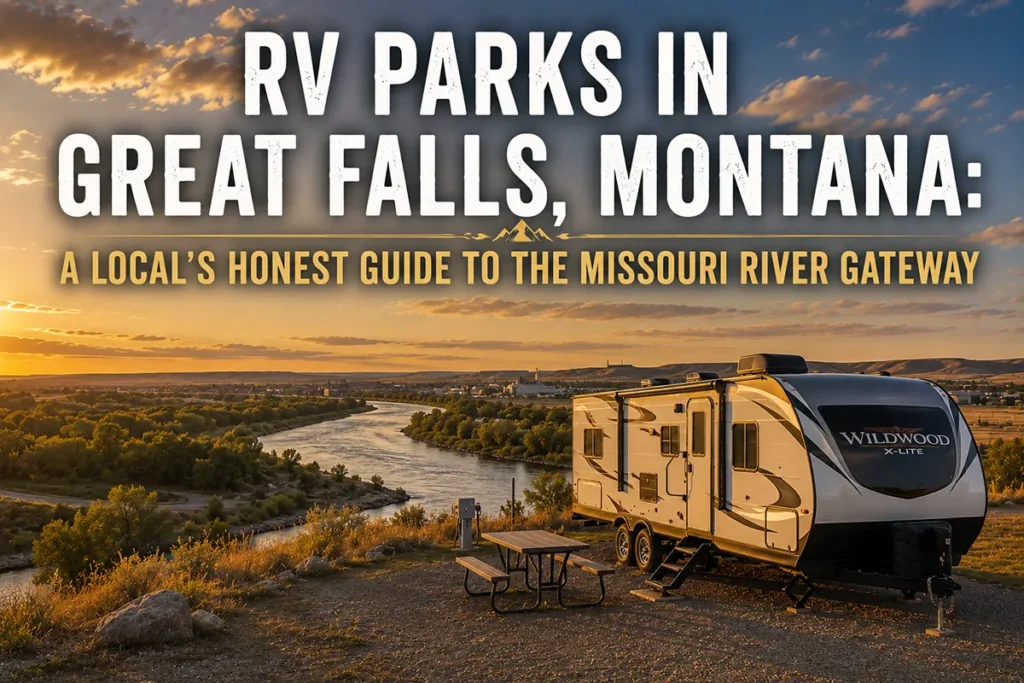
Great Falls is underrated. Most travelers blow through it on the way to Glacier, but the parks here are clean, well-priced, and never as full as the Glacier gateway. Dick’s RV Park is a longtime local favorite — clean laundry, level pull-throughs, central location, easy in/out.
Great Falls RV Park has comprehensive hookups and immediate highway access for travelers wanting to keep moving early.
The bonus: Giant Springs State Park is just minutes away, and the Lewis and Clark history runs deep here.
→ Full breakdown: RV Parks in Great Falls: Missouri River Stopovers on the Way to Glacier
Yellowstone Gateway: Gardiner and the North Entrance
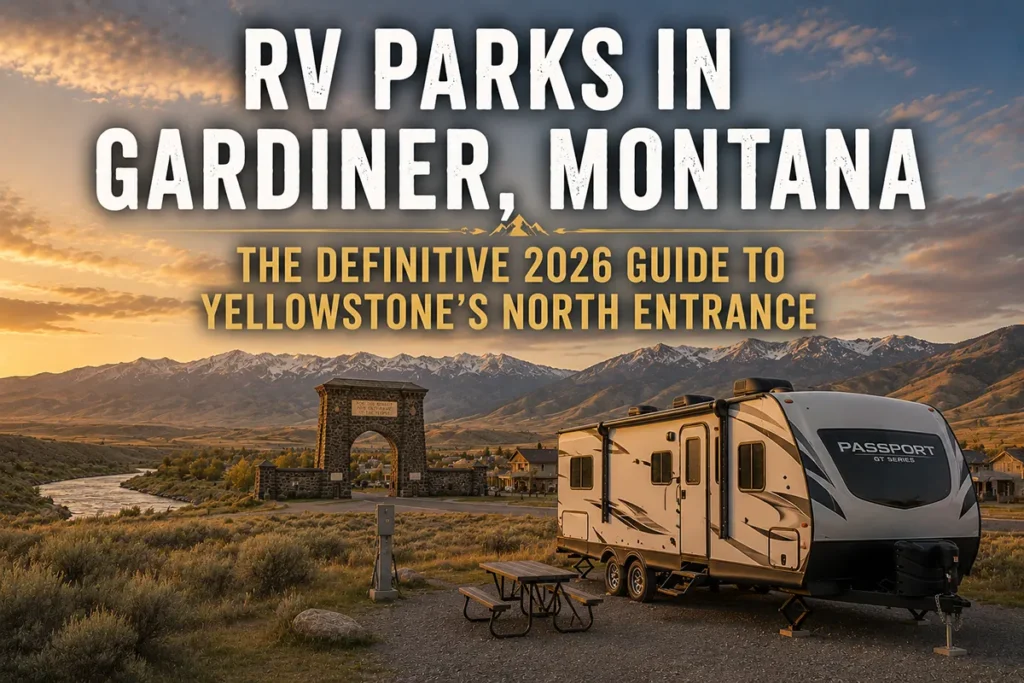
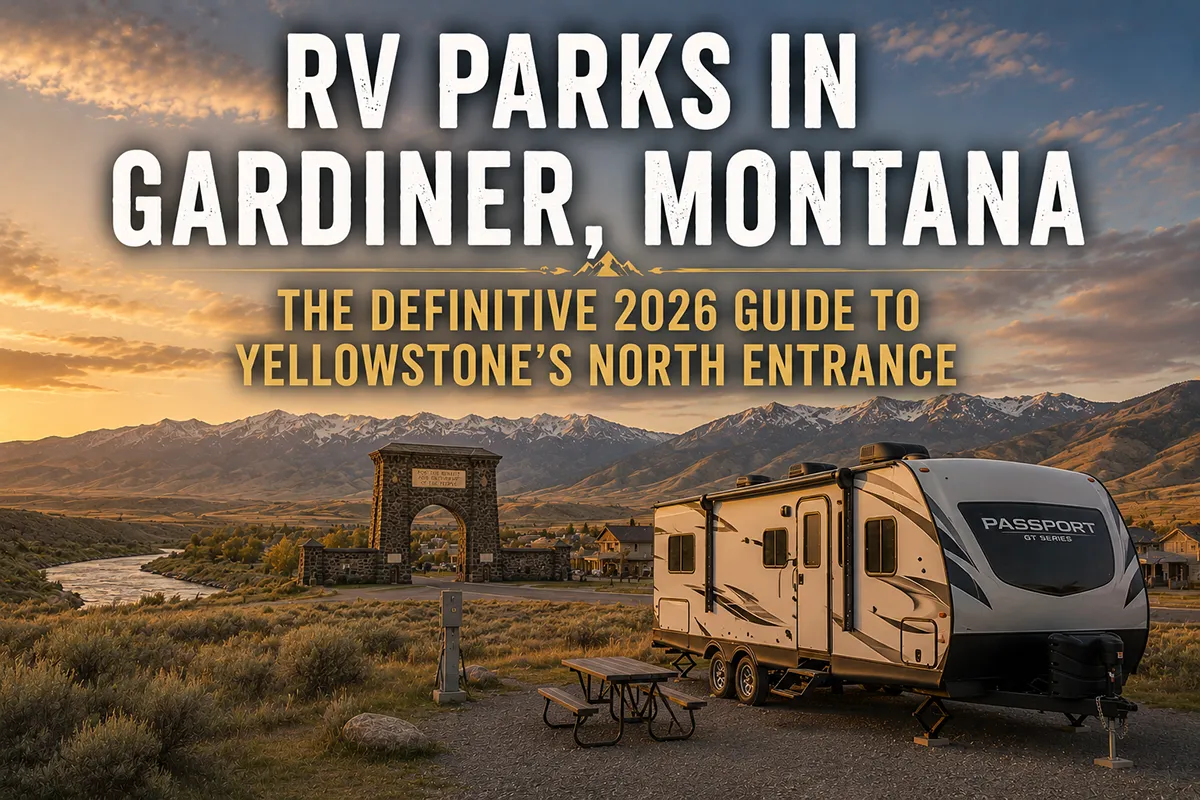
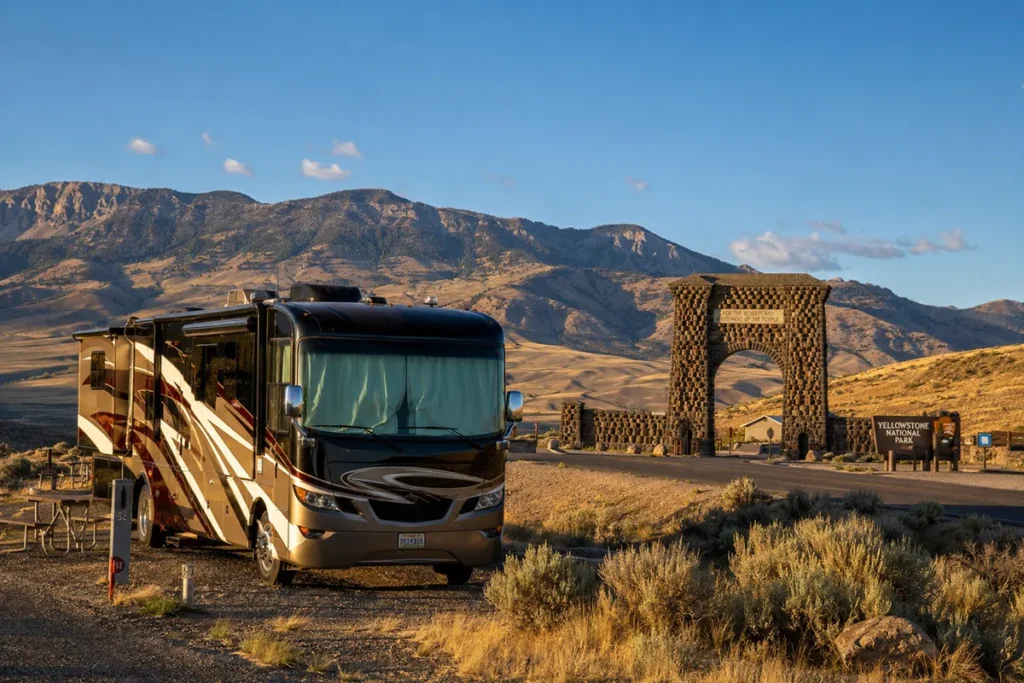
Gardiner is the only year-round vehicle gateway into Yellowstone, which makes it a strategic basecamp. Rocky Mountain RV Park & Cabins sits four blocks from the Roosevelt Arch and within walking distance of downtown.
Yellowstone’s Edge RV Park is about 30 minutes north along the Yellowstone River and has the riverfront sites that book up first.
Note: large motorhomes have specific designated parking inside Yellowstone (Old Faithful, Mammoth Hot Springs, Canyon Village), and clearance / bridge heights inside the park can catch big rigs off guard.
→ Full breakdown: Gardiner & Yellowstone Gateway RV Parks: The Complete North Entrance Guide
Bozeman and the Gallatin Valley
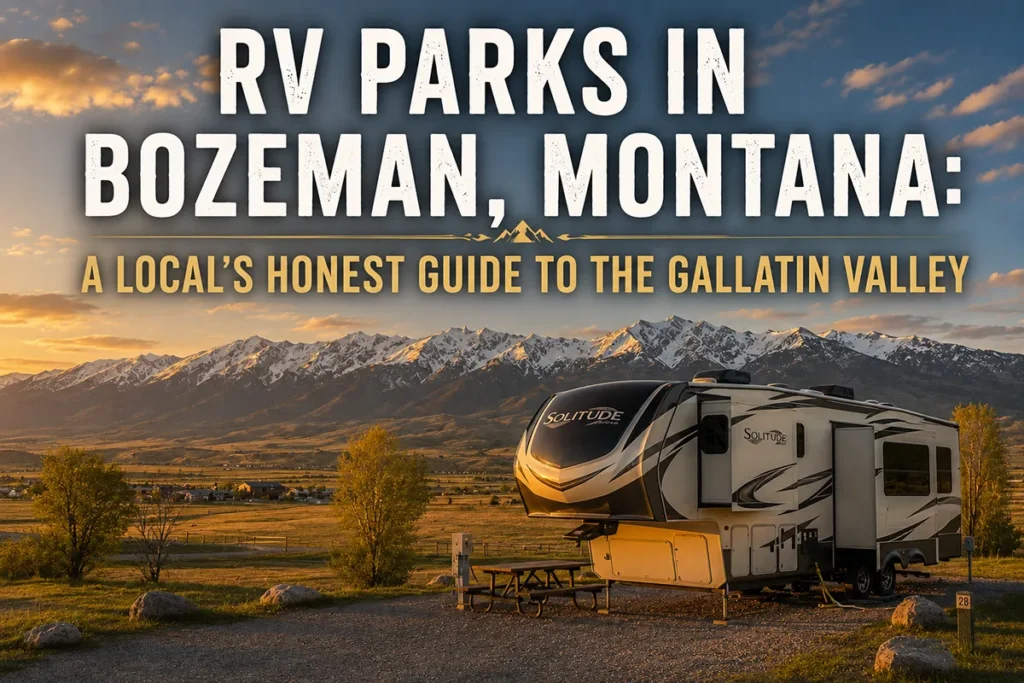
Bozeman has exploded over the last decade, and the RV market reflects it. Bozeman Trail RV Park has strategic highway access and full hookups, and is my go-to for one-night transits.
Gallatin County Fairgrounds RV Park is a unique municipal facility right in the heart of town — basic but clean, and walkable to downtown Bozeman.
If you’re a seasonal worker or digital nomad considering a longer stay, several Bozeman parks now offer monthly rates with winterized hookups; I cover the long-term scene in detail in the regional guide.
→ Full breakdown: RV Parks in Bozeman & the Gallatin Valley: Full Hookups, Long-Term Stays & Yellowstone Routing
Big Sky Alpine Gateway
Big Sky is the under-the-radar pick. Big Sky Camp & RV Park is the main motorized base, and the surrounding Gallatin Canyon has forest service sites along the Gallatin and Madison Rivers that I’d recommend over any commercial park if you don’t need full hookups
The fly fishing here is legendary — this is the river that A River Runs Through It was filmed on. If you can route through Big Sky on the way between Bozeman and West Yellowstone, do it.
→ Full breakdown: Big Sky RV Parks: Where to Stay in Montana’s Most Famous Mountain Town
Billings and the Yellowstone County Corridor
Billings is the eastern gateway for anyone entering Montana from the Dakotas or northern Wyoming. Billings Village RV Park has clean, paved pads and full utility connections.
Billings KOA Holiday holds the distinction of being the very first KOA campground in the world — opened in 1962 — and it’s right on the Yellowstone River.
The day-trip play from Billings is Pompeys Pillar National Monument, about 30 miles east, where you can still see William Clark’s actual signature carved into the sandstone from 1806.
Note: Pompeys Pillar is day-use only — no overnight camping there.
→ Full breakdown: RV Parks in Billings, Montana: I-90/I-94 Gateway to Eastern Montana
Butte and Southwest Montana
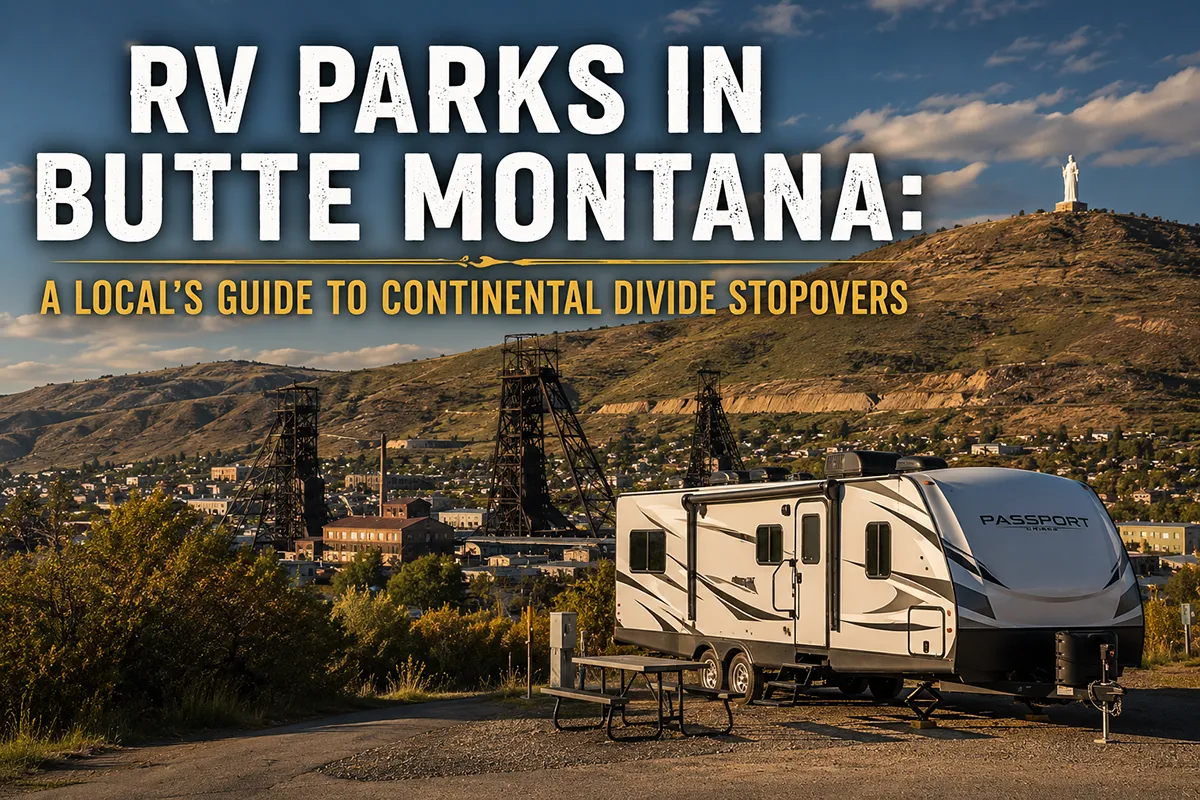
Butte gets passed over by most RVers, which is a mistake. The mining-history old town is genuinely fascinating, and Butte KOA is a solid base for exploring.
Slightly south in Dillon, Southside RV Park advertises itself as “the friendliest RV park in the west” and from my one stay there, the claim isn’t a stretch — within walking distance of downtown Dillon’s shops. The southwest corner of the state is full of these low-key small-town gems.
→ Full breakdown: RV Parks in Butte, Montana: Mining-Country Stopovers on I-15 & I-90
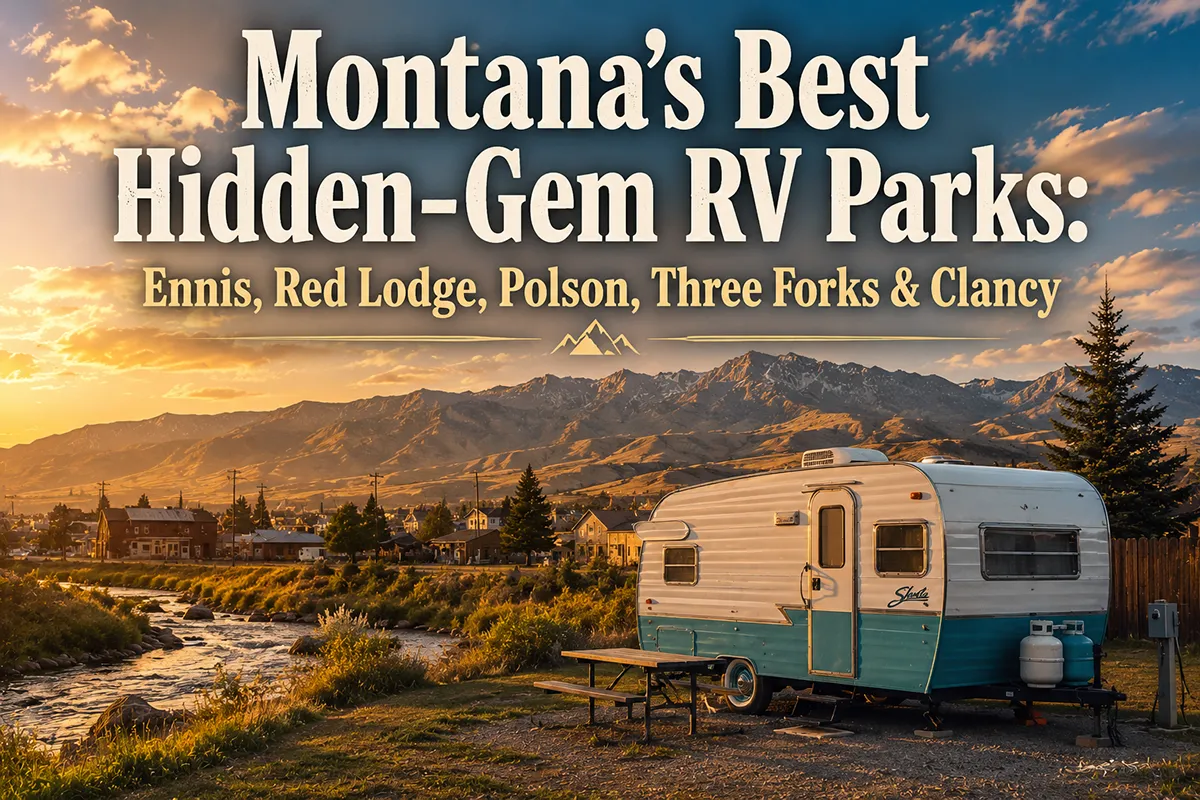
Hidden Gems: Ennis, Red Lodge, Polson, Three Forks, Clancy
Some of Montana’s best RV experiences are in towns you’ve never heard of. Polson Motorcoach & RV Resort on Flathead Lake is a Class A motorhome-only premium destination with sites averaging 46′ x 75′ — overkill for a small trailer but a destination in itself if you’ve got a big rig.
- Red Lodge RV Park is the basecamp for the Beartooth Pass drive.
- Three Forks RV Park is near the historic Sacajawea Hotel and where the Jefferson, Madison, and Gallatin Rivers form the Missouri.
- Alhambra RV Park in Clancy is a quiet local pick.
- And Ennis — the fly fishing capital of Montana — has a couple of small, friendly parks right in the Madison River valley.
→ Full breakdown: Hidden-Gem Montana RV Parks: Ennis, Red Lodge, Polson, Three Forks & Clancy
Hot Springs RV Resorts
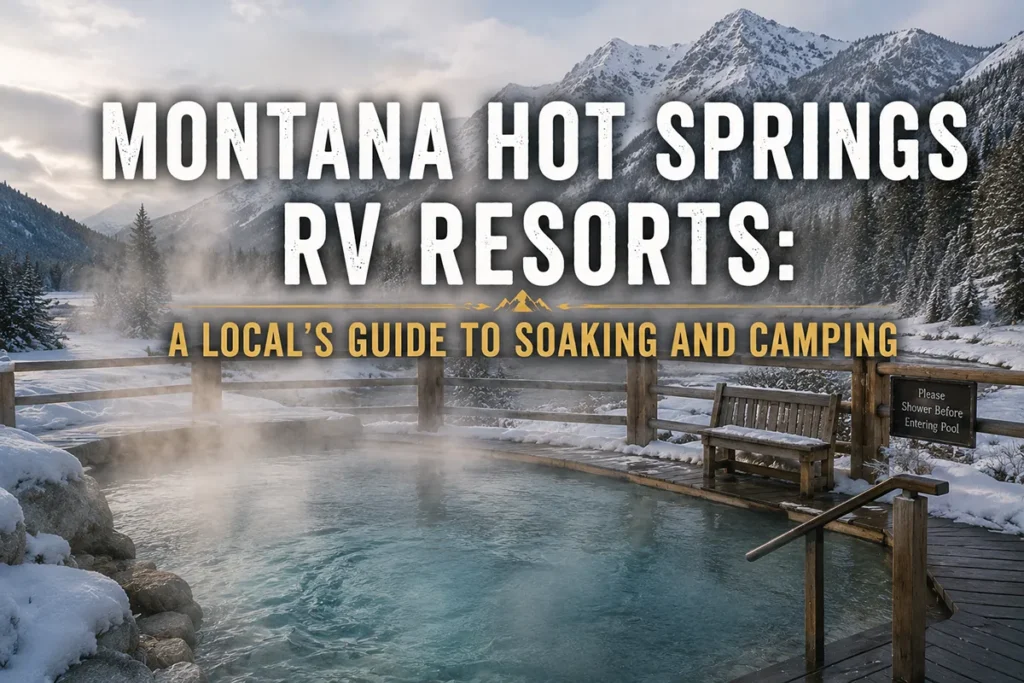
Montana has a wild number of natural hot springs, and several of them have built RV resorts around the soaking pools.
- Fairmont Hot Springs RV Park near Butte has massive mineral pools and a full-resort feel.
- Lolo Hot Springs RV Park sits along scenic Highway 12 near the Idaho border.
- Sophia Springs in the town of Hot Springs offers a quieter, more therapeutic soaking experience.
These are the parks I send people to who want a destination night, not a transit stop.
→ Full breakdown: Montana Hot Springs RV Resorts: Lolo, Fairmont, Sophia Springs & Beyond
What Most RV Guides Don’t Tell You: Mountain Passes
This is the section every other “best Montana RV parks” article skips, and it’s the section that genuinely matters. Montana is mountainous, and your rig matters.
Going-to-the-Sun Road (Glacier National Park):
Hard restrictions apply. Vehicles and vehicle combinations longer than 21 feet (including bumpers) or wider than 8 feet (including mirrors) are prohibited between Avalanche Creek and Rising Sun — that’s the most scenic section.
Vehicles over 10 feet tall may have clearance problems with rock overhangs between Logan Pass and the Loop.
If your rig is too big, you have two options: detach a tow car and drive that, or take the park shuttle (and as of July 1, 2026, there’s a new ticketed shuttle to Logan Pass requiring advance booking via Recreation.gov).
Beartooth Highway (US-212, between Red Lodge and Cooke City):
This is the famous “Highway to the Sky.” Top elevation is 10,947 feet. There are no hard length restrictions, but the National Forest Service does not recommend the route for motorhomes — switchbacks, 10% grades, and 5,000+ feet of vertical climb.
Most RVers park in Red Lodge and drive the pass in a tow vehicle. The road typically opens Memorial Day weekend and closes mid-October, but summer snowstorms can shut it down with little warning (it closed two weeks after a June trip I did, mid-summer).
Lolo Pass (US-12): Open year-round, no restrictions, manageable in any RV. Good route between Missoula and Idaho.
Logan Pass (within Glacier): See Going-to-the-Sun Road above.
For mountain passes generally: brake check before descending, use engine braking on long downgrades, and assume your fuel economy will drop by 30–40% on the climbs. If you’re towing, helper springs or air bags make a real difference in stability and sway.
Reservation Timing: When to Book
This is where new Montana RVers get burned. Here’s the real timeline:
- National park campgrounds (Glacier and Yellowstone): Booking windows open 6 months in advance to the day, at 10 a.m. Eastern, on Recreation.gov. Popular sites like Many Glacier sell out within minutes. Set calendar reminders.
- Private parks near the parks (West Glacier, Gardiner, West Yellowstone): Book 4–6 months out for peak July/August dates. Shoulder seasons (May, late September) can often be booked 1–2 months out.
- Transit corridor parks (Missoula, Bozeman, Billings, Great Falls, Helena): Most have weekday availability 2–4 weeks out even in summer. Weekends and holidays go faster.
- Smaller/hidden-gem parks: Variable — call directly. The smallest local parks often don’t show up on booking aggregators.
One thing competitors won’t tell you: many Montana RV parks close their water hookups around October 15 and don’t reopen them until late April or early May, even if the sites themselves are technically “open.” If you’re shoulder-season camping, ask before booking.
Bear Country Rules Are Legal Requirements, Not Suggestions
This catches a lot of new RVers off guard. Most of Montana — and effectively all of the camping you’d want to do — is grizzly bear country. Food storage isn’t a polite suggestion.
It’s enforced by the Forest Service and the Park Service with fines starting at $225 and going up to $5,000 and six months in jail for leaving food or attractants unattended.
What this means in practice: all food, garbage, coolers, pet food, toiletries with scent, and cooking equipment must be stored inside a hard-sided vehicle, in a campground-provided bear box, or in an IGBC-certified bear-resistant container.
Hard-sided RVs count, but you cannot leave food on the picnic table, in a soft-sided pop-up trailer, or in a tent. Always carry bear spray when hiking.
I’ve had a close encounter near Many Glacier and a more comfortable one near Hyalite Reservoir — both reinforced for me that this isn’t optional gear.
Realistic Driving Distances Between Regions
Use this to set expectations for any Glacier-to-Yellowstone road trip:
- Missoula → Bozeman: 200 miles, ~3 hours on I-90
- Bozeman → Gardiner (Yellowstone North): 80 miles, ~1.5 hours
- Bozeman → West Yellowstone: 90 miles, ~1.75 hours
- Helena → Great Falls: 90 miles, ~1.5 hours
- Great Falls → Columbia Falls (Glacier West): 215 miles, ~3.5 hours
- Columbia Falls → Missoula: 145 miles, ~2.5 hours
- Billings → Bozeman: 145 miles, ~2.25 hours
- Billings → Red Lodge (Beartooth start): 60 miles, ~1 hour
- Glacier (West) → Yellowstone (North) via Helena: 400 miles, plan as a 2-day drive
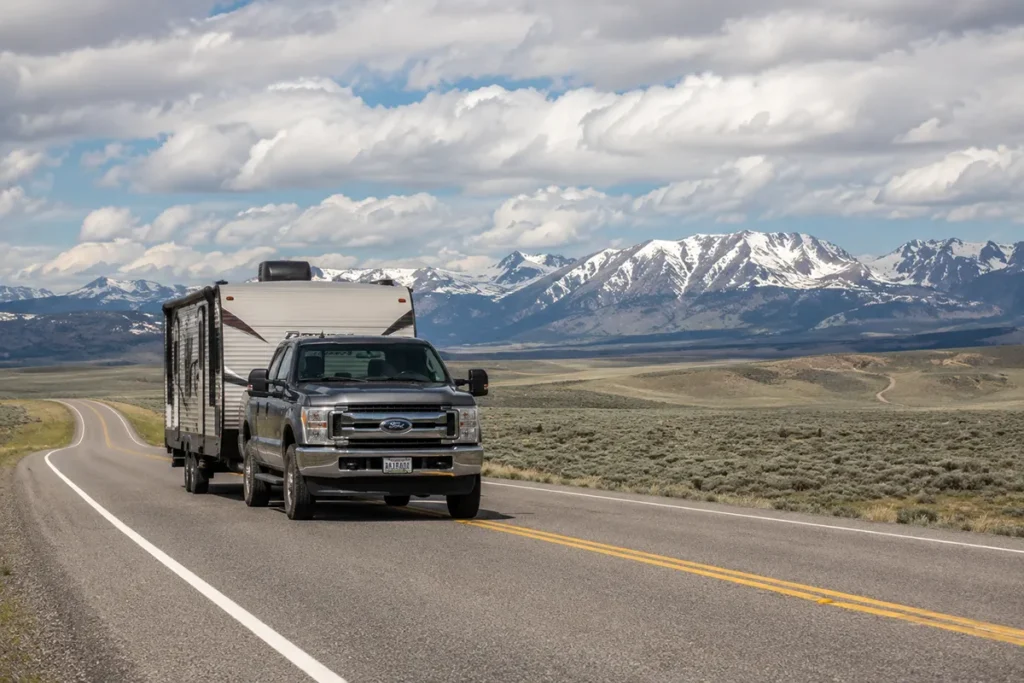
These are pickup-truck times. Add 15–25% if you’re hauling a fifth-wheel through mountain sections.
What I Wish I’d Known on My First Montana RV Trip
These are the lessons I learned the hard way over a decade of Big Sky Country travel:
Wildfire smoke is a real factor in August and September. A “blue sky” forecast can shift to apocalyptic orange in 12 hours if a fire kicks up upwind. Check the AirNow app daily. The smoke can ruin scenic drives, hiking, and any view-dependent reason you came. July is often a safer bet than late August for clean air.
Cell service is wildly inconsistent. Verizon works best in Montana, T-Mobile is patchy outside towns, and AT&T is third. Inside Glacier and large portions of Yellowstone, expect no service at all. Download offline maps before you leave a town. I keep AllTrails downloaded, Google Maps offline, and a paper Benchmark Montana Road Atlas as the backup.
The grocery gap between towns is significant. Once you leave Bozeman heading to Gardiner, your last real supermarket is Livingston. Same on US-2 west of Cut Bank. Stock the RV before you leave the main hubs.
Propane is easier to find than you’d think. Most full-service RV parks sell propane. So do many of the larger gas stations along I-90 and I-15. The free dump station I rely on most when transiting is the Missouri Headwaters State Park station near Three Forks — registered users dump free, $8 for unregistered.
Buy a Montana State Parks Pass if you’re staying more than a week. Montana residents pay $9 with vehicle registration for free entry; out-of-state visitors can buy a $9 annual pass that pays for itself in two stops. Several state parks have RV-friendly campgrounds at significantly lower rates than private parks.
Don’t try to do both national parks in one week. I know everyone wants to. The drive is 400 miles plus crowded park-internal driving. You will spend half your trip behind the wheel and arrive at each park tired. Either commit to one park and explore deeply (a fantastic option), or block 10–14 days for the full Glacier-to-Yellowstone route. Five-day attempts produce miserable travelers.
Practical Info Box: Montana RV Trip Planning at a Glance
| Detail | What to Know |
|---|---|
| Best season for full access | Mid-June through mid-September |
| Going-to-the-Sun Road open window | Early June to mid-October (weather dependent) |
| Beartooth Highway open window | Memorial Day weekend to mid-October |
| National park campground booking | 6 months in advance, 10 a.m. ET on Recreation.gov |
| Glacier vehicle reservations (2026) | Required for Going-to-the-Sun corridor; via Recreation.gov |
| Average peak season nightly rate | $50–$95 (full hookups), $30–$55 (partial/dry) |
| Going-to-the-Sun RV limit | 21 ft long, 8 ft wide, 10 ft tall (mid-section only) |
| Bear spray | Mandatory; available at most outdoor retailers in-state |
| Food storage fines | $225 minimum, up to $5,000 |
| Best cell carrier | Verizon (still patchy in parks) |
| Closest international airports | Bozeman (BZN), Missoula (MSO), Kalispell (FCA), Billings (BIL) |
| State park annual pass (non-resident) | [verify current entry fee] |
Where to Go From Here
Montana isn’t a one-trip state. Even four years deep, I still find RV parks I haven’t tried, dump stations I haven’t used, and small-town summer rodeos I didn’t know existed.
The pillar guide you just read is the framework — bookmark it, and use the regional links above to dive into the specific places you’ll actually be staying.
If you’re at the should I even do this stage of planning, my honest advice: start with one region and stay long enough to actually see it. A relaxed week in the Glacier gateway or the Yellowstone gateway will beat a frantic Montana sampler every time.
And if you want more inspiration for what to do once your rig is parked, my guides on Montana weekend getaways and things to do across Montana will set you up for the rest of the trip.
Pin this post for your trip planning, and drop your questions in the comments — I read every one, and the regional guides linked above keep getting updated as I do new trips through each area.
— Sarah Bennett