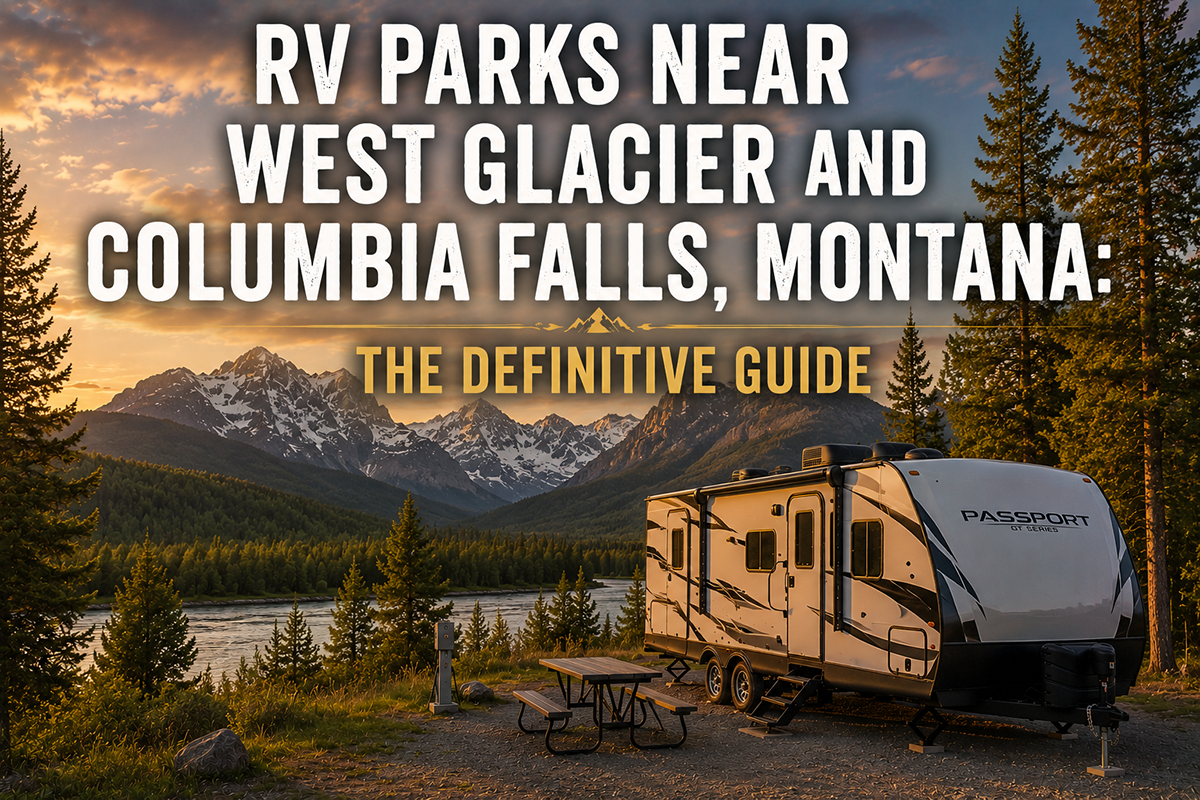
Glacier National Park is the trickiest place in Montana to RV — not because the parks are bad, but because the park itself doesn’t really welcome RVs.
The famous Going-to-the-Sun Road has hard size restrictions that exclude most rigs, the in-park campgrounds book out six months in advance, and the gateway towns are small with finite inventory.
The good news: a small constellation of excellent RV parks sits within 3–15 miles of the West Entrance. Pick the right one, book early, and you’ve got Glacier mostly handled.
TL;DR: West Glacier KOA Resort is the headline park — multiple pools, hot tubs, restaurants, 2.5 miles from the park entrance, and consistently rated one of the top RV resorts in the country. Columbia Falls RV Park & Cabins gives you the in-town walkable option. Moose Creek RV Resort, Mountain Meadow RV Park, and North American RV Park round out the gateway choices. Going-to-the-Sun Road has a 21-foot vehicle length limit between Avalanche Creek and Rising Sun — most RVs cannot drive the iconic route. Plan for shuttles, tow vehicles, or 2026’s new ticketed shuttle reservation system. Best season: mid-June through mid-September. Book 6+ months ahead.
This is the Glacier West Entrance RV deep-dive. It’s part of my broader best RV parks in Montana directory. If you’re routing toward Glacier from any direction, this is the gateway corridor most travelers use — and the one where pre-planning matters most.
Liked this article?
Add Roaming Montana as a preferred source so you see more of our articles and guides on Google.
Why Glacier RVing Is Different (And Harder) Than Yellowstone
Geography first. Columbia Falls sits at 3,094 feet, the small town of West Glacier at about 3,200 feet, and Glacier National Park’s West Entrance is reached via US-2 about 30 miles east of Kalispell.
The Flathead River runs along the park’s southern boundary; Lake McDonald sits just inside the gate. From here, the famous Going-to-the-Sun Road climbs 3,500 feet over 50 miles to Logan Pass at the Continental Divide and back down to St. Mary on the east side.
Three things make Glacier RVing harder than Yellowstone:
1. Going-to-the-Sun Road vehicle restrictions are real.
Vehicles longer than 21 feet (including bumpers) or wider than 8 feet (including mirrors) are prohibited between Avalanche Creek and Rising Sun — the most scenic middle section of the road. Vehicles over 10 feet tall may have clearance issues with rock overhangs between Logan Pass and the Loop. The restrictions are enforced, not suggestions. Most fifth-wheels, motorhomes, and Class A rigs simply cannot drive Going-to-the-Sun Road.
2. In-park campgrounds book six months ahead, to the minute.
Reservations open on a rolling 6-month basis at 10:00 a.m. Eastern at recreation.gov for the seven reservable Glacier campgrounds (Apgar, Fish Creek, St. Mary, Many Glacier, Rising Sun, Sprague Creek, and Two Medicine). Many Glacier sells out within minutes. Set calendar reminders.
3. The vehicle reservation system for Going-to-the-Sun Road.
In 2026, the National Park Service is continuing some form of timed-entry reservation for accessing Going-to-the-Sun Road during peak hours. The exact requirements shift year to year — and a new ticketed shuttle to Logan Pass is being rolled out for parts of the season. Check the NPS Glacier website 2-3 weeks before your trip for the current requirement.
What this means for RVers: don’t expect to drive your rig over Logan Pass. Plan for park shuttles, a tow vehicle, or both. The good news — the West Entrance area has the best RV parks of any Glacier gateway.
The Best RV Parks Near West Glacier
1. West Glacier KOA Resort — The Award-Winning Headline
Location: 2 1/2 miles west of West Glacier on US-2, then 1 mile east on a paved road. Pine-scented campsites 2.5 miles from Glacier’s West Entrance.
The West Glacier KOA is consistently rated one of the top RV resorts in the country, and it earns the label.
The amenity stack is enormous: heated adult-only (18+) pool, two adult hot tubs, heated family pool, KOA Patio sites, deluxe cabins with full baths, the Lazy Bear Breakfast and Dinner restaurants, the Bearstream Bar and Bear Garden (with live music nightly 7–9 p.m. from local artists), Scoops Ice Cream Shop with huckleberry ice cream, espresso bar, adult saunas, laundry, large playground, group camping with reservable event tent.
This is genuinely the most resort-style RV experience in the state.
What I like: The combination of proximity to Glacier (under 10 minutes to the gate) and amenities you’d expect from a destination resort makes it the right answer for travelers who want to actually enjoy their campground, not just sleep there. The trees between sites provide real privacy — you’re not parked five feet from your neighbor. Apgar Village (with shuttles to Lake McDonald and the Sun Road) is a 10-minute drive.
Heads-up: Pricing is premium. Expect peak summer rates [verify — recently $80–$140+ depending on site type]. Books months in advance for July and August. Some sites are still close to neighbors despite the tree screening — request a Patio or Deluxe site if you want more space. The amenity stack is a major draw — if you’d rather have a quiet, basic park, this isn’t it.
2. Columbia Falls RV Park & Cabins
Location: In-town Columbia Falls, walking distance to local shops and grocery stores.
This is the in-town walkable option. Full hookups, park-wide WiFi, easy in/out for big rigs, clean facilities. Walking distance to Columbia Falls’ downtown — coffee, restaurants, the Gunsight Saloon (live music several nights a week), and grocery resupply.
What I like: Walkability. After several days of having to drive everywhere, being able to walk to dinner is a real value. The location 15 minutes west of the park entrance is far enough that prices are noticeably lower than the West Glacier KOA, but close enough that day trips into the park aren’t burdensome.
Heads-up: Multiple reviewers note close-quarters sites — especially if you and your neighbor both have slide-outs deployed. If you’ve got a wide rig, request a corner spot or larger site type. Less natural shade than the wooded parks.
3. Moose Creek RV Resort
Location: Approximately 2.5 miles from Glacier’s West Entrance.
A long-running favorite among Glacier RVers. Wooded sites give real privacy and quiet, on-site bed-and-breakfast for guests who want to upgrade out of the RV one night, full hookups, propane, and a small camp store.
What I like: The quiet. Moose Creek runs more peaceful than the resort-style KOA — fewer kids running around, less ambient activity. For travelers who want to be near the park but in a calm setting, this is the pick.
Heads-up: Smaller park = limited availability. Books out fast. Confirm current amenities and rates by phone — the website has been less reliably updated than larger parks.
4. Mountain Meadow RV Park
Location: Secluded resort on 56 forested acres, minutes from the park boundary.
Mountain Meadow is the most spread-out option — 56 acres means real space between sites, mature forest, a storybook setting. Full hookups available.
What I like: The pace. This is the park to come to when you want to be deep in the woods but still have water and sewer. The site spacing alone is worth the premium over more crowded options.
Heads-up: Distance from the immediate park entrance adds a few minutes to every Glacier day trip. The remote setting means cell service is variable.
5. West Glacier RV & Cabin Resort
Location: Excellent proximity to the West Entrance.
This is the in-park-village option — full hookup pull-through sites, clean facilities, functional WiFi, and walking distance to Apgar Village and Lake McDonald. Premium pricing reflects the unbeatable position.
What I like: If you absolutely need to be as close to Going-to-the-Sun Road as RV camping allows, this is the answer. Walking distance to the Apgar shuttle stops cuts daily commute time to zero.
Heads-up: Books out first. Premium pricing. Tighter sites than the resort-style KOA.
6. Glacier Campground / Glacier Meadow / North American RV Park & Yurt Village
A handful of smaller alternatives 10–15 minutes from the entrance:
- Glacier Campground: Just 1 mile from the West Entrance, 40 wooded acres, surrounded by Flathead National Forest. Sites have real timber privacy.
- Glacier Meadow RV Park: About 45 minutes from Going-to-the-Sun Road, more affordable, more rustic.
- North American RV Park & Yurt Village: ~15 minutes from the park, pet-friendly with a dog park and fire pits. Yurts available for non-RVer family members.
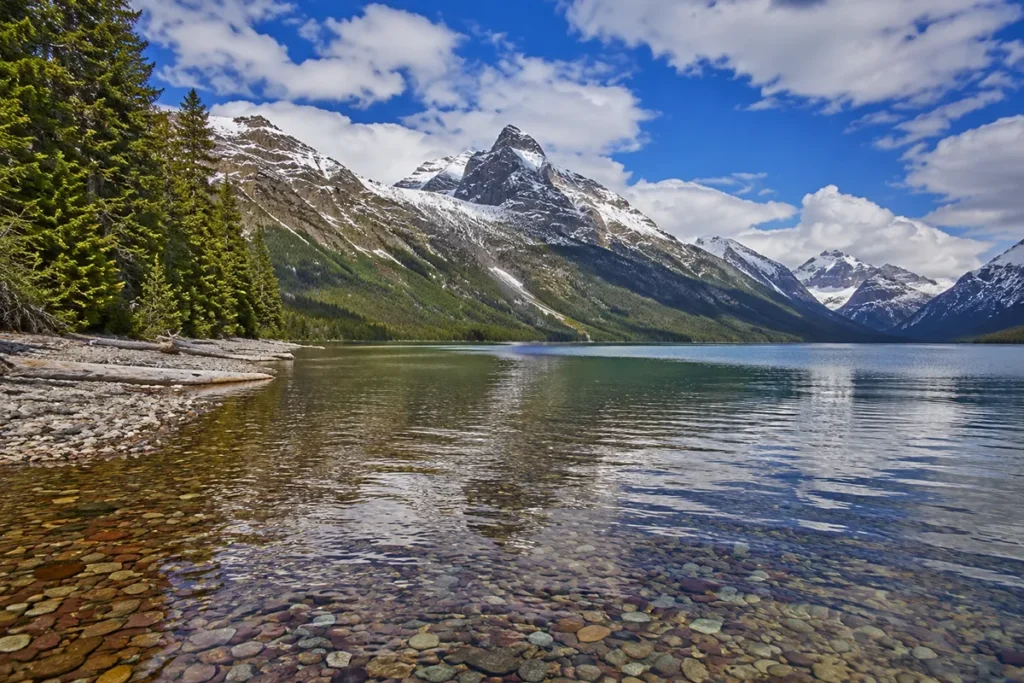
Going-to-the-Sun Road: The Hard Truth for RV Travelers
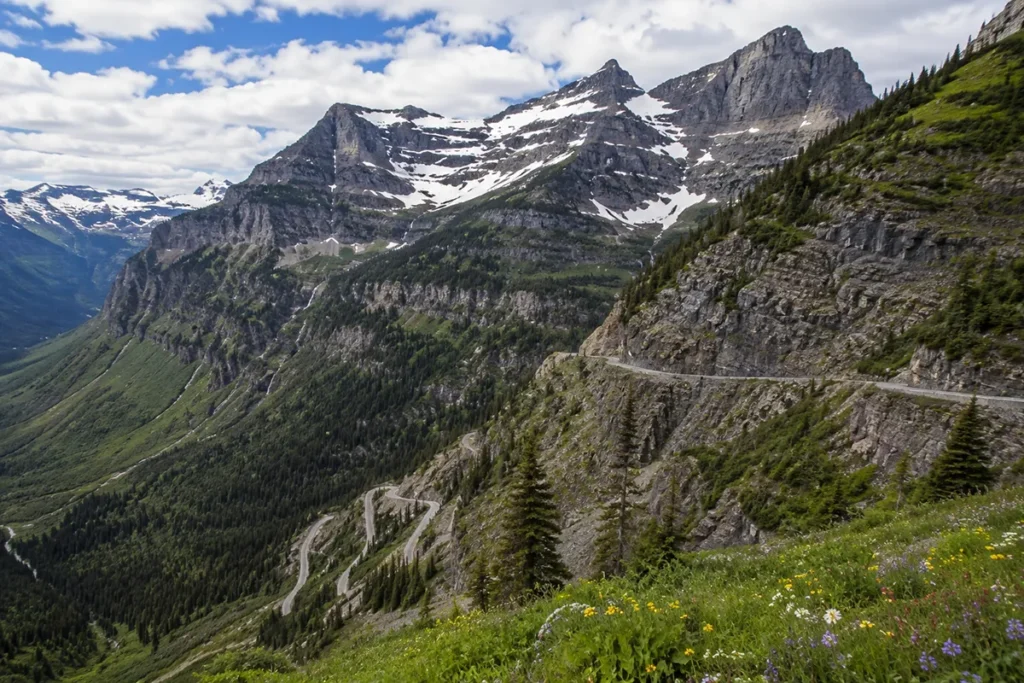
If you’ve never driven Going-to-the-Sun Road, you’ve heard about it but probably underestimate what it actually is. The road climbs 3,500 feet over 50 miles, with sustained 6–8% grades, narrow lanes with no shoulders, and tunneled rock overhangs. It’s been called one of the most beautiful drives in the world for legitimate reasons — but it was built in the 1930s for cars of that era.
Here’s what you need to know:
Size Restrictions (Strictly Enforced)
Between Avalanche Creek (West side, about 16 miles from the West Entrance) and Rising Sun (East side):
- Length: Maximum 21 feet including bumpers
- Width: Maximum 8 feet including mirrors
- Height: Maximum 10 feet (overhang clearance issue between Logan Pass and the Loop)
These restrictions mean most RVs cannot drive Going-to-the-Sun Road. If your rig is over 21 feet, you have three options:
Option 1: Drive a Tow Vehicle
If you’ve got a truck and trailer setup, unhook at your campground and drive the truck. This is the most flexible option — you can stop, hike, picnic, and reverse when you want.
Option 2: Use Park Shuttles
Glacier runs a free shuttle service along Going-to-the-Sun Road during peak summer (typically July through Labor Day). Shuttles stop at Apgar Village, Avalanche, Logan Pass, and other key spots. Pros: no driving stress. Cons: shuttle headway can be 30+ minutes during peak hours, and you’re locked into shuttle timing rather than your own.
Option 3: 2026’s New Logan Pass Ticketed Shuttle
The NPS is rolling out a new ticketed shuttle system to Logan Pass for parts of the 2026 season. Tickets are required for shuttle access during peak hours and must be booked through Recreation.gov. The exact requirements shift year-over-year — check the NPS Glacier website 2–3 weeks before your trip.
Vehicle Reservations for Going-to-the-Sun Road
In addition to shuttle requirements, the Going-to-the-Sun corridor itself requires timed-entry vehicle reservations during peak hours in 2026. These are separate from your park entry pass and from shuttle tickets. Reservations are released in waves through Recreation.gov. Plan to book this the day reservations open — they sell out within minutes.
Best Times to Drive
- 5:30–7:30 a.m.: Quietest traffic, often skips the vehicle reservation requirement (timed entry typically applies later in the morning).
- Mid-day: Crowded, slow, lots of stop-and-go.
- After 4:00 p.m.: Some travelers report better availability after the vehicle reservation window ends — verify for 2026.
What to Do Beyond Going-to-the-Sun Road
Glacier is huge, and the famous road is only one of many ways to experience it. Some of the best park experiences don’t involve driving Logan Pass at all.
1. Lake McDonald and Apgar Village
The largest lake in the park, accessible immediately inside the West Entrance. Apgar Village has a visitor center, restaurants, shops, kayak and canoe rentals, and the Apgar shuttle stop. Worth a half-day even if you do nothing else.
2. Many Glacier Valley
About 90 minutes by car (via outside-the-park routes — no direct interior road), Many Glacier has some of the best wildlife watching and hiking in the entire park. The Many Glacier Hotel is one of the historic Great Northern Railway hotels, worth a visit even if you don’t stay. Bear country — carry bear spray.
3. Two Medicine Valley
About 2.5 hours from West Glacier (also requires outside-the-park routing), Two Medicine is the quieter alternative — less famous than Many Glacier but with equally stunning lakes and trails. Day-trip from West Glacier is long; consider a one-night stop in St. Mary if budget allows.
4. Hiking on the West Side
The Trail of the Cedars is a wheelchair-accessible 1-mile loop through old-growth red cedars near Avalanche Creek. The Avalanche Lake Trail is a moderate 5-mile round-trip to a glacial lake — one of the most-photographed trails in the park. The McDonald Lake area trails range from easy strolls to multi-day backcountry treks.
5. Whitewater Rafting
Multiple outfitters in West Glacier and Columbia Falls run half-day and full-day rafting trips on the Middle Fork of the Flathead River. Class II-III rapids — family-friendly, scenic, and a great change of pace from hiking.
6. The Town of Whitefish
About 30 minutes west of Columbia Falls, Whitefish is the largest town near Glacier and has the food, beer, and shopping scene that the gateway towns lack. Worth a half-day if you’ve been craving city amenities.
7. Routing Onward
After Glacier, the most common routes are:
- South to Polson and Flathead Lake (then on to Missoula or Bozeman). See Polson and Flathead Lake RV parks in my hidden-gems guide.
- South to Missoula via US-93. See RV parks in Missoula.
- East via US-2 toward Great Falls. See Great Falls RV parks.
- Southeast toward Helena. See RV parks in Helena.
For broader Montana trip planning, my guide to things to do across Montana covers the whole state.
What I Wish I’d Known About RVing Near Glacier
Seven lessons from years of running this gateway:
1. The 21-foot Going-to-the-Sun rule catches travelers every year. I’ve watched rangers turn away $400k Class A motorhomes whose drivers swore they could fit. The rule is enforced at multiple points along the road. If your rig is over 21 feet, don’t try.
2. Many Glacier reservations open six months ahead and sell out in minutes. Set a phone alarm for 10:00 a.m. Eastern, six months to the day before your target arrival date. Have multiple browser tabs open with your account pre-logged-in at Recreation.gov. The casual approach guarantees you won’t get a site.
3. Park entry shuttles get crowded. During peak July weeks, shuttle lines at Apgar can stretch 30+ minutes. The earliest morning shuttles (7 a.m.) are far less crowded. Plan accordingly.
4. Cell service is patchy throughout the park. West Glacier village has limited coverage. Inside the park, expect to lose service almost entirely. Download offline maps and trail data before your first park day.
5. The Going-to-the-Sun Road opens late. The full road typically doesn’t open until late June or early July, weather depending. If you’re traveling in May or early June, expect the upper sections to still be closed for snow removal. The lower sections to Avalanche Creek usually open by mid-May.
6. Wildfire smoke from August through September is a real factor. Glacier sits in a regional smoke corridor. Even when there’s no fire in the immediate park, smoke from Idaho, Washington, or BC fires can blanket the valley for days. Check AirNow daily; have flexibility in your itinerary if smoke gets bad.
7. Bear spray is essential. This isn’t paranoid — Glacier has both black bears and grizzly bears in active populations, and several Glacier-specific fatal incidents over the decades have involved unprepared hikers. Carry spray, know how to use it, hike in groups when possible, and make noise.
Practical Info Box: Glacier West RV Camping at a Glance
| Detail | What to Know |
|---|---|
| Best season | Mid-June through mid-September |
| Elevation | Columbia Falls 3,094 ft / West Glacier ~3,200 ft |
| Highway access | US-2 (only highway in/out) |
| Closest airport | Glacier Park International (FCA), Kalispell |
| Headline park | West Glacier KOA Resort |
| In-town walkable | Columbia Falls RV Park & Cabins |
| Quietest | Moose Creek RV Resort, Mountain Meadow RV Park |
| Closest to entrance | West Glacier RV & Cabin Resort |
| Going-to-the-Sun length limit | 21 ft (Avalanche Creek to Rising Sun) |
| Going-to-the-Sun width limit | 8 ft (including mirrors) |
| Going-to-the-Sun height limit | 10 ft (between Logan Pass and the Loop) |
| Vehicle reservations 2026 | Required for Going-to-the-Sun corridor in peak hours |
| Logan Pass shuttle 2026 | Ticketed (new) — book via Recreation.gov |
| In-park camping booking window | 6 months ahead, 10 a.m. ET, Recreation.gov |
| Glacier entry fee | [verify — recently $35/vehicle, 7-day] |
| Bear spray | Mandatory; available in West Glacier and Apgar shops |
| Cell service | Patchy outside park; near-zero inside |
| Going-to-the-Sun open window | Late June to mid-October (weather dependent) |
| Average peak season nightly rate | [verify — typically $65–$140 full hookups] |
The Bottom Line on Glacier West RV Camping
Glacier National Park is the most demanding national park in the country to RV — between the size restrictions, the vehicle reservations, the shuttle ticketing, and the six-month booking window for in-park sites, it requires real planning.
But the small constellation of West Glacier-area RV parks is genuinely excellent, and the West Glacier KOA Resort sets the standard for what a national-park-gateway RV resort should be.
If you’ve got the time and willingness to plan, my recommended approach: book the West Glacier KOA (or Moose Creek for a quieter alternative) six months ahead, plan to drive your tow vehicle on Going-to-the-Sun Road (or use the shuttles if your rig has no tow vehicle), and give yourself at least three nights at the gateway.
Two days for Going-to-the-Sun, one for Many Glacier or Two Medicine, one for Lake McDonald and hiking. From there, route south to Polson and Flathead Lake, southwest to Missoula, or east toward Great Falls with the kind of memories that earn the trip.
Pin this post for your trip planning, see the full best RV parks in Montana directory for the rest of the state, and drop your Glacier questions in the comments. The guide gets updated annually as park requirements shift.
— Sarah Bennett