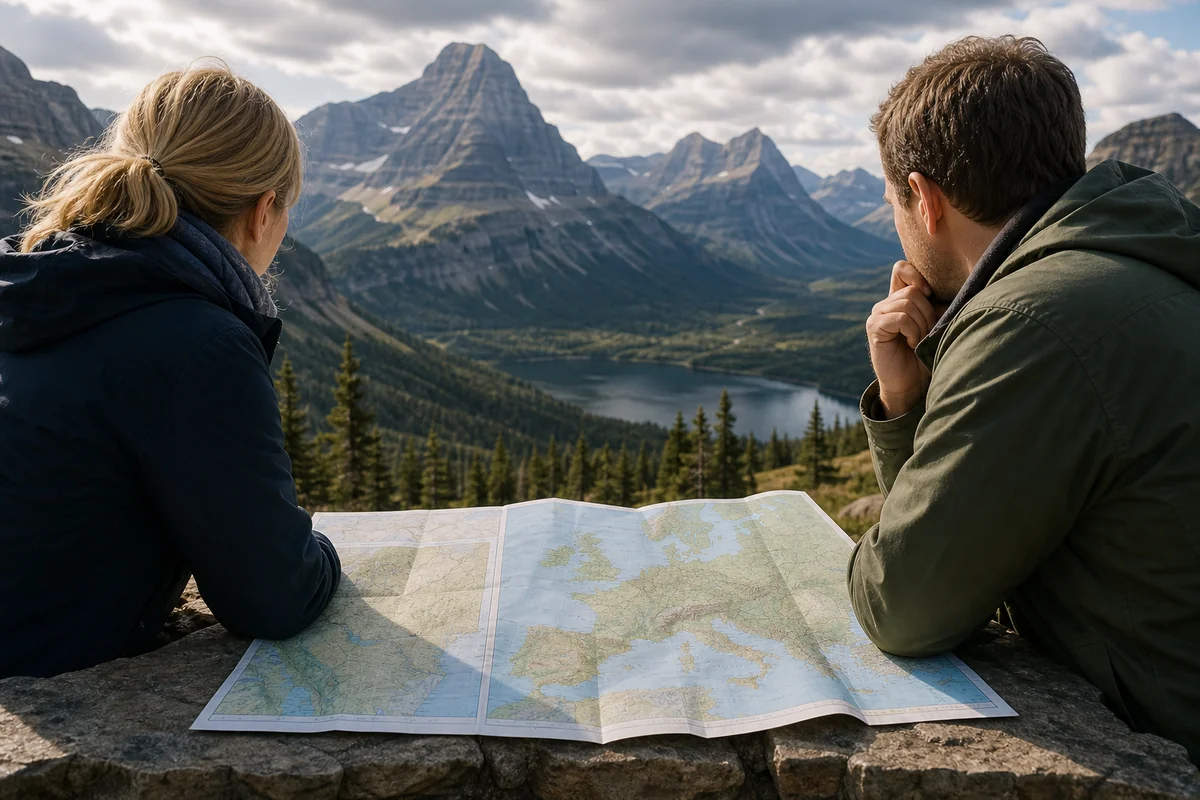
Standing at Logan Pass in Glacier National Park last August, I watched a German couple unfold their road trip map with visible confusion. “We thought we could see Yellowstone this afternoon,” the woman said, genuinely bewildered.
I’ve had this conversation dozens of times over my years exploring Montana, and it never gets old—because the vast size of Montana genuinely defies European sensibilities about distance and scale.
Here’s the thing that still amazes me after fifteen years of traveling this state: Montana isn’t just big by American standards. It’s legitimately larger than most European countries, and understanding this single fact will transform how you plan your trip.
- Montana (147,040 sq mi) is larger than Germany, Poland, Italy, or the United Kingdom
- Driving across Montana takes 9+ hours—equivalent to crossing multiple European countries
- You could fit Austria, Switzerland, and Belgium inside Montana with room to spare
- Plan for 2-3 hours minimum between major destinations
- European visitors consistently underestimate travel times by 50-70%
Liked this article?
Add Roaming Montana as a preferred source so you see more of our articles and guides on Google.
The Numbers That Changed How I See Montana
When I first moved to Montana from the East Coast, I made the classic mistake of planning a weekend trip that included Glacier National Park, Yellowstone, and a quick stop in Missoula. My European-trained sense of geography—honed during a semester abroad where I’d hop between countries on a whim—completely failed me.
Montana encompasses 147,040 square miles of territory. That’s not just a number; it’s a reality check.
To put this in perspective, Montana is considerably larger than England, which covers just 50,301 square miles. You could fit nearly three Englands inside Montana’s borders and still have room for a small country.
Direct Country Comparisons
| European Country | Size (sq mi) | Montana Comparison |
|---|---|---|
| Germany | 137,988 | Montana is 7% larger |
| Poland | 120,728 | Montana is 22% larger |
| Italy | 116,348 | Montana is 26% larger |
| United Kingdom | 93,628 | Montana is 57% larger |
| Austria | 32,386 | 4.5 Austrias fit in Montana |
| Switzerland | 15,940 | 9 Switzerlands fit in Montana |
| Belgium | 11,787 | 12.5 Belgiums fit in Montana |
| Netherlands | 16,040 | 9 Netherlands fit in Montana |
During my visit to the Swiss Alps two years ago, I drove from Zurich to Geneva—essentially crossing the entire country—in about three hours. That same drive time in Montana gets you from Bozeman to Great Falls, which doesn’t even cross half the state.
What This Actually Means for Your Road Trip
I’ve driven every major highway in Montana at least twice, and I can tell you that understanding the European comparison isn’t just trivia—it’s essential trip planning information.
The Cross-Country Reality Check
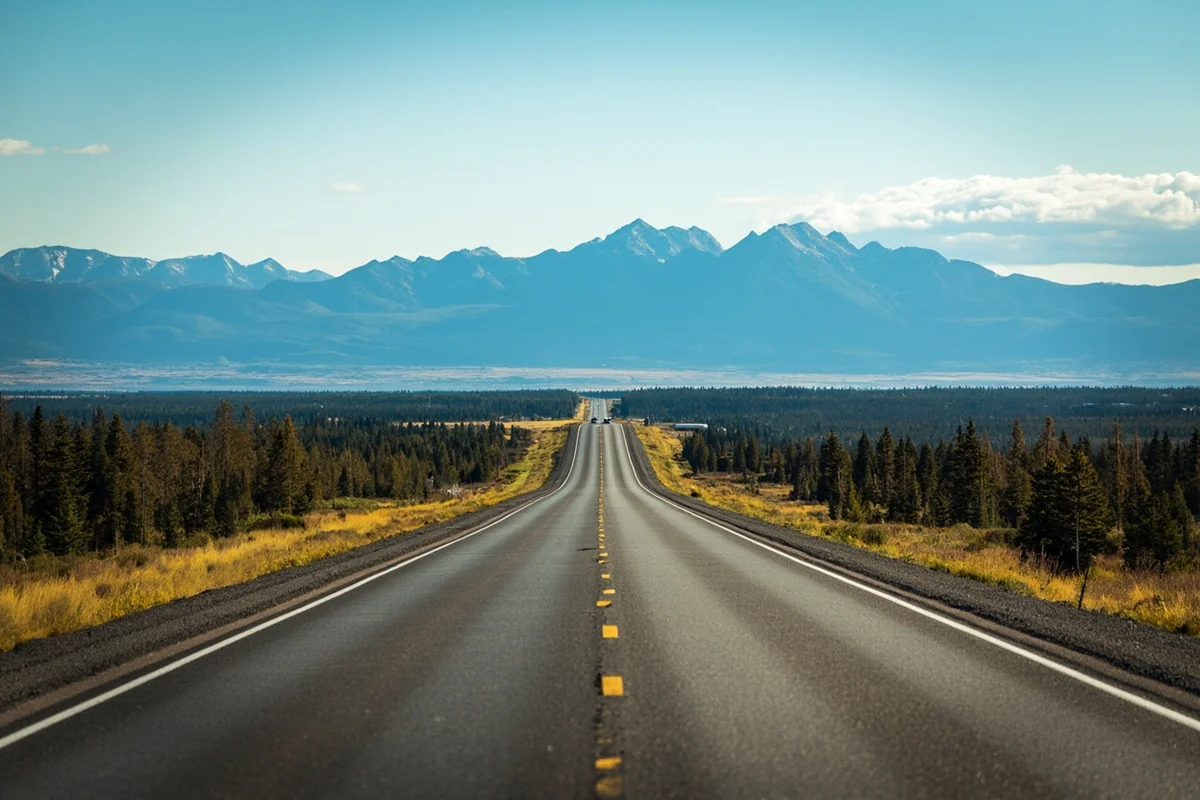
Driving from the eastern border of Montana at Wibaux to the western edge at Lookout Pass takes approximately nine and a half hours without stops. That’s roughly equivalent to driving from Paris to Munich, or from London to Edinburgh and back halfway.
Last summer, I met a British family at a gas station in Miles City. They were headed to Glacier National Park and genuinely believed they’d arrive by dinner.
They had over five hours of driving still ahead—and that was assuming no bathroom breaks, no stopping for the inevitable bison jam, and no pulling over to photograph the stunning Flathead Valley.
Practical Driving Distances
Here are some real distances I’ve driven repeatedly:
- Billings to Missoula: 348 miles, roughly 5 hours (comparable to London to Newcastle)
- Great Falls to Glacier National Park: 145 miles, 2.5 hours (similar to Paris to Reims)
- Bozeman to Yellowstone North Entrance: 90 miles, 1.5 hours (like Amsterdam to Antwerp)
- Helena to Kalispell: 220 miles, 3.5 hours (equivalent to Rome to Florence)
These distances shape everything about traveling here. When I explore how much land is actually in Montana, I always emphasize that it’s not just about square miles—it’s about experiencing those miles firsthand.
The Population Density Shock
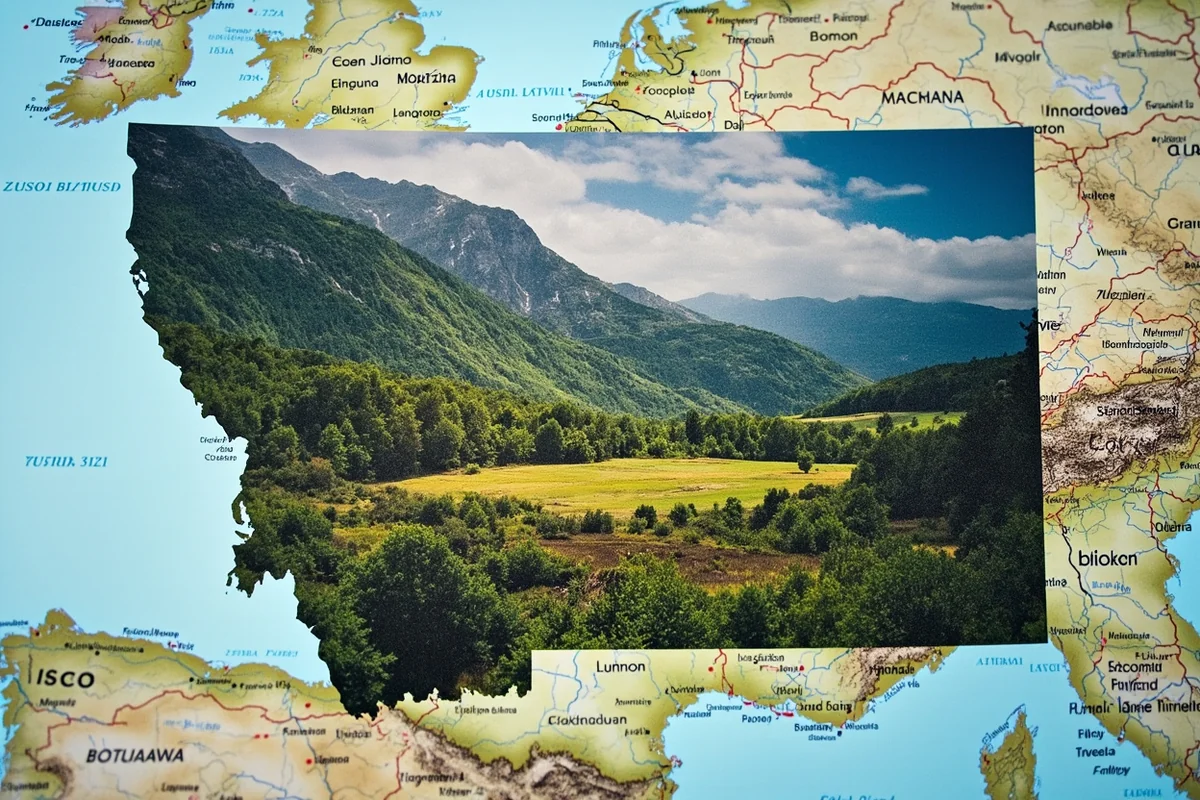
Here’s where the European comparison gets truly wild. Montana has roughly 1.1 million residents across its 147,040 square miles. That works out to about 7.5 people per square mile.
Germany, which is smaller than Montana, has 83 million people. The Netherlands, which could fit inside Montana nine times, has 17 million residents.
What Empty Actually Looks Like
On a drive from Jordan to Malta (yes, there’s a Malta in Montana) during my reporting trip for a wildlife story last fall, I didn’t see another car for 47 minutes. Not because I was on some obscure back road—Highway 200 is a numbered state highway.
This emptiness affects everything:
- Gas stations can be 80+ miles apart in eastern Montana
- Cell service disappears for long stretches
- Small towns roll up the sidewalks after 8 PM
- Wildlife outnumbers people in vast regions
For European travelers accustomed to villages every few kilometers, this emptiness can feel unsettling at first. But I’ve come to love it—there’s a profound peace in driving through a landscape bigger than Belgium with nobody else around.
Comparing Montana’s Regions to European Countries
Montana isn’t monolithic. The physical features of Montana vary dramatically from east to west, and I find it helpful to think of different regions as their own “countries” for planning purposes.
Western Montana: Think Alpine Europe
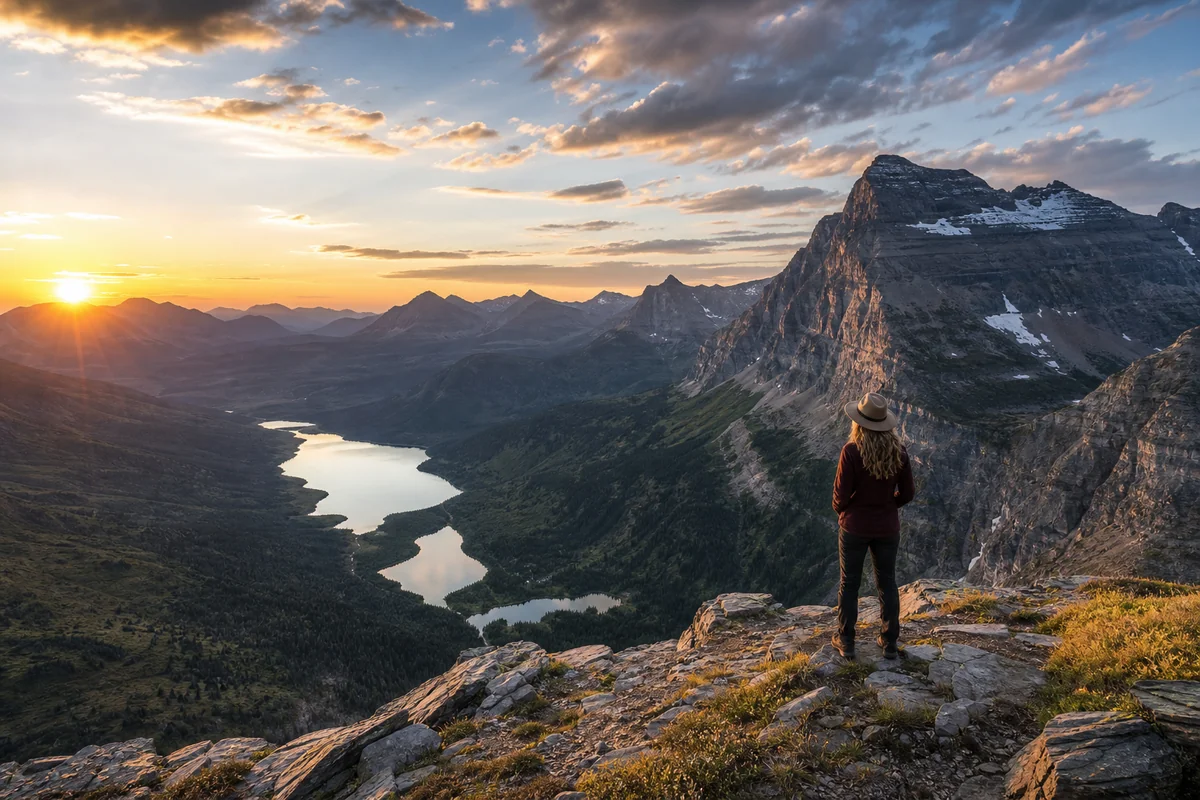
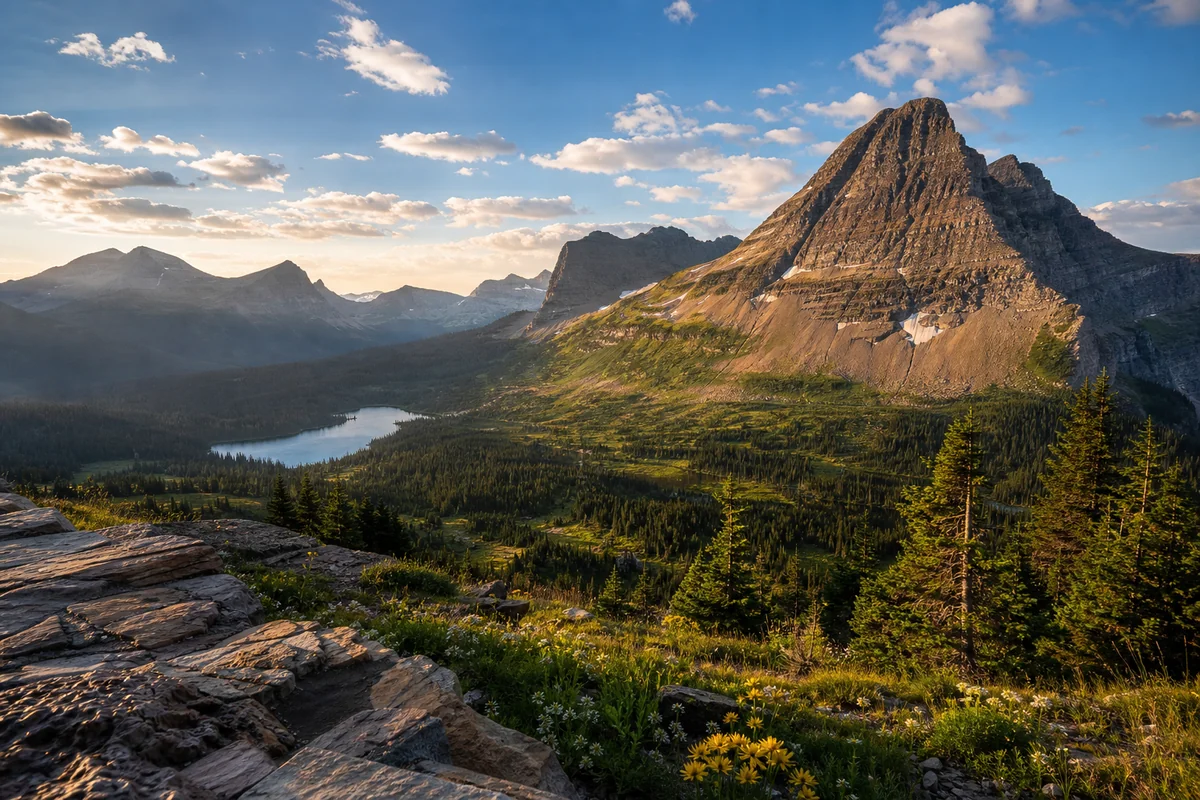
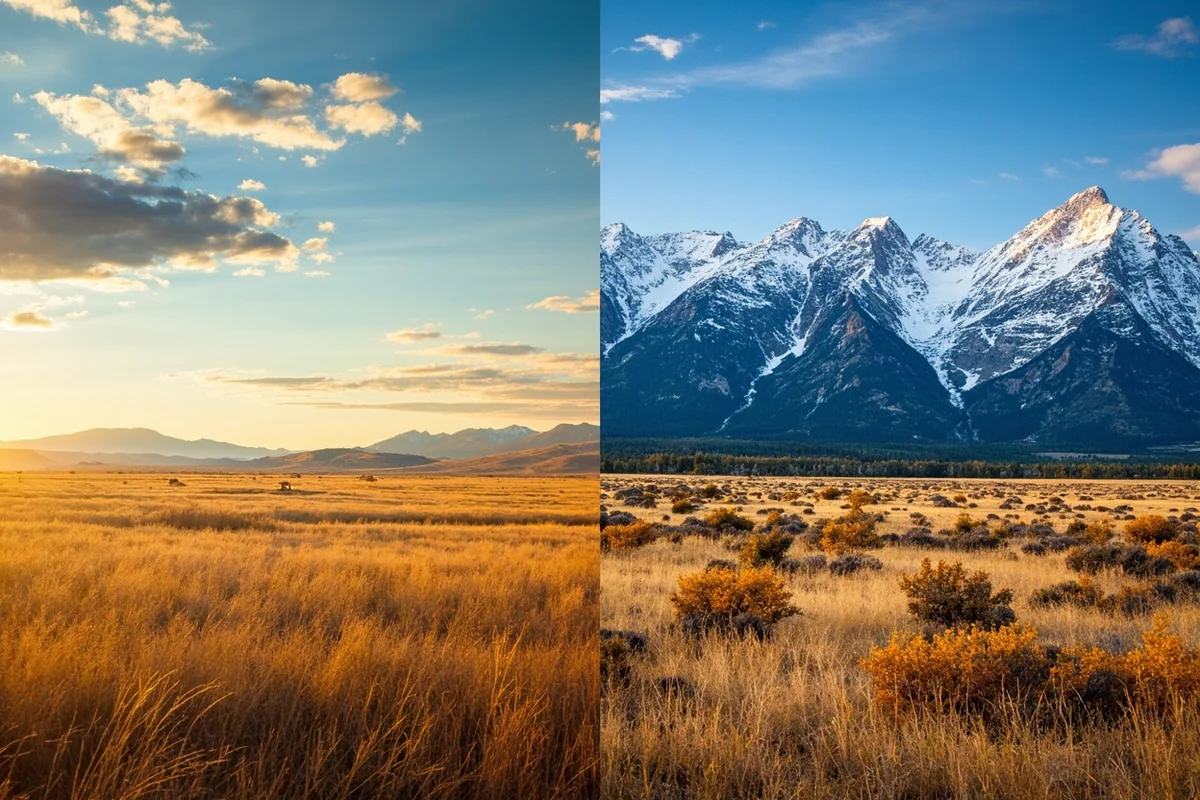
The western third of Montana, from the Bitterroot Valley through Glacier National Park, reminds me strongly of the Alps. Rugged peaks, deep valleys, pristine lakes—it shares DNA with Switzerland and Austria.
During my hiking trip through the Mission Mountains last July, I kept having flashbacks to the Bernese Oberland. The scale was similar, the dramatic elevation changes comparable, but with one crucial difference: I could hike for hours without seeing another person.
This region alone covers approximately 35,000 square miles—larger than Austria and nearly the size of Portugal.
Central Montana: The Scottish Highlands Connection
The central belt of Montana, including the Hi-Line region and the Rocky Mountain Front, evokes the Scottish Highlands for me. Rolling grasslands give way to dramatic mountain walls, with an ever-present wind and a certain wild grandeur.
I spent a week in the Choteau area two springs ago, watching grizzly bears emerge from the Rocky Mountain Front. The landscape felt ancient and untamed in a way that reminded me of hiking in the Scottish Highlands—except this area alone could contain Scotland twice over.
Eastern Montana: The Great Steppe
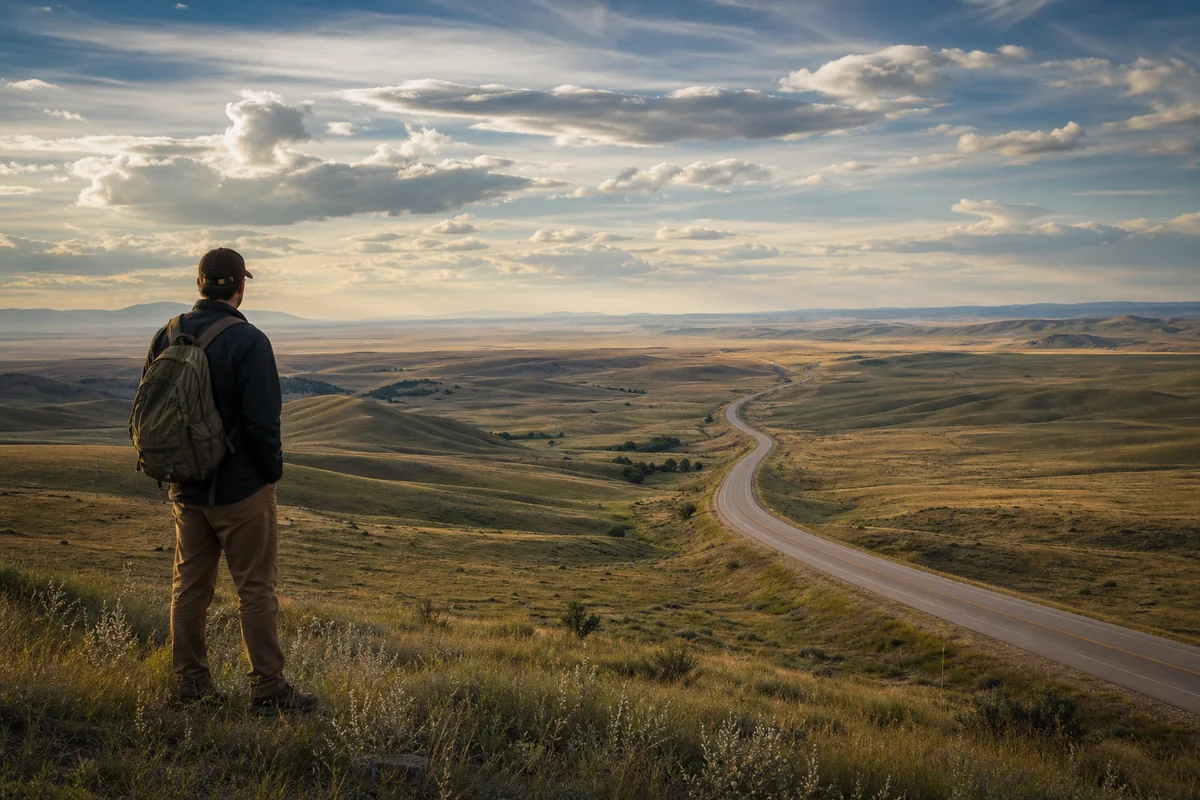
Eastern Montana is harder to compare to Western Europe because nothing in Western Europe quite matches it. The closest parallel might be the steppes of Ukraine or Kazakhstan—endless grasslands rolling toward a distant horizon.
This region spans roughly 50,000 square miles, making it larger than England. Yet Garfield County, one of the counties in this region, has fewer than 1,200 residents. The county seat of Jordan has a population of around 300.
Planning Your Itinerary Like a European Multi-Country Trip
After years of helping friends plan Montana visits, I’ve developed a European framework that works brilliantly for trip planning.
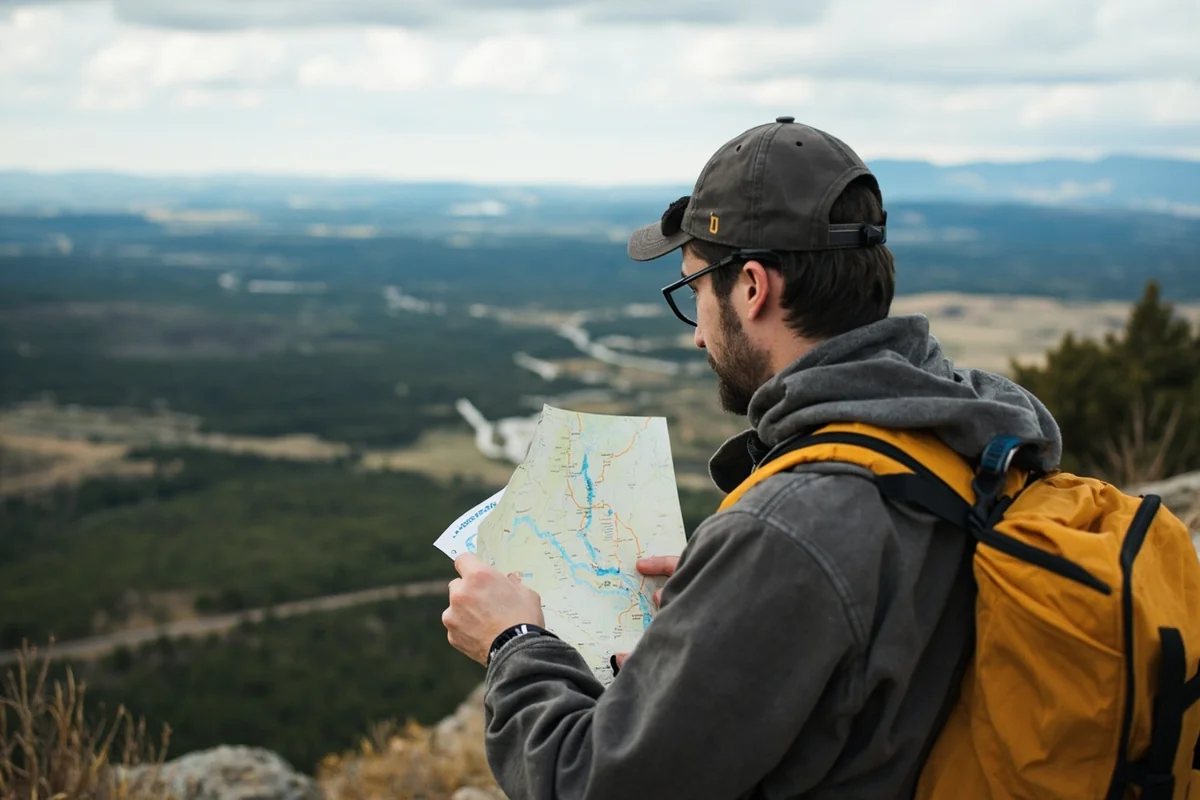
Treat Major Destinations as Different Countries
When European travelers visit multiple countries, they understand each destination deserves dedicated time. Apply this same thinking to Montana:
Glacier National Park = Your Swiss Alps trip
- Plan 3-4 days minimum
- Budget for mountain driving on Going-to-the-Sun Road
- Expect weather delays and embrace them
Yellowstone’s Montana Side = Your Italian Dolomites adventure
- Allow 2-3 days just for the northern section
- The Lamar Valley alone deserves a full day for wildlife
- Don’t try to combine with Glacier in the same trip unless you have 10+ days
The Hi-Line and Eastern Montana = Your Eastern European exploration
- Less visited but incredibly authentic
- Plan for self-sufficiency with food and fuel
- Rewards slow, observant travelers
When considering whether Montana is the largest state (it’s fourth), remember that even states larger than Montana—Alaska, Texas, California—have more developed infrastructure. Montana’s combination of size and wildness is unique.
A Realistic One-Week Itinerary
Based on my experience, here’s what I recommend for first-time visitors wanting a taste of Montana’s diversity:
Days 1-3: Glacier National Park Area
- Fly into Kalispell or drive from Missoula (2.5 hours)
- Base yourself in Whitefish or Columbia Falls
- Drive Going-to-the-Sun Road, hike Highline Trail if conditions allow
Day 4: Transit Day (Embrace It)
- Drive from Glacier region to Bozeman (5-6 hours)
- Stop in Helena for lunch, visit the historic downtown
- This isn’t wasted time—the scenery is part of the experience
Days 5-7: Bozeman and Yellowstone
- Day trip to Yellowstone’s north entrance through Paradise Valley
- Explore Bozeman’s downtown, Museum of the Rockies
- Optional: Hot springs in the Gardiner area
Notice what’s not included: the Bob Marshall Wilderness, the Missouri River breaks, the Beartooth Highway, eastern Montana’s prairie. One week barely scratches the surface.
What Europeans Get Wrong (And How to Get It Right)
I’ve collected common misconceptions from European travelers I’ve met across Montana. Understanding these will save you frustration.
Misconception 1: “We’ll Just Stop Where We Find a Hotel”
In much of Europe, you can drive until you’re tired, pull off, and find accommodation. In Montana—especially during summer—this strategy fails spectacularly.
During my last trip through the Blackfeet Reservation in July, every hotel within 50 miles of Glacier was booked solid. I ended up driving to Great Falls at midnight, adding three hours to my journey.
Book accommodations in advance, especially June through September.
Misconception 2: “The GPS Says Three Hours, So It’s Three Hours”
GPS calculations assume you’ll drive straight through. They don’t account for:
- Bison or cattle on the road (happens constantly in summer)
- Wildlife photography stops (you will pull over)
- Mountain pass conditions (Logan Pass opened late last year)
- Single-lane construction zones (common in summer)
Add 25-30% to any GPS estimate for realistic planning.
Misconception 3: “We Can Experience Montana in Three Days”
A Dutch couple I met at Many Glacier Hotel had flown from Amsterdam specifically to see Montana. They’d allocated three days before heading to Seattle.
They’d spent two of those days in a car, seen one corner of one national park, and were leaving with photos but no real understanding of the place.
Montana rewards slow travel. If you only have three days, pick one region and explore it deeply rather than trying to cover ground.
Misconception 4: “Public Transportation Must Exist”
In virtually all of Western Europe, you can travel without a car. Trains, buses, and regional transit networks make car-free travel not just possible but pleasant.
Montana has no passenger rail service except Amtrak’s Empire Builder, which runs along the northern border with limited stops. Intercity buses are nearly nonexistent. Uber and Lyft operate only in the largest towns and often have wait times measured in hours.
You need a car. Period. Rent one at a major airport, and make sure it’s something comfortable for long drives.
The European Features You’ll Find (And Miss)
Despite the differences, Montana shares some surprising characteristics with Europe that I’ve noticed over the years.
Alpine Similarities
The mountains of Western Montana genuinely rival the Alps for scenic beauty. When I’m hiking in the Cabinet Mountains or the Absaroka Range, the terrain feels distinctly European—just emptier.
Glacier National Park’s classic view from Wild Goose Island reminds me powerfully of certain Austrian postcard scenes. The difference is that in Austria, you’d share the viewpoint with busloads of tourists; at Glacier, you might have it to yourself at sunrise.
What You Won’t Find
Montana lacks certain European travel conveniences that many visitors expect:
- Mountain huts: Unlike the Alps, you can’t hike hut-to-hut with hot meals waiting. Backcountry here means carrying everything.
- Ski lift dining: Our ski areas have lodges, but nothing like the elaborate mountain restaurants of the Alps.
- Dense village networks: Charming mountain villages exist (Whitefish, Big Sky, Red Lodge), but they’re hours apart.
- Reliable cell coverage: Even major highways have substantial dead zones.
Why the Comparison Matters for Your Trip
Understanding Montana’s European scale isn’t about trivia—it’s about having a better trip.
When I plan my own Montana adventures now, I think in European terms. A weekend trip to Glacier is like planning a weekend in Switzerland: focused, intentional, with realistic expectations about what can be accomplished.
A cross-state road trip is like planning a multi-country European tour: you need buffer days, you need to accept that transit time is part of the experience, and you need to resist the urge to see everything.
The Mindset Shift
European travel often emphasizes efficiency—maximizing sights per day, minimizing transit time, checking destinations off a list.
Montana travel rewards the opposite approach. The state’s size forces you to slow down, to spend more time in each place, to let the landscape unfold gradually.
I’ve come to see this as Montana’s gift to travelers. Yes, you can’t see everything in one trip. But what you do see, you experience deeply.
Practical Tips from My Years of Montana Travel
Based on everything I’ve learned driving tens of thousands of miles across Montana, here’s my practical advice for visitors thinking in European terms:
Fuel and Supplies
- Never pass a gas station below half a tank in rural areas
- Carry snacks and water—the next town might be 90 minutes away
- Download offline maps before leaving major towns
- Have a physical road atlas as backup (I use the DeLorme Montana Gazetteer)
Timing and Daylight
- Summer days are long (sunrise before 6 AM, sunset after 9:30 PM)
- Winter days are brutally short (under 9 hours of daylight in December)
- Mountain roads may have restricted hours—Going-to-the-Sun Road has vehicle reservations
- Wildlife is most active at dawn and dusk—build this into your schedule
Weather Realities
- Montana’s size creates multiple climate zones
- Western Montana is wetter; eastern Montana is drier
- Mountain weather changes rapidly—check conditions before hiking
- Snow is possible any month at elevation (I’ve seen August snow at Glacier)
Final Thoughts: Embracing the Scale
After all these years, Montana’s size still surprises me. Just last month, I drove from Missoula to Sidney for a story assignment—eight hours across a single state. Along the way, I crossed mountain ranges, descended into vast prairie, followed the Missouri River, and watched the landscape transform completely.
Nowhere in Western Europe offers this experience. You’d cross four or five countries in that time, each with different languages, currencies, and cultures.
Montana offers something different: one state, one set of people, but a landscape so vast and varied it feels like multiple worlds.
For US travelers planning a Montana trip, the European comparison provides a useful framework. Think of this as visiting a country, not just a state. Give it the time, planning, and respect you’d give any European nation.
For European visitors, understand that your spatial instincts will mislead you. Everything is farther than it looks on the map. Roads are emptier than you expect. Towns are smaller and more spread out. But the landscape—the sheer, humbling scale of it—rewards every extra mile.
I’ve traveled extensively in Europe, and I’ve spent years exploring Montana. They’re both magnificent in their own ways. But Montana’s size, combined with its wildness and emptiness, creates something unique on Earth.
Come prepared for the scale. You won’t regret it.
Frequently Asked Questions
How big is Montana compared to European countries?
Montana spans 147,040 square miles, making it larger than Germany (138,065 sq mi) and nearly the size of Japan. To put it in perspective for US travelers, you could fit the entire United Kingdom inside Montana with room to spare. This means driving across the state takes 8-10 hours, so plan your itinerary accordingly.
Is Montana bigger than most countries in Europe?
Yes, Montana is larger than all but a handful of European nations. Only France, Spain, Sweden, and a few others exceed Montana’s land area. I always tell travelers to treat Montana like visiting a small country rather than just another US state when planning their trip.
How long does it take to drive across Montana compared to driving across a European country?
Driving across Montana on I-90 covers roughly 550 miles and takes about 8-9 hours nonstop, similar to driving from Paris to Munich. Unlike compact European countries where you can cross borders in a couple hours, Montana requires serious road trip planning with fuel stops every 100-150 miles in rural areas.
What should I budget for a Montana road trip covering its Europe-sized territory?
Budget $150-250 per day for a comfortable Montana road trip, including gas ($3.20-3.80/gallon), lodging ($100-180/night), and meals. Since Montana is comparable in size to Germany, expect to spend $200-400 on fuel alone for a week-long trip covering major attractions like Glacier and Yellowstone.
When is the best time to visit Montana to explore its vast European-sized landscape?
June through September offers the best weather for exploring Montana’s 147,000 square miles, with most roads and trails accessible. I recommend July and August for Glacier National Park’s Going-to-the-Sun Road, though shoulder seasons in June and September mean fewer crowds across this expansive state.
How many days do I need to explore Montana given its size rivals European countries?
Plan at least 7-10 days to meaningfully explore Montana’s major regions, given distances rival crossing multiple European nations. A rushed 3-4 day trip limits you to one area like Glacier National Park, while two weeks allows you to experience both Glacier and Yellowstone plus charming towns like Bozeman and Missoula.
What should US travelers pack for a trip across Montana’s vast territory?
Pack layers for Montana’s variable climate across its European-sized expanse, as temperatures can swing 40°F between mountain passes and valleys in a single day. Essential items include a quality cooler for long stretches without services, offline maps since cell coverage is spotty across rural areas, and bear spray ($40-50) for hiking in this wilderness-heavy state.
Sources:
- https://eros.usgs.gov/media-gallery/state-mosaics/montana
- http://plaza.ufl.edu/jdesouza/europe.html
- https://europe.unc.edu/wp-content/uploads/sites/314/2017/05/2.D_Schengen_PDF_from_Europa.pdf
- https://www.cia.gov/the-world-factbook/countries/european-union/
- https://open.lib.umn.edu/worldgeography/chapter/2-3-regions-of-western-europe