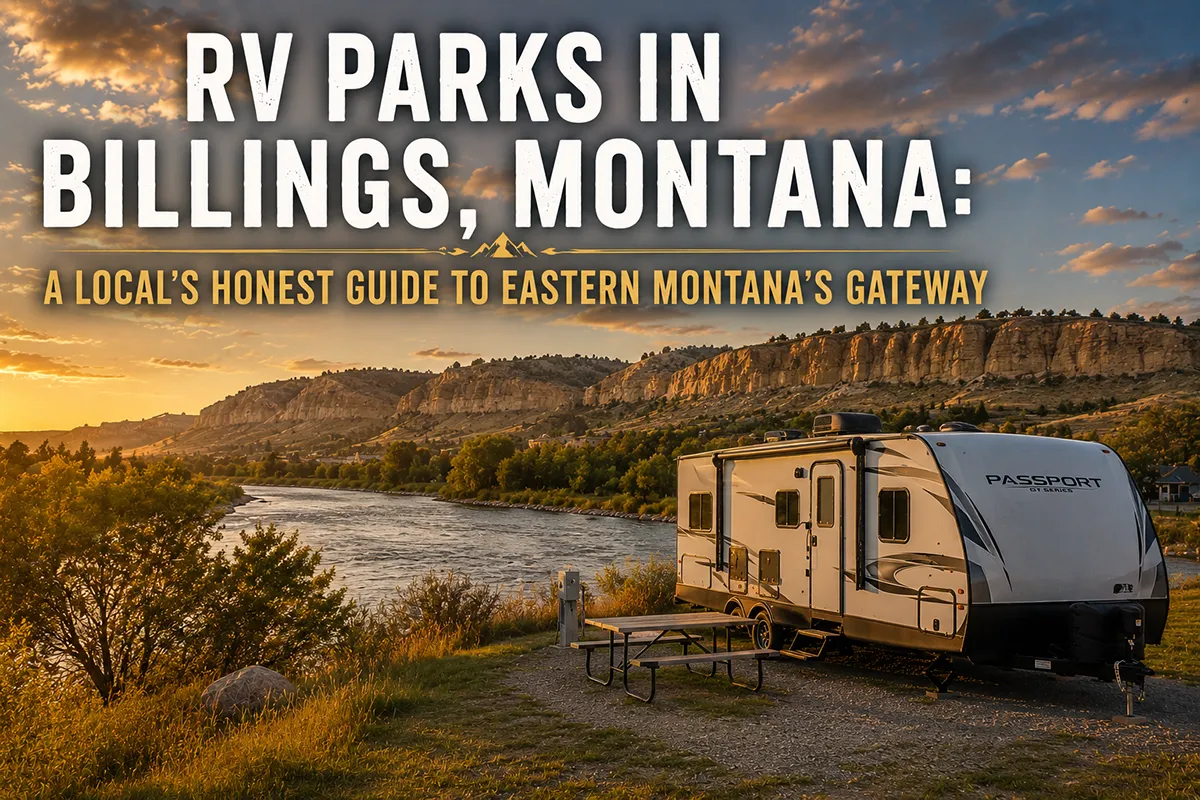
Billings has a claim no other RV park town in America can make: the first KOA campground in the world opened here in 1962, on the banks of the Yellowstone River, and it’s still operating today.
That’s not a marketing slogan — that’s a piece of American camping history. And it tells you something about Billings as an RV town: this is a city that takes road travel seriously, sits at the junction of two major interstates, and has been a fixture for cross-country RVers for more than 60 years.
TL;DR: Billings is Montana’s largest city and the strategic gateway from the Dakotas and northern Wyoming. Billings KOA Holiday (the original KOA) and Yellowstone River RV Park are the two headline full-hookup options, both with direct Yellowstone River access. Day trips include Pompeys Pillar (the only visible Lewis & Clark Expedition signature still in place), Little Bighorn Battlefield, the Beartooth Highway, and Pictograph Cave State Park. Best season is May through September. Lower competition and better availability than the gateway towns near Yellowstone or Glacier.
This is the eastern Montana RV deep-dive. It’s part of my broader best RV parks in Montana directory. If you’re entering Montana from the east — North Dakota, South Dakota, or northeastern Wyoming — Billings is your first major city and the smartest place to plan a real overnight rather than a quick gas stop.
Liked this article?
Add Roaming Montana as a preferred source so you see more of our articles and guides on Google.
Why Billings Matters for RV Travelers
Geography first. Billings sits at 3,123 feet — significantly lower elevation than the mountain towns most travelers think of when they think Montana, which means warmer summer days, milder shoulder seasons, and a longer practical RV season.
The city is at the literal intersection of Interstate 90 (running east-west across southern Montana) and Interstate 94 (which terminates here, coming in from the Dakotas). For anyone driving in from the east, Billings is unavoidable.
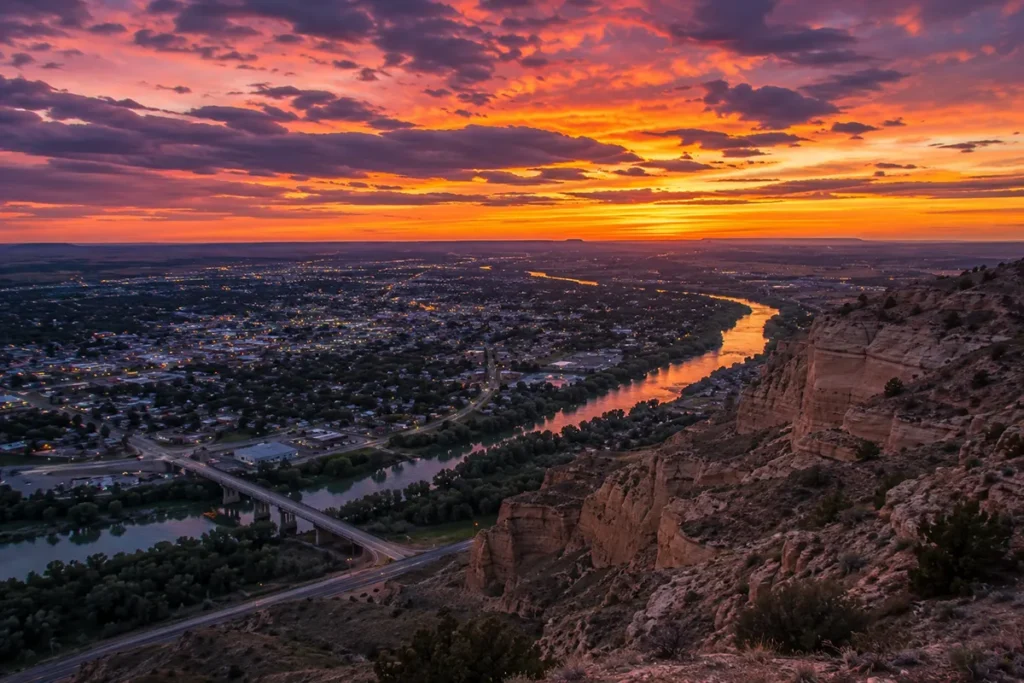
The city is built between two dramatic geographic features: the Yellowstone River runs along the south edge, and the Rimrocks — a 500-foot sandstone cliff line — rise dramatically along the north edge.
The Rimrocks are honest-to-god cliffs, not gentle hills; they’re visible from most of downtown, and the views from the top (Zimmerman Park, Swords Park) are worth the short drive up.
What this means for you as an RVer: Billings is a real city with full urban amenities (hospitals, big-box stores, RV repair shops, Costco, Sam’s Club, a major airport), but with significantly less competition for sites than you’ll find around Glacier or Yellowstone. Same-week reservations are often possible even in peak summer.
Rates are 20–30% lower than equivalent parks closer to the national parks. For travelers using Billings as a “do laundry, restock groceries, get the rig serviced” stop, it’s the most efficient option in the state.
The Best RV Parks in Billings
1. Billings KOA Holiday — The Historic Heavyweight
Location: 547 Garden Avenue, just off I-90 Exit 450, on the banks of the Yellowstone River.
This is the original KOA — opened in 1962, the first franchise location in what is now the largest private campground chain in North America. The park has been continuously upgraded over the decades but it still occupies that historic spot along the Yellowstone. 138 RV sites with full hookups (30 and 50-amp), 38 tent sites, 13 cabins.
Standard KOA amenities apply: heated swimming pool (Memorial Day through Labor Day), on-site mini golf (Trailhead Adventure Golf), playground, dog park, paw pen sites, basketball court, KOA Patio sites with built-in fire pits, giant chess, and a Kamp K-Store. Notably, the park has earned IBCCES Autism Certification, making it more accommodating for guests with sensory processing needs.
What I like: History aside, the Yellowstone River frontage is the real value. The walking path along the river is one of the best urban-trail combinations in Montana — you can hike, jog, or bike for miles without leaving the green corridor. The park is genuinely walkable to grocery shopping and restaurants on King Avenue.
Heads-up: Patio and premium sites carry premium pricing — peak season rates can reach [verify current rates]. Train tracks run nearby and freight trains pass at night. Pool open Memorial Day through Labor Day only — earlier or later in the season, that amenity is closed.
2. Yellowstone River RV Park & Campground
Location: Just off I-90 Exit 450 in southeast Billings, also along the Yellowstone River.
The independent alternative to the KOA, with full hookups, grass and tree-lined sites (more shade than the KOA), and a quieter, more locally-owned feel. Easy interstate access for one-night transit stays.
What I like: The trees. After enough KOA pavement-and-gravel stops, a park with actual mature cottonwoods feels like a small luxury. The park is less amenity-loaded than the KOA but the trade-off in calm and shade is worth it for a lot of travelers. Yellowstone River access right from the park.
Heads-up: Smaller park (fewer sites), so peak season weekend availability can be tighter than you’d think for the Billings market. Book a couple weeks out for July weekends.
3. Billings Village RV Park
Location: Central Billings, easy access from I-90.
The urban / business-traveler option. Clean, paved pads with comprehensive utility connections — full hookups including 50-amp service. Less recreational character than the KOA or Yellowstone River options; more “convenient overnight” character.
What I like: If you’re in Billings for work, family visits, medical appointments, or RV service work and need to be close to the city center rather than the river edges, this is the right answer.
Heads-up: Less scenic. You’re paying for location, not view.
4. Long-Term RV Park Options
The search term “long term rv parks billings mt” pulls real volume — Billings has a sizable population of energy-industry workers, traveling nurses (with two major hospitals, Billings Clinic and St. Vincent), and snowbirds passing through.
Monthly rates at the Billings KOA, Yellowstone River RV Park, and Trailer Village (and a couple of older mobile-home-style parks on the south side) typically run [verify current rates — recently $700–$1,200/month plus metered electric].
Winterized hookups are limited; many parks turn off water mid-October.
If you’re planning a longer Billings stay, call directly — long-term inventory rarely shows accurately on aggregator booking sites.
Day Trips from Billings: The Real Eastern Montana Itinerary
Billings rewards travelers who use it as a basecamp rather than just a one-night stopover. Here’s what’s actually worth your time.
1. Pompeys Pillar National Monument
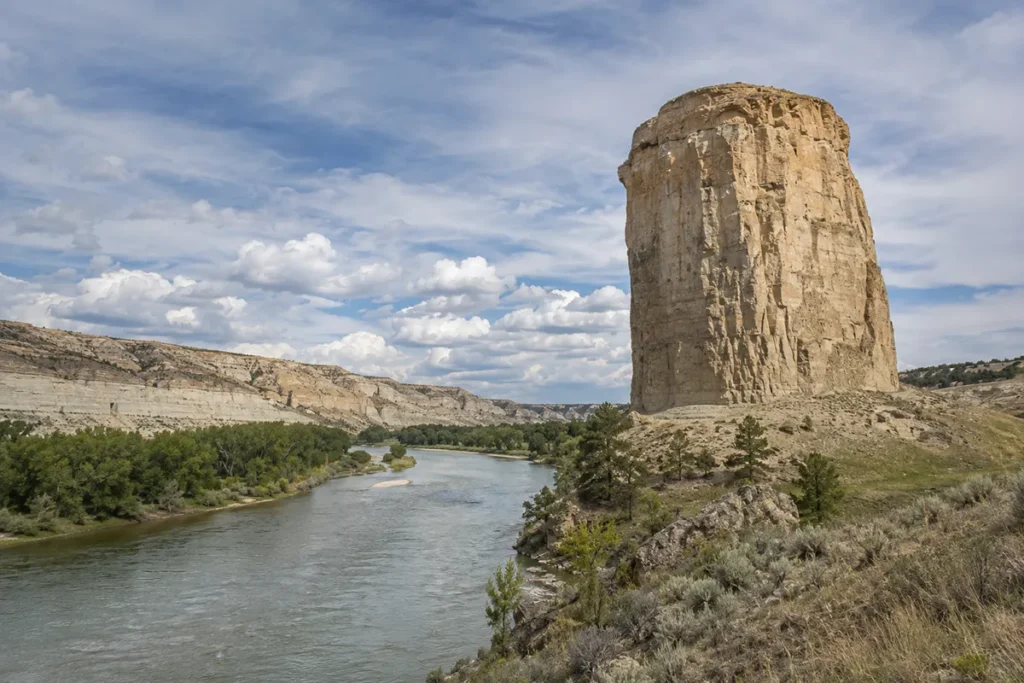
This is the most distinctive Lewis & Clark Expedition site you can visit anywhere. Pompeys Pillar is a 200-foot sandstone tower rising above the Yellowstone River about 28 miles northeast of Billings.
On July 25, 1806, Captain William Clark climbed the pillar and carved his signature and the date into the rock — and that signature is still there, protected behind glass for viewing.
It is the only on-site physical evidence of the Lewis & Clark Expedition still visible to the public anywhere along their route.
The visitor center is well-done — interpretive exhibits, a film, and a staircase up to Clark’s signature. Plan 90 minutes minimum. The monument is BLM-managed and day-use only — no overnight camping at Pompeys Pillar itself. The closest legitimate overnight is back in Billings or the small primitive Captain Clark fishing access nearby.
Note: Pompeys Pillar typically operates Memorial Day through late September. Outside that window, the visitor center is closed but the grounds and the signature itself remain visible (though access is more limited).
2. Little Bighorn Battlefield National Monument
About 65 miles southeast of Billings, this is one of the most sobering historical sites in the American West. Custer’s Last Stand was fought here on June 25–26, 1876.
The monument includes the battlefield, individual marker stones where soldiers and Lakota / Cheyenne warriors fell, and the relatively recent Indian Memorial that adds essential context to a story that for decades was told only from the U.S. Army perspective. Custer National Cemetery is on-site.
This is a half-day stop minimum. The auto tour route is 4.5 miles and you’ll want time at the visitor center.
3. The Beartooth Highway
About an hour south of Billings (60 miles) is Red Lodge, the northern terminus of the Beartooth Highway — Charles Kuralt’s “most beautiful drive in America.”
From Red Lodge, the road climbs nearly 5,000 vertical feet to Beartooth Pass at 10,947 feet before dropping into Cooke City near Yellowstone’s northeast entrance. The drive is one of the legitimate American bucket-list scenic roads.
Important: The Beartooth is not recommended for motorhomes. Switchbacks, 10% grades, and the high-elevation exposure are punishing on large rigs. Park your RV at the Billings KOA or in Red Lodge, then drive Beartooth in a tow vehicle.
I cover Red Lodge RV parks for the Beartooth in detail in the hidden-gems guide if you’d rather basecamp closer to the pass.
4. Pictograph Cave State Park
Less than 30 minutes from downtown Billings, Pictograph Cave State Park preserves three caves containing Native American rock paintings dating back as much as 2,100 years.
Easy walking access, interpretive signs, small visitor center. Plan an hour. The visible pictographs include warriors with shields, rifles (showing post-contact era), and turtles. A genuinely meaningful stop that doesn’t get the visitor traffic it deserves.
5. ZooMontana
The state’s only zoo, on the west side of Billings. Modest in scale but well-curated for animals native to the Northern Plains. Good half-day stop with kids.
6. Western Heritage Center and Yellowstone Art Museum
Downtown Billings has more cultural depth than its size suggests. The Western Heritage Center covers Northern Plains history with depth, and the Yellowstone Art Museum holds a strong regional collection plus rotating contemporary exhibits.
If you want a broader Montana picture, see my guide to things to do across Montana.
What I Wish I’d Known About RVing Through Billings
Seven things from years of routing through eastern Montana:
1. Billings is the cheapest fuel in Montana. The city sits on a long, flat plain with multiple distribution terminals nearby. Gas and diesel run noticeably lower here than in any Montana mountain town. Fill up before heading west.
2. Real RV service is available here. Major chain RV dealerships (Camping World, Pierce RV, and several independents) operate in Billings. If you’ve got tire, brake, slide-out, or appliance issues, this is the place to address them before continuing west — service appointments in Bozeman or Missoula can run 2–4 weeks out.
3. The wind is real, especially in spring. Eastern Montana sits in a wind corridor that runs from the Dakotas. Spring (April–May) and fall (October) can bring sustained 30–45 mph winds for days. Awning damage is the #1 wind-related issue at Billings parks. Secure or retract awnings even if you’re “just stepping out for groceries.”
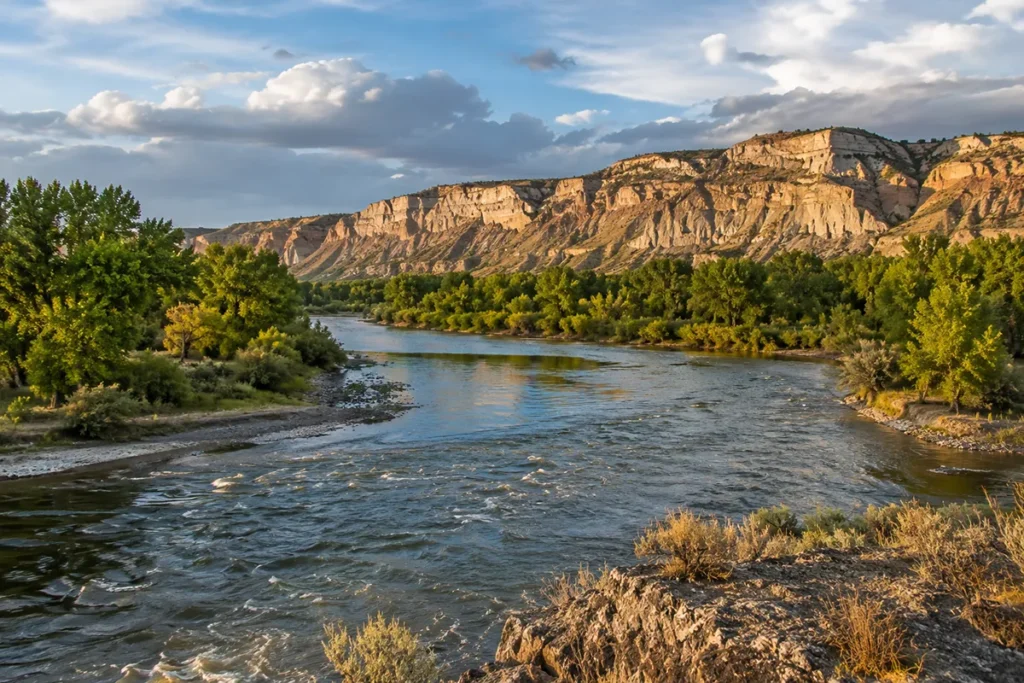
4. The Yellowstone River is the last undammed major river in the lower 48. That’s not just trivia — it means the river has a natural seasonal flow that floods spring lowlands. RV parks on the river edge (including the KOA in big snow years) occasionally have river-adjacent sites that flood during May–June high water. Ask which sites are most flood-resistant if booking spring.
5. Cell service is excellent. All three major carriers (Verizon, AT&T, T-Mobile) have full coverage in Billings and most of the highway corridor through Hardin and Crow Agency. Drops are minor compared to the rest of the state.
6. Pompeys Pillar visitor center hours are seasonal. Confirm before driving 28 miles each way in shoulder seasons. The grounds are usually open even when the visitor center is closed, but the staircase up to Clark’s signature is gated outside operating hours.
7. Adjacent regions worth pairing. West on I-90, my RV parks in Bozeman guide covers the next major city stop. Southwest to Yellowstone, my Gardiner RV parks guide covers the north entrance gateway. South into Wyoming via Bighorn Canyon is also reachable — but that’s beyond Montana’s borders.
Practical Info Box: Billings RV Camping at a Glance
| Detail | What to Know |
|---|---|
| Best season | May through October (long season due to lower elevation) |
| Elevation | 3,123 ft (lowest of Montana’s major cities) |
| Highway access | I-90 / I-94 junction (city is the western terminus of I-94) |
| Closest airport | Billings Logan International (BIL) |
| Headline park | Billings KOA Holiday (the world’s first KOA, 1962) |
| Independent alternative | Yellowstone River RV Park |
| Closest major attractions | Pompeys Pillar (28 mi NE), Little Bighorn (65 mi SE), Beartooth (60 mi SW) |
| RV service / repair | Multiple dealerships in town; fastest service in MT |
| Distance to Yellowstone (north entrance via Gardiner) | 175 mi, ~3 hrs |
| Distance to Yellowstone (NE entrance via Beartooth) | 130 mi but RVs cannot take Beartooth |
| Wind exposure | High in spring and fall; secure awnings |
| Cell service | Strong across all major carriers |
| Long-term monthly rates | Available, call ahead |
| Average peak season nightly rate | [verify — typically $50–$85 full hookups] |
The Bottom Line on Billings RV Camping
Billings doesn’t get the romantic Montana coverage that Glacier and Yellowstone gateways do, and that’s exactly why it’s such a valuable stop. The RV parks here are cheaper, more available, more service-rich, and easier to get to than anything in the mountain corridor.
The historical day trips — Pompeys Pillar in particular — are some of the most distinctive in the American West. And for travelers entering Montana from the east, Billings is the natural transition point between the high plains and the mountains.
If you’ve got the time, take two nights. One day for the Lewis & Clark / Little Bighorn historical pairing, one day for Pictograph Cave and a Beartooth tow-vehicle day trip from Red Lodge.
From there, route west to Bozeman, southwest toward Yellowstone, or south through Wyoming. You’ll leave with a better sense of the eastern Montana landscape than most tourists ever get.
Pin this post for your trip planning, see the full best RV parks in Montana directory for the rest of the state, and drop your Billings questions in the comments. I’m through here multiple times a year and the guide gets updated each spring.
— Robert Hayes