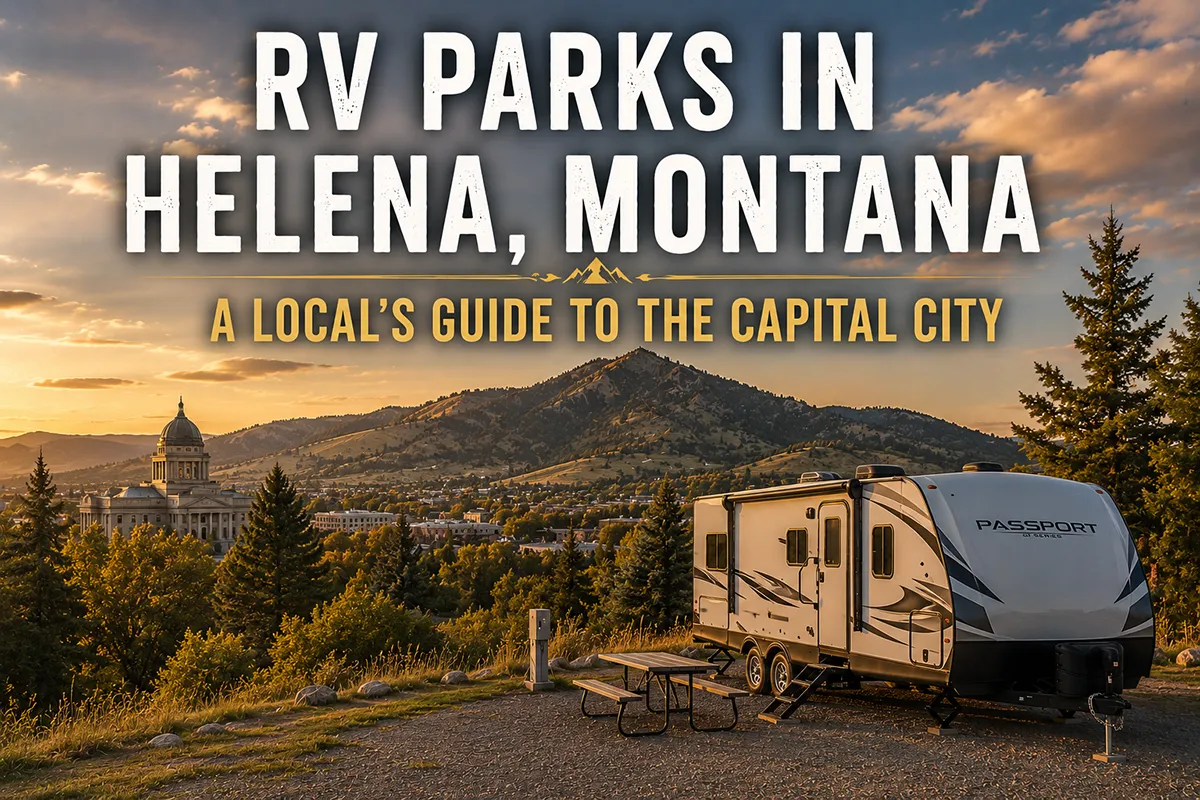
Helena is the Montana city that surprises every RVer who finally stops here. It’s the state capital and one of the smallest capital cities in America (population around 33,000), but the place has more dimension than any single visit can cover — a real historic downtown built on top of the Last Chance Gulch gold strike, a state Capitol that’s worth touring, a Cathedral of St. Helena modeled on Vienna, and the Gates of the Mountains boat tour on the Missouri River just north of town.
If you’re routing the I-15 corridor between Glacier and Yellowstone, Helena is the natural overnight — and a smarter choice than most travelers realize.
TL;DR: Helena’s RV park scene is small but functional. The headline park, formerly Lincoln Road RV Park, has been rebranded as Helena North KOA under new ownership — same location off I-15 Exit 200, now with KOA-network amenities and pricing. Helena Campground & RV Park (an independent in-town option with mature shade trees) and Conestoga Campground in the Smith River Valley (a quiet basecamp option) round out the main choices. Best season: May through October. Lower demand than mountain-corridor parks. Excellent equidistant base between Glacier and Yellowstone.
This is the capital region RV deep-dive. It’s part of my broader best RV parks in Montana directory. If you’re driving I-15 between Butte and Great Falls — or planning a Glacier-to-Yellowstone loop that needs a midpoint — Helena is the answer.
Liked this article?
Add Roaming Montana as a preferred source so you see more of our articles and guides on Google.
Why Helena Is Underrated for RV Travelers
Geography first. Helena sits at 4,058 feet in a valley between the Big Belt Mountains to the east and the Elkhorn Mountains to the south, with the Continental Divide running just west of town.
Interstate 15 cuts through the eastern edge of the city. The Missouri River winds north of town through the limestone canyons of the Gates of the Mountains. The geography is more dramatic than Helena’s modest population would suggest.
What makes Helena strategically valuable for RVers: it’s at the geographic middle of Montana. The numbers tell the story:
- Helena to Glacier (West Entrance): ~265 miles, ~4.5 hours
- Helena to Yellowstone (North Entrance): ~225 miles, ~3.75 hours
- Helena to Glacier (East / St. Mary): ~215 miles, ~3.5 hours
- Helena to Bozeman: 100 miles, ~1.75 hours
- Helena to Great Falls: 90 miles, ~1.5 hours
For any Glacier-to-Yellowstone road trip, Helena is the only single overnight that splits the drive evenly. That’s a real value if you’ve been pushing miles for days.
The other thing Helena offers: a working capital city with all the urban amenities (RV repair, big-box stores, full medical services, a regional airport) but with less traffic, fewer tourists, and cheaper site rates than Bozeman or anywhere near the parks.
The Best RV Parks in Helena (Important: Name Change Alert)
1. Helena North KOA (Formerly Lincoln Road RV Park)
Location: Off I-15 Exit 200, about 5 miles north of downtown Helena.
This is the most-searched RV park in the Helena area, and it’s recently been rebranded from “Lincoln Road RV Park” to “Helena North KOA” under new ownership.
Same physical park, same location, but now part of the KOA Journey network with updated amenities. If you’ve seen older reviews under the Lincoln Road name, they’re describing this property — just be aware the brand, pricing, and some operations have changed.
Current setup: pull-through RV sites with 30 and 50-amp service, full hookups, water, sewer, concrete pads, and picnic tables.
Two shower houses, laundry room, a Kamp K-Store, and a dog park with separated large and small breed sections. Streaming-quality WiFi. KOA Patio sites with built-in fire pits at premium pricing.
What I like: Easy I-15 access — you can roll off the highway and be parked in 5 minutes. Big-rig friendly with pull-throughs that don’t require unhitching. The location is the only full-service RV park genuinely easy to reach from the interstate. Manageable walking distance to a couple of nearby restaurants.
Heads-up: Reviews historically note narrow sites in some sections, especially the back-in spots between seasonal long-term sites. Request a pull-through with adequate spacing if you’re in a wide rig. Trees are sparse — limited natural shade, but good for satellite dish setup. Train tracks run nearby; freight trains pass at night. Rate has climbed since the KOA rebrand — expect to pay [verify current rates — recently $52–$75 depending on site type].
2. Helena Campground & RV Park
Location: 5820 N. Montana Avenue, on the north side of Helena.
The independent, mature-trees alternative. Helena Campground & RV Park is the in-town option with actual canopy shade from mature trees, full utility hookups, and close proximity to downtown Helena. Playground and family-friendly amenities.
What I like: Shade. After enough sun-baked KOA stops, parking under real trees feels like a small gift. Sites are well-spaced compared to the KOA. Easier walk to local restaurants than the more isolated KOA location.
Heads-up: Fewer amenities than the KOA — no pool, smaller store. Books up earlier than expected on summer weekends.
3. Conestoga Campground (Smith River Valley)
Location: Smith River Valley near White Sulphur Springs, about an hour east of Helena off US-12.
Conestoga isn’t actually in Helena proper, but it’s the regional option I send people to when they want a quieter, more scenic basecamp.
The campground sits in the wide-open Smith River Valley with grass between sites, mountain views, and a community fire pit. Playground, on-site camp store with groceries, RV supplies, and gifts. Free DVD rentals at the front office (a charmingly old-school touch).
What I like: Quiet. The Smith River Valley is one of the most underrated scenic regions in Montana. From Conestoga you’re positioned almost exactly equidistant between Glacier and Yellowstone — which is the actual reason the park advertises that way. The owners run it with old-school care.
Heads-up: White Sulphur Springs is a small town with limited dining options. You’ll want to be more self-sufficient with food than at an in-town park. The Smith River itself is famous for a permit-only float section — book year-ahead lottery, not relevant for spontaneous RV travelers, but worth knowing about if you’re a fly fisher.
4. Townsend / Canyon Ferry Lake KOA
Location: Townsend, about 35 miles southeast of Helena on Highway 287, near Canyon Ferry Lake.
Worth knowing about if you’re a fisher or boater. This KOA Holiday sits right on the Missouri River, with mini-golf, a camp store with boating and fishing equipment, propane, firewood, and an on-site snack bar. The neighboring Flamingo Grill is a long-running local favorite.
What I like: Direct water access. Canyon Ferry Lake is a massive reservoir (the third-largest in Montana) with excellent walleye and trout fishing. If your trip has a fishing emphasis, this is a stronger pick than the in-town Helena options.
Heads-up: 35 miles from downtown Helena, so not the right choice if you came for the city itself.
5. Quieter Alternative: Alhambra RV Park
Location: Clancy, 10 miles south of Helena on I-15 at Exit 182.
For travelers who want a quieter, more rural setting while still being close to Helena, Alhambra RV Park in Clancy is the play. Creek-side, on the site of a historic hot springs sanitarium. I cover Alhambra RV Park in Clancy in detail in my hidden-gems guide — worth a look if downtown Helena parks are full or if the Helena KOA isn’t your style.
Things to Do When You’re Parked in Helena
Helena gives you more to work with than its size suggests. Here’s how I’d spend a day and a half from any of the parks above.
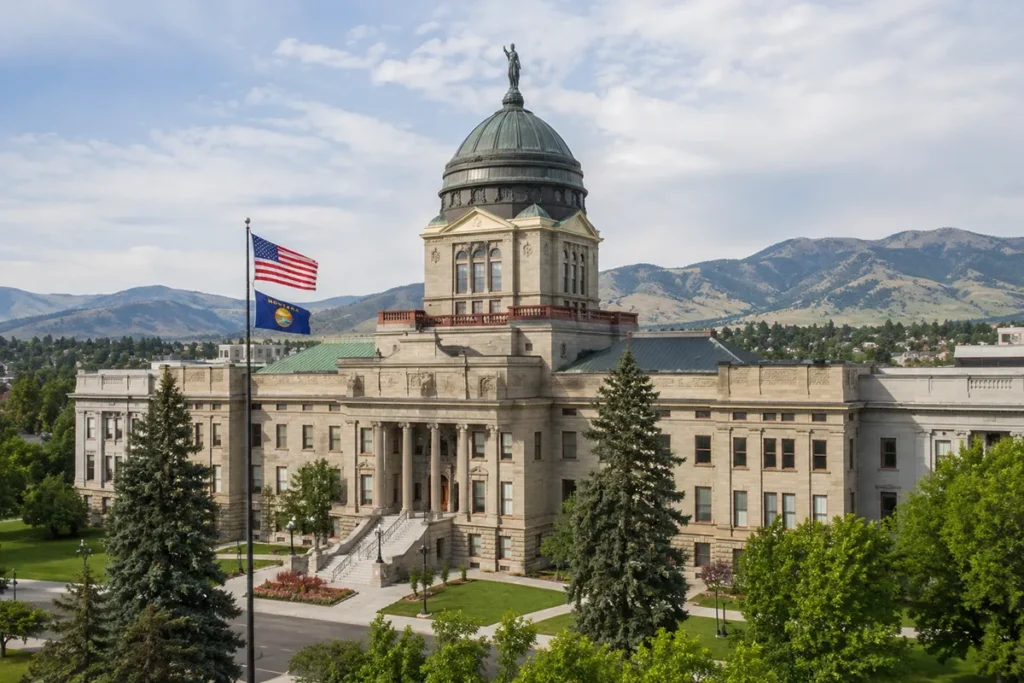
1. The Montana State Capitol
The state Capitol building sits on the south end of downtown, built of Montana sandstone with a copper-clad dome.
Free self-guided tours daily, and the rotunda murals — including Charles M. Russell’s massive “Lewis and Clark Meeting the Flathead Indians” — are worth the visit by themselves. Plan an hour.
2. Last Chance Gulch (Downtown Helena)
The original gold strike that founded Helena in 1864 ran right down what is now Last Chance Gulch, the curving main street of downtown.
The street follows the original creek bed (a tip you’d never guess from the city plan), and walking it takes you past restored Victorian-era buildings, the historic Atlas Block, the Power Block, and what was once “the richest gulch in the world” at the height of the strike. Allow a half-day for downtown including a meal.
3. The Last Chance Tour Train
For travelers who don’t want to walk the city, the open-air Last Chance Tour Train runs from the corner of 6th Avenue and Roberts Street through summer (typically Memorial Day through late September).
It’s an hour-long narrated ride covering the gold-rush history, the mansion district, the cathedral, and a restored miner’s village. Worth the modest fee if you’ve got mobility limits or are short on time.
4. Cathedral of St. Helena
530 N. Ewing. The Cathedral was modeled on Votivkirche in Vienna and completed in 1924. Stained-glass windows imported from Munich, twin spires visible from across the city. Free to visit. One of the most striking buildings in Montana.
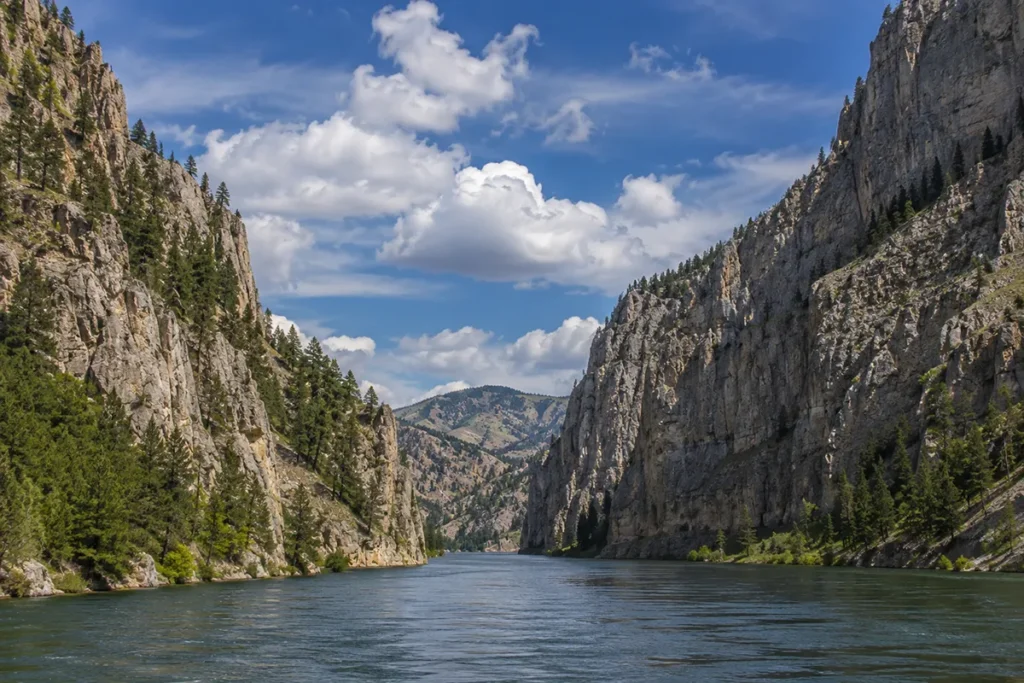
5. Gates of the Mountains Boat Tour
About 20 miles north of Helena, the Missouri River winds through a narrow limestone canyon that Lewis and Clark named “Gates of the Mountains” because the cliffs seem to open and close as the boat moves through.
Two-hour boat tours operate Memorial Day through September. This is one of the most distinctive Montana experiences you can have — pictographs on the canyon walls, bighorn sheep on the cliffs, eagles, and a deep sense of being somewhere genuinely wild. Highly recommended.
6. Mount Helena City Park
Right in downtown Helena, Mount Helena (5,468 feet at the summit) has hiking trails accessible from the city itself. The 1906 Trail loop is the popular one — about 3 miles, moderate effort. Views from the summit cover the entire valley and into the Big Belt Mountains.
7.Canyon Ferry Lake
About 30 minutes east of Helena, this massive Missouri River reservoir offers boating, fishing (excellent walleye), and a Bureau of Reclamation visitor center at the dam. Multiple state park / day-use areas around the shoreline. Worth a half-day or longer for water-recreation-oriented travelers.
8. MacDonald Pass and the Continental Divide
Just west of Helena, US-12 climbs over MacDonald Pass at 6,325 feet — and crosses the Continental Divide. There’s a small pullout at the pass with interpretive signs. For anyone collecting Divide crossings, it’s a quick and satisfying stop.
For broader trip planning, my guide to things to do across Montana covers the whole state.
What I Wish I’d Known About RVing Through Helena
Seven lessons from years of routing through the capital region:
1. Helena summers can swing from cool to hot fast. At 4,058 feet, mornings can be in the 40s even in July, with afternoons climbing to the high 80s. Pack layers and don’t assume you can leave windows open all day — afternoon heat can build inside an RV faster than you’d expect.
2. The Lincoln Road → Helena North KOA transition still confuses people. If you’re reading older RV blog posts or printed campground directories, they reference “Lincoln Road RV Park.” Same place, new ownership, KOA branding. Don’t book it twice thinking they’re different parks.
3. Cell service is good in town but variable around it. Verizon, AT&T, and T-Mobile all work in Helena itself. Once you head west toward MacDonald Pass, east toward Canyon Ferry, or north toward the Gates of the Mountains, service degrades. Download maps before leaving.
4. The Helena Regional Airport (HLN) is small but functional. If you’re picking up rental RVs or family flying in, HLN runs limited daily service. Larger flights typically connect through Salt Lake City, Denver, or Minneapolis.
5. The Helena KOA’s narrow sites are real. Multiple year-over-year reviews flag this — if you’ve got a wide rig, slide-outs that need clearance, or just prefer space between you and your neighbors, request a pull-through specifically and confirm site width when booking.
6. Restaurant scene punches above the city size. Helena has unusually strong food for its population — Lucca’s, the State Bar & Grill, Karmadillo’s, Steve’s Café, and the historic Windbag Saloon downtown. Don’t default to chain dining; the local spots are genuinely good.
7. Adjacent routing. North on I-15 takes you to Great Falls (90 miles, ~1.5 hours). South on I-15 takes you to Butte (65 miles). East on US-12 / I-90 leads to Bozeman RV parks (~100 miles). North via US-287 and on to US-2 eventually reaches Glacier National Park RV parks.
Practical Info Box: Helena RV Camping at a Glance
| Detail | What to Know |
|---|---|
| Best season | Mid-May through October |
| Elevation | 4,058 ft |
| Highway access | I-15 (Exit 200 for KOA, Exit 192 for downtown) |
| Closest airport | Helena Regional (HLN) |
| Headline park | Helena North KOA (formerly Lincoln Road RV Park) |
| Independent / shade pick | Helena Campground & RV Park |
| Quiet alternative | Conestoga (Smith River Valley); Alhambra (Clancy, 10 mi south) |
| Distance to Glacier (West Entrance) | 265 mi, ~4.5 hrs |
| Distance to Yellowstone (North Entrance) | 225 mi, ~3.75 hrs |
| Distance to Great Falls | 90 mi, ~1.5 hrs north on I-15 |
| Distance to Butte | 65 mi, ~1 hr south on I-15 |
| Distance to Bozeman | 100 mi, ~1.75 hrs east via US-12 then I-90 |
| Continental Divide crossing | MacDonald Pass (6,325 ft) on US-12 just west of town |
| Must-see local experience | Gates of the Mountains boat tour |
| Cell service | Strong in town; variable in surrounding canyons |
| Average peak season nightly rate | [verify — typically $50–$75 full hookups] |
The Bottom Line on Helena RV Camping
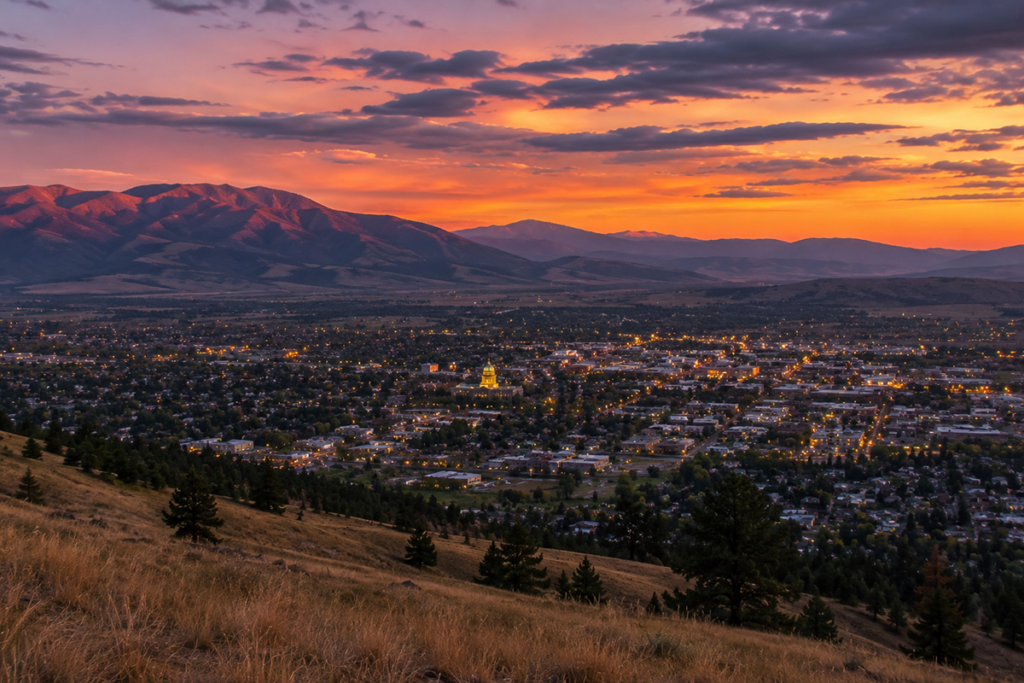
Helena is the Montana stop most road-trippers skip and end up regretting. The capital city has more cultural depth than its small size suggests, the geographic position makes it the natural midpoint of any cross-state route, and the RV park demand is significantly lower than what you’ll deal with at the gateway towns near Glacier or Yellowstone.
If you’re building a Montana itinerary that includes both national parks, Helena solves the “where do we sleep that’s halfway between” question better than anywhere else.
Two nights is the right amount if your schedule allows. One day for downtown Last Chance Gulch and the Capitol; one day for either the Gates of the Mountains boat tour or a Canyon Ferry Lake / MacDonald Pass loop.
From there, route north toward Glacier, south toward Yellowstone, or east toward Bozeman with the kind of breather most cross-state Montana trips don’t include.
Pin this post for your trip planning, see the full best RV parks in Montana directory for the rest of the state, and drop your Helena questions in the comments. The guide gets updated every spring as ownership and rates shift across the region.
— Sarah Bennett