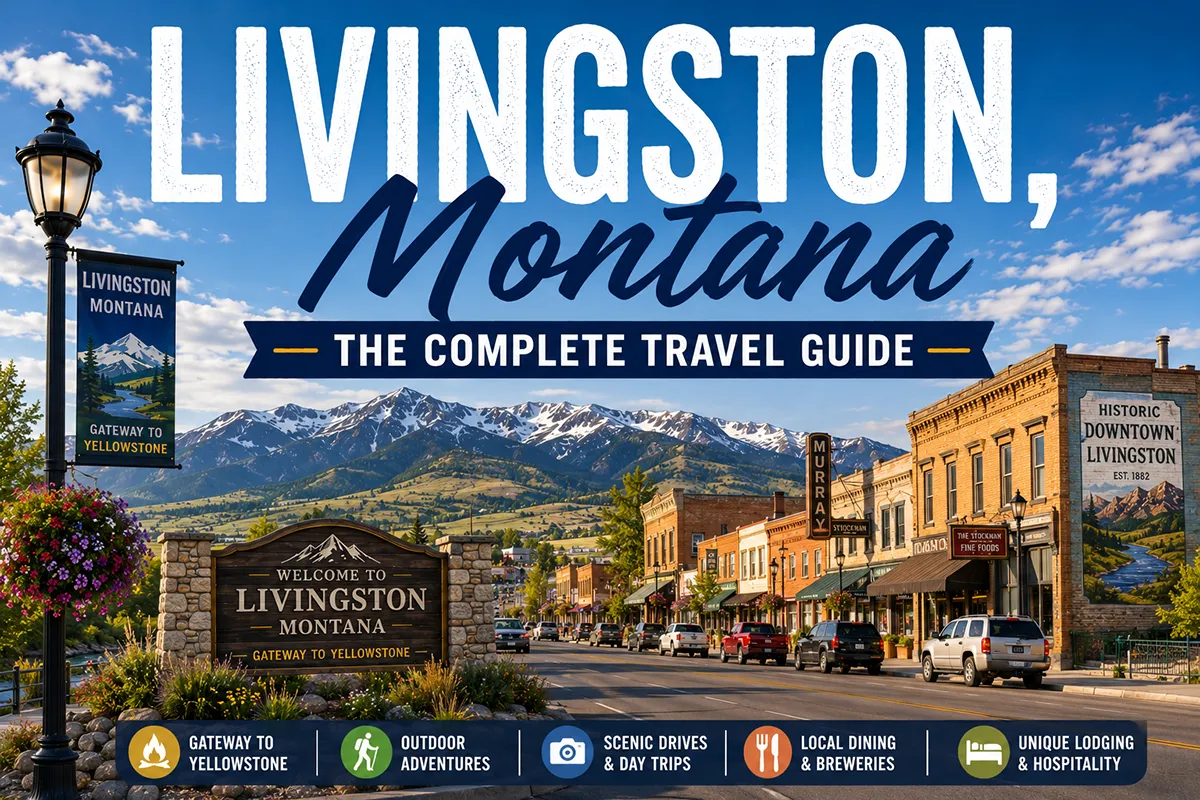
Livingston, Montana, was built on a bet that a railroad would stay, and for a while it was the front door to Yellowstone National Park.
TL;DR
- Livingston (8,040 residents in 2020) is the Park County seat on the Yellowstone River, about 26 miles east of Bozeman on I-90, and the start of the Paradise Valley drive to Gardiner.
- It began as a Northern Pacific rail town, moved there from a nearby settlement called Clark City, and still shows that history in its 1902 depot, brick downtown, and historic Murray Hotel.
- The town is known for three things the guides often mix up: serious wind, fly fishing, and a downtown arts-and-food scene that has outlasted the railroad.
- It works as a half-day stop, a full weekend, or a base for fishing and Yellowstone trips, but the wind and a short list of lodging deserve honest planning.
Liked this article?
Add Roaming Montana as a preferred source so you see more of our articles and guides on Google.
The Town That Moved to the Tracks
Most Montana towns grew where people already were. Livingston is a rare case where the people moved to the town. A settlement called Clark City was founded in 1882 nearby, but when the Northern Pacific Railway chose a different site for its division point, residents moved to the new location and Clark City was largely abandoned. Livingston was incorporated on December 21, 1882.
The railroad gave the town everything: shops, jobs, and a reason to exist. The Northern Pacific also promoted Yellowstone heavily and built a branch line south through Paradise Valley to Gardiner, which made Livingston the primary gateway to the park for roughly a quarter century. The Northern Pacific stockholder Johnston Livingston is credited as the namesake, though many accounts point instead to his nephew Crawford Livingston Jr., who founded the First National Bank in 1883.
That sets up the question this guide tries to answer: what is a railroad town for after the railroad leaves? The rest of the post follows the answers Livingston has found, and sits alongside other railroad-shaped communities in the Montana cities and towns series. For the wider story of the lines themselves, see the Montana railroads guide.
Livingston in Numbers
- Population: 6,851 in 2000, 7,044 in 2010, and 8,040 in 2020, a gain of about 14 percent in the last census decade. By Montana standards, that is steady growth, not a boom.
- Area: about 6 square miles.
- Elevation: about 4,495 feet.
- County seat: Park County.
- Median age: about 42.5 in 2020.
- Economy: tourism is now the main driver after the railroad era ended in the mid-1980s. Livingston HealthCare is among the largest local employers.
- Historic buildings: the National Register lists 17 sites in Livingston and the immediately adjacent area.
Three Depots and a Museum
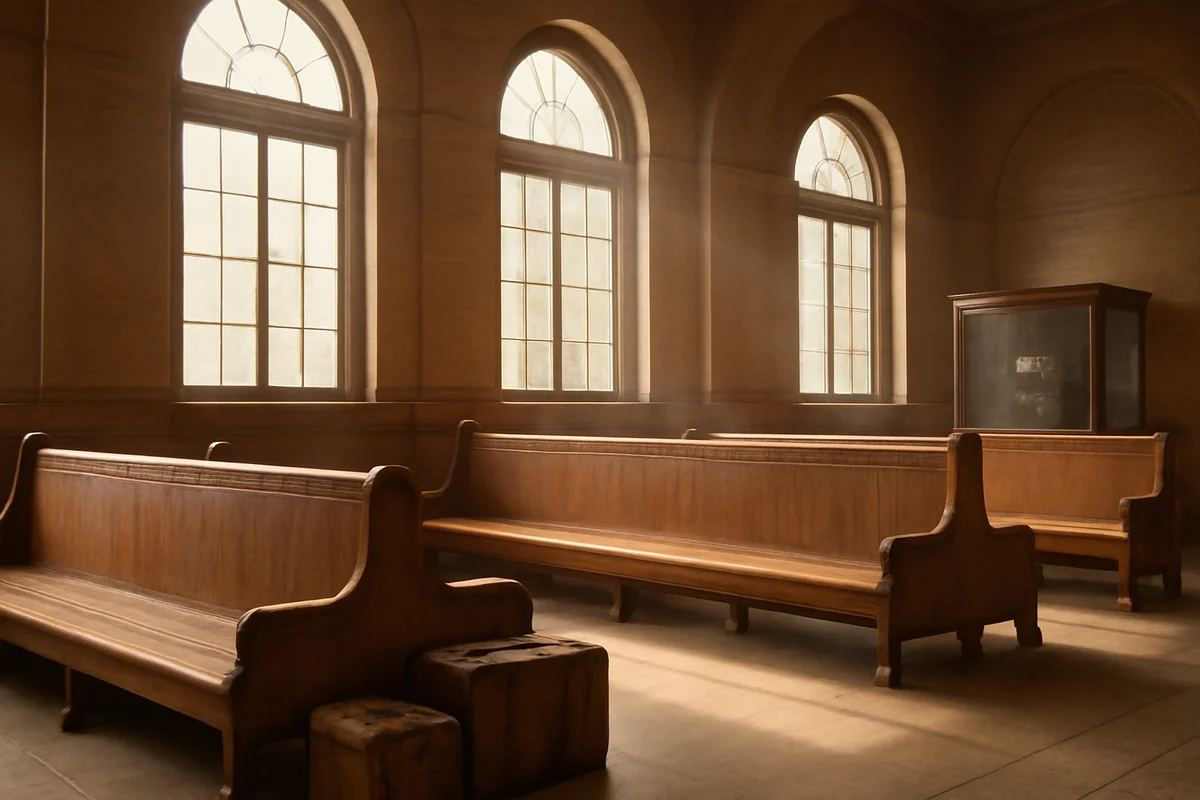
The Livingston Depot is the clearest symbol of the town’s origin, and its story has more turns than the plaque suggests.
How the station grew
An 1882 wooden station burned. An 1888 brick structure became inadequate as Yellowstone traffic grew. The present building, designed by the Minnesota firm Reed and Stem (later known for the first design of Grand Central Terminal in New York), opened in 1902 in an Italianate style with red and yellow brick and terra cotta trim.
One persistent mistake appears in older guides: the station is sometimes described as a “Burlington Northern” building. Burlington Northern did not exist until 1970, and the station was built by the Northern Pacific Railway.
The long goodbye
Passenger service ended in October 1979 when Amtrak discontinued the North Coast Hiawatha, ending trains to Livingston. In the mid-1980s the railroad could not find a buyer for the depot, and local citizens lobbied to have it donated to the city and managed by a nonprofit, the Livingston Depot Foundation. After extensive restoration, it reopened in summer 1987 as the Livingston Depot Center, a museum and community space.
Visiting
The museum is generally open from late May to mid-September, with events in the off-season. Pair it with the Montana train stations guide for other restored stations across the state.
A Walk Down Park Street
Downtown Livingston rewards walking, and the main stretch is compact.
The Murray Hotel
The Murray Hotel, at Park and Second streets, opened in 1904 as the two-story Elite Hotel, built for passengers of the Northern Pacific. It was founded by Josephine Kline with financing from the family of future U.S. Senator James E. Murray, and in the 1920s it grew to four floors. The Murray family later foreclosed and renamed it, a decision Kline contested as far as Washington, D.C., in 1934 without regaining ownership.
The hotel is listed on the National Register of Historic Places (September 5, 1979) and has about 29 to 30 rooms today after major renovations in the 1990s. Its guest list has included actors, writers, and a Danish queen, and the film director Sam Peckinpah reportedly lived in a suite from 1979 to 1984.
One claim often repeated is that Anthony Bourdain named it among his favorite hotels. The documented link is narrower: the hotel’s restaurant, the 2nd Street Bistro, opened in 2004 and appeared in a 2009 episode of Bourdain’s show about Montana, where he dined with Jim Harrison and Russell Chatham.
Museums
The Yellowstone Gateway Museum, run by Park County, was founded in 1977 in the 1906 North Side School and holds artifacts, exhibits on the founding of Yellowstone as the first national park, and outdoor displays that include a one-room schoolhouse, a blacksmith shop, and a caboose. The town also hosts a fly-fishing museum and discovery center tied to Fly Fishers International. For a state-wide list, see the best museums in Montana.
Galleries and the art walk
Downtown holds more than a dozen galleries, and a gallery walk has historically been held on the fourth Friday of summer months. The pace is quieter than Bozeman’s, which is the point.
The Wind
Livingston’s wind is real, and it deserves its own explanation because guides routinely exaggerate or misdescribe it.
What the records say
On a February morning in 2024, the Mission Field weather station recorded a gust of 92 miles per hour, two miles short of the all-time record of 94 miles per hour set at the same site in 1978. Average winds that day ran about 60 to 75 miles per hour in town. Wikipedia describes Livingston as among the windiest places in the country, ranking second among airport stations from 2000 to 2010.
Why it happens
Paradise Valley acts as a funnel between mountain ranges. When high pressure sits over Yellowstone and lower pressure moves south from Canada, air is pushed north through the valley and accelerated as it squeezes through the gap. The National Weather Service describes the result as a gap wind, and the strongest events usually come in fall and winter, blowing from the south.
The claim to avoid
Many pages call Livingston the “windiest incorporated city in Montana.” No source for that exact phrase was found, so a safer description is “one of the windiest places in the country”.
Planning around it
High-profile vehicles and trailers are the main hazard on I-90 and US-89 on windy days. The how windy is Montana guide gives the wider context, and the Montana winter driving guide covers road conditions.
Writers, Film, and the Livingston Reputation
The town has a reputation out of proportion to its size, and the sources agree on the names. Calamity Jane lived in Livingston for about two decades. Writers associated with the area include Thomas McGuane and Jim Harrison, and the journalist Tom Brokaw has local ties. The town has also served as a film location for productions including Rancho Deluxe (1975), A River Runs Through It (1992), The Horse Whisperer (1998), and Yellowstone (2018 to 2024).
For readers following that thread, the movies filmed in Montana and famous people from Montana guides pick it up. Fly fishing sits underneath all of it: Dan Bailey opened his fly shop in 1938, and the town remains one of the sport’s centers.
Eating and Drinking Downtown
The dining scene is small but unusually good for a town of this size. Names recur across guides, so confirm hours before planning a meal around any one of them.
- Mark’s In & Out is a classic burger stand, reported to have operated since 1954.
- 2nd Street Bistro is the Murray’s restaurant, opened in 2004.
- Neptune’s Brewery and Katabatic Brewing Company are the two downtown breweries; Katabatic’s name is a weather term for a downslope wind, a nod to the area’s famous air movement.
- Gil’s Goods is a breakfast and lunch spot that guides often single out.
- Livingston Farmers’ Market has been held on Wednesday evenings in summer.
For broader beer coverage, see the Bozeman breweries guide.
The Rodeo and the Summer Calendar
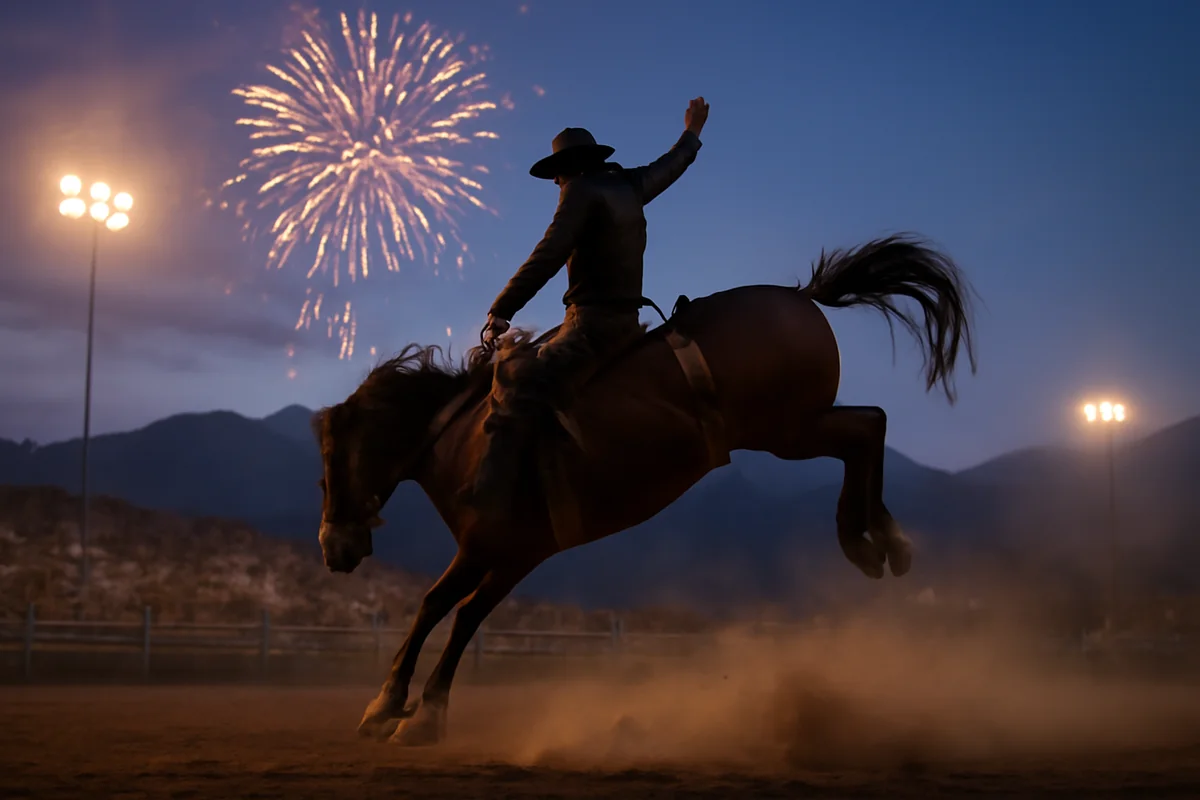
The Livingston Roundup Rodeo is the town’s biggest annual event. The 2026 event ran July 1 to 4 at the Park County Fairgrounds, with evening performances and nightly fireworks, and was billed as the 102nd annual rodeo. The county page describes “more than 101 years of rodeo” and features PRCA and WPRA competitors.
Earlier guides cite a 1924 start. Counting the 102nd edition in 2026 points to 1925 if the event ran every year, so the safer wording is “more than a century”. The rodeo draws large crowds, and lodging in town and in nearby Bozeman fills early. Other summer events include Summerfest, held in Sacajawea Park, and the Park County Fair in early August.
The Yellowstone River and Paradise Valley
South of town, US-89 follows the Yellowstone River into Paradise Valley and on to Gardiner.
The drive
One regional guide lists the route from Livingston to Gardiner as 53 miles and about 58 minutes. Earlier copy gave 56 miles and contradicted itself on the valley’s length, so a single route length is safer.
Stops along the way
- Mallard’s Rest Fishing Access Site, about 13 miles from Livingston, is a popular viewpoint and river access.
- East River Road (MT-540) branches off US-89 about five miles south of town and offers a quieter alternative with the same valley views.
- Pine Creek has a falls hike reported at about 2.5 miles round trip, with the trail continuing to an alpine lake.
- Chico Hot Springs, about 25 miles south of Livingston, is a long-running resort with mineral pools. See the Chico Hot Springs guide.
- Emigrant sits roughly midway, with seasonal food stops.
- Yankee Jim Canyon marks the southern end of the valley before Gardiner.
Fishing and floating
The Yellowstone River is often described as undammed, and the Yellowstone Country tourism office calls it a long undammed trout stream. Fishing access sites run along the valley, and guided floats are available. Check current regulations and flow conditions with a local shop. For other rivers, see the best rivers in Montana guide.
A Half Day Built Around the Tracks
Livingston compresses well, which makes it a good stop between Bozeman and Yellowstone. One workable order for a traveler arriving from I-90:
- Start at the depot. Park near the tracks, look at the Italianate brickwork and the platform canopy, and check whether the museum is open for the season.
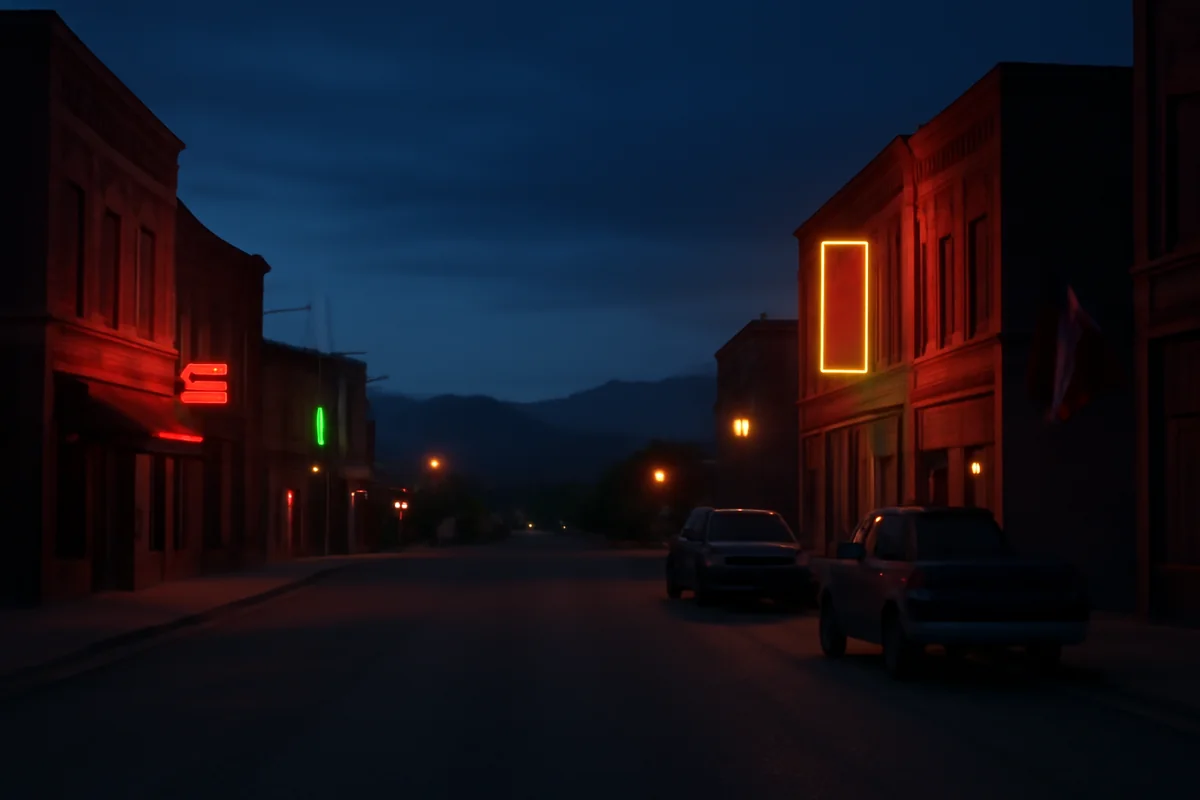
- Walk Park Street toward the Murray. The brick blocks and neon are the main attraction, and a stop in the hotel lobby costs nothing. The hotel’s restaurant and bar are the obvious lunch or coffee options.
- Cross to the Yellowstone Gateway Museum. Allow one to two hours if the schoolhouse and outdoor displays interest the group.
- Walk or drive to the river. Sacajawea Park sits on the Yellowstone River and is the easiest place to see the water without a boat or a fishing license.
- Finish on the Paradise Valley road. Even a 25-minute drive south on US-89 shows why the valley earned its name, and Mallard’s Rest is a reasonable turnaround point.
On a windy day, shorten the outdoor stops and put the museums first. On a calm summer evening, reverse the order and end with a drink downtown. Neither plan needs reservations except for rodeo week.
Where Livingston Fits Among Gateways
Three towns compete to be the base for a Yellowstone trip from the north. The right choice depends on priorities, not on a single winner.
| If the priority is… | Likely best base | Trade-off |
|---|---|---|
| Walkable historic downtown, food, galleries | Livingston | Fewer lodging choices; wind |
| Closest to the North Entrance | Gardiner | Small and seasonal; fewer dining options |
| Airport, big selection, university-town energy | Bozeman | Longer drive; higher traffic |
| Soaking after a river day | Chico, near Pray | Not in town; reservations matter |
| Different mountain, different town | Red Lodge | Opposite direction via Beartooth Highway |
Lodging prices change with season and events, so rates should be checked directly.
Season by Season
Spring (April and May) brings runoff, chancy weather, and cheaper rooms. Wind remains common.
Summer (June to August) is the best time for the depot, galleries, rodeo, and river. See Montana in July.
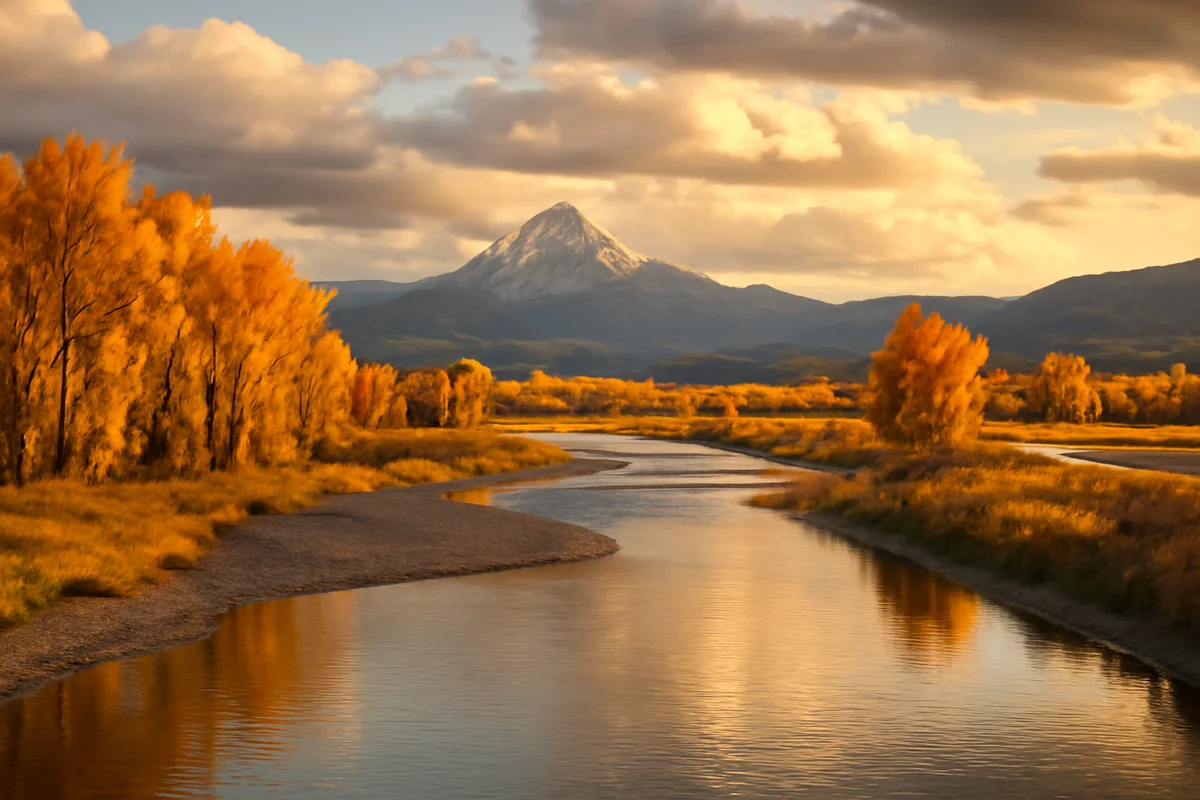
Fall (September and October) brings golden cottonwoods in the valley and some of the year’s strongest wind events. See Montana in October.
Winter (December to March) is quiet in town and risky on exposed roads. Mild temperatures can be interrupted by high-wind days that close or restrict traffic. For timing across the state, see best time to visit Montana.
Insider Notes for Visitors
- Check the wind forecast before towing or driving a high-profile vehicle. Gusts can exceed 90 miles per hour on the worst days.
- Book rodeo-week lodging early. Rooms in Livingston and Bozeman tighten around July 4.
- Confirm museum hours. The depot runs seasonal hours.
- Treat repeated claims with care. “Windiest in Montana” and “longest undammed river” circulate widely without a clear source.
- Use East River Road for a slower valley drive. It offers the same views with less traffic.
- Do not count on one restaurant. Small-town hours change, especially off-season.
- Pack layers. Wind can make a mild day feel much colder.
Practical Info at a Glance
Livingston Quick Reference
| Best season | June to September for events and river access |
| How to get there | I-90 exit toward downtown; about 26 miles east of Bozeman; nearest major airport is Bozeman Yellowstone International (see Montana airports) |
| Distance to Gardiner | About 53 miles via US-89 |
| Livingston Depot Center | Seasonal, late May to mid-September |
| Lodging | Murray Hotel and other small properties; more in Bozeman |
| What to bring | Wind layers, sun protection, fishing license if fishing |
| Nearby attractions | Paradise Valley, Chico Hot Springs, Gardiner, Yellowstone National Park, Bozeman |
Common Questions About Livingston, Montana
Is Livingston, Montana, worth visiting? Yes, for its railroad history, historic downtown, fly-fishing culture, and access to Paradise Valley.
Why is Livingston so windy? Paradise Valley funnels south winds between mountain ranges when pressure differences build, a pattern the weather service calls gap wind.
How far is Livingston from Gardiner? About 53 miles via US-89.
How far is Livingston from Bozeman? About 26 miles on I-90.
When was the Livingston Depot built? It opened in 1902 and housed Northern Pacific passengers until Amtrak ended service in 1979.
What is the Murray Hotel? A 1904 railroad hotel on Park Street, listed on the National Register of Historic Places in 1979, with about 30 rooms.
A Railroad Town That Kept Its Reasons
Livingston did not keep its railroad, but it kept what the railroad built: brick blocks, a depot, a hotel, and a front-row seat to a valley that people still cross a continent to see. The wind is part of the deal.
For the next stop on a bigger itinerary, browse the full Montana cities and towns guide, and pin this post for trip planning. Questions about Livingston and Paradise Valley go in the comments below.