Every year during the first week of July, the Arlee powwow grounds come alive with something that’s been happening at this location since the 1890s.
The Arlee Fourth of July Celebration — organized by the Confederated Salish and Kootenai Tribes — is one of the oldest and most respected intertribal powwows in the Pacific Northwest.
Traditional dance competitions draw high-caliber dancers from tribes across the continent. The Grand Entry, with all dancers entering the arbor in full regalia, is one of the most moving cultural spectacles in Montana.
Arlee is a small community of about 600 people. During the celebration, it hosts thousands.
TL;DR
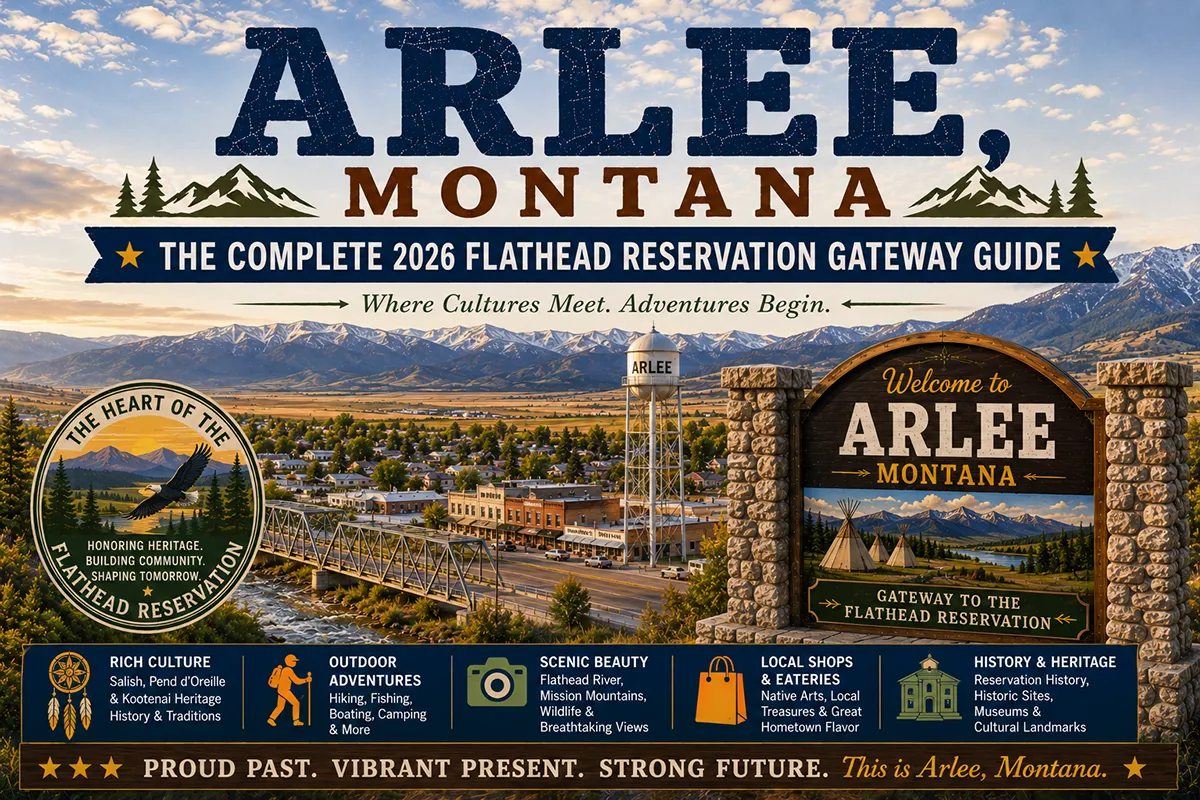
- Arlee (~600) is a small Flathead Reservation community at the south end of the Mission Valley on US-93, 25 miles north of Missoula.
- The Arlee Fourth of July Celebration is one of the Pacific Northwest’s oldest and most significant intertribal powwows — four days of traditional dance competitions, drumming, and CSKT cultural events.
- The Jocko River flows through the Arlee valley — fishing accessible with tribal recreation permit.
- Gateway to the Mission Valley north (Ronan, Pablo, Polson) and Missoula south.
- Visitor protocol: The Flathead Reservation is sovereign CSKT territory — approach with genuine respect.
- Best for: travelers genuinely interested in CSKT culture, people attending the Fourth of July Celebration, and travelers using Arlee as a Mission Valley/Missoula connector.
Liked this article?
Add Roaming Montana as a preferred source so you see more of our articles and guides on Google.
Arlee at a Glance
| Population (2020) | ~600 |
|---|---|
| County | Lake County |
| Reservation | Flathead Indian Reservation (CSKT homeland) |
| Region | Western Montana (Mission Valley) |
| Elevation | 3,009 ft |
| Distance to Missoula | ~25 miles south (~30 min) |
| Distance to Ronan | ~35 miles north (~40 min) |
| Distance to Pablo | ~40 miles north (~45 min) |
| Best for | Fourth of July Celebration powwow, Jocko Valley character, Mission Valley gateway |
What Makes Arlee Different
Arlee sits at the junction where the Jocko Valley meets the Mission Valley — where US-93 transitions from the Missoula-to-Jocko corridor into the broader Mission Valley opening north.
This geographic position makes Arlee simultaneously the southern gateway to the Mission Valley and the northern outpost of the Jocko drainage.
The Jocko River takes its name from Jacques Finlay, a fur trader of mixed Scottish and Indigenous heritage who worked in the region in the early 19th century.
The Jocko Valley’s lower reaches — from the canyon above Arlee through the valley floor to the reservation boundary — represent Salish homeland in a specific, place-named way that the broader “Flathead Reservation” designation can obscure.
The Arlee Fourth of July Celebration is the community’s most public cultural expression. The powwow has been held continuously in Arlee since the 1890s, making it one of the oldest continuous powwows in the Northwest.
The dance competitions — judged rigorously across multiple categories by style — draw dancers who travel thousands of miles. The drumming groups maintain the competitive rhythm. Grand Entry, when all dancers enter the arena in full regalia, is genuinely moving.
This is a ceremony and a competition, not a tourist attraction. Visitors are welcome as guests. That distinction matters.
For broader trip context, see my Montana cities and towns hub.
Things to Do In & Around Arlee
1. Arlee Fourth of July Celebration (First Week of July)
Four days of intertribal powwow at the Arlee powwow grounds — traditional dance competitions across multiple categories, drumming, giveaway ceremonies, stick games, and community events. Open to respectful public visitors. Grand Entry (evening) is the most spectacular session — arrive early for the best viewing position. No fee to attend.
Photography protocol: Ask individual dancers before photographing. Never photograph ceremonies without explicit permission. Some sessions may restrict photography.
2. CSKT Cultural Events (Year-Round)
The Confederated Salish and Kootenai Tribes host cultural events throughout the year — language programs, cultural gatherings, and community celebrations. Contact the CSKT tribal office in Pablo for the current schedule of publicly accessible events.
3. Jocko River
The Jocko River flows through the valley near Arlee. Fishing for rainbow and brown trout requires a CSKT tribal recreation permit for non-tribal members — available at tribal offices and sporting goods stores in the area. The river is productive and offers less-pressured fishing than the Bitterroot.
4. Ninepipe and Pablo National Wildlife Refuges (30–40 min north)
Both wetland refuges are exceptional for birding and wildlife viewing. See Ronan guide and Pablo guide for full context.
5. St. Ignatius Mission (45 min north)
The 1854 Jesuit mission in St. Ignatius has 58 original murals painted by Brother Joseph Carignano — one of the most significant historic religious sites in Montana. See the section under St. Ignatius in the Mission Valley.
6. National Bison Range (Moiese, 45 min north)
One of America’s last free-roaming bison herds, on CSKT-managed land. 19-mile auto tour with hiking trails. See Pablo guide for context.
7. Three Chiefs Culture Center (Pablo, 45 min north)
The CSKT’s own cultural institution presenting Salish, Kootenai, and Pend d’Oreille history. See Pablo guide.
8. Day Trip to Missoula (30 min south)
University city, Clark Fork River, Rattlesnake Wilderness, full services. See Missoula guide.
9. Jocko Valley Scenic Drive
US-93 from Missoula north through the Jocko Valley to Arlee — a beautiful transition from university-city to reservation-homeland landscape. The valley’s character shifts noticeably.
10. Flathead Reservation Cultural Context
Understanding the Flathead Reservation’s history — the 1855 Hellgate Treaty, the 1910 allotment, the CSKT’s ongoing sovereignty and governance — enriches the entire Mission Valley experience. The Three Chiefs Culture Center in Pablo (45 min north) is the right starting point.
Where to Stay
Arlee has limited lodging — Missoula and Ronan are the practical bases:
| Option | Vibe | Price | Location |
|---|---|---|---|
| Arlee motel options | Very basic | $80–120 | In Arlee |
| Missoula hotels (30 min south) | Full selection | $140–260 | Full city |
| Ronan motels (40 min north) | Budget | $90–150 | Mission Valley |
During Fourth of July Celebration: Reserve months ahead anywhere within an hour. The entire region fills.
Where to Eat
- Local café and convenience options in Arlee — limited
- Missoula (30 min south) — full dining variety
- Ronan (40 min north) — more options
Visitor Protocol — Flathead Reservation
Arlee is within the sovereign Flathead Indian Reservation (CSKT). Visitors should:
- Approach the powwow as guests — cultural ceremony, not tourism entertainment
- Ask before photographing any dancers, ceremony participants, or community members
- Purchase tribal recreation permits for fishing and backcountry use on reservation lands
- Follow all posted guidelines at cultural events
- Respect the community’s sovereignty and protocols
Getting There & Around
From Missoula: 25 miles north on US-93, about 30 minutes.
From Ronan: 35 miles south on US-93, about 40 minutes.
By car: Car-dependent. No public transit.
When to Visit
First week of July: Fourth of July Celebration — the single most significant reason to visit Arlee.
Spring (April–May): Best for Jocko River fishing (with tribal permit) and birding at the nearby refuges.
Summer (June–August): Full Mission Valley season; Ninepipe and Pablo refuges active.
Year-round for Mission Valley character: The Jocko Valley has its own beauty in every season.
Personal Tips
The Fourth of July Celebration requires respectful planning. Research powwow etiquette before attending — what to wear, how to behave, when to stand during Grand Entry, photography rules. The Montana CSKT tribal website has guidance.
Grand Entry is the highlight. Evening Grand Entry sessions — when all dancers enter the arbor in full regalia as the drummers play — are the most visually spectacular moments of the celebration.
Arrive early for good viewing. The powwow grounds fill quickly on celebration days. Arrive at least an hour before the scheduled Grand Entry for a good vantage point.
Combine with Mission Valley exploration. Arlee is the southern end of the Mission Valley corridor — continue north to Ronan, Pablo, and Polson for the full Mission Valley experience.
Missoula is the practical base. 30 minutes south, with full hotel and dining infrastructure. During the Fourth of July Celebration, reserve rooms in Missoula months ahead.
Arlee Quick Facts
| Reservation | Flathead Indian Reservation (CSKT) |
|---|---|
| Arlee Fourth of July Celebration | Continuous since 1890s; one of oldest in Pacific Northwest |
| Jocko River | Tributary of the Clark Fork; tribal permit required to fish |
| Average summer high | 84°F |
| Average winter low | 18°F |
Conclusion
Arlee rewards visitors who come with genuine purpose — the Fourth of July Celebration is among Montana’s most meaningful cultural events, one that has continued uninterrupted for over 130 years on the same grounds as an expression of CSKT cultural continuity. For travelers who approach it as guests rather than tourists, it’s an experience available nowhere else in the state.
Have an Arlee question? Drop it in the comments — I read every one.
Frequently Asked Questions
Is Arlee Montana worth visiting?
Arlee is worth visiting specifically for the Arlee Fourth of July Celebration — one of the Pacific Northwest’s oldest and most significant intertribal powwows, with traditional dance competitions and drumming that draw participants from across North America. Outside the celebration, Arlee functions as a Flathead Reservation gateway community; Missoula (30 min south) and Ronan (40 min north) are the area’s more developed bases.
What is the Arlee Fourth of July Celebration?
The Arlee Fourth of July Celebration is an annual intertribal powwow organized by the Confederated Salish and Kootenai Tribes (CSKT) in Arlee, held during the first week of July. One of the oldest continuous powwows in the Pacific Northwest (ongoing since the 1890s), it features traditional dance competitions across multiple categories, drumming groups, giveaway ceremonies, and community events. Open to respectful public visitors.
What tribe is in Arlee Montana?
Arlee is located within the Flathead Indian Reservation, homeland of the Confederated Salish and Kootenai Tribes (CSKT) — combining the Bitterroot Salish, Upper Pend d’Oreille, and Kootenai peoples. The CSKT is a federally recognized sovereign nation.
How far is Arlee from Missoula?
Arlee is approximately 25 miles north of Missoula on US-93 — about a 30-minute drive. Missoula is the practical lodging and dining base for visitors to Arlee.
Do I need a tribal permit to fish the Jocko River?
Yes — fishing on the Jocko River within the Flathead Reservation requires a CSKT tribal recreation permit for non-tribal members. Permits are available at tribal offices in Pablo and at sporting goods retailers in the region. State fishing licenses alone do not authorize fishing on reservation waters.