I’ve been in a lot of Montana museums — enough to build out a running list of the best museums in Montana — and this is the only one where a guide fitted me with a hard hat and a headlamp before I could see the main exhibit. That’s your first sign that the World Museum of Mining is a different kind of visit.
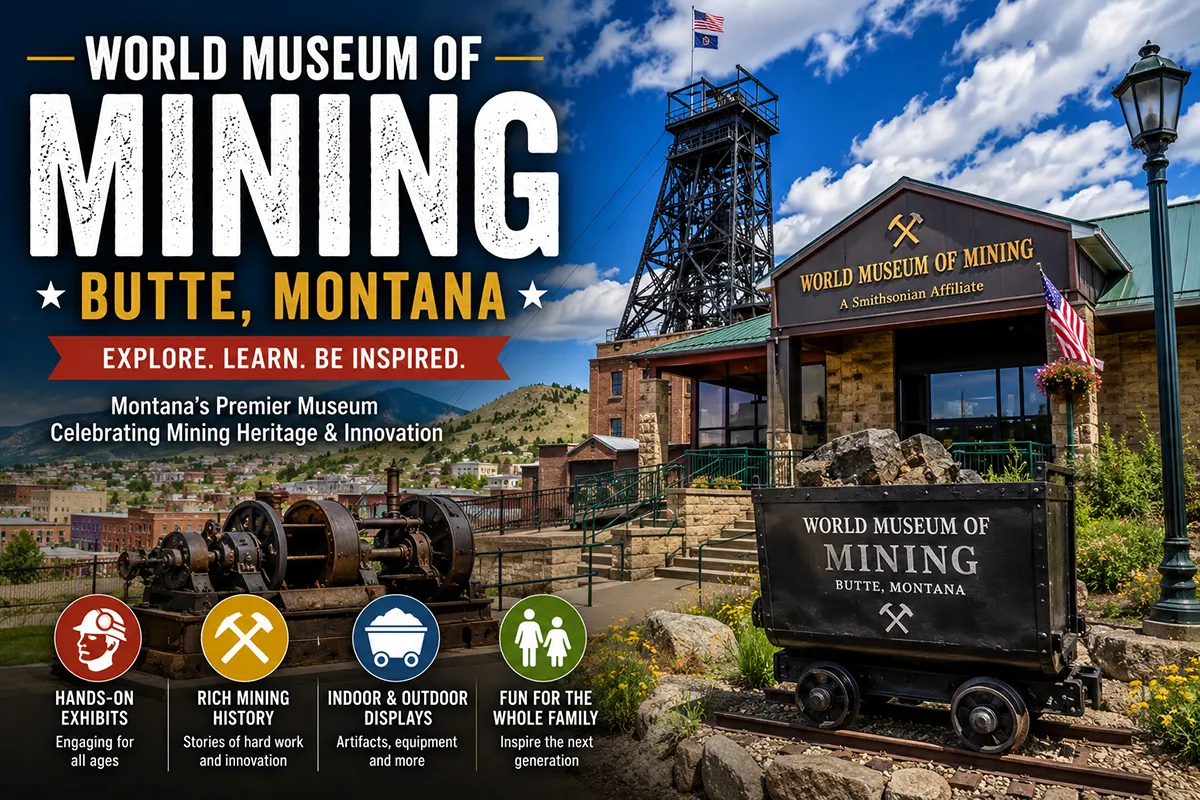
The World Museum of Mining sits directly on the grounds of the Orphan Girl, a real silver and zinc mine that operated from 1875 to the mid-1950s, on 22 acres just outside downtown Butte. You can tour 50+ historic buildings in the recreated town of Hell Roarin’ Gulch and, with a reservation, descend 100 feet underground into the actual mine workings. This guide covers what each part of the visit involves, what to know before booking the underground tour, the immigrant communities who actually built this place, and the sobering memorial that puts the whole site in context.
Liked this article?
Add Roaming Montana as a preferred source so you see more of our articles and guides on Google.
A Museum Built On an Actual Mine, Not a Replica
Most mining museums show you artifacts behind glass. This one puts you on the actual mine yard — the Orphan Girl claim was staked in 1875 and worked as a hard-rock silver and zinc operation until the mid-1950s, reaching a depth of roughly 3,200 feet before it closed.
When the World Museum of Mining chartered as a nonprofit in 1964 and opened to the public in July 1965, it didn’t build a fictional mining town from scratch — it preserved the real one that was already standing on 22 acres of former mine property, and moved in dozens of additional original buildings from other parts of Montana to round out the collection.
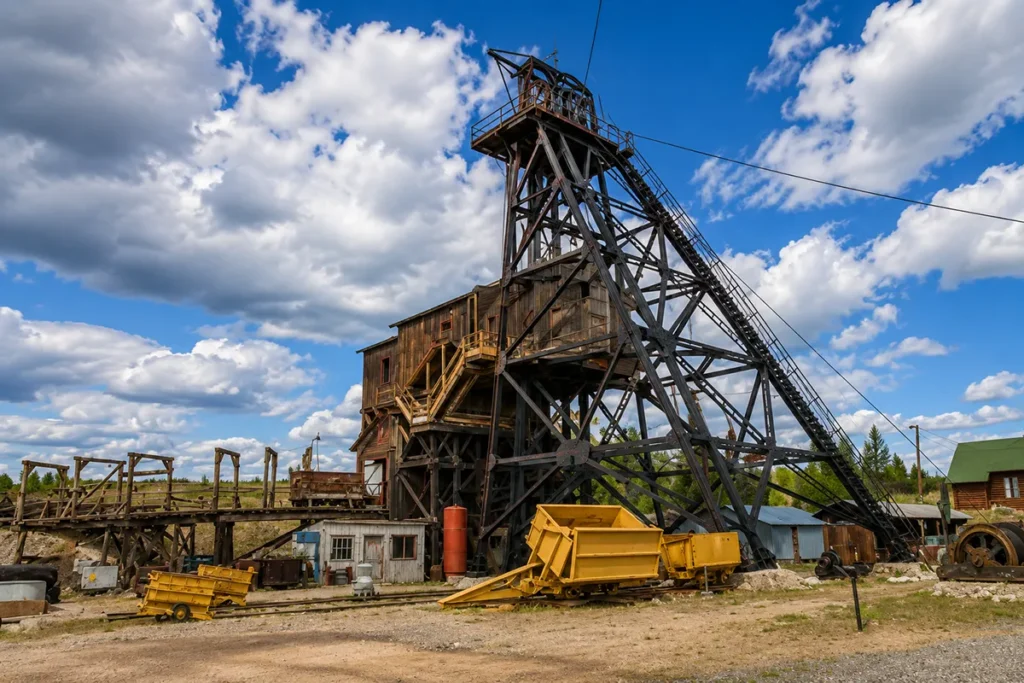
That distinction matters once you’re actually walking the grounds. The 100-foot steel headframe towering over the site isn’t a stage prop; it’s the Orphan Girl’s real hoist structure, the piece of machinery that lowered miners and equipment down and hauled ore back up for the better part of a century.
Standing underneath it gives you a genuinely different sense of scale than a museum photograph ever could.
The Underground Mine Tour
This is the part of the visit that makes the museum genuinely unforgettable, and it requires some advance planning.
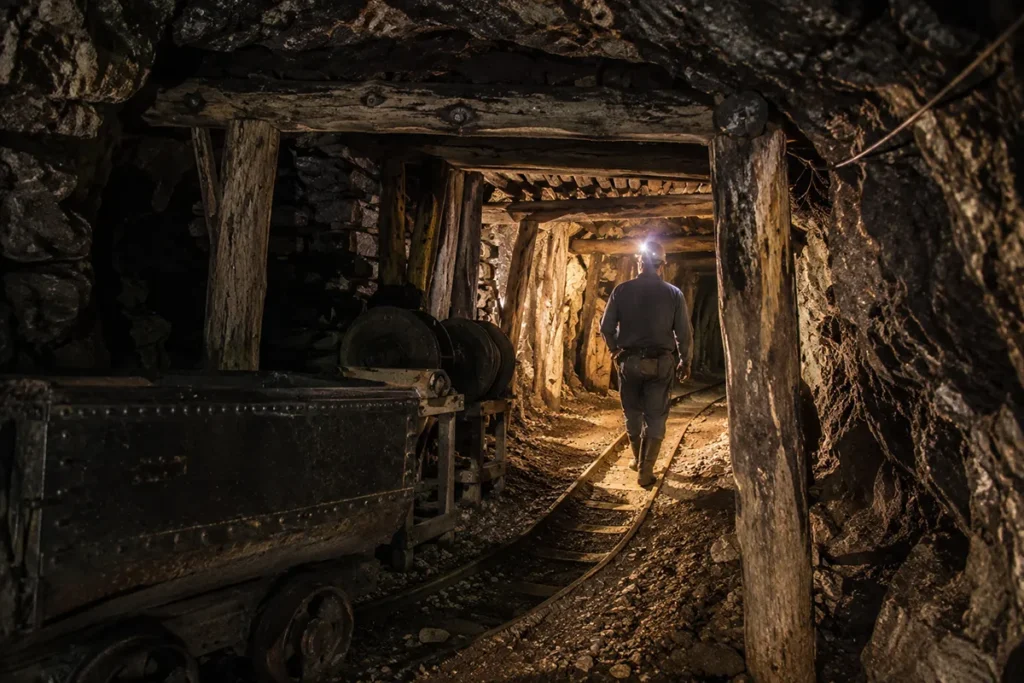
The Orphan Girl underground tour takes you roughly 100 feet down into real mine workings — one of the only publicly accessible exposed mine veins in North America — via a cage descent, followed by a guided walk through original tunnels with a miner’s hard hat and headlamp as your only light beyond your guide’s.
The tour runs about 90 minutes and reservations are required; space is limited, and it’s seasonal, generally running through late spring and summer into fall before winter conditions and staffing limit availability.
A few practical notes worth knowing before you book: the underground tour is not wheelchair accessible and involves roughly 180 feet of entrance ramp with a noticeable slope, closed-toe shoes are required, and children under 5 aren’t permitted on the tour for safety reasons.
It runs cool and damp regardless of the weather topside, so bring a layer even if it’s 90 degrees outside when you arrive.
Guides are frequently former miners or people with direct family ties to Butte’s mining community, and the storytelling is genuinely the best part of the tour — the technical details about hard-rock mining methods land very differently coming from someone whose grandfather actually worked underground in Butte.
Hell Roarin’ Gulch
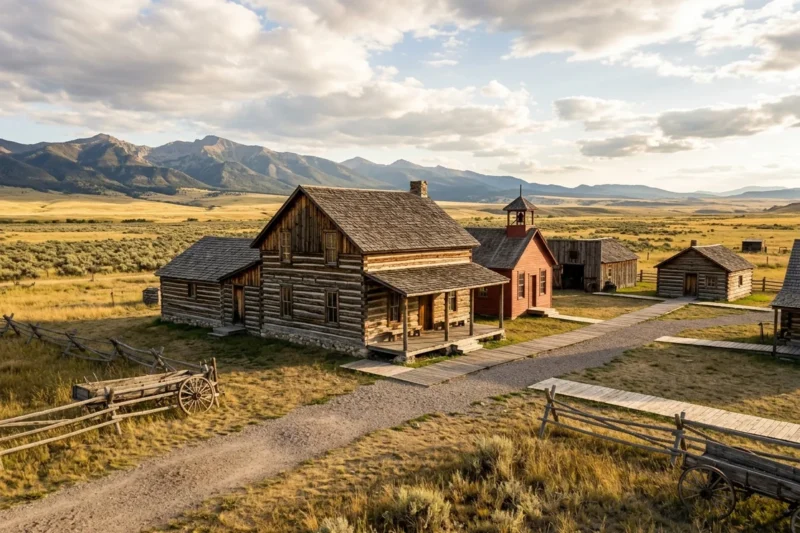
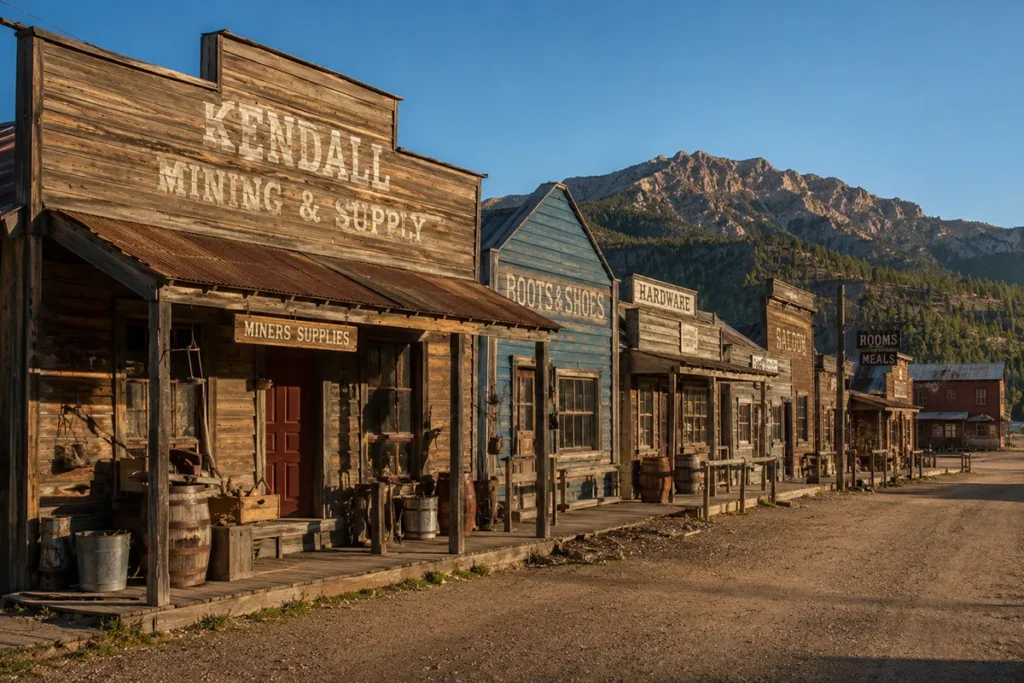
Above ground, Hell Roarin’ Gulch is a rebuilt 1890s mining town spread across more than 50 structures — some original buildings relocated from other Montana towns, including a superintendent’s house, a one-room schoolhouse, and two churches, others reconstructed to match the era.
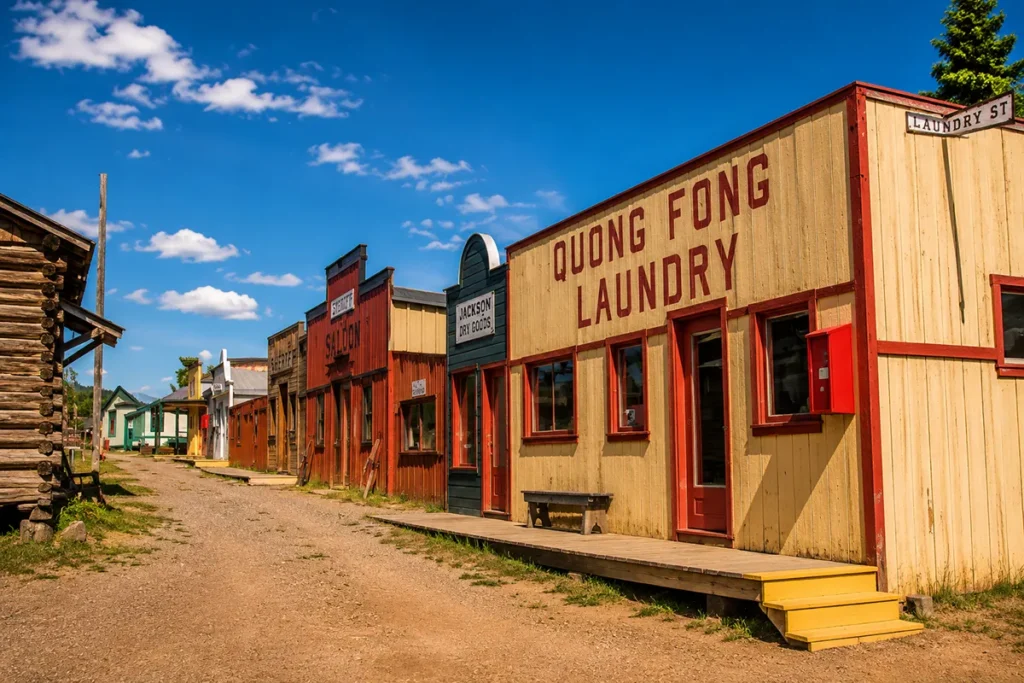
Walking the brick-lined streets, you’ll pass a Chinese laundry, a sauerkraut factory, a First National Bank branch, a union hall, a general store, and a saloon, each stocked with period-accurate artifacts that reflect the genuinely international workforce that built Butte — Cornish, Irish, Chinese, Finnish, and Eastern European immigrants all show up in the town’s surviving buildings and records.
It’s worth budgeting real time here rather than treating it as a quick walk-through on your way to the mine tour.
There’s a small-scale replica of the roller coaster from Columbia Gardens, Butte’s long-gone amusement park, tucked into the grounds — an unexpected, slightly whimsical detail in an otherwise heavy historical site.
The main exhibit building also houses a mineral room featuring rocks and ore samples collected by a former Orphan Girl miner over decades underground, a worthwhile stop if you’re at all interested in Montana’s broader rockhounding and gemstone scene.
The Miners Memorial Wall
Before you leave, make time for the Miners Memorial Wall and Remembering Garden, which lists more than 2,500 names of miners who died in Butte’s underground mines.
It’s a quiet, deliberately understated part of the site compared to the more hands-on exhibits elsewhere, and I think that’s intentional — after an hour or two of headframes and recreated saloons, the memorial forces a shift in tone that’s appropriate for what this place actually represents.
Butte’s mining wealth came at a real human cost, and the museum doesn’t sanitize that.
What Other Guides Get Wrong
Most Montana travel content mentions the World Museum of Mining in a single line — “great mining museum in Butte” — and moves on. A few things I see left out consistently:
- The underground tour’s reservation requirement rarely gets flagged clearly. Show up expecting a walk-up experience and you may find the day’s tour slots already full, especially in peak summer.
- The accessibility limitations of the underground tour go unmentioned in most generic listicles, which matters a lot if you’re traveling with anyone who has mobility concerns.
- Hell Roarin’ Gulch gets treated as a minor add-on, when it’s genuinely large enough to justify an hour or more on its own, separate from the mine tour.
- The Miners Memorial is almost never mentioned, despite being one of the more meaningful stops on the property.
- Nobody explains that this is a real mine yard, not a themed recreation — a distinction that changes how the whole visit feels once you understand it.
Personal Tips: What I Wish I Knew
- Book the underground tour before you arrive in Butte, not the morning of. Space is genuinely limited, and I’ve seen visitors show up expecting a same-day slot and leave disappointed.
- Budget half a day, not an hour. Between Hell Roarin’ Gulch, the main exhibit hall, the mineral room, and the underground tour, this is a full-morning-or-afternoon stop, not a quick photo-and-go visit.
- Dress in real layers. Butte’s surface weather and the underground tour’s cool, damp conditions are two completely different climates, sometimes in the same July afternoon.
- Pair this with the rest of Butte’s mining-era sites. The Mai Wah Museum (Chinese immigrant history) and the Berkeley Pit are both a short drive away, and together they round out the fuller, more complicated story of Butte’s boom years that the World Museum of Mining only tells part of on its own.
- If you’re claustrophobic or have mobility limitations, you can still have a great visit — the above-ground exhibits and Hell Roarin’ Gulch are the bulk of the experience even if the underground tour isn’t right for you.
The Immigrant Story Behind the Buildings
What struck me most on my own visits isn’t the machinery — it’s how clearly Hell Roarin’ Gulch tells the story of who actually built Butte.
This wasn’t a homogenous American workforce; it was a genuinely international one. Cornish miners brought hard-rock mining expertise from tin mines back in England. Irish immigrants fled famine and political unrest for wage work underground.
Chinese immigrants, largely excluded from mining jobs directly by discriminatory local ordinances, built out the laundries, restaurants, and service businesses that supported the mining workforce — which is exactly why a Chinese laundry sits among the reconstructed buildings here rather than a mine shaft entrance.
Finnish, Croatian, Serbian, and Italian immigrants all show up in Butte’s surviving records and neighborhood names.
By the early 20th century, Butte had one of the most ethnically diverse populations in the Mountain West, packed into a single hillside city, and Hell Roarin’ Gulch’s building mix — bank, union hall, church, laundry, saloon, schoolhouse — reflects that layered community more honestly than a single “mining town” narrative usually does.
The union hall building is worth pausing at specifically. Butte was a genuine center of American labor organizing in the early 20th century, home to fierce, sometimes violent conflicts between miners and mine owners over wages, safety, and working conditions.
The Miners Memorial Wall’s 2,500-plus names are a direct consequence of that era’s mining conditions — cave-ins, fires, and equipment failures killed workers at a rate that would be unthinkable in a modern American workplace, and the labor organizing that grew out of Butte’s mines helped shape mine-safety standards that extended well beyond Montana.
Quick Questions I Get Asked
Is the underground tour worth the extra cost and planning?
In my view, yes — it’s genuinely the most memorable part of the visit and something you can’t get at almost any other museum in the state. But the above-ground museum and Hell Roarin’ Gulch are a complete, worthwhile visit even if you skip it.
Is this a good stop for young kids?
Older kids tend to do well here, especially in Hell Roarin’ Gulch, but the underground tour specifically excludes children under 5, and the mine environment (dark, enclosed, damp) isn’t a great fit for very young children even where technically permitted.
How does this compare to other Montana Dinosaur Trail or history museums?
It’s a fundamentally different kind of experience — less about objects behind glass and more about physically standing in the actual environment where the history happened. If you’ve done Museum of the Rockies or the C.M. Russell Museum, this will feel like a change of pace rather than more of the same.
Is Butte worth a dedicated stop just for this museum?
I’d say yes, especially paired with Uptown Butte’s mining-boom architecture and the rest of the city’s mining-era historic sites. Butte rewards a slower visit more than most people expect.
Butte doesn’t get the tourist traffic of Bozeman or Missoula, and I think that works entirely in its favor here — you can take a 90-minute underground tour without fighting a crowd even in the middle of summer.
The museum sits just west of the Montana Tech campus, a short drive from Uptown Butte’s historic commercial district, which makes it easy to build into a full day exploring the city’s mining-boom architecture and history.
Our Butte city guide and Butte things-to-do guide cover the rest of what’s worth seeing while you’re in town, and if you want more context on how Butte’s mining boom fits into the state’s larger story, our Montana history overview is a useful companion read.
If you’re building a broader Montana mining-and-history itinerary, our Montana museums guide maps out how this pairs with other stops around the state.
Give yourself the full afternoon if you can. I’ve watched visitors budget an hour for this place and leave rushed and a little frustrated — between the headframe, Hell Roarin’ Gulch, the mineral room, the memorial, and the underground tour, there’s genuinely more here than a quick stop can do justice to.
Practical Info
| Address | 155 Museum Way, Butte, MT 59701 |
| Phone | (406) 723-7211 |
| Typical hours | Daily, roughly 9:30 a.m.–5 p.m. (Sun 10:30 a.m.–4 p.m.), open through late October with limited November availability [verify current seasonal hours] |
| Underground tour | Reservation required, ~90 minutes, seasonal (spring–fall), not wheelchair accessible, closed-toe shoes required, ages 5+ only |
| Admission | [verify current museum and underground tour pricing at miningmuseum.org] |
| Time needed | 2–4 hours (longer with the underground tour) |
| Good for | History enthusiasts, families with older kids, anyone interested in Montana’s industrial and immigrant history |
| Nearby pairing | Rest of our Butte things-to-do guide, Montana gemstones and rockhounding guide |
Final Thoughts
The World Museum of Mining is one of the few places in Montana where you don’t just learn about a piece of history — you physically descend into it.
The underground tour alone makes this worth planning ahead for, but don’t shortchange Hell Roarin’ Gulch or the Miners Memorial on your way through; together they give you the fuller, more human story of what built and cost Butte its reputation as the Richest Hill on Earth.
Pin this for your Butte trip planning, and if you’ve done the underground tour, I’d genuinely love to hear what stood out most in the comments — whether it was the cage descent, the guide’s stories, or just the strange quiet of standing 100 feet under a hillside that once employed thousands of people at once.