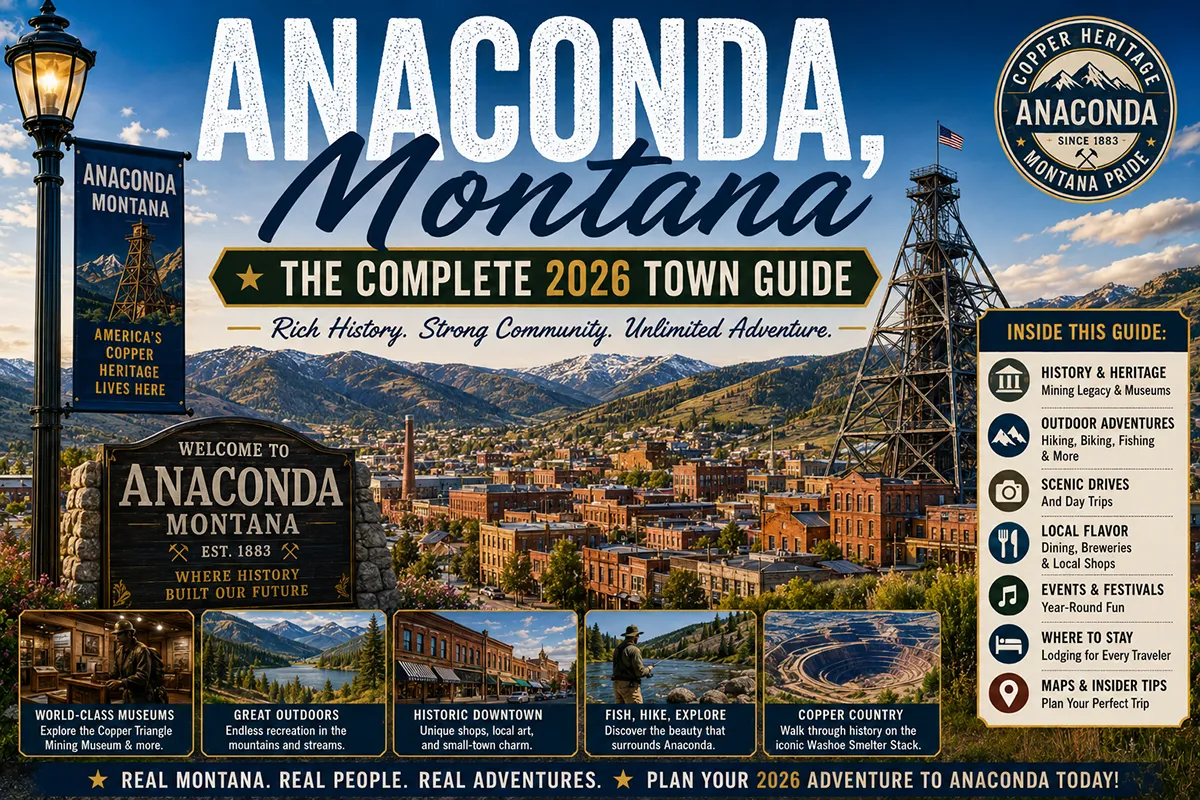
At 585 feet, the brick stack above Anaconda was the tallest chimney in the world for nearly two decades, and today it is the tallest thing for miles in a valley that otherwise belongs to the Pintler Mountains.
TL;DR
- Anaconda is a Deer Lodge County seat of about 9,400 people (2020 census, consolidated city-county), built in the 1880s by Marcus Daly to smelt Butte’s copper, and now a quiet gateway to the Pintler Mountains, Georgetown Lake, and Discovery Ski Area.
- The core of a visit is four stops: the Anaconda Smelter Stack, the Washoe Theatre, the Main Street historic district, and Old Works Golf Course, built on cleaned-up smelter waste.
- Anaconda is only about 25 miles from Butte, so the two make a natural pair, but it is a better base for outdoors and golf than Butte is.
- The stack and its surroundings are part of a Superfund site. Visitors view it from a distance, with a guided bus tour offered a few days each year.
- Most online guides get basic directions and a few historical facts wrong. This guide sticks to sourced numbers and flags the rest.
On a clear evening, drivers coming into town from the east see the stack before they see anything else. It stands on a hill south of town, round and plain and impossibly tall, with the Anaconda Range behind it. Then the highway curves, Main Street appears, and the stack drops out of sight behind rooftops, which only makes it more striking when it comes back.
Anaconda is a place that takes a little explaining, and it rewards the explanation. The town was designed from scratch as a smelter city in 1883, grew rich and fast, lost its smelter in 1980, and then did something unusual with the ruins: it kept the stack, cleaned up the ground, and turned part of it into a golf course. Locals still talk about the smelter in the present tense.
It belongs to the Southwest Montana region and to the wider list of Montana cities and towns, but it is not a place that fits a template. It is part industrial history, part Art Deco surprise, and part mountain town. This guide covers how to see all three.
Liked this article?
Add Roaming Montana as a preferred source so you see more of our articles and guides on Google.
Anaconda at a Glance
| Detail | What sources support |
|---|---|
| County | Deer Lodge County (county seat) |
| Government | Consolidated city-county since 1977 |
| Population | 9,421 (2020 census, consolidated); 9,298 (2010) |
| Elevation | About 5,335 feet in the center (Wikipedia). Other figures circulate online, so treat any single number as approximate |
| Town plat filed | June 25, 1883 |
| Climate | Humid continental; about 15 inches of precipitation and about 75 inches of snow in an average year |
| Nearby mountains | Anaconda Range (the Pintlers); the Continental Divide passes within about 8 miles south of town |
| Nearest commercial airport | Bert Mooney Airport in Butte |
How Anaconda Came to Exist
Copper was the reason. Marcus Daly, who managed the silver mines of Walkerville and then bought the Anaconda mine in Butte, needed a place to smelt the ore. He chose a site on Warm Springs Creek, about 25 miles west of the mines, with water, room to grow, and rail access. The Hearst, Haggin, and Tevis syndicate backed him.
Daly first wanted to call the new town Copperopolis, but a town in Meagher County already used the name. He settled on Anaconda, and the plat was filed on June 25, 1883. The origin of the name is told several ways, and the popular anecdotes are hard to confirm.
The speed of growth was startling. By fall 1884 the town had about 80 buildings, including seven hotels and boarding houses and twelve saloons. At the end of 1885 the reduction works had a payroll of roughly 1,700 people. Daly’s Montana Hotel was modeled on the Hoffman House in New York. Immigrant workers from Ireland and across Europe settled into neat streets of small houses.
The Capital That Almost Was
Daly wanted Anaconda to be Montana’s capital. In the state referendums of 1892 and 1894, he backed Anaconda against Helena. Helena won, and the story of that loss is told in the Helena guide from the other side.
Union Town
Anaconda’s labor history was strong. In 1903 the Socialist Party won the town’s local offices, which is recorded as its first victory west of the Mississippi. For visitors the legacy shows up in the architecture of union halls, the modest scale of the working-class neighborhoods, and the number of local taverns.
The Smelter Stack
The signature sight is also the one that is hardest to see up close.
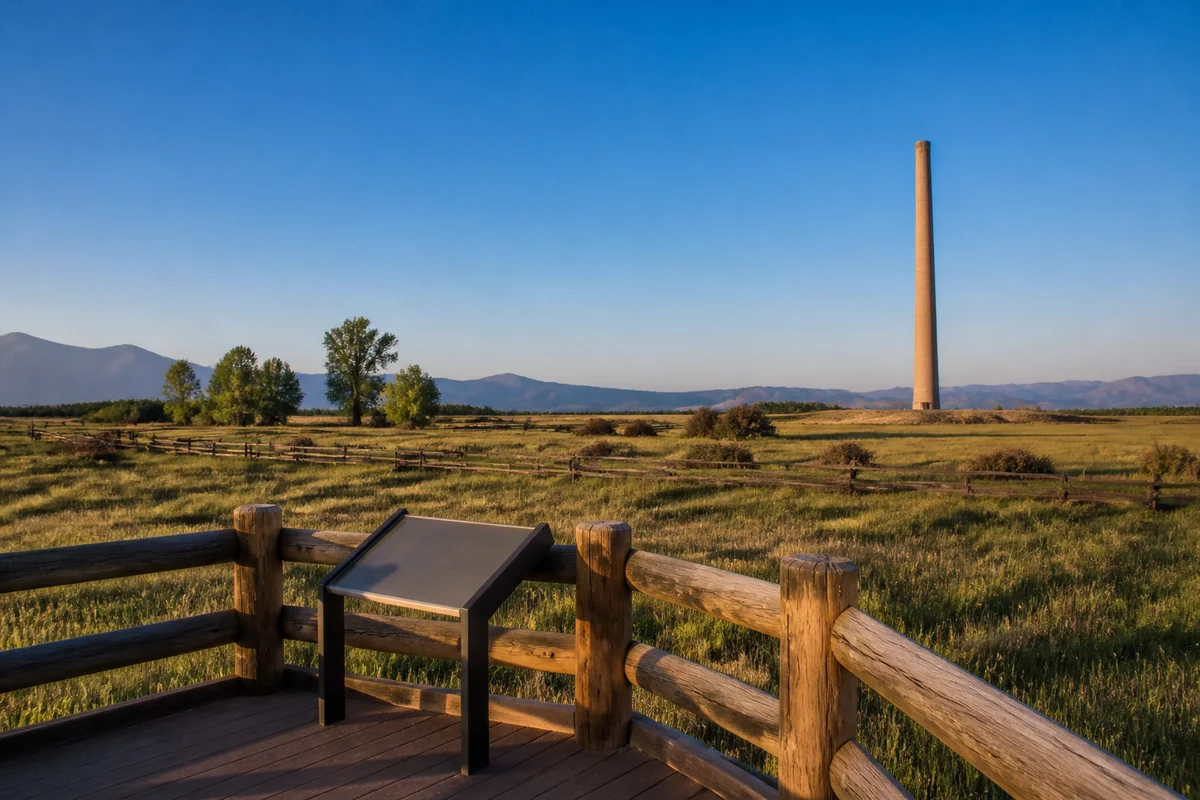
The structure. The Washoe Smelter stack was built from May to November 1918 and entered operation in May 1919. The builder was the Alphons Custodis Chimney Construction Company of New York. The height is usually given as 585 feet overall: a 555-foot brick chimney on a roughly 30-foot concrete foundation. It uses about 2.46 million perforated tile bricks and weighs on the order of 23,000 tons. The interior diameter is about 76 feet at the base and 60 feet at the top. It was the tallest chimney in the world from 1919 until 1937. Today, it is described as the tallest surviving masonry structure in the world.
Why the claim is worded carefully. Many sources, including the old version of this page, say “tallest masonry structure in North America.” The more defensible claim is that it is the tallest surviving structure of its kind. Taller masonry chimneys have been demolished.
Closure. The smelter shut in 1980, though one source gives 1981. The Washoe Smelter buildings were demolished afterward, and local people organized to save the stack.
Designations. The stack was named Anaconda Smoke Stack State Park in 1986 and listed on the National Register of Historic Places in 1987. It is not described as a National Historic Landmark in the sources reviewed.
Seeing the Stack Safely
The stack itself cannot be entered. The surrounding soil is contaminated with arsenic, copper, cadmium, lead, and zinc, and the area is part of a Superfund site. The state park has two parts: a viewing center, built in 2000 just east of town, and the stack, about 1.2 miles to the southeast.
For most visitors, the best view is from the viewing area or from across the valley. Signs near Benny Goodman Park provide interpretation. Admission to view is free, and there is no staffed visitor center on site, according to local tourism materials.
A guided bus tour runs on Smeltermen’s Day, which Montana news coverage describes as a three-day event held each year, and the bus stops as close to the stack as allowed. The date and any fee are not given in the sources reviewed.
Washoe Theatre
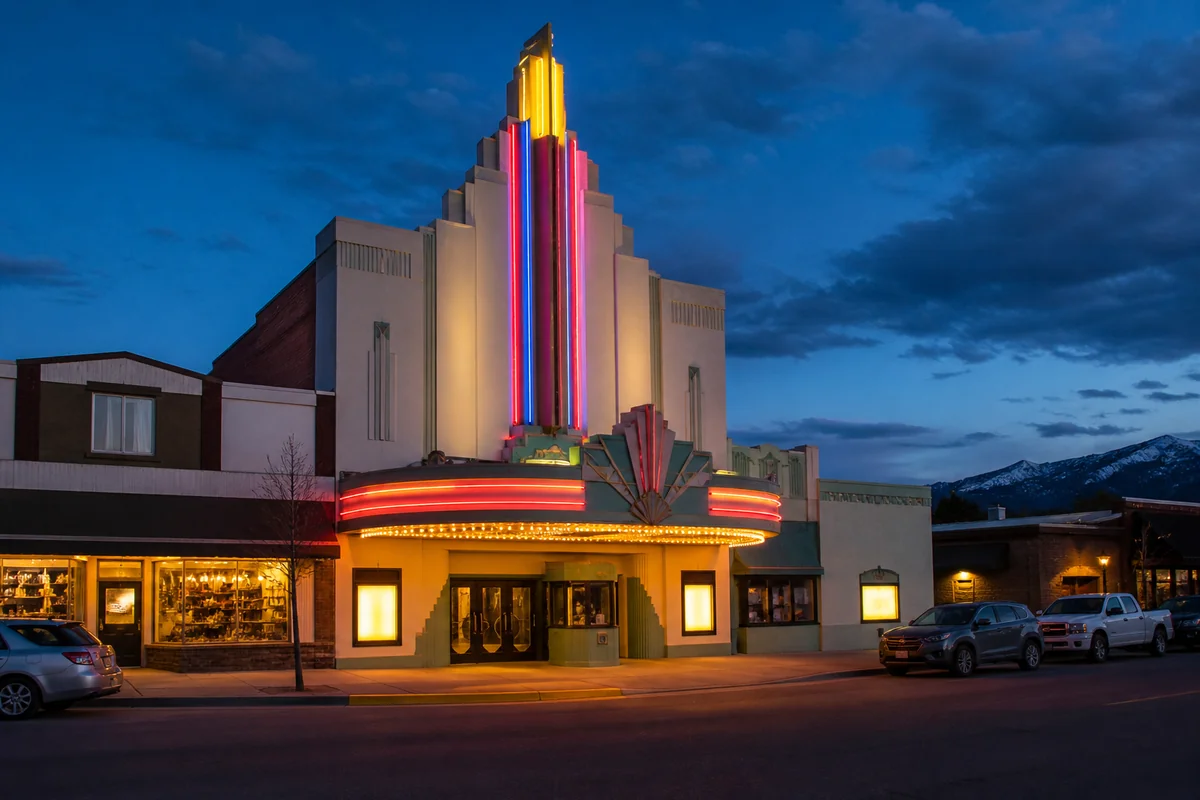
The Washoe Theatre at 305 Main Street is the building most visitors do not expect. Architect B. Marcus Priteca designed it in 1930, and it opened in 1936 as an Art Deco movie palace with murals and ornamentation in silver, copper, and gold leaf. It cost about $200,000 to build and replaced the earlier Sundial Theater, which burned in 1929. It was listed on the National Register of Historic Places in 1982. It is often described as the last theater built in the Nuevo Deco style, and local sources say the Smithsonian ranked it fifth nationally for architectural value.
One correction matters. Marcus Daly died in 1900, so he could not have commissioned the theater, even though some guides say he did. The Washoe is a product of the 1930s, when the smelter was still running and the town was still prosperous.
The Washoe is still a working theater, with films and events. The theater recently upgraded to digital sound and projection. Check its schedule before planning an evening.
Main Street and the Historic District
Anaconda’s historic downtown is compact and walkable. The core buildings, including the U.S. Post Office, the Hearst Free Library, the Deer Lodge County Courthouse, and the Washoe Theatre, are listed on the National Register and remain in use. Part of town is also included in the Butte-Anaconda Historic District.
The walk pairs well with the downtown businesses: coffee shops, boutiques, a brewery, a bottle shop, and a bike shop, per local tourism listings.
Copper Village Museum and Art Center
The museum at 401 E. Commercial is housed in the former Anaconda City Hall, built in 1896. It includes a historical museum, archives, an art center, a shop, and the historical society. Art in the Park, its main fundraiser, is held every July.
Historical Bus Tour
Discover Anaconda’s Visitor Center at 306 E. Park Avenue runs a historical bus tour in a 1936 touring bus, Monday through Saturday from mid-May to mid-September. Local tourism materials have listed adult tickets at $20, seniors and veterans at $15, children 5 to 12 at $7, and children under 5 free.
Old Works Golf Course
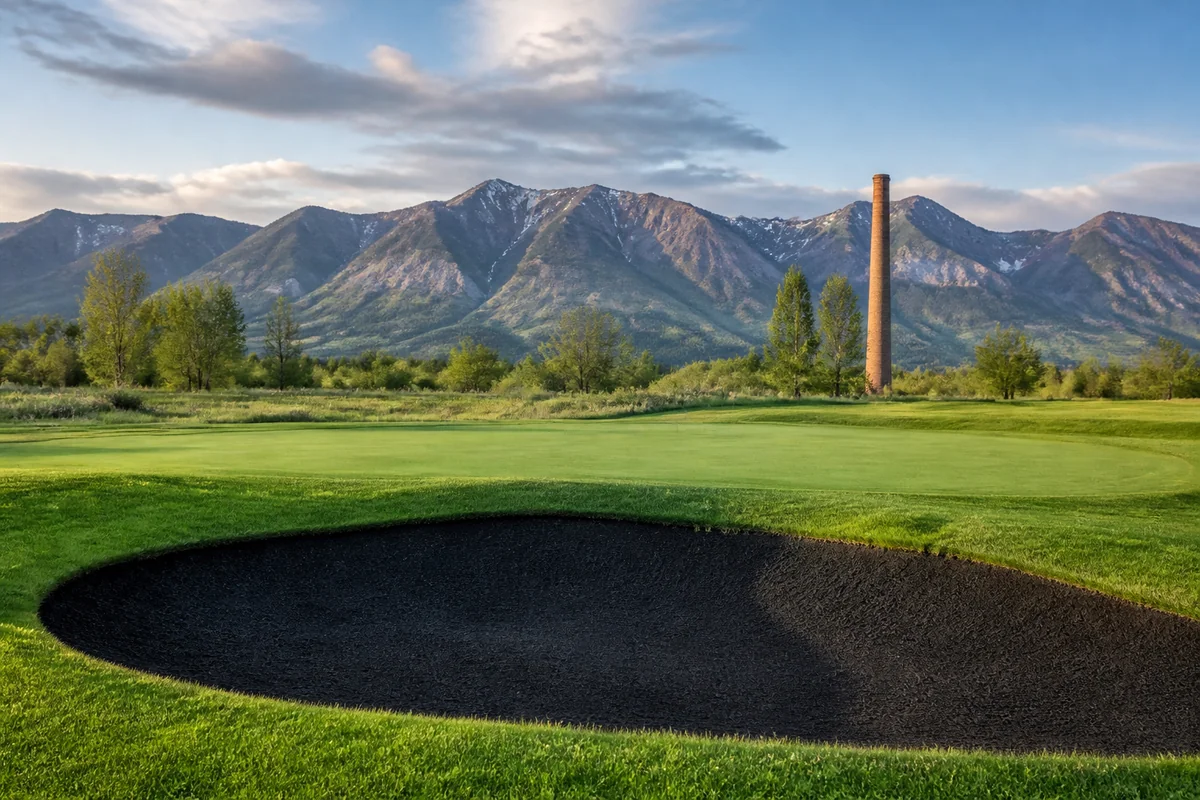
Old Works is the clearest example of Anaconda reinventing its ruins. The Jack Nicklaus-designed, par-72 course opened in May 1997. It sits on land where smelter waste was left after closure, and the EPA designated the smelter a Superfund site in 1983. The course was chosen for reuse after years of negotiations among ARCO, the EPA, state officials, and the community.
The waste is capped beneath crushed limestone, clay, and topsoil, with drainage and irrigation systems designed to prevent leaching. The sand traps and bunkers use black slag, which gives the course its unmistakable look. Nicklaus has said the slag bunkers are easier to play from than ordinary sand because balls do not sink into them.
Golfers should book early in summer and confirm tee-time policies, season dates, and rates. Non-golfers can still see the course from public roads, but the course is private property.
Outdoors Around Anaconda
Anaconda’s real appeal for many visitors is how close the mountains are.
Pintler Scenic Route
The Pintler Veterans Memorial Scenic Highway (Highway 1) runs 64 miles from Anaconda through Georgetown Lake and Philipsburg to Drummond. It is an alternative to I-90 between Butte and Missoula, and it passes conifer-covered mountains and sage-covered hills along Flint Creek. Allow a half day with stops. See the Philipsburg guide for what to do at the far end, and Montana ghost towns for the old mining sites nearby.
Georgetown Lake and Discovery Ski Area
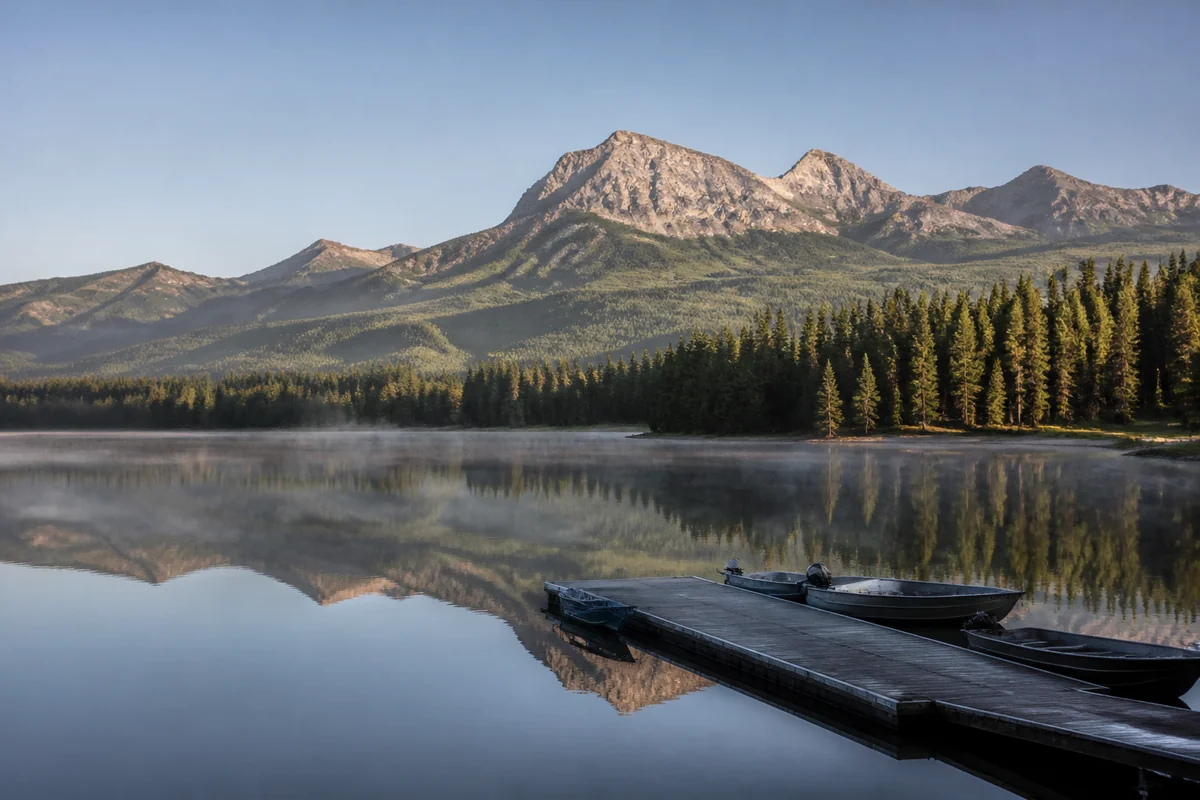
Georgetown Lake is a popular fishing and boating lake, and Discovery Ski Area lies just beyond it. Discovery runs terrain for families and experienced skiers in winter and operates as a mountain bike park in summer. See the full Discovery Ski Area guide.
Hiking, Fishing, and Snow
The Anaconda-Pintler Mountains offer hiking, skiing, and snowmobiling on national forest land outside town. The Big Hole River and Georgetown Lake are the nearest well-known fishing waters. Local ranger offices have current trail information.
Hot Springs
Fairmont Hot Springs, between Anaconda and Butte near the I-90 corridor, is the closest large hot-springs resort. For a list of other options, see Montana hot springs.
Where to Stay and Eat
Anaconda has motels and a few lodging choices in town, with larger chains in nearby Butte. Rates change with golf season and events, so check current prices instead of relying on printed ranges. Camping is available in the surrounding national forest and at nearby private campgrounds. Butte has more RV capacity; see Butte RV parks.
Main Street has coffee, a brewery, and several restaurants and bars. Names and hours change, so confirm before planning a meal around one. The town has a long tavern tradition, and many locals say that is where to find the best conversation.
Anaconda by Season
Spring. Snow lingers in the Pintlers. Roads in town are clear, but high trails are not.
Summer. The best season for golf, hiking, and the Pintler Scenic Route. Evenings are cool.
Fall. Quiet and colorful, with elk season drawing hunters into the hills. Check Discover Anaconda for Smeltermen’s Day dates.
Winter. Anaconda gets about 75 inches of snow in an average year. Discovery is open, and the town is calm. Roads over the Pintler route can be icy.
For broader planning, see the best time to visit Montana.
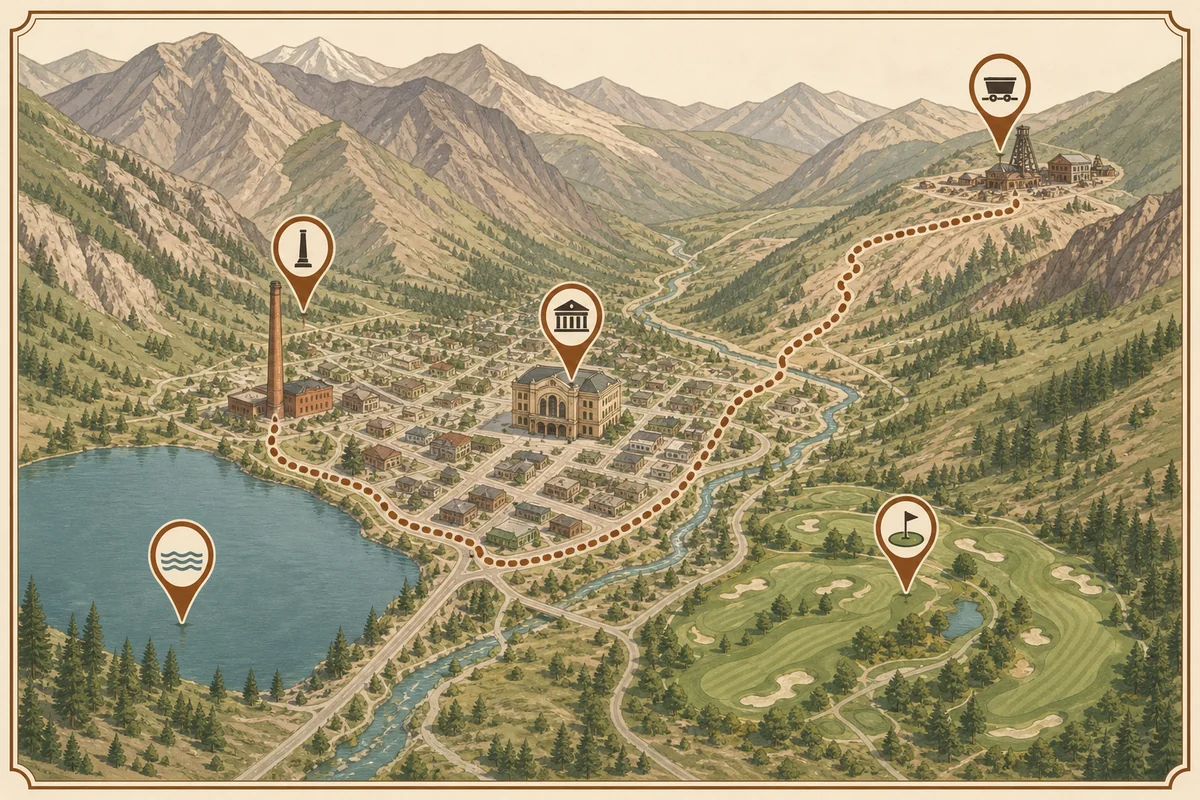
One Day in Anaconda
- Start at the Visitor Center and walk Main Street.
- Visit the Washoe Theatre exterior and the Copper Village Museum.
- View the Smelter Stack from the viewing area.
- Play a round at Old Works or drive the Pintler Scenic Route toward Georgetown Lake.
- Return for dinner on Main Street, or continue to Butte.
Pairing Anaconda With the Rest of Southwest Montana
- Butte (about 25 miles east): The mines that fed the smelter. Start with Butte, then the small silver town above it, Walkerville.
- Philipsburg: A restored mining town on the far end of the Pintler route. See Philipsburg.
- Helena: The capital that beat Anaconda. See Helena.
- Deer Lodge: For prison history, see Montana state prison history.
- Lewis and Clark Caverns: East on I-90, see Lewis and Clark Caverns.
- Museums: For others in the state, see best museums in Montana, and for the broader story of the state’s boom years, the Montana Gold Rush.
Getting There
Anaconda sits on Montana Highway 1, which connects to Interstate 90 about midway between Butte and Missoula. Butte is to the east; Philipsburg and Georgetown Lake are to the west and northwest on Highway 1.
| From | Direction from Anaconda | Approximate distance |
|---|---|---|
| Butte | East | About 25 miles |
| Philipsburg | West/northwest via Highway 1 | About 30 miles |
| Helena | Northeast | About 90 miles |
| Missoula | North/northwest | About 100 miles |
| Bozeman | East | About 110 miles |
Bert Mooney Airport in Butte is the nearest commercial airport. A car is needed for the stack, the golf course, and the Pintler route.
What Visitors Wish They Knew
- Start with the viewing center. It frames the smelter story.
- Do not try to reach the stack on foot. The surrounding land is a Superfund site.
- Book the bus tour ahead. It operates only mid-May to mid-September, and Smeltermen’s Day tours run only a few days.
- Check the Washoe’s schedule. Showtimes vary.
- Leave time for Main Street. The best moments are unplanned.
- Watch the weather in the Pintlers. Mountain storms arrive fast.
- Double-check numbers. Population, elevation, and “tallest in North America” claims vary from source to source.
Practical Info
| Item | Details |
|---|---|
| Best season | June through September for golf and driving; winter for Discovery |
| Time needed | A full day for Anaconda; add a day for the Pintler route and Georgetown Lake |
| Cost | Viewing the stack and walking downtown are free; golf, tours, and museum charge |
| Difficulty | Easy in town; moderate in the mountains |
| What to bring | Layers, binoculars, golf clubs if desired, water |
| Nearby | Butte, Walkerville, Philipsburg, Georgetown Lake |
Conclusion
Anaconda does not hide what built it. The stack still dominates the skyline, the theater still glows on Main Street, and a golf course sits where the waste was buried. It is honest about industry and generous about the outdoors.
Pin or save this guide for your Southwest Montana planning, and leave questions in the comments, especially if hours or tours have changed. For the next stop, browse the full list of Montana cities and towns or build a route through Southwest Montana.
Frequently Asked Questions
Is Anaconda, Montana worth visiting?
Yes, for travelers interested in industrial history, Art Deco architecture, and golf, and as a base for the Pintler Mountains and Georgetown Lake.
How tall is the Anaconda Smelter Stack?
About 585 feet overall, including a roughly 30-foot foundation. It is described as the tallest surviving masonry structure in the world, and it was the world’s tallest chimney from 1919 to 1937.
Can you go up to the Smelter Stack?
No. The surrounding soil is contaminated and the area is a Superfund site. Visitors view it from a distance, and a guided bus tour runs a few days each year.
Who built the Washoe Theatre?
Architect B. Marcus Priteca designed it, and it opened in 1936. Marcus Daly, who died in 1900, had no role in it.
Why was Anaconda built?
Marcus Daly founded it in 1883 to smelt copper ore from Butte’s mines.
What is Old Works?
A Jack Nicklaus-designed golf course that opened in 1997 on a reclaimed smelter site, with black slag bunkers.
How far is Anaconda from Butte?
About 25 miles. Butte is east of Anaconda.
Is Anaconda near ski areas?
Yes. Discovery Ski Area sits beyond Georgetown Lake, a short drive from town.
When is the best time to visit?
Summer for golf and the Pintler route, winter for skiing at Discovery, and early fall for quieter streets.