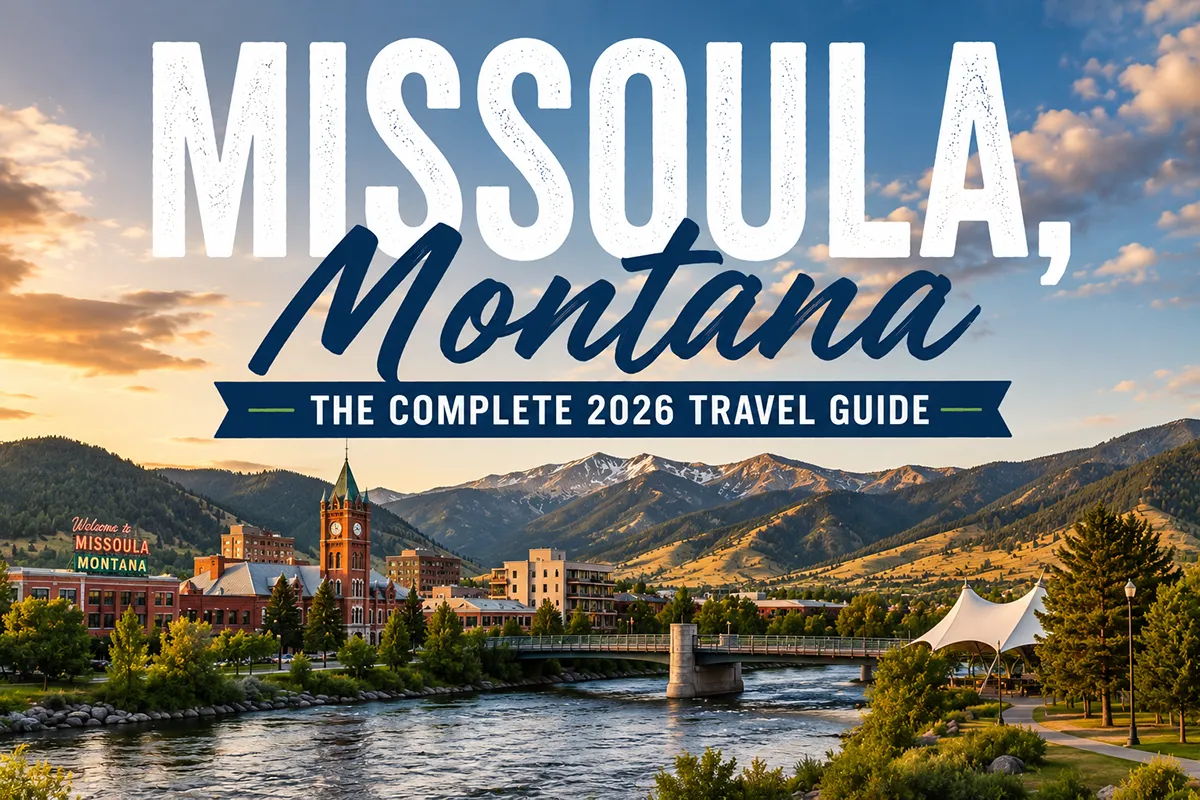
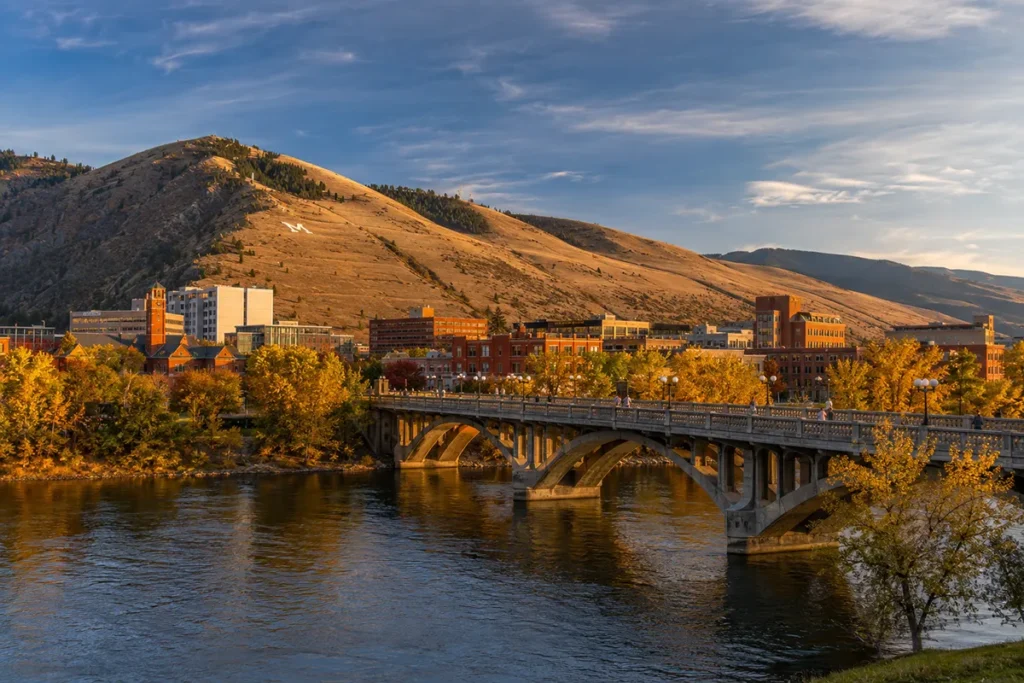
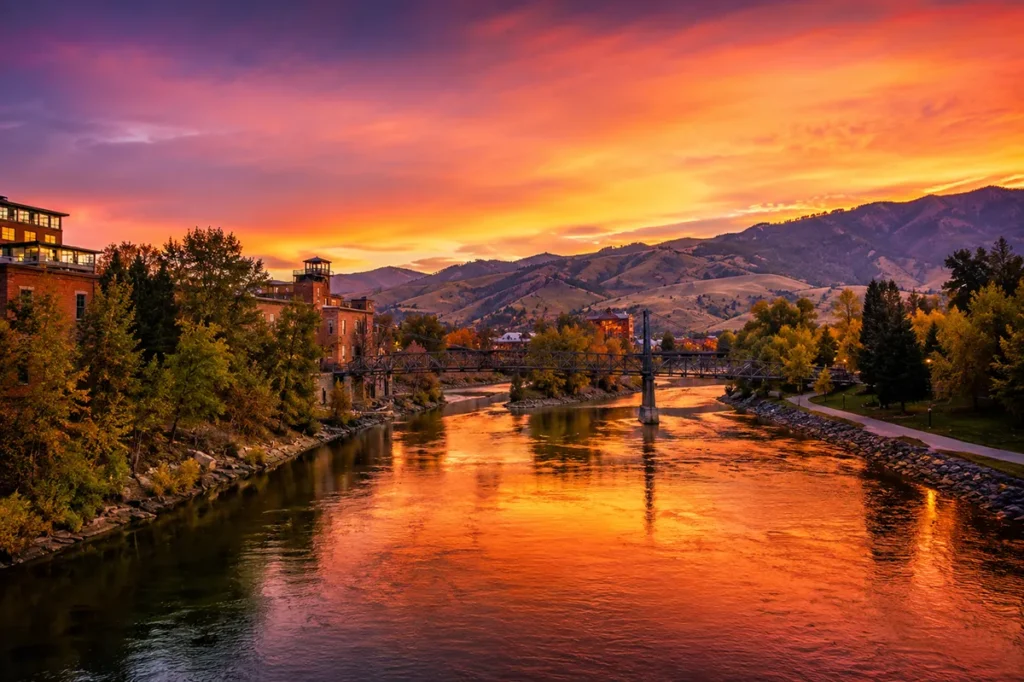
The first time I pulled into Missoula on a September evening, the Clark Fork River was glowing copper in the fading light and someone was playing acoustic guitar outside a bar on Higgins Avenue.
I sat in my car for a full minute thinking: this is not the Montana I expected — and I mean that as the highest compliment.
TL;DR
- Missoula is western Montana’s most vibrant city — a university town with serious outdoor energy, a thriving craft beer and food scene, and a genuine arts culture that surprises most first-timers
- It sits at the convergence of five mountain valleys, and trail access is literally minutes from downtown
- This guide covers the best things to do in Missoula, when to go, where to eat, where to stay, and the day trips that make it a natural base camp for western Montana
- September is the single best month to visit — warm days, almost zero wildfire smoke, the fall colors starting in the hills, and the crowds thinning after Labor Day
- Budget around 2–4 days minimum; serious outdoor explorers could easily justify a full week
Liked this article?
Add Roaming Montana as a preferred source so you see more of our articles and guides on Google.
Introduction: Montana’s Garden City Is More Than a Stopover
Most road-trippers blow through Missoula on I-90, maybe stopping for gas and a burger before pushing on toward Glacier or Yellowstone.
That’s a mistake I made exactly once. The second time I drove into western Montana, I gave Missoula three full days — and I still left wishing I had more time.
Missoula is the kind of place that feels effortlessly cool without trying too hard. The University of Montana keeps it young and creative, the surrounding Lolo National Forest keeps it firmly outdoors-oriented, and a long history as a railroad and trading hub gives it a gritty authenticity that the more resort-ified Montana towns can’t replicate.
Locals here are genuinely outdoorsy — not performatively so. You’ll see people leaving work with kayaks on their cars on a Wednesday afternoon, headed for a quick float on the Clark Fork. That is just regular life here.
If you’re building a Montana road trip itinerary, Missoula deserves a real spot on your map — not a drive-through.
And if you want to understand the full range of what Montana’s cities and towns have to offer, check out our complete guide to Montana cities and towns — Missoula stands apart, but knowing how it compares to Bozeman, Billings, and Helena makes the picture richer.
This guide is everything I know about Missoula, gathered across multiple visits in different seasons, and it’s written to actually help you plan a trip — not just make you want to take one.
Missoula at a Glance
| Population (2020) | ~77,000 (2nd largest in MT) |
|---|---|
| County | Missoula County |
| Region | Western Montana (Glacier Country) |
| Elevation | 3,209 ft |
| Airport | Missoula Montana Airport (MSO) |
| University | University of Montana (~10,000 students) |
| Distance to Glacier National Park | ~150 miles (2.5 hours to West Glacier) |
| Best for | Urban Montana, arts/culture, fly fishing, Glacier access |
Why Missoula Feels Different from Other Montana Cities
There’s a reason Missoula has been nicknamed “the Garden City.” The broad, fertile valley it sits in — carved out by glacial Lake Missoula thousands of years ago — is lush by Montana standards.
Five separate valleys converge here, and the Clark Fork River runs right through the heart of downtown.
Mountains rise in almost every direction. It genuinely does feel like someone dropped a vibrant, progressive small city into the middle of a wilderness postcard.
What sets Missoula apart from, say, Bozeman (younger, shinier, more expensive) or Helena (quieter, more governmental) is the texture of its street life. Independent bookstores, local coffee roasters, vinyl record shops, a working-class dive bar next door to a James Beard–nominated restaurant.
The University of Montana student population blends seamlessly with longtime locals, outfitters, artists, and transplants who came for a semester and never quite left. I’ve never felt out of place in Missoula no matter what kind of trip I was on.
Getting to Missoula
By Air: Missoula Montana Airport (MSO) is a small but genuinely functional regional airport with direct flights from Seattle, Salt Lake City, Denver, Minneapolis, Los Angeles, and several other hubs. Flights from the West Coast take under two hours. In my experience, the airport is refreshingly stress-free — small enough that you’re out the door with your bags in 20 minutes.
By Car: Missoula sits right on I-90, making it highly accessible from both east and west. From Spokane, it’s about 2.5 hours east. From Bozeman, it’s about 2.5 hours west. From Calgary via US-93 south, it’s about 4 hours. If you’re doing the classic Montana road trip loop, Missoula is a natural anchor point for the western leg.
By Train: Amtrak’s Empire Builder passes through Missoula on its route between Chicago and Seattle/Portland. If you have the time, this is one of the most scenic train rides in North America. I’ve done a segment of it twice and it never gets old — especially through the Clark Fork River canyon west of town.
The Best Time to Visit Missoula, Montana
If you read nothing else in this section, remember this: late August wildfire smoke is real, and it can be severe. I’ve been in Missoula in mid-August when the sky turned a flat orange by noon and the air quality was genuinely unhealthy.
That’s not every year, and it’s not every week in August — but it’s common enough that I factor it into every western Montana trip I plan.
For context on timing your broader Montana visit, our best time to visit Montana guide covers the state-wide picture.
Summer (June–August): Peak Season with One Big Caveat
Summer in Missoula is genuinely wonderful — warm but not oppressive (most days top out in the low-to-mid 80s°F), with long evenings that seem to stretch forever.
The Clark Fork is full of floaters, every patio in town is packed, and the farmers market is running every Saturday. June and early July are ideal — wildflowers are up, the river is still running high and fast, and the hills are a rich green before they dry out.
The caveat, as mentioned: late July through mid-August can bring wildfire smoke from fires across Idaho, Washington, and Montana itself. The bowl-shaped geography that makes Missoula so visually dramatic also traps air.
Some summers are fine; some summers are not. Check air quality forecasts at airnow.gov before you commit your best outdoor days.
Fall (September–October): The Season I Keep Coming Back For
September is hands-down my favorite time to be in Missoula. The smoke clears, temperatures drop to something like perfection (60s and 70s during the day, cool nights), the crowds thin noticeably after Labor Day, and by late September the larch trees in the surrounding mountains turn a brilliant, almost shocking gold. Drive up any canyon road out of Missoula in early October and you’ll see what I mean.
October gets chilly — especially at elevation — but Missoula’s downtown scene doesn’t slow down. University of Montana football (the Grizzlies are a genuine community institution) fills Saturdays with energy, and the restaurant and bar scene hits a comfortable groove. October is when Missoula feels most like itself.
Winter (November–March): Quiet, Cold, and Surprisingly Fun
Winter in Missoula is cold and frequently gray. Temperature inversions settle into the valley and can bring fog and poor air quality for days at a time (wood smoke being the winter equivalent of summer wildfire smoke).
That said, if you’re a skier, Missoula’s location makes it worth considering. Snowbowl ski resort is just 12 miles north of downtown — a legitimately underrated mountain with real vertical and a no-frills, Montana-locals vibe. Lift tickets are a fraction of Big Sky prices.
The city itself doesn’t hibernate. The restaurant scene is excellent year-round, the breweries are cozy and full, and the University keeps the cultural calendar active with performances, films, and speakers. Just pack layers and don’t expect the trails to be accessible above 4,000 feet.
Spring (April–May): Fresh and Underrated
Spring in Missoula is mercurial — warm sunny days followed by cold rain, and mountain trails that are muddy and often snow-covered until May or even early June.
But the Clark Fork comes alive with snowmelt, the trees start budding out, and the International Wildlife Film Festival (held in April and the oldest of its kind in the world) draws a fascinating crowd. If you can time your visit around the festival, I’d encourage it.
Top Things to Do in Missoula, Montana
Missoula punches well above its size when it comes to things to do. Between its position at the edge of the Lolo National Forest, its vibrant downtown, and the University of Montana’s cultural programming, you genuinely won’t run out of options.
Here’s what I’d prioritize, ranked loosely by how often I personally come back to them.
For the full range of Montana outdoor activities, Missoula is one of the best base camps in the state — almost everything I describe below can be combined with broader western Montana exploration.
1. Hike the M Trail on Mount Sentinel
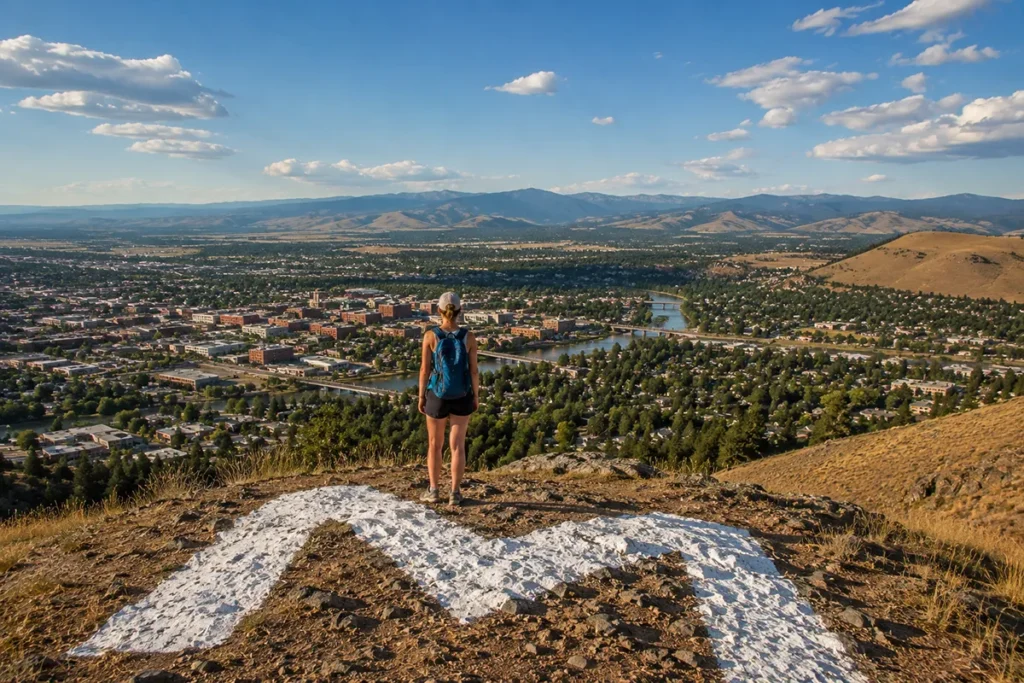
If you do one thing in Missoula, hike the M Trail. Full stop. It’s a short hike — about 1.5 miles round-trip — but it climbs steeply up the face of Mount Sentinel directly above the University of Montana campus, and the view from the large concrete “M” at the top is one of the best urban-adjacent vistas I’ve encountered anywhere.
I’ve done this trail at least a half-dozen times now: once at sunrise when the Clark Fork was wrapped in mist, once in a light snowfall in October when I had it almost entirely to myself, and once on a busy Saturday in July when it was full of students and families and still completely worth it.
The trailhead is at the south end of the UM campus on Gerald Avenue and there’s parking available.
Plan for 45–60 minutes for the round trip at a moderate pace. The trail is exposed and south-facing, so bring water even on cool days — it bakes in full sun.
You can also continue past the M to the ridge trail that runs along the top of Mount Sentinel for longer views and more solitude.
2. Explore Rattlesnake National Recreation Area and Wilderness
This is the feature of Missoula that genuinely astonishes first-timers: a federally designated wilderness area that begins less than two miles from downtown. I’ve walked from my hotel room in the city to the trailhead in under 30 minutes.
The Rattlesnake NRA offers everything from a flat, easy creek walk along Rattlesnake Creek to serious backcountry routes that climb into true wilderness.
For a first visit, the trail along the creek is lovely — shaded, gentle, and populated with wildflowers in early summer and golden cottonwood leaves in fall.
Go farther in and you’ll find alpine lakes, challenging ridge routes, and the kind of silence that takes a minute to adjust to after the city noise.
I went up to Lake Elsina on a weekday morning in early September and saw exactly three other hikers over four hours.
That’s the beauty of having this resource so close — the trailhead crowds dissipate fast once you get a few miles in. Trailhead parking is on Rattlesnake Drive; arrive by 8 a.m. on summer weekends if you want a spot.
3. Get on the Clark Fork River
The Clark Fork River running through downtown Missoula isn’t just scenery — it’s an active playground, and locals use it that way.
Summer floats between Brennan’s Wave and the downtown put-in are practically a Missoula tradition. Rent an inflatable kayak or a stand-up paddleboard from one of the local outfitters downtown ([verify current outfitter options and rental prices]) and spend a couple of hours on the water.
The Kim Williams Nature Trail follows the Clark Fork through a dramatic rock gorge just east of the university — it’s paved, flat, and gorgeous for walking or running.
I’ve done this walk three times and it feels different every season: green and lush in June, parched golden in August, brilliant with color in October.
Brennan’s Wave, right in the heart of downtown, is a human-engineered river wave that draws kayakers and surfers year-round. On a warm afternoon it’s free entertainment — pull up a chair on the pedestrian bridge and watch people attempt to hold their line in the standing wave below.
4. Visit the Carousel for Montana
I’ll be honest: when I first heard about a historic carousel in Missoula, I expected a tourist trap. I was completely wrong.
The Carousel for Montana, located in Caras Park right on the riverfront, is one of the most genuinely moving things I’ve encountered in any Montana city.
It was hand-carved entirely by community volunteers over a decade, completed in 1995, and it features 38 horses, two chariots, and dozens of hand-painted panels depicting Montana scenes. The craftsmanship is extraordinary — these are not amusement park horses.
They’re works of art. Even if you ride it with no children in tow (and I say this as someone who has done exactly that), it’s worth the small admission fee just to walk around and look at it closely.
The adjacent Dragon Hollow playground is one of the most elaborate and beloved community-built playgrounds I’ve seen.
5. Explore Downtown and the “Hip Strip”
Downtown Missoula is genuinely walkable and genuinely interesting. Higgins Avenue is the main artery, and within a few blocks in either direction you’ll find independent bookstores, vintage clothing, coffee shops, galleries, and restaurants of every price point.
Cross the Higgins Avenue Bridge heading south and you’re on what locals call the “Hip Strip” — a stretch of South Higgins Avenue that packs in boutique shops, record stores, bars, and some of the city’s best breakfast spots.
This is where I spend most of my Missoula mornings: a coffee at one of the independent cafes, a slow walk through a bookstore, maybe a quick browse through one of the vintage shops.
The Missoula Art Museum, on North Pattee Street just off Higgins, is free and genuinely worth an hour. It focuses heavily on Montana and regional artists, and the quality of the rotating exhibitions has surprised me every time.
Don’t miss it on the assumption that small-city art museums aren’t worth it — this one is.
6. Catch a Cultural Event
Missoula’s cultural calendar is more robust than you’d expect for a city its size, and most of it is either free or very affordable. A few highlights:
Caras Park Events: The riverfront park hosts a full summer schedule of free outdoor events, including Out to Lunch Wednesdays (live music and food vendors at noon from late June through August) and the River City Roots Festival in late August. I stumbled into Out to Lunch on a Wednesday in July and spent two hours I hadn’t planned on — excellent musicians, good food trucks, and the whole city seemingly taking a lunch break outside together.
Shakespeare in the Parks: The University of Montana’s professional theater company performs free outdoor Shakespeare at parks across Montana all summer, and they always kick off the season right in Missoula. Check the schedule — it’s one of those things that sounds optional and ends up being a highlight.
International Wildlife Film Festival (April): If your trip falls in April, this is worth building around. It’s the oldest wildlife film festival in the world, and the screenings, panels, and filmmaker events draw an extraordinary crowd of naturalists, filmmakers, and conservation professionals. Tickets for individual screenings are very reasonable.
Missoula’s Food and Drink Scene: Better Than You Think
I’ve heard people say they were surprised by the food in Missoula. I stopped being surprised years ago. This city eats well.
1. Restaurants Worth Planning Around
The Pearl Cafe on East Broadway is my benchmark for a Missoula dinner. It’s been around for decades, it has a French-influenced farm-to-table approach, and the menu shifts seasonally with what’s coming out of the surrounding valley. Make a reservation — it’s a small room and fills up. This is not a budget restaurant, but it’s genuinely excellent.
Scotty’s Table is another upscale-ish spot that does thoughtful local sourcing and creative seasonal cooking. The atmosphere is warm without being stuffy, and the wine list is surprisingly strong. I’ve had some of the best meals of my Montana travels here.
For something more casual, Biga Pizza on East Pine Street does wood-fired pies with excellent dough — the kind of pizza where you realize immediately that the crust is the whole point. Expect a wait on weekend evenings; it’s worth it.
The Good Food Store on Brooks Avenue deserves a mention even though it’s technically a grocery store. Locals know it as the best natural and organic grocery in the region, and the hot bar and deli counter have saved my lunch multiple times. If you’re cooking in a vacation rental or need quality road-trip snacks, this is your stop.
Big Dipper Ice Cream on Higgins is a Missoula institution. Seasonal flavors, made in-house, no pretension. Get the huckleberry if it’s available — you’ll understand why Montanans are so possessive about this berry.
2. The Craft Beer Scene
Missoula has a brewery scene that punches well above its weight, and I’ve covered it in detail in our dedicated best breweries in Missoula guide. The short version:
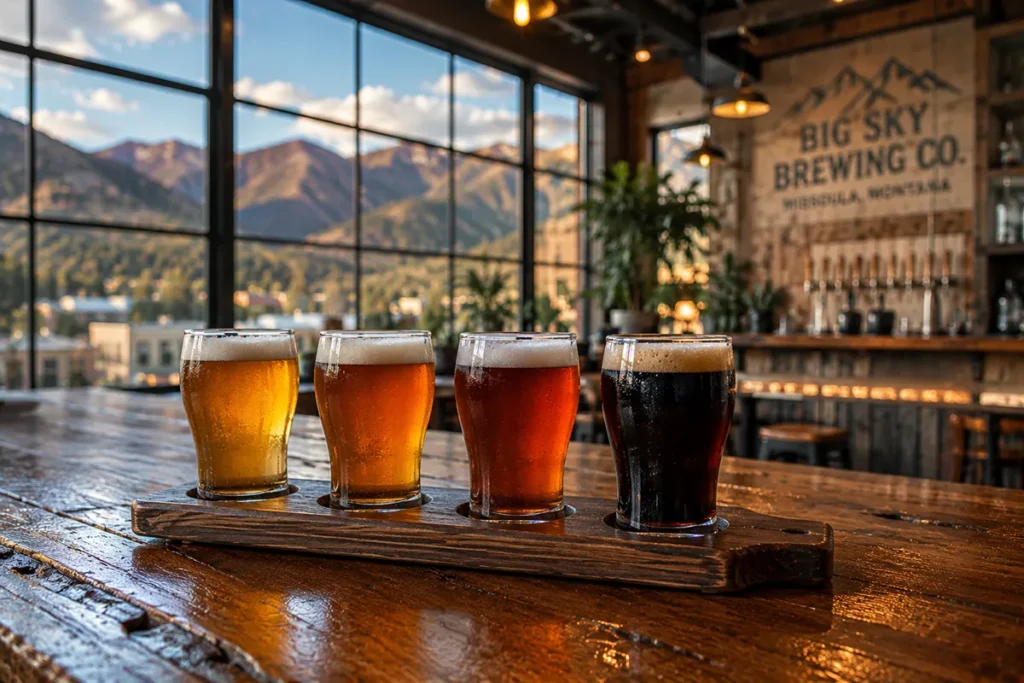
KettleHouse Brewing has two locations (the Northside and the Bitterroot Branch) and is probably the most beloved brewery in town. Their Cold Smoke Scotch Ale is locally iconic — the first pint I ordered on my first Missoula visit, on a friend’s recommendation, and I’ve ordered it on almost every visit since. The Northside taproom has an outdoor patio right on the Clark Fork that is one of the best places in the city to spend an afternoon.
Bayern Brewing on Kearney Street is Montana’s oldest craft brewery, going back to 1987, and it makes German-style lagers and biers that are a genuine rarity in the American craft beer landscape. The Bayern amber lager is deeply satisfying after a day on the trail.
Draught Works on Toole Avenue has a sprawling taproom with excellent sour and experimental beers alongside solid standards. Garden City Brewing downtown is smaller and newer but worth a stop for the location and consistently good pilsners.
3. The Saturday Farmers Market
If your visit lands on a Saturday between late May and late October, do not skip the Missoula Farmers Market. It runs Saturday mornings and is significantly more than just produce — local honey, handmade soap, fresh baked goods, cut flowers, prepared foods, live music, and the general organized chaos of an entire community turning out at once.
I’ve bought some of my best Montana food souvenirs here: local jam, huckleberry syrup, dried herbs, hand-rolled pasta from a local maker whose name I’ve forgotten but whose lasagna I still think about.
Day Trips from Missoula
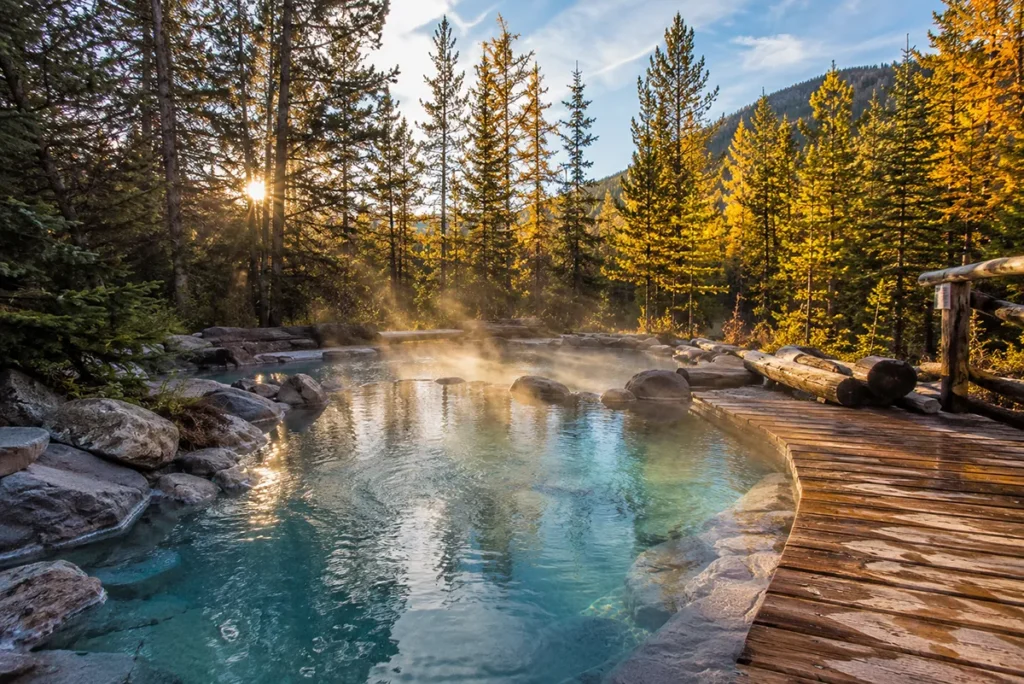
Missoula’s central location in western Montana makes it an exceptional base camp. Half the fun is leaving the city.
1. Lolo Hot Springs (~40 Miles Southwest)
Take US-12 west from Missoula for about 40 miles and you’ll find Lolo Hot Springs — a historic natural hot spring that Lewis and Clark themselves stopped at in 1805.
The facility has been developed with soaking pools, but the water is genuinely hot and mineral-rich, and the surrounding canyon is gorgeous.
I usually pair a Lolo Hot Springs visit with a stop somewhere along the Lochsa River corridor (one of the most beautiful river drives in the state) or a short hike in the surrounding national forest.
It’s a perfect half-day add-on, especially after a few days of hiking when your legs need some mineral encouragement. If you’re interested in more options, our Montana hot springs guide has the complete rundown of soaking spots across the state.
2. The Bitterroot Valley (Hamilton and Stevensville, ~45–75 Miles South)
Drive south on US-93 from Missoula and you enter the Bitterroot Valley — one of the most scenic and underrated corners of western Montana.
The Bitterroot Range lines the western horizon the whole way, dramatic and glacier-carved, while the valley floor is an agricultural patchwork of farms, ranches, and orchards.
Stevensville (about 30 miles south) is a tiny town with a lot of history and a genuinely excellent local grocery and deli. It’s also home to Fort Owen, Montana’s oldest non-Native American settlement, and the St. Mary’s Mission — worth a quick stop.
Hamilton (about 45 miles south) is the valley’s main town and has grown significantly in recent years. The Daly Mansion just outside Hamilton is a stunning Victorian-era estate — one of the finest historic homes in Montana. The hiking in the Bitterroot is spectacular, particularly up any of the canyon drainages into the Selway-Bitterroot Wilderness.
3. Glacier Country and Flathead Lake (~1 Hour North)
Head north on US-93 and within an hour you’re in the Flathead Valley and deep into what Montanans call Glacier Country — the broad geographic region that encompasses Flathead Lake, the Mission Mountains, and the western gateway to Glacier National Park.
Flathead Lake is about 45 minutes from Missoula and is the largest natural freshwater lake west of the Mississippi.
It’s enormous and deeply blue and worth a stop even if you’re just driving the scenic loop road around its perimeter. Polson at the south end of the lake is a pleasant small town with good restaurants and lake access.
Glacier National Park itself is about 2.5 hours from Missoula via US-93 north — doable as a long day trip if you want to catch the Going-to-the-Sun Road, but I’d recommend at least one overnight in Whitefish or West Glacier to do it justice.
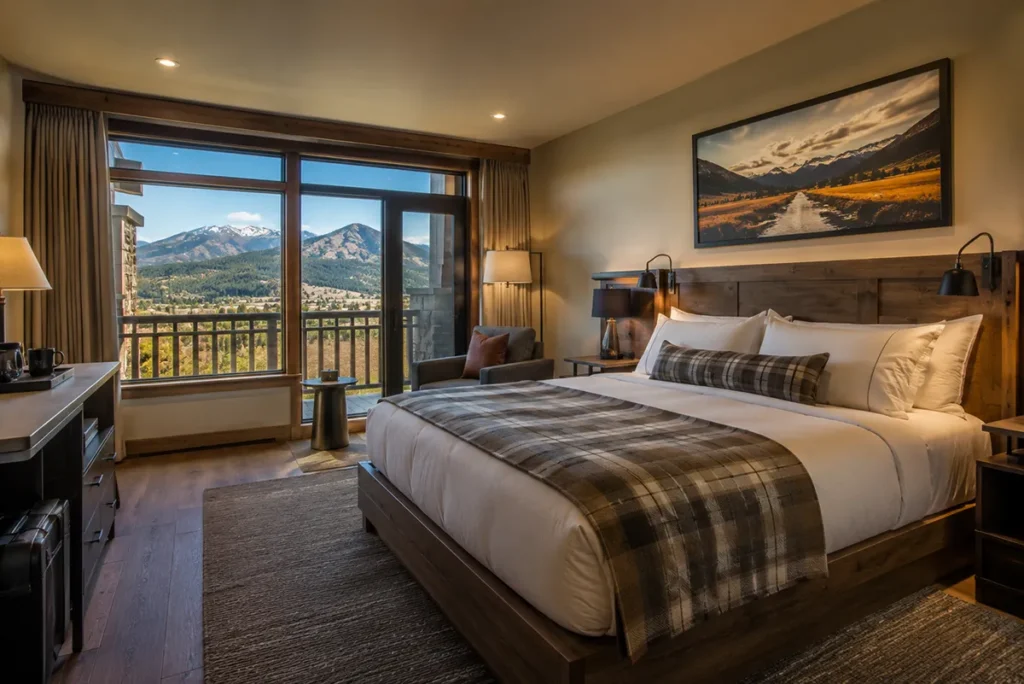
Where to Stay in Missoula
Boutique and Upscale Hotels
The lodging scene in Missoula has improved noticeably in recent years. The DoubleTree by Hilton on Pattee Street sits right on the Clark Fork River and has rooms with genuine river views — worth asking for specifically when you book. The riverfront location means you can walk to basically everything downtown.
The Graduate Missoula near the University of Montana campus is a boutique hotel chain that does a good job of local-themed design without feeling too precious about it.
University neighborhood location means excellent walkability to the Hip Strip, the M Trail trailhead, and the Kim Williams Nature Trail. Check our best hotels in Missoula roundup for current rates, availability, and options across price points.
Budget and Mid-Range Options
Missoula has a solid range of mid-range chain hotels along Broadway (the main commercial corridor) and near the airport on Reserve Street.
They’re not charming, but they’re clean, usually reasonably priced, and functional for travelers who plan to spend most of their time outdoors anyway. I’ve stayed at a few over the years without complaint.
Vacation rental options through the usual platforms have expanded substantially and are worth exploring, especially if you’re staying more than two nights or traveling with a group. Several nice properties are available in the university neighborhoods within walking distance of downtown.
RV Parks and Camping
Missoula has good RV infrastructure — see our dedicated RV parks near Missoula guide for the full picture. The Missoula KOA Holiday on Tina Avenue is well-rated and close to the Clark Fork.
Jellystone Park Missoula is a good family option. For tent camping, the Lolo National Forest has dispersed camping options within 30–45 minutes of the city; check the Missoula Ranger District website for current conditions and access before you go.
| Hotel | Vibe | Price | Best For |
|---|---|---|---|
| AC Hotel by Marriott | Modern downtown | $200–350 | Most travelers |
| DoubleTree by Hilton Edgewater | Riverside | $180–320 | Riverside views |
| Holiday Inn Downtown | Reliable chain | $150–250 | Budget downtown |
| Goldsmith’s Inn | B&B, historic | $200–350 | Couples, character |
| Residence Inn by Marriott | Extended-stay | $200–300 | Families |
| Doubletree by Hilton Missoula Edgewater | Riverfront | $200–300 | Walkable to Caras Park |
Missoula is noticeably cheaper than Bozeman or Whitefish — typically $50–100 less for equivalent quality.
Where to Eat & Drink
Missoula’s food scene is the third-best in Montana (behind Bozeman and possibly Whitefish), but the cafe and coffee scene is unmatched and the breweries are excellent.
Restaurants:
- Plonk Wine — wine bar and small plates, Hip Strip
- Pearl Cafe — fine dining, fish-forward
- Scotty’s Table — bistro fare, locally sourced
- Top Hat Lounge — gastropub with live music
- Stockman’s — old-school Western steakhouse and bar (a Missoula institution)
- Five on Black — Brazilian, fast-casual, cheap and good
- Plonk — solid neighborhood bistro
Cafes & Coffee:
- Black Coffee Roasting Co. — locals’ favorite
- Florence Coffee — multiple locations
- Le Petit Outre — French-style bakery
- Bernice’s Bakery — institution, especially for breakfast
- Big Dipper Ice Cream — line out the door in summer for a reason
Breweries:
- Kettlehouse Brewing — flagship Cold Smoke Scotch Ale
- Bayern Brewing — oldest brewery in Montana
- Imagine Nation Brewing — community-focused
- Highlander Beer — classic Missoula taproom
What I Wish I Knew Before Visiting Missoula
These are the things that would have made my first Missoula trip better. Consider this the “local friend” section.
The smoke situation needs a real plan. If you’re visiting in July or August, download the AirNow app and check the Air Quality Index every morning before you commit to a full day of outdoor activity. On heavy smoke days (AQI above 150), trail hiking is genuinely unpleasant and potentially unhealthy. Have a backup plan: the Missoula Art Museum, a morning at a brewery, a drive south to the Bitterroot where air quality is often better. The smoke doesn’t ruin a Missoula trip — but being caught off guard by it does.
Parking downtown is easy if you know where to look. There’s a free city parking garage on Ryman Street and free two-hour street parking is widely available on the residential streets just east of Higgins. Locals know to park there and walk three minutes to wherever they’re going.
The Rattlesnake gets crowded on weekend mornings. If you want a quieter experience at the Rattlesnake NRA, go on a weekday or arrive before 7:30 a.m. on weekends. It’s a resource that half the city uses regularly, and it shows on Saturday mornings in summer.
Cell service is spotty in the canyons. Whether you’re heading up the Rattlesnake, driving US-12 toward Lolo Hot Springs, or heading up any of the Bitterroot canyon trails, download your offline maps before you leave town. I use Gaia GPS for trail navigation and recommend downloading the relevant map tiles the night before any backcountry outing.
The farmers market goes fast. If you want the good stuff — fresh pastries, the best produce, the prepared food vendors — arrive within the first hour. By 10:30 a.m. the most popular vendors are often sold out.
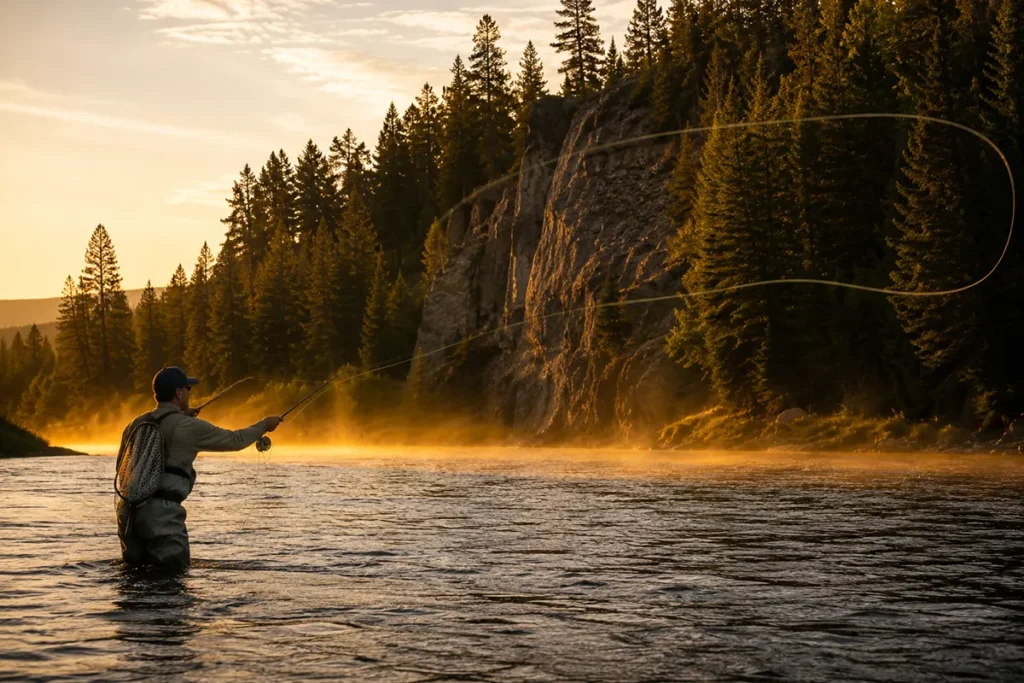
Locals actually float the river on weekdays, not just weekends. If you want a mellower Clark Fork float experience with fewer people in the water, aim for a Tuesday or Wednesday. I did an afternoon float on a Thursday in July that felt practically private compared to the weekend circus.
Don’t skip Fort Missoula. The Historical Museum at Fort Missoula is out on South Avenue on the west side of town and gets overlooked by most visitors. But if you have even a passing interest in Montana history — particularly the fascinating and troubling history of the Buffalo Soldiers stationed here and the Japanese American internment camp that operated on the site during World War II — it’s a genuinely moving and informative museum.
Missoula Quick Facts
| Founded | 1860 |
|---|---|
| Major industries | University, healthcare, manufacturing, tourism, outdoor industry |
| Rivers | Clark Fork, Bitterroot, Blackfoot |
| Mountain ranges within sight | 5 (Bitterroot, Mission, Rattlesnake, Sapphire, Garnet) |
| Famous resident (historical) | Norman Maclean, author of A River Runs Through It |
| Average summer high | 84°F |
| Average winter low | 19°F |
| Closest national park | Glacier (150 mi to West Glacier) |
Practical Information
📍 Quick Reference: Visiting Missoula, Montana
Best Months to Visit: September (first choice), June, October, July (smoke permitting)
Getting There: Fly into Missoula Montana Airport (MSO) with direct connections from Seattle, Denver, SLC, and more; or drive via I-90
Getting Around: Downtown Missoula is very walkable; a car is necessary for day trips and most trailheads. For broader Montana trip planning, see my Montana travel map (link to your travel maps page).
Elevation: ~3,200 feet (minimal altitude adjustment needed for most visitors)
Cell Service: Good in the city and along major highways; limited or none in mountain canyons
Key Trailheads: M Trail (south end of UM campus), Rattlesnake NRA (Rattlesnake Drive), Kim Williams Trail (Van Buren Street near river), Blue Mountain (Blue Mountain Road)
Must-Pack: Layers for cool evenings even in summer, sunscreen (UV is intense at elevation), an air quality app for summer visits, offline maps
Wildlife to Watch For: White-tailed deer in the Rattlesnake corridor, occasional black bear, osprey and bald eagles along the Clark Fork year-round
University of Montana Football (Griz) Season: September–November — if you’re here on a home game Saturday, expect a packed, festive downtown before and after the game. It’s excellent atmosphere.
Nearest Major Airport Alternative: Spokane (GEG) — 2.5 hours west, sometimes offers better fares
Nearby Attractions: Lolo Hot Springs (40 mi), Flathead Lake (55 mi), Glacier National Park western entrance (130 mi), Bitterroot Valley (30–75 mi south)
Final Thoughts: Give Missoula the Time It Deserves
I’ve said this to every traveler who’s mentioned Montana to me: don’t blow through Missoula. It seems like a stop, but it’s actually a destination.
The combination of genuine outdoor access, a real food and drink culture, interesting history, and a community that is authentically invested in the place — that’s rare in any city, let alone one in Big Sky Country.
Two nights is a minimum. Three nights lets you breathe. Four nights means you might actually find your way up the Rattlesnake to a lake, eat at the Pearl Cafe, make it to a morning at the farmers market, spend a full afternoon at KettleHouse’s riverfront patio, and still have time for a sunset drive up Blue Mountain Road without feeling rushed.
That’s the Missoula visit I’d build for myself — and honestly, I’d probably add a day trip to Lolo Hot Springs just to round it out.
If Missoula fits into your broader Montana itinerary and you’re wondering how it compares to other Montana weekend getaways, I’d tell you it stands on its own — not just as a gateway to Glacier or Yellowstone country, but as a place worth visiting in its own right. Plan accordingly, and you won’t regret it.
Have questions about visiting Missoula? Drop them in the comments below — I check regularly and genuinely love helping people plan their Montana trips. And if you found this guide useful, pin it for your trip planning.
Frequently Asked Questions
Is Missoula worth visiting?
Yes — Missoula is absolutely worth visiting and is genuinely one of the most distinctive Montana cities. The combination of the University of Montana, three rivers converging at the city center, a walkable downtown plus the Hip Strip, an excellent arts and literary scene, and access to fly fishing, hiking, and Glacier National Park (2.5 hours away) makes it a top choice for travelers seeking a real urban Montana experience.
What is Missoula, Montana known for?
Missoula is known for being the cultural and artistic heart of Montana, home to the University of Montana, the setting of Norman Maclean’s A River Runs Through It, the confluence of three rivers (Clark Fork, Bitterroot, Blackfoot), the largest smokejumper base in the United States, and as a major hub for fly fishing on the Blackfoot River. It’s also Montana’s most liberal city.
How many days do you need in Missoula?
Plan 2–3 days in Missoula to experience downtown, the Hip Strip, the M Trail, the Smokejumper Visitor Center, and a few breweries. Add 1–2 days if you’re planning day trips to Lolo Hot Springs, the Bitterroot Valley, Garnet Ghost Town, or fly fishing trips on the Blackfoot River.
How far is Missoula from Glacier National Park?
Missoula is approximately 150 miles from Glacier National Park’s West Entrance at West Glacier — about a 2.5-hour drive north via US-93 through the Flathead Valley. This makes Missoula a reasonable base for a Glacier trip, though staying closer (Whitefish or Kalispell) is more practical for multi-day Glacier visits.
What airport serves Missoula, Montana?
Missoula Montana Airport (MSO) is the airport serving Missoula, located about 15 minutes west of downtown. MSO offers direct flights from Seattle, Denver, Minneapolis, Salt Lake City, Las Vegas, Chicago, and several other destinations — with seasonal expansions in summer.
What’s the best time of year to visit Missoula?
September and October are arguably the best months to visit Missoula — comfortable temperatures, fall colors along the rivers, the university back in session, and fewer tourists. Summer (June–August) offers the best weather and full activity access but heavier crowds and a real risk of wildfire smoke in August. Spring and winter visits work for downtown-focused trips.
What’s the difference between Missoula and Bozeman?
Missoula is larger (~77,000 vs ~57,000), more liberal, more affordable, more literary and artistic, and closer to Glacier National Park. Bozeman is smaller, more expensive, more polished and tourist-oriented, has stronger restaurant scene, and is closer to Yellowstone. Missoula attracts travelers wanting cultural authenticity; Bozeman attracts travelers wanting outdoor luxury.
What is the Hip Strip in Missoula?
The Hip Strip is a section of South Higgins Avenue in Missoula, just south of the Clark Fork River across the Higgins Bridge. The strip is packed with independent shops, restaurants, bookstores, breweries, and cafes — including Fact & Fiction bookstore, Le Petit Outre bakery, and Big Dipper Ice Cream. It’s Missoula’s social and arts hub.
Is Missoula safe for tourists?
Yes — Missoula is generally a very safe city for tourists. Downtown and the Hip Strip are comfortable to walk at all hours. Standard urban precautions apply. The main practical concerns are summer wildfire smoke and winter ice on sidewalks, not personal safety.
Can you fly directly from major cities to Missoula?
Yes — Missoula has direct flights from Seattle, Denver, Salt Lake City, Minneapolis, Chicago O’Hare, Las Vegas, Phoenix, Dallas, and Atlanta, with summer seasonal additions. MSO is one of the easier-to-reach airports for travelers from the Midwest and East Coast looking to access western Montana.