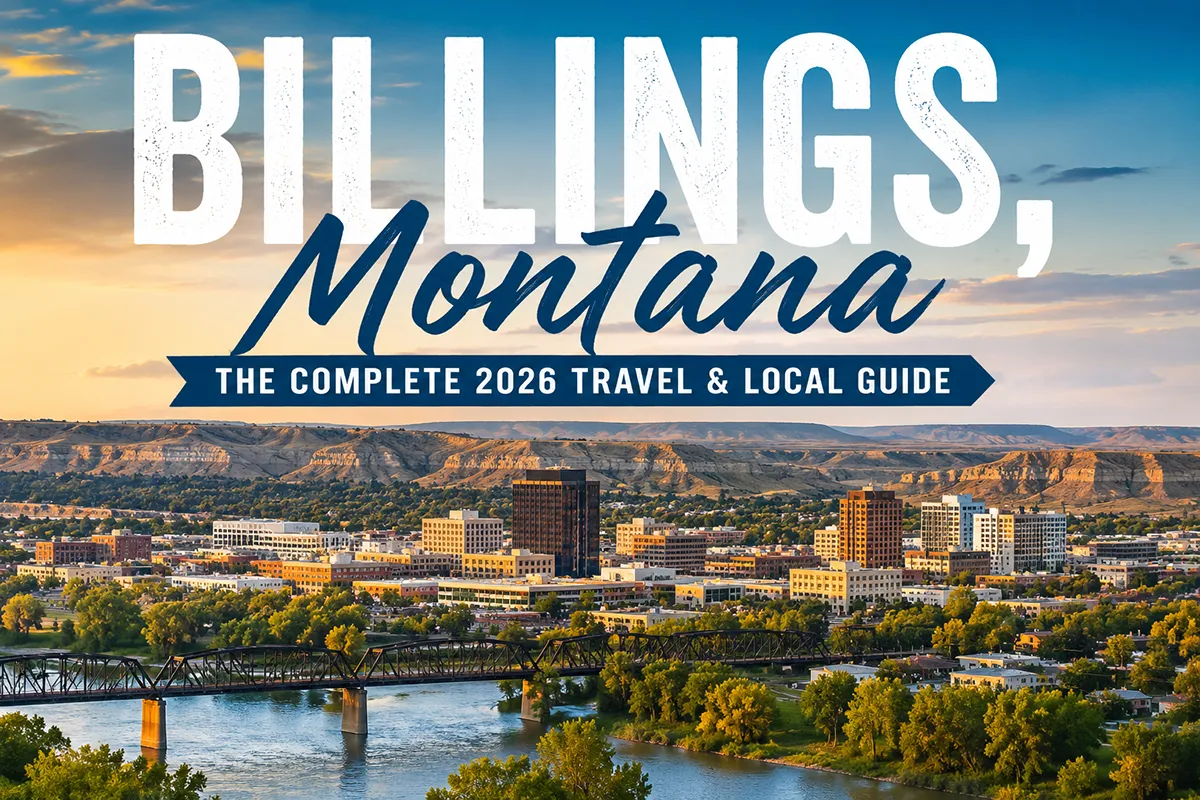
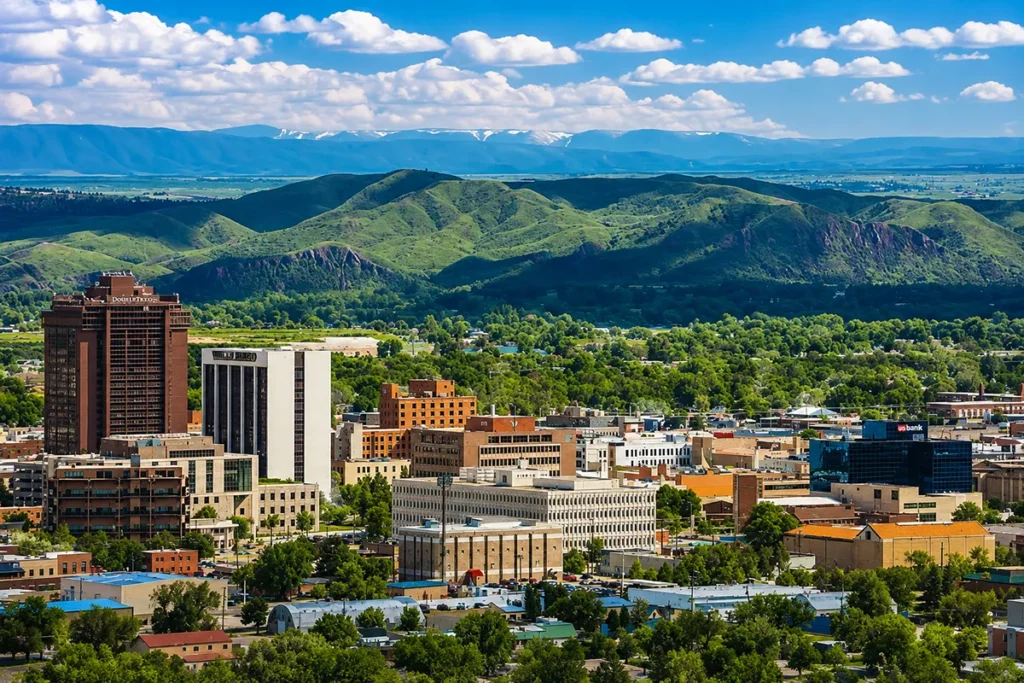
I stood at the top of Zimmerman Park on the Rimrocks at sunrise on a clear October morning, watching the city of Billings emerge from blue shadow into orange light, and realized: this is the only major American city I can think of that’s literally built underneath a 500-foot cliff. Most travelers fly into Billings and never go up there. They’re missing the best thing about it.
- Billings (pop. ~117,000) is Montana’s largest city and the trade and distribution hub for one of the largest commerce areas in the United States — nicknamed “The Magic City” and branded “Montana’s Trailhead.”
- The Rimrocks sandstone cliffs wrap the city’s north edge and deliver five named mountain range views from a single overlook — completely free, almost always empty.
- Pompey’s Pillar National Monument — a 150-foot sandstone boulder 30 miles northeast — holds William Clark’s hand-carved 1806 signature, one of the only surviving physical traces of the Lewis & Clark Expedition in America. Your current page likely misses this.
- Gateway to the Beartooth Highway (America’s most scenic drive), Yellowstone’s Northeast Entrance, and the Little Bighorn Battlefield.
- Best for: south-central Montana road trips, anyone flying into Montana east of the Continental Divide, Beartooth/Yellowstone access, and travelers who want regional scale without resort-town prices.
For context on where Billings fits in Montana, see my Montana cities and towns hub.
Liked this article?
Add Roaming Montana as a preferred source so you see more of our articles and guides on Google.
Billings at a Glance
| Population (2020) | ~117,116 (largest city in Montana) |
|---|---|
| Metro Area Population | ~184,000 (Yellowstone, Stillwater, and Carbon counties) |
| County | Yellowstone County (county seat) |
| Region | South-Central Montana |
| Elevation | 3,123 ft (city center); Rimrocks ~3,650 ft |
| Nicknames | “The Magic City”; “Montana’s Trailhead” |
| Airport | Billings Logan International (BIL) |
| Founded | March 1882 (Northern Pacific Railroad town) |
| Named for | Frederick H. Billings, president of the Northern Pacific RR |
| Major industries | Healthcare, oil refining, agriculture, finance, trade |
| Closest national park | Yellowstone NE Entrance (~130 mi via Beartooth Highway) |
| Distance to Bozeman | ~145 miles (~2 hrs via I-90) |
| Distance to Little Bighorn | ~65 miles (~1 hour via I-90) |
Billings in America: The Magic City’s Story
Long before the Northern Pacific Railroad arrived, the land that became Billings was called Ammalapáshkuua by the Crow people and É’êxováhtóva by the Northern Cheyenne — both names translating roughly to “where they cut wood,” reflecting the area’s role as a timber and resource site along the Yellowstone River.
The Crow Nation’s reservation still lies southeast of Billings today, and the connection between the city and its Indigenous neighbors remains a defining part of the regional culture.
The immediate predecessor to Billings was a small settlement called Coulson — a trading post and stagecoach station established in 1877, about two miles east of where Billings now sits. Fewer than fifty people lived there before the Northern Pacific arrived.
When the railroad surveyed and platted the new town in March 1882, they named it after Frederick H. Billings, then president of the Northern Pacific Railroad. Growth was explosive. Within months, thousands of people arrived.
By 1882’s end, Billings had newspapers, hotels, and banks. They called it the “Magic City” because of how fast it appeared from nothing — and the name stuck.
By 1883, Billings was the county seat. By 1885 it was incorporated. Prosperity collapsed briefly after 1887 when the cattle boom crashed, but recovered and strengthened after 1900 with the development of irrigated agriculture, sugar beet farming, and eventually oil refining — four refineries now operate in the Billings area, making it one of the most significant petroleum processing centers in the northern Rockies.
In 1992, Billings received the All-America City Award — one of the most prestigious civic designations in the United States, recognizing communities that demonstrate cooperative civic accomplishment. In 2007, Billings was designated a Preserve America Community.
In 2022, it became the first city in Montana (and 21st globally) to receive LEED Gold certification for sustainability achievements including electric city buses, EV charging expansion, and conservation land additions.
For a city that many outsiders write off as a blue-collar agricultural hub, Billings has quietly built one of the most forward-looking civic records in the Mountain West.
Today Billings is what Britannica calls the metropolis of the “Midland Empire” — the rangeland and irrigated river valley region that stretches across south-central Montana, northern Wyoming, and western portions of North Dakota and South Dakota.
The Billings Chamber of Commerce claims a commerce area covering more than 125,000 square miles, one of the largest retail trade areas in the United States.
For more on Montana’s development story, see my Montana history guide.
What Makes Billings Different
Billings isn’t a quaint mountain town. It’s a working regional city — the largest in a 500-mile radius (Salt Lake City, Denver, and Calgary are the nearest comparable metros).
For travelers accustomed to Bozeman’s polished cosmopolitanism or Whitefish’s resort sheen, Billings can feel like an under-presented stepchild of Montana tourism. That’s precisely its appeal.
It’s genuinely called “Montana’s Trailhead.” This isn’t just marketing. With 50+ miles of trails within the city limits and direct access to Beartooth, Yellowstone, Pryor Mountains, Little Bighorn, and Pictograph Cave, Billings functions as the literal launch point for a significant swath of America’s most dramatic public land.
The Rimrocks are among the most dramatic urban geological features in the United States. Five named mountain ranges visible from a single free viewpoint. A 500-foot cliff you can drive to in 10 minutes from downtown.
The airport (BIL) is genuinely the best-served airport in eastern Montana. Direct flights from Seattle, Denver, Minneapolis, Salt Lake City, Las Vegas, Phoenix, and Dallas make it the most practical entry point for travelers heading into south-central Montana from across the country.
It’s affordable by Montana standards. Hotels run 30–40% cheaper than Bozeman or Whitefish equivalents. The restaurant and bar scene prices for locals, not tourists.
Two universities. Montana State University-Billings (founded 1927) and Rocky Mountain College (1898) give Billings a younger, more energized demographic base than most cities its size in the Mountain West.
Top Attractions in Billings, Montana
1. Pompey’s Pillar National Monument ★ [Do Not Skip]
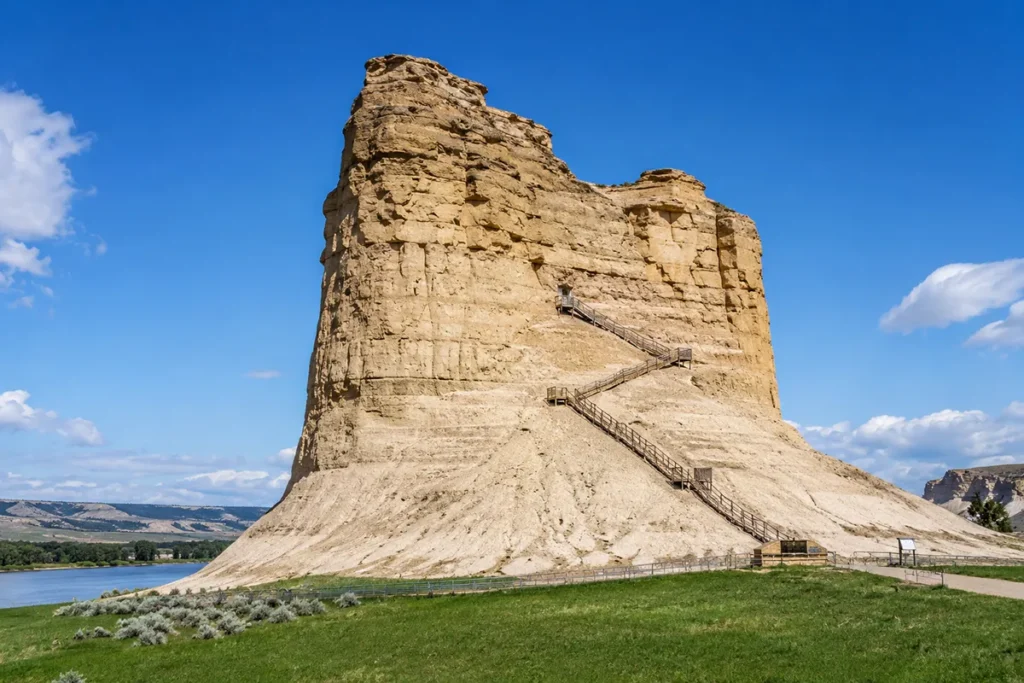
Thirty miles northeast of downtown Billings, a 150-foot sandstone butte rises from the Yellowstone River floodplain.
This is Pompey’s Pillar National Monument — and it holds something no other site in the western United States can offer: William Clark’s hand-carved signature, dated July 25, 1806, during the return leg of the Lewis & Clark Expedition.
Clark climbed the rock and scratched his name and the date into the sandstone as his party passed through on the way back east.
That inscription is still there, protected behind glass but clearly visible. It is one of the only surviving physical remnants of the Lewis & Clark Expedition anywhere in North America — everything else was on paper.
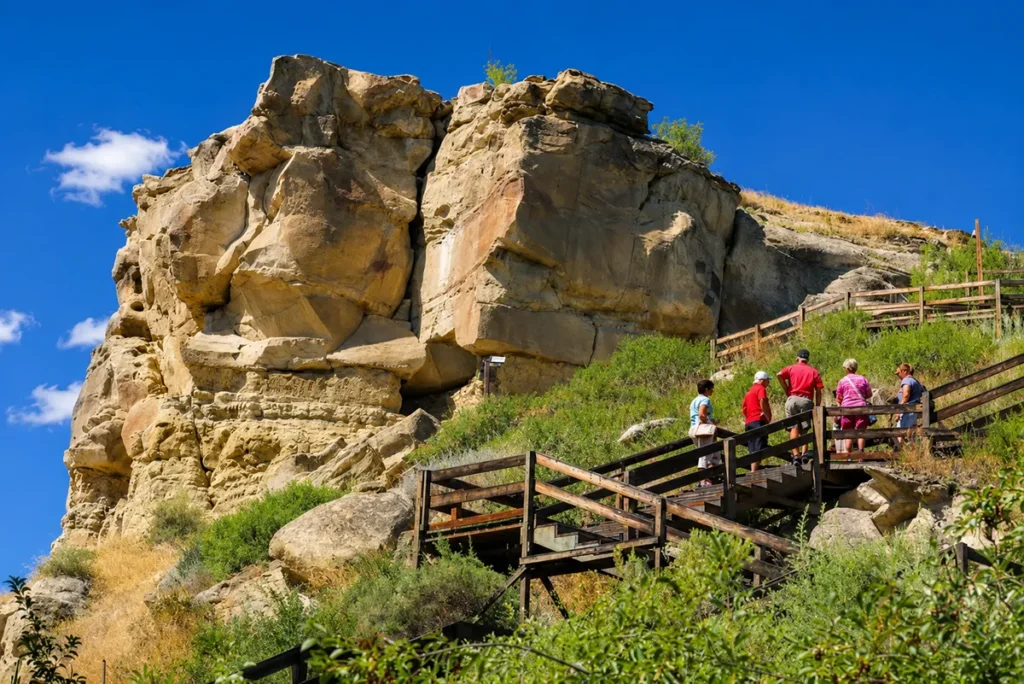
The rock also carries Native American petroglyphs and pictographs going back more than 2,000 years. The site includes a boardwalk, interpretive exhibits, and stairs built into the face that take you to the summit where Clark stood and surveyed the valley.
The view from the top — Yellowstone River below, the plains rolling toward the Pryor Mountains — is quietly spectacular. Plan an hour minimum; most people stay longer.
[Verify current entry fees and seasonal hours at nps.gov.]
This is the single biggest gap in most Billings travel coverage. Do not visit Billings without going to Pompey’s Pillar.
2. The Rimrocks
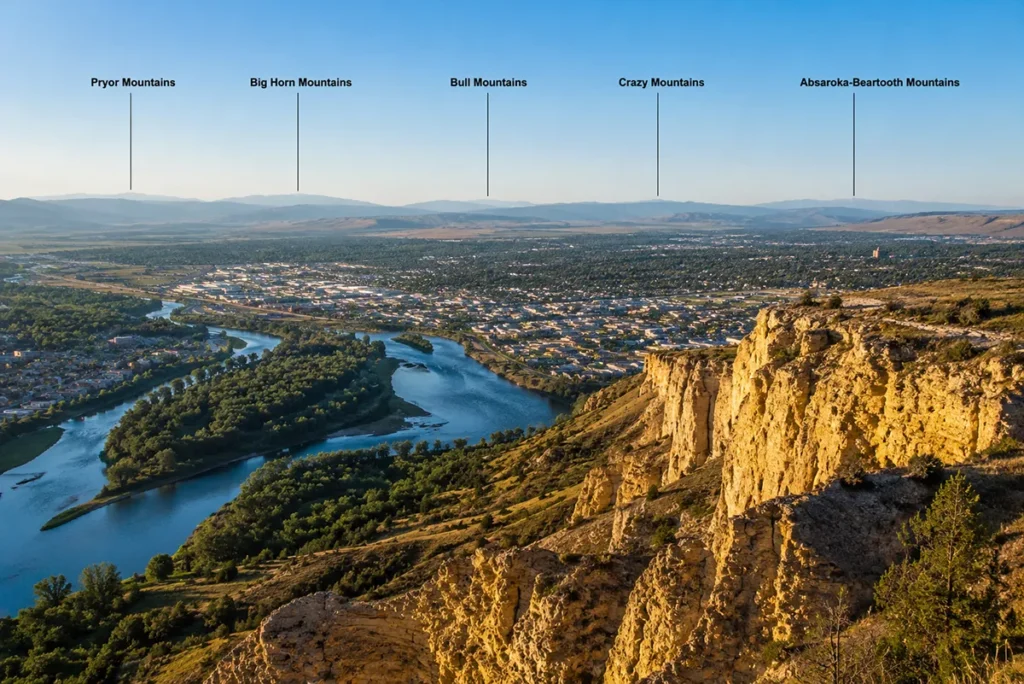
The Rimrocks are a sandstone cliff system that wraps around the north side of Billings for several miles, rising 500 feet above the city in places. Multiple access points deliver completely different experiences:
Zimmerman Park — The most accessible viewpoint, with panoramic views over downtown, the Yellowstone River valley, and the plains. Best at sunrise and sunset. Free parking.
Swords Rimrock Park — The main Rimrocks park system, with miles of hiking, mountain biking, and jogging trails along the cliffs. The view here takes in five mountain ranges: the Pryor, Big Horn, Bull, Crazy, and Absaroka-Beartooth ranges. Standing at the north rim looking south at the city with those ranges stacked behind it is one of Montana’s great urban views.
Four Dances Recreation Area — On the East Rimrocks, 765 acres of sagebrush, ponderosa pine, and dramatic sandstone. Trails lead to Sacrifice Cliff on the western edge — a historically significant Crow people site where warriors rode horses over the cliff during a smallpox epidemic as an act of sacrifice. The view from the cliff edge, 500 feet down to the Yellowstone River, is breathtaking. No bikes or motorized vehicles; excellent snowshoeing and cross-country skiing in winter.
Boothill Cemetery — The Rimrocks’ most historically charged spot. Early settlers were buried here in the 1880s, when Billings was raw and violent enough to warrant a frontier cemetery on a cliff. The graves of outlaws and lawmen sit in the same rocky ground. Yellowstone Kelly’s grave is here: Luther Sage Kelly was a frontier scout, U.S. Army officer, and one of the legendary figures of the late 19th-century West — he died in California but specifically requested burial in Montana, which was honored with full military honors.
The Rimrocks are free, open year-round, and represent the most dramatic urban outdoor experience in all of eastern Montana.
3. Pictograph Cave State Park
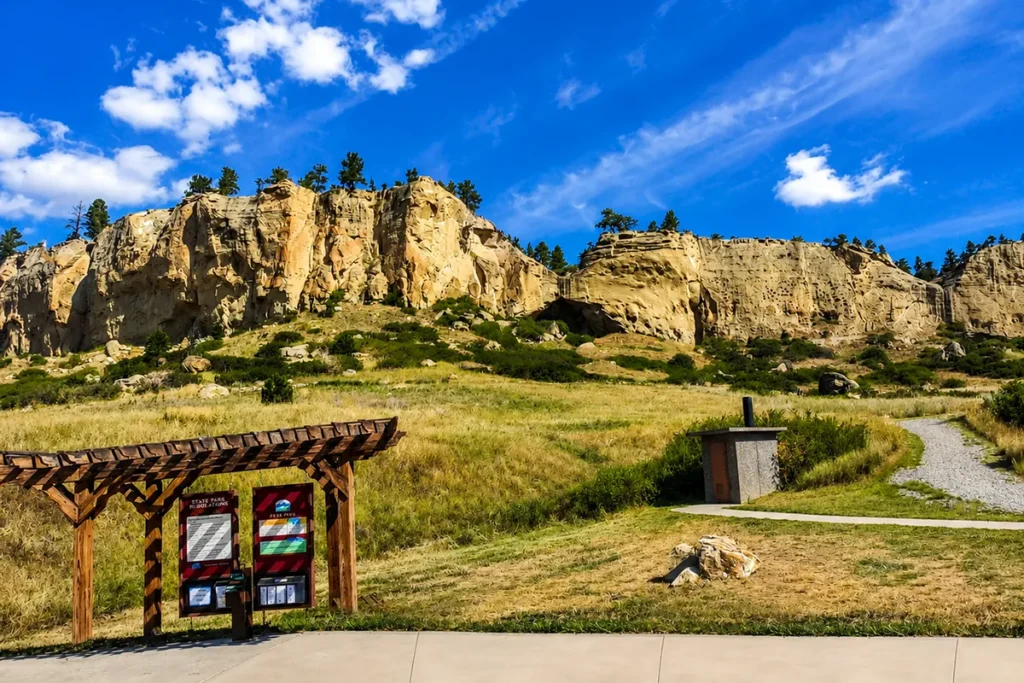
Three caves preserve rock art dated to roughly 2,000 years old, tucked into limestone cliffs southeast of Billings. The paved loop trail is easy, the interpretive signage is excellent, and the preservation work on the pictographs is well done. A half-day from Billings.
4. Yellowstone Art Museum (YAM)
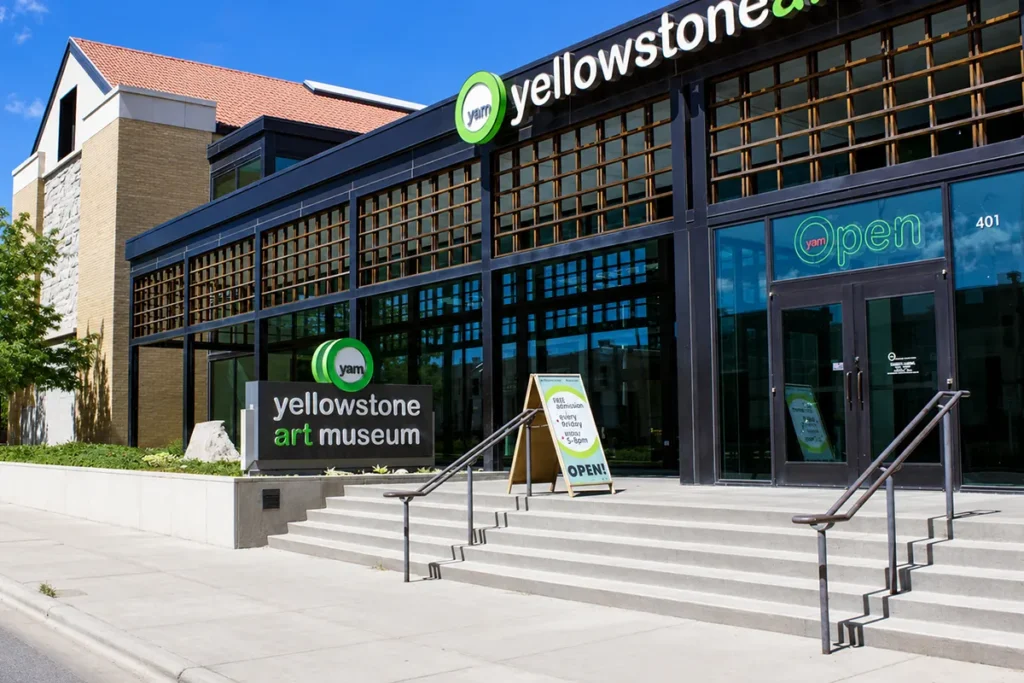
Housed partly in the city’s 1916 jail building (the cells are still visible), the YAM is the largest contemporary art museum in Montana with 8,500+ works focused on Northern Plains and Northern Rocky Mountain artists.
Particularly strong collection of Charles M. Russell and other Montana artists. The “Visible Vault” — where the museum has opened its art storage to the public — is a genuinely unique experience not found at most regional art museums.
5. Western Heritage Center
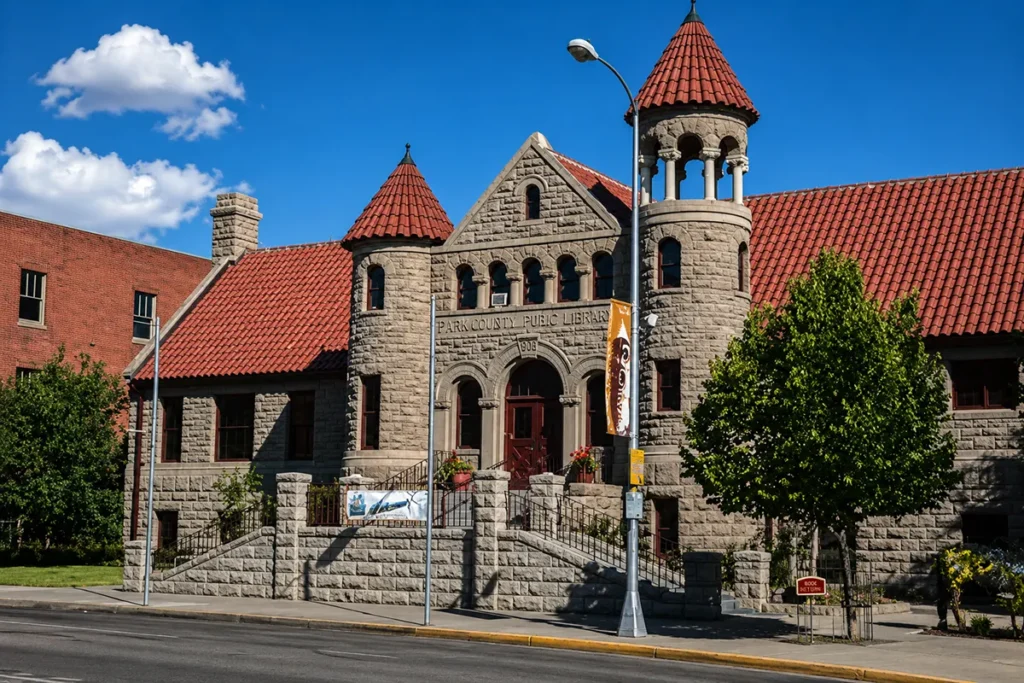
Smithsonian-affiliated regional history museum in downtown Billings covering the Indigenous, ranching, and railroad history of the Yellowstone River valley. Free admission (suggested donation).
Located on Montana Avenue, five blocks from the Yellowstone Art Museum — the core of downtown’s museum walk.
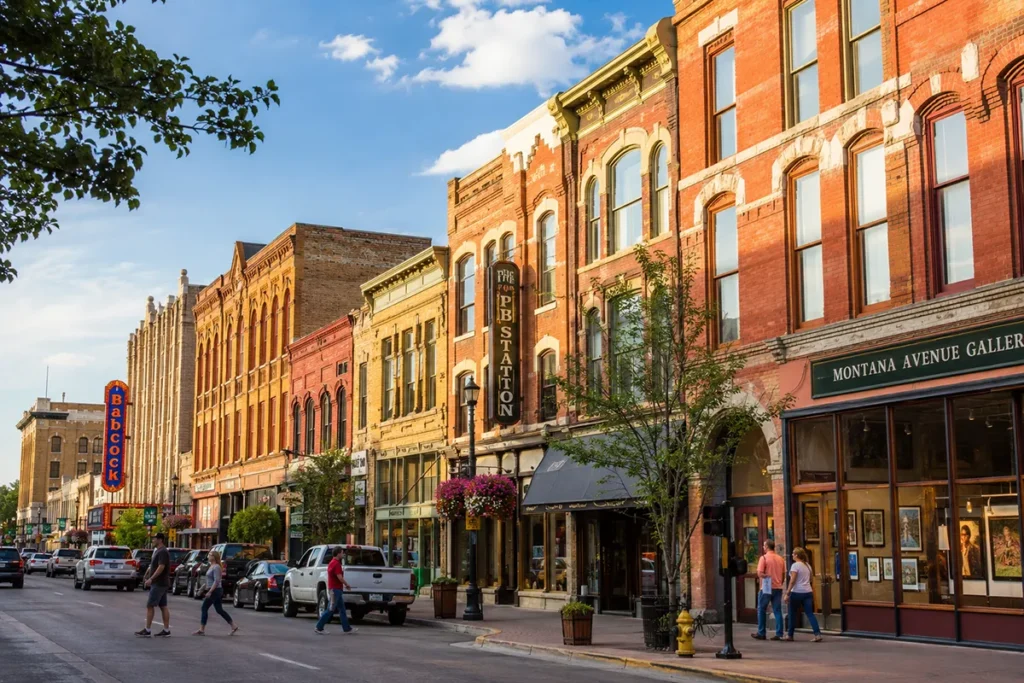
6. Montana Avenue Historic District
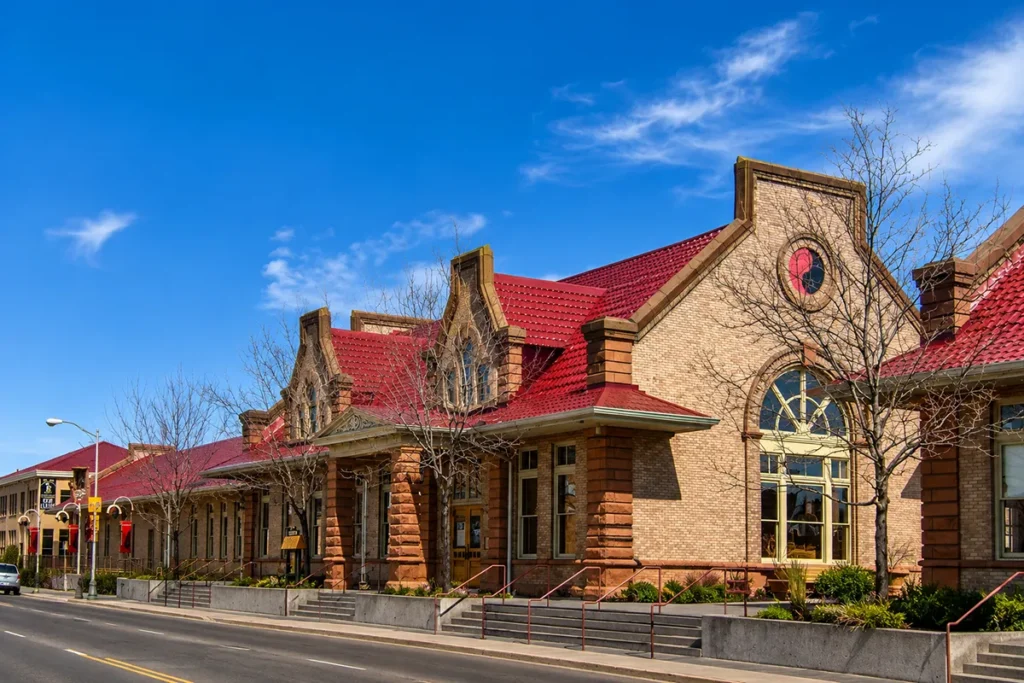
Montana Avenue is the actual spine of downtown Billings — a walkable corridor of galleries, restaurants, bars, and historic buildings, running roughly east-west through the core of the city.
The Billings Depot, a passenger rail station built in 1909 that ran until 1979, now serves as a popular events venue and marks a natural starting point for a downtown walk.
Interpretive boards behind the building give the city’s founding history in condensed, readable form.
Walk west on Montana Avenue to hit the Western Heritage Center, then continue to the Moss Mansion, Skypoint, and the Alberta Bair Theater — a complete downtown circuit.
7. Moss Mansion Historic House Museum
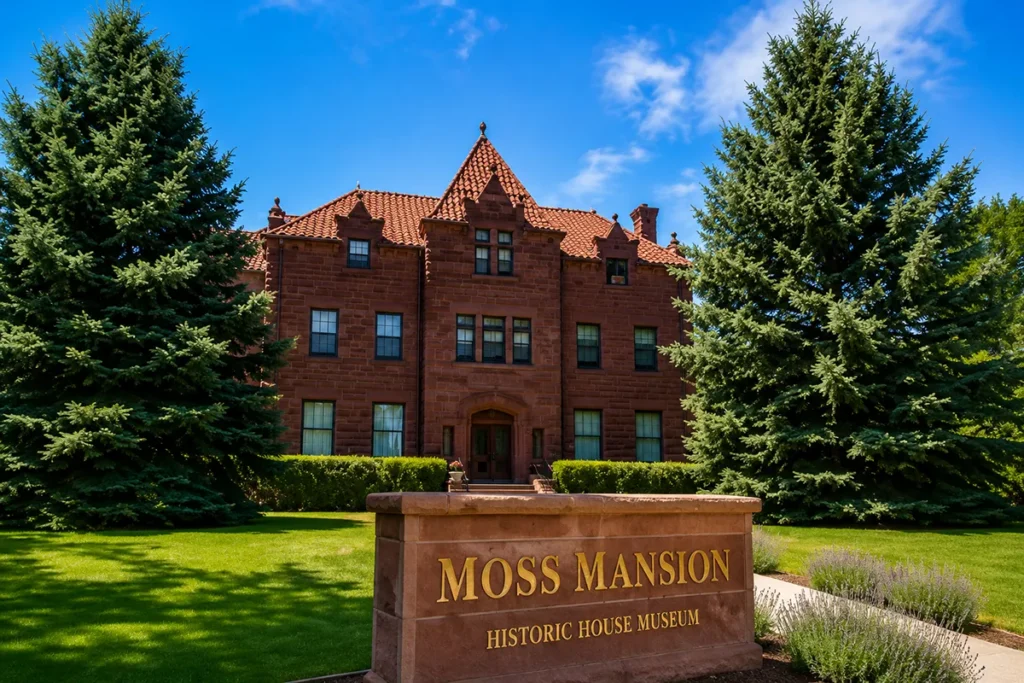
Built in 1903 for businessman Preston Moss and designed by the same New York architect who later worked on the Waldorf Astoria, this 28-room red sandstone mansion is preserved as a house museum.
Guided tours run year-round. The vibrant period wallpaper, ornate fixtures, and intact parlors give a genuine window into what wealth looked like in early Billings.
The Christmas decorations each December are a local tradition worth planning around if you’re visiting in winter.
8. Skypoint and Alberta Bair Theater
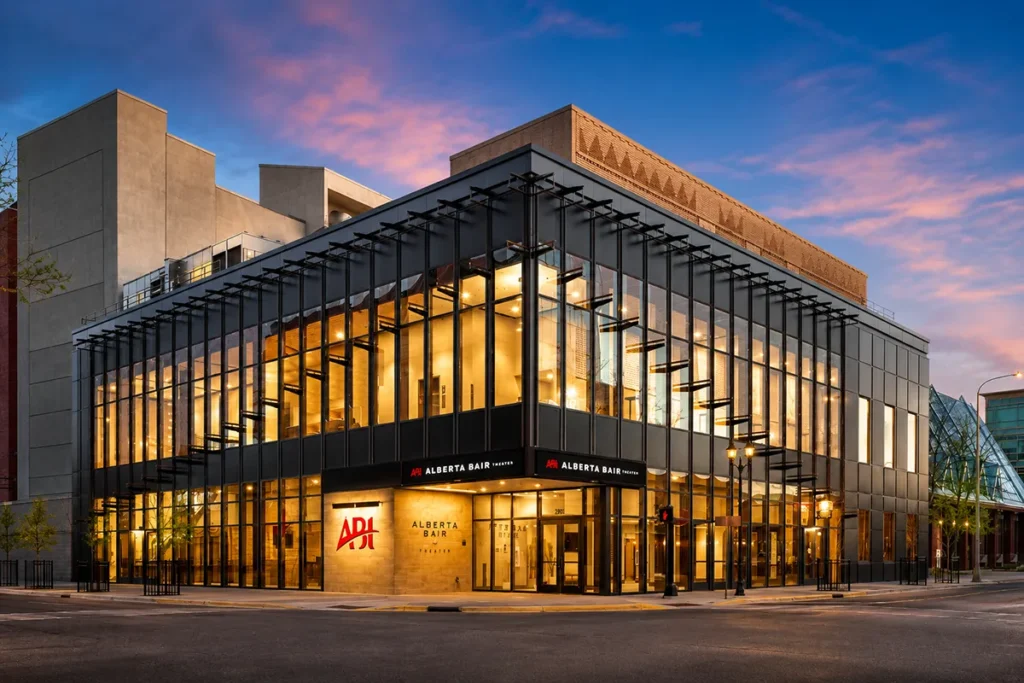
Two downtown Billings landmarks that most visitors miss. Skypoint is a tent-like sculptural canopy over the intersection at Broadway and 2nd Avenue North — three sail-like forms (one actually moves) that serve as a downtown gathering landmark and performance space.
One block away, the Alberta Bair Theater is a 1931 art deco performing arts center with performances running year-round from classical music to Broadway touring productions. Both are worth a walk-by on any downtown circuit.
9. ZooMontana
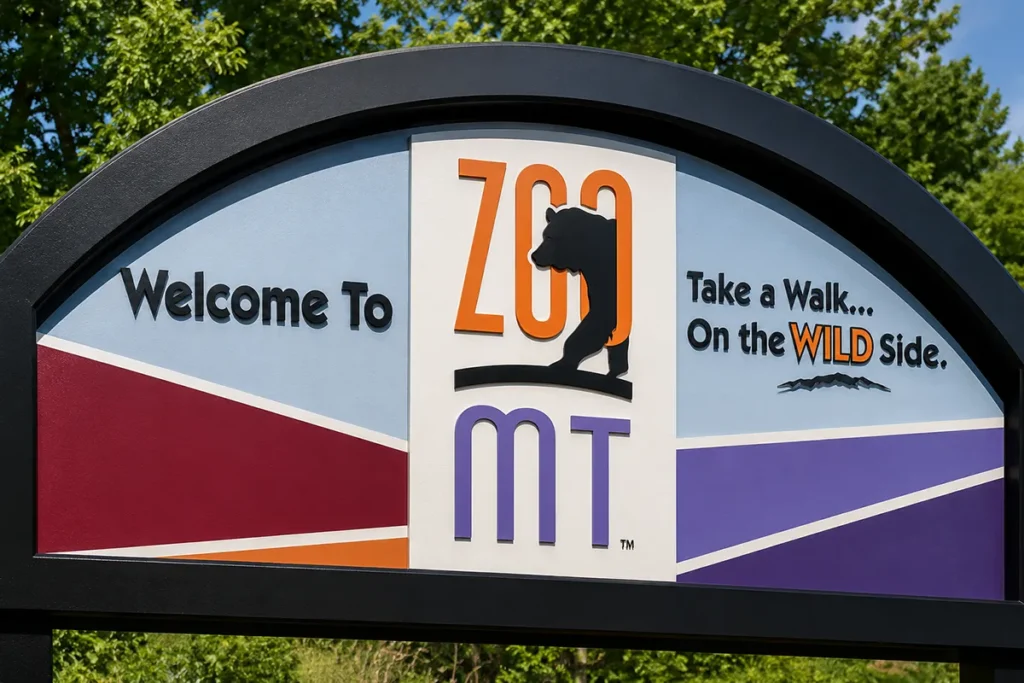
A small zoo specializing in cold-climate animals — grizzly bears, wolves, river otters, bald eagles — with most residents being non-releasable rescues from the wild. For families with children, this is the best half-day in Billings. See current programming at ZooMontana.
10. Yellowstone County Museum
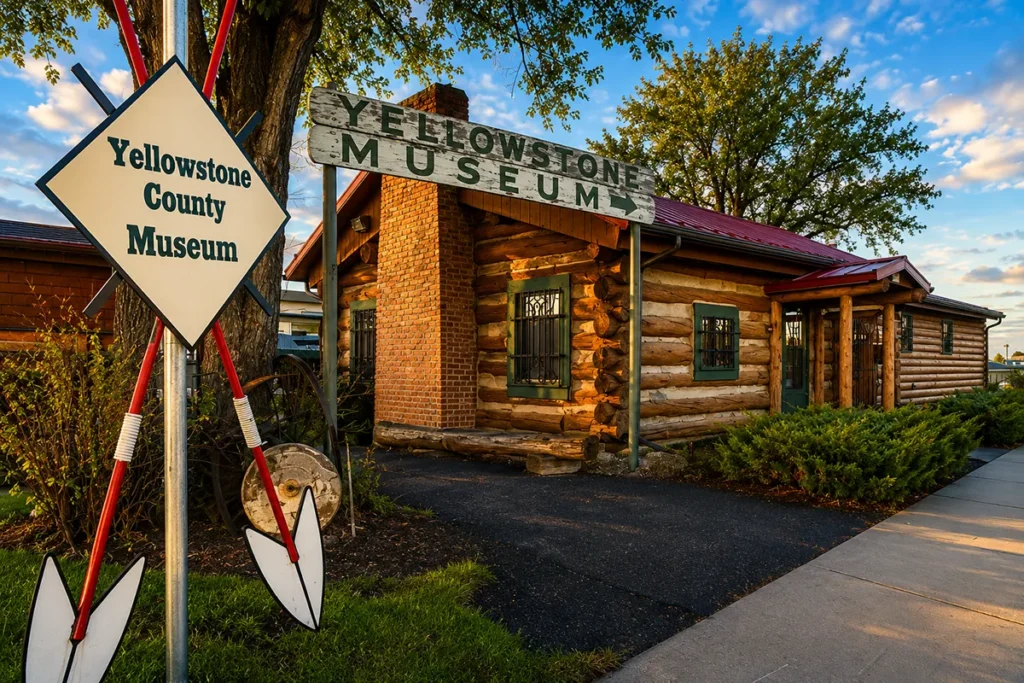
Located at MetraPark, the Yellowstone County Museum focuses on the natural history and diverse cultures of the Yellowstone Valley and Northern Plains.
Often overlooked compared to the YAM and Western Heritage Center but worth a stop for the depth of its Indigenous artifacts and frontier-era exhibits.
11. Lake Elmo State Park
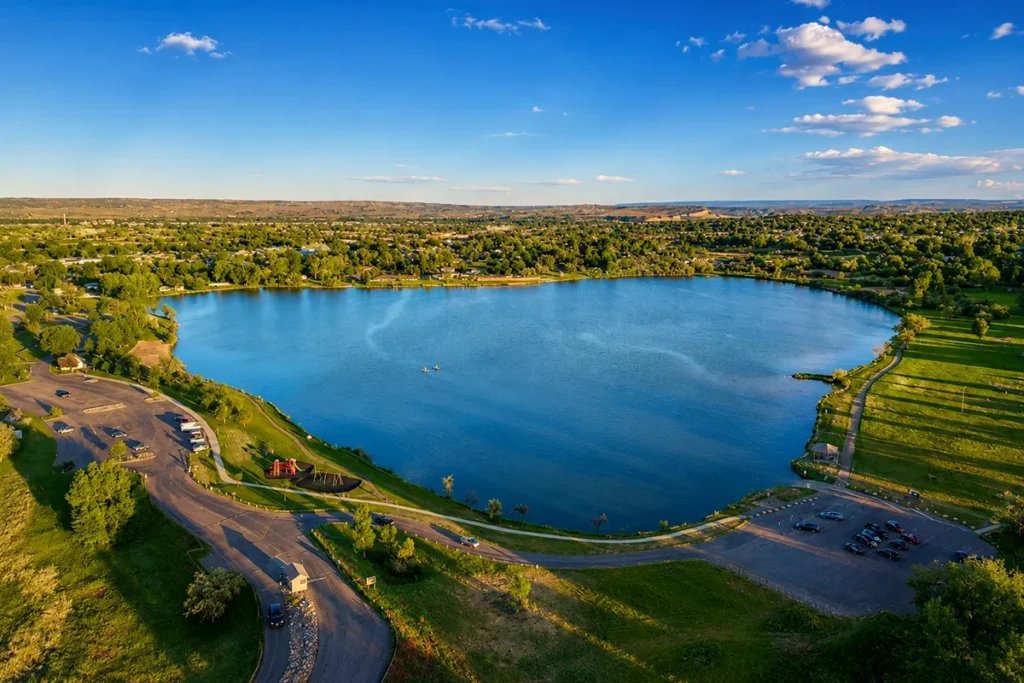
A spring-fed lake on the eastern edge of Billings, popular for swimming, fishing, non-motorized boating, and walking.
Significantly calmer and cleaner than the Yellowstone River for water recreation. Good for families wanting a beach day without leaving the metro area. [Verify current day-use fees.]
12. MetraPark / First Interstate Arena
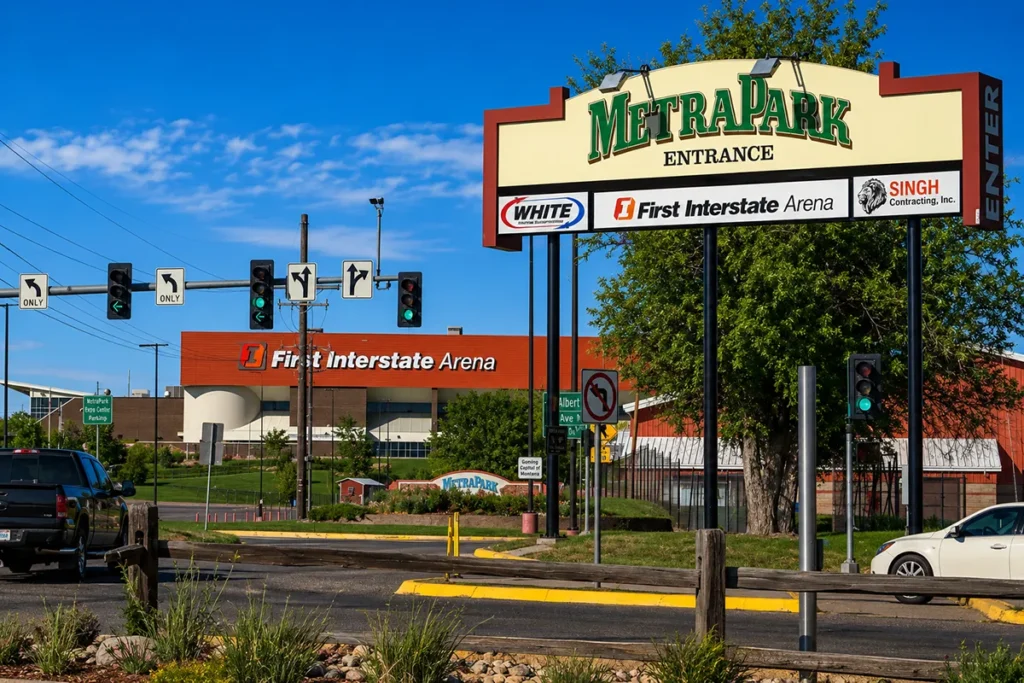
The city’s major sports and entertainment complex, hosting Montana’s largest annual event (MontanaFair, see Events section), concerts, rodeos, and the NILE stock show. If something major is happening in Billings, it’s probably here.
Events & Festivals in Billings
Billings runs one of the biggest event calendars in Montana. Two are genuinely major:
MontanaFair (August, MetraPark) — The region’s largest annual event draws nearly 250,000 visitors over nine days at MetraPark. Livestock exhibitions, PRCA rodeo, midway rides, concerts, 4-H shows, and classic fair food. One of the largest agricultural fairs in the Mountain West. [Verify 2026 exact dates and concert lineup at MetraPark.]
NILE — Northern International Livestock Exposition (October, MetraPark) — A week-long stock show and rodeo that draws exhibitors from across the United States and Canada. Cattle shows, gold buckle horse sales, junior livestock competitions, and professional rodeo action. The NILE is one of the premier livestock events in the Northwest.
Billings Brew Trail Events — The Brew Trail hosts periodic collaborative events, tap takeovers, and passport challenges year-round. Best checked at visitbillings.com closer to your trip.
Billings Mustangs Baseball (April–August, Dehler Park) — Minor league affiliate baseball in a small, accessible ballpark right in Billings. Cheap tickets, family-friendly evenings, and an authentically local experience.
Murder Mystery Dinner Experience (DoubleTree Billings) — A currently running interactive true crime dinner show at the DoubleTree by Hilton; check visitmt.com for current schedules and tickets.
Shopping in Billings
Billings has the most complete retail environment in eastern Montana.
Lou Taubert Ranch Outfitters — An institution. Multiple floors of Western wear, boots, hats, saddles, and ranch gear in a building that’s been outfitting Montanans for generations. Even if you don’t buy anything, this is the most authentically western retail experience in the city. On Broadway Street in downtown.
Montana Avenue boutiques — The historic downtown corridor hosts independent galleries, gift shops, and clothing boutiques that stock regional art, Montana-made goods, and items you won’t find at airport gift shops.
West End shopping — Chain retailers, big-box stores, and the Rimrock Mall are concentrated on the West End — practical for any supplies you need for onward trips to Beartooth or Yellowstone.
Yellowstone Cellars & Winery — Handcrafting French and Italian style red and white wines from hand-picked grapes since 2010. Worth a tasting stop for wine-inclined visitors; the selections lean toward robust red styles that suit Montana’s food culture.
Southeast Montana Burger Trail — Not a store, but a regional food tourism program worth knowing. Billings anchors this 24-restaurant trail of Montana-raised beef burgers across southeastern Montana. The Burger Dive is the Billings entry and a legitimately excellent burger. The program website lists all participating restaurants if you’re road tripping southeast Montana.
Where to Stay in Billings
| Hotel | Vibe | Price Range | Best For |
|---|---|---|---|
| Northern Hotel (downtown) | Historic, fully renovated | $180–280 | Splurge / couples |
| DoubleTree by Hilton (downtown) | Solid chain, walkable | $150–230 | Most travelers |
| AC Hotel Billings (downtown) | Modern, boutique feel | $160–240 | Business / design-conscious |
| Home2 Suites (West End) | Extended stay, value | $130–190 | Families / budget |
| Hilton Garden Inn (West End) | Reliable chain | $140–200 | Standard road-trip stop |
| Big Horn Resort (contains The Reef) | Family resort feel | $150–220 | Families with kids |
| Hotels near BIL Airport | Functional chain cluster | $120–170 | Late arrivals / early departures |
Downtown hotels put you within walking distance of Montana Avenue, the Brew Trail, and the museum cluster. West End hotels are better positioned for quick I-90 access if you’re continuing to Beartooth or Yellowstone the next morning. For RV travelers, see my Billings RV parks guide.
Where to Eat in Billings
Billings has the most diverse restaurant scene in eastern Montana — a product of its size and its role as a regional hub drawing residents and visitors from hundreds of miles in every direction.
Walkers Grill — The gold standard of upscale dining in Billings. Seasonal American menu, strong wine list, $30–45 per entree. Downtown.
Lilac — Farm-to-table, sourcing from regional producers, intimate space, reservations strongly recommended for dinner.
The Marble Table — Contemporary Montana cuisine with local beef at the center. Brussels sprouts with kimchi aioli, house-cut steaks, rotating seasonal menu.
Stella’s Kitchen & Bakery — The breakfast institution. Cash only. Lines form on weekends. Worth the wait for the biscuits and gravy and house-baked pastries.
The Burger Dive — World Food Championship award-winning burger joint with Montana-raised beef and inventive preparations. The “I’m Your Huckleberry” burger (huckleberry Hatch chile BBQ sauce, bacon, goat cheese, arugula) is the flagship.
Jake’s Bar & Grill — The local steakhouse classic. Big Montana beef cuts, reliable execution.
Bin 119 — Wine bar with excellent small plates. Good alternative to a full sit-down dinner.
Ciao Mambo — Reliable Italian, family-friendly, a local standby.
Yellowstone Cellars & Winery — Tasting room for locally made wine; see the Shopping section above.
The Billings Brew Trail
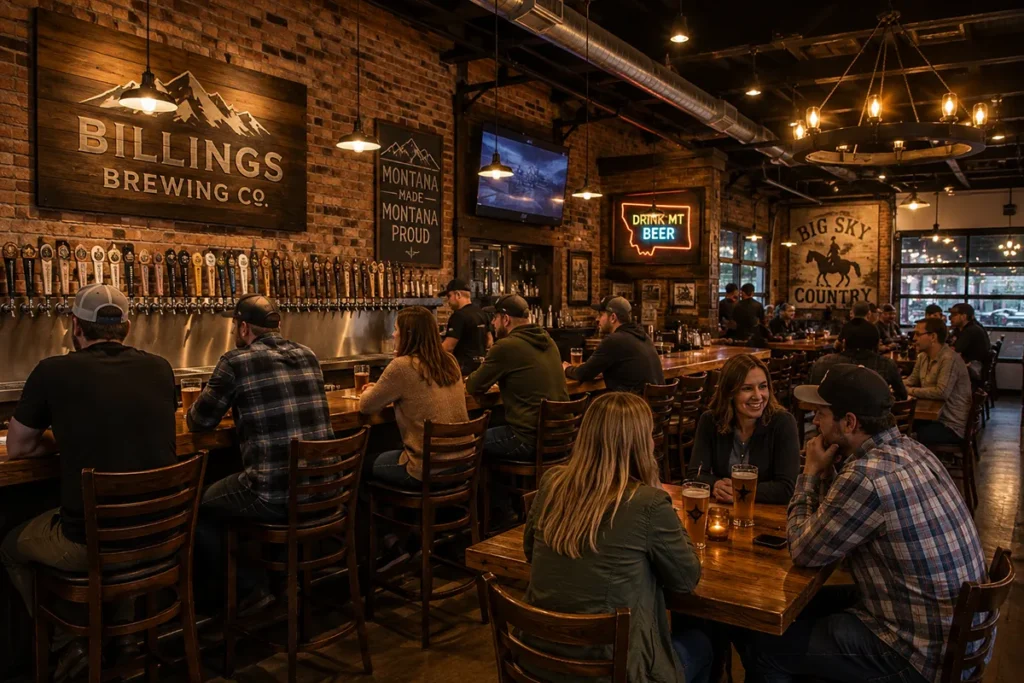
Eight to ten breweries and distilleries within easy walking distance of downtown Billings make up “Montana’s Trailhead” of craft beer. Pick up a passport from any participating venue — collect stamps, earn a free pint glass.
Montana Brewing Company — The original Billings craft brewery. The Sharptail Pale Ale is the signature. Lively taproom on Broadway.
Angry Hank’s Microbrewery — Long-running, known for approachable styles and a relaxed local crowd.
Thirsty Street Brewing — More recent addition with experimental styles and a strong social media presence.
Last Chance Cider Mill — Hard cider specialist. If you want Montana apple-forward drinks rather than hops, this is the stop.
Trailhead Spirits — Distillery on the Brew Trail. Whiskey, gin, and vodka made in small batches. Montana-sourced grain where available.
The full trail map is available at visitbillings.com.
Getting to Billings & Getting Around
By plane: Billings Logan International Airport (BIL) is Montana’s busiest airport by passenger volume. Direct flights from Seattle, Denver, Minneapolis, Salt Lake City, Las Vegas, Phoenix, and Dallas via Delta, United, Alaska, and Allegiant. Ten minutes from downtown by car. Car rental available at the terminal from all major agencies.
By car: I-90 runs east-west through the city. From Bozeman, ~145 miles west (~2 hrs). From Sheridan WY, ~135 miles south (~2 hrs). From Billings east to Glendive, I-94 splits off toward the North Dakota state line.
Around Billings: Car-dependent, like most western cities. The Montana Avenue downtown corridor is walkable for museum-hopping and dining. Uber and Lyft operate citywide. The MET Transit bus system covers the main corridors ($1.50 fare; the MET Transit Center on Montana Avenue received the first LEED Platinum certification of any transit facility in the United States in 2010).
For broader Montana getting-around context, see my Montana transportation guide.
What Billings Unlocks — Day Trips & Road Trips
Billings’s real competitive advantage is what’s reachable within 1–3 hours in any direction. This is the densest concentration of major road trip targets in Montana.
Pompey’s Pillar National Monument (30 min northeast)
Already covered above — but worth reiterating: if you visit Billings, this is non-negotiable. William Clark’s 1806 signature in stone. [Verify fees at nps.gov.]
Beartooth Highway (1 hour to Red Lodge start)
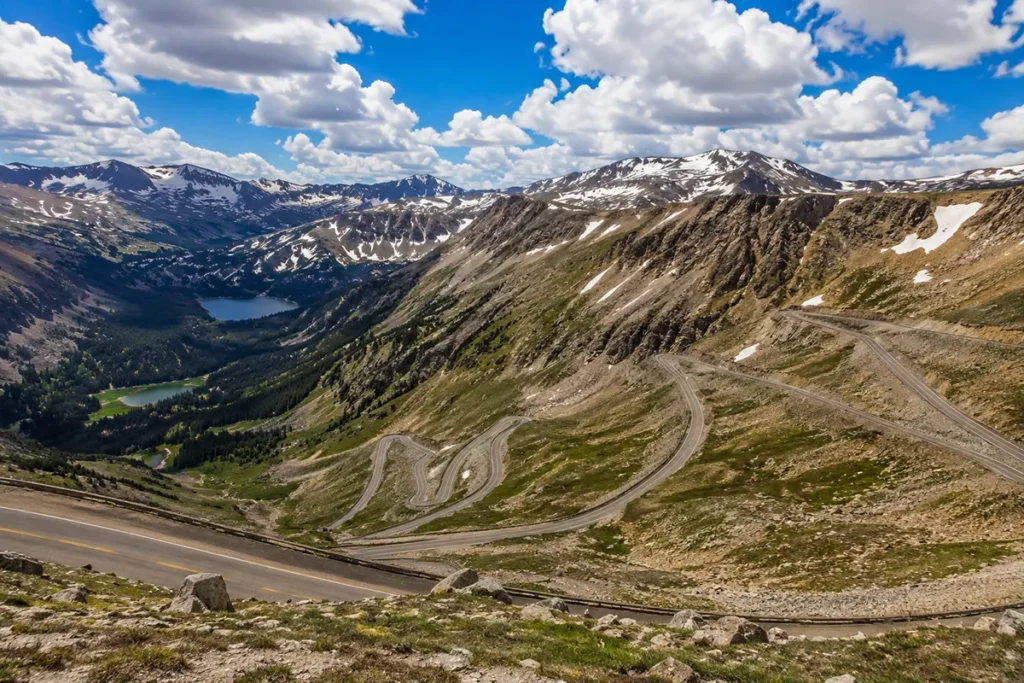
Drive south to Red Lodge — one of Montana’s most charming small towns — then up US-212 onto the Beartooth Plateau. Charles Kuralt called it the most beautiful drive in America.
The highway climbs to 10,947 feet through switchbacks, passes multiple mountain lakes, and descends into Cooke City at Yellowstone’s Northeast Entrance.
Open approximately late May to mid-October. See my Montana outdoor activities guide for trip-planning context.
Yellowstone National Park (3 hours to NE Entrance)
The Beartooth route delivers you to Cooke City, then 20 minutes to the Lamar Valley — widely considered the best wildlife viewing in the contiguous 48 states.
Bison herds, wolf packs, grizzlies, elk, and pronghorn in a concentrated valley that has no equal anywhere in America.
See my Lamar Valley guide and Yellowstone wolf watching guide for specifics. Consider Montana guided tours for wildlife-focused day trips into the park.
Little Bighorn Battlefield National Monument (1 hour via Hardin)
The site of the June 25–26, 1876, battle between the 7th U.S. Cavalry and Lakota, Northern Cheyenne, and Arapaho warriors.
Ranger-led tours run seasonally and provide balanced historical perspectives from both sides of the engagement.
The gravestone markers still dot the hillsides where soldiers fell. Sobering, historically profound, well-interpreted.
[Verify fees and tour schedule at nps.gov.] Pass through Hardin en route — a small city with its own Crow and homestead history.
Pryor Mountains Wild Horse Range (1.5 hours south)
The Pryor Mountains south of Billings harbor one of the few federally protected wild horse herds in the United States.
The horses are descendants of Spanish colonial stock and have distinct physical characteristics from other wild horse populations.
Lower meadow access requires a standard vehicle; reaching the upper wild horse country requires high-clearance 4WD.
Some of the most striking Montana landscape that almost no one visits. See my Montana wildlife refuges guide for regional context.
Red Lodge (1 hour south)
The gateway town to the Beartooth Highway. Historic Main Street, excellent restaurants, a small ski area (Red Lodge Mountain), and a charming base if you want to stage a multi-day Beartooth/Yellowstone trip. Worth spending a night here rather than charging up the Beartooth and back in a single day.
Pictograph Cave State Park (20 minutes southeast)
Three caves with rock art going back roughly 2,000 years. Easy paved loop, strong interpretive signage. A natural first-day stop before longer day trips later in the visit.
When to Visit Billings
May and June — Best for mild weather, wildflowers on the Rims, and Beartooth opening (usually late May). Pictograph Cave is at its most accessible. Not yet peak tourist season.
July and August — The Beartooth and Yellowstone are fully open. MontanaFair runs in August. Temperatures regularly hit 90°F+; start outdoor activities early. Hotel rates peak.
September and October — My preferred window. Crowds thin significantly after Labor Day. The NILE stock show runs in October. Fall colors on the canyon walls. The Beartooth closes around mid-October; plan the drive for early-to-mid September if you want it plus fall conditions.
Winter (November–March) — Cold (average January lows around 17°F) and occasionally severe, but the city stays functional. ZooMontana is open year-round. The Moss Mansion Christmas season is worth a special visit. Skiing at Red Lodge Mountain (1 hour south) is the main outdoor draw.
Note on Beartooth timing: The highway typically opens Memorial Day weekend and closes by mid-October. If the Beartooth is a priority, plan around this window. See my best time to visit Montana guide for state-wide seasonal details.
Personal Tips After Multiple Billings Visits
Go to Pompey’s Pillar first. It’s 30 minutes northeast and you probably haven’t heard of it. The moment you see Clark’s actual carved signature in the rock — protected behind glass but right there at eye level — everything you thought you knew about Lewis & Clark becomes tactile and real. Plan 90 minutes.
Go to the Rimrocks at sunrise on your first day. It orients you to the whole city — you see downtown below, the Yellowstone River to the south, all five mountain ranges on the horizon, and you immediately understand why anyone settled here.
Use Four Dances for the serious hiking, not just Zimmerman. Zimmerman is the accessible overlook. Four Dances is the real trail experience — 765 acres, Sacrifice Cliff, actual solitude. No bikes or motorized vehicles means it stays quiet.
Eat on Montana Avenue, not King Avenue. King Avenue West is the chain-restaurant strip that serves the highway traveler crowd. Montana Avenue’s historic district has the restaurants and bars that represent actual Billings. Same principle as most western cities — the chain mile is convenient and forgettable; the downtown mile is why you go.
Use Billings as a hub, not just a pass-through. Two solid days in Billings and its immediate surroundings (Pompey’s Pillar, Pictograph Cave, downtown, Rimrocks) before staging deeper day trips is the right structure. The temptation is to rush through; resist it.
The summer heat is real and fast. Billings sits at 3,123 feet — lower than most Montana destinations — and bakes in July and August. If you’re hiking the Rims or doing outdoor walking at Pictograph Cave, start by 8 a.m. The afternoon sun by 2 p.m. is punishing.
The airport (BIL) is genuinely the best-served in eastern Montana. If your Montana trip touches south-central or southeastern Montana at all, flying into Billings is almost always cheaper and better-connected than Bozeman. Don’t default to Bozeman just because it’s the more familiar name.
Lou Taubert Ranch Outfitters. Even if you’re not in the market for western wear, spend 20 minutes in here. It’s the most authentically western retail experience in a Montana city — the kind of shop where actual ranchers buy their work boots, not where tourists buy decorative spurs.
Billings Quick Facts
| Founded | March 1882 |
|---|---|
| Named for | Frederick H. Billings, president of the Northern Pacific Railroad |
| Predecessor town | Coulson (settled 1877, absorbed into Billings by the 1930s) |
| Nickname | “The Magic City”; “Montana’s Trailhead” |
| All-America City Award | 1992 |
| Preserve America | Designated 2007 |
| LEED Gold | 2022 (first Montana city; 21st globally) |
| Largest trade area | One of the largest in the United States (125,000+ sq mi commerce area) |
| Major river | Yellowstone River — longest undammed river in the contiguous United States |
| Universities | MSU-Billings (1927); Rocky Mountain College (1898) |
| Mountain ranges visible | 5: Pryor, Big Horn, Bull, Crazy, Absaroka-Beartooth |
| Average summer high | 87°F (July) |
| Average winter low | 17°F (January) |
Conclusion
Billings will never compete with Whitefish for charm or Bozeman for hip restaurant density.
What it offers instead is honest scale, a geological setting unlike any other American city its size, and unmatched access to some of the most dramatic landscapes in the western United States — Beartooth, Lamar Valley, Little Bighorn, Pompey’s Pillar.
An All-America City with a legitimate claim to the “Montana’s Trailhead” title and one of the most underrated set of free outdoor assets (the Rimrocks) in any American city.
If you’re flying into Montana for a south-central road trip, Billings is your most practical, best-connected, and most affordable starting point. Give it two days before you launch toward the mountains, and it’ll earn its place on your itinerary.
Have a Billings question? Drop it in the comments — I read every one.
Frequently Asked Questions
Is Billings, Montana worth visiting?
Yes — Billings is worth 2–3 days, especially as a base for Pompey’s Pillar National Monument, the Rimrocks, Pictograph Cave State Park, the Beartooth Highway, Yellowstone’s Northeast Entrance, and Little Bighorn Battlefield. As a standalone city destination it’s less polished than Bozeman or Whitefish, but its size, airport access, affordability, and surrounding access make it the most practical base city in eastern Montana.
What is Billings, Montana known for?
Billings is Montana’s largest city, nicknamed “The Magic City” for its rapid 1882 founding and “Montana’s Trailhead” for its trail network and gateway access to major attractions. It’s known for the Rimrocks sandstone cliffs that ring the city, Pompey’s Pillar National Monument (William Clark’s 1806 carved signature from the Lewis & Clark Expedition), the Beartooth Highway, Little Bighorn Battlefield, the Billings Brew Trail, and as the regional healthcare, agriculture, and oil refining hub for one of the largest trade areas in the United States.
What is Pompey’s Pillar near Billings?
Pompey’s Pillar is a 150-foot sandstone butte about 30 miles northeast of Billings on the Yellowstone River. It was named by William Clark of the Lewis & Clark Expedition, who climbed the rock on July 25, 1806, and carved his name and the date into the sandstone. That signature is still visible today — protected behind glass — making it one of the only surviving physical remnants of the Lewis & Clark Expedition anywhere in North America. The site also features 2,000-year-old Native American petroglyphs and pictographs. [Verify entry fees at nps.gov.]
Why is Billings called “The Magic City”?
Billings earned the “Magic City” nickname because of its extraordinarily rapid growth after its founding in March 1882. The Northern Pacific Railroad’s arrival transformed empty prairie into a city seemingly overnight. Within months, Billings had hotels, banks, newspapers, and thousands of residents. The speed of its appearance made it seem almost magical to contemporary observers, and the nickname stuck.
How many days do you need in Billings?
Plan 2 days in Billings itself — covering the Rimrocks (sunrise + Zimmerman/Four Dances), Montana Avenue museums (Yellowstone Art Museum, Western Heritage Center, Moss Mansion), and downtown dining/Brew Trail. Add 1 day for Pompey’s Pillar and Pictograph Cave. Then 2–4 additional days if using Billings as a base for Beartooth Highway, Yellowstone NE Entrance, and Little Bighorn.
What airport serves Billings, Montana?
Billings Logan International Airport (BIL) — Montana’s busiest airport by passenger volume. Direct flights from Seattle, Denver, Minneapolis, Salt Lake City, Las Vegas, Phoenix, and Dallas via Delta, United, Alaska, and Allegiant. About 10 minutes from downtown by car.
How far is Billings from Yellowstone National Park?
About 130 miles from Yellowstone’s Northeast Entrance via the Beartooth Highway (through Red Lodge and Cooke City) — roughly 3 hours when the highway is open (late May to mid-October). About 215 miles to the North Entrance at Gardiner — a 4-hour drive year-round. The Northeast Entrance via Beartooth is one of America’s most spectacular drives; the Lamar Valley just inside that entrance is the best wildlife watching in the lower 48 states.
What is the best time to visit Billings?
May, June, September, and October are the best months — pleasant temperatures, full access to the Beartooth Highway (open late May to mid-October), and lower crowds outside peak summer. July and August are fully accessible but hot (90°F+ regularly). September is my personal preference: the Beartooth is still open, crowds thin after Labor Day, and fall colors appear in the canyons.
What are the Rimrocks in Billings?
The Rimrocks are a sandstone cliff system that runs along the north edge of Billings, rising roughly 500 feet above the city. Multiple access points — Zimmerman Park, Swords Rimrock Park, Four Dances Recreation Area, Boothill Cemetery — offer hiking, mountain biking, panoramic views of five mountain ranges, and historically significant sites including Sacrifice Cliff (a Crow Nation historical site) and Yellowstone Kelly’s frontier-era grave. All Rimrock access is free.
Is Billings safe for tourists?
Yes — Billings is generally safe for visitors, with standard urban precautions. Downtown, the West End, and the Billings Heights area are where visitors stay and eat; these areas are straightforward. Like any mid-sized city, some neighborhoods are best avoided after dark. Ask your hotel front desk for current local guidance.
What’s the difference between Billings and Bozeman?
Billings is significantly larger (~117,000 vs ~57,000), cheaper, more industrial, and positioned in eastern Montana. It has better airport connectivity for eastern Montana travel and is the more practical base for Beartooth/Yellowstone NE/Little Bighorn trips. Bozeman is smaller, more expensive, more tourist-oriented, has a stronger restaurant scene, and is better positioned for Yellowstone’s west/north entrances and the ski industry. Choose Billings for eastern Montana road trips; choose Bozeman for Yellowstone geyser country and mountain culture.
What universities are in Billings, Montana?
Billings has two: Montana State University-Billings (MSU-B), founded in 1927 as a normal school (teachers college), and Rocky Mountain College, founded in 1898. Both are on the west side of the city. Their presence gives Billings a younger demographic and more active arts-and-culture scene than its industrial reputation might suggest.