In the 19th century, the last wild herd of buffalo in the entire contiguous United States roamed somewhere between the Bear Paw Mountains and the Little Rocky Mountains of north-central Montana — across the lush Milk River Valley that has been the ancestral home of the Aaniiih (Gros Ventre) and Nakoda (Assiniboine) peoples for centuries.
The herd was deliberately exterminated as part of broader federal Indian policy.
Beginning in 1974 — nearly 100 years after the last wild herd disappeared — the Aaniiih and Nakoda tribes of the Fort Belknap Indian Reservation began rebuilding a buffalo herd. They started with 27 buffalo.
Today, the Snake Butte Buffalo Pasture — a 22,000-acre reserve at the south end of the reservation near the small community of Hays — supports more than 500 buffalo. The reserve includes a substantial population of pure-genetic buffalo descended from the herd at Yellowstone National Park.
The story of contemporary Fort Belknap traces directly to that 1974 decision and the broader cultural restoration work that has continued for over 50 years since.
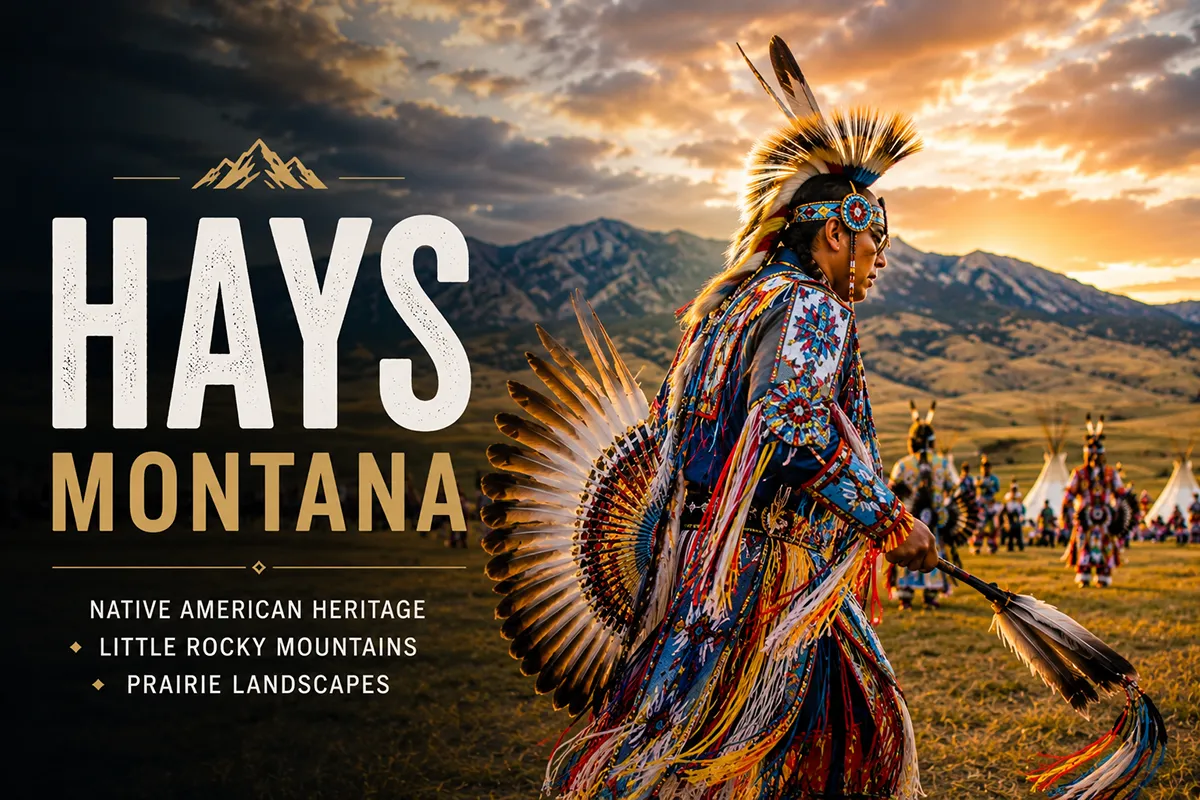
Hays — the small community of approximately 700 residents at the southwestern edge of the reservation, in the foothills of the Little Rocky Mountains — sits at the substantive cultural center of this restoration. Hays is the only Fort Belknap community located in the mountains.
The town is home to the Catholic St. Paul’s Mission (established 1886), the dramatic Mission Canyon with its Mission Falls, the annual Hays Pow Wow (one of the area’s finest outdoor cultural celebrations), and the broader institutional infrastructure that defines contemporary Aaniiih and Nakoda community life.
TL;DR
- Hays (~700) is a small community in southwestern Blaine County on the Fort Belknap Indian Reservation at the edge of the Little Rocky Mountains.
- The reservation is home to the Aaniiih (Gros Ventre) and Nakoda (Assiniboine) peoples — combined enrollment approximately 7,000.
- Fort Belknap Reservation was established June 1, 1888 and covers approximately 675,147 acres (the 4th-largest reservation in Montana).
- The reservation is named after William W. Belknap, Secretary of War under President Ulysses S. Grant — who was later impeached for corruption.
- Hays features the Catholic St. Paul’s Mission (established 1886 by Jesuit Father Frederic Eberschweiler at the request of the Aaniiih), the dramatic Mission Canyon with Mission Falls in the Little Rocky Mountains, and the annual Hays Pow Wow.
- The Snake Butte Buffalo Pasture (22,000 acres, 500+ buffalo) — established 1974 starting with 27 buffalo — represents one of the most substantively important Indigenous-led wildlife restoration efforts in the American West.
- The pre-1880s last wild buffalo herd in the entire continental United States roamed between the Bear Paw Mountains and the Little Rocky Mountains in the Milk River Valley.
- Aaniiih Nakoda Tours offers guided experiences exploring the buffalo herd, Snake Butte, and the broader Fort Belknap cultural landscape.
- Best for: Aaniiih-Nakoda cultural heritage, Little Rocky Mountains exploration, buffalo restoration heritage, Mission Canyon recreation.
Liked this article?
Add Roaming Montana as a preferred source so you see more of our articles and guides on Google.
Hays at a Glance
| Population (estimated) | ~700 |
|---|---|
| County | Blaine County |
| Status | Unincorporated community on Fort Belknap Indian Reservation |
| Region | North-Central Montana (Little Rocky Mountains) |
| Elevation | 2,789 ft |
| Hays area | 27.05 sq miles (large geographic area) |
| Tribes | Aaniiih (Gros Ventre) and Nakoda (Assiniboine) |
| Distance to Harlem (Fort Belknap Agency HQ) | ~25 miles north |
| Distance to Chinook | ~50 miles northwest |
| Distance to Malta | ~40 miles northeast |
| Distance to Havre | ~75 miles west |
| Distance to Lodge Pole (other Little Rockies community) | ~15 miles east |
| Distance to Dodson | ~50 miles northeast |
| Reservation established | June 1, 1888 |
| Reservation area | 675,147 acres (4th-largest in Montana) |
| Reservation tribal enrollment | ~7,000 |
| St. Paul’s Mission established | 1886 |
| Best for | Aaniiih-Nakoda heritage, Little Rocky Mountains, Mission Canyon, Hays Pow Wow |
What Makes Hays Different
The story is the story of the Aaniiih and Nakoda peoples — and the substantive cultural restoration work that defines contemporary Fort Belknap.
The Two Tribes
The Fort Belknap Indian Community is the unified federal government of two distinct tribal nations.
The Aaniiih (also commonly anglicized as Gros Ventre or A’aninin) translate their own name as “White Clay People” or “People of the White Clay.”
The origin of the name is unclear, but many believe it refers to the practice of painting themselves with white clay found along the Saskatchewan River for ceremonial purposes — a practice shared with the Northern Arapaho, with whom the Aaniiih have ancient cultural and linguistic connections. Early French fur trappers and traders called them “Gros Ventre” (“Big Belly”). Other neighboring tribes referred to them as the “Water Falls People.”
The Nakoda (also commonly known as Assiniboine) are part of the broader Sioux language family but with substantial cultural distinctiveness. They have traditionally inhabited the northern Great Plains across what is now Montana and the Canadian provinces of Saskatchewan and Manitoba.
The Aaniiih live primarily at the south end of the reservation near the Little Rocky Mountains — including the Hays and Lodge Pole communities. The Nakoda settled primarily on both sides of the U.S.-Canada border, with substantial Fort Belknap presence as well.
The 1888 Reservation Establishment
The Fort Belknap Indian Reservation was formally established by Act of Congress on May 1, 1888.
The reservation is named after William W. Belknap — Secretary of War in President Ulysses S. Grant’s administration when the original Fort Belknap military post was established on the Milk River.
Belknap was later impeached for corruption by the U.S. House of Representatives in 1876 (he resigned before the Senate completed his impeachment trial). The reservation that bears his name is one of the substantively complicated pieces of American Indian policy heritage.
The reservation today encompasses 675,147 acres — making it the 4th-largest Indian reservation in Montana. It extends approximately 28 miles east-west and 35 miles north-south. The terrain is mostly rolling Great Plains grasslands, with the Little Rocky Mountains rising dramatically at the southern end (where Hays is located).
Tribal members accepted the Indian Reorganization Act of 1934 by referendum on October 27, 1934. The combined Aaniiih-Nakoda tribes adopted a tribal constitution on October 19, 1935 and a corporate charter on August 25, 1937.
The Fort Belknap Indian Community Council is the contemporary governing body, with a President and Vice President elected to 4-year terms.
St. Paul’s Mission
In 1886 — two years before the reservation was formally established — Jesuit priest Father Frederic Eberschweiler established the St. Paul’s Mission at Hays at the explicit request of the Aaniiih people.
The mission school (now serving grades K-6) has operated continuously since. The original log structures have been replaced by more substantial buildings over the past 140 years, but the mission’s commitment to the Hays community has remained consistent.
The contemporary mission complex sits at the western edge of Hays in the foothills of the Little Rocky Mountains. Visitors are welcome at the chapel and grounds during reasonable daytime hours.
Mission Canyon
The dramatic Mission Canyon — carved by Beaver Creek through the limestone formations of the Little Rocky Mountains — extends south from Hays into the heart of the mountain range.
The canyon walls rise sharply on both sides. Mission Falls — a substantial waterfall within the canyon — provides one of the more substantively dramatic recreational destinations on the entire Fort Belknap reservation.
The canyon is genuinely beautiful, substantively important for Aaniiih spiritual practice, and accessible via Beaver Creek Road south from Hays.
The Snake Butte Buffalo Pasture
In 1974, the Fort Belknap Indian Community began a substantial buffalo restoration program.
They started with 27 buffalo. The herd was placed on the Snake Butte Buffalo Pasture — a 22,000-acre tribal reserve north of Hays. The pasture is dominated by Snake Butte itself, an imposing wall of rock that has great cultural significance to both the Aaniiih and Nakoda peoples.
Over the past 50+ years, the herd has grown to more than 500 buffalo. The reserve also includes a substantial population of pure-genetic buffalo descended from the herd at Yellowstone National Park — providing genetic resources that may eventually be used in broader Plains bison restoration efforts elsewhere.
Aaniiih Nakoda Tours — based in Hays — provides guided experiences exploring the buffalo herd, Snake Butte, the broader cultural landscape, and the Mission Canyon area. The tours represent substantively important Indigenous-led tourism programming.
The Hays Pow Wow
The annual Hays Pow Wow is one of the most substantively important outdoor cultural celebrations in north-central Montana.
The pow wow draws Indigenous community members from across the United States and Canada for an entire weekend of dancing, singing, drumming, traditional regalia displays, and broader cultural sharing. Verify current scheduling and visitor protocols before planning a visit.
The Treaty Heritage
The broader Fort Belknap legal heritage traces to the 1855 Lame Bull Treaty (also called the Treaty with the Blackfeet, Blood, Piegan, Gros Ventres of the Prairie, and River Crow) — signed October 17, 1855 — which acknowledged tribal occupancy of a vast territory north of the Missouri River and east of the Rocky Mountains.
The treaty also facilitated U.S. access and settlement through provisions for roads, forts, and emigration routes — effectively initiating land cessions across millions of acres in what is now Montana. The Fort Belknap Reservation represents what remains after subsequent decades of land cessions reduced the tribal land base dramatically.
For broader trip context, see my Montana cities and towns hub and Montana history overview.
The Top 6 Things to Do In & Around Hays
1. Aaniiih Nakoda Tours
The signature visitor experience.
Aaniiih Nakoda Tours — based in Hays — provides guided experiences exploring the Snake Butte Buffalo Pasture, the broader Fort Belknap cultural landscape, Mission Canyon, and Aaniiih-Nakoda traditional cultural elements.
The tour gift shop sells Native American-made items including drums, ribbon skirts, beaded jewelry, blankets, ammunition, and craft supplies. RV trailers and generators available for rent.
Schedule tours in advance via call or email.
2. Mission Canyon & Mission Falls
The dramatic limestone canyon south of Hays — carved by Beaver Creek through the Little Rocky Mountains.
Mission Falls within the canyon provides one of the more substantively dramatic natural attractions on the Fort Belknap Reservation. The canyon walls rise sharply on both sides; the falls themselves are substantial. Accessible via Beaver Creek Road south from Hays.
Respect that the area is substantively important for Aaniiih spiritual practice.
3. St. Paul’s Mission
The 1886 Catholic mission at the western edge of Hays.
The mission complex includes the historic chapel, the school (currently serving grades K-6), and surrounding grounds in the foothills of the Little Rocky Mountains. Visitors welcome at the chapel and grounds during reasonable daytime hours.
4. Snake Butte Buffalo Pasture
The 22,000-acre buffalo reserve north of Hays, with 500+ buffalo including the pure-genetic Yellowstone-descended herd.
Best accessed via Aaniiih Nakoda Tours rather than independent visits. Snake Butte itself — the dramatic rock formation that gives the pasture its name — has substantial cultural significance to the Aaniiih and Nakoda peoples.
5. Hays Pow Wow
The annual cultural celebration draws Indigenous community members from across the U.S. and Canada for dancing, singing, drumming, and traditional regalia displays.
Verify current scheduling with the Fort Belknap Tourism office. Respect cultural protocols — dancing, photography, and recording may have specific restrictions; ask before participating or photographing.
6. Day Trip to Harlem (Fort Belknap Agency HQ)
Approximately 25 miles north of Hays.
Harlem is the location of the Fort Belknap Agency headquarters — the administrative center of the reservation. Attractions include Aaniiih Nakoda College (the tribal college), the Fort Belknap Tribal Headquarters, and the broader US-2 Hi-Line community context.
Where to Stay
Hays has no dedicated lodging.
Most travelers base in Malta (40 miles northeast) or Harlem (25 miles north).
| Lodging | Vibe | Price | Best For |
|---|---|---|---|
| Malta hotels (45 min NE) | Phillips County seat | $100–180 | Most travelers |
| Harlem lodging (25 min N) | Fort Belknap Agency HQ area | $90–140 | Reservation-focused |
| Chinook options (50 min NW) | Blaine County seat | $100–180 | Western base |
| Havre hotels (1.5 hrs W) | Larger Hi-Line town | $100–200 | Extended Hi-Line travel |
| Vacation rentals (Fort Belknap area) | Limited | $130–250 | Cultural visitors |
| Aaniiih Nakoda Tours RV rental (Hays) | Tribal-owned | Varies | Self-sufficient travelers |
Where to Eat
- Local Hays options — small selection; verify current operations
- Harlem dining (25 min N) — Fort Belknap Agency area
- Malta restaurants (45 min NE) — broader Hi-Line selection
- Havre options (1.5 hrs W) — full small-city selection
Getting There & Around
From Harlem: ~25 miles south on Indian Highway 2, about 35 minutes.
From Malta: ~40 miles southwest via US-2 and county roads, about 45 minutes.
From Havre: ~75 miles east on US-2 then south, about 1.5 hours.
From Chinook: ~50 miles southeast via US-2 and county roads, about 1 hour.
From Dodson: ~50 miles southwest, about 1 hour.
Cell service: Limited in Hays and the surrounding Little Rocky Mountains. Bring offline maps for Mission Canyon and reservation backroads.
When to Visit
Summer (June-August): Best weather; full Aaniiih Nakoda Tours operations; warmest temperatures; check Hays Pow Wow scheduling.
Fall (September-October): Outstanding Little Rocky Mountains color; cooler temperatures; quieter than summer.
Winter (December-March): Severe Montana weather; reservation roads can be treacherous; tours may be limited.
Spring (April-May): Snowmelt; the country greens up; quieter shoulder season.
Personal Tips
Visit through Aaniiih Nakoda Tours. The tribally-operated tour program provides substantively meaningful access to Snake Butte, the buffalo herd, Mission Canyon, and the broader cultural landscape that independent visitors cannot easily replicate. The tours represent substantively important Indigenous-led tourism programming that directly supports the Fort Belknap community.
Respect cultural protocols. Fort Belknap is a substantively important Indigenous community. Approach visits with appropriate respect. Don’t photograph people without permission. Don’t enter ceremonial sites or sacred locations without invitation. Ask before participating in any cultural activities.
Understand the broader heritage. The story of the Fort Belknap Reservation — including the 1855 Lame Bull Treaty land cessions, the deliberate extermination of the last wild buffalo herd in the contiguous United States in the 1880s, the 1974 buffalo restoration program, and the contemporary Aaniiih-Nakoda cultural restoration work — adds substantial depth to any visit.
Visit Mission Canyon respectfully. The dramatic limestone canyon south of Hays is substantively important for Aaniiih spiritual practice. Don’t disturb cultural sites. Don’t remove rocks or plants. Photograph from established viewpoints.
Plan for the Hays Pow Wow. The annual outdoor cultural celebration draws Indigenous community members from across the U.S. and Canada. A visit timed for the Pow Wow provides substantively meaningful cultural context that visits at other times cannot provide.
Don’t expect tourism amenities. Hays is a working Indigenous community of approximately 700 people. The substantive attractions are the cultural and natural heritage — not curated tourism infrastructure.
Hays Quick Facts
- Population (estimated) | ~700
- County | Blaine County
- Reservation | Fort Belknap Indian Reservation
- Tribes | Aaniiih (Gros Ventre) + Nakoda (Assiniboine)
- Aaniiih meaning | “White Clay People” / “People of the White Clay”
- French traders’ name for Aaniiih | Gros Ventre (“Big Belly”)
- Other tribes’ name for Aaniiih | “Water Falls People”
- Nakoda heritage | Sioux language family, traditional Northern Plains
- Reservation established | June 1, 1888
- Reservation area | 675,147 acres
- Reservation rank in Montana | 4th-largest
- Named after | William W. Belknap (later impeached for corruption)
- St. Paul’s Mission established | 1886
- St. Paul’s Mission founder | Jesuit Father Frederic Eberschweiler
- Buffalo restoration began | 1974
- Starting herd | 27 buffalo
- Current herd | 500+
- Snake Butte Buffalo Pasture | 22,000 acres
- Includes | Pure-genetic Yellowstone-descended herd
- Tribal Council established | 1904
- Indian Reorganization Act accepted | October 27, 1934
- Tribal constitution adopted | October 19, 1935
- Corporate charter adopted | August 25, 1937
- Combined tribal enrollment | ~7,000
- Hays geographic area | 27.05 sq mi
- Elevation | 2,789 ft
- Average summer high | 84°F
- Average winter low | -4°F
Conclusion
Hays is a 700-person Indigenous community on the Fort Belknap Indian Reservation with substantively important Aaniiih and Nakoda cultural heritage.
The 1886 St. Paul’s Mission at the western edge of town. The dramatic Mission Canyon with Mission Falls in the Little Rocky Mountains. The Hays Pow Wow as one of the most substantive outdoor Indigenous cultural celebrations in north-central Montana.
The Snake Butte Buffalo Pasture with 500+ buffalo restored since the 1974 founding herd of 27. The Aaniiih Nakoda Tours that provide substantively meaningful tribally-led visitor experiences.
The reservation is named after a corrupt Secretary of War. The pre-reservation territory of the Aaniiih and Nakoda extended across millions of acres of present-day Montana.
The buffalo restoration program represents an extraordinarily substantive Indigenous-led cultural and ecological recovery effort. All of these things are part of the contemporary Hays story.
The next time you’re in north-central Montana — perhaps driving the US-2 Hi-Line through Malta or Harlem — consider taking a day trip south to Hays. The buffalo are waiting.
Have a Hays question? Drop it in the comments — I read every one.
Frequently Asked Questions
Is Hays Montana worth visiting?
Yes — Hays is worth visiting for the substantively important Aaniiih-Nakoda Indigenous cultural heritage, the dramatic Mission Canyon and Mission Falls in the Little Rocky Mountains, the historic St. Paul’s Mission (established 1886), the annual Hays Pow Wow, and the Snake Butte Buffalo Pasture (22,000 acres with 500+ buffalo, restored since 1974). Best experienced through Aaniiih Nakoda Tours, which provides tribally-led guided experiences that independent visitors cannot easily replicate.
Who are the Aaniiih and Nakoda?
The Aaniiih (also commonly anglicized as Gros Ventre or A’aninin) translate their own name as “White Clay People” or “People of the White Clay.” The Aaniiih have ancient cultural and linguistic connections with the Northern Arapaho, with whom they shared the ceremonial practice of painting themselves with white clay. Early French fur trappers and traders called them “Gros Ventre” (“Big Belly”); other neighboring tribes called them the “Water Falls People.” The Nakoda (also commonly known as Assiniboine) are part of the broader Sioux language family with substantial cultural distinctiveness, traditionally inhabiting the northern Great Plains across present-day Montana and the Canadian provinces. The two tribes are united as one federally recognized government called the Fort Belknap Indian Community, with combined tribal enrollment of approximately 7,000.
Where is Hays Montana located?
Hays is located in southwestern Blaine County on the Fort Belknap Indian Reservation at the southwestern edge of the reservation, in the foothills of the Little Rocky Mountains. Hays is approximately 25 miles south of Harlem (the Fort Belknap Agency headquarters), 40 miles southwest of Malta, and 75 miles east of Havre. It is the only Fort Belknap community located in the mountains; Lodge Pole (approximately 15 miles east) is the other Little Rockies community on the reservation. The Hays community geographically covers approximately 27.05 square miles.
What is St. Paul’s Mission in Hays?
St. Paul’s Mission is a Catholic mission complex at the western edge of Hays, Montana, founded in 1886 by Jesuit priest Father Frederic Eberschweiler at the explicit request of the Aaniiih (Gros Ventre) people. The mission was established two years before the Fort Belknap Indian Reservation was formally created by Congress. The mission school continues to operate today serving grades K-6. The mission complex sits in the foothills of the Little Rocky Mountains and includes the historic chapel and surrounding grounds.
What is the Snake Butte Buffalo Pasture?
The Snake Butte Buffalo Pasture is a 22,000-acre tribal reserve on the Fort Belknap Indian Reservation north of Hays, Montana. The buffalo restoration program began in 1974 with 27 buffalo. Today the reserve supports more than 500 buffalo, including a substantial population of pure-genetic buffalo descended from the herd at Yellowstone National Park. The reserve is dominated by Snake Butte — an imposing wall of rock with great cultural significance to both the Aaniiih and Nakoda peoples. The buffalo herd represents one of the most substantively important Indigenous-led wildlife restoration efforts in the American West. Aaniiih Nakoda Tours based in Hays provides guided access to the herd and Snake Butte.
How big is the Fort Belknap Indian Reservation?
The Fort Belknap Indian Reservation covers approximately 675,147 acres in north-central Montana, primarily in Blaine County with a smaller portion in Phillips County. It is the 4th-largest Indian reservation in Montana. The reservation extends approximately 28 miles east-west and 35 miles north-south. The terrain is mostly rolling Great Plains grasslands, with the Little Rocky Mountains rising dramatically at the southern end. The reservation was established by Act of Congress on May 1, 1888 and named after William W. Belknap, Secretary of War in President Grant’s administration — who was later impeached for corruption.
How far is Hays from Harlem Montana?
Hays is approximately 25 miles south of Harlem via Indian Highway 2 — about a 35-minute drive. Harlem is the location of the Fort Belknap Agency headquarters and the Aaniiih Nakoda College (the tribal college). Harlem serves as the practical urban anchor for any Fort Belknap reservation visit, with more substantial services than the smaller Hays community can provide.