In 1855, the U.S. government and the Blackfoot Confederacy signed a treaty.
The treaty recognized the Blackfeet Indian Reservation as encompassing approximately most of the northern half of what is now the state of Montana — including a substantial portion of what would later become Glacier National Park.
Over the next 41 years, that reservation was substantially reduced.
The 1896 treaty excluded the Badger-Two Medicine area of the Rocky Mountain Front from Blackfeet lands. But the Blackfeet reserved specific cultural and use rights to the area — recognizing that the Badger-Two Medicine remained substantively sacred to the tribe as their “Cathedral” of origin and creation.
The contemporary 1.5-million-acre Blackfeet Indian Reservation represents what remains of that earlier vast territorial homeland.
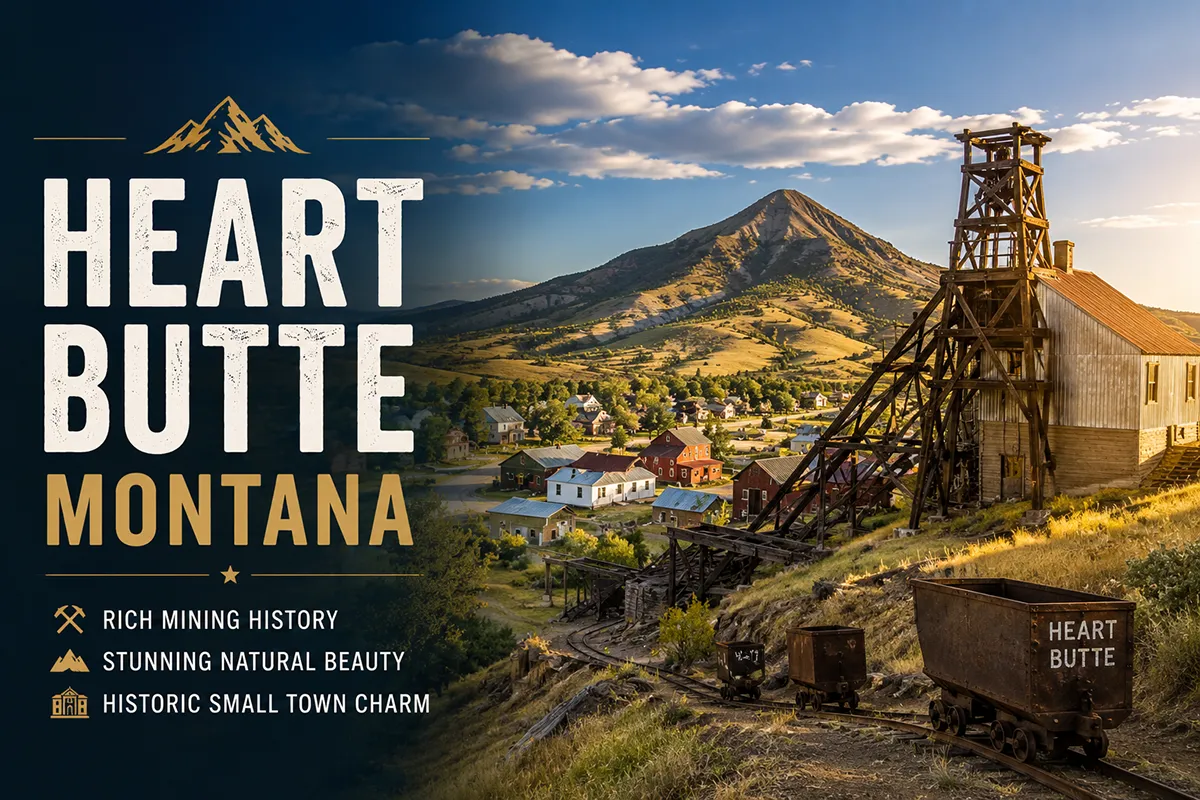
Heart Butte, Montana sits in the middle of that complicated heritage.
The small community of approximately 621 residents (2020 census) is located in Pondera County — at the southern edge of the contemporary Blackfeet Indian Reservation, 26 miles south of Browning (the reservation headquarters), near the Continental Divide, and immediately adjacent to the sacred Badger-Two Medicine area.
The town takes its name from a small heart-shaped peak to the southwest. In Blackfeet (Niitsi’powahsin) language, the community is known as Moskizipahpi-istaki (also written Moskitsipahpiistaki).
Heart Butte sits at 4,446 feet elevation — substantially higher than most other small communities on the Blackfeet Reservation. The Rocky Mountain Front rises immediately to the west. The Continental Divide is just a few miles further. Glacier National Park is approximately 30-40 miles north and west.
The community is a substantively important contemporary anchor for Blackfeet Confederacy cultural life. The annual Heart Butte Society Celebration — held every August — is one of the most significant traditional Blackfeet festivals and pow wows held anywhere on the reservation.
TL;DR
- Heart Butte (621) is an unincorporated CDP in Pondera County, on the southern edge of the Blackfeet Indian Reservation.
- The community is 26 miles south of Browning (reservation headquarters), with the Continental Divide immediately west and Glacier National Park approximately 30-40 miles north.
- Heart Butte’s Blackfeet name is Moskizipahpi-istaki (Moskitsipahpiistaki).
- The town takes its name from a small heart-shaped peak to the southwest.
- The contemporary Blackfeet Indian Reservation covers 1.5 million acres and is one of the largest in the United States.
- The Blackfeet Nation has ~16,500 registered members — Montana’s largest Indian tribe.
- The Blackfeet occupied this region for 10,000 years according to their oral history.
- The original 1855 Blackfeet Reservation encompassed most of the northern half of Montana — including parts of what later became Glacier National Park.
- The 1896 treaty excluded the sacred Badger-Two Medicine area from the reservation but the Blackfeet reserved specific cultural and use rights.
- The Heart Butte Society Celebration (also called the Heart Butte Healing Celebration) is held annually in August.
- Best for: Blackfeet cultural heritage, Rocky Mountain Front access, sacred sites context, Glacier National Park southeast approach.
Liked this article?
Add Roaming Montana as a preferred source so you see more of our articles and guides on Google.
Heart Butte at a Glance
| Population (2020) | 621 |
|---|---|
| Population (2000) | 698 |
| County | Pondera County |
| Status | Unincorporated CDP on Blackfeet Indian Reservation |
| Region | North-Central Montana (Rocky Mountain Front) |
| Elevation | 4,446 ft |
| CDP area | 4.58 sq miles (4.56 land + 0.015 water) |
| ZIP code | 59448 |
| Population density | 136.1 per sq mi |
| Blackfeet name | Moskizipahpi-istaki (Moskitsipahpiistaki) |
| Distance to Browning (reservation HQ) | ~26 miles north |
| Distance to East Glacier Park Village | ~30 miles northwest |
| Distance to Cut Bank | ~55 miles northeast |
| Distance to Choteau | ~50 miles south |
| Distance to Conrad | ~40 miles east |
| Distance to Valier | ~25 miles east |
| Distance to Dutton | ~55 miles southeast |
| Distance to Glacier National Park (Two Medicine entrance) | ~30 miles north |
| Best for | Blackfeet cultural heritage, Rocky Mountain Front, sacred sites context |
What Makes Heart Butte Different
The story is deeply rooted in Blackfeet history and the broader cultural landscape of the Rocky Mountain Front.
The Pre-Contact Heritage
The Blackfeet have occupied this region for approximately 10,000 years according to tribal oral history.
The broader Blackfoot Confederacy historically dominated a vast territory extending from the North Saskatchewan River in present-day Canada south to the Yellowstone River in Montana, and from the Rocky Mountain Front east into Saskatchewan.
The Confederacy includes four primary nations: the Siksika (Blackfoot), the Kainai (Blood), the Piegan (Pikuni) of Canada, and the Pikuni (South Piegan or Blackfeet) of Montana.
The contemporary U.S. Blackfeet Tribe is descended primarily from the Pikuni (South Piegan).
The Blackfeet sacred geography centers on what is known in English as the Badger-Two Medicine area of the Rocky Mountain Front — the region the Blackfeet refer to as their “Cathedral” of origin and creation. The area is approximately 15-25 miles west and northwest of Heart Butte.
Chief Mountain — further north in Glacier National Park — is the single most sacred peak. The Two Medicine area within Glacier National Park is the second most sacred area.
Heart Butte sits in the substantively important southern reach of this sacred geography.
The 1855 Lame Bull Treaty
The first major treaty between the U.S. government and the Blackfoot Confederacy was the 1855 Lame Bull Treaty (formally the Treaty with the Blackfeet, Blood, Piegan, Gros Ventres of the Prairie, and River Crow), signed October 17, 1855.
The treaty recognized the Blackfeet Indian Reservation as encompassing approximately the entire northern half of what would become the state of Montana — a vast territory extending from the Canadian border south to the Missouri River, and from the Continental Divide east into present-day eastern Montana.
The treaty also facilitated U.S. access and settlement through provisions for roads, forts, and emigration routes — effectively initiating the substantial land cessions that would reduce the Blackfeet land base dramatically over the following four decades.
The 1896 Land Cession
The most consequential of those cessions was the 1896 treaty that excluded the sacred Badger-Two Medicine area of the Rocky Mountain Front from the Blackfeet Indian Reservation.
The exclusion was substantively contested — the Blackfeet had argued that the Badger-Two Medicine was too spiritually important to be ceded under any conditions. The compromise reached was that while the area was excluded from the reservation, the Blackfeet reserved specific cultural and use rights to the area in perpetuity.
The Badger-Two Medicine became part of what would later become the Lewis and Clark National Forest — accessible from public land but managed in coordination with Blackfeet cultural concerns.
The exclusion remains substantively important to contemporary Blackfeet sovereignty and federal Indian policy debates. The most recent example: starting in the 2010s, the Blackfeet Tribe successfully campaigned against proposed oil and gas drilling in the Badger-Two Medicine — leading to the federal government’s 2016 cancellation of leases that had been issued in the 1980s without adequate tribal consultation.
The Heart-Shaped Butte
The community itself takes its name from a small heart-shaped peak located to the southwest of town.
The peak rises from the surrounding prairie at the foot of the Rocky Mountain Front. The substantive visual prominence of the peak — and its recognizable heart shape — made it a natural landmark for both pre-contact Blackfeet travel and post-contact European-American settlement.
The Blackfeet name for the community is Moskizipahpi-istaki (also written Moskitsipahpiistaki) — translating approximately to the heart-shape descriptor.
Browning and the Reservation Agency
The Blackfeet Indian Agency headquarters has been located at Browning — 26 miles north of Heart Butte — since 1894. Browning is the principal shopping and administrative center of the reservation, and home to the Museum of the Plains Indian at the intersection of US-2 and US-89.
Other Blackfeet Reservation communities include East Glacier Park Village, Babb, St. Mary, Starr School, Kiowa, Blackfoot, Seville, Glacier Homes, and Heart Butte itself.
The Heart Butte Society Celebration
The annual Heart Butte Society Celebration — also called the Heart Butte Healing Celebration — is held every August.
It is one of the most substantively important traditional Blackfeet festivals on the reservation. The celebration features Blackfeet pow wow dancing, drumming, singing, traditional regalia, and broader cultural programming.
Verify current dates and visitor protocols with the Blackfeet Nation tribal office before planning a visit.
For broader trip context, see my Montana cities and towns hub and Montana history overview.
The Top 6 Things to Do In & Around Heart Butte
1. Heart Butte Society Celebration
The signature annual cultural event.
Held every August in Heart Butte itself, the Society Celebration draws Blackfeet community members and visitors from across the reservation and beyond. The pow wow grounds host substantial dancing, drumming, and traditional cultural programming.
Approach with appropriate respect — this is a substantively important traditional Blackfeet event, not a commercial tourism attraction. Ask before photographing.
2. The Heart-Shaped Butte
The small heart-shaped peak southwest of town is the namesake landmark.
Best photographed from established public viewpoints along the access roads. The peak’s substantive visual presence in the surrounding landscape is genuinely striking.
3. Badger-Two Medicine Area Day Trip
The sacred Badger-Two Medicine area extends west of Heart Butte into the Rocky Mountain Front.
The area is part of the Lewis and Clark National Forest but is managed with substantial regard for Blackfeet cultural and use rights. Multiple Forest Service roads provide public access. Hiking, fishing, and dispersed recreation are allowed.
Approach respectfully — this is sacred ground. Don’t disturb cultural sites, tepee rings, or natural features.
4. Day Trip to Browning (26 miles north)
The Blackfeet Reservation administrative and cultural center.
Attractions include the Museum of the Plains Indian (one of the most substantively important Plains Indian museums in the United States, at US-2/US-89 intersection), the Blackfeet Heritage Center and Art Gallery, and substantial services not available in Heart Butte.
5. Glacier National Park Day Trip
The Two Medicine entrance to Glacier National Park is approximately 30 miles north of Heart Butte.
Two Medicine Lake — substantially sacred to the Blackfeet — and the surrounding region offer some of Glacier’s most substantively important sacred ground access. The lake features Rising Wolf Mountain towering above the south face. Multiple hiking trails lead west and north from the Two Medicine Store area.
See best hikes in Glacier National Park, where to stay in Glacier National Park, and the Going-to-the-Sun Road guide for additional Glacier planning.
6. Badger Creek Historical Markers Drive
The Blackfeet Nation has installed 10 new Historical Markers along Badger Creek Road that document substantively important sites in Blackfeet heritage — including the 1879 Old Agency Site on Badger Creek and several tepee ring locations.
The markers provide substantive context that earlier visitors had to imagine without interpretive support. Highway 89 access from the Badger Creek Road junction.
Where to Stay
Heart Butte has no dedicated lodging.
Most travelers base in Browning, East Glacier Park Village, Choteau, or Cut Bank.
| Lodging | Vibe | Price | Best For |
|---|---|---|---|
| Browning lodging (30 min N) | Reservation HQ area | $100–180 | Most travelers |
| East Glacier Park Village options (40 min NW) | Glacier-adjacent | $130–250 | Glacier-focused |
| Cut Bank hotels (1 hr NE) | Glacier County seat | $100–180 | Eastern base |
| Choteau lodging (1 hr S) | Teton County seat | $110–200 | Rocky Mountain Front-focused |
| Great Falls options (2 hrs SE) | Full city selection | $130–280 | Extended regional travel |
| Vacation rentals (Heart Butte area) | Limited | $130–250 | Cultural travelers |
| Glacier National Park lodging — see where to stay in Glacier National Park | In-park options | $200–500 | Park-focused |
Where to Eat
- Local Heart Butte options — small selection; verify current operations
- Browning dining (30 min N) — broader reservation options
- East Glacier Park Village restaurants (40 min NW) — Glacier Park Lodge dining
- Choteau options (1 hr S) — Teton County selection
Getting There & Around
From Browning: ~26 miles south on US-89 and county roads, about 35 minutes.
From East Glacier Park Village: ~30 miles south on US-89 and county roads, about 45 minutes.
From Cut Bank: ~55 miles southwest via US-2 and US-89, about 1 hour.
From Choteau: ~50 miles north on US-89, about 1 hour.
From Great Falls: ~110 miles north on US-89 and county roads, about 2 hours.
Cell service: Limited in Heart Butte and on the southern reservation. Bring offline maps.
When to Visit
Summer (June-August): Best Heart Butte weather; Heart Butte Society Celebration in August; access to Two Medicine and Glacier National Park at peak; warmest temperatures.
Fall (September-October): Outstanding Rocky Mountain Front color; cooler temperatures; quieter; substantial accessibility for Badger-Two Medicine area visits.
Winter (December-March): Severe Rocky Mountain Front weather; substantial winter wind conditions; high-elevation positioning of Heart Butte (4,446 ft) means earlier and longer winter than lower-elevation reservation areas.
Spring (April-May): Snowmelt; the country greens up; quieter shoulder season.
Personal Tips
Approach Heart Butte with cultural respect. The community sits at the substantively important southern edge of the Blackfeet Reservation, adjacent to substantively sacred land. The community is small (621 residents) and rural. Approach as a respectful visitor, not a tourist consumer.
Read about the Badger-Two Medicine context. The 1855-1896 reservation reduction story — particularly the exclusion of the Badger-Two Medicine area despite its sacred status — is substantively important context for any Heart Butte visit. Understanding the tribe’s contemporary efforts to defend the Badger-Two Medicine (including the 2016 cancellation of 1980s oil and gas leases) adds substantial depth.
Visit during the Society Celebration. A August Heart Butte visit timed for the Heart Butte Society Celebration provides substantively meaningful cultural context that visits at other times cannot replicate. Verify current scheduling with the Blackfeet Nation.
Don’t disturb cultural sites. The Rocky Mountain Front around Heart Butte contains substantial pre-contact heritage — tepee rings, vision quest sites, and other culturally significant features. Photograph from public viewpoints. Don’t remove rocks, plants, or artifacts.
Combine with Glacier National Park. A morning at Heart Butte and the Badger Creek Historical Markers, followed by an afternoon at Two Medicine Lake in Glacier National Park, makes a substantively meaningful Blackfeet sacred geography day. The Two Medicine area is the second most sacred area in the entire park (after Chief Mountain).
Visit the Museum of the Plains Indian in Browning. The museum 26 miles north provides substantive interpretive context for any Heart Butte visit. The collection is one of the most substantively important Plains Indian museums in the United States.
Heart Butte Quick Facts
- Population (2020) | 621
- Population (2000) | 698
- County | Pondera County
- CDP area | 4.58 sq mi
- Elevation | 4,446 ft
- ZIP code | 59448
- Population density | 136.1 per sq mi
- Blackfeet name | Moskizipahpi-istaki / Moskitsipahpiistaki
- Name origin | Heart-shaped peak southwest of town
- Reservation | Blackfeet Indian Reservation
- Reservation area | 1.5 million acres
- Blackfeet Nation enrolled members | ~16,500 (largest in Montana)
- Blackfeet oral history occupation | ~10,000 years
- Original 1855 Reservation | Most of northern half of Montana
- 1855 Lame Bull Treaty signed | October 17, 1855
- 1896 Badger-Two Medicine exclusion | Reserved cultural and use rights
- 2016 BTM oil/gas leases cancelled | Federal recognition of inadequate consultation
- Heart Butte Society Celebration | Annual, August
- Distance to Browning (HQ) | 26 miles north
- Browning agency established | 1894
- Museum of the Plains Indian (Browning) | US-2/US-89 intersection
- Blackfeet Confederacy nations | Siksika, Kainai, Piegan, Pikuni
- Average summer high | 76°F
- Average winter low | 13°F
Conclusion
Heart Butte is a 621-person Blackfeet Reservation community in Pondera County with substantively significant Indigenous heritage and access to one of the most substantively important sacred landscapes in North America.
The name Moskizipahpi-istaki. The heart-shaped peak that gives the community its English name. The 26-mile southern position from Browning. The substantial 4,446-foot elevation. The annual Heart Butte Society Celebration every August.
The proximity to the substantively sacred Badger-Two Medicine area — the Blackfeet “Cathedral” of origin and creation, excluded from the reservation in 1896 but with reserved tribal cultural and use rights to this day.
The broader Blackfeet Indian Reservation — at 1.5 million acres, one of the largest in the United States, home to Montana’s largest Indian tribe with approximately 16,500 enrolled members.
The Blackfeet have lived in this region for 10,000 years according to their oral history. Heart Butte sits in the middle of that profound continuity.
The next time you’re driving the Rocky Mountain Front between Choteau and Browning — or making the trip to the Two Medicine entrance of Glacier National Park — consider a respectful detour to Heart Butte.
Have a Heart Butte question? Drop it in the comments — I read every one.
Frequently Asked Questions
Is Heart Butte Montana worth visiting?
Heart Butte is worth visiting primarily for the substantively important Blackfeet cultural heritage, the proximity to the substantively sacred Badger-Two Medicine area of the Rocky Mountain Front, the annual Heart Butte Society Celebration (August), the access to the Two Medicine entrance of Glacier National Park (~30 miles north), and the broader Rocky Mountain Front landscape. Best combined with visits to Browning (26 miles north — the reservation HQ with the Museum of the Plains Indian) and the broader East Glacier Park Village area.
Why is it called Heart Butte?
Heart Butte takes its name from a small heart-shaped peak located to the southwest of the town. The peak rises from the surrounding prairie at the foot of the Rocky Mountain Front. The substantive visual prominence of the peak — and its recognizable heart shape — made it a natural landmark for both pre-contact Blackfeet travel and post-contact European-American settlement. The Blackfeet name for the community is Moskizipahpi-istaki (also written Moskitsipahpiistaki), translating approximately to the heart-shape descriptor.
Where is Heart Butte Montana located?
Heart Butte is located in Pondera County in north-central Montana — not Glacier County as some sources mistakenly indicate. The community sits at the southern edge of the Blackfeet Indian Reservation, approximately 26 miles south of Browning (the reservation headquarters), with the Continental Divide immediately west and Glacier National Park approximately 30-40 miles north. Heart Butte sits at 4,446 feet elevation — substantially higher than most other Blackfeet Reservation communities.
How big is Heart Butte Montana?
Heart Butte had a population of 621 at the 2020 U.S. Census — down from 698 in 2000. The community covers approximately 4.58 square miles in southern Pondera County. The population is substantially Blackfeet, reflecting the community’s position on the reservation.
What is the Badger-Two Medicine area?
The Badger-Two Medicine is a substantially sacred area of the Rocky Mountain Front, approximately 15-25 miles west and northwest of Heart Butte. The Blackfeet refer to this area as their “Cathedral” of origin and creation. The area was part of the original 1855 Blackfeet Indian Reservation but was excluded from the reservation by the 1896 treaty. However, the Blackfeet reserved specific cultural and use rights to the area in perpetuity. The Badger-Two Medicine is now part of the Lewis and Clark National Forest but is managed in coordination with Blackfeet cultural concerns. In 2016, the federal government cancelled oil and gas leases that had been issued in the 1980s without adequate tribal consultation — recognizing the Blackfeet’s substantial argument that the area was too spiritually important for industrial development.
What is the Heart Butte Society Celebration?
The Heart Butte Society Celebration — also called the Heart Butte Healing Celebration — is an annual traditional Blackfeet festival and pow wow held every August in Heart Butte, Montana. The celebration features Blackfeet pow wow dancing, drumming, singing, traditional regalia, and broader cultural programming. It is one of the most substantively important traditional Blackfeet festivals on the reservation, drawing community members and visitors from across the reservation and beyond. Verify current scheduling and visitor protocols with the Blackfeet Nation tribal office before planning a visit.
How far is Heart Butte from Browning Montana?
Heart Butte is approximately 26 miles south of Browning via US Highway 89 and county roads — about a 35-minute drive. Browning is the headquarters of the Blackfeet Indian Agency (since 1894) and the principal administrative and shopping center of the reservation. Browning is home to the Museum of the Plains Indian (at the US-2/US-89 intersection) and the Blackfeet Heritage Center and Art Gallery, both substantively important attractions that visitors typically combine with a Heart Butte trip.
Who are the Blackfeet?
The Blackfeet Tribe of Montana is a federally recognized Native American nation with approximately 16,500 registered members — Montana’s largest Indian tribe. The Blackfeet are part of the broader Blackfoot Confederacy, which includes four primary nations: the Siksika (Blackfoot), the Kainai (Blood), the Piegan (Pikuni) of Canada, and the Pikuni (South Piegan or Blackfeet) of Montana. The contemporary U.S. Blackfeet Tribe is descended primarily from the Pikuni (South Piegan). The Blackfeet have occupied the northern Great Plains and Rocky Mountain Front region for approximately 10,000 years according to tribal oral history. The Blackfeet Indian Reservation today covers 1.5 million acres in north-central Montana — substantially reduced from the original 1855 reservation that encompassed most of the northern half of Montana.