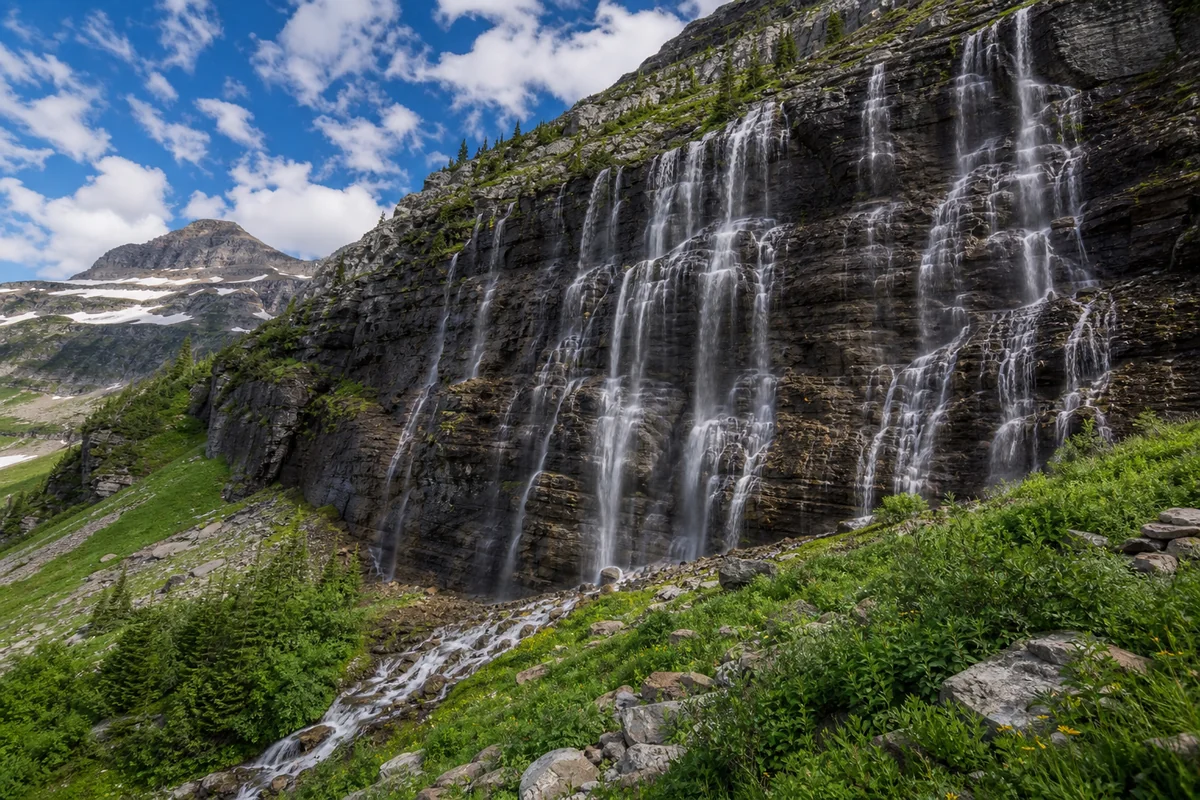
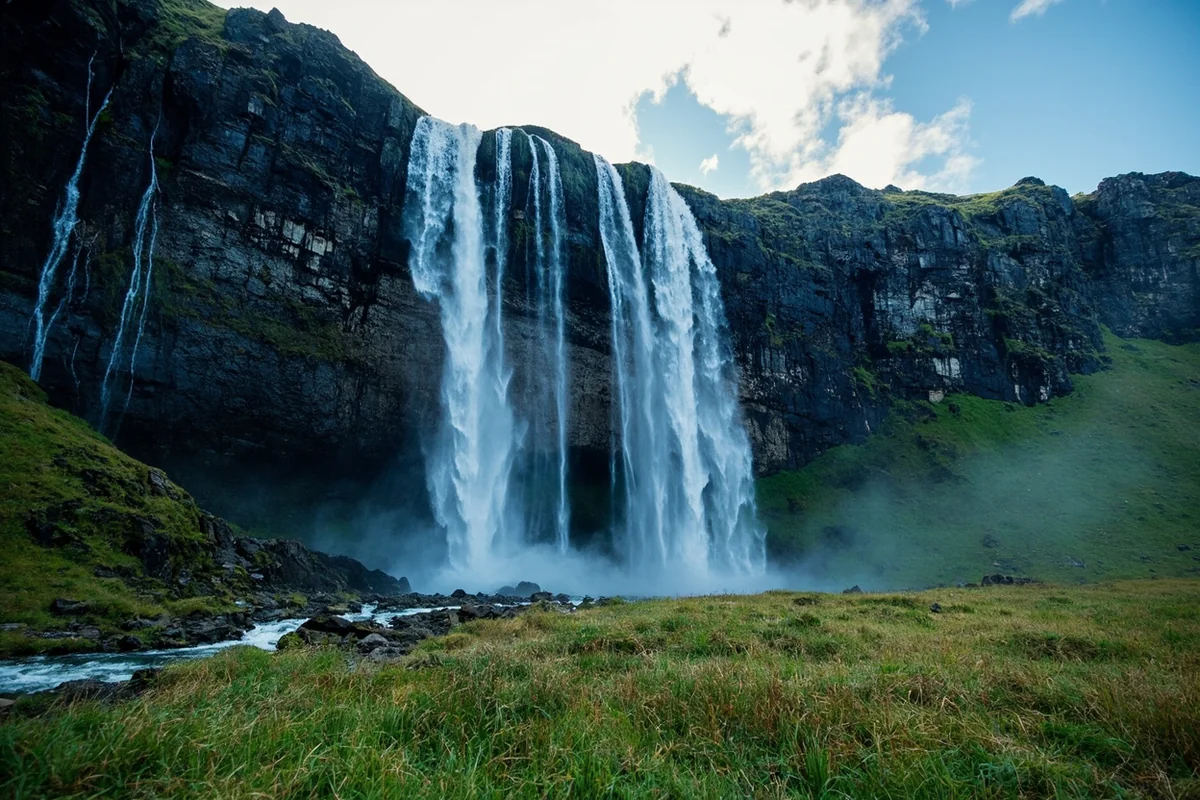
The moment I rounded the bend on the Siyeh Pass Trail and caught my first glimpse of Silken Skein Falls, I understood immediately how it earned its name—dozens of delicate white ribbons cascading down a sheer cliff face, each strand catching the afternoon light like threads of spun silver against the dark rock.
This ethereal waterfall remains one of Glacier National Park’s most underappreciated gems, overshadowed by more accessible attractions yet rewarding those willing to earn the view with one of the most memorable sights among all Montana waterfalls I’ve encountered in years of exploring this state.
- Silken Skein Falls is located along the Siyeh Pass Trail in Glacier National Park’s Many Glacier region
- The hike is approximately 10 miles round trip with 2,300 feet of elevation gain—moderate to strenuous difficulty
- Best viewing window: late June through mid-August when snowmelt peaks
- No special permits required beyond standard park entrance ($35 per vehicle, valid 7 days)
- The falls appear as multiple delicate ribbons rather than a single powerful cascade
- Start early (before 7 AM) to secure parking at Siyeh Bend and avoid afternoon thunderstorms
Liked this article?
Add Roaming Montana as a preferred source so you see more of our articles and guides on Google.
Why Silken Skein Falls Deserves a Spot on Your Montana Itinerary
During my most recent visit last July, I counted at least fifteen distinct water strands flowing down the approximately 200-foot cliff face. The volume varies dramatically throughout the summer, and timing your visit correctly makes all the difference between witnessing a spectacular display and arriving to find a barely-there trickle.
What sets Silken Skein Falls apart from other Glacier waterfalls isn’t sheer power or height—it’s the delicate, almost ethereal quality that makes it feel like you’ve stumbled upon something magical. Unlike the thundering majesty of Kootenai Falls or the postcard-perfect beauty of Saint Mary Falls, Silken Skein rewards patient observers who appreciate subtlety.
The falls emerge from snowfields high above, collecting in hidden basins before spilling over a resistant rock layer. This geological setup creates that signature multi-strand appearance that photographers travel hundreds of miles to capture.
Getting to Silken Skein Falls: Trailhead and Directions
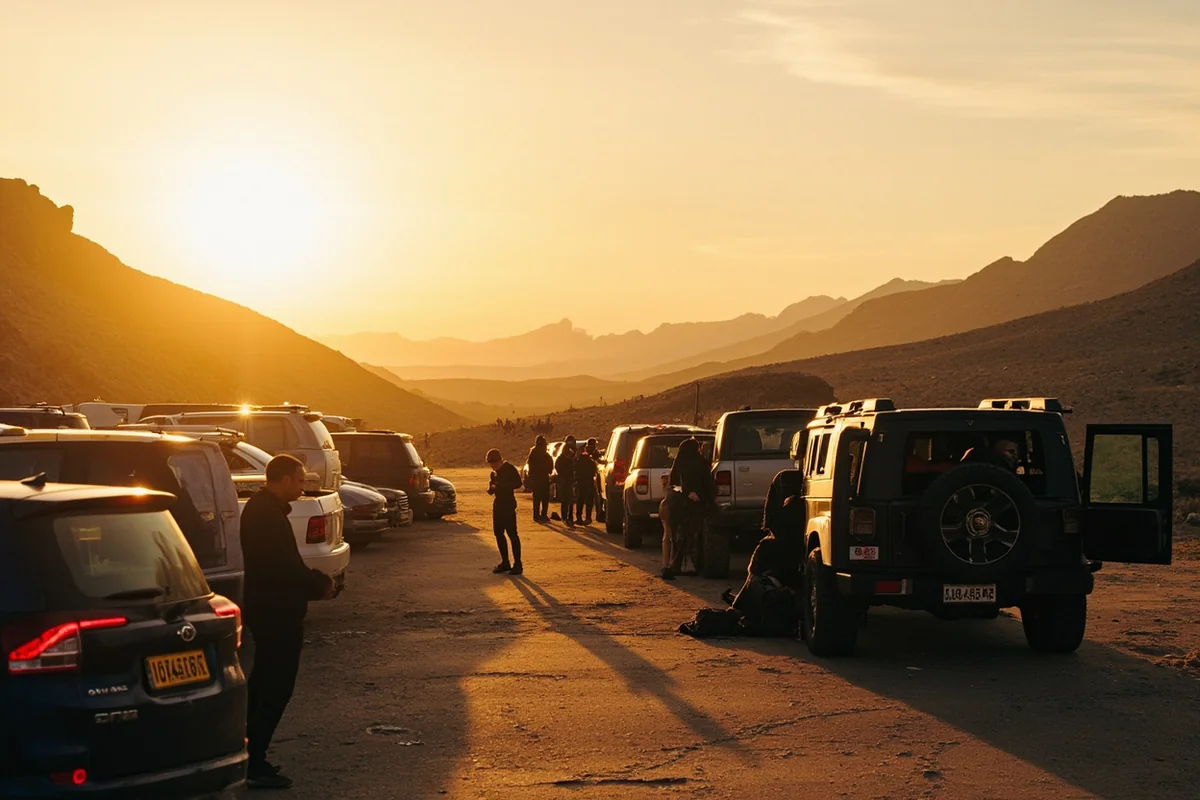
The journey to Silken Skein Falls begins at Siyeh Bend, a pullout along the Going-to-the-Sun Road approximately 10 miles east of Logan Pass. When I arrived at 6:45 AM on a Saturday in peak season, the small parking area was already half full—by 8:30, it was overflowing onto the road shoulder.
Driving Directions from Major Starting Points
From the West Entrance (West Glacier):
– Take Going-to-the-Sun Road east for approximately 32 miles
– The Siyeh Bend pullout appears on your right shortly after Siyeh Bend itself
– GPS coordinates: 48.7432° N, 113.5847° W
From the St. Mary Entrance (East Side):
– Drive west on Going-to-the-Sun Road for approximately 12 miles
– The pullout will be on your left
– Watch for the distinctive sharp bend in the road
| Starting Point | Distance to Trailhead | Drive Time |
|---|---|---|
| West Glacier | 32 miles | 1 hour 15 minutes |
| St. Mary | 12 miles | 25 minutes |
| Many Glacier | 23 miles | 50 minutes |
| Kalispell | 65 miles | 2 hours |
Important Note About Going-to-the-Sun Road
The road typically opens fully in late June or early July, depending on snowpack. I’ve been caught by closures as late as July 4th during heavy snow years.
Check the National Park Service website the morning of your hike. The park now requires vehicle reservations during peak hours (6 AM to 4 PM) from late May through mid-September—this caught me off guard during my 2023 visit.
The Trail to Silken Skein Falls: What to Expect
The Siyeh Pass Trail isn’t a casual stroll—I want to be upfront about that. During my first attempt several years ago, I significantly underestimated the difficulty and turned back exhausted at the 3-mile mark.
Trail Statistics
- Distance to falls viewpoint: Approximately 4.8 miles one way
- Total round trip: 9.6-10 miles (depending on how far you explore)
- Elevation gain: 2,300 feet
- Difficulty: Moderate to strenuous
- Average hiking time: 6-8 hours round trip
- Trail surface: Well-maintained packed dirt with rocky sections
Mile-by-Mile Breakdown
Miles 0-1.5: The Initial Climb
The trail wastes no time gaining elevation. From the trailhead, you’ll climb steadily through subalpine forest, switchbacking up the valley wall. The forest provides welcome shade on hot mornings, but the steep grade had my heart pounding within the first half mile.
I recommend stopping at the natural overlook around mile 1.2. You’ll catch your first views of the Sexton Glacier remnants—a sobering reminder of climate change that has dramatically altered this landscape since the park’s establishment.
Miles 1.5-3: Alpine Transition
The trees thin considerably as you enter the alpine zone. This section offers increasingly dramatic views, but also increasing exposure to sun and wind. During my July hike, temperatures felt fifteen degrees warmer in this stretch compared to the shaded forest below.
Wildlife sightings become more common here. I spotted a family of mountain goats grazing on a distant slope and nearly stepped on a hoary marmot sunning itself on a trailside boulder.
Miles 3-4.8: The Final Push
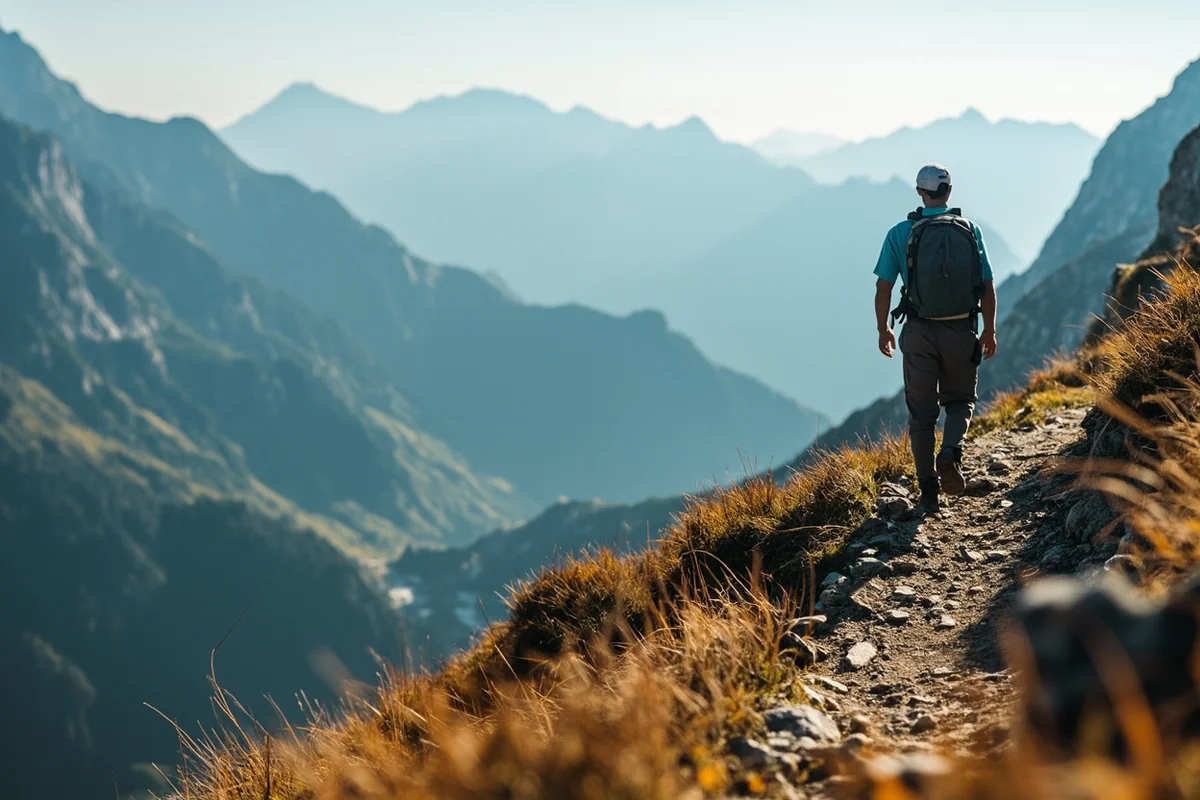
The last stretch demands the most but delivers the greatest rewards. You’ll traverse below Preston Park, a stunning alpine basin often dotted with wildflowers in July.
Keep your eyes on the cliff faces to your left—Silken Skein Falls comes into view gradually, first as a white smudge against dark rock, then resolving into those distinctive individual strands as you approach.
The best viewpoint sits about 4.8 miles from the trailhead at a rocky outcropping. There’s no official sign or marker, but you’ll know it when you see it.
Best Time to Visit Silken Skein Falls
Timing matters enormously for this waterfall. I’ve visited three times across different seasons and experienced dramatically different results.
Seasonal Considerations
Late June – Mid-July (Peak Flow)
This window offers the most impressive water volume. During my June 28th visit two summers ago, the snowmelt was at its peak, and every strand of the falls was flowing strongly. The roar was audible from a quarter mile away.
However, late-season snow can still block trail sections during this period. Check current conditions before committing to the hike.
Mid-July – Early August (Optimal Balance)
I consider this the sweet spot. The trail is reliably clear, wildflowers reach their peak, and the falls maintain respectable flow. My most memorable visit occurred during the third week of July when everything aligned perfectly.
Late August – September (Diminishing Returns)
By late August, Silken Skein Falls begins living up to its delicate name a bit too literally. Water volume drops significantly, and some strands disappear entirely. The hike remains beautiful, but the waterfall becomes a mere whisper of its early summer self.
Time of Day Recommendations
Start early. I cannot emphasize this enough.
The falls face roughly northeast, catching beautiful morning light between 8 and 11 AM. Afternoon storms roll through regularly during summer—I was caught in a hailstorm at 2 PM during one visit that turned the trail into a slippery mess.
My ideal schedule looks like this:
– Arrive at trailhead: 6:30-7:00 AM
– Begin hiking: 7:00 AM
– Reach falls viewpoint: 10:30-11:00 AM
– Photography and lunch: 1-1.5 hours
– Return to trailhead: 2:30-3:00 PM
This schedule has never failed me.
What Makes Silken Skein Falls Unique
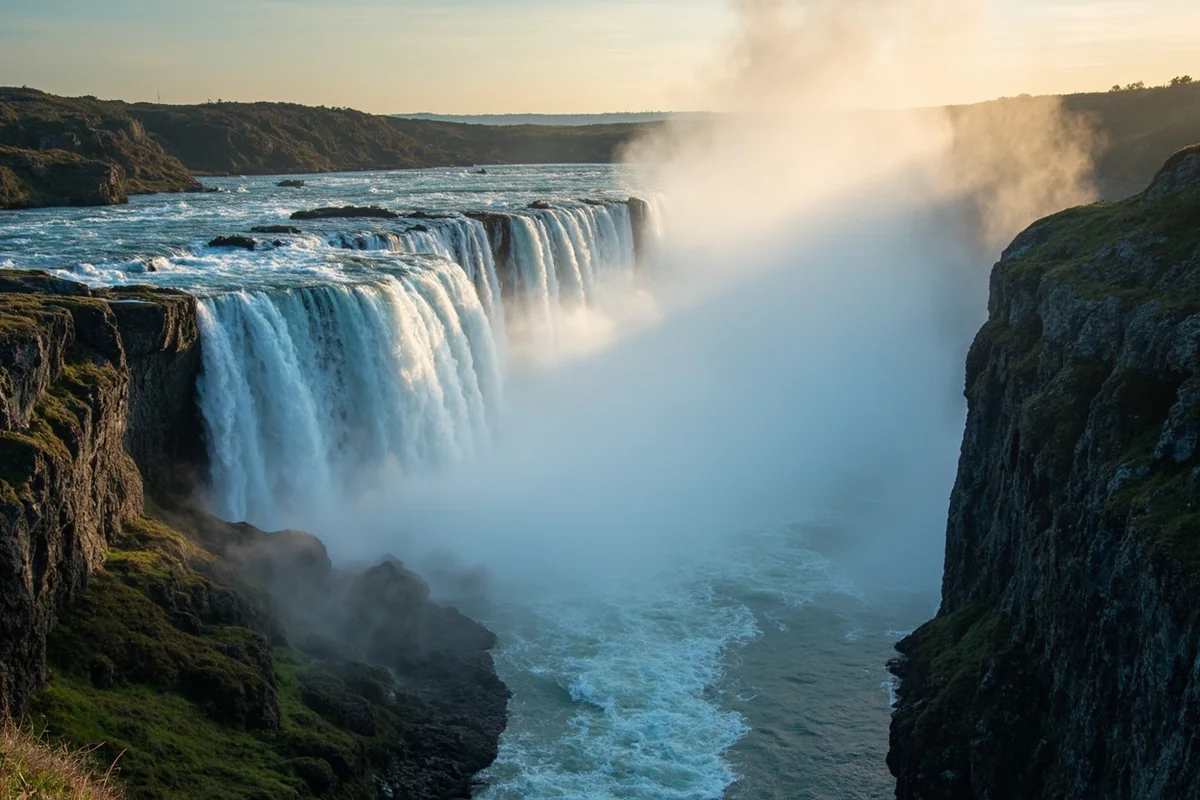
Having visited dozens of waterfalls across Montana—from the dramatic Ousel Falls near Big Sky to the thundering power of Running Eagle Falls—I can confidently say Silken Skein occupies its own category.
The Geology Behind the Beauty
The distinctive multi-strand appearance results from a layer of resistant argillite rock that creates a near-perfect horizontal lip. Water seeping down from the snowfields above spreads across this lip before dropping, creating those individual “threads” rather than coalescing into a single stream.
During my conversation with a park ranger at the St. Mary Visitor Center, I learned that this geological formation is relatively rare in the park. Most of Glacier’s waterfalls form where streams cut through weaker rock layers, creating traditional single-drop falls.
Photography Opportunities
Photographers prize Silken Skein Falls for its unusual characteristics:
- Long exposure magic: A 1-2 second exposure transforms the individual strands into a silky curtain of white—hence the name
- Compositional elements: The dark cliff face provides perfect contrast against the white water
- Foreground options: Alpine wildflowers (paintbrush, glacier lilies, alpine forget-me-nots) bloom profusely in July
- Scale references: Mountain goats occasionally traverse the cliffs near the falls, adding dramatic scale
I’ve had success shooting both wide compositions that include the surrounding peaks and tighter shots focusing on individual water strands. Bring a polarizing filter to reduce glare on the wet rocks.
Essential Gear and Preparation
My first Silken Skein Falls attempt ended in failure partly due to inadequate preparation. Learn from my mistakes.
Required Gear
- Sturdy hiking boots: Trail runners won’t cut it on the rocky upper sections
- Minimum 3 liters of water: No reliable water sources until the falls area, and I wouldn’t drink from those without treatment
- Sun protection: Hat, sunglasses, and SPF 50+—the alpine exposure is brutal
- Layers: Temperatures can drop 20+ degrees if clouds roll in
- Rain gear: Afternoon storms appear from nowhere
- Bear spray: Carried on your hip, not buried in your pack
- Trekking poles: Highly recommended for the steep descents
Recommended Additions
- Camera with tripod: Essential for those silky long-exposure shots
- Binoculars: Wildlife viewing opportunities abound
- Packed lunch: The viewpoint area makes an ideal picnic spot
- Emergency supplies: First aid kit, emergency blanket, whistle

Wildlife Encounters Along the Trail
Glacier National Park’s wildlife is both a draw and a serious consideration. During my three visits to Silken Skein Falls, I’ve encountered:
Mountain Goats
The rocky terrain around the falls provides ideal habitat for these sure-footed residents. I’ve watched them traverse seemingly impossible cliff faces near the waterfall itself. Keep your distance (25 yards minimum) and never approach for a photo—they’re wild animals despite their seemingly docile appearance.
Grizzly Bears
The Siyeh Pass Trail passes through prime grizzly habitat. I’ve never encountered a bear on this specific trail, but I’ve seen fresh sign (digging, scat) on multiple occasions. Travel in groups of three or more when possible, make noise on blind corners, and keep that bear spray accessible.
Last summer, the trail was briefly closed due to bear activity near Preston Park. Always check current conditions at the ranger station.
Marmots and Pikas
These adorable alpine rodents provide entertainment throughout the hike. Hoary marmots sun themselves on boulders and emit sharp whistles when alarmed. Pikas dart between rock piles, gathering vegetation for their winter stores.
Bighorn Sheep
Less common than mountain goats but occasionally spotted on the upper slopes. I saw a magnificent ram during my first successful trip—it remains one of my most treasured wildlife sightings in the park.
Combining Silken Skein Falls with Other Hikes
If you’re spending multiple days in Glacier’s east side, consider combining your Silken Skein Falls adventure with other waterfall hikes in the area. The park offers incredible variety within reasonable driving distances.
Same-Day Options (For Very Fit Hikers)
If you finish the Silken Skein Falls hike by early afternoon and still have energy, the Sacred Dancing Cascade along McDonald Creek offers an easier evening stroll on the west side of the park.
However, I generally recommend against combining this strenuous hike with another significant trail effort. Your legs will thank you for taking it easy.
Multi-Day Itinerary Suggestions
Day 1: Silken Skein Falls (full day commitment)
Day 2: Easier recovery hike to Redrock Falls in the Many Glacier area or the accessible McDonald Falls viewpoint
Day 3: Moderate hike to Ptarmigan Falls or the spectacular Piegan Falls
This progression allows adequate recovery while maximizing your waterfall experiences.
Nearby Accommodations and Logistics
Planning your Silken Skein Falls trip requires strategic thinking about where to stay and how to stage your adventure.
Lodging Options
St. Mary Area (Recommended)
St. Mary sits closest to the eastern trailhead access, making for the shortest early morning drive. During my visits, I’ve stayed at:
– St. Mary Lodge and Resort: Comfortable rooms, on-site restaurant, slightly pricey but convenient
– Various VRBO rentals in the St. Mary area: Better value for groups
– St. Mary Campground: Book months in advance for summer dates
Many Glacier
Many Glacier Hotel offers stunning views and reasonable proximity, though the drive to Siyeh Bend adds 20+ minutes. The historic hotel books up quickly—I recommend reserving 6+ months ahead for peak season.
West Glacier Area
Staying on the west side means an early morning drive through Logan Pass, which can be magical but adds significant time and requires passing through the vehicle reservation zone.
Food and Supplies
St. Mary has limited grocery options. I recommend stocking up in Kalispell or Browning before entering the park. The general store at St. Mary carries basics but at premium prices.
Pack your lunch and snacks the night before—you won’t find coffee shops or delis at 6 AM when you should be heading to the trailhead.
Safety Considerations
I take safety seriously on every backcountry adventure, and Silken Skein Falls demands respect.
Weather Hazards
Mountain weather changes rapidly. I’ve experienced:
– Temperature swings of 35°F in a single day
– Hail appearing from clear skies within 15 minutes
– Winds strong enough to knock me off balance on exposed ridges
Check weather forecasts obsessively. The Mountain Weather forecast from NOAA provides the most accurate predictions for the park.
Trail Hazards
- Snow patches: Persist into July on north-facing slopes; bring traction devices early in the season
- Loose rock: Watch your footing on the upper trail sections
- Steep dropoffs: Stay on established trails near viewpoints
- Stream crossings: May require rock-hopping during high water
Emergency Preparedness
Cell service is nonexistent along most of the trail. I carry a personal locator beacon (PLB) on all remote Glacier hikes. It’s never been needed, but the peace of mind is invaluable.
Register your hike at the trailhead or inform someone of your plans. The park requires backcountry permits for overnight trips, but day hikers should still leave a detailed itinerary with a friend.
Less Crowded Alternatives in the Area
If the Siyeh Pass Trail feels too ambitious or crowded, Glacier offers numerous waterfall alternatives that scratch a similar itch.
The Grotto Falls area provides a more accessible option, while Hidden Falls lives up to its name as a genuine off-the-beaten-path discovery. For those seeking truly remote experiences, Mokowanis Cascade requires significant effort but rewards with incredible solitude.
Outside Glacier, Montana offers incredible diversity. The Morrell Falls near Seeley Lake provides a more moderate hiking experience, while Memorial Falls near Augusta offers easy access with dramatic results.
Conservation and Leave No Trace
Silken Skein Falls exists within one of America’s most precious wild spaces. When I first visited over a decade ago, I noticed significantly less trail impact than I see today.
Leave No Trace Principles
- Pack out everything: Including food scraps and fruit peels
- Stay on established trails: Shortcutting destroys fragile alpine vegetation
- Maintain wildlife distances: 25 yards minimum, 100 yards from bears
- Dispose of waste properly: Use park restrooms or pack out human waste in alpine areas
- Leave what you find: Rocks, wildflowers, and artifacts stay where they belong
During my last visit, I spent ten minutes picking up energy bar wrappers and water bottle caps discarded by previous hikers. I encourage everyone to carry a small bag for trail trash—leave the place better than you found it.
Photography Tips for Silken Skein Falls
Capturing this waterfall’s unique character requires some planning.
Camera Settings
For silky water effect:
– ISO: 100 (or lowest native ISO)
– Aperture: f/11-f/16
– Shutter speed: 1-4 seconds
– Tripod: Absolutely essential
– ND filter: 3-6 stops depending on lighting conditions
For frozen water droplets:
– ISO: 400-800
– Aperture: f/8
– Shutter speed: 1/500 or faster
– Handheld shooting possible
Composition Suggestions
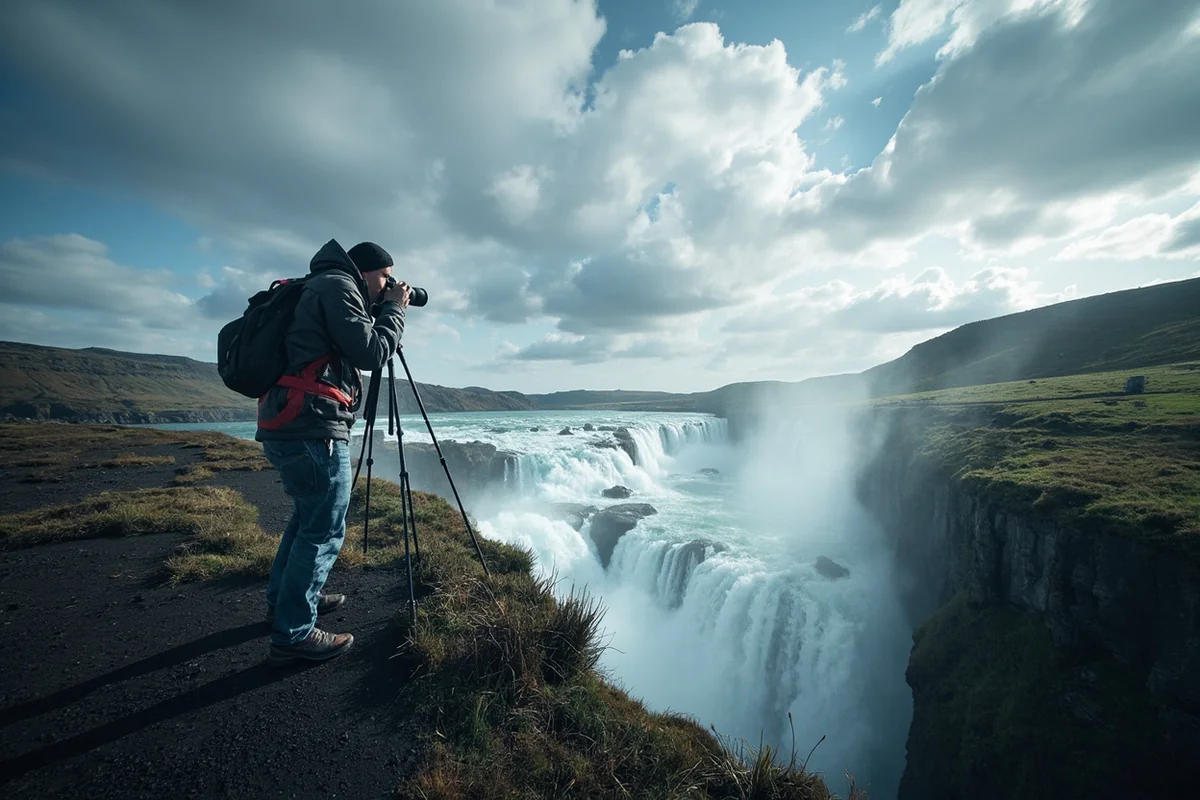
I’ve found the most compelling images include:
– Foreground wildflowers with falls in mid-ground
– Vertical orientation to capture the full drop
– Early morning sidelight for dimensional contrast
– Mountain goats for scale (if you’re lucky enough to see them)
The viewpoint around mile 4.8 offers the classic angle, but don’t neglect exploring slightly off-trail (on rock, not vegetation) for unique perspectives.
What Other Visitors Say
I’ve chatted with dozens of fellow hikers at the Silken Skein Falls viewpoint over the years. The consensus matches my own experience:
Most visitors describe the falls as “unexpected” and “unlike anything else in the park.” The common refrain is that photos don’t do it justice—the scale, the sound, the overall setting combines into something camera sensors simply can’t capture.
First-time visitors sometimes express mild disappointment at the falls’ size compared to massive drops like Holland Lake Falls or the power of Skalkaho Falls. I encourage adjusting expectations—Silken Skein’s beauty lies in its delicacy, not its drama.
Several photographers I’ve met specifically plan trips around peak flow periods, treating it as a bucket-list destination for long-exposure waterfall photography.
Final Thoughts on Silken Skein Falls
After three visits spanning nearly a decade, Silken Skein Falls has earned a permanent place in my Montana favorites. It’s not the tallest, most powerful, or easiest waterfall to reach—but it might be the most uniquely beautiful.
The effort required creates natural crowd control. Unlike easily accessible falls that draw hundreds of daily visitors, Silken Skein rewards those willing to work for it.
My recommendation: make the trek during prime season, arrive early, bring proper gear, and spend quality time at the viewpoint. Let the falls reveal their character slowly. Watch how the light changes the appearance of those delicate strands. Listen to the subtle variations in sound as breezes shift.
This is Glacier National Park at its finest—challenging, remote, and achingly beautiful.
For those building a comprehensive Montana waterfall experience, consider pairing Silken Skein with contrasting destinations. The raw power of Hole In The Wall Falls and the surprising accessibility of Palisade Falls near Bozeman offer completely different experiences that together showcase Montana’s incredible waterfall diversity.
Whether you’re a seasoned backcountry hiker or an ambitious first-timer ready to push your limits, Silken Skein Falls delivers an experience worth every step of the journey.
Frequently Asked Questions
Where is Silken Skein Falls located in Montana?
Silken Skein Falls is located in Glacier National Park, along the Going-to-the-Sun Road corridor near the Sunrift Gorge area. The falls cascade down the mountainside and are visible from the road, making them one of the more accessible waterfalls in the park. It’s approximately 10 miles west of St. Mary Entrance Station.
How do I get to Silken Skein Falls and is there a hike involved?
You can view Silken Skein Falls directly from Going-to-the-Sun Road without any hiking required, as the wispy cascade is visible from pullouts along the scenic drive. For closer views, you can park at Sunrift Gorge and walk a short distance along the roadside. I recommend arriving early in summer months to secure parking at the small pullout areas.
What is the best time of year to see Silken Skein Falls in Montana?
The best time to visit Silken Skein Falls is late May through mid-July when snowmelt is at its peak and the falls flow most dramatically. By late August, the waterfall often diminishes to a thin trickle or dries up completely. Keep in mind that Going-to-the-Sun Road typically doesn’t fully open until late June due to snow clearing operations.
Do I need a park entrance pass or reservation to visit Silken Skein Falls?
Yes, you’ll need to pay the Glacier National Park entrance fee of $35 per vehicle, which is valid for 7 days. During peak summer season from late May through early September, you’ll also need a vehicle reservation to enter the Going-to-the-Sun Road corridor during daytime hours. I highly recommend booking your reservation at Recreation.gov as soon as they become available.
Why is it called Silken Skein Falls and what makes it unique?
Silken Skein Falls gets its name from its delicate, thread-like appearance that resembles strands of silk flowing down the rocky cliff face. Unlike the powerful, thundering waterfalls in other areas of Montana, this cascade is known for its ethereal, wispy character that seems to float down the mountainside. The falls are especially photogenic when backlit by afternoon sun.
What should I bring when visiting Silken Skein Falls on Going-to-the-Sun Road?
Bring binoculars or a telephoto camera lens for the best views since the falls are across the valley from viewing areas. Pack layers even in summer because temperatures along Going-to-the-Sun Road can be 15-20 degrees cooler than lower elevations. I always carry bear spray, snacks, and plenty of water since services are limited along this remote stretch of road.
Can I combine Silken Skein Falls with other nearby Glacier National Park waterfalls?
Absolutely—Silken Skein Falls is perfectly positioned for a waterfall-hopping day along Going-to-the-Sun Road. Within just a few miles, you can also visit Baring Falls, St. Mary Falls, and Virginia Falls via short hikes. I suggest starting at St. Mary early morning, catching all the falls heading west, and timing your drive to reach Logan Pass by midday.