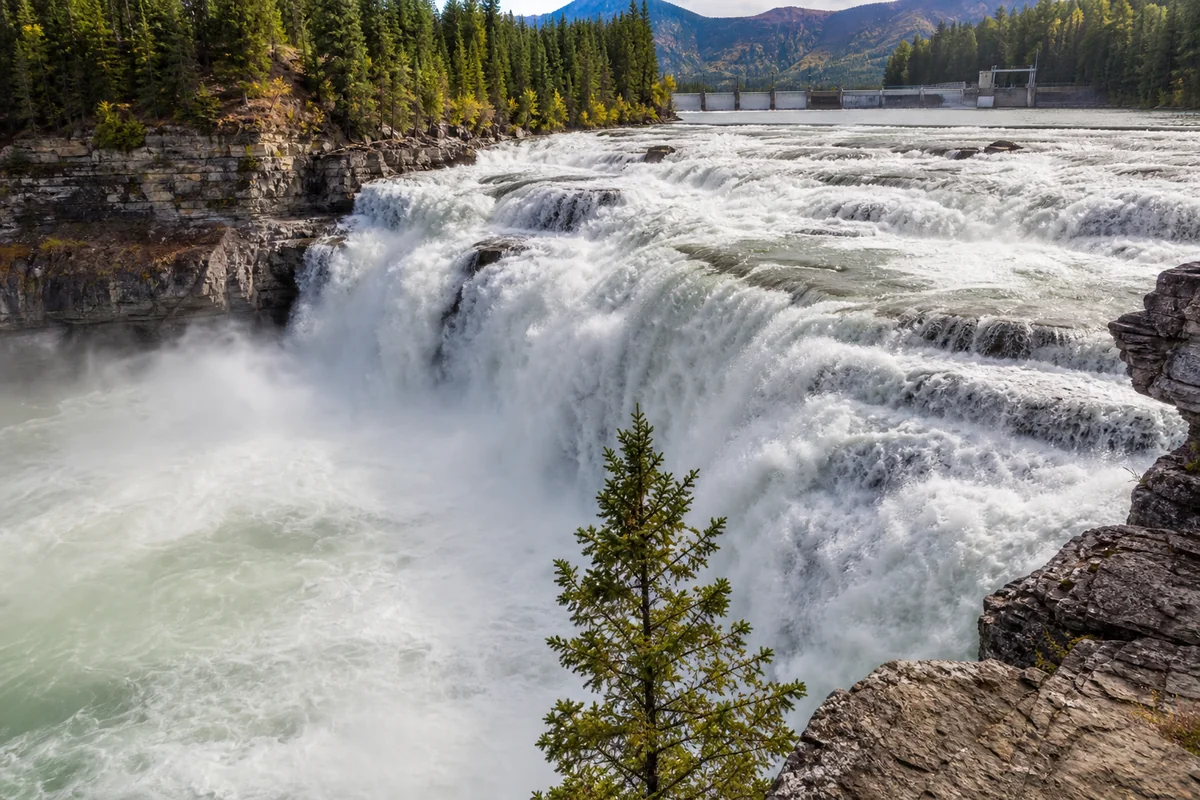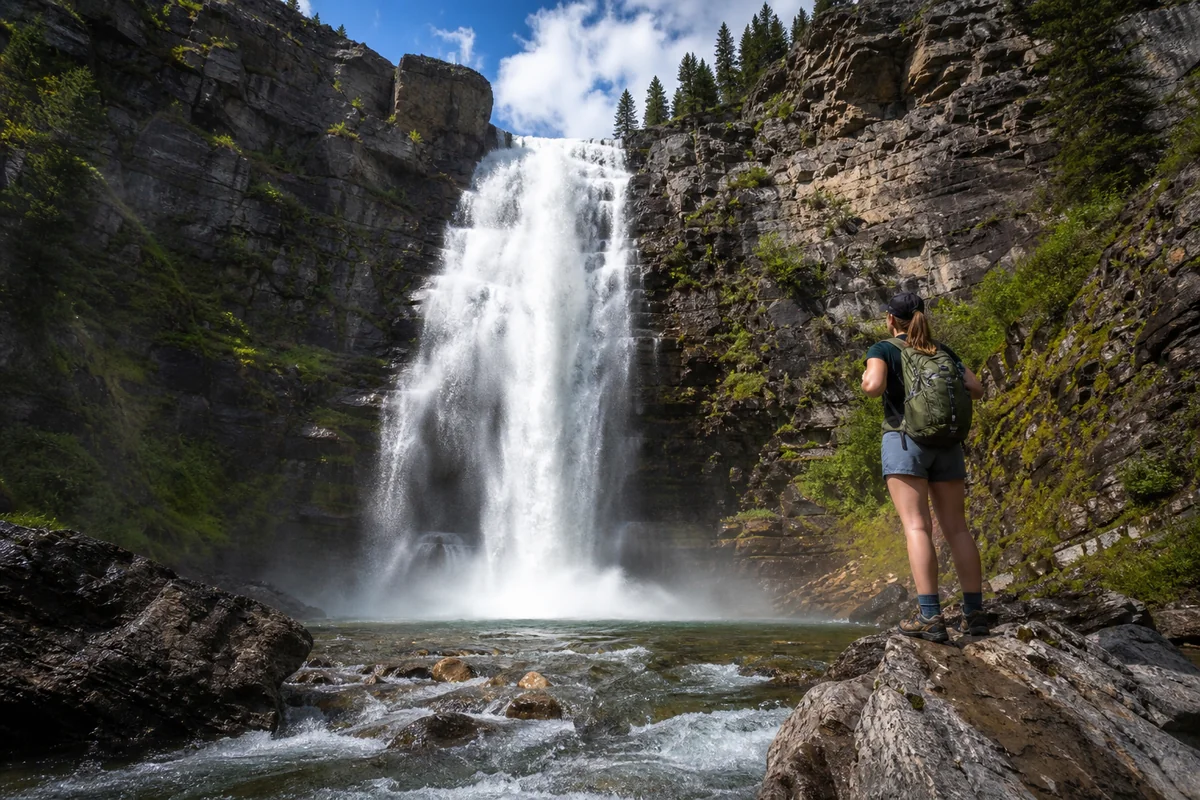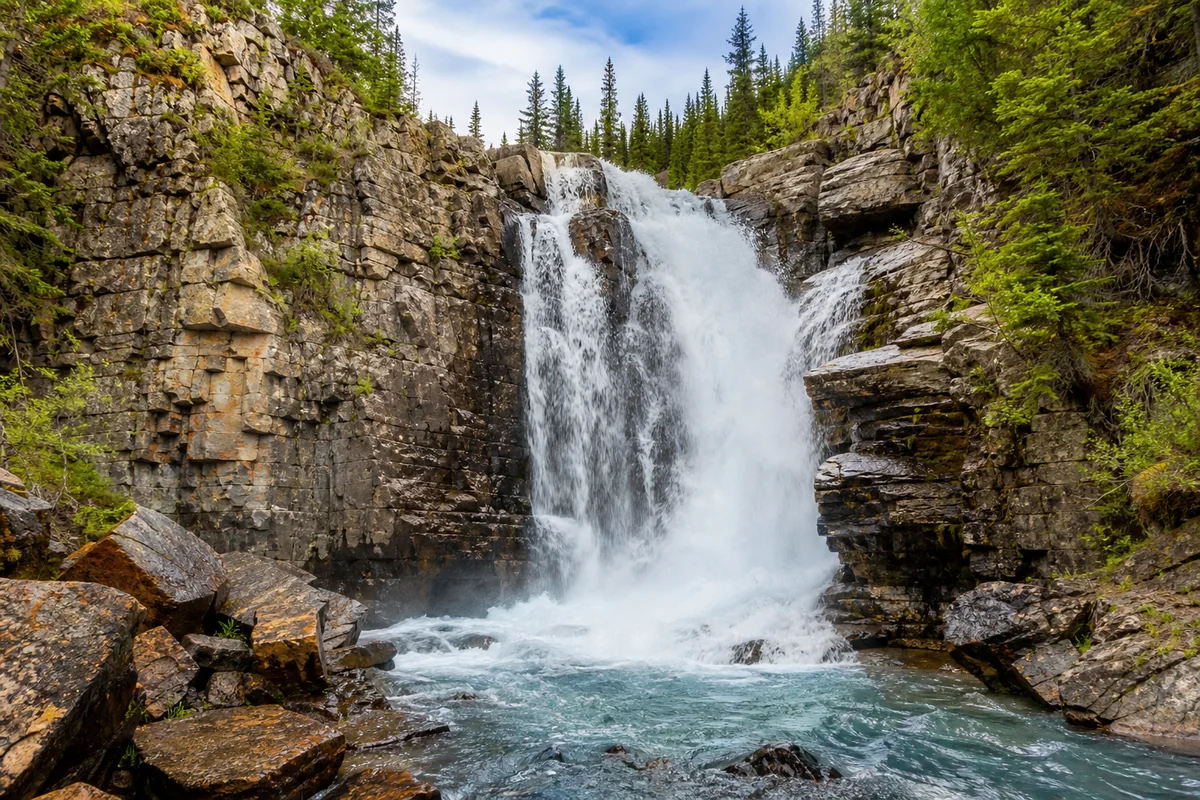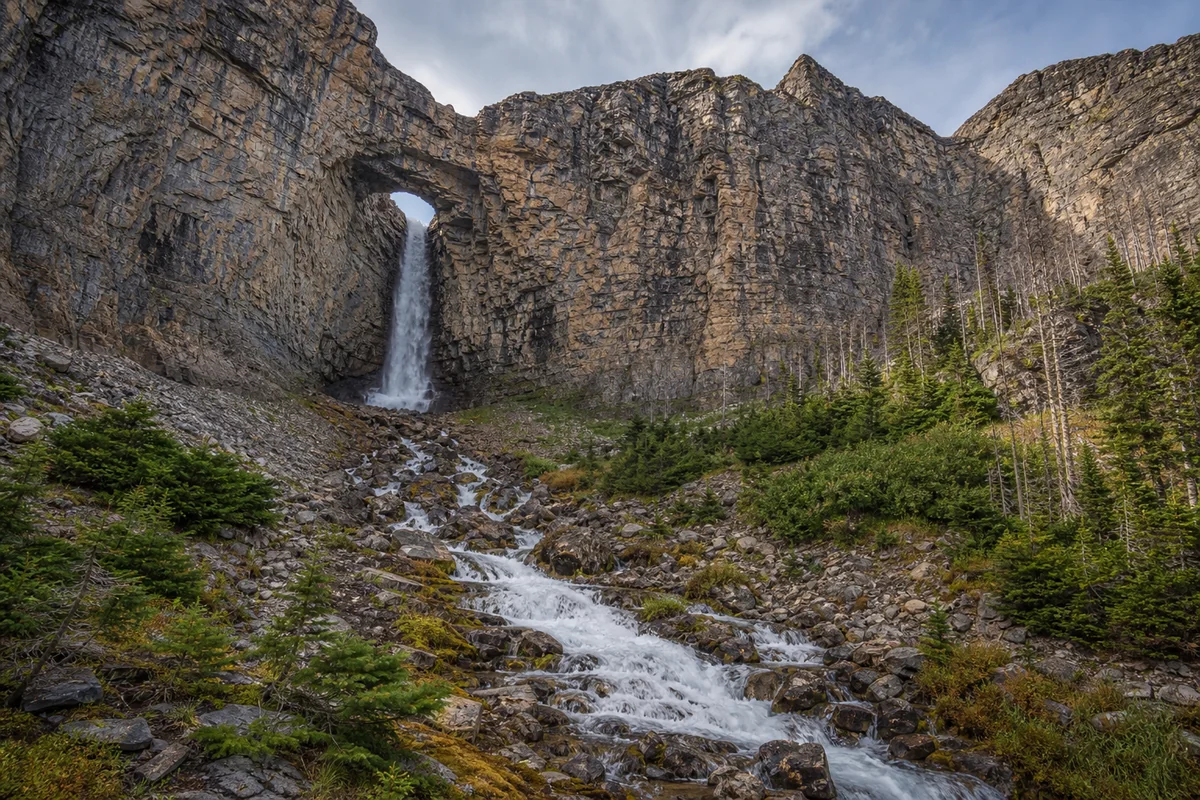
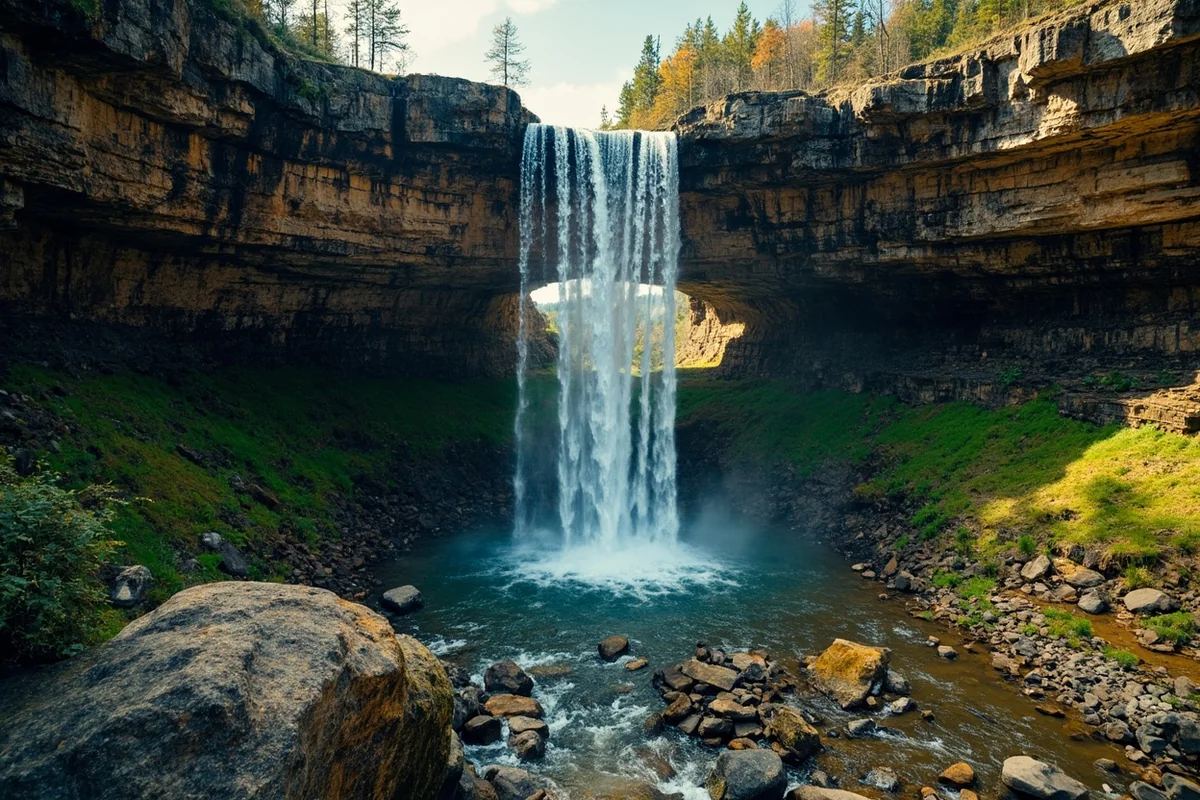
Standing at the base of Hole In The Wall Falls last August, I watched in disbelief as water erupted from a literal hole in the cliff face—a geological oddity that made every grueling step of the 13-mile round trip absolutely worth it.
This isn’t your typical roadside waterfall; it’s one of Montana’s most unique waterfalls, hidden deep in Glacier National Park’s backcountry where fewer than a handful of hikers venture each day.
- Located in Glacier National Park’s Many Glacier region — 13-mile round trip hike
- Moderate to strenuous difficulty with 2,400 feet elevation gain
- Best visited late June through mid-September when snow clears
- Water literally pours through a natural hole in the cliff — unlike any other Montana waterfall
- Start early (before 7 AM) to secure parking at Iceberg Lake Trailhead
- Bear spray is mandatory — I saw two grizzlies during my visit
Liked this article?
Add Roaming Montana as a preferred source so you see more of our articles and guides on Google.
What Makes Hole In The Wall Falls So Unique
I’ve chased waterfalls across Montana for years, from the easily accessible Kootenai Falls in the northwest to the tucked-away Grotto Falls near Bozeman. None of them prepared me for what I encountered at Hole In The Wall.
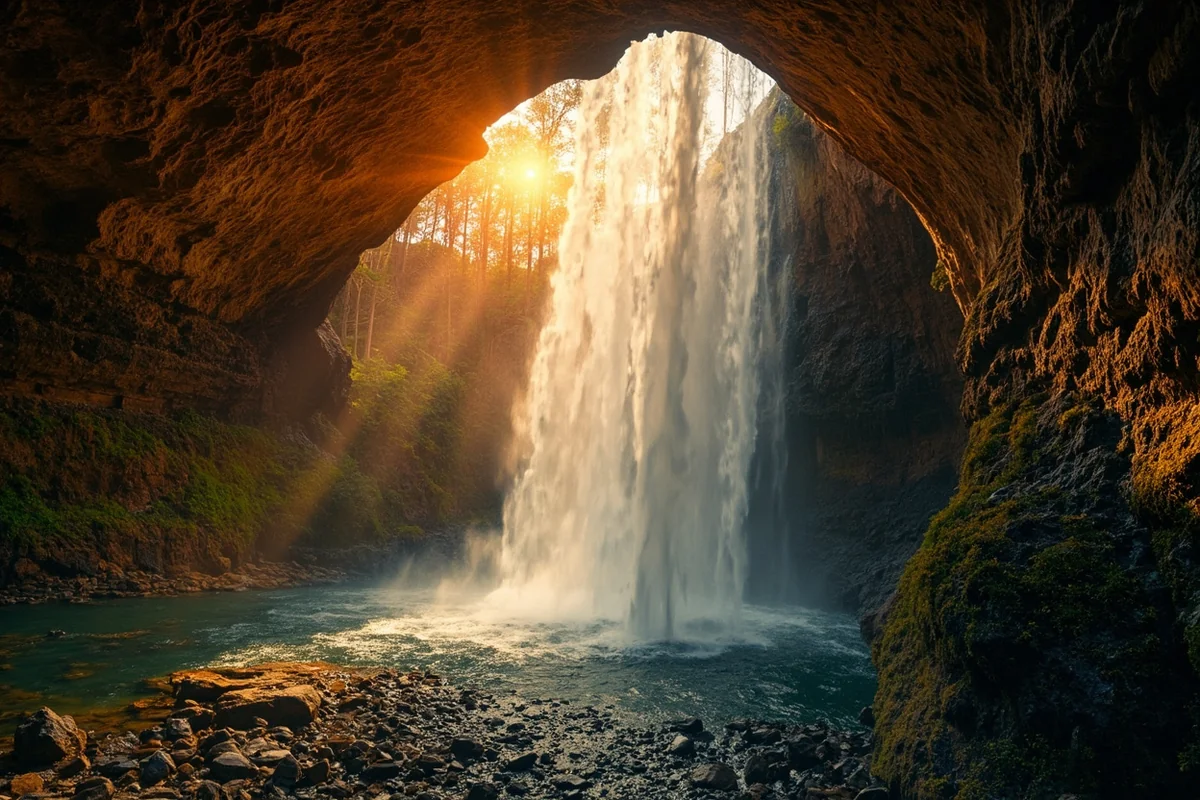
The geological formation here is genuinely one-of-a-kind. Snowmelt and runoff from the Ptarmigan Wall collect behind a massive cliff, then punch through a natural opening in the rock face before plummeting roughly 300 feet down the mountain.
During my visit in late summer, the water volume was modest but still impressive—a silver ribbon threading through that improbable gap in the stone.
I’m told early season visitors (late June to early July) witness an absolute torrent, though the trail can still be partially snow-covered then.
Understanding the Trail: Ptarmigan Tunnel Trail
Hole In The Wall Falls isn’t the primary destination for most hikers on this trail—that honor goes to Ptarmigan Tunnel, a historic 183-foot-long tunnel blasted through the Ptarmigan Wall in 1931. But the waterfall sits prominently along the route, making it an unavoidable (and unforgettable) highlight.
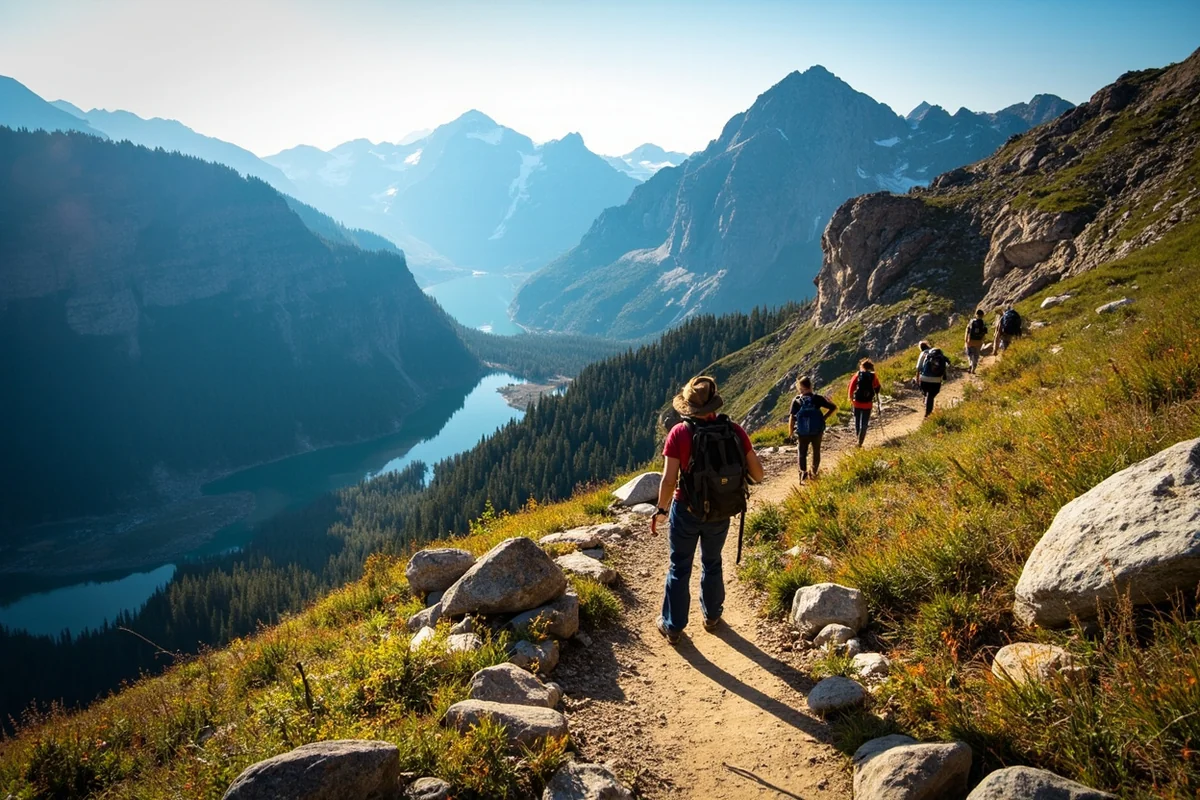
The trail begins at the Iceberg Lake Trailhead in the Many Glacier area of Glacier National Park. For the first 2.4 miles, you’ll actually share the path with hikers heading to Iceberg Lake—one of the park’s most popular destinations.
At the junction, bear left toward Ptarmigan Tunnel. This is where the real adventure begins.
Trail Statistics at a Glance
| Detail | Information |
|---|---|
| Round Trip Distance | 13.2 miles (to Ptarmigan Tunnel and back) |
| Elevation Gain | 2,400 feet |
| Distance to Falls | Approximately 5.5 miles from trailhead |
| Trail Difficulty | Moderate to Strenuous |
| Average Hiking Time | 7-9 hours round trip |
| Trail Type | Out and back |
Getting to the Trailhead: Many Glacier Access
Many Glacier Valley sits in the northeastern corner of Glacier National Park, and getting there requires some planning. From the town of Babb on Highway 89, turn west onto Many Glacier Road and drive approximately 12 miles to the Iceberg Lake Trailhead parking area.
Here’s what I learned the hard way: this parking lot fills up fast. During my August visit, I arrived at 6:45 AM and snagged one of the last spots. By 7:30 AM, cars were circling aimlessly, and rangers were directing overflow parking along the roadside nearly a half-mile back.
If you’re staying at Many Glacier Hotel or Swiftcurrent Motor Inn (both highly recommended), you can walk to the trailhead and avoid the parking chaos entirely. When I return next summer, that’s exactly my plan.
Driving Distances to Many Glacier
- From Kalispell: 140 miles (approximately 3 hours)
- From Great Falls: 170 miles (approximately 3 hours)
- From Missoula: 280 miles (approximately 4.5 hours)
- From Calgary, AB: 180 miles (approximately 3 hours)
Note that Many Glacier Road typically doesn’t open until late May or early June, depending on snowpack. Check the park’s website for current road status before making the drive.
The Hike: What to Expect Mile by Mile
Miles 0-2.4: The Shared Section
The trail kicks off through a gorgeous subalpine forest with occasional breaks offering glimpses of Mount Wilbur and Iceberg Peak. The grade is gentle here, and I found myself lulled into a false sense of ease.
Wildflowers were everywhere during my late summer trek—beargrass, fireweed, and Indian paintbrush adding splashes of color against the deep greens. I spotted three deer within the first mile, completely unbothered by the steady stream of hikers.
At the 2.4-mile mark, you’ll reach the Ptarmigan Trail junction. A large sign makes navigation foolproof. Most hikers continue straight toward Iceberg Lake, so the crowds thin dramatically once you turn left.
Miles 2.4-4.5: Ptarmigan Lake Approach
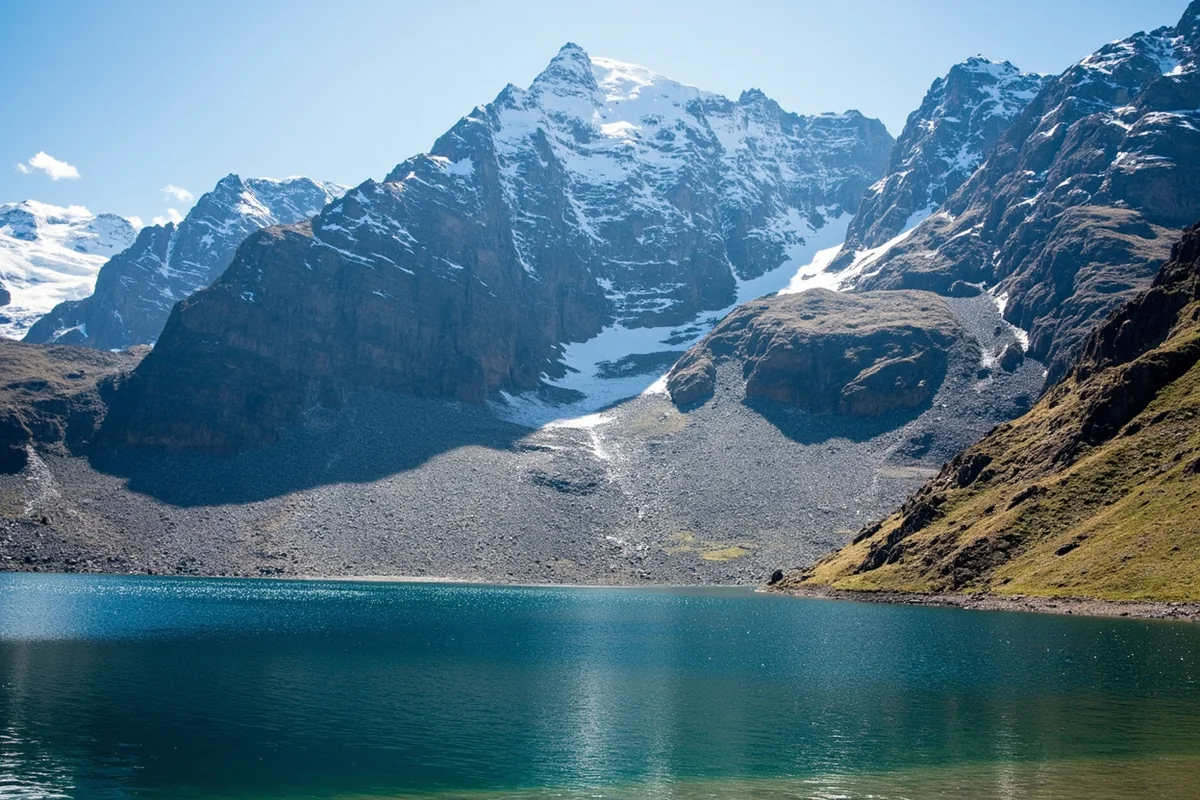
This section features more noticeable climbing as you traverse along the valley’s edge. Views open up dramatically, and I found myself stopping constantly to photograph the layered sedimentary rock formations that make Glacier’s geology so distinctive.
Ptarmigan Lake appears around mile 4.5, and it’s worth a brief rest here. The lake sits in a glacial cirque beneath the imposing Ptarmigan Wall—the same wall that Hole In The Wall Falls punches through.
During my visit, I noticed several mountain goats picking their way along the cliffs above the lake. They’re common in this area and seem entirely indifferent to human presence.
Miles 4.5-6.6: The Final Push
Here’s where things get real. The trail climbs steeply from Ptarmigan Lake toward the tunnel, gaining roughly 900 feet in just over two miles. Switchbacks help manage the grade, but I won’t sugarcoat it—my lungs were burning.
Hole In The Wall Falls comes into view around mile 5.5. The first time I saw it, I actually stopped mid-stride and just stared. Water cascading through that impossible opening in solid rock is something you need to witness in person to fully appreciate.
The trail passes within a few hundred feet of the falls’ splash zone. On warm days, the mist provides welcome relief. I spent twenty minutes here on my hike in, photographing the falls from multiple angles before continuing to the tunnel.
Best Time to Visit Hole In The Wall Falls
Timing your visit correctly makes an enormous difference in what you’ll experience.
Late June to Early July: Peak Flow
If maximum water volume is your priority, aim for late June through early July. Snowmelt is at its peak, and the falls transform into a thundering cascade. However, expect lingering snow patches on the upper trail sections, and the Ptarmigan Tunnel may still be closed.
I spoke with a park ranger who described the early season flow as “spectacular but intense.” She mentioned that snow bridges sometimes still cover portions of the trail, requiring careful navigation.
Mid-July to August: The Sweet Spot
This is when I visited, and I consider it ideal. Water flow remains impressive, the trail is completely snow-free, and the Ptarmigan Tunnel is fully accessible. Wildflowers peak during this window, and wildlife sightings are common.
The tradeoff? More crowds, though “crowded” is relative on this trail. I passed maybe 30 other hikers during my nine-hour day, which feels practically deserted compared to trails like Avalanche Lake.
September: Peaceful but Diminished
By early September, the falls slow considerably. When I drove through Many Glacier on a reconnaissance trip in late September a few years ago, rangers mentioned the waterfall was barely more than a trickle. However, the trail is quieter, fall colors emerge in the lower elevations, and the light is beautiful for photography.
Wildlife Considerations: This Is Bear Country
I cannot stress this enough: the Ptarmigan Tunnel Trail passes through some of the densest grizzly habitat in the lower 48 states. Bear spray isn’t optional—it’s mandatory park equipment.
During my hike, I encountered two grizzly bears. The first was a lone adult grazing on berries about 200 yards off-trail near Ptarmigan Lake. We made eye contact, and it continued eating, unconcerned. The second was a sow with a cub, spotted from a distance on my descent. I gave them an extremely wide berth.
Bear Safety Essentials
- Carry bear spray: Keep it accessible on your hip, not buried in your pack
- Make noise: Talk, clap, or use bear bells, especially around blind corners
- Hike in groups: Groups of four or more dramatically reduce encounter risks
- Stay alert: Pay attention to your surroundings, not your phone
- Know what to do: If you encounter a bear, don’t run—speak calmly and back away slowly
Glacier National Park offers excellent bear safety information at visitor centers. Take ten minutes to watch their video if you’re new to grizzly country.
What to Pack for the Hike
After my experience on this trail, here’s what I consider essential:
The Non-Negotiables
- Bear spray: Already mentioned, but it bears repeating (pun intended)
- Water: I carried 3 liters and used nearly all of it—no reliable water sources until Ptarmigan Lake
- Layers: Temperature can drop 20+ degrees between the trailhead and the falls
- Sun protection: The upper trail is fully exposed
- Sturdy hiking boots: The rocky terrain is unforgiving on sneakers
- Food: Pack more than you think you’ll need—this is a full-day endeavor
Highly Recommended
- Trekking poles: The descent’s steep sections are much easier with poles
- Camera with telephoto lens: For wildlife and waterfall photography
- First aid kit: You’re 5+ miles from any help
- Emergency shelter: Weather changes fast in the mountains
- Headlamp: In case your hike runs longer than expected
Photography Tips for Hole In The Wall Falls
As someone who takes photography seriously, I spent considerable time studying the light at this location.
Morning light hits the falls directly, which creates harsh shadows but dramatic contrast. I arrived around 11 AM, when softer light diffused across the cliff face—perfect for capturing detail in both the rock and the falling water.
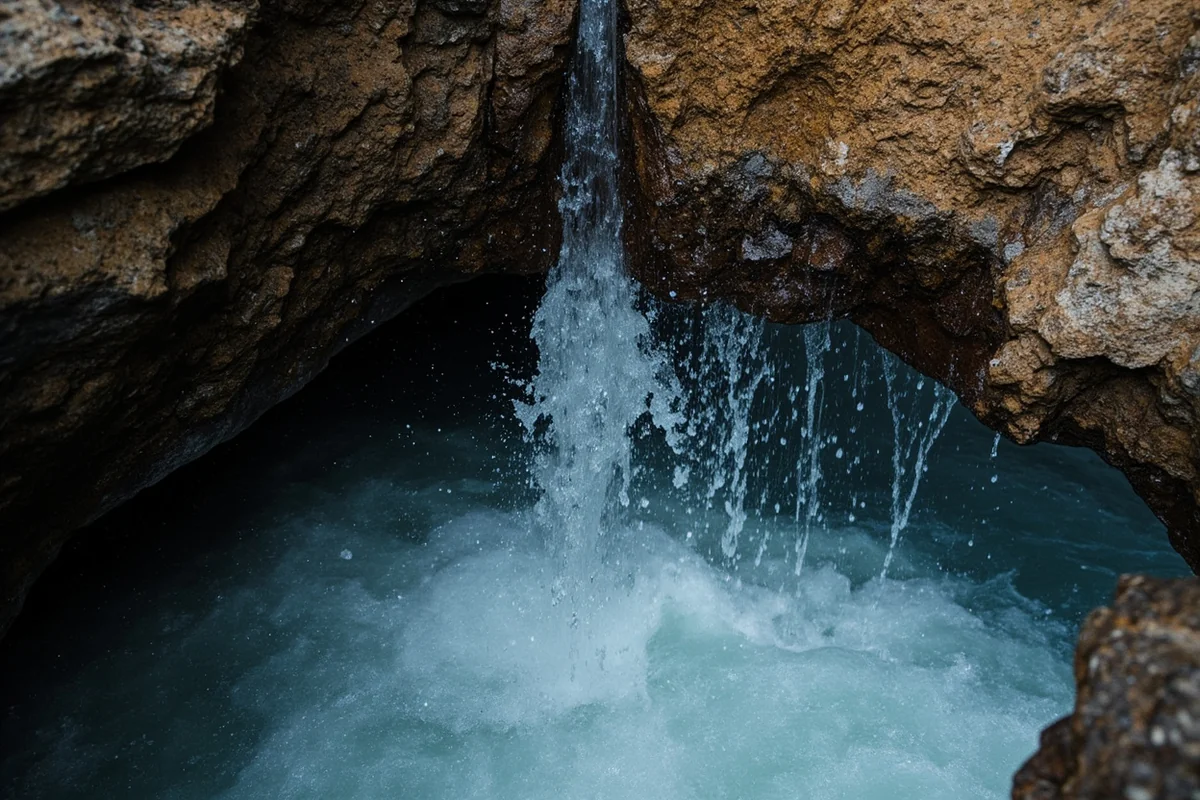
A polarizing filter helped cut the glare from wet rocks and deepened the blue sky above. I shot with a neutral density filter to achieve silky water effects, using exposures around 1/4 second.
Don’t forget to photograph the surrounding landscape. The Ptarmigan Wall itself is incredibly photogenic, and the views toward Many Glacier Valley are equally stunning.
Comparing Hole In The Wall to Other Montana Waterfalls
If you’re planning a Montana waterfall adventure, understanding how different falls compare can help with trip planning.
For accessibility, you won’t beat roadside cascades like McDonald Falls along Going-to-the-Sun Road or the easy walk to Running Eagle Falls in the Two Medicine Valley. Both offer rewarding experiences with minimal effort.
For a similar backcountry adventure without quite as much distance, consider Morrell Falls in the Seeley-Swan Valley. The 5.5-mile round trip delivers excellent scenery without the all-day commitment.
If you’re already in Glacier and want more waterfall options, Saint Mary Falls and Redrock Falls make excellent additions to your itinerary. Both are shorter hikes with stunning payoffs.
For something equally dramatic in a different park region, Holland Lake Falls offers spectacular cascades in the Flathead National Forest.
Extending Your Adventure: Ptarmigan Tunnel
Since you’re already hiking past the waterfall, continuing to Ptarmigan Tunnel adds only about a mile and another 500 feet of climbing. In my opinion, it’s absolutely worth the extra effort.
The tunnel itself is a marvel of Depression-era engineering. Civilian Conservation Corps workers hand-drilled and blasted this passage through the mountain in 1931, creating a route to the Belly River drainage on the north side.
Walking through the dark tunnel (bring your headlamp) and emerging on the other side to views of the Belly River Valley was one of the most memorable moments of my hiking life. The perspective completely changes—you’re suddenly looking at a completely different world.
The tunnel typically opens between late June and early July, depending on snow conditions. Check current status before planning your trip.
Where to Stay Near Many Glacier
Inside the Park
Many Glacier Hotel: This historic Swiss-style lodge sits directly on Swiftcurrent Lake. Rooms book months in advance, but the location can’t be beaten. I splurged on a stay here last summer and walked to the trailhead in 15 minutes.
Swiftcurrent Motor Inn: More affordable and equally convenient. The cabins offer basic accommodations, and the camp store stocks essentials.
Outside the Park
Babb area lodging: Several cabins and small lodges near Babb offer alternatives when park accommodations fill up. You’ll add about 25 minutes of driving each way.
St. Mary: More options exist in St. Mary, though it’s farther from Many Glacier (about 35 miles).
Camping
Many Glacier Campground: 109 sites available on a first-come, first-served basis. During summer, sites fill by mid-morning. I recommend arriving before 8 AM.
Combining Hole In The Wall With Other Hikes
If you’re spending multiple days in Many Glacier (which I strongly recommend), consider adding these trails to your itinerary:
Ipasha Falls makes an excellent shorter option on a recovery day after the Ptarmigan Tunnel trek. The 9-mile round trip to Iceberg Lake showcases one of Glacier’s most dramatic cirques.
The Highline Trail from Logan Pass offers different scenery and connects to multiple other destinations. On my last trip, I spent five days in the park and hiked a different trail each day—none disappointed.
Common Mistakes to Avoid
Based on my experience and conversations with rangers, here are the biggest mistakes hikers make on this trail:
Starting Too Late
I watched a family begin the hike at 11 AM, clearly underestimating the distance. Unless you’re extremely fast, starting after 8 AM means finishing in the dark. Begin early.
Underestimating Difficulty
The trail statistics look manageable on paper, but 2,400 feet of elevation gain over 13 miles—much of it at altitude—is legitimately challenging. Be honest about your fitness level.
Insufficient Water
Three liters is my minimum recommendation. On hot days, four liters isn’t excessive. Dehydration at 7,000+ feet elevation hits hard and fast.
Ignoring Weather
Mountain weather changes rapidly. That clear morning sky can become afternoon thunderstorms with zero warning. Check forecasts, watch for building clouds, and don’t hesitate to turn back if conditions deteriorate.
Permits and Fees
Entering Glacier National Park requires paying the entrance fee ($35 per vehicle for a seven-day pass) or holding an America the Beautiful annual pass ($80).
During peak summer season (late May through September), the park now requires advance vehicle reservations for entry between 6 AM and 5 PM. This reservation system was implemented to manage overwhelming crowds at popular areas.
Book your reservation at Recreation.gov as far in advance as possible—they release spots in blocks, and high-demand dates sell out within minutes.
The Ptarmigan Tunnel Trail itself requires no additional permits for day hiking. Overnight backpacking trips do require backcountry permits.
Accessibility Considerations
I want to be honest: this trail is not suitable for those with limited mobility. The distance, elevation gain, and rugged terrain make it one of the more challenging day hikes in Glacier National Park.
For visitors seeking easier waterfall experiences, Glacier offers options like Sacred Dancing Cascade viewable from the roadside or the relatively flat trail to Memorial Falls outside the park near Kalispell.
Historical Context: The Ptarmigan Wall
The geological formation that creates Hole In The Wall Falls has fascinated visitors for over a century. The Ptarmigan Wall represents a dramatic exposure of the Belt Supergroup rocks—some of the oldest sedimentary formations visible in North America, dating back over a billion years.
The “hole” itself likely formed through a combination of erosional processes. Water found a weakness in the rock and, over millennia, carved a passage through the cliff. What we see today is the result of geological time scales we can barely comprehend.
Native Blackfeet people knew these mountains intimately long before European explorers arrived. The name “Ptarmigan” comes from the white-tailed ptarmigan, an alpine bird species common in the high country here.
Planning Your Trip: A Suggested Itinerary
Based on my experiences, here’s how I’d structure a trip specifically targeting Hole In The Wall Falls:
Day Before
Arrive at Many Glacier by mid-afternoon. Check into your accommodation, drive around the valley to orient yourself, and get to bed early. If camping, secure your site by noon.
Hike Day
Wake at 5 AM, eat a solid breakfast, and be on the trail by 6:30 AM. Hike steadily to Hole In The Wall Falls, spending time photographing and appreciating the unique formation. Continue to Ptarmigan Tunnel if time and energy permit.
Plan for 7-9 hours of total hiking time. Return to your accommodation exhausted but satisfied.
Day After
Sleep in. Consider an easier activity like a boat tour on Swiftcurrent Lake or a short walk to Fishercap Lake. Your legs will thank you.
Final Thoughts on This Remarkable Place
Of all the waterfalls I’ve visited across Montana—from the powerful Mission Falls to the serene Ousel Falls near Big Sky—Hole In The Wall Falls remains the most memorable simply because it defies expectation.
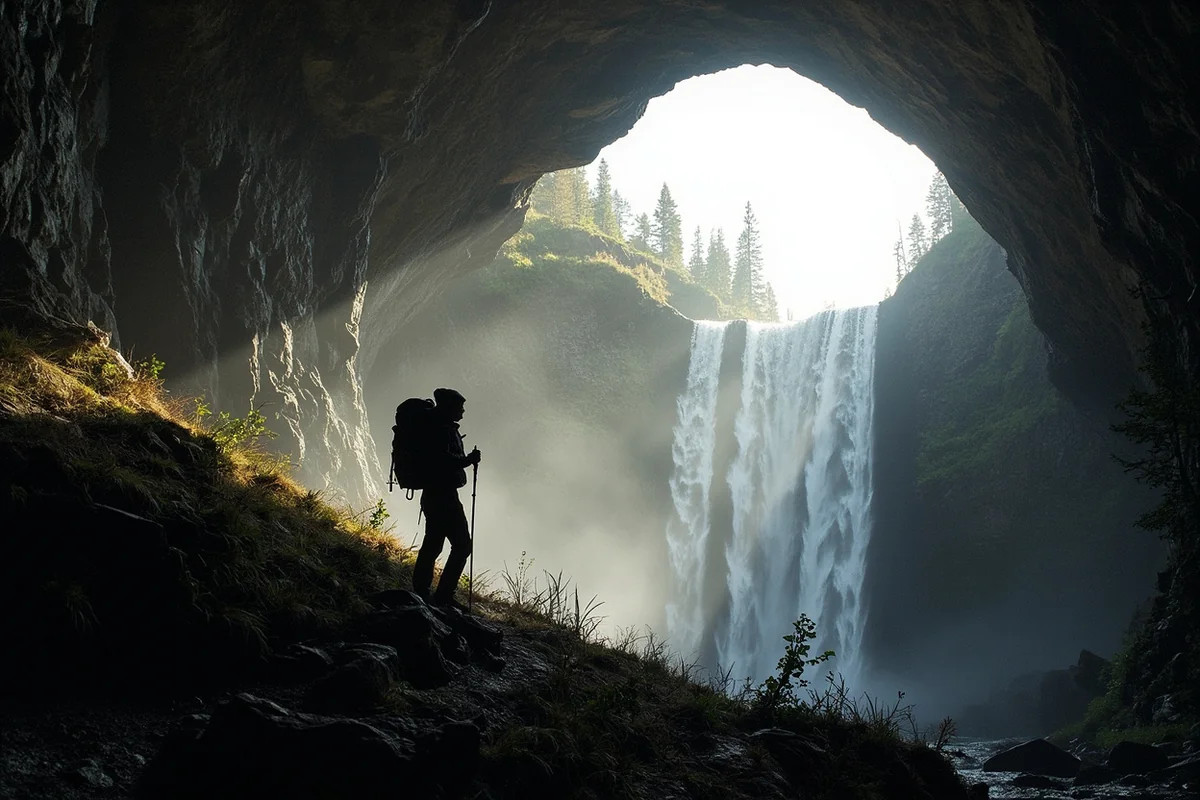
You don’t just see this waterfall. You earn it. Every mile of that 13-mile journey builds anticipation until you round a corner and witness water defying solid rock, pouring through an opening that seems almost too perfect to be natural.
That moment—standing beneath this geological wonder, feeling the mist on your face, understanding that you’re witnessing something genuinely rare—is why we chase waterfalls in the first place.
The Ptarmigan Tunnel Trail to Hole In The Wall Falls isn’t for everyone. It’s long, it’s demanding, and it requires genuine effort. But for those willing to put in the work, the reward is experiencing one of Montana’s most extraordinary natural features in one of America’s most spectacular national parks.
I’m already planning my next visit. See you on the trail.
Frequently Asked Questions
Where is Hole In The Wall Falls located in Montana?
Hole In The Wall Falls is located in the Custer Gallatin National Forest near Big Sky, Montana, approximately 45 miles south of Bozeman. The falls are tucked into the Gallatin Canyon along the Gallatin River, making them accessible from Highway 191. I found the trailhead easy to spot once I knew to look for the small pullout area.
How difficult is the hike to Hole In The Wall Falls Montana?
The hike to Hole In The Wall Falls is relatively short but steep, covering about 0.5 miles one way with a significant elevation gain that can challenge casual hikers. The trail involves scrambling over rocks and navigating slippery terrain near the falls, so I’d rate it as moderate difficulty. Sturdy hiking boots with good ankle support are essential for this trail.
What is the best time of year to visit Hole In The Wall Falls?
The best time to visit Hole In The Wall Falls is late spring through early summer (May through July) when snowmelt creates the most dramatic water flow. I visited in June and the falls were absolutely roaring with powerful cascades. By late August, water levels drop significantly, though the hike remains scenic with fall colors peaking in September.
Is Hole In The Wall Falls in Montana kid-friendly?
Hole In The Wall Falls is not ideal for young children due to steep, rocky terrain and slippery conditions near the waterfall. The trail requires some scrambling and there are no guardrails near cliff edges, which can be dangerous for little ones. I’d recommend this hike for families with older kids (12+) who have some hiking experience.
What should I bring for the Hole In The Wall Falls hike?
Bring waterproof hiking boots, trekking poles for stability on the descent, plenty of water, and bear spray since you’re in grizzly country. I also recommend packing a waterproof layer because mist from the falls will soak you if you get close. A camera with a waterproof case is worth bringing to capture the dramatic canyon scenery.
Is there a fee to visit Hole In The Wall Falls Montana?
There is no entrance fee to visit Hole In The Wall Falls since it’s located on National Forest land with free public access. Parking at the small pullout along Highway 191 is also free, though spaces are limited and fill up quickly on summer weekends. I recommend arriving before 9 AM to secure a spot during peak season.
Can you swim at Hole In The Wall Falls in Montana?
Swimming at Hole In The Wall Falls is extremely dangerous and not recommended due to powerful currents, frigid snowmelt temperatures, and underwater hazards. The pool beneath the falls looks inviting but the force of the water creates deadly undertows. I’ve seen people wade in the calmer areas downstream, but even that requires caution with water temperatures hovering around 40-50°F.
Sources