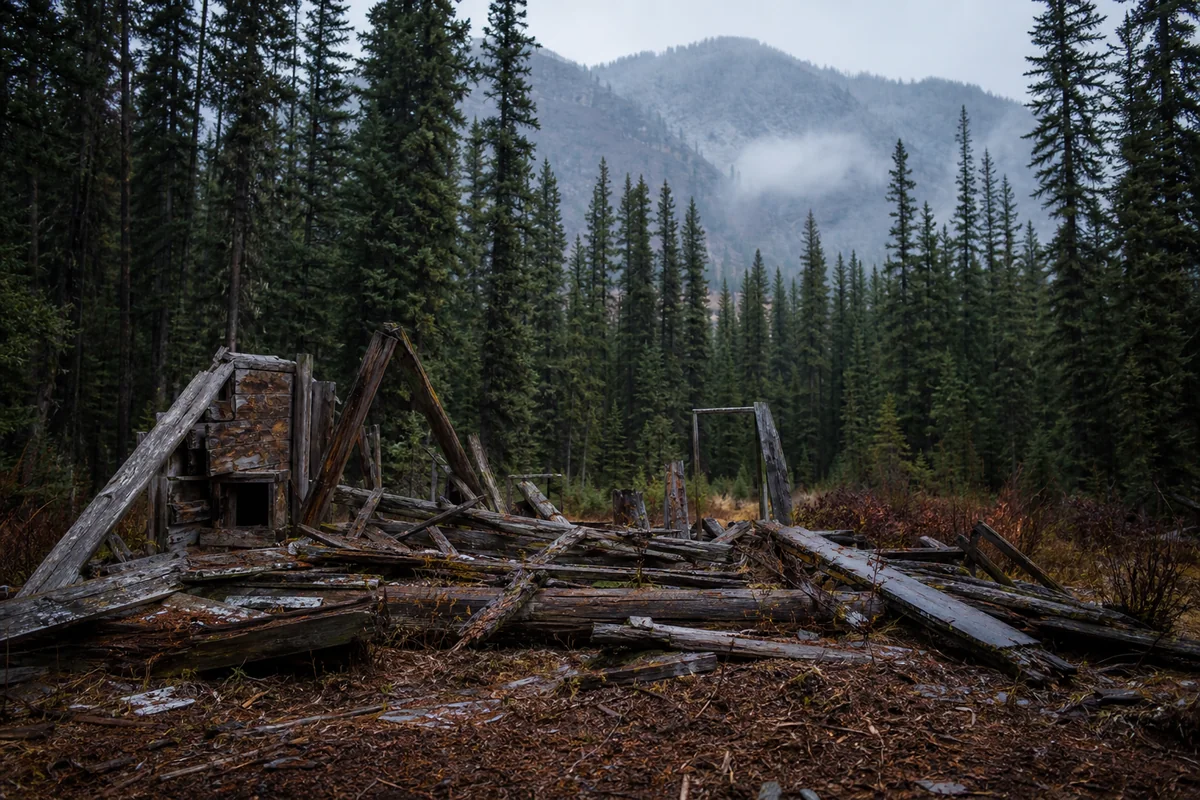
Standing outside the barely-there remains of Ted Kaczynski’s cabin site near Lincoln, Montana last October, I felt the weight of what had happened in these seemingly peaceful woods settle over me like mountain fog.
The silence was profound—the same silence that once concealed America’s most elusive domestic terrorist for nearly two decades.
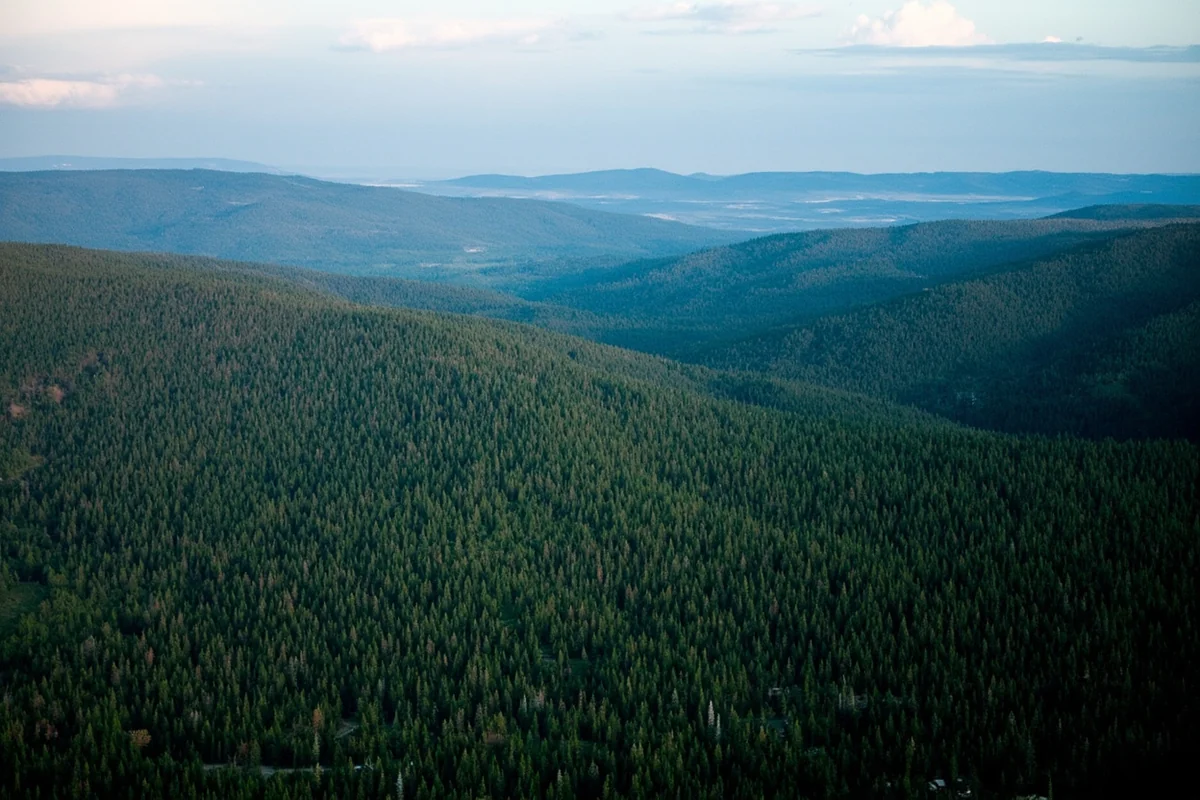
Montana’s sprawling wilderness and sparse population have always attracted those seeking isolation, but as I’ve discovered through years of researching Montana history, that solitude has sometimes sheltered individuals with far darker intentions.
This isn’t a comfortable topic, but understanding the state’s criminal history offers important context for the communities you’ll visit and helps explain why Montana’s law enforcement evolved the way it did.
- Montana has been home to several notorious serial killers, including Ted Kaczynski (the Unabomber) who lived near Lincoln for 25 years
- The state’s isolation and vast wilderness made it attractive to criminals seeking to hide from authorities
- Key cases include the Highway Serial Killings along I-90, David Meirhofer (first criminal caught via FBI profiling), and Wayne Nance (the Missoula Mauler)
- Several Montana communities now have memorials and historical markers acknowledging victims
- Understanding this history provides context for Montana’s unique law enforcement challenges and community resilience
- Most locations connected to these cases are on private property or have been demolished
Why Montana’s Geography Created Perfect Cover
When you drive through Montana—really drive through it, not just pass through on the interstate—you begin to understand something crucial. This state is massive, covering 147,040 square miles with a population density of just seven people per square mile.
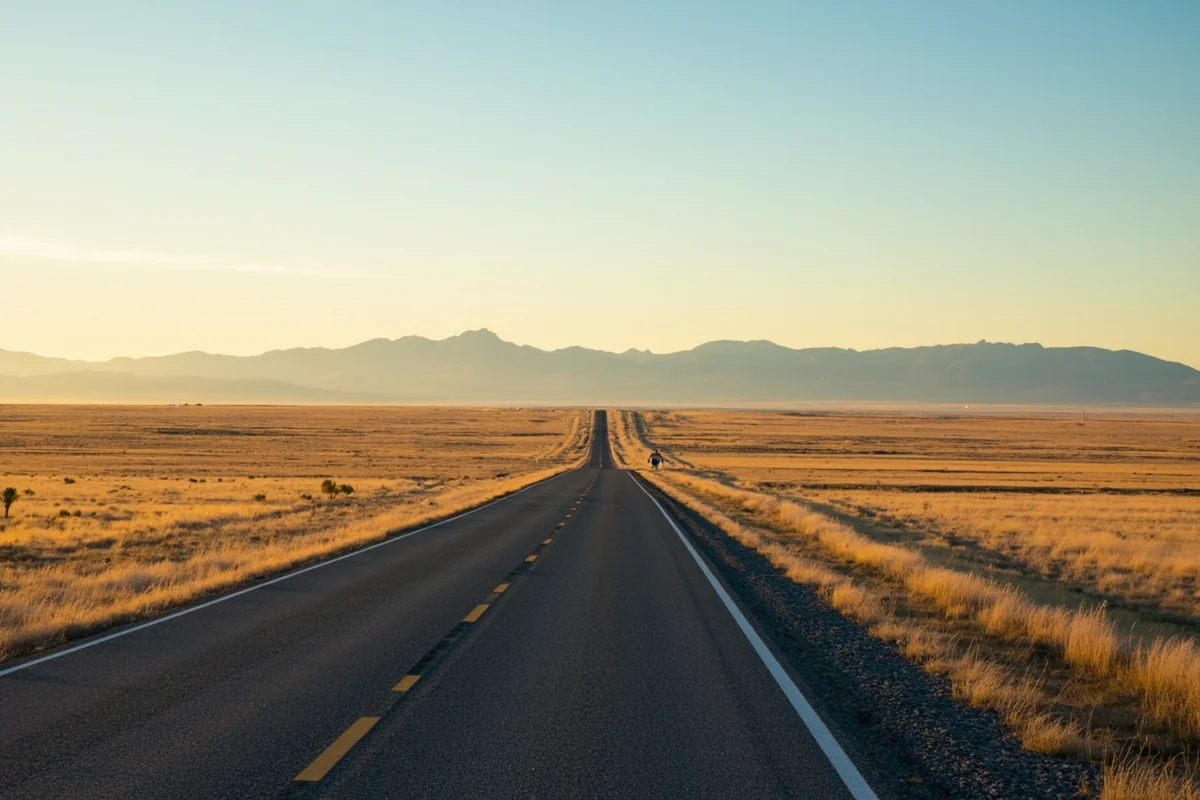
During my research trips across the state, I’ve gone hours without seeing another vehicle. That isolation feels liberating to most visitors, but it presented obvious opportunities for those with criminal intent.
The same rugged landscape that challenged the Montana pioneer legacy created natural hiding places that would take decades to fully explore. Abandoned mining claims, remote homesteads, and endless forest service roads provided countless locations where someone could disappear—or make others disappear.
Ted Kaczynski: The Unabomber’s Montana Years
No discussion of Montana serial killers can begin anywhere else. Ted Kaczynski lived in a 10-by-12-foot cabin outside Lincoln, Montana from 1971 until his arrest in 1996. That’s 25 years of meticulous bomb-making in a structure without electricity or running water.
I visited the Lincoln area during my trip last fall, and locals still remember the shock of discovering their reclusive neighbor was responsible for a bombing campaign that killed three people and injured 23 others across the country.
What Lincoln Looks Like Today
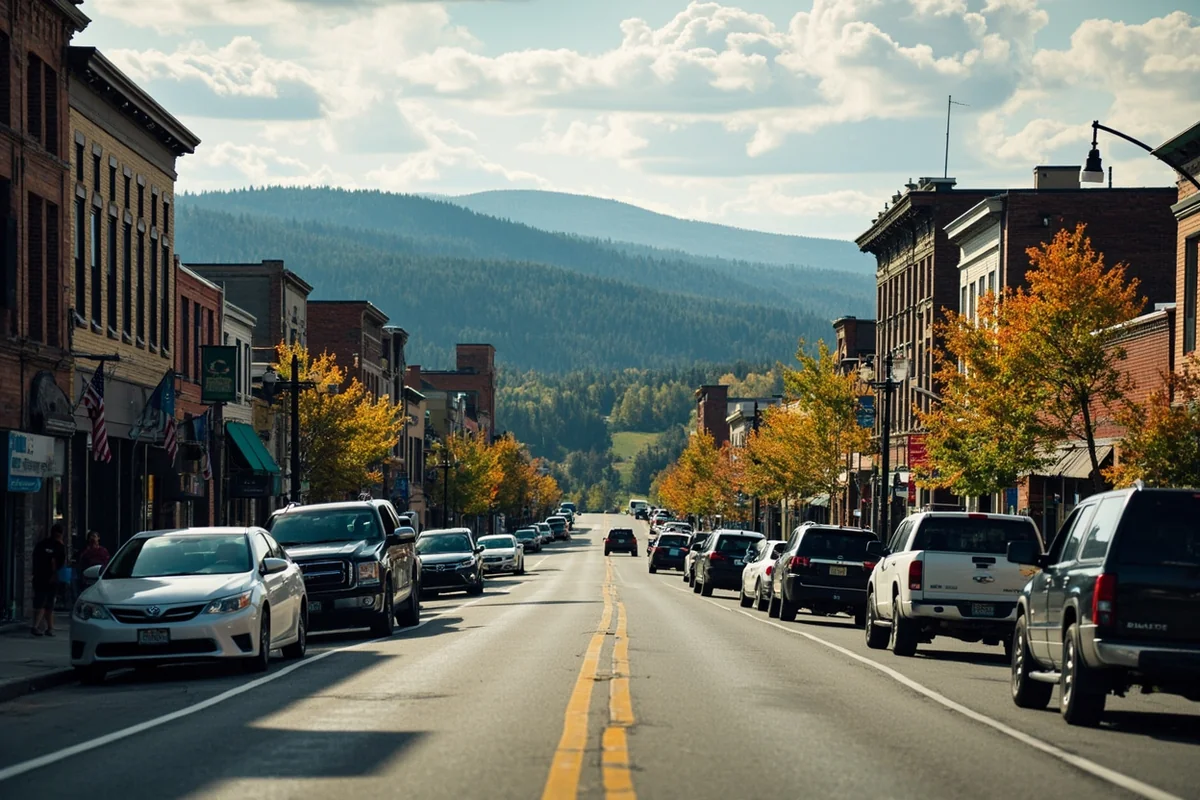
Lincoln is a small community of about 1,000 people, roughly 60 miles northwest of Helena. When I stopped at the Lincoln Hotel for lunch, an older gentleman at the bar told me he’d occasionally seen Kaczynski riding his bicycle into town during the 1980s.
“He’d come in for supplies,” he said. “Quiet guy. We just thought he was one of those back-to-the-land types.”
The cabin itself was removed by the FBI after Kaczynski’s arrest. It spent years at the Newseum in Washington D.C. before being transferred to the FBI Academy in Quantico, Virginia. There’s nothing left at the original site but forest.
Visiting the Lincoln Area
If you’re interested in this dark piece of history, I recommend staying in Lincoln and exploring the surrounding Helena National Forest. The Stemple Pass Road, which provided access to Kaczynski’s property, is now a popular recreational route.
However, I need to be clear: please don’t attempt to find the exact cabin location. It’s on private property, and the community understandably wants to move beyond this chapter. What you can do is visit Lincoln itself—it’s a charming mountain town with excellent access to the Continental Divide Trail and numerous fishing spots.
The contrast between the town’s natural beauty and its unwanted claim to infamy struck me deeply during my visit. These communities didn’t choose to be associated with violent criminals.
David Meirhofer: A Landmark Case for Criminal Profiling
Long before Kaczynski made headlines, Montana was the site of a case that would change criminal investigation forever. In 1974, David Meirhofer became one of the first criminals captured using FBI psychological profiling techniques.
Meirhofer kidnapped and murdered at least four victims in the Gallatin Valley area near Manhattan and Three Forks, Montana. His victims included seven-year-old Susie Jaeger in 1973 and nineteen-year-old Sandra Smallegan in 1974.
The Birth of Criminal Profiling
What makes this case historically significant is the FBI’s involvement. Special Agent Howard Teten and his colleague Pat Mullany had been developing psychological profiling methods, and they applied their theories to help local Montana law enforcement.
I spoke with a retired Gallatin County deputy during my research trip to Bozeman who remembered the case. “It was unlike anything we’d seen before,” he told me. “These FBI guys came in talking about personality types and behavior patterns. We were skeptical, but they were right.”
The profile predicted Meirhofer was a local young man, likely single, who would contact the victim’s family. When Susie Jaeger’s mother received a call from the killer, the FBI was prepared. Meirhofer eventually confessed to four murders before taking his own life in custody.
Visiting the Gallatin Valley Today
Three Forks and Manhattan are now thriving communities in one of Montana’s fastest-growing regions. When I visited Three Forks last summer to see the Missouri Headwaters State Park, there was no visible reminder of the crimes that occurred there 50 years ago.
The Headwaters Heritage Museum in Three Forks focuses on the area’s rich history, including its connection to the Montana Gold Rush and Lewis and Clark expedition. This is appropriate—communities shouldn’t be defined solely by tragedy.
Wayne Nance: The Missoula Mauler
Missoula, Montana’s cultural hub and home to the University of Montana, was terrorized by Wayne Nance from approximately 1974 until his death in 1986. Nance is believed to have murdered at least five people, though investigators suspect the number may be higher.
What makes Nance’s case particularly disturbing is how integrated he was in the community. He worked as a furniture delivery driver, which gave him access to homes throughout the Missoula area.
A Case That Nearly Went Unsolved
Nance’s crimes ended not through investigation but through the resistance of his final intended victim. In September 1986, Nance broke into the home of Doug and Kris Wells, stabbing Doug and tying up Kris.
Doug Wells, despite being stabbed and shot, managed to retrieve a rifle and shot Nance three times, killing him. Only afterward did investigators connect Nance to multiple unsolved murders dating back over a decade.
I walked through downtown Missoula during my last visit, passing the kinds of Victorian homes where Nance committed some of his crimes. The disconnect between the charming university town atmosphere and its dark past was jarring.
Missoula’s Healing
Missoula has grown substantially since the 1980s. The city now has a population over 75,000 and a vibrant arts scene, excellent restaurants, and easy access to wilderness areas.
When you visit—and you should—you’ll find a community that has moved forward while honoring victims’ memories. The Montana State Prison history includes a chapter on how Nance might have been stopped sooner with better inter-agency communication, lessons that have since been applied to law enforcement statewide.
Highway Serial Killings: Montana’s I-90 Corridor
Montana sits along a crucial east-west transportation corridor, and Interstate 90 has unfortunately been linked to what the FBI calls “Highway Serial Killings.” While no single serial killer has been definitively connected to multiple Montana highway deaths, the pattern of unsolved cases along trucking routes is concerning.
During my drive across I-90 from Billings to Missoula last year, I stopped at several truck stops and rest areas. These are busy places with constant turnover—exactly the type of environment where victims can disappear without immediate notice.
The FBI’s Highway Serial Killings Initiative
The FBI’s Highway Serial Killings Initiative, launched in 2009, has identified over 750 potential victims along American highways, with several cases in Montana. The victims are often transient individuals, sex workers, or hitchhikers—people whose disappearances might not be immediately reported.
I visited the Billings area specifically to understand this issue. Montana is one of the states that has implemented training for truck stop employees and highway patrol officers to recognize warning signs.
What Travelers Should Know
This isn’t meant to scare you away from road tripping across Montana—far from it. But understanding this issue helps explain why Montana Highway Patrol maintains such a visible presence along I-90 and why rest areas are well-lit and regularly patrolled.
If you’re traveling Montana’s highways, stick to established rest areas, let someone know your route, and trust your instincts. The vast majority of your fellow travelers are just people enjoying the same beautiful drive you are.
| Safety Resource | Contact/Location |
|---|---|
| Montana Highway Patrol | *HP on cell phone or 1-800-525-5555 |
| FBI Tip Line | 1-800-CALL-FBI |
| Montana Rest Area Information | www.mdt.mt.gov/travinfo/restareas |
| National Missing and Unidentified Persons System | www.namus.gov |
Nathaniel Bar-Jonah: Great Falls’ Dark Chapter
The Great Falls case of Nathaniel Bar-Jonah remains one of Montana’s most disturbing criminal histories. Bar-Jonah, a convicted sex offender who moved to Great Falls from Massachusetts in 1991, was convicted of kidnapping and assault in 2002. He was also the primary suspect in the 1996 disappearance of 10-year-old Zachary Ramsay, though he was never charged with murder.
I have to be honest: researching this case was difficult. The details are deeply upsetting, and Great Falls residents I spoke with during my visit clearly still carry the trauma.
Great Falls Today
Great Falls is Montana’s third-largest city, home to the C.M. Russell Museum and the stunning Giant Springs State Park. It’s also near Montana’s military bases, specifically Malmstrom Air Force Base.
When I visited Great Falls, I intentionally spent time appreciating what the city does well. The River’s Edge Trail offers 60 miles of pathways along the Missouri River. The downtown district has seen significant revitalization with local restaurants and breweries.
The community has worked hard to be known for its art scene and outdoor recreation, not its connection to a child predator. That resilience deserves recognition.
Joseph Henry Schwab: The Billings Strangler
In the early 1970s, Billings—Montana’s largest city—experienced a series of murders that would go unsolved for decades. Joseph Henry Schwab is believed to have killed at least four women in Billings between 1971 and 1972, though he was only officially convicted of one murder before his death in prison in 2011.
I researched this case at the Western Heritage Center in Billings, which has an extensive Montana history archive. The difficulty in solving these cases highlighted the limitations of forensic technology at the time and the challenges of coordinating investigations across Montana’s vast landscape.
How DNA Changed Everything
Schwab’s case was eventually solved through DNA evidence—technology that didn’t exist when the crimes occurred. This is a recurring theme in Montana cold cases: the state’s isolation made evidence collection and preservation challenging, and many cases from the 1960s through 1980s remained unsolved until DNA technology caught up.
Montana law enforcement has since invested heavily in cold case units and DNA evidence preservation. When I spoke with a Yellowstone County detective, she mentioned that several Montana cases from this era are currently being re-examined with new technology.
Understanding Montana’s Law Enforcement Evolution
These cases collectively shaped how Montana approaches law enforcement. The state’s small population and vast territory require creative solutions that more densely populated states don’t need.
During my travels, I’ve noticed the strong cooperation between county sheriffs, city police, tribal law enforcement, and federal agencies like the FBI. This wasn’t always the case—several of the cases I’ve described revealed critical gaps in communication that have since been addressed.
Tribal Jurisdiction and the MMIW Crisis
No discussion of violence in Montana would be complete without acknowledging the Missing and Murdered Indigenous Women (MMIW) crisis. Montana has seven Indian reservations, and Indigenous women face violence rates far exceeding national averages.
The complexities of tribal jurisdiction—who investigates crimes on reservation land—have historically allowed perpetrators to escape justice. Montana has been working to address this through legislation like Hanna’s Act, passed in 2019, which requires the Montana Department of Justice to maintain a database of missing persons and to coordinate with tribal governments.
When I visited the Blackfeet Reservation near Glacier National Park, I saw MMIW awareness materials in multiple businesses. This is an ongoing issue, not a historical curiosity, and travelers should be aware that these communities are still fighting for justice for missing loved ones.
What You Won’t Find: A “Serial Killer Tour”
I want to be clear about something: Montana doesn’t market its criminal history, and neither do I. You won’t find “serial killer tours” like those offered in some other states.
This is intentional and appropriate. These were real victims with real families, many of whom still live in Montana. During my research, I was careful to contact local historical societies and law enforcement rather than seeking out victim families or crime scenes.
If you’re interested in true crime history, I recommend:
- The Montana Historical Society in Helena, which maintains records on state criminal history
- Local libraries with newspaper archives from relevant time periods
- The Montana Law Enforcement Academy in Helena, which occasionally hosts public events about investigative history
- University of Montana criminology department public lectures
What I don’t recommend is seeking out specific crime scene locations. Most are on private property, and your presence would be traumatic for current residents or victim families.
The Broader Context of Montana Crime
It’s worth noting that while Montana has had its share of notorious criminals, the state’s overall violent crime rate is lower than the national average. The cases that make headlines do so precisely because they’re unusual.
The isolation that occasionally sheltered predators also creates tight-knit communities where strangers are noticed. Montana’s small-town culture means people look out for each other—something I’ve experienced firsthand when my car broke down outside of Havre and three separate pickups stopped within twenty minutes to offer help.
This community vigilance is part of why several Montana serial killers were eventually caught. Wayne Nance was stopped by an armed homeowner. Ted Kaczynski was turned in by his brother after his writings were published. David Meirhofer was caught when he couldn’t resist contacting a victim’s family.
Related Dark History Topics
Montana’s challenging past extends beyond serial killer cases. The state has weathered tremendous natural and man-made catastrophes that shaped its communities.
The harsh Montana winter of 1886 killed thousands of cattle and fundamentally changed the ranching industry. Montana’s fire history includes devastating blazes that claimed both lives and entire communities.
The state’s military presence, including Montana missile silos and launch sites from the Cold War era, adds another layer of complexity to its history. Some conspiracy theorists have even speculated about secret military bases in Montana, though these claims remain unverified.
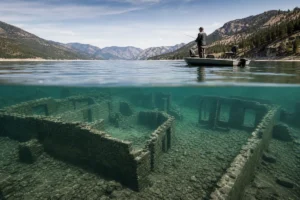
Even Montana’s natural landscape holds mysteries—the Montana underwater history of ancient seas and flooded canyons continues to reveal secrets.
Understanding Montana’s major earthquakes and Montana’s worst winters helps explain why the state’s residents are resilient and self-reliant. When you’re isolated from help, you learn to handle problems yourself.
How This History Shapes Modern Montana
When you visit Montana today, the legacy of these cases manifests in subtle ways. Rural sheriff’s departments maintain satellite offices in remote communities. Montana Highway Patrol troopers carry advanced forensic equipment in their vehicles. Amber Alert signs dot the highways.
The state has also invested heavily in victim services. When I visited Missoula, I noticed several organizations dedicated to violence prevention and survivor support. These didn’t exist 40 years ago.
Montana’s approach to corrections has evolved as well. The Montana State Prison in Deer Lodge, which I toured last spring, has implemented rehabilitation programs that weren’t available when many of these killers would have been incarcerated.
Practical Information for Travelers
If you’re traveling to Montana and this history is on your mind, here’s what I suggest:
General Safety
Montana is extraordinarily safe for tourists. Violent crime against visitors is rare. The criminals I’ve described in this article almost exclusively targeted local residents or transient individuals, not tourists.
That said, Montana’s isolation means help can be far away. Carry a paper map (cell service is spotty), tell someone your itinerary, and trust your instincts about people and situations.
Memorial Sites and Historical Markers
Several Montana communities have established memorials for crime victims, though these are often subtle. The Missoula County Courthouse has a victims’ memorial garden that I found peaceful during my visit.
Lincoln has largely declined to create any Kaczynski-related markers, and I respect that choice. The town’s identity shouldn’t be reduced to who lived there.
True Crime Research
If you’re specifically interested in true crime research, the Montana Historical Society Research Center in Helena is your best resource. Staff there can direct you to court records, newspaper archives, and other primary sources.
The Mansfield Library at the University of Montana in Missoula also has extensive newspaper archives from across the state.
Final Thoughts: Why This History Matters
I’ve traveled across Montana for years, writing about everything from Montana’s culinary heritage to key historical events. Understanding the darker chapters doesn’t diminish my love for this state—it deepens it.
Every community I’ve described in this article has overcome tremendous trauma and chosen to define itself by more than its worst moments. Lincoln has its stunning mountain scenery. Missoula has its university and arts scene. Great Falls has its river trails and art museums.
The victims of these crimes deserve to be remembered, and the communities deserve recognition for their resilience. When you visit Montana, you’re seeing places that have weathered darkness and emerged stronger.
Even Montana’s name comes from the Spanish word for “mountainous,” and those mountains have witnessed everything from the glory of gold strikes to the horror of serial violence. The landscape endures, as do the people who call it home.
If you’re wondering why Montana attracts both those seeking beauty and those seeking to hide, the answer is the same: isolation, vast spaces, and a frontier independence that operates outside normal rules. That independence creates breathtaking freedom and occasionally enables terrible abuse of that freedom.
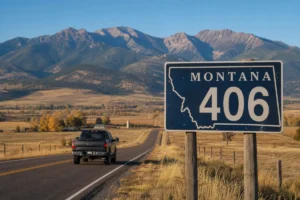
Understanding both sides makes you a better traveler. It helps you appreciate what communities have overcome and why they guard their peace so fiercely. It might even help you understand why that Montana 406 area code is such a point of pride—this is a state where people look out for each other because no one else will.
Travel safely, respect the communities you visit, and remember that every beautiful Montana town you drive through has a history deeper than its scenery. That history includes darkness, but it also includes the light that overcame it.
Frequently Asked Questions
Are there any serial killer museums or dark tourism sites in Montana I can visit?
Montana doesn’t have dedicated serial killer museums, but you can visit locations connected to infamous cases like the Old Montana Prison in Deer Lodge, which housed several notorious criminals. The prison offers guided tours for around $10-15 and provides fascinating insight into Montana’s criminal history. I’d recommend calling ahead to check tour availability, especially during off-season months.
Where did the Unabomber Ted Kaczynski live in Montana and can you visit the location?
Ted Kaczynski lived in a remote cabin near Lincoln, Montana, about 60 miles northwest of Helena on Highway 200. The original cabin was removed and is now displayed at the Newseum archives, but true crime enthusiasts still visit the Lincoln area to see where he evaded capture for nearly 18 years. The small town has a few local businesses where longtime residents occasionally share stories about the case.
What is the best time of year to take a Montana true crime history tour?
Late spring through early fall (May to September) offers the best conditions for exploring Montana’s dark history sites, with accessible roads and longer daylight hours. Summer months can be crowded at popular stops like the Old Montana Prison, so I’d suggest visiting in September when crowds thin out but weather remains pleasant. Winter travel can be treacherous on rural Montana roads where many crime sites are located.
How much does it cost to visit historical crime sites and prisons in Montana?
Budget around $50-100 per day for Montana dark tourism, including museum admissions ($8-18), gas for rural driving, and meals. The Old Montana Prison Complex charges $18 for adults, while many roadside historical markers and crime scene locations are free to visit. Lodging in towns like Deer Lodge or Helena runs $80-150 per night depending on the season.
What should I bring when visiting remote Montana locations connected to serial killer cases?
Pack a full tank of gas, physical maps or downloaded offline GPS since cell service is unreliable in rural Montana, and emergency supplies including water, snacks, and a first-aid kit. I always bring bear spray when exploring remote areas, even for brief stops, plus layers for rapidly changing mountain weather. A portable phone charger is essential since you may drive 100+ miles between towns with services.
Were there any serial killers active along Montana’s major highways and travel routes?
Montana’s isolated highways have unfortunately been hunting grounds for killers, including Wayne Nance who terrorized the Missoula area in the 1970s-80s and remains linked to unsolved cases along I-90. The Highway of Tears phenomenon extends into Montana’s border regions, making it important for solo travelers to stay vigilant and share itineraries. Historical markers don’t commemorate these dark chapters, but local libraries in Missoula and Great Falls have archived newspaper coverage.
Can I combine Montana serial killer history sites with other tourist attractions nearby?
Absolutely—the Old Montana Prison in Deer Lodge is just 40 miles from Butte’s historic mining district and 80 miles from Missoula’s vibrant downtown. Lincoln, connected to the Unabomber case, sits along the scenic Blackfoot River made famous by A River Runs Through It, offering excellent fly fishing. I’d plan a 3-4 day road trip loop covering Helena, Deer Lodge, and Missoula to blend dark history with Montana’s stunning natural attractions.
Sources
- https://www.justice.gov/usao-id/pr/convicted-child-murderer-joseph-edward-duncan-iii-dies-death-row
- https://library.sdsu.edu/scua/new-notable/panzram
- https://sites.psu.edu/harringpassion/2018/09/13/edmund-kemper/
- https://commons.wikimedia.org/wiki/File:David_Meirhofer_arrest.jpg
- https://commons.wikimedia.org/wiki/File:Carl_Panzram_Washington_DC_Mugshot.jpg
- https://commons.wikimedia.org/wiki/File:Edmund_Kemper_(mug_shot_-1973).jpg
- https://commons.wikimedia.org/wiki/File:The_face_of_zodiac_killer_from_the_Paul_Stine_murder
- https://commons.wikimedia.org/wiki/File:FBI-160-EdwardWayneEdwards.jpg
- https://commons.wikimedia.org/wiki/File:Theodore_Kaczynski