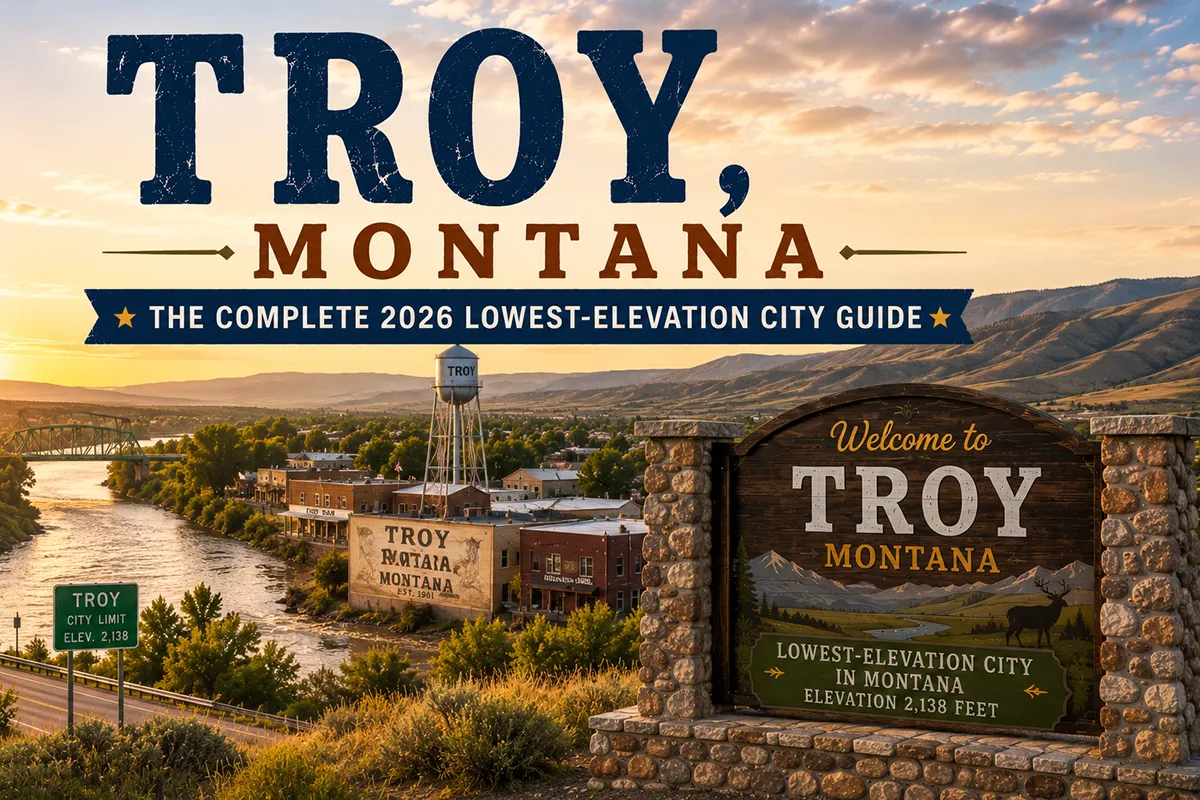
Troy sits at 1,892 feet — the lowest elevation of any incorporated city in Montana. That single fact shapes everything about the town: the climate, the vegetation, the way winter actually behaves here. Cedars grow that don’t grow elsewhere in the state.
The Kootenai River runs through a deep forested valley right at the town’s edge, and unlike most Montana rivers, it holds steelhead — Pacific Northwest fish that should not, by all logic, be in Montana. Almost nobody outside of northwest Montana knows any of this.
TL;DR
- Troy (~880) is in far northwest Montana on the Kootenai River, 20 miles west of Libby and 5 miles from the Idaho border.
- At 1,892 feet, Troy is the lowest-elevation incorporated city in Montana — giving it a notably milder climate than most of the state.
- The Kootenai River here holds steelhead (rare for Montana), bull trout, and rainbow trout — and Kootenai Falls is 7 miles east toward Libby.
- Access to the Yaak Valley north — one of Montana’s most biologically diverse and least-disturbed wilderness areas.
- Best for: anglers (especially steelhead), travelers wanting Pacific Northwest character in Montana, Yaak Valley adventurers, and Idaho Panhandle road trippers.
Liked this article?
Add Roaming Montana as a preferred source so you see more of our articles and guides on Google.
Troy at a Glance
| Population (2020) | ~880 |
|---|---|
| County | Lincoln County |
| Region | Far Northwest Montana |
| Elevation | 1,892 ft (lowest incorporated city in Montana) |
| Distance to Libby | ~20 miles east (~25 min) |
| Distance to Idaho border | ~5 miles west |
| Distance to Sandpoint, ID | ~80 miles southwest (~1.25 hours) |
| Best for | Steelhead fishing, mild-climate Montana, Yaak Valley access, Idaho Panhandle adjacency |
What Makes Troy Different
Troy’s low elevation creates a microclimate genuinely unlike any other in Montana. Winters are noticeably milder — average winter lows in the 20s°F rather than the single digits or below zero typical elsewhere — and the precipitation is significantly higher and more rain than snow at valley elevation.
Western red cedars grow here, the same species you’d find in the Pacific Northwest’s coastal forests; some of the cedars in the Kootenai National Forest near Troy are several hundred years old.
The Kootenai River here is a major Pacific drainage — water flowing past Troy ends up in the Columbia River and eventually the Pacific Ocean, unlike most of Montana’s east-flowing rivers.
This Pacific connection brings rare fish: steelhead (sea-run rainbow trout) have been documented in the Kootenai, and bull trout (a Pacific Northwest native, threatened in much of its range) thrives here. The fishing is genuinely different from anywhere else in Montana.
The town itself is small and quiet, with a working-class character shaped by logging, the railroad, and outdoor recreation. The proximity to Idaho and the Pacific Northwest is palpable — many residents commute or travel regularly to Sandpoint, ID and beyond.
For broader trip context, see my Montana cities and towns hub.
The Top 10 Things to Do In & Around Troy
1. Kootenai River Fishing (Steelhead, Bull Trout, Rainbow)
The Kootenai near Troy is one of Montana’s most distinctive fisheries — bull trout (Pacific Northwest native, catch-and-release only), rainbow trout, and occasional steelhead make it unique in the state. The tailwater section below Libby Dam is the most productive; multiple public access sites between Libby and Troy on US-2.
2. Kootenai Falls (7 miles east toward Libby)
The most powerful waterfall in Montana — accessible from US-2 between Libby and Troy. A 15-minute walk leads to dramatic viewing platforms and the swinging bridge over the gorge. Sacred to the Kootenai people; filming location for “The River Wild.” See Libby guide.
3. Lake Creek Falls
A series of waterfalls on Lake Creek north of Troy — accessible via Forest Service roads into the Yaak Valley area. Multiple falls along the creek; the main fall is dramatic and accessible via short hikes. Less famous than Kootenai Falls but worth the trip.
4. Yaak Valley Drive
Drive north from Troy on MT-508 into the Yaak Valley — one of Montana’s most remote inhabited valleys, with temperate rainforest pockets and significant wolverine, grizzly, and wolf habitat. Writer Rick Bass has lived and written about the Yaak for decades. The Dirty Shame Saloon at the Yaak River Lodge is a legendary remote Montana bar.
5. Ancient Cedars (Ross Creek)
About 30 miles southwest of Troy in the Kootenai National Forest — a grove of ancient western red cedars, some over 175 feet tall and 8 feet in diameter, dating back over 500 years. A short interpretive trail loops through the grove. One of Montana’s most distinctive forest experiences.
6. Bull Lake & Bull Lake Trail
A large, beautiful lake about 25 miles south of Troy with camping, fishing, and access to the Cabinet Mountains Wilderness. Bull Lake Trail accesses the wilderness from the lake area.
7. Cabinet Mountains Wilderness (south of Troy)
The Cabinet Mountains Wilderness — 94,000+ acres of rugged peaks, alpine lakes, and grizzly bear habitat — is south of Troy via Forest Service roads. Genuine wilderness; serious preparation required. See Libby guide for full Cabinet Mountains context.
8. Idaho Day Trip — Sandpoint, ID (1.25 hours)
Sandpoint on Lake Pend Oreille is one of the Inland Northwest’s most appealing towns — about 1.25 hours west of Troy. Schweitzer Mountain ski resort, lake recreation, and a vibrant downtown.
9. Historic Troy Walking Tour
Troy’s small downtown has classic Northwest railroad-town character — local businesses, a few historic buildings, the railroad still active through town. A 30-minute walk gives the flavor.
10. Spotted Bear / Northwest Peak Scenic Area
The Northwest Peak Scenic Area is in the extreme northwest corner of Montana, north of Troy via the Yaak Valley — one of the most genuinely remote and least-visited Forest Service areas in the state.
Where to Stay
| Hotel | Vibe | Price | Best For |
|---|---|---|---|
| Holiday Motel (Troy) | Basic, clean | $80–130 | Most travelers |
| Bull Lake Resort (25 miles south) | Lakeside cabins | $130–250 | Couples, anglers |
| Yaak River Lodge (Yaak Valley) | Remote wilderness lodge | $100–200 | Wilderness experience |
| Libby hotels (25 min east) | More variety | $90–160 | Travelers wanting more |
| Forest Service campgrounds | Multiple options | $10–25 | Campers |
Where to Eat
- Silver Spur — local bar and grill, reliable
- Sportsman’s — community gathering spot
- Dirty Shame Saloon (Yaak, 1+ hour north) — legendary remote Montana bar; call ahead for food
- Libby dining (25 min east) — more options
Getting There
From Libby: 20 miles east on US-2, about 25 minutes.
From Sandpoint, ID: 80 miles east on US-2, about 1.25 hours.
From Spokane, WA: ~135 miles east, about 2 hours.
From Kalispell: 110 miles west via US-2 through Libby, about 2 hours.
When to Visit
Spring–Summer (April–September): Best fishing season (especially for bull trout late summer/early fall), warmest weather, full Forest Service access.
Fall (September–November): Excellent for steelhead season, fall colors in the cedars and larch, hunting season.
Winter (December–March): Troy’s mild climate makes it more accessible than higher-elevation Montana towns. More rain than snow at valley level.
Year-round for ancient cedars at Ross Creek — the trail is accessible most months.
Personal Tips
Bull trout fishing is special. They’re catch-and-release only and require careful handling, but the Kootenai near Troy is one of the best bull trout fisheries accessible to the public in the lower 48.
Visit the Ross Creek Cedars. They’re unlike anything else in Montana — a temperate rainforest grove in a state typically associated with dry mountains and prairie. Worth the 30-mile drive from Troy.
Yaak Valley deserves a deliberate day. Don’t rush the drive in. Stop at the Yaak River, have a beer at the Dirty Shame, absorb a piece of Montana that’s disappearing everywhere else.
Combine with Eureka. Troy and Eureka together (via Libby) cover the full far-northwest-Montana corner. Both have distinctive character; the combined trip is rewarding.
Sandpoint, ID is the urban escape. When Troy feels too small, Sandpoint (1.25 hours west) provides full city amenities, lake recreation, and a vibrant downtown without leaving the Pacific Northwest character of the region.
Troy Quick Facts
| Founded | 1892 (railroad town) |
|---|---|
| Elevation | 1,892 ft (lowest incorporated city in Montana) |
| Major industries | Logging, recreation, railroad |
| Kootenai River | Pacific drainage; bull trout, steelhead, rainbow |
| Ross Creek Cedars | Some 500+ years old, 175+ ft tall |
| Average summer high | 82°F |
| Average winter low | 22°F (mild for Montana) |
Conclusion
Troy is the corner of Montana that most feels like the Pacific Northwest — low elevation, mild climate, cedars and rainforest, steelhead in the river, and a quiet town in a deep forested valley. For travelers willing to drive to the far northwest corner of the state, it offers a Montana experience genuinely available nowhere else.
Have a Troy question? Drop it in the comments — I read every one.
Frequently Asked Questions
Is Troy Montana worth visiting?
Yes for travelers interested in distinctive northwest Montana character — the Kootenai River fishing (including rare bull trout and occasional steelhead), the ancient cedars at Ross Creek, the Yaak Valley access, and Troy’s status as Montana’s lowest-elevation incorporated city with notably milder weather than most of the state. It’s a real off-the-beaten-path destination with genuinely unique features.
What is the lowest-elevation city in Montana?
Troy, Montana, at 1,892 feet, is the lowest-elevation incorporated city in Montana. This relatively low elevation gives Troy a notably milder climate than most of Montana, with warmer winters and a Pacific Northwest character including western red cedar forests.
Can you catch steelhead in Montana?
Yes — though rare. The Kootenai River near Troy is the primary location where steelhead (sea-run rainbow trout) are documented in Montana. The Kootenai is a Pacific drainage flowing toward the Columbia River system. Bull trout (a threatened Pacific Northwest native) also thrives in the Kootenai near Troy. Both fish require careful handling and special regulations apply — check current Montana FWP regulations.
What are the Ross Creek Cedars near Troy?
The Ross Creek Cedars are a grove of ancient western red cedars in the Kootenai National Forest about 30 miles southwest of Troy. Some trees are over 175 feet tall and 8 feet in diameter, dating back 500+ years. A short interpretive trail loops through the grove. The site preserves one of Montana’s only temperate-rainforest-style old-growth cedar groves and is genuinely unique in the state.
How far is Troy from Idaho?
Troy is approximately 5 miles east of the Idaho border. Sandpoint, ID — a major Idaho Panhandle town on Lake Pend Oreille — is about 80 miles west via US-2, roughly a 1.25-hour drive.
Is the Yaak Valley near Troy?
Yes — the Yaak Valley begins about 12 miles north of Troy via MT-508. The Yaak is one of Montana’s most remote inhabited valleys, with temperate rainforest pockets, significant grizzly bear and wolverine habitat, and a small community centered around the Yaak River Lodge and Dirty Shame Saloon. Writer Rick Bass has lived in the Yaak for decades.