For a while in 1908, this town’s own sign couldn’t make up its mind. One morning it read Hobson. The next morning, Philbrook. The argument went on long enough that the railroad company finally had to settle it themselves.
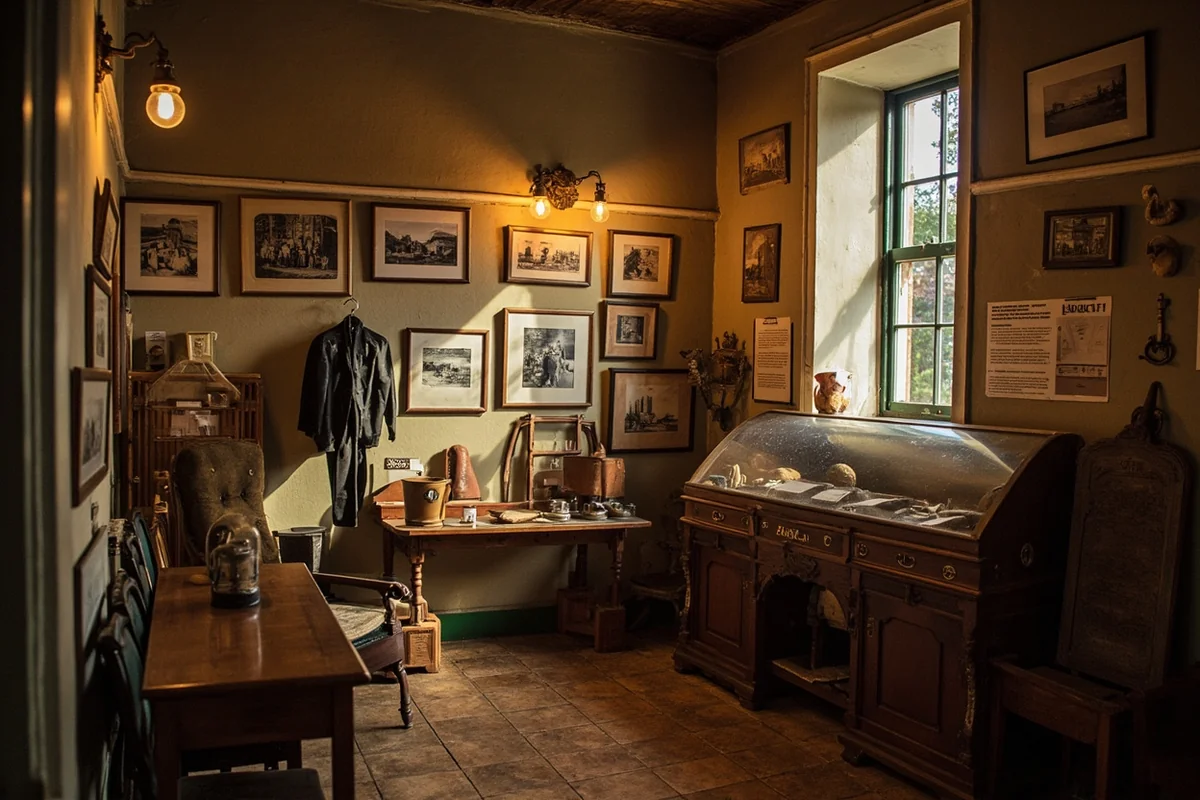
- Hobson Museum occupies a 1909 building that spent nearly 40 years as a drugstore and more than 50 years as an American Legion hall before becoming a museum in 2008
- The town itself was born from a genuine naming dispute between two competing settlements, resolved only when the railroad picked a side
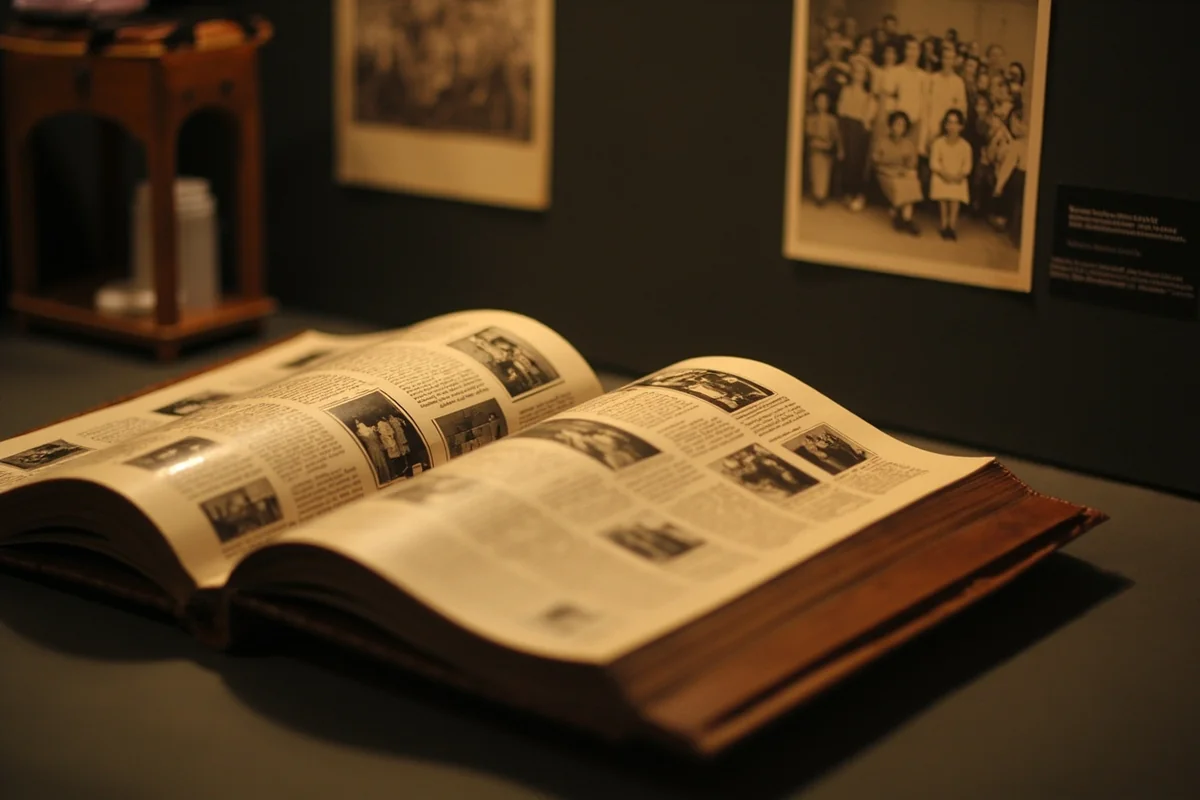
- The collection includes a nearly complete run of Hobson High School yearbooks, including the very first one published in 1914
- The museum operates seasonally with off-season visits available by appointment
- This is one of the best museums in Montana telling the story of an entire cluster of small Judith Basin communities, not just one town
Liked this article?
Add Roaming Montana as a preferred source so you see more of our articles and guides on Google.
Two Towns, One Name, and a Railroad That Had the Final Say
Before Hobson existed as the town you’d find on a map today, there was Philbrook — a genuinely thriving little settlement built around a completely different location.
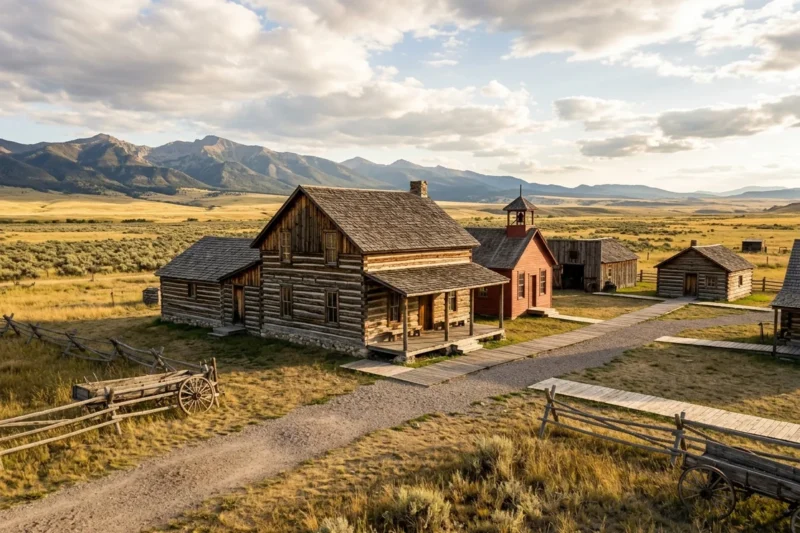
In 1881, E.J. Morrison bought a house and saloon at a freight-wagon crossing of the Judith River, established a post office, and named the new community Philbrook after his wife’s maiden name. The town grew steadily, eventually adding two hotels, two stores, a saloon, and two blacksmith shops — a genuinely functional little frontier settlement.
Everything changed in 1908, when the Great Northern Railway’s Billings and Northern branch line bypassed Philbrook entirely, establishing a new townsite four miles west instead.
Local rancher and legislator S.S. Hobson, along with three partners, purchased the new site from the railroad and formed the Philbrook Townsite Company.
But residents genuinely couldn’t agree on what to call the new town. As the dispute dragged on, the signboard itself became the battleground: one morning it read Hobson, the next morning Philbrook, back and forth as opposing factions kept changing it.
The railroad company eventually stepped in and settled the matter permanently, choosing Hobson.
A Building With Three Complete Lives
The museum’s own building has a genuinely layered history that mirrors the town’s own evolution across more than a century.
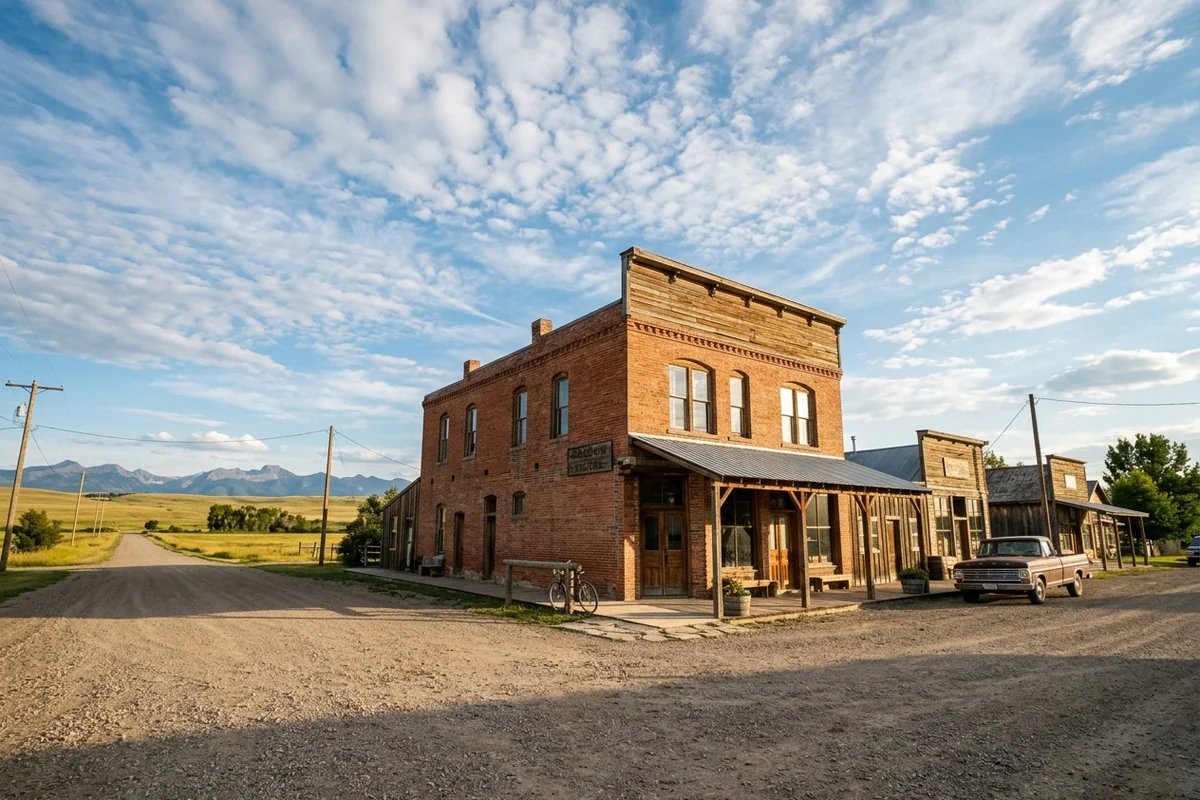
Built in 1909, the structure originally housed the Cook and Dunn Drugstore, which operated there for nearly 40 years through the early 1940s.
After World War II, with veterans returning home in large numbers, American Legion Post 76 and its Auxiliary purchased and remodeled the building, using it as their meeting hall for more than 50 years.
By 2006, dwindling membership and growing concerns about properly maintaining a historic structure led the American Legion to sell the building to Dale and Kathy Longfellow, owners of Hobson Insurance.
Recognizing the building’s genuine significance, the Longfellows donated it to the Friends of the Hobson Library/Museum in 2007 — setting up the building’s third and current act.
Moved Two Blocks, One Building at a Time
Getting the building to its current location wasn’t a simple matter of changing ownership on paper. The entire 61-by-25-foot structure had to be physically relocated roughly a block and a half south, onto property owned by the Friends of the Hobson Library.
That move, completed by the end of June 2007, required genuine site preparation and an entirely new foundation before the actual building could be moved into place. A $50,000 Montana State Tourism TIPP grant helped fund the renovations needed to modernize the century-old structure once it arrived.
The timing worked out perfectly: the museum opened in July 2008, becoming the literal centerpiece of Hobson’s Centennial Celebration and an all-class high school reunion held that same summer.
A Nearly Complete Run of Yearbooks, Starting With the First One Ever Printed
Among the museum’s photographs and displays documenting the area’s cattle and farming industries, one specific archival treasure stands out for anyone interested in genuinely rare primary sources.
The collection includes a nearly complete series of Hobson High School annuals, including an original copy of the very first yearbook ever published, produced by the school’s first graduating class in 1914.
That’s a genuinely remarkable survival rate for a small rural school’s earliest publications, and it gives researchers and curious visitors alike a direct window into exactly who graduated from this tiny Judith Basin school more than a century ago.
A Museum for an Entire Cluster of Small Towns
What genuinely sets this museum apart from a single-town historical society is the sheer geographic reach of what it documents. Rather than focusing exclusively on Hobson itself, the collection captures life across an entire constellation of small Judith Basin communities at the turn of the 20th century: Hobson, Moccasin, Kolin, Buffalo, Straw, Utica, and Benchland.
Several of these towns barely register on a modern map, some reduced to little more than a scattered building or two along the old Great Northern rail corridor.
This museum functions as one of the few remaining places where their combined history gets preserved and presented together, rather than scattered across individual family collections or lost entirely as the towns themselves faded.
Outdoor Recreation Right Alongside the History
Judith Basin County’s appeal extends well beyond its museums, and Hobson sits close enough to several genuinely worthwhile outdoor stops to make a full day of your visit.
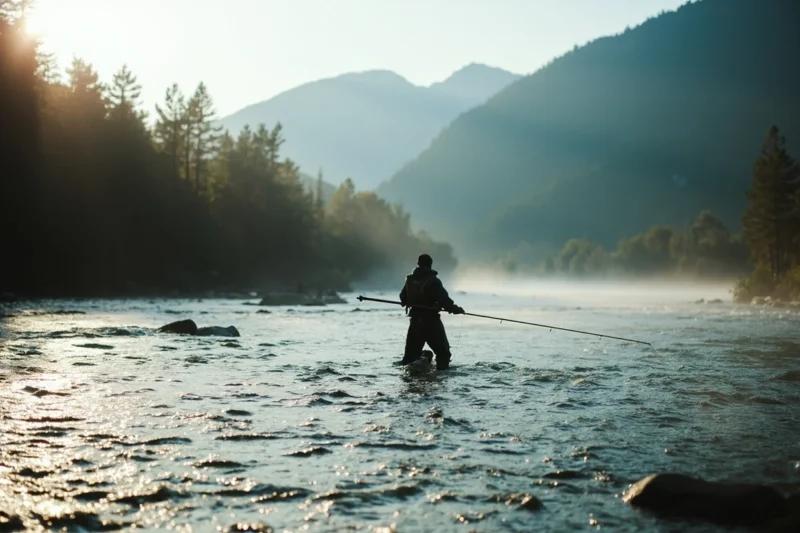
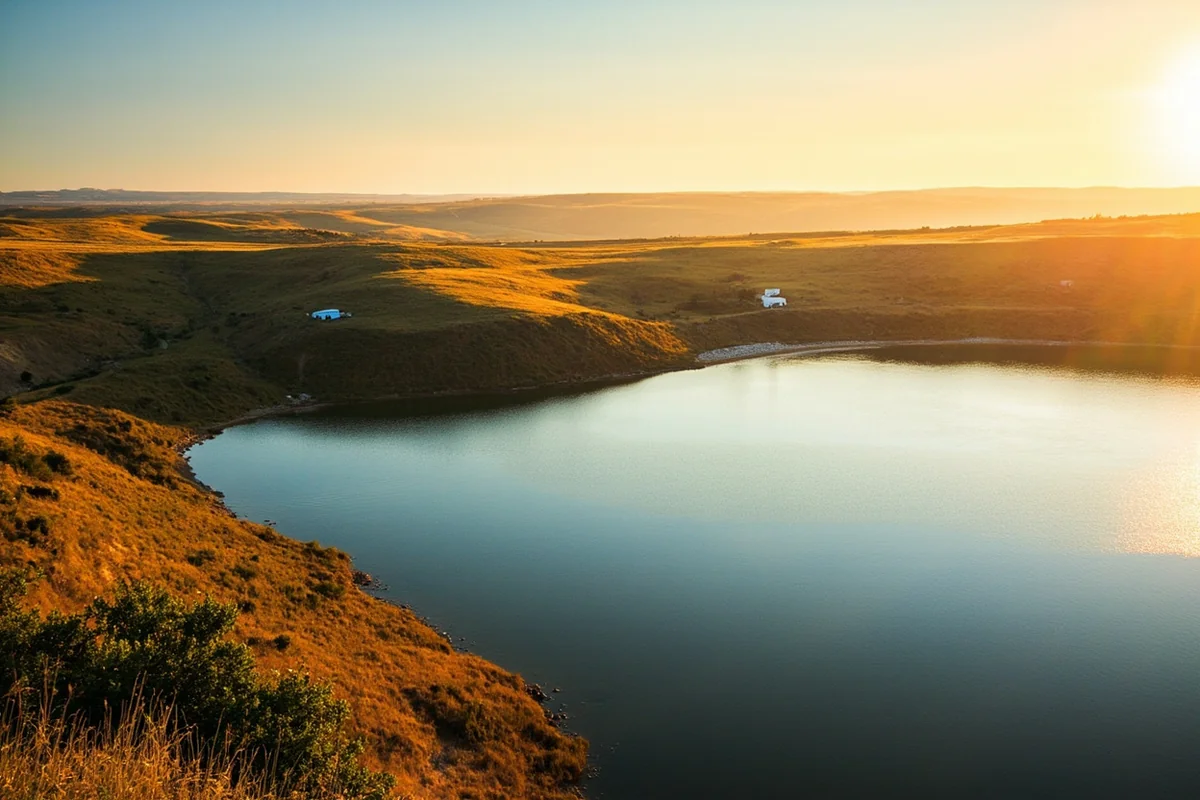
Ackley Lake, named for an early settler and frontiersman, sits near Hobson at an elevation of 4,336 feet, covering 160 acres and offering diverse water sports opportunities.
The lake is stocked with rainbow trout and reportedly offers good fishing for 10-to-15-inch fish, with 23 campsites available featuring vault toilets, picnic tables, grills, a group use area, and drinking water during the summer season.
Further afield, the Judith River Wildlife Management Area, sitting at the edge of the Little Belt Mountains, is a genuinely good spot to view large elk herds during late fall and winter.
The Lewis and Clark National Forest surrounds much of this region too, offering additional hiking and camping options if you want to extend your Judith Basin visit beyond a single day of museum-hopping.
Visiting With Kids
This is a genuinely compact museum, and while it doesn’t offer the same hands-on, room-by-room immersion as some of the larger regional museums, the specific story of the town’s naming dispute tends to genuinely delight kids once a volunteer or staff member tells it well.
There’s something inherently funny and relatable about grown adults arguing over a sign, and that human, slightly absurd detail sticks with younger visitors better than most abstract historical facts.
If you’re traveling with kids who have any connection to the area — say, relatives who attended Hobson schools generations back — the yearbook collection can turn into a genuinely engaging scavenger hunt, flipping through decades of class photos looking for a familiar family name.
Given the museum’s modest size, I’d pair a visit here with time at Ackley Lake afterward, letting kids balance a shorter indoor history stop with genuine outdoor time at the lake or campground.
Frequently Asked Questions
Is the town actually still torn over its name today?
No — the Hobson name has been settled and used exclusively for well over a century now. The naming dispute is purely a historical footnote at this point, not an ongoing local controversy.
Is this the same as the Judith Basin County Museum in Stanford?
No — they’re separate institutions in separate towns, though both cover overlapping regional history from slightly different angles. Visiting both gives you a fuller picture of Judith Basin County as a whole.
Can we do genealogy research using the yearbook collection?
The collection is a genuine resource for anyone researching family history connected to Hobson High School specifically. Contact the museum ahead of your visit to confirm current research access procedures.
Is the museum accessible for visitors with mobility limitations?
[verify current accessibility accommodations directly with the museum before visiting]
What’s the best time of year to visit?
Given the museum’s seasonal operating schedule, a summer visit gives you the most reliable access. Off-season, an appointment call ahead is essential rather than optional.
- The Hobson-versus-Philbrook naming feud almost never gets told, even though it’s a genuinely entertaining, specific piece of Montana town-founding history.
- The building’s three distinct institutional lives — drugstore, Legion hall, museum — rarely get connected into a single narrative, losing the genuinely satisfying arc of how it ended up preserved at all.
- The 1914 yearbook’s significance gets treated as a minor detail, when it’s exactly the kind of rare primary-source artifact researchers specifically seek out.
- The museum’s regional scope across seven different communities rarely gets emphasized, reducing it to a single-town collection when it’s actually a much broader Judith Basin resource.
Personal Tips: What I Wish I Knew
- Call ahead before you make the drive. This museum operates seasonally, and off-season access requires an appointment rather than assuming walk-in availability.
- Pair this with Judith Basin County Museum in Stanford. The two are consistently recommended together, and both cover overlapping but distinct pieces of the same regional history.
- Ask about the yearbook collection specifically if genealogy or local family history interests you. It’s a genuinely valuable research resource that isn’t always obvious from a casual walk-through.
- Budget a shorter visit than some of the larger regional museums. This is a focused, single-building collection rather than a sprawling multi-structure complex.
- Consider a detour to Utica if you’re already in the area. The tiny cowboy town made famous by Charlie Russell’s art has its own well-regarded museum and the popular Oxen Yoke Inn.
How This Fits a Central Montana Road Trip
Hobson sits along US Highway 87/Montana 200 at the eastern edge of Judith Basin County, making it an easy stop if you’re already exploring this stretch of Central Montana.
If you’re building a Judith Basin-focused itinerary, pairing this museum with our Judith Basin County Museum guide in nearby Stanford gives you two complementary angles on the same regional history — both museums are consistently recommended together by locals, and neither takes more than an hour to see properly.
Our Central Montana Museum guide in Lewistown rounds out a broader regional loop if you have extra time, and if Charlie Russell’s connection to this landscape interests you, both museums touch on his years working across the Judith Basin before he became one of America’s most celebrated Western artists.
Ackley Lake State Park, just outside Hobson, offers a pleasant outdoor stop if you want to break up a museum-heavy day with some fishing or a picnic. Our Montana museums guide maps how this stop connects to the rest of the state’s cultural landscape.
Practical Info
| Address | 212 Central Ave, Hobson, MT |
| Phone | 406-423-5453 (library/museum) |
| Hours | Seasonal; closed off-season, available by appointment [verify current seasonal hours] |
| Admission | [verify current pricing, likely free or by donation] |
| Time needed | 45 minutes–1 hour |
| Good for | History enthusiasts, genealogy researchers, families exploring Judith Basin County |
| Nearby pairing | Judith Basin County Museum (Stanford), Ackley Lake State Park |
Final Thoughts
Hobson Museum tells a genuinely specific, almost comic piece of Montana town-founding history — a literal sign war between two rival settlement names — inside a building that’s already lived three completely different institutional lives.
The 1914 yearbook alone makes this worth a stop for anyone interested in just how much small-town Montana history survives when a community decides it’s worth saving.
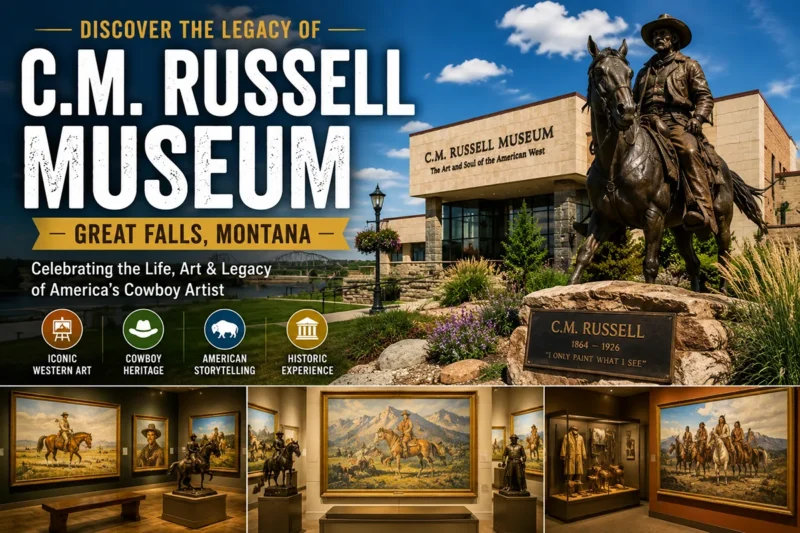
If you’re chasing the same Charlie Russell connection that runs through nearby Stanford, our C.M. Russell Museum guide in Great Falls covers his full body of work in much greater depth.
Pin this for your Central Montana trip planning, and call ahead to confirm current hours before you make the drive. If you’ve traced a family connection through the museum’s yearbook collection, I’d love to hear what you found in the comments.