A soldier’s mother baked him donuts before he left for the Civil War. He came home with one left in the bottom of his bag. That donut is still on display today, in a museum built on the site of a real 1876 Army fort — and it’s just one of thousands of stories packed into 13 buildings on the edge of Miles City.
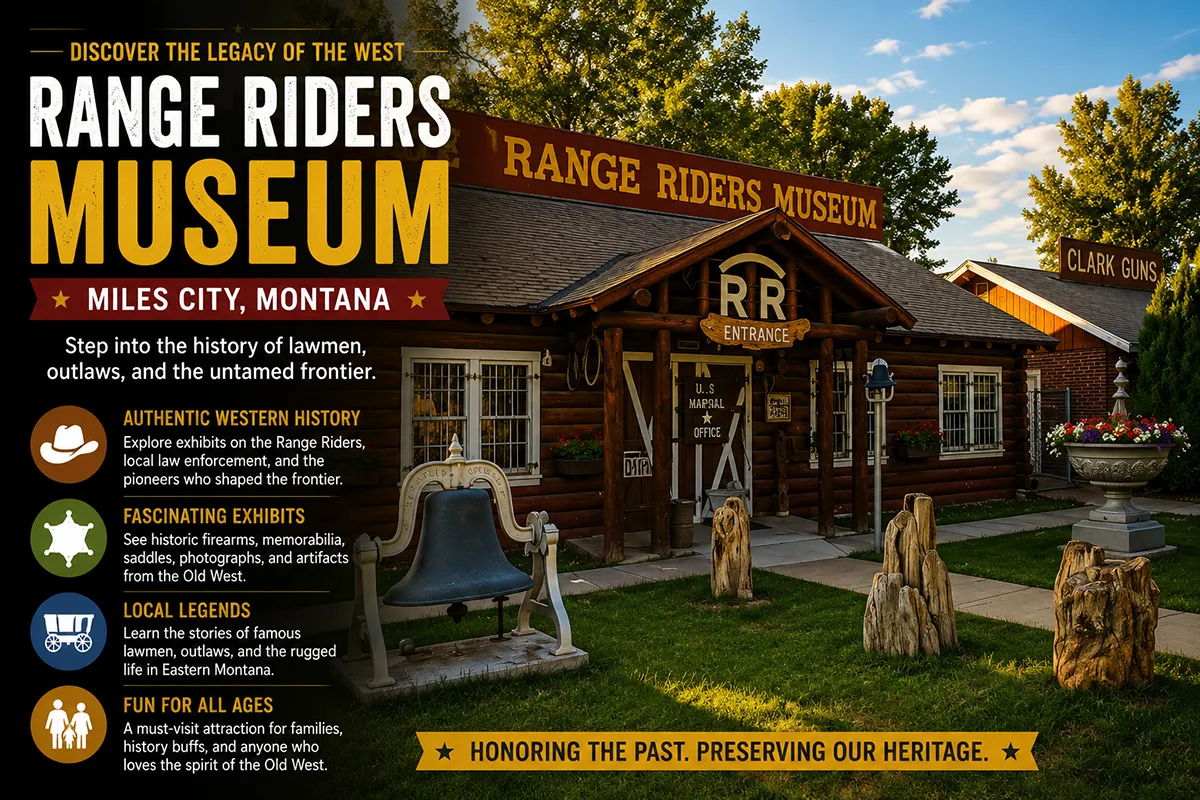
Range Riders Museum sits on the site of Fort Keogh, the 1876 cantonment General Nelson Miles built in the aftermath of the Battle of Little Bighorn. Founded in 1939 by actual working cowboys and range riders, it’s grown into 13 buildings and 38,000+ square feet covering everything from dinosaur fossils to 20th-century ranch life. This guide is one of the best museums in Montana for anyone who wants Old West history that wasn’t sanitized for a gift shop. Here’s what’s actually inside, and how to budget your visit.
Liked this article?
Add Roaming Montana as a preferred source so you see more of our articles and guides on Google.
Built By the People Who Lived the History
Most Western heritage museums get assembled by historians and curators after the fact. This one didn’t.
The Range Riders Organization was founded in 1939 by a group of actual cowboys and range riders from southeastern Montana. These weren’t reenactors or hobbyists. They were the generation that had personally worked the open range, and they wanted their stories preserved before they were gone.
That timing mattered enormously. By 1939, the men who’d actually driven cattle across open, unfenced range in the 1880s were reaching the end of their lives. The founders understood they were racing against time to get firsthand accounts and personal artifacts collected before that entire generation disappeared.
The museum opened to the public in August 1942. It’s stayed privately financed ever since, which explains why it feels more like a community’s personal collection than a polished institutional exhibit. Every piece has a name and a family attached to it.
A Fort Built After Custer’s Defeat
The museum’s location isn’t incidental. It sits directly on the site of Fort Keogh, the 1876 cantonment General Nelson A. Miles built to secure the region in the immediate aftermath of the Battle of Little Bighorn.
If you’ve already visited Little Bighorn Battlefield, this is a genuinely meaningful next stop. You’re standing at the direct military response to that battle, not just another unrelated frontier fort.
Miles City itself is named after General Miles, and Custer County takes its name from the officer who lost at Little Bighorn just a few months before this fort went up.
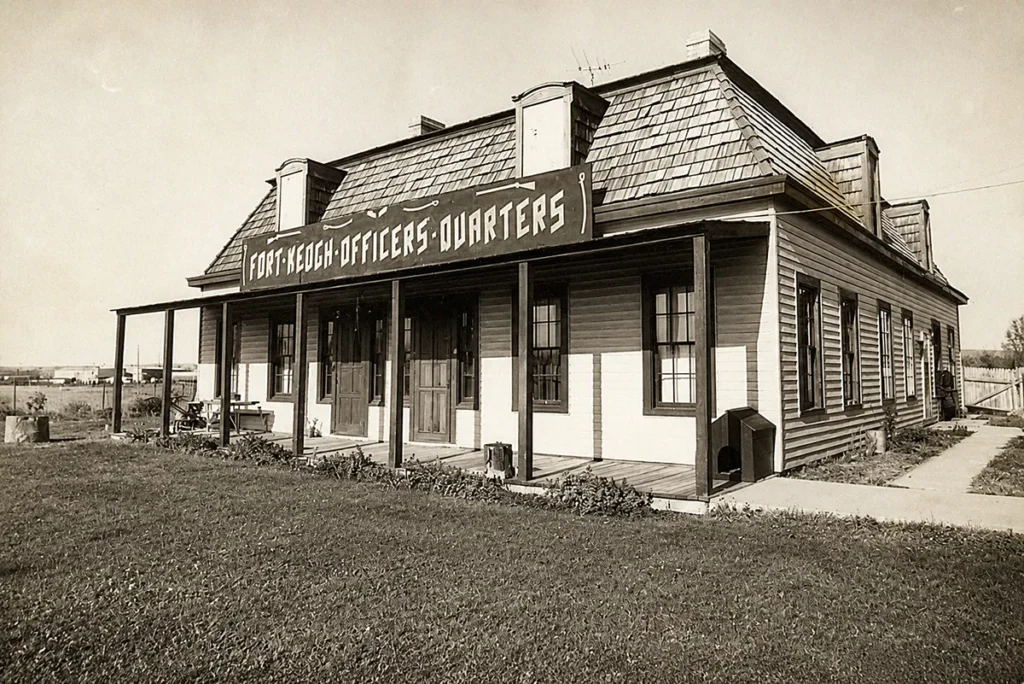
The Fort Keogh Officers’ Quarters still stands on the museum grounds today, donated and filled with period artifacts.
<!– wp:image –> <!– IMAGE PLACEHOLDER Position: Hero image, top of post before TL;DR Alt text: “Historic Fort Keogh Officers Quarters building at Range Riders Museum in Miles City, Montana” Caption: “Range Riders Museum sits directly on the site of Fort Keogh, built by General Nelson Miles in 1876.” AI Generation Prompt: “Realistic travel photography, historic wooden military officers quarters building on open prairie land, Montana big sky in the background, warm afternoon light, wide-angle composition, no visible people, editorial documentary photography style” –> <!– /wp:image –>
Thirteen Buildings, Each With Its Own Character
This isn’t one museum hall. It’s a small campus of 13 separate buildings spread across 13 acres, and each one has its own personality.
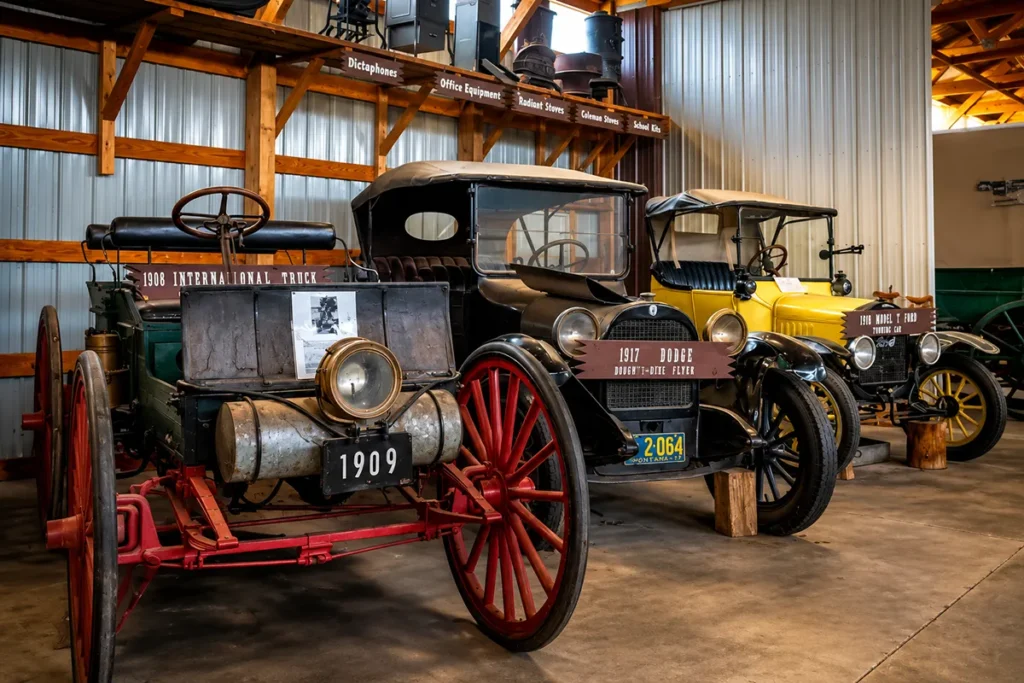
The Wagon Depot is the largest building on the property. It holds an extensive collection of antique vehicles alongside everything from early office equipment to farm tools.
The Homestead House is an actual pioneer home, moved here from its original site. It’s still furnished with a wood-burning stove, a chamber pail under the bed, and a wooden cradle — the real, everyday texture of frontier domestic life rather than a staged recreation.
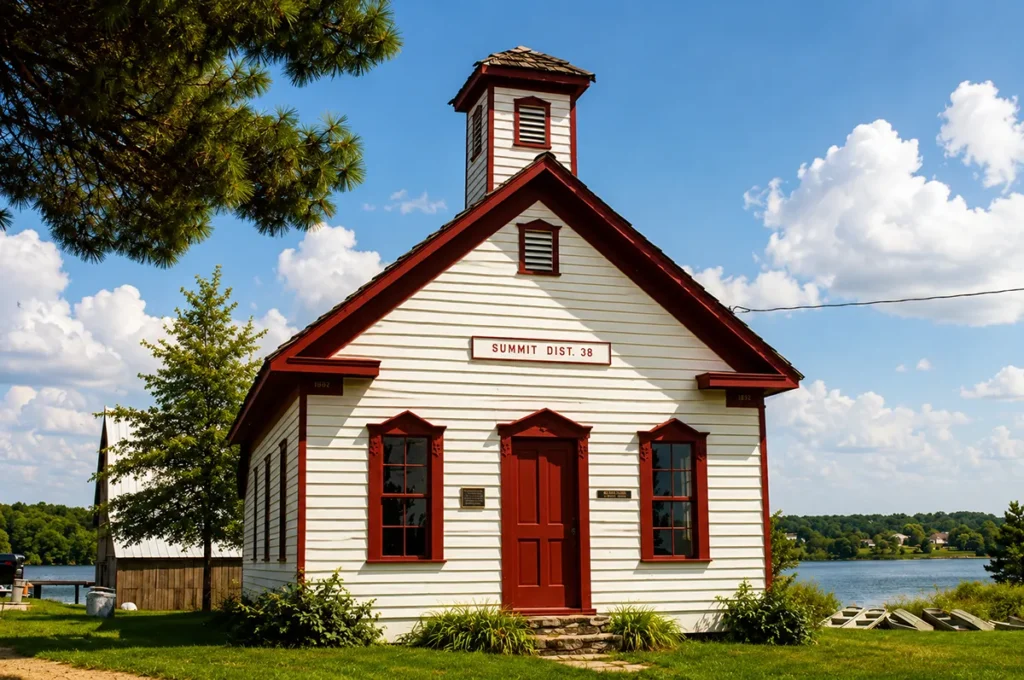
A one-room schoolhouse and a coach house round out the historic structures. The Heritage Center houses a recreated frontier town called Old Main Street Milestown, with eleven different shop storefronts representing early Miles City commerce.
The Photography Collection Is the Real Standout
If I had to pick one reason to visit, it’s the photography.
The museum holds work from four early frontier photographers: Huffman, Morrison, Jody Cameron, and Barthelmess. L.A. Huffman in particular is considered one of the most important documentarians of Montana’s open-range cattle era — his images are the closest thing we have to real photographic evidence of what that world actually looked like, not a painted or written recollection of it.
One visitor mentioned being personally guided by a docent who turned out to be Huffman’s great-granddaughter, sharing family stories that don’t exist anywhere in print. That’s the kind of thing that happens at a museum still connected to the actual families involved.
Native American artifacts from the Sioux, Cheyenne, and Crow tribes are displayed throughout, alongside a dedicated Charles Russell Gallery. If you’ve been to the C.M. Russell Museum in Great Falls, this is a smaller but worthwhile second look at Russell’s work in a different regional context.
The Small Details That Make This Museum Memorable
A few specific items are worth watching for, because they’re the kind of detail that turns a museum visit into a story you actually tell people afterward.
The Civil War donut is the obvious one — preserved since 1864, kept by a soldier who never ate his mother’s last care-package pastry, and eventually donated to the museum by his family.
The Jelinek Wedding display pairs a couple’s original wedding outfits with their retirement photos decades later. Charley’s Place holds photographs of 400 nurses who trained at Holy Rosary Nursing School between 1910 and 1960. There’s even a display of locally discovered mammoth bones, tying the region’s fossil record into the same 13-acre complex as its ranching history.
Why Miles City Became Cattle Country
Understanding a bit of the broader history helps explain why this specific town ended up with a museum this substantial.
Texas longhorns first reached Montana around 1866, driven north along early cattle trails. The open range around Miles City had exactly what herds needed: the Yellowstone River for water and enormous stretches of unfenced grassland.
Small ranches sprang up quickly. By the 1880s, the region had entered a short-lived but intense era of cattle barons — large-scale operators who ran thousands of head across open range before homesteading and barbed wire began closing that world down within a generation.
That compressed, dramatic arc — open range boom to homestead-era enclosure in roughly one generation — is exactly what the Range Riders founders lived through firsthand in 1939. It’s part of why they felt such urgency to preserve it while they still could.
Memorial Hall and the Ranching Tool Collection
Memorial Hall holds a rotating set of plaques honoring local figures, unveiled each spring in a small annual ceremony. It’s a quiet tradition, but it says something about how this museum still functions as a living community institution rather than a static historical archive.
Scattered through several of the 13 buildings are dedicated tool exhibits. You’ll find ranching tools, barber tools, medical and dental equipment, and wagon-wright tools, each grouped by trade rather than mixed together.
These aren’t generic period-piece displays. Signage consistently identifies which ranch family donated each item, and often tells you exactly how it was used. That level of specific attribution is rare even at much larger museums.
Visiting With Kids
This museum tends to work well for families, mostly because of its scattered, building-to-building layout. Kids get to move physically between spaces rather than sitting through one long continuous gallery.
The mammoth bones and the Wagon Depot’s antique vehicles are usually the biggest hits with younger visitors. The Civil War donut is a strange enough detail that it tends to stick with kids longer than almost anything else in the museum.
Give yourself real time here if you’re traveling with children. Between 13 buildings and genuinely engaging stories in each one, this isn’t a 45-minute stop.
Quick Questions I Get Asked
Is this the same as a typical small-town historical society museum?
Not really. Most county historical societies operate out of a single building. This one has grown into a 13-building campus, which puts it closer in scale to a regional heritage park than a standard county museum.
Is the museum wheelchair accessible?
The main exhibit areas are generally accessible, though a few of the historic outbuildings have the uneven flooring typical of century-old structures. Call ahead if accessibility is a specific concern for your group.
How does this compare to Western Heritage Center in Billings?
They cover overlapping ground, but Range Riders leans harder into hands-on, artifact-dense exhibits built directly from local ranching families, while Western Heritage Center in Billings has a more traditional gallery-style presentation. Both are worth visiting if you’re building a Southeast Montana heritage itinerary.
Is there anywhere to eat nearby?
Downtown Miles City has several local dining options within a short drive, including stops near the historic Montana Bar.
Can we visit both Range Riders Museum and the Bucking Horse Sale in the same trip?
Yes, if your timing lines up. The Bucking Horse Sale runs each May and draws heavily on the same ranching and rodeo culture the museum documents historically — seeing both gives you a genuinely fuller picture of the region than either alone.
Most Montana travel content mentions this museum in a single sentence, if at all. A few specific things get missed:
- The Fort Keogh connection to Little Bighorn rarely gets explained. Most guides don’t mention that this site was the direct military response to Custer’s defeat just months earlier.
- The photography collection gets underplayed. Huffman’s images are historically significant beyond just this museum, and that context is almost never included.
- The seasonal closure catches people off guard. This museum is only open mid-April through mid-October, and generic listicles rarely flag that clearly.
- The sheer scale gets undersold. Calling this “a museum” undersells 13 buildings and 38,000 square feet of exhibit space.
Personal Tips: What I Wish I Knew
- Budget more time than you think. More than one visitor has told me they arrived an hour before closing expecting a quick look and ended up wishing they had the whole day.
- Ask about the docents. Several are descended from the families whose artifacts are on display, and their stories aren’t written down anywhere else.
- Check the season before you drive out. This is strictly an April 15–October 15 operation, with appointment-only access outside that window.
- Don’t skip the Wagon Depot. It’s easy to spend all your time in the Heritage Center and miss the largest building on the property.
- Pair this with a Little Bighorn Battlefield visit if your route allows it — the historical throughline between the two sites is genuinely worth experiencing back to back.
How This Fits a Southeastern Montana Trip
Miles City sits along I-94 in Montana’s southeastern corner, a region that gets far less tourist traffic than Glacier or Yellowstone. That’s part of its appeal.
Downtown Miles City itself is worth a slow walk before or after your museum visit. The historic Montana Bar, a short drive from the museum, is considered one of the best-preserved historic bars anywhere in Montana, and it’s a natural stop if you want a sense of the town beyond its museum campus.
Our Miles City guide and Miles City things-to-do guide cover the rest of what’s worth doing in town. If you’re building a broader loop through this part of the state, our Little Bighorn Battlefield guide and Montana museums guide both connect naturally to a Range Riders visit.
Miles City also hosts the Bucking Horse Sale each May, one of the region’s biggest annual events, drawing rodeo and ranching culture from across the Northern Plains. If your travel dates happen to overlap, combining that event with a Range Riders visit gives you both the historical and living version of the same cowboy culture in a single trip.
Practical Info
| Address | 435 W I-94 Business Loop, Miles City, MT |
| Season | Mid-April through mid-October; by appointment or special occasion outside that window |
| Typical hours | Daily, roughly 8 a.m.–5 p.m. during season [verify current hours] |
| Admission | [verify current pricing at rangeridersmuseum.com] |
| Time needed | 2–4 hours |
| Good for | History enthusiasts, families, Western heritage and photography fans |
| Nearby pairing | Little Bighorn Battlefield, rest of our Miles City guide |
Final Thoughts
Range Riders Museum works precisely because it wasn’t built by outsiders trying to preserve a culture from a distance. It was built by the people who lived it, on the actual ground where a consequential piece of that history happened.
That combination — genuine firsthand provenance, a historically significant location, and 13 buildings’ worth of room to actually spread the story out — makes this one of the more substantial small-town museums anywhere in Montana. Most visitors arrive expecting a modest local history stop and leave having spent most of a day here instead.
Pin this for your Southeastern Montana trip planning. If you’ve heard a docent’s family story here that stuck with you, I’d love to hear it in the comments.