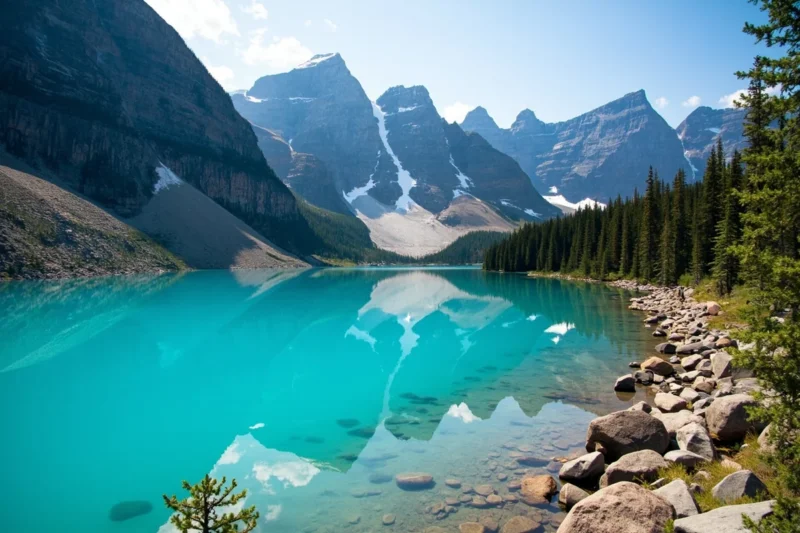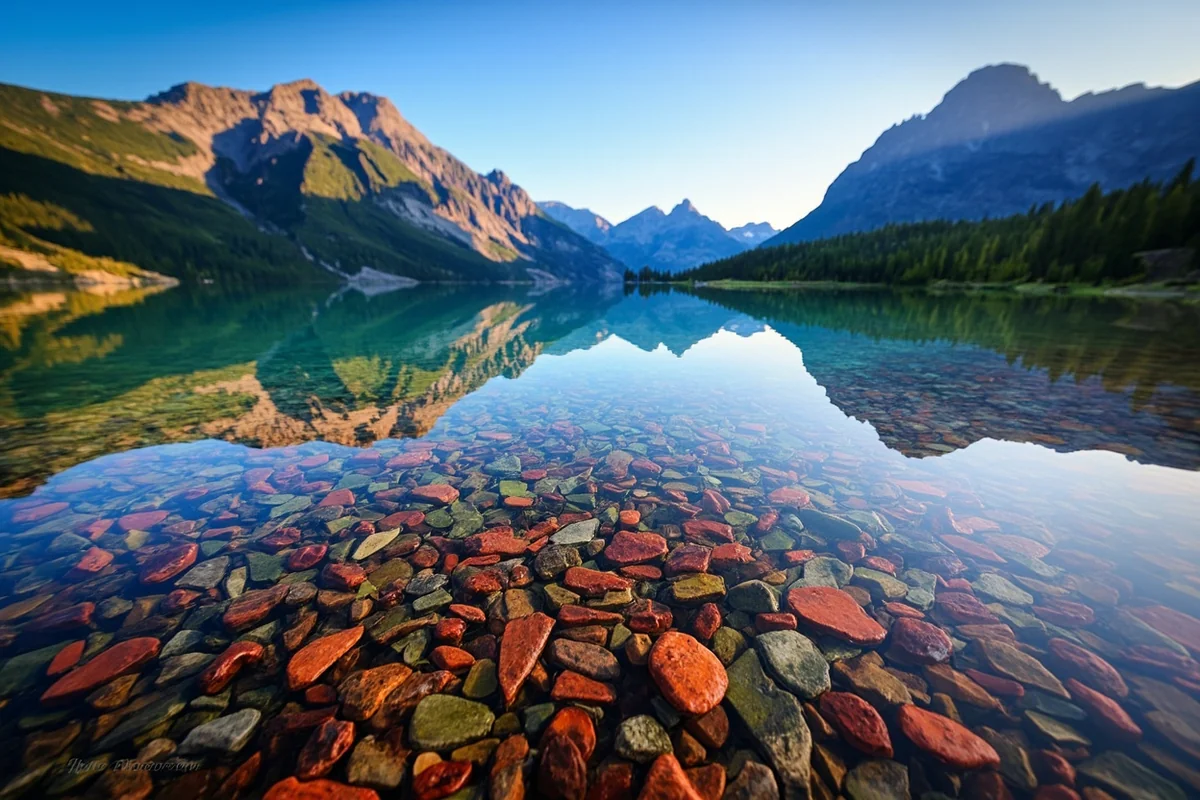
I’ve pulled off at the same overlook on Lake McDonald’s south shore probably fifteen times over the years, and I still stop the car every time. There’s a stretch of shoreline near Apgar where the rocks under the water look like someone spilled a box of watercolors, and I’ve never gotten tired of it.
Lake McDonald is Glacier National Park’s largest lake — ten miles long, nearly 500 feet deep, and the first major landmark most visitors see coming through the west entrance. This guide covers the geology behind its famous colored rocks, where to swim, hike, and camp around it, how Going-to-the-Sun Road interacts with the lake, and the seasonal details that change everything about a visit here.
Liked this article?
Add Roaming Montana as a preferred source so you see more of our articles and guides on Google.
Lake McDonald by the Numbers
- Length: approximately 9.7 miles (roughly 10 miles)
- Maximum depth: approximately 464 feet, making it the deepest lake in Glacier National Park
- Elevation: about 3,153 feet
- Formation: carved by glacial ice during the last Ice Age, in a classic U-shaped glacial trough
The lake sits in a basin gouged out by a glacier that was, at its peak, thousands of feet thick.
When it retreated, it left behind a fjord-like trough now filled by the lake, flanked by the Continental Divide’s peaks on most sides — which, as a side benefit, blocks a fair amount of incoming weather and gives this side of the park a noticeably milder, wetter microclimate than the drier east side around St. Mary.
Why the Rocks Look Like That
The multicolored stones visible through Lake McDonald’s water are one of the most-asked-about features of the lake, and the explanation is genuinely interesting.
The colors come from different mineral compositions in the argillite and limestone that make up much of the surrounding rock — red and green argillite bands formed from ancient sediment deposited over a billion years ago, when this region was part of a shallow inland sea.
Iron oxidation created the reds; less-oxidized, iron-poor layers stayed green and gray. The lake’s exceptional water clarity is what lets you actually see this geology instead of just reading about it.
I’d recommend viewing the rocks from the shoreline near Apgar Village or at the day-use pullouts along the lake’s south side — they’re easiest to appreciate on calm, sunny days when the surface isn’t broken up by wind.
Going-to-the-Sun Road and the Lake
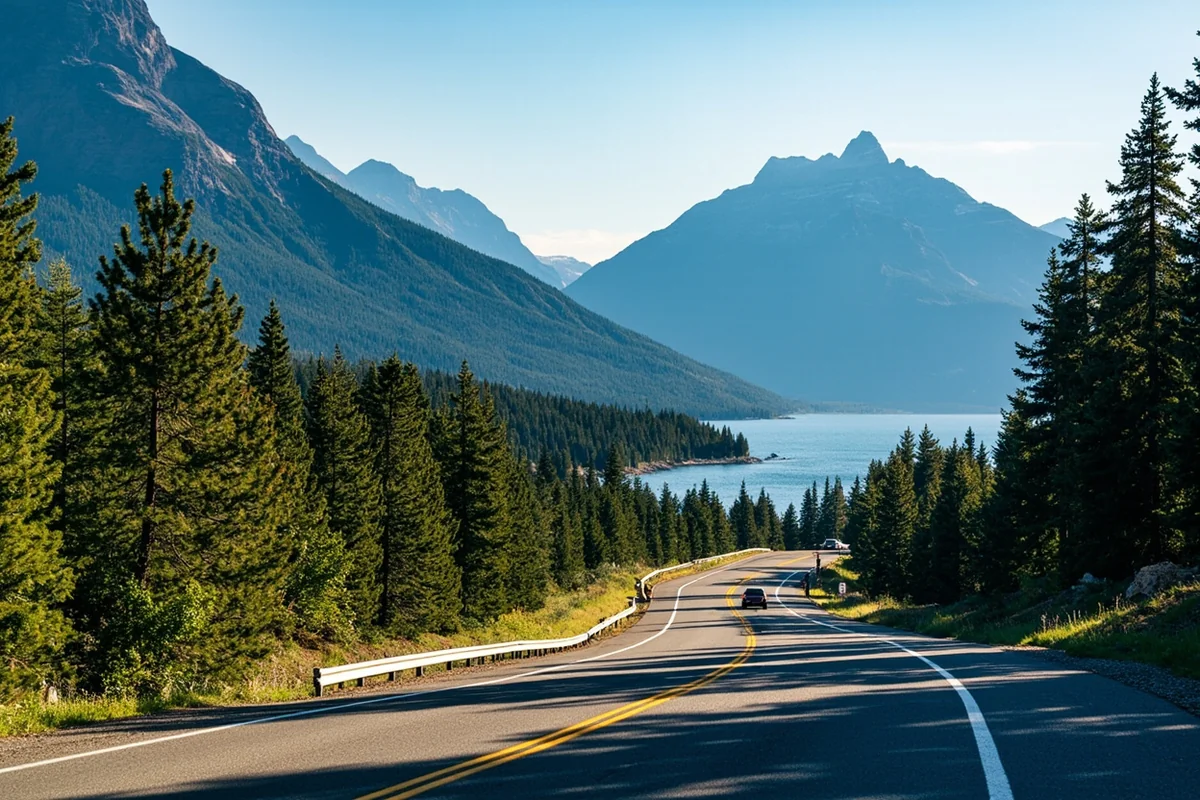
Going-to-the-Sun Road runs directly along Lake McDonald’s south shore for several miles before it starts its climb toward Logan Pass, which means for most visitors, the lake is the first big scenic payoff of the drive.
The road along this stretch is typically open earlier in the season than the high alpine section near Logan Pass, since it sits at much lower elevation.
If you’re visiting in late spring or early summer, expect the lake-side portion of the road to be accessible even when the pass itself is still snowed in — this trips up a fair number of visitors who assume the whole road opens on the same date.
Swimming at Lake McDonald
Swimming is allowed and reasonably popular here, especially around Apgar and the day-use areas near the lodge, but I’ll say the same thing I say about every glacially-influenced lake in this region: it’s cold, even in August.
I’ve gone in on a hot July afternoon and lasted about four minutes before my feet went numb. There are no lifeguards anywhere on the lake, so swim at your own comfort level and keep an eye on kids near the sloped, rocky shoreline.
Hiking Around Lake McDonald
The lake anchors several trailheads worth knowing:
- Trail of the Cedars — an easy, largely boardwalked loop through old-growth cedar and hemlock forest near Avalanche Creek, and the connector trail to Avalanche Lake.
- Avalanche Lake — a 4.6-mile round trip from the same trailhead, one of the earliest trails in the park to melt out each spring.
- Fish Lake Trail — a quieter, less-trafficked option starting near Lake McDonald Lodge.
- Sperry Trail — the long approach toward Sperry Glacier and Sperry Chalet, for visitors with a full day and serious mileage in mind.
I’d point first-time visitors toward Trail of the Cedars if they want an easy, family-friendly walk, and toward Avalanche Lake if they want a genuine payoff for a moderate half-day hike.
For a broader rundown of trail options across the whole park, see my Glacier National Park hiking guide.
Boating and Fishing
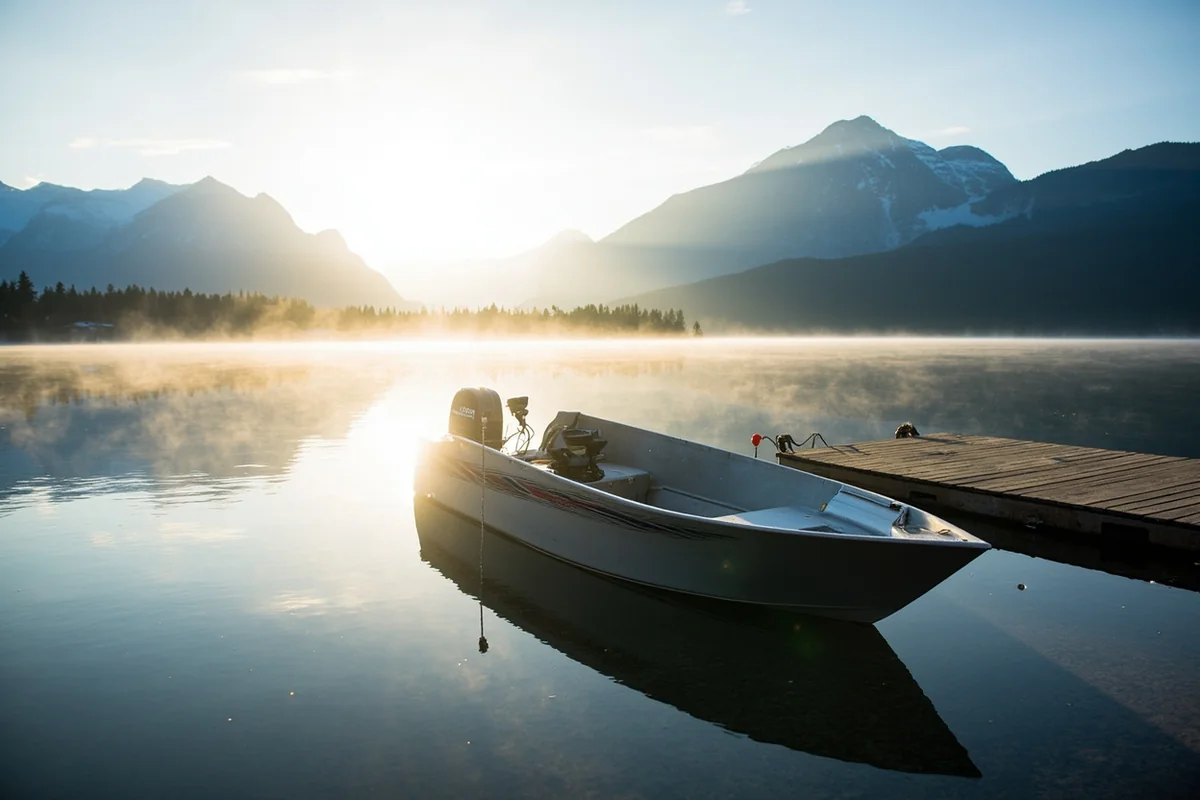
Non-motorized boats and small motorized boats are both permitted on Lake McDonald, and a boat ramp near Apgar handles most launches.
Fishing here is a mixed bag — the lake holds bull trout, lake trout, and westslope cutthroat, but bull trout are a protected species in the park and must be released immediately if caught, a rule I’ve seen more than a few visitors unaware of.
A Glacier National Park fishing permit (which is free but required) covers fishing here; no separate Montana state license is needed inside park boundaries.
Camping and Lodging Near the Lake
Apgar Campground, near the lake’s outlet on the west end, is the largest campground in the park and fills up fast in peak summer — I’ve watched it fill by mid-morning on July weekends.
Sprague Creek Campground, smaller and tents/small-RVs only, sits directly on the lakeshore partway up the south side and is one of my favorite spots in the park for that reason alone.
For lodging, the historic Lake McDonald Lodge, built in 1913-14 in a Swiss chalet style, sits on the lake’s north end and remains one of the most requested reservations in the park’s concession system — book as early as the reservation window opens if you want a stay here in peak season.
For more lodging options across the park, see my Glacier National Park lodging guide.
A Quiet Corner: Fish Creek and the North Shore
Most visitors never make it past Apgar and the lodge area, which means the lake’s upper north shore, accessible via the Fish Creek area and a handful of quieter pullouts, sees a fraction of the foot traffic.
I’ve found a short, unmarked scramble down to the water here more than once with nobody else around, even in the middle of July.
It’s not a maintained trail in the way Trail of the Cedars is, so I wouldn’t send anyone here without decent trail sense, but if solitude matters more to you than convenience, it’s worth exploring.
Wildlife Around the Lake
The forested shoreline and surrounding slopes support a healthy population of white-tailed and mule deer, and I’ve had multiple close encounters with black bears foraging near trailheads in the early morning, particularly in berry season during late summer.
Bighorn sheep and mountain goats are more common at higher elevations away from the lake itself, but osprey and bald eagles fish the lake regularly and are worth watching for from the shoreline.
Lake McDonald Through the Seasons
Spring (May–early June): The lake-side portion of Going-to-the-Sun Road usually opens well before the full road clears, since this stretch sits at much lower elevation than Logan Pass. I’ve visited in late May and found Apgar green and blooming while the mountains above still held heavy snow — a striking contrast, and one of the least crowded windows of the year.
Summer (late June–August): Peak season, peak crowds, and the only reliable window for swimming without a wetsuit. Parking at Apgar and the lodge fills early, and I plan around that reality rather than fighting it.
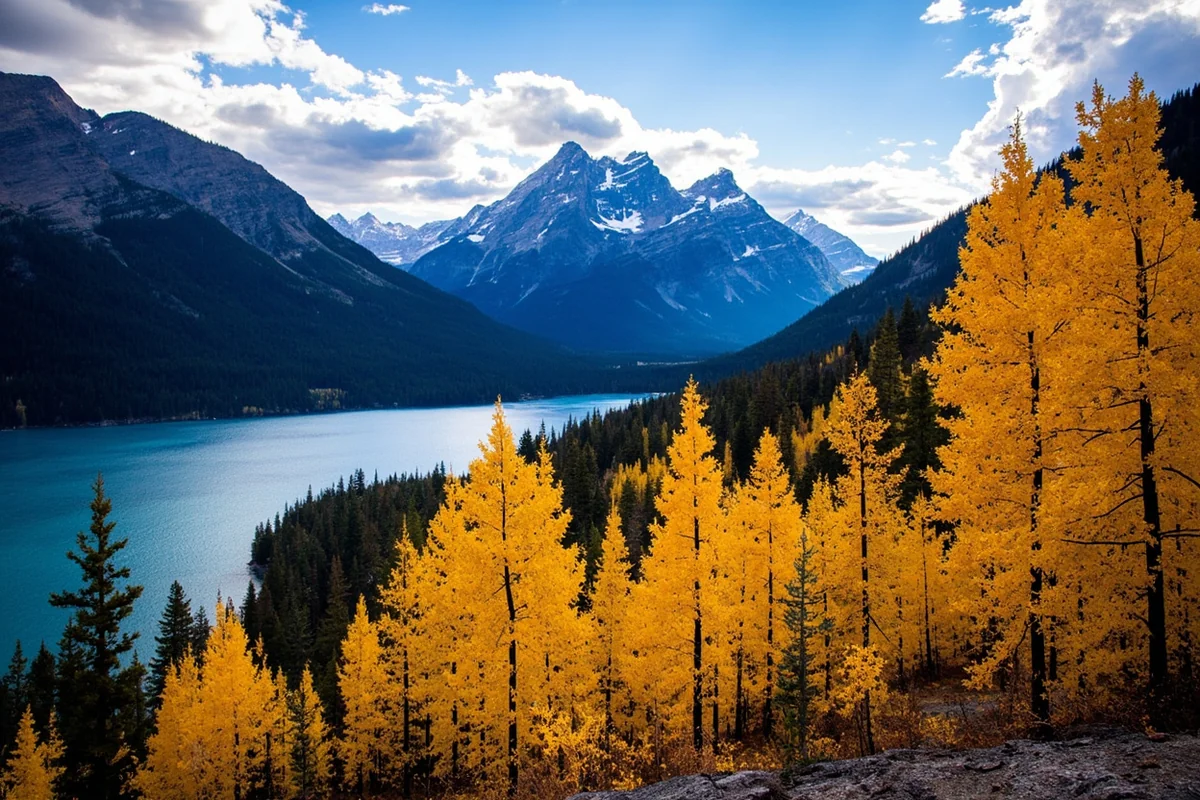
Fall (September–October): My personal favorite. Crowds thin dramatically after Labor Day, the larch trees on the surrounding slopes turn gold by late September, and I’ve had long stretches of shoreline entirely to myself on weekday mornings. Weather becomes less predictable, though, so I always pack layers.
Winter (November–April): Much of Going-to-the-Sun Road closes for the season, but the section along Lake McDonald’s south shore often stays accessible by car further into the year than the high alpine section. The lake itself takes on a stark, quiet beauty against the snow-covered surrounding peaks, and I’ve snowshoed sections of the lakeshore trail near Apgar on a still January morning with no one else in sight.
Best Photo Spots
If you only have time for a few stops, I’d prioritize the pullouts along the south shore road for wide lake-and-mountain shots, the shoreline near Apgar Village for the colored-rock close-ups, and the dock area near Lake McDonald Lodge for a classic framed view with the historic building in the foreground.
Early morning light, before the wind picks up and breaks up reflections, consistently gives the best results — I’ve had my best shots here between 6 and 8 a.m. in summer.
Personal Tips / What I Wish I Knew
Go early for parking. Apgar and the Lake McDonald Lodge area fill their lots by mid-morning in July and August. I now aim to be at the lake before 8 a.m. if I want an easy parking spot.
The north end is quieter than the south end. Most day-trip traffic clusters around Apgar; the lodge area and points further up the lake’s north shore see noticeably fewer people.
Fall light here is underrated. I came through in late September once and had the lakeshore at Apgar nearly to myself, with larch trees turning gold on the surrounding slopes.
Bring a permit application mindset for the lodge. If a night at Lake McDonald Lodge is a priority, treat it like booking a popular concert — reservations open roughly 13 months out and the best dates go quickly.
A Note on Crowds and Timing
Lake McDonald sits so close to the west entrance that it absorbs a disproportionate share of the park’s total visitor traffic — nearly everyone entering from West Glacier passes it within the first few minutes of the drive.
I’ve found the difference between an 8 a.m. visit and a noon visit on the same July day to be dramatic: parking lots that are wide open at sunrise are turning cars away by mid-morning.
If your schedule allows any flexibility at all, front-loading your Lake McDonald time into the early morning consistently pays off more here than at almost any other spot in the park.
Practical Info: Lake McDonald
| Best season to visit | Late May through September for full road and facility access |
| Water temperature (summer) | Cold year-round; rarely comfortable for long swims even in August |
| Entry | Glacier National Park entrance fee required [verify current fee]; vehicle reservation may be required for Going-to-the-Sun Road in peak season [verify current requirement] |
| Fishing permit | Free Glacier National Park fishing permit required; no state license needed inside the park |
| Camping | Apgar Campground (largest) and Sprague Creek Campground (lakeside, smaller) |
| Nearest airport | Glacier Park International Airport (FCA), about 30 minutes from the west entrance |
Frequently Asked Questions
How deep is Lake McDonald?
Lake McDonald reaches a maximum depth of approximately 464 feet, making it the deepest lake in Glacier National Park.
Why does Lake McDonald have colorful rocks?
The rocks are argillite and limestone with different mineral and iron content, creating red, green, and gray bands. The lake’s exceptional water clarity makes them visible from the surface.
Can you swim in Lake McDonald?
Yes, swimming is allowed with no lifeguards present. The water stays cold even in summer due to glacial and snowmelt inflow.
Is Lake McDonald bigger than St. Mary Lake?
Yes. Lake McDonald is the largest lake in the park at about 10 miles long, while St. Mary Lake is the second-largest.
Do you need a permit to fish Lake McDonald?
You need a free Glacier National Park fishing permit, but no separate Montana state fishing license is required within park boundaries.
How long is Lake McDonald?
Lake McDonald is approximately 9.7 miles long, making it the longest as well as the deepest lake in Glacier National Park.
Is Lake McDonald Lodge on the lake itself?
Yes, the historic Lake McDonald Lodge sits directly on the lake’s north end and has operated in some form since it was built in 1913–14.
Can you kayak on Lake McDonald?
Yes, non-motorized boats including kayaks and canoes are permitted, with the Apgar boat ramp serving as the main launch point.
Final Thoughts
Lake McDonald is the kind of place that rewards a slow visit — pulling off more than once, walking the shoreline instead of just driving past it, and coming back in a different season to see how much the light and the crowds change.
It’s the first big “wow” moment for most visitors entering Glacier from the west, and it still gets me every time.
For more of the park’s best lakes, see my guides to Avalanche Lake and St. Mary Lake, or check out the complete guide to Montana’s best lakes for what else belongs on your trip.