I’ve hiked to Grinnell Lake three times over the years, and each visit the glacier feeding it looked a little smaller than the one before.
That’s not nostalgia talking — it’s one of the fastest-retreating glaciers in the park, and standing at this lake is one of the more direct ways to actually see climate change happening in real time.
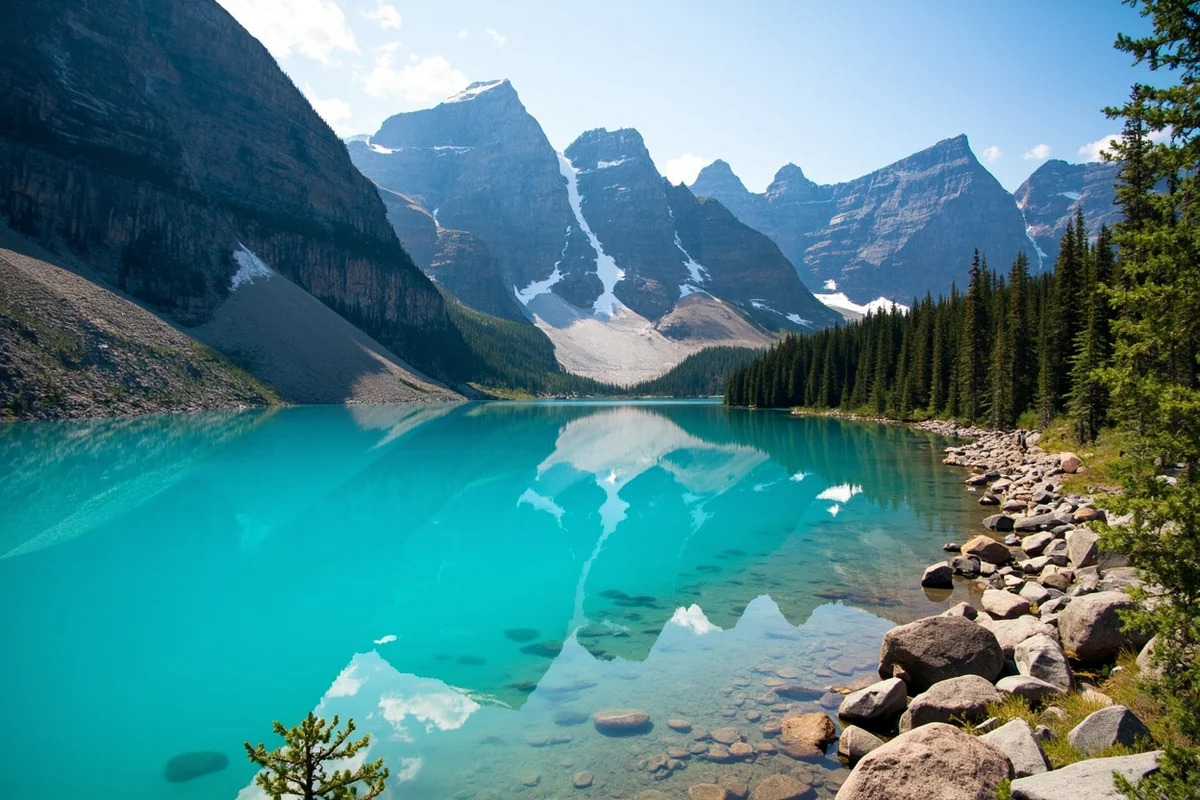
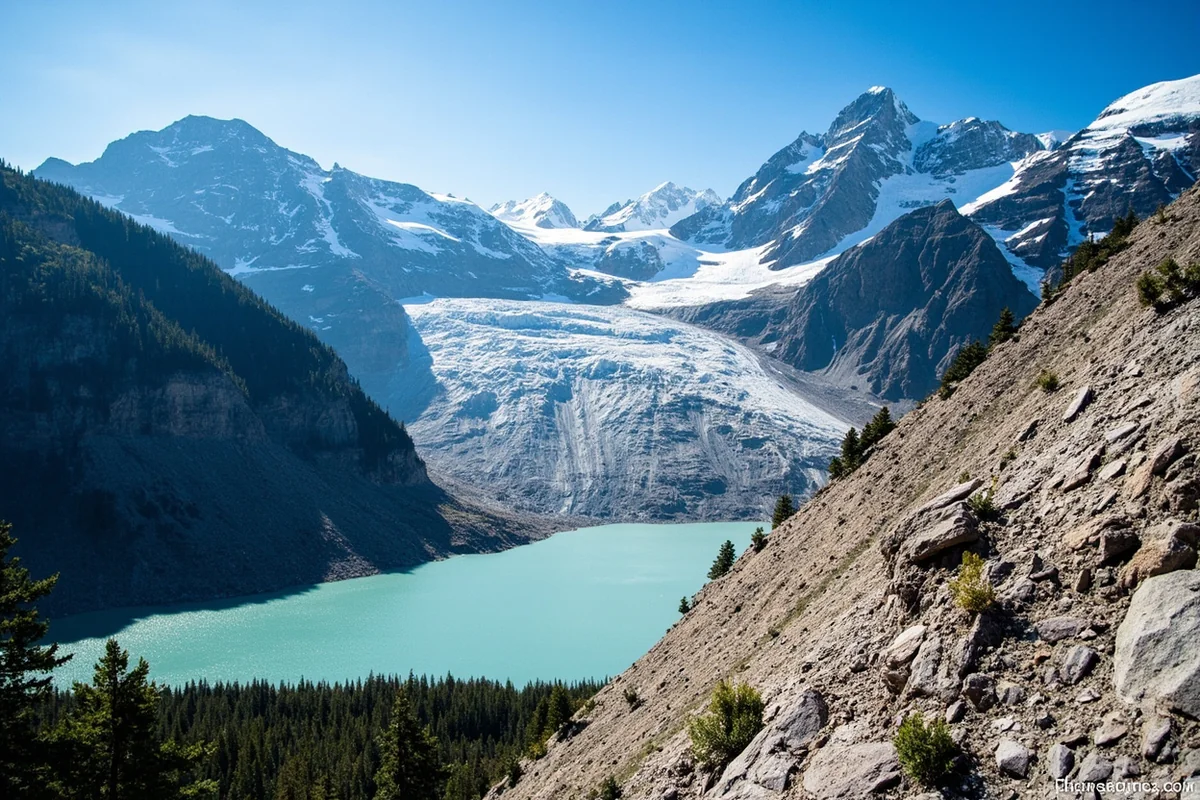
Grinnell Lake sits in the Many Glacier area on Glacier National Park’s east side, fed directly by the meltwater of Grinnell Glacier and famous for its opaque, almost unreal turquoise color. This guide covers the trail options (easy lakeside walk versus the strenuous full glacier hike), the boat shuttle that cuts serious mileage off the trip, what’s actually changing about the glacier itself, and the wildlife-heavy terrain you’re walking through to get there.
Liked this article?
Add Roaming Montana as a preferred source so you see more of our articles and guides on Google.
Why Grinnell Lake Looks the Way It Does
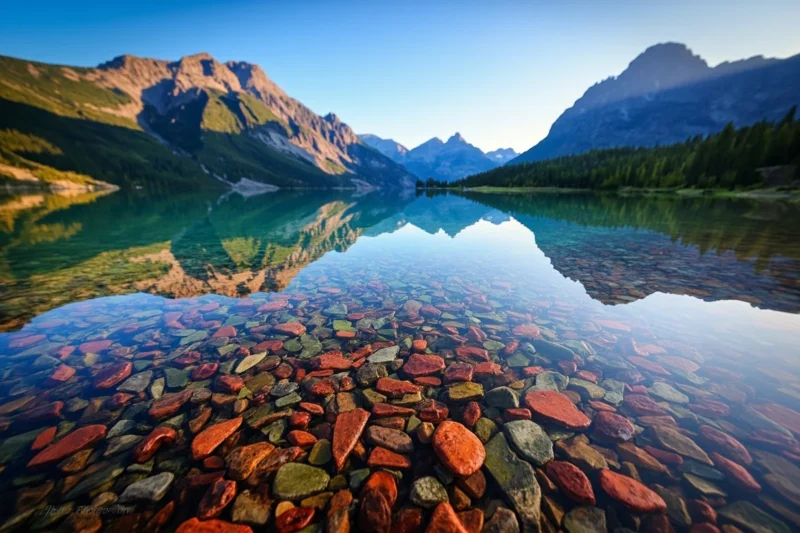
The color is the first thing everyone asks about, and it’s worth understanding rather than just photographing. Grinnell Lake’s water carries a fine, suspended sediment called rock flour — silt ground down by the movement of Grinnell Glacier and carried into the lake by meltwater streams.
That suspended sediment scatters light in a way that produces the lake’s signature opaque, almost impossibly saturated turquoise-blue, a color that shifts noticeably depending on the angle of the sun and how much meltwater is actively flowing on a given day.
The lake and its parent glacier are both named for George Bird Grinnell, an anthropologist and conservationist often called the “Father of Glacier National Park” for his advocacy in getting this landscape protected.
It’s a fitting namesake for what remains one of the most photographed features in the entire park.
The Glacier Behind the Lake Is Disappearing
I don’t say this to be alarmist, but it’s a genuinely important part of visiting Grinnell Lake honestly: Grinnell Glacier is one of the most closely studied, and most rapidly retreating, glaciers in the park.
Comparing historical photographs to the current ice extent shows a dramatic reduction over the past century, and researchers actively monitor it as an indicator of broader climate trends in the region.
If seeing the glacier itself, not just the lake it feeds, is part of your reason for making this trip, I’d encourage doing it sooner rather than assuming it’ll look the same in a decade.
Getting to Grinnell Lake: Your Trail Options
This is one of the more flexible hikes in the park, since it can be approached at very different difficulty levels depending on your time and fitness:
Grinnell Lake Trail (easy option): A 7.1-mile round trip with an easy grade and only about 350 feet of elevation gain, making it accessible for families and less experienced hikers. This trail stays close to the valley floor rather than climbing toward the glacier itself.
Grinnell Glacier Trail (full hike): A considerably more demanding 7.6-mile round trip with roughly 1,840 feet of elevation gain if hiked entirely on foot from the Many Glacier trailhead, climbing all the way to the glacier’s edge.
Grinnell Glacier Trail via boat shuttle: The smart option for many visitors. Two boat shuttles — across Swiftcurrent Lake and then Lake Josephine — cut about 3.4 miles off the round trip, turning a genuinely strenuous hike into a considerably easier one while still delivering the same spectacular views at the top.
I’ve done this trail both ways — full hike on one visit, boat shuttle on another — and I’d recommend the boat shuttle to nearly everyone unless you’re specifically looking for the extra mileage and elevation as part of your day.
The Boat Tour Experience
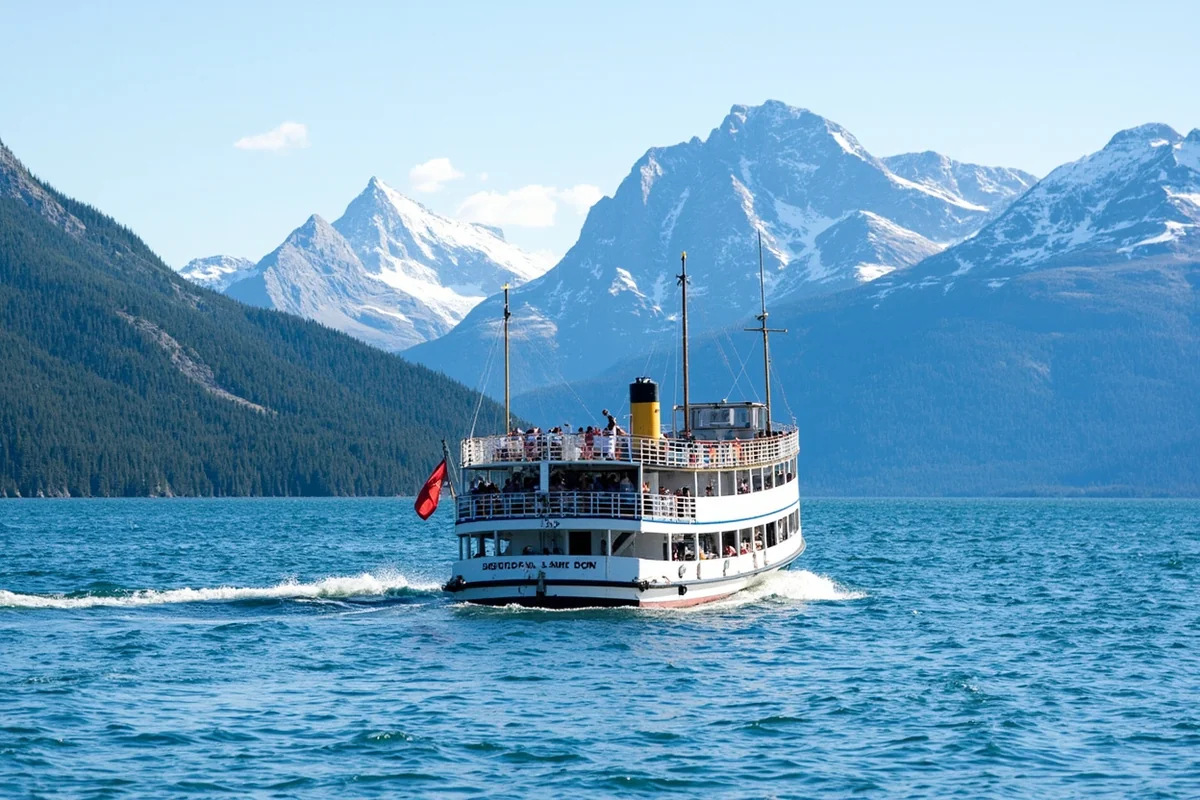
The boat shuttle system, operated by Glacier Park Boat Company from the dock behind Many Glacier Hotel, uses historic tour boats to cross Swiftcurrent Lake and Lake Josephine in sequence, with a short walk between docks.
It’s a genuinely pleasant way to start the hike, with narrated commentary on the area’s history and geology, and it noticeably shortens the trail’s more demanding sections.
I’d book ahead in peak season, since the boats have limited capacity and popular departure times sell out [verify current schedule and pricing].
What You’ll See Along the Way
Beyond the lake and glacier themselves, this trail corridor passes through some of the most reliably wildlife-rich terrain in the park.
I’ve had grizzly sightings (at a safe distance) on two separate visits here, along with regular encounters with mountain goats and bighorn sheep on the higher sections of the Grinnell Glacier Trail.
The lake sits beneath the north face of Angel Wing, a 7,430-foot peak that provides a dramatic backdrop for photos from the shoreline.
This isn’t a trail where grizzly encounters are purely theoretical, either. Back in 2010, former Columbus Zoo director and TV personality Jack Hanna was hiking this exact stretch, near Thunderbird Falls, when he and three others rounded a blind corner and came face to face with a sow grizzly and her two yearling cubs at close range.
Hanna needed three bursts of bear spray to turn the bear away before the group could retreat safely.
I bring this up not to scare anyone off the trail, but because it’s a genuinely useful reminder of why the standard advice here — making noise around blind corners, carrying bear spray where you can reach it instantly, never hiking with headphones in — isn’t just boilerplate. This is working grizzly habitat, not a backdrop.
Swimming at Grinnell Lake
Swimming is technically permitted, but I’d set expectations correctly: this water is genuinely, seriously cold, fed directly by active glacial meltwater rather than just snowmelt.
I’ve waded in up to my ankles and immediately understood why most visitors just admire the color from the shore rather than getting in. If you do want to say you’ve swum in it, brief is the operative word.
An Alternative Route: Piegan Pass
For hikers wanting a longer, less-trafficked approach, the Grinnell Lake and Lake Josephine via Piegan Pass Trail offers a considerably more demanding, roughly 21.9-mile out-and-back route with over 4,400 feet of elevation gain.
This isn’t a casual day hike — it involves boulder scrambling and stream crossings without bridges — but it delivers far more solitude than the standard approach and connects to a completely different section of the park’s trail network.
Combining Grinnell Lake with Other Many Glacier Trails
Since you’re already at the Many Glacier trailhead, it’s worth planning a day that takes in more than just Grinnell Lake.
Swiftcurrent Lake, right at the trailhead itself, offers an easy nature trail loop that pairs well as a warm-up or cool-down walk, and it’s flat enough to do even after a long day on the Grinnell Glacier Trail.
Where to Stay for a Grinnell Lake Trip
Most visitors base themselves at Many Glacier Hotel or the Swiftcurrent Motor Inn, both a short walk from the trailhead, or in nearby towns along Highway 89 if lakeside lodging is booked up.
See my Glacier National Park lodging guide for the full range of options across the park, and book well ahead if a Many Glacier stay is part of your plan — rooms here go quickly given the area’s popularity for exactly this hike.
The Best Time of Year to See the Color at Its Most Dramatic
I get asked often when the lake’s turquoise color is most striking, and my honest answer is early-to-mid July, when glacial melt is running heavily but the trail is generally clear of lingering snow.
Visit too early in the season and you may still find snowpack blocking sections of trail; visit in September and the color, while still beautiful, tends to be slightly less saturated as meltwater slows.
If your trip timing is flexible, see my Montana in July guide for what else to expect from the park during peak wildflower and melt season.
Personal Tips / What I Wish I Knew
Book the boat shuttle in advance if you want it. I learned this the hard way on my first visit, showing up without a reservation and having to hike the full distance on foot instead.
Go earlier in the season for more dramatic meltwater flow, later for calmer water. I’ve noticed the color and clarity shift noticeably between a June visit, when runoff is heavy, and a September visit, when the water settles and clears somewhat.
Bear spray is not optional here. The Many Glacier area, including this trail corridor, has one of the highest concentrations of grizzly bears in the park.
Don’t skip the easy trail option if you’re short on time. Even the flatter 7.1-mile Grinnell Lake Trail delivers the lake’s full visual impact without the climb — you don’t need the glacier view to make this worthwhile.
Practical Info: Grinnell Lake
| Lake depth | Approximately 87 feet |
| Lake size | Approximately 130 acres |
| Easy trail option | 7.1 miles round trip, easy grade, ~350 ft elevation gain |
| Full glacier hike | 7.6 miles round trip on foot, ~1,840 ft elevation gain |
| With boat shuttle | Reduces round trip by about 3.4 miles |
| Best season | June through October; boat shuttle typically operates summer months only |
| Trailhead | Many Glacier, via Grinnell Glacier Trailhead |
Frequently Asked Questions
Why is Grinnell Lake such a bright turquoise color?
The color comes from rock flour — fine glacial silt ground by Grinnell Glacier and carried into the lake by meltwater — which scatters light and produces the lake’s distinctive opaque blue-green appearance.
How hard is the hike to Grinnell Lake?
The easy Grinnell Lake Trail is a manageable 7.1-mile round trip with minimal elevation gain, suitable for most fitness levels. The full Grinnell Glacier Trail to the glacier itself is considerably more strenuous.
Can you take a boat to Grinnell Lake?
Yes, a boat shuttle across Swiftcurrent Lake and Lake Josephine cuts significant mileage off the hike toward Grinnell Glacier, operated by Glacier Park Boat Company from Many Glacier Hotel.
Is Grinnell Glacier disappearing?
Yes, Grinnell Glacier is one of the most closely monitored and rapidly retreating glaciers in Glacier National Park, with a significantly reduced ice extent compared to historical photographs.
Can you swim in Grinnell Lake?
Swimming is permitted, but the water is extremely cold, fed directly by active glacial meltwater, making more than a brief dip uncomfortable for most visitors.
One More Reason to Go Now Rather Than Later
I mentioned Grinnell Glacier’s retreat earlier, but it bears repeating in the context of trip planning: this isn’t a hypothetical, distant concern.
Park scientists have documented measurable, significant loss of ice extent at Grinnell within recent decades alone, and there’s no reasonable expectation that trend reverses.
If seeing an actual glacier, not just its meltwater lake, is meaningful to you, I wouldn’t put this trip off indefinitely.
I’ve felt genuinely lucky each time I’ve made this hike, aware that the view is actively, measurably changing every single season.
What Makes This Hike Different From the Rest of the Park
I’ve done a lot of the park’s signature hikes, and what sets the Grinnell corridor apart is how thoroughly it delivers on every front at once — genuine wildlife density, one of the most striking water colors in the entire Rockies, a working glacier you can watch shrink year over year, and a trail flexible enough for nearly any fitness level. Few single hikes in Glacier check that many boxes simultaneously.
If I had to recommend just one Many Glacier hike to a first-time visitor with only one day in the area, this would be it, ahead even of the more famous Highline Trail further west.
Final Thoughts
Grinnell Lake is one of the rare hikes in Glacier that works for nearly any fitness level, thanks to the flexible trail and boat shuttle options, while still delivering one of the most visually striking payoffs in the entire park. Go while the glacier that creates that color is still there to see.
For the lakes along the same trail system, see my guides to Swiftcurrent Lake and Lake Josephine, or check out the complete guide to Montana’s best lakes for the rest of the region. Bring bear spray, book the boat shuttle if you want it, and go see the glacier while it’s still there to see.