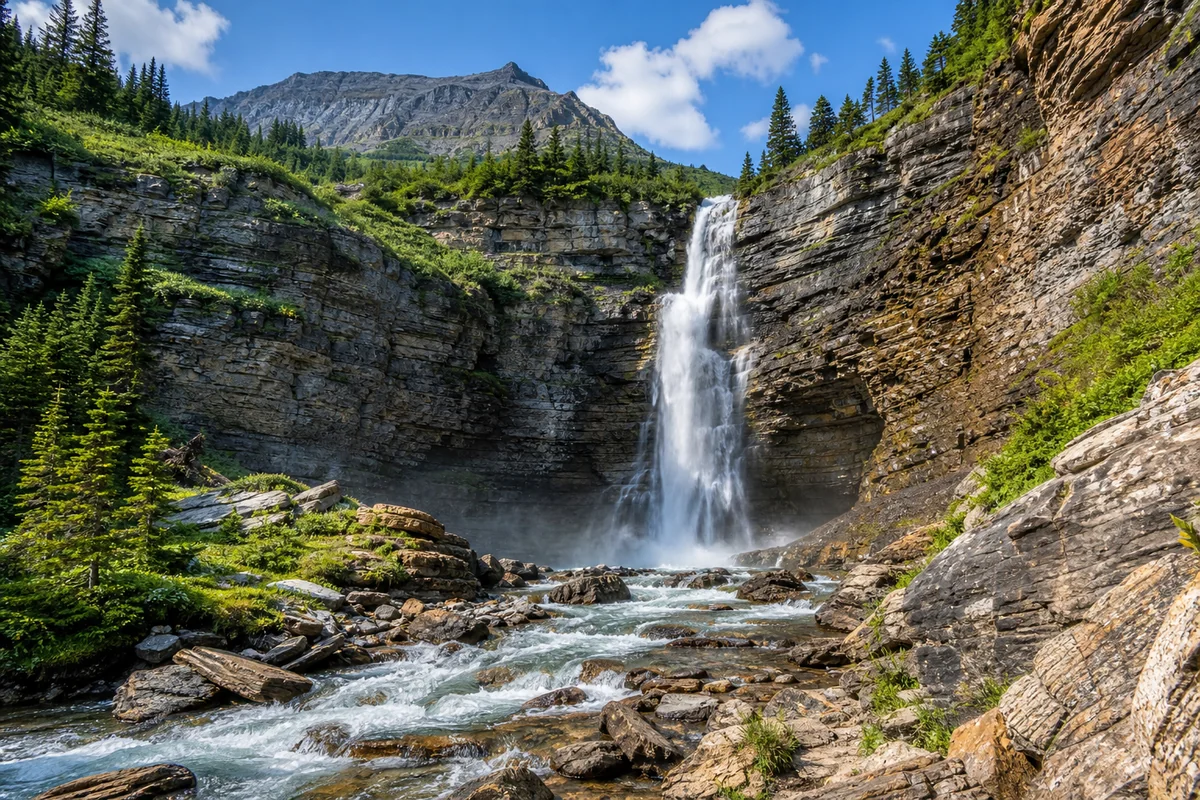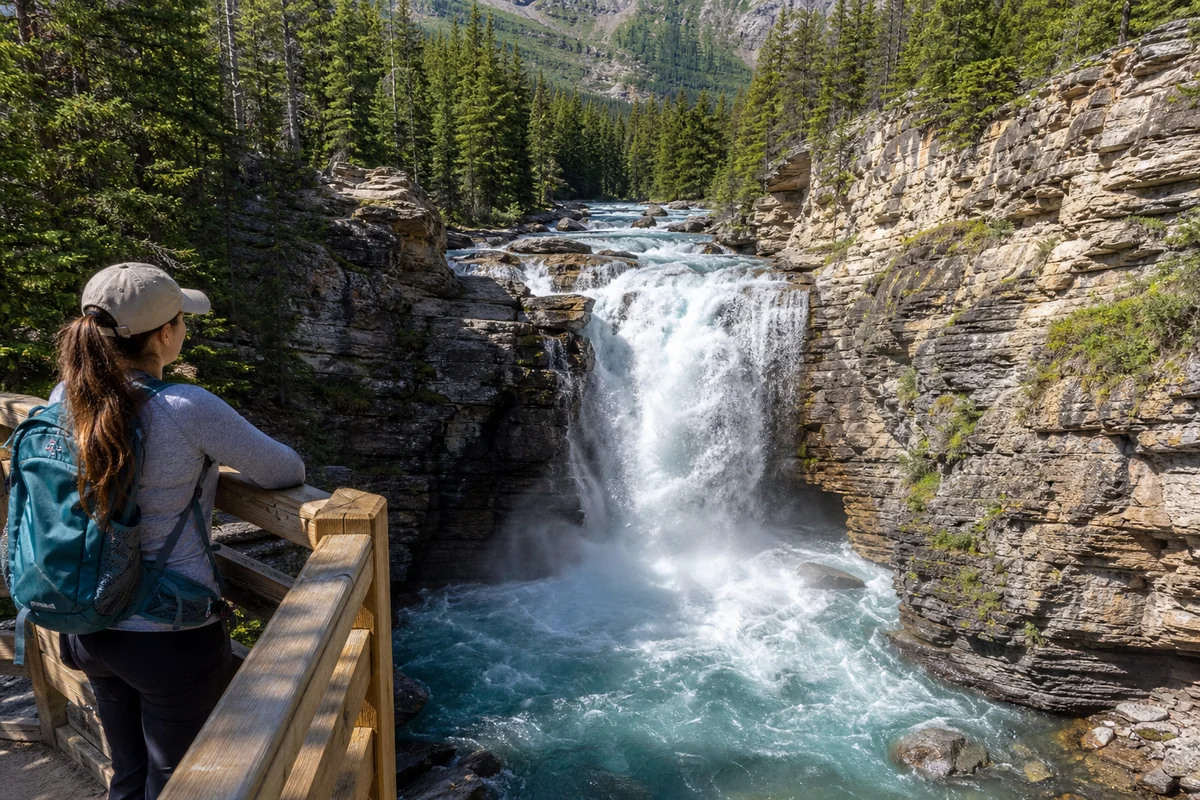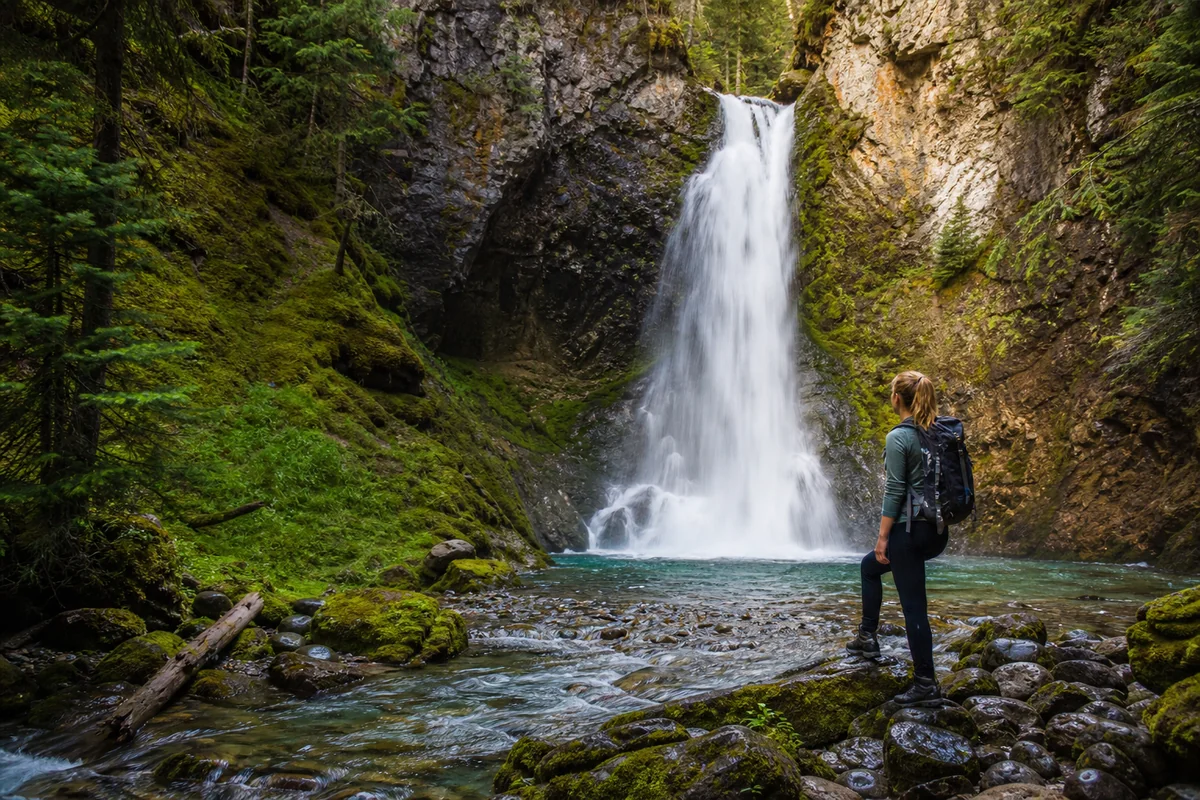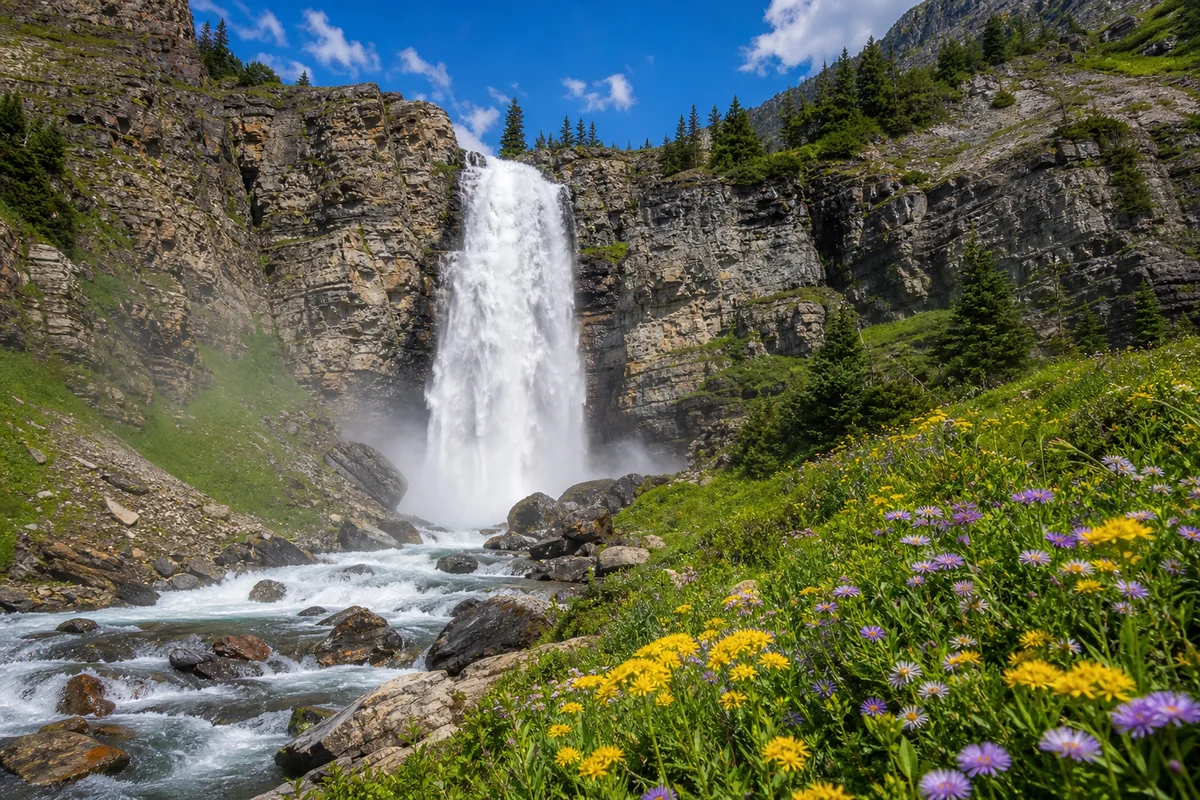
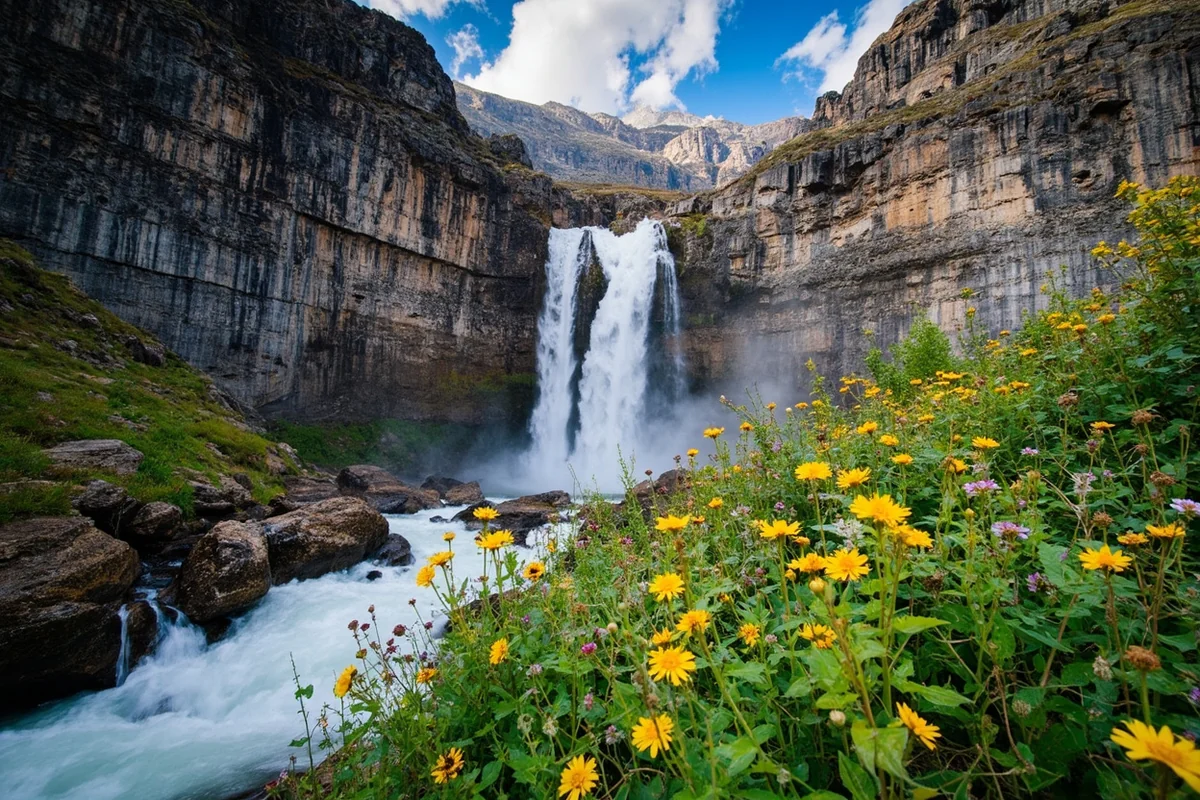
The mist hit my face before I even saw the water. I was rounding a bend on the Oberlin Falls trail last July when that unmistakable roar grew louder, and suddenly there it was—a thundering cascade pouring down from the alpine snowfields above, surrounded by wildflowers I couldn’t have imagined existed in such profusion.
Among the many Montana waterfalls I’ve chased over the years, Oberlin Falls stands out as one of those hidden gems that rewards hikers willing to venture just slightly off the beaten path.
- Oberlin Falls is located in Glacier National Park near Logan Pass, accessible via a short but steep 0.3-mile spur trail
- Best visited mid-June through late August when snowmelt creates maximum water flow
- The falls drop approximately 40 feet through a rocky chute surrounded by alpine meadows
- Access requires the Going-to-the-Sun Road to be fully open—typically late June
- Combine with the Hidden Lake Overlook trail for a full day of alpine adventure
- Early morning visits (before 9 AM) offer the best lighting and smallest crowds
Liked this article?
Add Roaming Montana as a preferred source so you see more of our articles and guides on Google.
Where Exactly Is Oberlin Falls?
Oberlin Falls sits high in the alpine zone of Glacier National Park, fed by melting snow from Mount Oberlin and the surrounding peaks near Logan Pass. During my most recent visit last summer, I was struck by how few people actually knew about this waterfall despite its proximity to one of the park’s busiest areas.
The falls are located just off the Hidden Lake Overlook trail, which begins at the Logan Pass Visitor Center. If you’ve driven the famous Going-to-the-Sun Road, you’ve likely passed within a quarter mile of Oberlin Falls without even knowing it existed.
The waterfall itself drops roughly 40 feet through a narrow rocky channel, fed by Oberlin Creek which originates from the snowfields clinging to Mount Oberlin’s north face. What makes this location special isn’t just the falls—it’s the entire alpine ecosystem surrounding it.
Getting to the Trailhead: What You Need to Know
Here’s the honest truth about reaching Oberlin Falls: the hardest part isn’t the hike itself, but simply getting to Logan Pass. The Going-to-the-Sun Road is one of the most beautiful drives in America, but it comes with significant challenges.
Driving the Going-to-the-Sun Road
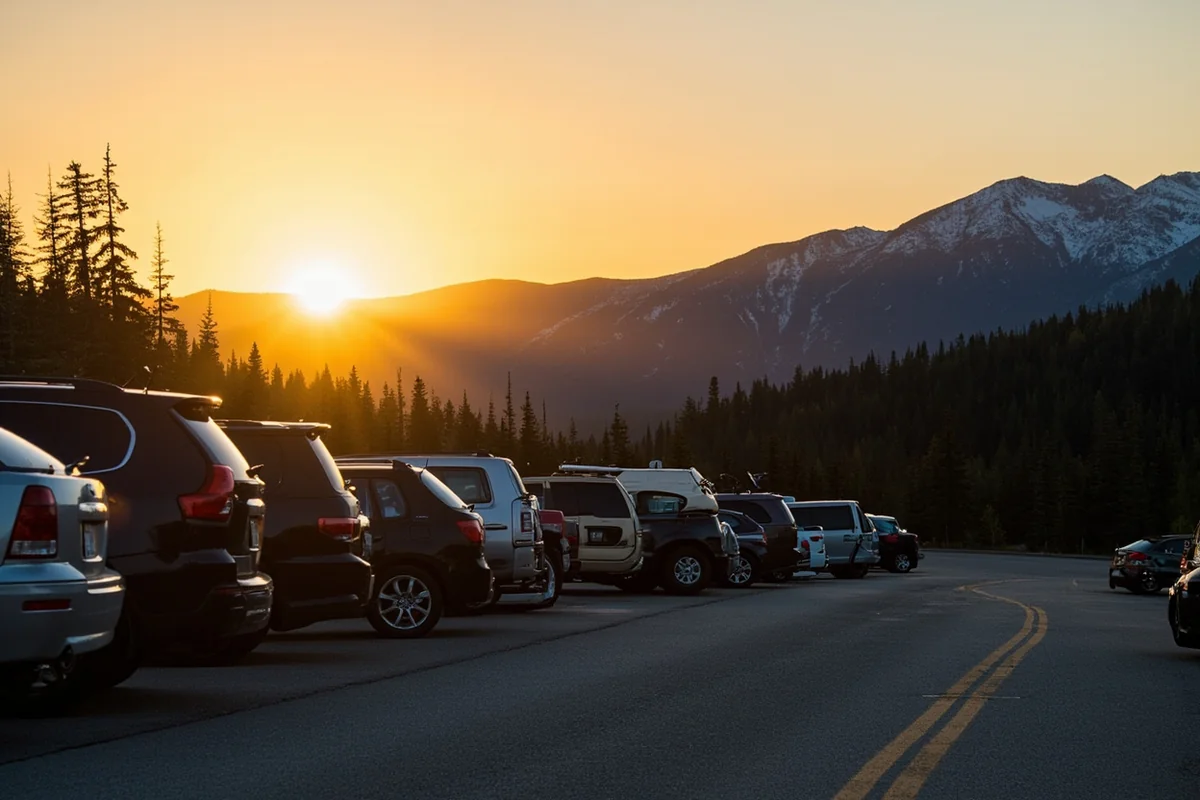
The road typically opens fully by late June, though I’ve seen years where snow kept it closed until early July. During my visit last summer, I learned the hard way that arriving at Logan Pass after 8:30 AM on a weekend means circling the parking lot for 45 minutes.
The Logan Pass parking lot holds approximately 200 vehicles, and it fills completely by mid-morning during peak season. When I hiked Oberlin Falls in July, I arrived at 6:45 AM and still counted a dozen cars already there.
Pro tip from experience: The parking lot often clears slightly between 10:30 AM and noon as early hikers leave. If you miss the morning window, this mid-day gap might be your best bet.
Vehicle Reservations and Entry Requirements
Glacier National Park now requires timed entry reservations for the Going-to-the-Sun Road corridor during peak season (typically late May through early September). I cannot stress enough how important it is to secure these reservations the moment they become available.
Reservations open 60 days in advance, and popular time slots—especially the 6 AM entry windows—disappear within minutes. During my planning last year, I set a phone reminder and was refreshing the recreation.gov website at exactly midnight when reservations dropped.
| Practical Information | Details |
|---|---|
| Trailhead Location | Logan Pass Visitor Center, Going-to-the-Sun Road |
| Distance to Falls | Approximately 1.0 mile one way (via spur trail) |
| Elevation Gain | 350 feet |
| Trail Difficulty | Moderate (steep sections) |
| Trailhead Elevation | 6,646 feet |
| Best Season | Mid-June through August |
| Park Entrance Fee | $35 per vehicle (7-day pass) |
The Trail to Oberlin Falls: Step by Step
Let me walk you through exactly what to expect on this hike, based on the three times I’ve made this trek over the past two summers.
Starting at the Logan Pass Visitor Center
Your journey begins at the Logan Pass Visitor Center, which sits at 6,646 feet—already well into the alpine zone. The thin air hit me immediately during my first visit; I remember feeling winded just walking across the parking lot to the trailhead.
The Hidden Lake Overlook trail starts directly behind the visitor center. You’ll see the obvious boardwalk beginning near the restrooms. Most hikers are heading to Hidden Lake, but Oberlin Falls requires a slight detour that many people miss entirely.
The First Half Mile: Boardwalk and Meadows
The initial section of trail features an elevated boardwalk designed to protect the fragile alpine meadows. During my July visit, these meadows were absolutely carpeted with wildflowers—glacier lilies, beargrass, Indian paintbrush, and dozens of species I couldn’t identify.
Walking the boardwalk, you’ll gain elevation steadily while enjoying panoramic views of the surrounding peaks. Mount Oberlin rises to your left, its snowfields gleaming in the morning sun. To your right, the dramatic cliffs of Mount Clements create a stunning backdrop.
This section takes about 15-20 minutes at a comfortable pace. I always remind myself to stop frequently—partly to admire the scenery, but honestly also to catch my breath at this altitude.
Finding the Oberlin Falls Spur Trail
Here’s where most visitors miss the falls entirely. After approximately 0.7 miles on the main Hidden Lake trail, you’ll reach a junction near a small rise. The official trail continues toward Hidden Lake Overlook, but a less obvious social trail branches off to the left.
During my visits, I’ve noticed this junction isn’t well-marked. Look for a worn path heading northwest, directly toward Mount Oberlin. You might see a small cairn or two, but don’t count on official signage.
The spur trail to Oberlin Falls covers roughly 0.3 miles but feels longer because of the terrain. You’ll descend slightly, cross a section of alpine tundra, and then begin hearing the falls before you see them.
The Final Approach to the Falls
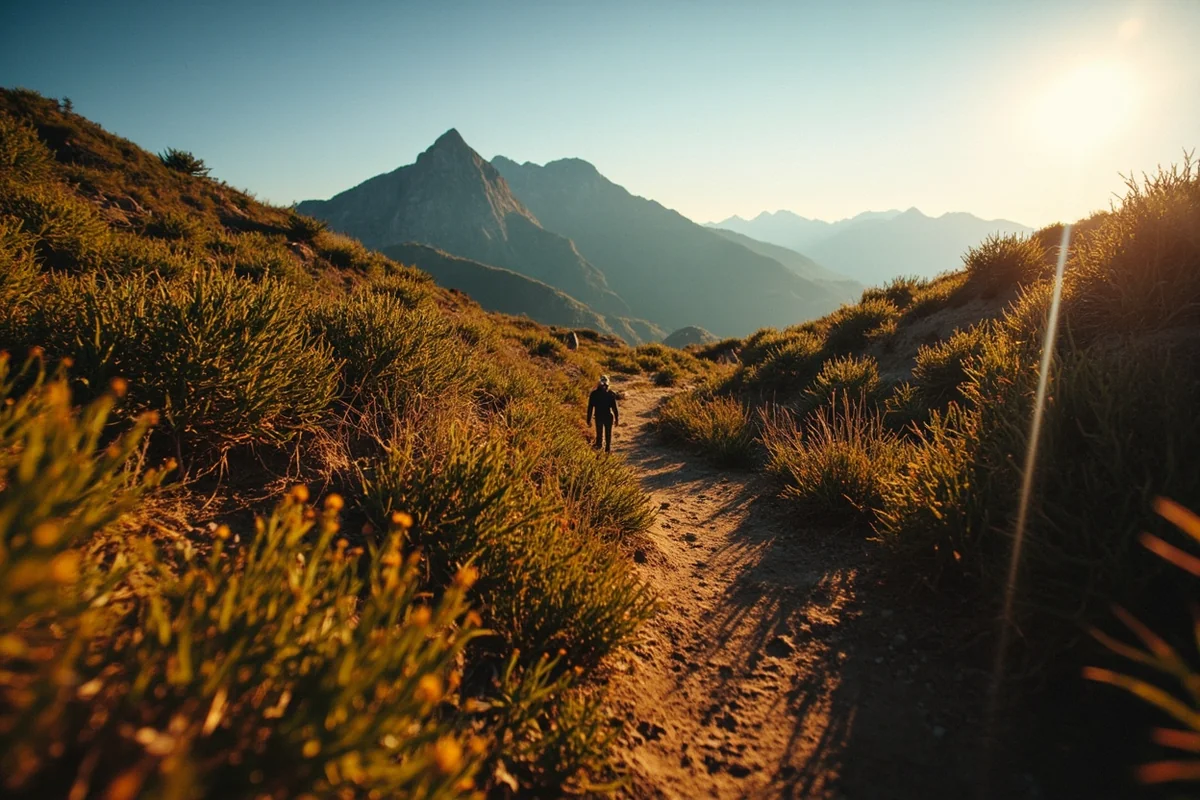
The last section of trail is the trickiest. During my most recent hike, I had to navigate several snow patches that lingered into late July. The trail becomes rockier and less defined as you approach the falls.
When I finally rounded the last bend and saw Oberlin Falls, the effort felt completely worthwhile. The water pours through a narrow rocky channel, dropping in several tiers before collecting in a small pool. The surrounding landscape is pure alpine wilderness—rocky outcrops, patches of late-season snow, and hardy wildflowers clinging to every available surface.
What Makes Oberlin Falls Special
Having visited numerous waterfalls across Glacier National Park, including popular spots like Saint Mary Falls and Running Eagle Falls, I can say that Oberlin Falls offers something genuinely different.
The Alpine Setting
Most waterfalls in Glacier sit in forested valleys or along lower-elevation trails. Oberlin Falls exists in an entirely different world—the high alpine zone where trees can’t grow and the landscape feels almost lunar.
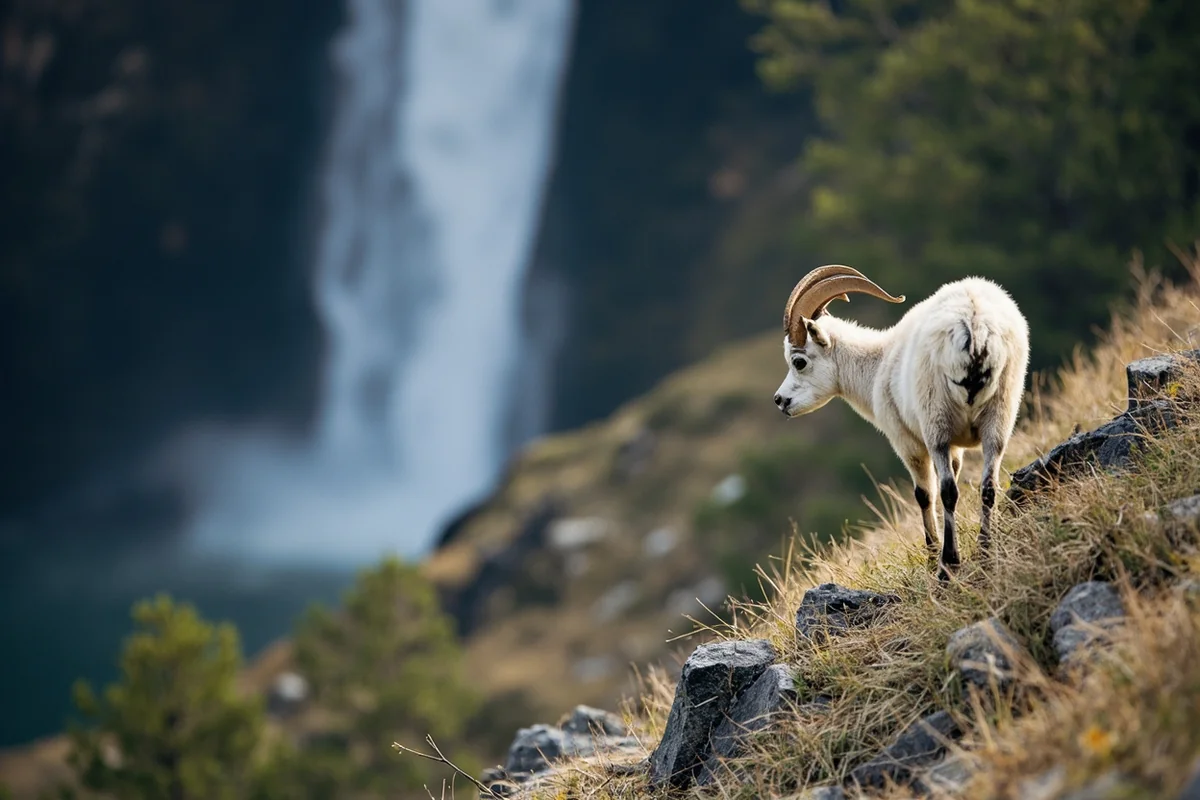
During my July visit, I was standing at the base of the falls watching the water cascade down while mountain goats grazed on the slopes above me. That’s not an exaggeration—this area is prime mountain goat habitat, and I’ve spotted them on two of my three visits.
The wildflower display in the surrounding meadows rivals anything I’ve seen elsewhere in Montana. The short growing season at this elevation means everything blooms simultaneously, creating an explosion of color that typically peaks in mid-July.
The Solitude Factor
Here’s what I find most appealing about Oberlin Falls: despite being located just off one of the park’s most popular trails, relatively few visitors actually make the detour.
During my last visit, I spent 45 minutes at the falls and saw exactly two other hikers. Compare that to the Hidden Lake Overlook itself, where I counted over 100 people during the same morning. If you’re looking for a waterfall experience without crowds, Oberlin Falls delivers.
Photography Opportunities
For photographers, Oberlin Falls presents both challenges and opportunities. The narrow canyon creates harsh shadows during midday, so I strongly recommend visiting during the golden hours.
On my most successful photography trip, I arrived at the falls by 7:30 AM. The soft morning light illuminated the surrounding peaks while the falls remained in gentle shade, creating a dramatic contrast that translated beautifully in my images.
Best Times to Visit Oberlin Falls
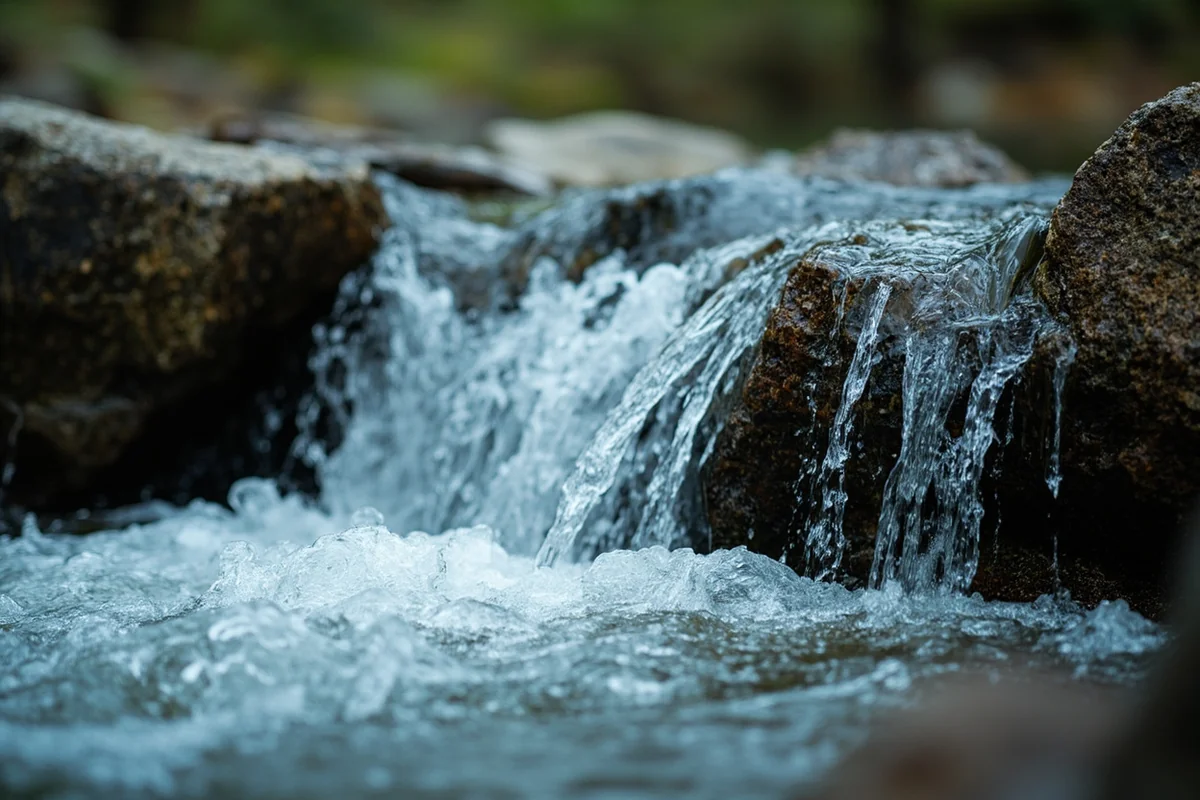
Timing your visit correctly makes an enormous difference in your Oberlin Falls experience. I’ve been here during peak flow and during late-season trickle, and they’re almost like visiting two different waterfalls.
Seasonal Considerations
Mid-June to Early July: This period typically offers the most impressive water flow as snowmelt reaches its peak. However, the trail may still have significant snow coverage, and you might need microspikes. The Going-to-the-Sun Road often just opened, making access possible.
Mid-July to Mid-August: In my opinion, this window offers the best overall experience. The trail is usually snow-free, wildflowers are at their peak, and water flow remains strong. This is when I’ve made most of my visits.
Late August to September: Water flow diminishes significantly, and the falls may reduce to a thin stream during dry years. However, fall colors can add visual interest, and crowds thin considerably after Labor Day.
Time of Day
I’ve experimented with different times and can confidently say that early morning offers the best experience at Oberlin Falls. The falls face roughly east-northeast, so they catch the first light of day beautifully.
More importantly, the Logan Pass area becomes incredibly crowded by late morning. Getting there early means you’ll have a parking spot, the trails will be quieter, and you’ll enjoy the falls in relative peace.
If early morning doesn’t work for your schedule, consider late afternoon visits. Most day-trippers have left by 4 PM, and the evening light can be equally stunning.
What to Bring: Essential Gear and Preparation
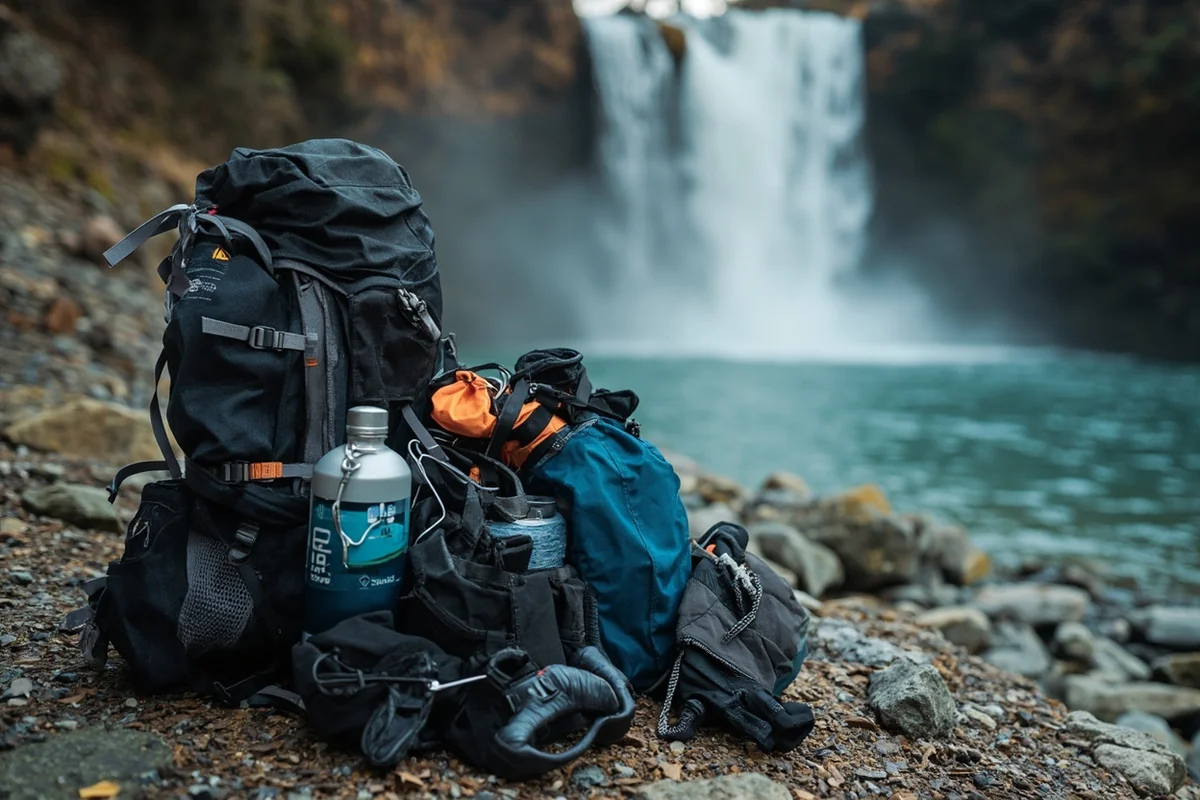
The alpine environment around Oberlin Falls demands more preparation than your typical Montana waterfall hike. Here’s what I’ve learned to pack after multiple visits.
Clothing and Footwear
Even in July and August, temperatures at Logan Pass can drop dramatically. During my morning hike last summer, I started in temperatures around 45°F and watched it climb to 70°F by noon. Weather changes rapidly at this elevation.
I always bring:
- A warm fleece or puffy jacket (non-negotiable)
- A rain shell or windbreaker
- Long pants or convertible hiking pants
- Sturdy hiking boots with ankle support
- A warm hat and gloves (seriously, even in summer)
- Sunscreen and sunglasses (UV is intense at 6,600+ feet)
The trail to Oberlin Falls can be rocky and uneven, especially on the spur section. I’ve seen people attempt this in sandals and regret it immediately. Proper hiking boots made a significant difference in my comfort and safety.
Food, Water, and Safety Essentials
The elevation and thin air make dehydration a real concern. I typically carry at least two liters of water for this relatively short hike, along with high-energy snacks like trail mix and energy bars.
Bear spray is mandatory in Glacier National Park, and this area is no exception. I’ve never had a close encounter near Oberlin Falls, but grizzlies frequent these alpine meadows, especially during berry season in late summer.
Combining Oberlin Falls with Other Attractions
Since getting to Logan Pass represents a significant time investment, I recommend making a full day of it. Here’s how I structure my visits.
Adding Hidden Lake Overlook
The most logical combination pairs Oberlin Falls with the Hidden Lake Overlook, since you’re already on the same trail system. After visiting the falls, I backtrack to the main trail and continue another half mile to the overlook.
Hidden Lake Overlook offers stunning views of the cirque lake below and the dramatic peaks surrounding it. On clear days, you can see the lake’s impossibly blue water and often spot mountain goats on the slopes.
The total round trip, including both destinations, covers roughly 3 miles with about 500 feet of elevation gain. I typically allow 3-4 hours for a leisurely pace with plenty of photo stops.
Highline Trail Connection
For more ambitious hikers, the famous Highline Trail also begins at Logan Pass. This legendary route traverses the Continental Divide, offering some of the most spectacular scenery in Glacier National Park.
I’ve done the first few miles of the Highline Trail on the same day as Oberlin Falls, though it makes for a long day. If you’re up for it, I recommend visiting Oberlin Falls early morning, then tackling a portion of the Highline Trail.
Other Waterfall Options in the Area
If you’re a waterfall enthusiast planning an extended Montana trip, the Glacier region offers numerous other options. On the west side of the park, McDonald Falls provides an easy roadside stop along Going-to-the-Sun Road.
For a different alpine waterfall experience, consider Ptarmigan Falls in the Many Glacier area, or the impressive Grotto Falls near Hyalite Canyon outside of Bozeman. Each offers its own unique character and setting.
Wildlife You Might Encounter
The alpine environment around Oberlin Falls supports a surprising diversity of wildlife. During my visits, I’ve had some memorable encounters.
Mountain Goats
This area is famous for mountain goats, and they’re almost guaranteed sightings during summer months. These magnificent animals frequent the cliffs and meadows around Mount Oberlin, often seeming completely indifferent to human presence.
During my July visit, a nanny and kid grazed within 30 yards of the trail while I watched for nearly 20 minutes. Keep your distance (at least 25 yards, or 75 feet for bears and wolves), but these encounters are unforgettable.
Bighorn Sheep
Less common than goats but equally impressive, bighorn sheep occasionally appear in this area. I’ve spotted them on the rocky slopes above the falls, though never as close as the goats.
Marmots and Pikas
The boulder fields near Oberlin Falls provide perfect habitat for hoary marmots and pikas. Listen for the marmots’ distinctive whistle—a sound that always makes me smile because it means I’m truly in the high country.
Pikas are harder to spot but equally entertaining. These tiny relatives of rabbits live among the rocks and emit a sharp, high-pitched call. I’ve spent considerable time trying to photograph pikas near the falls with limited success—they’re masters of disappearing.
Photography Tips for Oberlin Falls
As someone who’s spent considerable time photographing waterfalls across Montana, including stunning locations like Morrell Falls and Ousel Falls, I’ve developed specific techniques for capturing Oberlin Falls effectively.
Camera Settings and Equipment
The classic silky water effect requires slower shutter speeds. I typically shoot between 1/4 and 2 seconds, which requires a sturdy tripod on the rocky terrain.
A neutral density filter becomes essential during bright conditions. The alpine environment is incredibly bright, making longer exposures impossible without an ND filter. I carry a 3-stop and 6-stop ND filter for flexibility.
Wide-angle lenses work well for capturing the falls in their alpine context. However, I also bring a telephoto for isolating details in the water and photographing wildlife from a respectful distance.
Composition Ideas
Some compositions that have worked well for me at Oberlin Falls:
- Include wildflowers in the foreground with the falls in the middle distance
- Frame the falls with the rocky canyon walls
- Capture the surrounding peaks as context for the alpine setting
- Get low for intimate water detail shots
- Include any lingering snow patches for seasonal interest
Lighting Considerations
The canyon orientation creates challenging light conditions. Direct midday sun produces harsh shadows and blown highlights. I’ve had my best results during:
- Early morning (6:30-8:30 AM) for soft, directional light
- Overcast conditions, which eliminate harsh shadows
- Late evening before sunset (though the falls go into shadow)
Safety Considerations at Oberlin Falls
The alpine environment presents unique safety challenges that every visitor should understand.
Altitude Awareness
At over 6,600 feet, the thin air affects everyone differently. I’ve felt dizzy and short of breath at this elevation, even though I consider myself reasonably fit. Take breaks, stay hydrated, and don’t push yourself if you’re feeling symptoms of altitude sickness.
Weather Changes
Mountain weather changes rapidly and dramatically. I’ve started hikes in brilliant sunshine and encountered thunderstorms within an hour. Always check forecasts before your hike and be prepared to turn back if conditions deteriorate.
Lightning is particularly dangerous in the alpine zone, where you’re often the highest point on the landscape. If storms approach, descend immediately and seek lower ground.
Trail Conditions
The spur trail to Oberlin Falls isn’t maintained to the same standard as major park trails. Expect loose rocks, occasional snow patches (even in summer), and sections where the trail becomes indistinct.
Proper footwear is essential. I’ve turned an ankle on loose rocks here and been grateful for my high-top hiking boots.
Wildlife Safety
Bears are active in this area, though encounters at Oberlin Falls are relatively rare due to the open terrain providing good visibility. Still, carry bear spray, know how to use it, and make noise while hiking.
Never approach or feed wildlife. The mountain goats may seem tame, but they’re wild animals that can become aggressive, especially during mating season or when kids are present.
Nearby Accommodations and Services
Planning where to stay for your Oberlin Falls adventure requires some advance thought, as options near Logan Pass are limited.
In-Park Lodging
The historic Lake McDonald Lodge and Rising Sun Motor Inn are the closest in-park accommodations. Both book far in advance for summer dates—I’ve had success reserving 10-12 months ahead.
Many visitors base themselves in the Many Glacier area for access to both sides of the park. This area offers additional waterfall options like Redrock Falls and Rockwell Falls.
Gateway Towns
West Glacier and East Glacier offer more lodging options, though neither provides quick access to Logan Pass. West Glacier is approximately 33 miles from Logan Pass via the Going-to-the-Sun Road—plan at least 90 minutes for the drive due to traffic and stops.
Camping
Glacier National Park operates numerous campgrounds, including the small Sprague Creek Campground on the west side. These fill quickly during summer, so reservations are essential for most.
For adventurous travelers, backcountry camping permits allow access to primitive sites throughout the park. The wilderness camping near Oberlin Falls offers an incredible but challenging experience.
Making the Most of Your Oberlin Falls Visit
After multiple visits, I’ve developed a strategy that maximizes the experience while minimizing frustrations.
My Recommended Itinerary
5:45 AM: Arrive at Logan Pass entrance (if coming from West Glacier)
6:30 AM: Secure parking at Logan Pass
6:45 AM: Begin hiking toward Hidden Lake/Oberlin Falls junction
7:30 AM: Reach and explore Oberlin Falls
8:30 AM: Continue to Hidden Lake Overlook
9:30 AM: Return to parking area
10:00 AM: Drive to another destination or enjoy the visitor center
This timing avoids the midday crowds entirely and provides the best lighting conditions. I’ve also found that wildlife is more active during morning hours.
What I Wish I’d Known Before My First Visit
Several lessons I’ve learned through experience:
The altitude is real. Don’t underestimate it, even if you’re in good shape. Take your time and listen to your body.
Bring more layers than you think necessary. I’ve been uncomfortably cold at Oberlin Falls even in July.
The social trail to the falls can be confusing. If you’re uncertain, don’t be afraid to ask other hikers or backtrack.
Early morning really is better. Every time I’ve visited later in the day, I’ve regretted it due to crowds and parking challenges.
Water flow varies dramatically. The falls are most impressive in late June and early July when snowmelt peaks.
Connecting Your Waterfall Adventures
If you’re planning an extended waterfall exploration in Montana, Oberlin Falls fits beautifully into a larger itinerary. The state offers incredible diversity, from roadside cascades to backcountry adventures.
In the Glacier region alone, you could spend weeks exploring options. Ipasha Falls offers a completely different experience in the park’s remote northern reaches, while Sacred Dancing Cascade provides easier access for families.
Further south, the Bozeman area offers exceptional options like Palisade Falls in Hyalite Canyon—one of the most accessible waterfalls in Montana. For something more challenging, consider Holland Lake Falls in the Swan Valley.
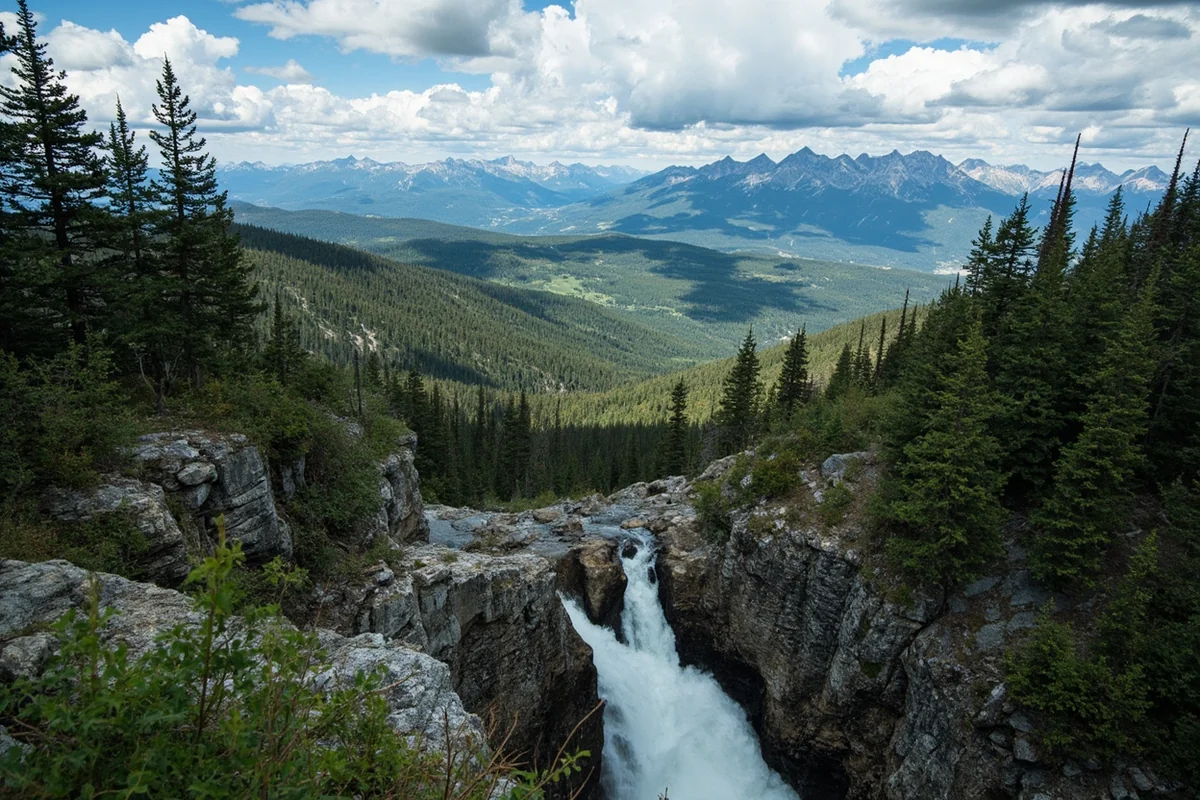
Western Montana provides additional stunning options, including Kootenai Falls near Libby and Memorial Falls outside of Great Falls. Each offers a unique Montana waterfall experience.
I’ve found that planning a week-long waterfall road trip allows time to appreciate each location without rushing. Montana rewards those who take their time and embrace the journey.
Final Thoughts on Oberlin Falls
Standing at Oberlin Falls last summer, surrounded by wildflowers and alpine grandeur, I understood why I keep returning to this place. It’s not just the waterfall itself—though that’s certainly beautiful—but the entire experience of being immersed in Glacier’s high country.
The effort required to reach Oberlin Falls filters out casual visitors, creating moments of genuine solitude in one of America’s most popular national parks. The alpine setting provides a backdrop that elevates a modest waterfall into something truly memorable.
Whether you’re a dedicated waterfall chaser, a photography enthusiast, or simply someone seeking a meaningful wilderness experience, Oberlin Falls delivers. Just remember to plan ahead, respect the environment, and give yourself time to truly absorb this special corner of Montana.
The mountains will be there whenever you’re ready. And trust me—they’re worth every moment of preparation it takes to reach them.
Frequently Asked Questions
Where is Oberlin Falls located in Montana and how do I get there?
Oberlin Falls is located in Glacier National Park near Logan Pass along the Going-to-the-Sun Road. You can access the trailhead from the Oberlin Bend pullout, approximately 1.5 miles west of Logan Pass Visitor Center. The hike to the falls is relatively short at about 0.3 miles one way, making it one of the most accessible waterfalls in the park.
What is the best time of year to visit Oberlin Falls in Glacier National Park?
The best time to visit Oberlin Falls is late June through early August when snowmelt is at its peak and the waterfall flows most dramatically. Keep in mind that Going-to-the-Sun Road typically doesn’t fully open until late June or early July due to snow removal, so plan accordingly. I’ve found early morning visits offer fewer crowds and better lighting for photos.
Do I need a vehicle reservation to see Oberlin Falls at Glacier National Park?
Yes, from late May through early September, you’ll need a vehicle reservation to drive the Going-to-the-Sun Road corridor between 6 AM and 3 PM. Reservations cost $2 per vehicle plus the $35 park entrance fee and can be booked at Recreation.gov. Alternatively, you can enter before 6 AM or after 3 PM without a reservation, or take the free park shuttle.
How difficult is the Oberlin Falls trail and is it family-friendly?
The Oberlin Falls trail is considered easy to moderate and is suitable for most families with children who can handle uneven terrain. The trail is short but does involve some rocky sections and a moderate incline with about 200 feet of elevation gain. I recommend sturdy hiking shoes even for this brief hike, as the path can be slippery near the falls from mist and snowmelt.
What should I bring when hiking to Oberlin Falls Montana?
Bring layers regardless of the season, as temperatures at this 6,600-foot elevation can drop quickly even in summer. I always pack a waterproof jacket since mist from the falls can soak you, plus bear spray, plenty of water, and traction devices if visiting in early season when snow patches remain. Don’t forget your camera and a wide-angle lens to capture the full cascade against the mountain backdrop.
Can I see Oberlin Falls without hiking in Glacier National Park?
You can actually see Oberlin Falls from the Going-to-the-Sun Road without hiking if mobility is a concern. The Oberlin Bend pullout offers distant views of the waterfall cascading down the mountain, though the short hike brings you much closer to the base. This makes Oberlin Falls one of the most accessible major waterfalls in Glacier for visitors of all abilities.
Are there other waterfalls near Oberlin Falls worth visiting on the same trip?
Absolutely, the Logan Pass area is a waterfall hotspot with Bird Woman Falls visible from the road and Haystack Falls just a short drive away. If you’re up for more hiking, the Hidden Lake Overlook trail from Logan Pass offers stunning alpine scenery and additional cascade views. I typically plan a full day around Logan Pass to maximize waterfall viewing and combine multiple short hikes.
Sources: