Evelyn Cameron picked up a large-format camera in the 1890s and documented Montana prairie life with a technical skill and unflinching honesty that most of her male contemporaries never matched. She did it at a time when women were expected to stay home and raise children, not haul photography equipment across the badlands.
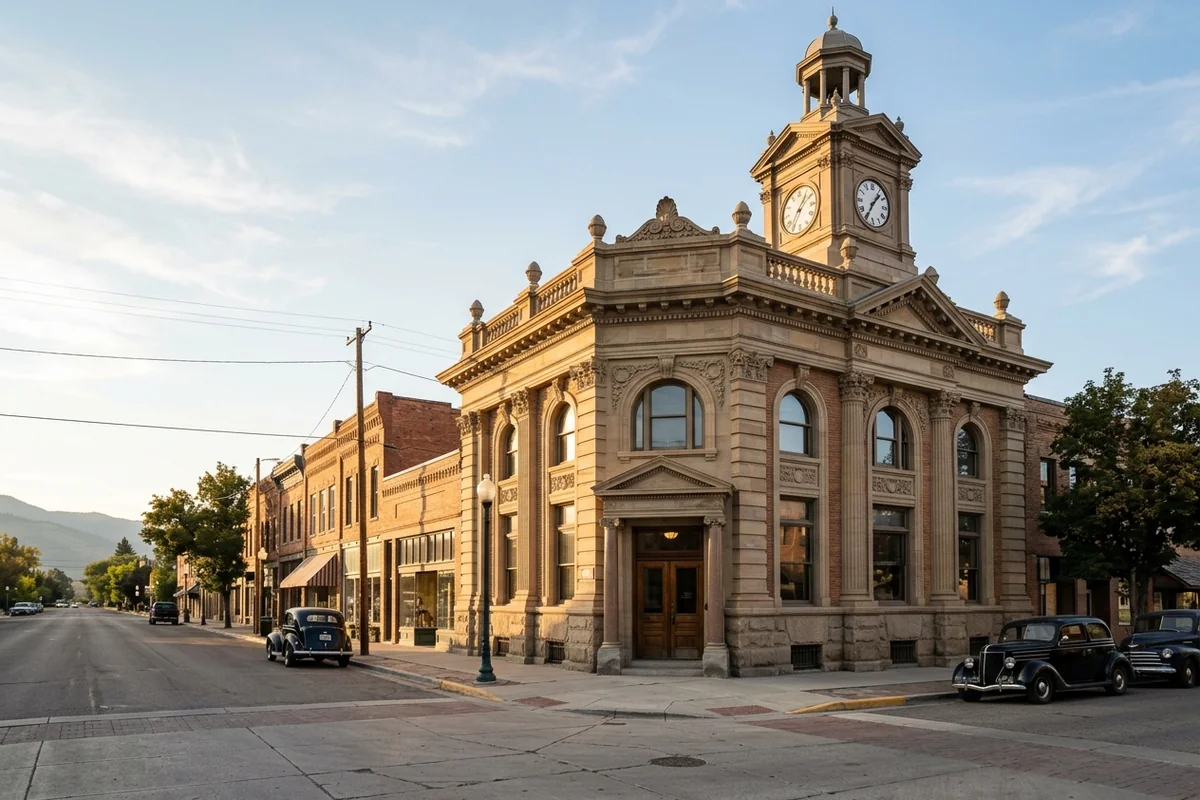
- Prairie County Museum in Terry occupies the historic 1916 State Bank of Terry building, with original teller windows still intact
- The attached Evelyn Cameron Gallery displays photographs from a genuine pioneer of American documentary photography, an English-born frontierswoman who chronicled prairie life in extraordinary technical and emotional detail
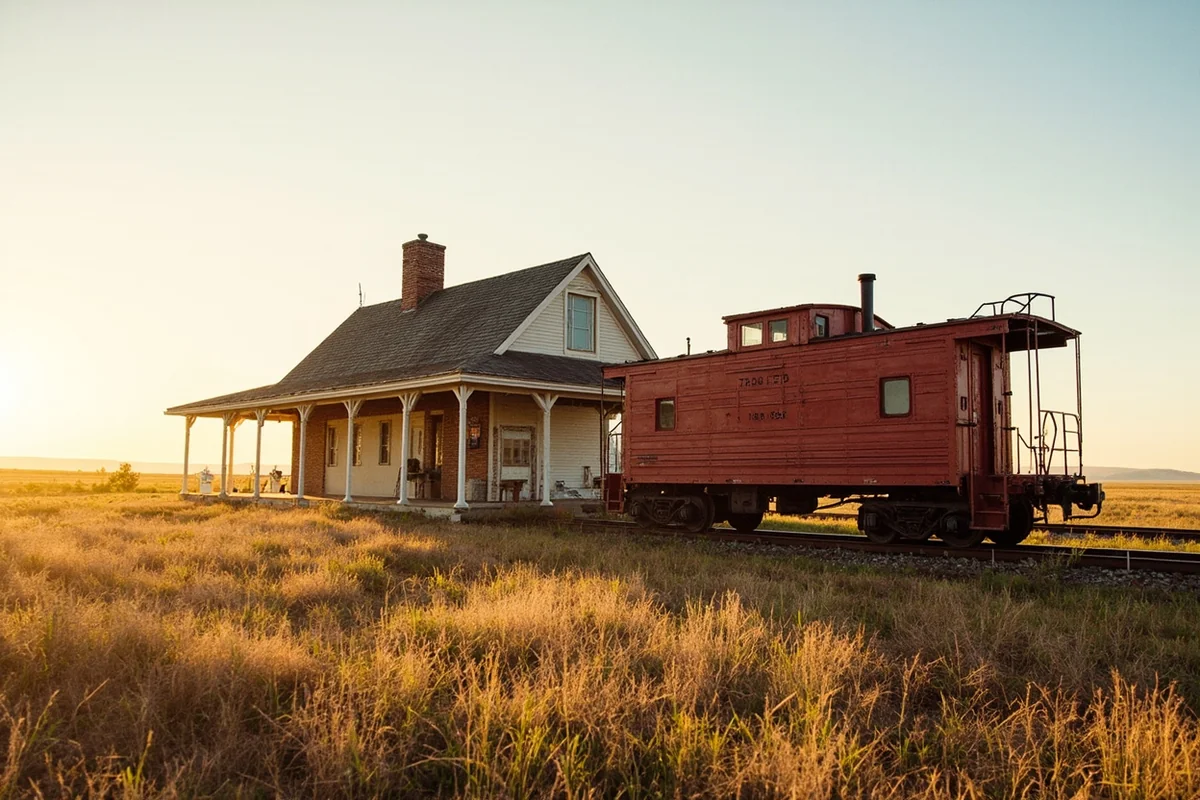
- The complex includes a pioneer homestead, a train depot, a caboose, and the self-proclaimed only steam-heated outhouse this side of the Mississippi
- Hours shift seasonally and can be inconsistent, but volunteers have repeatedly opened the museum for visitors with just a phone call, even in the off-season
- This is one of the best museums in Montana holding one of the most historically significant photography collections in the entire state
Liked this article?
Add Roaming Montana as a preferred source so you see more of our articles and guides on Google.
A Bank Building With Its Own Layered History
Before it held a single Evelyn Cameron photograph, this building had already lived through its own small transformation. The original, smaller bank structure — locals called it simply “the little bank” — was physically moved out of the way in 1916 to make room for a larger replacement, the State Bank of Terry.
That new bank operated for decades until the early 1970s, when yet another new banking building went up in town, finally freeing the 1916 structure for a different purpose.
The Prairie County Museum opened inside it in 1975, and many of the original banking features, including the actual teller windows, remain intact today.
Walking through a county history museum that still visibly reads as a small-town bank adds a genuinely specific texture you won’t find in a purpose-built exhibit hall.
Meet Evelyn Cameron
The single most significant reason to visit this museum is a woman most American history books have never mentioned.
Evelyn Cameron, born in England, relocated to Prairie County with her husband around the turn of the 20th century and spent the following decades documenting frontier life with a camera at a time when photography itself was a demanding, technically difficult pursuit — let alone one considered appropriate for a woman.
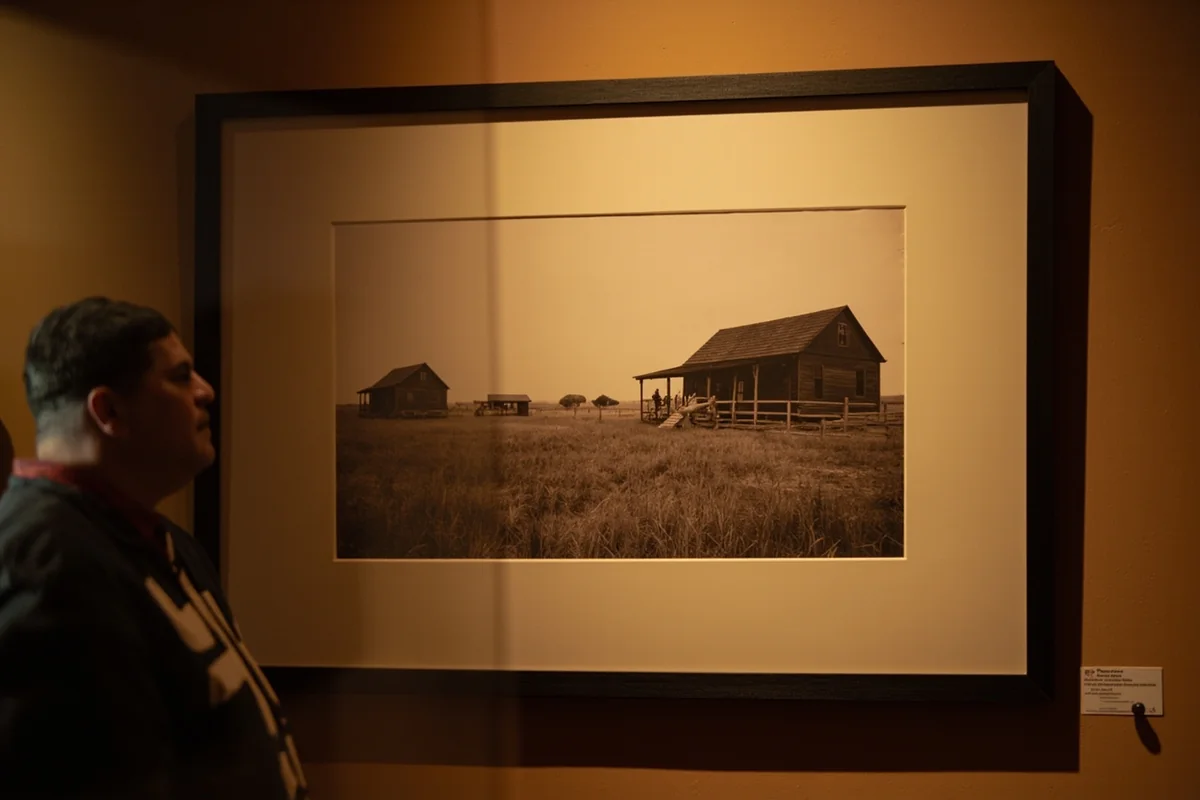
Cameron’s photographs show a genuine mastery of early large-format photographic technique, combined with an unflinching, deeply observant eye for the actual grit of settler life.
Her images don’t romanticize the frontier. They document real ranching hardship, real homestead struggles, and real people, captured with a clarity and technical precision that stands up against professional work from the same era produced by men with far more institutional support.
Alongside her photography, Cameron kept a daily diary that ranged from mundane domestic details — how many eggs were collected on a given day — to genuinely deep reflections on the difficulty of eking out a living on a homestead claim.
Reading her words alongside her photographs gives visitors a rare, combined written-and-visual record of frontier life from a woman’s direct perspective, something genuinely uncommon in how this era typically gets documented and remembered.
The Largest Known Collection of Her Work
Cameron’s photographic legacy didn’t disappear after her death — it’s been actively preserved and championed by a dedicated organization built specifically around her life’s work.
Evelyn Cameron Heritage, Inc., established in 2009 as a separate nonprofit, owns more than 900 original vintage Evelyn Cameron photographs, making it the largest known private collection of her work anywhere.
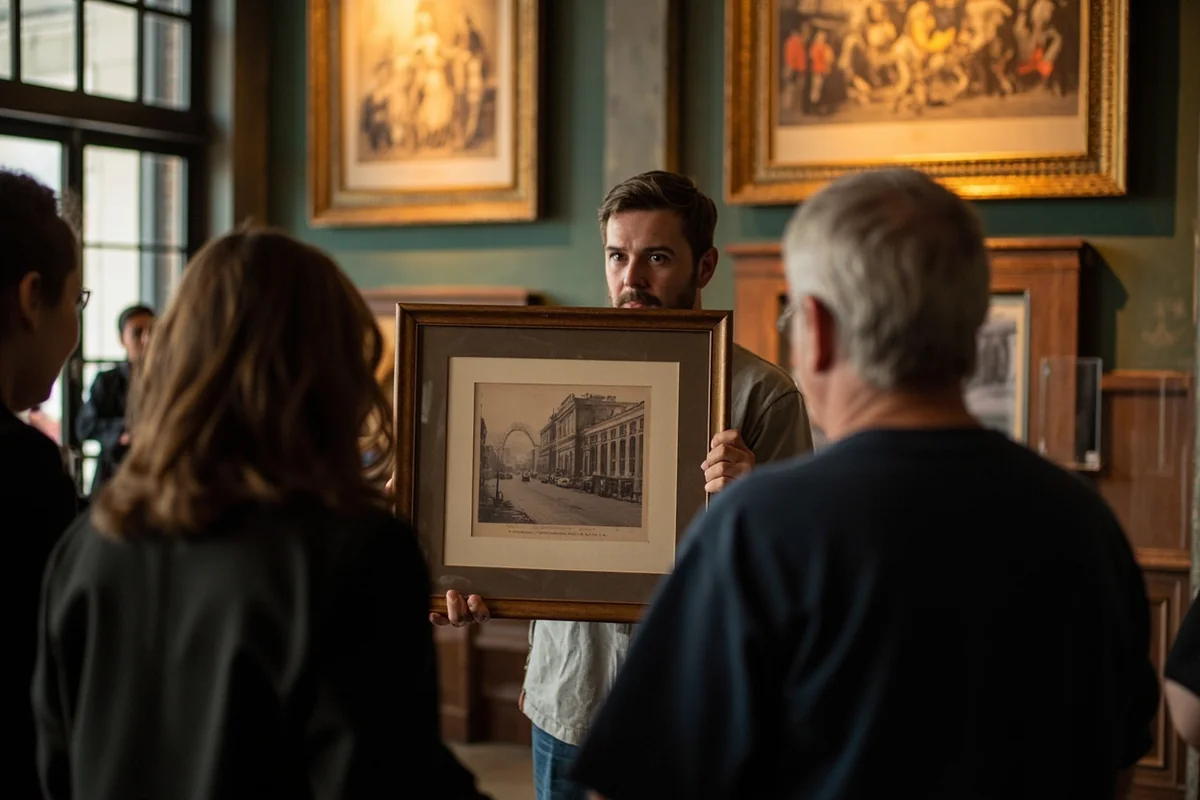
The gallery attached to Prairie County Museum displays a rotating selection, typically more than 50 images at a time, giving visitors direct access to a body of work that might otherwise remain scattered in private archives.
The organization’s broader mission goes beyond simple preservation — it actively works to improve tourism and economic development in Prairie County by promoting Cameron’s legacy, treating her photography as a genuine cultural and economic asset for this quiet stretch of eastern Montana rather than just a historical curiosity.
The Rest of the Complex: A Depot, a Caboose, and a Steam-Heated Outhouse
Beyond the Cameron gallery, the museum grounds have grown into a genuinely varied complex over the decades since 1975.
An old-time pioneer homestead gives visitors a tangible sense of early domestic life, while a relocated Burlington Northern train depot and an old wooden caboose document the railroad’s role in developing this stretch of Montana.
The newer Larsen Memorial Building houses additional historical artifacts that have outgrown the original bank building’s space.
Then there’s the detail every visitor seems to mention: a genuine steam-heated outhouse, relocated to the museum grounds and only half-jokingly billed as the only one of its kind this side of the Mississippi River.
It’s a small, strange, and genuinely memorable artifact — exactly the kind of oddity that turns a quick museum stop into a story you tell people for years afterward.
Primary Sources Worth Seeking Out
Beyond the photographs and the outbuildings, a few specific documents in the collection deserve genuine attention from anyone interested in verified primary-source history.
The museum holds an original edition of the New York Herald announcing President Lincoln’s assassination — a genuinely significant historical artifact for a small county museum to have preserved.
Alongside it, an original 1909 Enlarged Homestead Act map details the specific family names attached to individual 320-acre sections across the region, giving genealogy researchers and local historians a direct, verifiable record of who actually claimed which piece of land.
The museum also maintains thousands of historical files supporting local and family research, covering events, family trees, and obituaries. The photograph collection itself is reprintable for a nominal fee, meaning you can actually take home a physical print connected to this specific stretch of Montana history.
Volunteers Who’ll Open the Door Even in the Off-Season
This museum’s hours have a reputation for being genuinely inconsistent across different sources, and that’s worth setting honest expectations around before your visit.
Officially, hours shift seasonally, and the museum has historically closed for winter with access by appointment only. But multiple visitors report a genuinely remarkable pattern: showing up outside posted hours, finding a note or a shop clerk nearby directing them to call a specific phone number, and having a volunteer arrive shortly after to open the museum specifically for them.
That level of individual, on-demand hospitality is rare even among Montana’s already volunteer-heavy small museums.
Visiting With Kids
This museum leans a bit more toward adults and older kids genuinely interested in history and photography than very young children, given the gallery-style format of the Cameron collection specifically.
That said, the steam-heated outhouse is a guaranteed hit across every age group, and the train depot and caboose give younger visitors something tangible and climbable-looking to explore between denser gallery time.
Older kids studying American history or photography in school tend to get real value from Evelyn Cameron’s story specifically, since it offers a genuinely different angle on frontier history than the usual cowboys-and-homesteaders narrative most textbooks default to.
If your kids have any interest in old technology, the technical demands of large-format photography in frontier conditions is a genuinely interesting rabbit hole a knowledgeable volunteer can walk them through.
Given the complex’s spread across multiple buildings, this works well as a manageable family stop with natural breaks between the different exhibit areas.
Frequently Asked Questions
Is Evelyn Cameron a well-known figure outside Montana?
She’s genuinely significant within the history of American documentary and frontier photography, though she remains far less widely known nationally than her body of work arguably deserves. Visiting this gallery is one of the more direct ways to actually encounter her work firsthand.
Can we buy prints of her photographs to take home?
Yes — the museum’s photograph collection can be reprinted for a nominal fee, giving you a genuine, meaningful souvenir tied directly to her work rather than a generic gift shop item.
Is the museum accessible for visitors with mobility limitations?
As a converted 1916 bank building with additional outbuildings, accessibility can vary by structure. Call ahead if this is a specific concern for your visit.
How does this compare to other Southeast Montana museums with strong volunteer hospitality, like Powder River Historical Museum?
Both reflect that same genuinely personal, above-and-beyond volunteer dedication common across this quieter stretch of the state. Powder River Historical Museum leans more into its battlefield artifacts and natural history oddities, while this museum’s centerpiece is unquestionably Cameron’s photography. Both are worth the stop if your route allows.
Is there a research fee for using the historical files?
[verify current research access policies and any associated fees directly with the museum]
- Evelyn Cameron’s genuine historical and photographic significance rarely gets explained, reducing her to “old photos of pioneer life” rather than conveying that she was a genuine pioneer of American documentary photography in her own right.
- The confusing, inconsistent posted hours catch visitors off guard, and most listings don’t mention that a simple phone call has repeatedly gotten visitors in outside normal hours.
- The steam-heated outhouse gets treated as a throwaway curiosity, when it’s genuinely one of the most memorable, specific details visitors bring up afterward.
- The connection to the Terry Badlands and moss agate hunting nearby rarely gets mentioned, missing an easy pairing for visitors interested in Montana’s gemstone scene.
Personal Tips: What I Wish I Knew
- Call ahead, especially outside the core summer season. Given the documented inconsistency in posted hours, a quick phone call before you drive out can save real frustration.
- Budget at least an hour, more if you’re genuinely interested in photography or frontier women’s history. The Cameron gallery alone rewards a slow, careful look rather than a quick walk-through.
- Ask about purchasing a photograph reprint. It’s a genuinely meaningful souvenir tied directly to one of Montana’s most significant historical photographers, available for a nominal fee.
- Don’t skip the outbuildings for the gallery alone. The depot, caboose, and homestead each add real context to the broader Prairie County story beyond just Cameron’s photography.
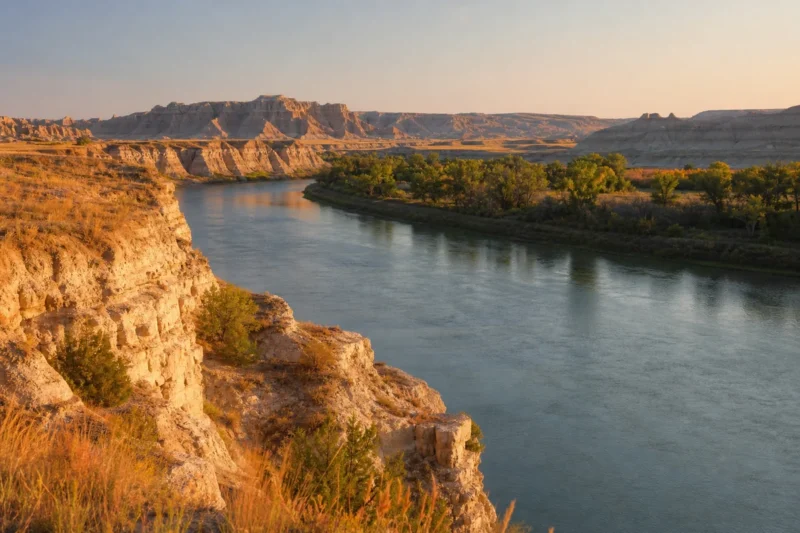
- Pair your visit with time in the Terry Badlands. The area is genuinely known for moss agate hunting, and it’s a short drive from the museum itself.
How This Fits a Southeast Montana Road Trip
Terry sits just off I-94 in Montana’s southeastern corner, making this museum an easy, low-detour stop for anyone already driving that corridor.
If Montana’s gemstone scene interests you beyond the museum itself, our Montana agate guide and our Montana rockhounding sites guide both cover the moss agate hunting this specific region is known for.
If you appreciate small museums built almost entirely on genuine volunteer dedication, our Powder River Historical Museum guide in Broadus covers another Southeast Montana institution with that same personal, above-and-beyond hospitality.
If frontier photography interests you further, our WaterWorks Art Museum guide in Miles City covers Montana’s largest public collection of L.A. Huffman’s contemporaneous frontier photography, giving you two distinct photographic perspectives on the same general era from the same broader region.
Our Montana museums guide maps how this stop connects to the rest of the state’s cultural landscape.
Practical Info
| Address | 101 S Logan Ave, Terry, MT 59349 |
| Phone | 406-233-9103 (text/call) or 406-635-4040 |
| Hours | Vary seasonally; historically limited days with reduced hours [verify current hours directly, as posted schedules have varied significantly across sources] |
| Off-season | By appointment; calling ahead has reliably worked for past visitors |
| Admission | [verify current pricing] |
| Time needed | 1–2 hours |
| Good for | History and photography enthusiasts, families, genealogy researchers |
| Nearby pairing | Terry Badlands, Prairie Unique local shop |
Final Thoughts
Prairie County Museum holds one of Montana’s most historically significant photography collections inside a converted small-town bank, alongside a genuine 1865 Lincoln assassination newspaper, an original homestead land map, and an outhouse with a genuinely improbable claim to fame.
Evelyn Cameron’s work alone justifies the detour off I-94, but the volunteers running this place are exactly the kind of people who make a quiet stop in Terry, Montana feel like a genuine discovery.
Pin this for your Southeast Montana trip planning, and call ahead if you’re arriving outside peak summer hours. If you’ve purchased a print of one of Evelyn Cameron’s photographs, I’d love to hear which image spoke to you most in the comments.