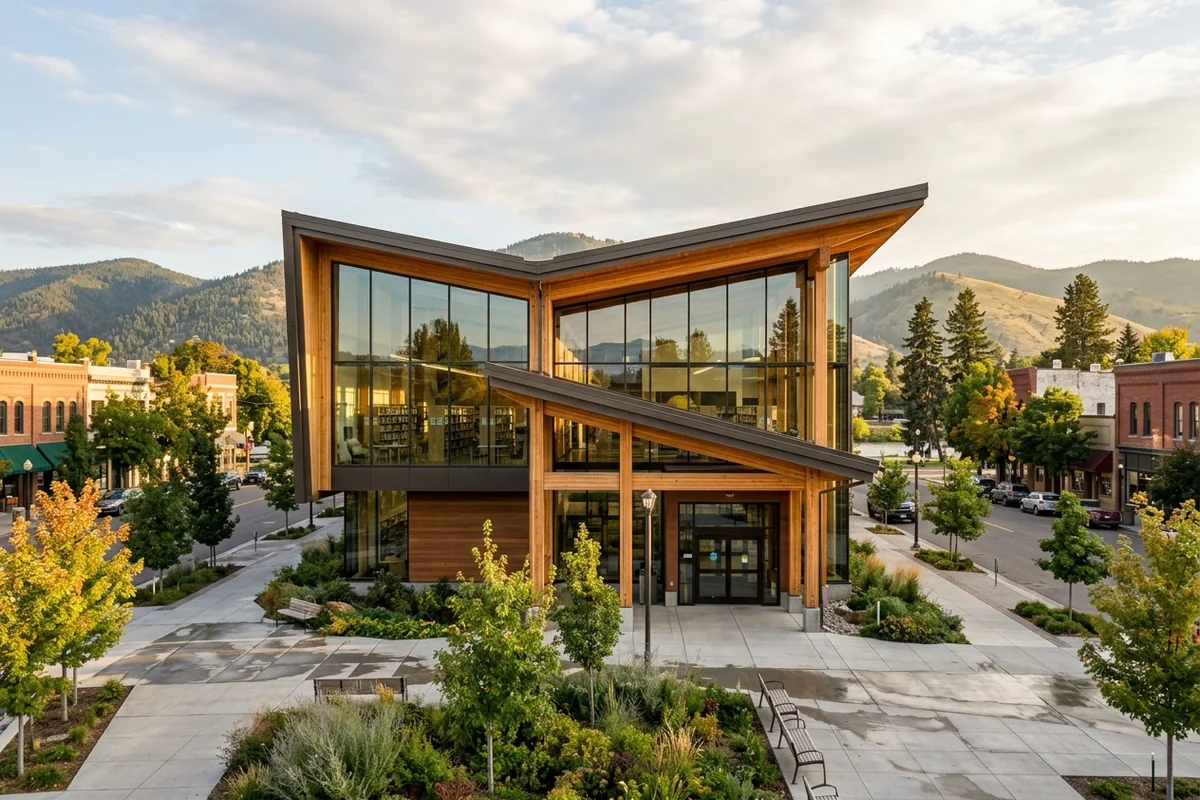
Missoula’s hands-on science museum doesn’t have its own building. It’s tucked onto the second floor of the public library, and it’s completely free to walk into any day it’s open.
- spectrUM Discovery Area is a free, hands-on science museum on the second floor of the Missoula Public Library, founded in 2007 by medicinal chemist Dr. Charles Thompson
- Weekly themed science activities run at the Discovery Bench, Tuesday through Saturday afternoons, with no registration required
- Beyond its Missoula location, spectrUM runs an award-winning mobile science program reaching over 200,000 Montanans a year, including tribal communities across the state
- A Science for All Scholarship Fund keeps camps and programs accessible regardless of family income
- This is one of the best museums in Montana that most visitors never expect to find inside a library, and it’s built entirely around kids actually touching things
Liked this article?
Add Roaming Montana as a preferred source so you see more of our articles and guides on Google.
A Chemist’s Idea That Outgrew Its Original Space
spectrUM started in October 2007, founded by Dr. Charles Thompson, a medicinal chemist who wanted Montana kids to have real, hands-on access to science rather than just textbook descriptions of it. That founding vision still shapes everything about how the museum operates today.
As part of the University of Montana’s Broader Impacts Group, spectrUM connects directly to the university’s research mission while staying genuinely accessible to the general public.
The museum now occupies the second floor of the Missoula Public Library at 455 East Main Street, a location that makes it one of the more unusual “museum in a library” arrangements you’ll find anywhere in the state.
That library location isn’t a limitation — it’s part of the point. Kids and families can wander in during a regular library visit, discover the science exhibits almost by accident, and end up staying for an hour of hands-on activities they never planned on.
The Discovery Bench: Different Science Every Week
The heart of a spectrUM visit is the Discovery Bench, where staff lead hands-on science activities Tuesday through Saturday afternoons, roughly 2 to 6 p.m. No registration is required, and admission has always been free.
What makes repeat visits genuinely worthwhile is the rotating weekly theme structure. One week might focus on wildfire science, directly relevant to a state that deals with real wildland fire seasons every summer.
Another week covers chemistry, physics, robotics and coding, anatomy, space exploration, forensics, or geoscience. A family visiting in June will see a completely different Discovery Bench than one visiting in August.
Monthly activity calendars are posted right in the museum, and the center occasionally brings in actual scientists and community leaders as guest presenters at the bench — a chance for kids to meet a real chemist or researcher demonstrating their own work, rather than just following a printed activity card.

A Statewide Reach Most Visitors Never Realize
This is the detail that genuinely surprises people once they learn it. spectrUM’s Missoula location is only part of the story — the organization also runs an award-winning mobile science program that travels to communities and schools across the entire state.
Combined, the physical museum and the mobile program reach more than 200,000 people every year, a genuinely remarkable number for an organization headquartered inside a single library floor.
For context, that’s a meaningful fraction of Montana’s entire population, spread across a state where many rural communities sit hours from the nearest science museum of any kind.
The mobile program exists specifically to close that gap, bringing genuine hands-on STEM programming to towns that would otherwise have no local access to anything like it.
That mobile outreach specifically includes collaboration with tribal communities, co-designing Indigenous science experiences meant to represent Montana’s Native nations authentically rather than as an afterthought bolted onto a standard curriculum.
This kind of intentional, co-designed programming — rather than a generic traveling exhibit dropped into a community without local input — reflects a genuinely thoughtful approach to educational equity across Montana’s diverse geography and communities.
National partners including the National Science Foundation’s EPSCoR Program, the Institute of Museum and Library Services, the NISE Network, and SciGirls support this work, alongside Montana-based funders like the O.P. and W.E. Edwards Foundation.
That’s a genuinely serious institutional backing structure for a “science museum” most out-of-state visitors have never heard of.
The Science for All Scholarship Fund
spectrUM’s stated mission explicitly commits to serving all Montanans, and the Science for All Scholarship Fund is where that commitment becomes concrete.
The fund specifically supports low-income children, schools, and entire communities, removing cost as a barrier to camps and programs that would otherwise be out of reach for some families.
Given that the core museum experience is already free, this fund mostly matters for spectrUM’s paid programming — summer camps, birthday parties, no-school-day camps, and after-school clubs — ensuring those extended offerings don’t become an income-based dividing line between which Montana kids get deeper science exposure and which don’t.

Camps, Clubs, and Exhibit Swaps
Beyond the drop-in Discovery Bench, spectrUM runs a genuinely full calendar of structured programming throughout the year. Summer camps run in weekly themed sessions — chemistry, physics, robotics, anatomy, forensics, and more — giving kids a deeper dive than a single afternoon visit allows.
The museum also periodically closes for short stretches specifically to swap out exhibits, followed by evening Exhibit Opening Parties that give the community a first look at new hands-on displays. That rotation keeps the physical exhibit floor changing throughout the year, on top of the weekly Discovery Bench theme changes.
Birthday parties and after-school clubs round out the offerings, making spectrUM as much a recurring part of Missoula family life as a one-time tourist stop.
Visiting With Kids
Given that spectrUM is built entirely around a young audience, this section matters more here than at almost any other museum in this guide. The hands-on, drop-in format at the Discovery Bench means kids are never just passively looking at exhibits behind glass — every visit is designed around them actually doing something.
Younger kids tend to gravitate toward the more sensory, colorful activities, while older kids and early teens often get pulled in by the more technical weekly themes like robotics, coding, or forensics.
Because the museum is free and inside a library, it’s also an easy, low-pressure stop to try even if you’re not sure your kids will engage — there’s no ticket cost weighing on the decision if you need to leave after fifteen minutes.
Parents specifically researching STEM enrichment for their kids should also look into the summer camps and after-school clubs, which go considerably deeper than a single drop-in visit allows.
Frequently Asked Questions
Do we need to be Missoula residents or library cardholders to visit?
No — spectrUM is open to all visitors regardless of residency or library card status, and admission is free for everyone.
Is this a good stop if we only have a short amount of time in Missoula?
Yes, especially since it’s free and centrally located. Even a 30- to 45-minute visit during Discovery Bench hours gives kids a genuine hands-on activity to break up a day of sightseeing.
Can adults enjoy this too, or is it strictly for kids?
While the programming clearly targets younger visitors, several of the weekly themes — geoscience, forensics, chemistry — hold genuine appeal for curious adults accompanying kids, not just the children themselves.
Is there anywhere to park nearby?
Yes, free two-hour parking is available in the library’s building lot, and the location is also accessible via the Mountain Line bus route and the Riverfront Trail bike path.
How does this compare to a typical children’s museum?
It’s more narrowly focused on science and STEM specifically, rather than the broader imaginative play you’d find at a general children’s museum, which makes it a particularly strong stop for kids with specific science curiosity.

What Other Guides Get Wrong
- The library location confuses people who expect a standalone museum building. Most travel content doesn’t clearly explain that spectrUM occupies a floor of the Missoula Public Library rather than its own dedicated structure.
- The statewide mobile program and its scale almost never get mentioned, reducing spectrUM to just its Missoula location when it actually reaches over 200,000 Montanans annually.
- The Indigenous science collaboration work rarely gets highlighted, despite being a genuinely distinctive part of the organization’s broader mission.
- The rotating weekly themes get treated as a minor detail, when they’re actually the reason repeat visits are worthwhile rather than redundant.
Personal Tips: What I Wish I Knew
- Check the current week’s Discovery Bench theme before you go, especially if a specific topic like robotics or space exploration would particularly excite your kids.
- Visit Tuesday through Saturday afternoons for the guided Discovery Bench activities. Outside those hours, you’ll still find exhibits, but the staff-led hands-on component won’t be running.
- Watch for exhibit swap closures. The museum periodically closes for short stretches to refresh displays, so check current status before building a specific day around a visit.
- Take advantage of the free two-hour parking in the library lot, or consider the Mountain Line bus route or Riverfront Trail bike path if you’re staying downtown.
- Don’t rush through in ten minutes. Because it’s free and inside a library, some visitors treat it as a quick pass-through, but the rotating hands-on activities genuinely reward a slower, more engaged visit.
How This Fits a Missoula Visit
spectrUM’s downtown library location makes it one of the easiest, lowest-cost stops to build into a Missoula day, especially if you’re already planning a stroll along the Riverfront Trail.
Pairing this with Montana Natural History Center gives families a genuinely full science-and-nature day in Missoula, covering both hands-on physics and chemistry here and Montana-specific ecology and geology there.
If your family enjoys hands-on museums specifically, American Computer & Robotics Museum in Bozeman follows a similar spirit on a much larger, more historical scale if your Montana trip extends that far.
Our Missoula guide covers the rest of what’s worth doing in town, and our Montana museums guide maps how this stop fits into the state’s broader museum landscape.
Missoula’s downtown core also makes it easy to treat spectrUM as one stop among several in a single afternoon rather than a dedicated destination requiring its own separate trip.
Given the free admission and central location, it’s a low-risk addition to almost any Missoula itinerary, regardless of how much time you actually end up spending there.
Practical Info
| Address | 455 East Main Street (2nd floor, Missoula Public Library), Missoula, MT 59802 |
| Discovery Bench hours | Tuesday–Saturday, roughly 2–5 or 6 p.m. [verify current hours] |
| Admission | Free |
| Time needed | 45 minutes–1.5 hours |
| Good for | Families with kids of all ages, STEM enthusiasts, budget-conscious travelers |
| Nearby pairing | Montana Natural History Center, Riverfront Trail |
Final Thoughts
spectrUM Discovery Area proves that a genuinely impactful science museum doesn’t need its own grand building or an admission fee to matter.
A rotating Discovery Bench, a statewide mobile program reaching Native communities and rural schools alike, and a scholarship fund making sure cost never becomes the barrier — all built quietly into the second floor of a public library.
I think about spectrUM’s model every time I visit a larger, more expensive science center elsewhere and wonder how many kids never get to walk through the door simply because of ticket price or distance.
This organization built its entire mission around removing exactly those two barriers, and the fact that it still manages to reach over 200,000 people a year says the approach genuinely works.
Pin this for your Missoula trip planning, especially if you’re traveling with curious kids. If you’ve caught a particularly memorable Discovery Bench theme, I’d love to hear which one stuck with your family in the comments.